
Experts Matter. Find Yours.
Connect for media, speaking, professional opportunities & more.

MEDIA RELEASE: Five ways to cut costs on travel; plus, the one thing you should never skip
Ontarians love to travel, but with costs rising due to inflation, it has become more important than ever to find ways to save money, while still crossing off destinations on your bucket list. “This year, more and more people across the province are eager to embark on their next adventure, whether that means disconnecting in a tropical paradise or exploring the history of an ancient city,” says Susan Postma, regional manager, CAA Club Group. “While we are seeing a renewed interest in travel, we know the costs associated with it will be factor for many people.” With the help of our travel professionals, CAA South Central Ontario (CAA SCO) has compiled a few tips to help save you money. Plan ahead. Start planning your trip well in advance of your departure date. Determine what your budget will allow and book flights, hotels, and rental cars early to get the best deals and rates possible. With the higher demand for travel, last-minute planning will result in higher airfares, hotel rates and even disappointment from no availability. Redeem your loyalty points or member benefits. Use frequent flyer miles or credit card points to pay for flights or hotels. Take advantage of CAA member benefits and discounts at hotels and attractions, or tap into hotel loyalty programs. Now is your time to finally redeem all those accumulated rewards points from a member program or credit card. Also, don’t forget to check the expiration date on unused vouchers or credits. Look for hotels that include breakfast or allow self-catering. Food costs continue to rise and will quickly eat into your budget when you’re paying for three meals (+ snacks) each day. A free breakfast, offered by many hotels, or a hotel room with a kitchenette or fridge will help reduce food costs and give you more money to put towards excursions and other experiences while you’re away. Travel during off-peak times. There are both days of the week and times of the year that are cheaper to travel. Consider travelling during these off-peak times or leaving for your trip during the week versus on a weekend. Partner with a travel agent to get the best deal. A travel agent will know when there are active sales. Travel promotions happen several times throughout the year, and a trusted travel agent will know the best time to book your next getaway. While everyone likes a great deal, the one thing you should never skip is travel insurance says Postma. “You may be in good health before your departure, but unexpected medical emergencies can still happen while you are away from home. If you get sick or injured, travel insurance is important to ensure your medical treatment is covered, along with any related out-of-pocket expenses.” If you're uncertain what coverage you need, CAA encourages you to talk to your travel insurance expert who can help you find the most suitable coverage for your trip and your needs.


The effects of social media on domestic terrorism - Our experts have the answers
There is no question social media has an impact on today’s society. Worldwide there isn’t much research available with empirical evidence showing its effect. Lance Hunter, PhD, associate professor in Pamplin College of Arts, Humanities, and Social Sciences and the Masters of Arts in Intelligence and Security Studies program at Augusta University recently was part of two studies that show evidence linking social media to political violence including domestic terrorism and civil conflict. The studies included over 150 countries and covered the time frame 2000 to 2019. “One of the things we found very interesting is the amount of time that people spend on social media on average within each country per year. It really does matter in affecting the amount of domestic terrorism within countries,” said Hunter. While many are focused on what happens domestically, Hunter found that some countries have more social media usage as compared to the United States and have varying amounts of political violence within their countries. “When social media is dangerous is when it increases polarization. When it’s used to spread disinformation that disinformation can have a polarizing effect on citizens around the world, and that polarization is associated with political violence.” Even socio-economic factors can play a role in social media and its effect on people in a country. “Looking at our research and data and looking across democracies and non-democracies, different income levels of countries most developed, less developed, we see there is a noticeable effect that social media can really influence political violence, especially if it’s used for disinformation purposes.” He went on to add since their data ended in 2019, and there have been instances of violence in the U.S. since then, researchers may continue to speculate on the relationship between social media posts and the acts of domestic terrorism. Here's an excerpt from the journal's abstract in Behavioral Sciences of Terrorism and Political Aggression: Much qualitative research has drawn an association between social media and domestic terrorism, with the studies reaching different conclusions. However, few empirical studies have evaluated whether the surge in social media participation affects domestic terrorist events. Controlling for common explanations in the literature, we conduct a cross-national, time-series analysis of up to 151 countries from 2000 to 2019 to assess the impact of social media penetration on domestic terrorism. We find that greater social media penetration increases the likelihood of domestic terrorism in countries as it supports extremists’ ability to recruit, mobilize, and train terrorists. Using mediation analysis, we also find that greater social media penetration amplifies online and political polarization, increasing the likelihood of domestic terrorism events. Our work indicates the possible mechanisms linking social media and domestic terrorism and the need to develop and apply appropriate counterterrorism strategies to mitigate terrorist operations. “There is a noticeable effect that social media can really influence political violence, especially if it’s used for disinformation purposes. I think maybe it’s just something to think about going forward for governments and citizens regarding how we should approach social media because I think with any type of technology, it can be used for good or for evil.” While there are countries that try to limit certain social media platforms depending on what information is being transmitted, there will likely be ways around any restrictions put in place. “When you’re thinking overall regarding social media, and we’re thinking about communication over social media, is that individuals at times do have certain technologies that they can circumvent those controls at times. So it can be a cat and mouse game between the government and the citizens.” Dr. Lance Hunter is an assistant professor of political science with a background in international relations. His research focuses on how terrorist attacks influence politics in democratic countries and how political decisions within countries affect conflicts worldwide. Hunter is available to speak with media about this important topic - simply click on his icon to arrange an interview today.


Aston University students take home two prizes from annual European Union simulation event
EuroSim is an annual international intercollegiate simulation of the European Union More than 150 students, from universities in North America and Europe, participate every year The Aston EuroSim Team was awarded best debater in two categories. Aston University’s EuroSim team has returned from this year’s event with two awards. The Aston EuroSim Team was awarded best debater in the European Parliament Committee on Employment and Social Affairs (EMPL) and best in special roles (media/journalist). EuroSim is an annual international intercollegiate simulation of the European Union (EU). The purpose of it is to provide a framework for a simulation of the EU decision-making on major current issues. More than 150 students, from 16 universities in North America and Europe, participate in the simulation. All students are assigned roles, including members of the European Parliament (MEPs), members of the European Commission, heads of government and national ministers. The purpose of this module is to educate students about the inner workings of the European Union in order to enhance the learning experience for students. This year it was hosted by the University of South Wales in Newport, the first time the event has been held in the UK. Dr Patrycja Rozbicka, a senior lecturer in politics and international relations who is the lead for Aston EuroSim and was European associate director for EuroSim experience (2019-2023), said: “Here at Aston University, the EuroSim module is one of the most innovative modules of the Aston Politics and International Relations Department’s undergraduate and MA programmes. Amin Hassan, a final year international relations and English language student at Aston University, who took part in EuroSim, said: “I would like to extend my gratitude to my team from Aston University, and special mentions to my lecturer Dr Patrycja Rozbicka and student director Chris Burden for organising and inviting us to this memorable trip. “Representing Max Orville (my alter ego), MEP and Renew Europe Group, I worked together with my party and committee members with shared interests and values to ensure that no one is left behind by the proposed Social Climate Fund, which has recently been approved in real life. “After three days packed with negotiations and meetings, we are pleased that the Social Climate Fund has been approved and we strongly believe that it will support vulnerable people, households, micro-enterprises and transport users at risk of facing higher costs as the bloc introduces new climate measures.” Chris Burden, European students director at EuroSim and PhD researcher at Aston University, said: “I had the greatest honour attending the EuroSim2023 meeting at the ICC Wales as the European student director and part of Team Aston. “The work that goes into this conference is unbelievable, and the students had a fantastic time debating and simulating questions surrounding social and climate action within Europe. “This Transatlantic conference is the highlight of any year. “Thank you to our fantastic team from Aston University who brought home the two awards for their efforts.” The next EuroSim will be held next year in Brockport, northern New York State, USA. If you want to read more about the Aston EuroSim, click here.


Combating Hate Speech in 2023 (and Beyond)
The arrival of a new year often initiates a reflection on the previous one. And according to Billie Murray, PhD, associate professor in the Department of Communication, reflecting on America’s past begins with acknowledging the country’s history of and ever-growing propensity towards hate speech. As defined by Dr. Murray in her book Combating Hate: A Framework for Direct Action, hate speech “defames, denigrates, dehumanizes and/or inspires violence against particular groups of people on the basis of their religion, ethnicity, nationality, race, gender or other identity category.” Hateful rhetoric is not restricted to the fringes of society as it once might have been. It is emerging within schools, localities and central government. Yet, as Dr. Murray points out, America’s enmeshment is not fated. Dr. Murray’s commitment to fieldwork has taken her throughout the country to protests at hate group rallies in Stone Mountain and Newnan, Georgia, Columbia, South Carolina, and Washington, D.C. At these rallies, and through the lens of a researcher, scholar and activist, Dr. Murray sought to identify oppositional tactics used by counter-protestors that succeeded in diminishing the presence and the effects of hate speech. As a result of her observations, Dr. Murray devised the Counterspeech System, a strategy based on the idea that more speech (not avoidance) is the best way to counter hate speech. And there are two successful ways of doing just that: Confrontational Tactics focus on combating hate through direct action. For example, ‘Angel Action’ is a term used for a confrontational tactic employed at funerals in which activists dress in white angel costumes, rising seven feet tall with ten-foot wing spans, to form a shield with their bodies while creating a barrier between mourners and hate groups. For non-funeral occasions, counteractive celebratory events such as public dance parties, pride celebrations and noise brigades (the drowning out of hate speech with things like kazoos or brass bands) aim to quell hate with love. Persuasive-Dialogic Tactics focus on both public and interpersonal discussions. For example, persuadable members of the general public may receive the message that hate is a problem (through media campaigns and education) and thus come to the conclusion that action must be taken to combat it. Additionally, an interpersonal dialogue with individual members of a hate group in which messaging about compassion, human dignity and mutual respect is initiated can lead to self-reflection and the use of resources such as de-radicalization support groups (like Life After Hate). It is important to acknowledge that although successful, Counterspeech System tactics do not prevent hate groups from organizing or disseminating information. More speech serves to combat existing hateful rhetoric. “Our country needs a shift in how it understands free speech and the role of police protection of hate groups, especially if we are going to continue to win this fight,” says Dr. Murray. It will take federal action coupled with a coalition of those engaging in oppositional tactics to bring about lasting change. However, despite the challenges, Dr. Murray affirms that combating hate speech is worth the fight.


Psychology students launch creative sessions to support wellbeing through art
The Aston Creative Wellbeing Group is run and facilitated by Aston University psychology students The group brings students together outside of class with an aim of supporting health and wellbeing through art The group will be running another nine sessions in spring 2023 due to its popularity. A student-led creative wellbeing group has been set up by psychology students at Aston University, with the help of their tutor, to connect student participants through art and help enhance their wellbeing. The Aston Creative Wellbeing Group, which showcases its creative work on its Instagram page, was so well attended in the autumn term - with more than 120 participants - it is now planning another nine sessions meeting weekly during the spring term to continue its mission to bring students together and support wellbeing. With some initial funding from the University welfare team to purchase ‘start up’ materials, the group ran a range of sessions including rock painting, making postcards, learning to crochet, painting and drawing and making festive decorations during the autumn 2022 term. Dr Kate Nicholls, senior personal tutor and teaching fellow in psychology at Aston University, explained why she supported the group to set up. Kate said: "I was keen to develop some student-led initiatives to support health and wellbeing in the School of Psychology. I also hoped it would help the students develop their professional skills and the practical application of their psychological knowledge. "It was art making and creative activities that sparked an interest from some final year psychology students and the Aston Creative Wellbeing Group was born. The group wanted to use the arts to enhance wellbeing, using creative activities to explore sense-making, aesthetic appreciation, provide entertainment and friendships.” Karla Hitchins, a final year psychology student who set up the group, said: “Running the group slides in nicely with my interests in art psychotherapy, but I also really enjoy arts and crafts in my own time. It has been great fun to facilitate this group. “The aim of the sessions is for people to have a safe space where they can connect with their creative side, as well as with other students. At the University, there are wellbeing and counselling services, but I don’t think there is anything quite like this. “Having somewhere to express your feelings, or to just have a creative outlet is incredibly important and I hope that eventually there will be more arts-based interventions for mental health and wellbeing at all universities.” Psychology student and group facilitator, Molly-Emma Taylor, said: “I've experienced a few mental health wobbles during this term, so having the wellbeing sessions has helped me a lot. "For example, the painting session was an amazing way to let out some pent-up feelings and it gave me time to connect with friends. I don't think I would have got so much out of it had I simply painted alone. “I think that the theme of everyone banding together every two weeks and making art, in whatever form it may be, is pretty awesome. It's always fun to see what everyone makes. “The social media aspect of the group on Instagram is nice too, because it means even if someone wasn't able to make it to a session they can still feel like a part of group and see what other people created.” Jacqueline Maloney, mental health specialist at Aston University said: "As a mental health specialist at the University, I have been thrilled to help promote and support our psychology Students’ initiative to provide creative wellbeing activities for our students. "I am a big believer in the therapeutic potential of the arts and through participation in these sessions I have witnessed students relaxing, laughing, trying new crafts, and enjoying time in creative endeavours. I am so pleased that this session will be continued into 2023." For more information about studying psychology at Aston University, please visit our website.
UConn Expert, 10 Years after Sandy Hook, on the Lies that 'Plague the U.S.'
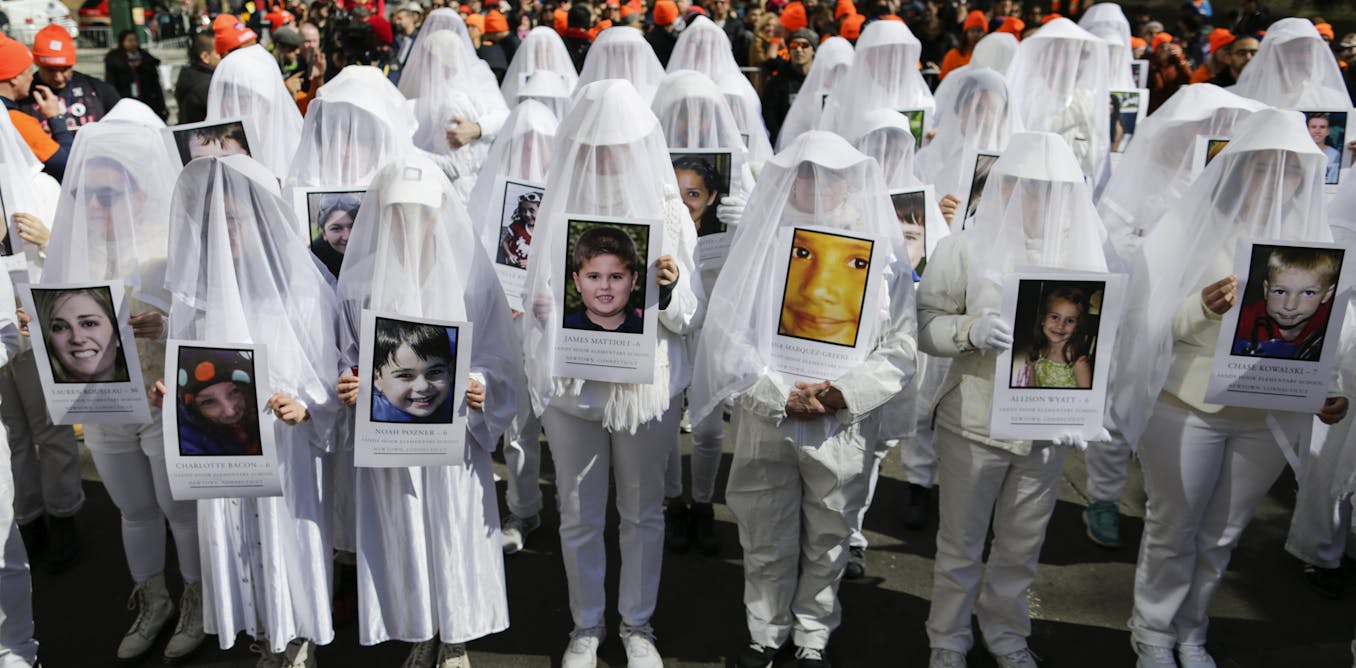
UConn professor and journalist Amanda J. Crawford considers the misinformation that spread like wildfire after tragic school shooting at Sandy Hook Elementary School to be "the first major conspiracy theory of the modern social media age." Ten years after 26 young students and school staff were killed in the massacre, the impact of that day in 2012 continues to reverberate in America today. On this solemn anniversary, Crawford writes about the aftermath of Sandy Hook misinformation in a new essay for The Conversation: Conspiracy theories are powerful forces in the U.S. They have damaged public health amid a global pandemic, shaken faith in the democratic process and helped spark a violent assault on the U.S. Capitol in January 2021. These conspiracy theories are part of a dangerous misinformation crisis that has been building for years in the U.S. While American politics has long had a paranoid streak, and belief in conspiracy theories is nothing new, outlandish conspiracy theories born on social media now regularly achieve mainstream acceptance and are echoed by people in power. Recently, one of the most popular American conspiracy theorists faced consequences in court for his part in spreading viral lies. Right-wing radio host Alex Jones and his company, Infowars, were ordered by juries in Connecticut and Texas to pay nearly $1.5 billion in damages to relatives of victims killed in a mass shooting at Sandy Hook Elementary School a decade ago. Jones had falsely claimed that the shooting was a hoax. As a journalism professor at the University of Connecticut, I have studied the misinformation that surrounded the mass shooting in Newtown, Connecticut, on Dec. 14, 2012 – including Jones’ role in spreading it to his audience of millions. I consider it the first major conspiracy theory of the modern social media age, and I believe we can trace our current predicament to the tragedy’s aftermath. Ten years ago, the Sandy Hook shooting demonstrated how fringe ideas could quickly become mainstream on social media and win support from various establishment figures – even when the conspiracy theory targeted grieving families of young students and school staff killed during the massacre. Those who claimed the tragedy was a hoax showed up in Newtown and harassed people connected to the shooting. This provided an early example of how misinformation spread on social media could cause real-world harm. Amanda J. Crawford is a veteran political reporter, literary journalist, and expert in journalism ethics, misinformation, conspiracy theories, and the First Amendment. Click on her icon now to arrange an interview with her today.


Social media engagement style may be linked with perceived social connectedness – new research
A novel experimental task measuring behaviour on a social networking site identifies key differences between passive, reactive and interactive usage 526 users were observed on the mock platform to monitor usage according to frequency of likes, shares, and scrolling More interactive users reported greater social connectedness and social capital Researchers at Aston University have developed a new experimental task, involving a mock social networking site, which grouped people into three distinct styles of social media use—passive, reactive and interactive. Led by Dr Daniel Shaw and Dr Charlotte Pennington in the School of Psychology, at Aston University, the new findings also suggest that interactive users reported greater feelings of social connectedness than passive or reactive users. Despite the wealth of research into the psychological impact of social networking site (SNS) usage, inconsistent findings have prevented any firm conclusions from being drawn. While some studies have concluded that social media usage was associated with increased social connectedness and reduced loneliness, others reported detriments to loneliness and wellbeing with greater use of such platforms. In their new work, published in the journal PLOS ONE, the researchers administered the Social Networking SiteBehavior Task (SNSBT) online to 526 individuals, who also completed questionnaires on their levels of loneliness, sense of belonging, social connectedness, online social capital and answered questions about their Facebook usage and friendship network. The SNSBT grouped users into three discrete groups depending on how often they clicked “Next,” “Like,” or “Share” on 90 images presented to them on the mock SNS. On average, passive users, about 39% of those in the study, clicked “Next” most often (on 85% of images). Reactive users, 35.4% of the study, most often clicked either “Next” (59% of the time) or “Like” (36% of the time). Interactive users, 25.7% of participants, mostly clicked “Like” (51% of the time) or “Share” (20% of the time). Analysis of the data revealed that interactive users had, on average, more Facebook friends, spent more time on Facebook, and reported greater feelings of social connectedness and social capital than passive or reactive SNS users. However, this study could not determine if any causal or directional link between these factors exists. The researchers are planning to carry outfurther work in this area. The authors concluded that the simple SNSBT tool they developed, now publicly available, could help researchers quantitatively differentiate between different SNS usage styles and overcome the limitations of self-report data, enhancing future research in the field of cyberpsychology. Dr Daniel Shaw said: “This study introduces a new tool with which researchers can measure different styles of engagement on social networking platforms and indicates that our style of engagement can be more important for our psychological wellbeing than the amount of time we spend on social media.” Dr Charlotte Pennington added: “Individuals displaying more interactive styles of usage on our platform reported stronger feelings of social connectedness and social capital compared with those who showed more reactive or passive behaviour. Our team has developed the first mock social networking site that can be used to measure natural styles of usage, free from the ethical concerns that arise when people log into their own phones.”
:quality(70)/d1hfln2sfez66z.cloudfront.net/11-12-2020/t_153988229cf34ae380f9746b321a82db_name_WDW_RESERVATIONS_OPEN_430pm_frame_3082.jpg)
Is the sun set to shine again on a rebounding Florida tourism economy?
It was a tough couple of years for the Florida tourism industry. With flights restricted, travel discouraged and theme parks closed or limiting the number of guests, Florida felt the full economic brunt of the pandemic when the tourists stopped coming. To put it in perspective: In 2020, Walt Disney World took a $7 billion loss. But with COVID all but a memory, the rebound already is in full swing with visitors and their disposable income returning to the Sunshine State. Florida tourism exploded to record numbers as the state has welcomed 104.5 million visitors so far this year, a 15.3 percent increase over the same time period in 2021, according to the offices of Gov. Ron DeSantis and Visit Florida. In the third quarter alone, Florida welcomed 35.1 million tourists – a 6.9 increase from the same period in 2021 and the fifth quarter in a row that saw overall visitation surpassing pre-pandemic levels. About 32.6 million domestic visitors traveled to Florida in the third quarter period of 2022. Islander News - December 2022 But still after such a slowdown, should we be cautious? What can tourism operators, hoteliers and the rest of the hospitality industry expect for 2023? With COVID no longer a deterrent, will a shaky economy be the next shoe to drop? Or, after being stuck at home for so long, will visitors help places such as Disney, Universal and LEGOLAND become recession-proof? These are great questions, and if you are a journalist covering the 2023 tourism season in Florida, let us help. Peter Ricci, Ph.D., is a clinical associate professor and director of the Hospitality and Tourism Management program in Florida Atlantic University’s College of Business. He is a hospitality industry veteran with more than 20 years of managerial experience in segments including food service, lodging, incentive travel and destination marketing. Peter is available to speak with the media about space-travel tourism as well as other topics, including the labor shortage in hospitality and tourism. Simply click on his icon to arrange an interview.



ExpertFile-powered “Our Experts” site makes health experts findable and accessible to media at a click of a button ChristianaCare and its collaborative partner ExpertFile have been recognized with a 2022 Silver Quill Award from the International Association of Business Communicators (IABC) for its "Our Experts" media database. Designed to easily and quickly connect journalists to subject-matter experts, this online resource has been recognized with the top prize – an “Award of Excellence” in the Communications Management, Media Relations category. The IABC Silver Quill Awards showcase business communication excellence and are acknowledged as among the most prestigious awards programs in the communications industry. “I’m proud to accept the Silver Quill Award on behalf of our organization and our incredible Communications team, including our ExpertFile partners,” said Shane Hoffman, communications director at ChristianaCare. “The ‘Our Experts’ platform has given us next-level ways to engage our experts and share our knowledge as a trusted source of health care information. It has also helped us re-imagine the traditional online news room experience and turn it into a truly new and innovative way to serve the needs of both journalists and our community.” IABC’s Silver Quill awards honor the dedication, innovation and passion of communicators on a global scale. Each entry is scored independently by evaluators who judge the award submission on factors that include: stakeholder analysis, strategic and tactical planning, quality of execution and measurable results. Since launching in March 2021, the "Our Experts" media database has received more than 20,000 online visits and has resulted in more than 200 news stories. “We are honored to earn this Silver Quill Award with our client, ChristianaCare,” said Peter Evans, CEO of ExpertFile. “Despite the pressures of the pandemic, their team collaborated closely with us to create a world-class program that continues to help a variety of audiences discover and connect every day with credible medical experts and groundbreaking research.” Powered by the ExpertFile software platform, the ChristianaCare “Our Experts” site provides a digital media toolkit with advanced search/digital content features to help journalists discover experts and access resources that make it easier for them to complete stories and meet their deadlines. Awarding top honors “with distinction,” the IABC judging panel provided a number of detailed comments on the “ChristianaCare Experts Program”: “Very well-done website. Nice content that is well organized and searchable. From planning and implementation to measurement afterward the program shows great work.” “Great work in the time of COVID. Your knowledge of journalists and their challenges. during COVID was spot-on.” “I liked the media advisories. Having been on both sides of the reporter/media relations thing, I like clear and simple. You achieved this!” “If I were a reporter, the advisory would be invaluable when I needed an expert.” “Very specific and focused on business-results. Great work here.” “Very comprehensive! You thought of everything without getting bogged down in unnecessary details.” Nearly 100 ChristianaCare experts are featured in the database today, and that number continues to grow. “As communicators in health care, it has always been important for us to provide timely, accurate, easy-to-understand information to the communities we serve so that people can make informed decisions about their health,” said Karen Browne, vice president of marketing and communications at ChristianaCare. “The COVID-19 pandemic added an entirely new level of urgency to our role as communicators, and it made it even more important for us to build strong relationships with our partners in the news media so that they can deliver compelling, actionable health information to the community—from experts they can trust.” The pandemic also highlighted the need to do more with less. ChristianaCare’s innovation was driven out of a desire to improve the reach, impact and efficiency of its media relations efforts—amid rapidly increasing demand—without the need to add additional resources. “With our partners at ExpertFile, we leveraged ExpertFile’s outstanding technology platform to create a database of our experts that helps reporters and news producers find the sources they need quickly, and it enables our team to nimbly manage their requests and facilitate interviews in a way that makes the absolute best use of our resources,” Hoffman said. “The ExpertFile team worked as our strategic thought partners throughout this process, and they’ve really embraced our desire for innovation that drives results. They’ve helped us to work smarter and do more without adding a lot of additional resources. Together, we’ve built a system and process that is helping us to communicate in new and better ways—and we’re just getting started.” About ChristianaCare Headquartered in Wilmington, Delaware, ChristianaCare is one of the country’s most dynamic health care organizations, centered on improving health outcomes, making high-quality care more accessible and lowering health care costs. ChristianaCare includes an extensive network of primary care and outpatient services, home health care, urgent care centers, three hospitals (1,299 beds), a freestanding emergency department, a Level I trauma center and a Level III neonatal intensive care unit, a comprehensive stroke center and regional centers of excellence in heart and vascular care, cancer care and women’s health. It also includes the pioneering Gene Editing Institute. ChristianaCare is nationally recognized as a great place to work, rated by Forbes as the 2nd best health system for diversity and inclusion, and the 29th best health system to work for in the United States, and by IDG Computerworld as one of the nation’s Best Places to Work in IT. ChristianaCare is rated by Healthgrades as one of America’s 50 Best Hospitals and continually ranked among the nation’s best by U.S. News & World Report, Newsweek and other national quality ratings. ChristianaCare is a nonprofit teaching health system with more than 260 residents and fellows. With its groundbreaking Center for Virtual Health and a focus on population health and value-based care, ChristianaCare is shaping the future of health care.


MEDIA RELEASE: CAA survey finds people who drive high on edibles continues to rise
A survey conducted by CAA South Central Ontario (CAA SCO) found that since 2019, there has been a 10 per cent increase (26 per cent in 2022 vs. 16 per cent in 2019) in cannabis impaired drivers admitting to consuming an edible before driving. With approximately 10 million Ontario drivers, that number equals about 156,000 Ontario drivers who have driven high on edibles in the last three months. “It’s shocking that we’re seeing this many people who are getting behind the wheel while high,” says Michael Stewart, community relations consultant at CAA SCO. “Our data shows an alarming trend in the use of edibles and driving. With the growing popularity of cookies, gummies, and chocolates, since legalization, the use of edibles continues to rise and so do people who drive high on edibles.” Stewart warns that edibles pose a greater risk to road safety because they are harder to detect and can take up to two hours for the effects to kick in. He underscores that people may get behind the wheel sober, only to become high mid-trip. Also, the effects can last up to 12 hours and residual effects for up to 24 hours. The survey also found that in the past three months, approximately 600,000 Ontario drivers have admitted to driving after consuming cannabis. While this number has remained the same since CAA’s survey in 2019, what continues to be of concern is the following: Almost half (about 282,000) of the cannabis impaired driving was paired with other substances such as alcohol or other drugs. More than half (about 336,000) of the cannabis-impaired drivers admitted to getting behind the wheel within three hours of consumption. A third of cannabis impaired drivers who drive the same day felt high while driving. While most Ontario drivers say that cannabis-impaired driving is a serious risk to road safety (89 per cent), only half are aware of the penalties. “Because of the novelty of edibles, there seems to be a knowledge gap surrounding the impaired-driving laws related to substances other than alcohol. However, studies show that the drug affects nearly every skill related to driving. It impairs a driver’s motor skills, making it harder to judge distances, and can slow reaction times,” says Stewart. Those caught and who fail a Drug Recognition Expert’s evaluation face an immediate 90-day licence suspension, a seven-day vehicle impoundment, and a $550 fine. If convicted in court, drivers will see their licence suspended for at least a year, along with various other mandatory stipulations including an education or treatment program, and the use of an ignition interlock device for at least a year.
