
Experts Matter. Find Yours.
Connect for media, speaking, professional opportunities & more.

MEDIA RELEASE: CAA Manitoba sees a high number of service calls due to extended, extreme cold
WINNPEG, January 7, 2022 – The extreme cold weather that has gripped southern Manitoba for weeks has caused higher-than-average call volumes, and as result CAA Manitoba (CAA MB) is prioritizing service to Members in unsafe situations. “CAA’s top priority is to always ensure our members and drivers are safe, especially in extreme cold weather situations and when stranded on the side of the road,” says Tim Scott, President, CAA Manitoba. “We assure members that we are doing everything we can to get them and provide assistance. If you’re safe at home, we ask for your patience as there may be extended wait times.” On a typical winter day, CAA sees an average of 300 to 400 calls, the cold snap has resulted in a call volume three times higher than normal. “The last few weeks have been incredibly cold and busy days. Demand for service coupled with the frigid weather has been difficult,” says Scott. As the extreme cold weather is expected to stick around well into next week, CAA is reminding members, to plug in block heaters, and if they do decide to go out, to make sure you have an emergency car kit in your trunk. As well as having a fully charged cell phone before leaving your home. If drivers do find themselves stranded during the cold weather, it is important to be prepared by following these tips: Note the location of your vehicle. Assess your vehicle's operating problem if it is safe to do so. Make your vehicle visible by turning on hazard lights. If you choose to exit your vehicle, be aware of your surroundings and stay away from oncoming traffic. If a member finds themselves in need of service, we encourage downloading the CAA mobile app by visiting www.caamanitoba.com/membership/mobile-app or dialing *222 on your smartphone. During this weather event, Members at home may be given the option to call an alternate service provider and submit the receipt for reimbursement at our contractor rates.


MEDIA RELEASE: Winter weather looming: CAA Manitoba advising motorists to prepare for the unexpected
Winnipeg, MB, November 04, 2021 – As temperatures drop and winter approaches, it’s a reminder that unpredictable driving conditions often come when we least expect it. CAA Manitoba (CAA MB) is advising motorists to get their vehicles ready now before wintry weather hits. “It’s time to prepare your vehicle by installing winter tires and getting your battery checked by a professional,” says Heather Mack, manager of government and community relations at CAA MB. “We are encouraging motorists to be winter wise and plan ahead for heavy snowfalls, slippery road conditions and frigid temperatures before they happen.” Winter tires take on all the challenges brought on by cold weather including snow, ice, slush, wet and dry roads, but to fully optimize your vehicle’s handling, stability and braking it’s important to install four matching tires once the temperature consistently dips below 7°C. “Compared to all-season tires, winter tires stay flexible in cold temperatures—whether or not there’s snow on the ground—giving you better traction,” says Mack. “This may reduce your stopping distance by a few feet which can be the reason for preventing a collision.” Save time by getting your tires changed right in your driveway by booking CAA’s Mobile Tire Change service and enjoy convenient, safe and reliable at-home assistance performed by expert technicians. While installing your winter tires, CAA recommends also asking your mechanic to check your car battery. “Even a fully charged battery can lose power when the temperature dips below 0° Celsius,” says Mack. “It’s important to have your car battery tested in the fall to ensure it’s ready for the winter.” If your battery is giving you problems or you are unsure if it’s time to replace it, you can call CAA’s Mobile Battery Service at *222 to have a trained CAA MB Battery Service Representative come test your battery and provide a helping hand. Not sure if your car battery will make it through the winter months? Watch for the following warning signs that a battery may need to be replaced: Your vehicle cranks slowly when trying to start. It takes 175 to 250 amps of battery power to get a car going. If your car is slow to start, you might be dealing with an insufficient charge. Your headlights dim while idling. When idle, a car may draw more power than the alternator alone can produce, so your battery kicks in. If your headlights dim when you are idling but brighten when you rev the engine, it could mean a drained battery. Your digital systems power down quickly. Electronics like the radio, GPS, dash cams and other accessories, especially in modern cars, use battery power when the engine is off. If they stop functioning properly, it could suggest a weak battery. You hear a grinding, clicking or buzzing noise when you turn on the ignition. It’s important to be able to distinguish the reason why your vehicle may be making noises, usually, these sounds mean your battery has lost its charge but if you’re still unsure, get your vehicle checked by a professional. Your vehicle has stalled. The stored energy in your car battery is essential for starting the engine, without its juice, you won’t be going very far.

MEDIA RELEASE: Ten things Manitobans need to know prior to booking travel abroad
Winnipeg, MB, October, 26, 2021 – CAA Manitoba (CAA MB) has compiled a list of ten things that Manitobans should be aware of if they are considering travelling abroad. “Now that the Canadian government is no longer advising against non-essential travel due to COVID-19, those who are considering booking a trip should make sure they understand the scope of what travel looks like at the moment,” said Kaitlynn Furse, director, corporate communications, CAA Club Group. “The checklist for planning a trip has changed and we want to help people navigate this new environment.” Through consultation with its top travel agents, CAA MB has identified ten key considerations that potential travellers may not be aware of. Anyone who is considering travel in the current environment should make sure they have looked into the following and remember that travel requirements and regulations are continually changing. 1. Confirm the COVID-19 situation at destination prior to booking. Understand the risk level associated with travel to a particular destination by checking the Government of Canada Travel Advice and Advisories website. While the Global Affairs Canada Level 3 Travel Advisory to avoid all non-essential travel has been lifted, individual travel advisories do remain on a country-by-country basis. It is important that Canadians understand the ongoing uncertainty associated with international travel, whether that be related to the continued community transmission of COVID-19, or state of health care systems in destinations hit hard by the pandemic. 2. Understand the type, timing, cost and accessibility of required COVID testing. Every country has different requirements when it comes to the COVID tests that are needed prior to travel, and every country has different testing capacities once you are there. There are also requirements in order to return to Canada. Make sure you understand the difference between molecular PCR and rapid antigen tests, in what time period tests must be taken, the associated costs and locations where these tests are available. 3. Confirm change and cancellation flexibility with your travel service provider. Many airlines and hotels have been providing more flexibility when it comes to refunds and changes to bookings. Make sure you understand any key dates related to cancellation and changes and whether you are entitled to a refund or a future travel voucher or credit at the time of booking. 4. Buy travel insurance and understand what is covered. Make sure you have $5 million in coverage for emergency medical situations and that illness related to COVID-19 is included. Understand your entitlements for things like denied boarding in the event of a positive test and coverage related to isolation expenses. 5. Prepare required travel documentation and the format it must be presented in, for both Canada and your destination. Canadians returning home should have all required documentation loaded onto the ArriveCAN App or website. Each destination has varying requirements, so make sure you fully understand what information you need to have ready and in what format. Make sure you also take into consideration connections and any requirements in the connecting destination due to lay over or delays. 6. Take note of local public health rules prior to departure. Many destinations have measures in place such as curfews and quarantine requirements. You should also understand what the regulations are if you happen to test positive for COVID-19 in the country you are visiting. 7. Be aware of changes between booking and departure. Make sure you reconfirm all the details that were researched prior to booking, to ensure they are still accurate prior to departure. What was true when a trip was booked may not be the case by the time you are ready to travel. 8. Double check all research with the appropriate embassy or consulate. Travel at this time is complex and many factors can change quickly, so ensuring you have the most up to date and accurate information is essential. 9. Plan for extra time. From disembarkment and customs to retrieving luggage and exiting the airport, most things on the travel journey are taking longer than during preCOVID travel times. Also note the check-in and baggage drop off deadline for your flight as it may require you to arrive earlier than anticipated. 10. Stay connected. Fully unplugging while travelling is likely a thing of the past. It is important to have access to trusted, up-to-date information while travelling so you can monitor changing conditions and requirements and adapt accordingly. Bookmark the Global Affairs Canada website prior to departure and check it regularly while abroad. It is also a good idea to sign up for Registration of Canadians Abroad and stay in touch with a family or friend that has knowledge of your travel plans.


MEDIA RELEASE: Watch for higher traffic volume in school zones as students go back to class
WINNIPEG, MB, September 7, 2021 – After months of distance learning, many students will be excited to see their friends and classmates again as they return to the classroom. With higher traffic periods anticipated before and after school, CAA Manitoba (CAA MB) is urging all pedestrians and motorists to stay alert and take extra caution while travelling through school zones. “Pedestrian safety begins with drivers,” said Heather Mack, manager of government and community relations at CAA MB. “When you’re behind the wheel, you have the responsibility to look out for everyone else around you, including parents, guardians and children.” When COVID-19 public health orders were loosened in the province during August and September 2020, recent data reported by Manitoba Public Insurance revealed a spike in the number of fatalities and serious injuries in motor vehicle collisions. In comparison to the previous five-year average, the number of fatalities caused by distracted driving quadrupled while the number of fatalities due to not wearing a seatbelt almost tripled. Additionally, instances of speeding also significantly increased. “CAA is reminding pedestrians, cyclists and motorists to be fully aware of their surroundings by slowing down and putting away all distractions,” said Mack. “Whether you are a parent or guardian driving, or a child walking or wheeling to school, everyone plays a role in keeping school zones safe.” CAA is encouraging motorists to remember these top five school zone safety tips: 1. Make eye contact with passing pedestrians and cyclists: With the excitement of going back to school, anticipate that children may not easily see or hear your moving vehicle. Use eye contact to ensure pedestrians are aware of you driving your vehicle. 2. Help reduce traffic with active school travel: Encourage your kids to walk or ride to school to ease traffic congestion. If your school is a further distance, CAA encourages parents and guardians to park a block away and walk to school, if possible, to reduce traffic and make school zones safer. 3. Slow down: Know the speed limit in your neighbourhood’s school zones and respect them. Ensure to give yourself plenty of time to drop off your kids at school to avoid rushing. 4. Follow the rules of the road near school buses: Always stop for the buses’ flashing lights and wait for children to get safely on or off. Stay alert and watch for children or parents/guardians crossing the road when the bus moves on. 5. Choose a safe spot to drop off and pick up your children from school: Follow your school’s rules and avoid double parking or stopping on crosswalks, dropping off or picking up your kids on the opposite side of the street, and stopping in moving traffic as kids rush out. Instead, use the designated drop off areas or consider a spot a bit farther away from school that is easily accessible and safe. CAA supports safety in school zones through the CAA School Safety Patrol® program. The program was developed to protect, educate and empower elementary school children on safe road-crossing practices.

MEDIA RELEASE: Taylor Avenue in Winnipeg voted Manitoba’s Worst Road
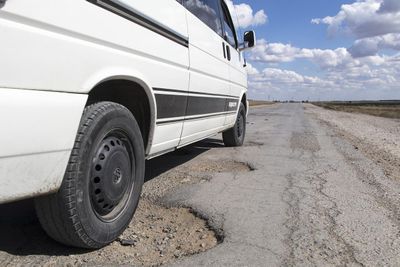
Winnipeg, MB, June 3, 2021 – The votes have been tabulated and the CAA Manitoba Worst Road for 2021 is Taylor Avenue in Winnipeg, making it’s debut on the Top 10 list due to potholes and crumbling infrastructure. Taking the second spot is Provincial Road 307 and another debut in third spot is Provincial Road 250. “Everyone is affected by the quality of our roadways. Potholes and crumbling pavement continue to be the most critical issue identified by Manitoba motorists, followed by traffic congestion, ” says Heather Mack, government and community relations manager, CAA Manitoba. “Cyclists and pedestrians accounted for 10% of the votes and pointed to potholes, poor cycling infrastructure, and sidewalk obstructions as top concerns.” This year’s top 10 list had a significant turnover with more provincial highways topping the list and Winnipeg streets falling off the list due to the City of Winnipeg significantly investing in road renewal since 2015. There were nearly 3000 votes cast in the 2021 CAA Manitoba Worst Roads campaign. A total of 421 roads were nominated spanning 55 municipalities across Manitoba. The CAA Worst Roads campaign is a platform for Manitobans to make roads safer by helping municipal and provincial governments understand what roadway improvements are important to citizens, and where they need to be made. For the full list of the 2021 Worst Roads, please visit caaworstroads.com. The top 10 CAA Worst Roads in Manitoba this year are: Taylor Avenue, Winnipeg Provincial Road 307 Provincial Road 250 Provincial Road 450 Trunk Highway 34 Saskatchewan Avenue, Winnipeg St. James Street, Winnipeg Sherwin Road, Winnipeg Waller Ave, Winnipeg Empress Street, Winnipeg
MEDIA RELEASE: Less than one week left to vote for Manitoba’s Worst Roads
Winnipeg, MB, April 13, 2021 – With just about a week left for Manitobans to vote in the annual CAA Worst Roads campaign, CAA Manitoba continues to call on motorists, cyclists, transit users and pedestrians to nominate their worst road. “This campaign gives Manitobans a voice. By voting for your worst road, you are effecting change and letting governments know what matters to you and your community,” says Heather Mack, government and community relations manager, CAA Manitoba. Interest in the CAA Worst Roads campaign has been strong again this year. Contenders for the provincial top 10 list reflect a number of communities all across Manitoba. Once voting closes, CAA will compile a list of the top 10 worst roads in Manitoba. Collectively, the campaign results will help to shine a light on the state of roads in communities across the province. Nominations for CAA’s Worst Roads can be cast at caaworstroads.com until April 18, 2021

MEDIA RELEASE: Manitobans can drive change by voting for Worst Roads in province
WINNIPEG, March 23, 2021 – Following a one-year hiatus due to the pandemic, CAA’s Worst Roads campaign is back and ready to give Manitobans their say on the province’s road conditions. For 9 years, CAA Manitoba’s annual Worst Roads campaign has influenced change by giving road users the unique opportunity to highlight what roadway improvements are top of mind and where they need to be prioritized by various levels of government. As Manitobans use the roads each and every day to reach their destinations, maintaining the quality of our roads is important in keeping essential workers, goods and services flowing and our communities safe. “Nobody enjoys a bumpy commute or getting stuck in traffic. Whether you are a driver, a cyclist or a pedestrian—these road conditions affect everyone,” says Heather Mack, government and community relations manager for CAA Manitoba. “Now is your chance to take action and help decision-makers understand what challenges you are facing on Manitoba roads.” Crumbling pavement and potholes continue to be the most critical concerns identified by motorists, followed by traffic congestion. Other common issues also include poor road signage and limited or non-existent cycling or walking infrastructure. “As people are encouraged to stay home and telework during the pandemic, we should take advantage of lighter traffic patterns as an opportunity for road repair,” adds Mack. CAA Manitoba continues to advocate longer-term, dedicated infrastructure funding which helps municipalities prepare, plan, budget and execute on repair backlogs and capital projects. These investments aim to reduce the wear and tear on Manitoba’s infrastructure and taxpayer expenses paving the way for safer travels and a healthy economy. Past success stories from this campaign include the new Empress Overpass constructed after taking the list’s top spot in 2018 and 2019, and the reconstruction of Victoria Ave., in Brandon, MB, which is now one of the most improved roads after taking the list’s top spot in 2013. CAA Manitoba is calling on drivers, cyclists, transit users and pedestrians to voice their concerns and participate in this campaign dedicated to improving the province’s roads. Nominations for CAA’s Worst Roads are open today and can be cast at caaworstroads.com until April 18, 2021. To encourage participants to act on their concerns, they will be entered into a grand prize draw to win a $100 CAD gas certificate, an Evercraft® Pressure Washer, a CAA Deluxe emergency car kit, three (3) piece Atlantic luggage set, a NAPA® car detailing kit and a CAA branded water bottle. Once voting closes, CAA will compile a list of the 10 worst roads in Manitoba. CAA Manitoba will present the list of 2021 Worst Roads to local and provincial officials to help inform future funding and planning decisions.

MEDIA RELEASE: Stay Alert Stay Safe: Daylight saving time ends soon
Winnipeg, MB, October 29, 2020 – CAA Manitoba (CAA MB) is reminding all motorists and pedestrians to stay alert as we turn our clocks back this weekend. Daylight saving time ends at 2 a.m. on Sunday, November 1. The return to standard time means fewer daylight hours and reduced visibility for all road users. “Road safety and pedestrian safety are a shared responsibility. Taking precautions and being aware of other road users helps us all arrive at our destinations safely,” says Heather Mack, manager of government and community relations, CAA MB. As we are navigate our new normal, working and commuting during a pandemic, we are facing additional obstructions this year. Physical distancing means pedestrians may step out onto the road to keep their distance from others or take longer to cross at intersections. It is important now more than ever to remind road users to follow the rules of the road, and be patient. What motorists can do to stay safe: Be alert to pedestrians stepping out onto the road. Physical distancing on sidewalks means pedestrians may step out onto the road at any given moment. Always look for pedestrians crossing the road. Be attentive while driving and yield to pedestrians at crosswalks, school crossings and crossovers. Mind your blind spots. Be aware of blind spots when making turns at intersections. Stay focused and vigilant behind the wheel. Avoid distractions inside and outside of your vehicle. Slow down in school zones. Reduce your speed and obey speed limits in school zones and residential neighbourhoods. Prepare for the unexpected. Residential streets and school zones have different types of obstacles, such as children playing outdoors, riding bikes, skateboarding, etc. Be cautious and considerate. Be alert around stopped transit vehicles and be courteous to pedestrians with different mobility needs that may require more time. Use your lights. Motorists should use their full lighting system at when it gets dark and in low visibility situations. What pedestrians can do to stay safe: Be careful when physical distancing on the sidewalk. Try to avoid stepping out onto road and if you end up stepping on the road, ensure there are no vehicles in the lane. Always be aware of your surroundings. Avoid distractions and be alert while crossing the street. Follow the flow. Follow signals and cross at designated locations or crosswalks. Stop, look, and listen. Ensure all traffic has come to a complete stop before crossing the road. Keep an eye out. Make eye contact with motorists—never assume that drivers can see you or know your intentions. Be visible. Pedestrians should wear bright or reflective clothing or accessories at night to help with visibility. CAA MB are providing FREE “Slow Down Please” lawn signs to anyone living in Winnipeg. When well-placed, these signs aim to make roads safer for children and those living in the community. Remember to check local bylaws before installing signs on private property. Anyone can pick up a maximum of two signs at any CAA Store, while quantities last.

Winnipeg, MB, September 3, 2020 – COVID-19 has changed the way we do many things and, the return to school is no different. Many Manitoba students are heading back to school next week and CAA Manitoba (CAA MB) is reminding everyone to slow down and take extra caution while travelling through school zones. Pedestrian safety begins with drivers, and this year more than ever, it’s important to put away distractions such as phones and be extra attentive in school zones, be it a parent driving or a child walking or biking to school. “As students prepare to reunite with friends and classmates after a six-month hiatus, many might forget to take the extra precautions needed to stay safe. This means there is an even bigger responsibility to watch for children travelling to and from school,” says Heather Mack, manager of government and community relations for CAA MB. Drivers can also use the following CAA tips to ensure they are staying safe in school zones: Make eye contact with children: With the excitement of back to school, anticipate that children may not easily see or hear your moving vehicle. Make eye contact with passing pedestrians and cyclists. Reduce traffic by walking: Incorporate a short walk into your commute to school. CAA encourages parents to park a block away and walk to school, if possible, to reduce congestion and make school zones safer. Slow down: Know the speed limit in your neighbourhood’s school zones and respect them. Watch for more school buses: Always stop for the buses’ flashing lights and wait for children to get safely on or off. Stay alert and watch for children or parents crossing the road when the bus moves on. Choose a safe spot to drop off and pick up your children from school: Follow your school’s rules and don’t park illegally, it can put your child’s safety at risk. Instead, use the designated drop off areas or consider a spot a bit farther away from school that is easily accessible and safe. The above tips are crucial in maintaining a safe school zone. According to CAA poll, nearly 25 per cent of drivers reported witnessing a near miss or collision in a school zone, more than half of which involved a child. The poll also revealed 70 per cent of Canadians said they have witnessed someone speeding in a school zone. CAA supports safety in school zones through the CAA School Safety Patrol® program. The program was developed to protect, educate and empower elementary school children on safe road-crossing practices.

MEDIA RELEASE: CAA Manitoba Launches Summer Food Drive for Families in Need during COVID-19
Winnipeg, MB, July 14, 2020 – CAA Manitoba is launching the summer edition of ‘Tin for the Bin’, a store-wide food drive to help stock the shelves at local food banks throughout the province. From now until August 8, CAA Manitoba is encouraging Members and non-Members to visit any of the four CAA Manitoba stores to drop off canned goods and other non-perishable food donations. Each person who makes a donation will receive a coupon for 15 per cent off of a $30 purchase in store. “At CAA Manitoba, we continue to find ways to give back to the community during these unprecedented times,” says Heather Mack, manager, government and community relations, CAA Manitoba. “We are counting on the support of the community to make this summer food drive a success so that we can ensure every family has food on the table as we know the need is great right now during COVID-19.” Collected food will be donated to Winnipeg Harvest which helps nearly 64,000 Manitobans each month and Samaritan House in Brandon, which provides food hampers once every two weeks to individuals and families in need. Food can be dropped off at any of the following CAA Store locations: 870 Empress Street, Winnipeg 1555 Regent Ave W., Kildonan Place, Winnipeg 501 St. Anne's Road, Winnipeg Unit C, 305 18th Street N., Brandon For more information visit: https://shop.caamanitoba.com/pages/bin-bdn https://shop.caamanitoba.com/pages/bin-wpg