
Experts Matter. Find Yours.
Connect for media, speaking, professional opportunities & more.

As holiday shopping season nears, UF experts warn retail theft is growing more sophisticated
With the busiest shopping season of the year approaching, new findings from the National Retail Federation’s Impact of Retail Theft and Violence 2025 report — developed by the University of Florida’s SaferPlaces Lab and the Loss Prevention Research Council — show retailers are facing increasingly complex and technology-driven threats. UF researchers say early preparation, better data and stronger collaboration will be essential as stores brace for heavier foot traffic and heightened safety risks. Despite public reports that retail theft is decreasing, Read Hayes, Ph.D., a UF research scientist and director of the LPRC at UF Innovate, said retailer surveys tell a different story: Incidents of shoplifting, organized retail crime, online fraud and other external theft continue to rise, even as some law enforcement statistics appear flat or declining. The gap, he said, reflects how much crime goes unreported or unrecorded. “Retailers have always had a difficult time reporting much of their crime, and if you look only at police data, like calls for service or arrests, it can look like retail crime is flat or even slightly down,” he said. “But when we survey retailers, who are the actual crime victims, they consistently report year-over-year increases in theft and violence.” Criminal groups are also becoming more sophisticated. Hayes said offenders are increasingly using technology to defeat protective systems, disrupt cameras and identify vulnerable stores. They also rely heavily on social media platforms such as TikTok and Reddit to coordinate attacks and share tactics. “It’s a little disconcerting how much criminals rely on social media now to scout stores, map out easy targets, learn from each other or just plain brag about how they did it,” he said. LPRC scientists monitor social media signals to help retailers and law enforcement understand emerging threats — not in real time, Hayes said, but to help build best practices organizations can use to defend themselves. Criminals continue to focus on high-demand items such as branded apparel and footwear, prompting retailers to rethink how those products are displayed and secured. Hayes said many companies are testing new approaches to better protect vulnerable merchandise without driving customers away. One example is automated self-service systems for locked items, where customers can retrieve a product by having a code sent to their phone without waiting for a store employee. Safety remains retailers’ top concern, Hayes said. LPRC’s latest report, developed in collaboration with the security technology company Verkada, found that frontline retail workers report feeling less safe than ever, a trend that typically intensifies during the holiday rush. Rising incidents of in-store violence, limited law enforcement support in some areas and increased guest-related confrontations are pushing retailers to reassess how they protect both employees and customers. “Nothing is more important than protecting the frontline retail associates who keep this industry running,” Hayes said. “This report helps reinforce what retailers need to do to ensure those workers feel safe.” LPRC teams are also studying ways to improve safety beyond store walls, testing parking lot technologies, including license plate readers and flashing deterrent systems designed to discourage potential offenders and reassure law-abiding shoppers. At the federal level, Hayes said he and partners across the country are urging Congress to pass a bill to address organized retail crime and establish a centralized platform for reporting retail theft threats. As the holiday season approaches, Hayes said the need for evidence-based solutions has never been clearer. “Retailers are under pressure to keep their stores safe, welcoming and competitive,” Hayes said. “The more we can understand offender behavior, customer expectations and emerging technologies, the better we can help retailers, communities and law enforcement reduce harm.” The LPRC, headquartered at UF Innovate, brings together more than 200 major retailers, technology companies and public safety agencies to conduct research that strengthens store safety, reduces loss and enhances the customer experience.



LSU Expert Available: Lowest Gas Prices in Years
Greg Upton, an LSU expert in energy economics, is available for media interviews on why gas prices have fallen to their lowest levels in years.



School’s Out, Screens Are In: Why Your Kids Copy Your Phone Habits on Winter Break
When the bell rings for winter break, most parents worry their kids will “disappear into their phones.” What often goes unmentioned? The adults usually disappear into theirs first. New behavioral data from Offline.now, the digital wellness platform founded by author Eli Singer, shows we now spend about 10 of our 16 waking hours on screens, roughly 63% of our day. Kids off school are simply mirroring the digital norms they see at home. Executive Function Coach and child development specialist Craig Selinger says winter break is less a test of kids’ willpower and more a test of family norms: “If you want behavior change in kids, start with the parent model. A 12-year-old will not put their phone away at dinner if their parents won’t.” Selinger points to what he calls the “mobility problem”: what used to be a TV in the living room is now a device in your child’s pocket. “Mobility makes tech sticky - there’s no natural ‘show’s over’ when Minecraft and TikTok never end.” Offline.now’s experts note that high, especially late screen use is tied to disrupted sleep and next-day behavior in children and teens, exactly when parents say, “They’re monsters over break.” Selinger’s work with families suggests the answer isn’t banning devices outright, but changing what kids see adults do with theirs. When parents put phones in a basket at meals, leave devices out of bedrooms, and actually join “old school” activities: cooking, board games, hands-on hobbies, kids’ attention and confidence start to rebound: “Micro-independence beats micromanagement. If you engineer small wins off-screen - a 20-minute task kids can complete without their phone - you rebuild their real-world confidence one brick at a time.” Key message for journalists: Over winter break, the real story isn’t just “kids are on their phones all day.” It’s that adult behavior quietly sets the ceiling on what’s realistic for children. The most effective “screen-time rule” is the one parents are willing to follow themselves. Featured Expert Craig Selinger, M.S., CCC-SLP - Executive Function Coach and child development specialist (Brooklyn Letters), focused on how kids actually learn and how digital dependency affects attention, writing, family systems, and school success. Expert interview availability can be arranged through Offline.now’s media team.


Confused About the Economy? We can Help!
In a recent piece on CNN ... eyebrows were raised about the state of America's economy. The article describes a growing disconnect in the U.S. economy: strong growth and rising corporate productivity driven by artificial intelligence, but weak job creation. Companies are investing heavily in AI and automation, which allows them to increase output without hiring more workers — especially in roles involving routine or administrative tasks. This dynamic has produced what economists call a “jobless boom”: profits and productivity rise, while new jobs lag behind. The Federal Reserve is increasingly concerned because this trend creates risks for both workers and the broader economy. Lower-skilled and entry-level workers face displacement, wage inequality may widen, and traditional unemployment metrics may understate how difficult it has become for people to re-enter the job market. Policymakers now face a harder balancing act as AI reshapes labor demand, raising questions about retraining, social supports, and how to manage an economy where growth no longer guarantees broad-based job creation. If you're confused - don't feel bad. In fact, if you're a journalist covering this topic - let us help. Dr. Jared Pincin is a nationally respected expert on economic issues facing the United States of America. He's available to speak with media - simply click on his icon now to arrange an interview today.


RPI to Host Holiday Concert and Troy Victorian Stroll Kickoff December 6
RPI President Martin A. Schmidt ’81, and his wife, Lyn, invite the Capital Region to join them for the RPI Holiday Concert and Troy Victorian Stroll Kickoff, which will take place on Saturday, December 6, at 7 p.m. in the Concert Hall of the Curtis R. Priem Experimental Media and Performing Arts Center (EMPAC) on RPI’s campus. This event is free and open to the public, and a reception with refreshments will follow. The concert, titled “Light in Winter,” will include performances from the RPI Wind Symphony, Concert Choir, and Orchestra, all under the direction of Robert Whalen, RPI lecturer in music and conducting. For the second year in a row, the concert will also serve as the kickoff for the 43rd annual Troy Victorian Stroll, made possible through RPI’s partnership with the Rensselaer County Regional Chamber of Commerce. “This concert is a wonderful opportunity for our students, who work so hard all year, to share their passion for music and create something meaningful for the entire community,” said Whalen. The program, following a “Light in Winter” theme, celebrates the various ways we bring light and joy to the darker winter season. “There is a common connection across cultures of lighting up the darkness in the late fall and winter, said Whalen. “Consider Diwali, Hannukah, Christmas, Alban Arthan, and others. Music and the arts, as well as education, each represent a way of sharing our inner creative light to illuminate the darkness.” During the concert, students will perform music by Smetana, Tchaikovsky, Gershwin, Lauridsen, and Saint-Saens, all following the “Light in Winter” theme. The program will feature two winners of the 2025 RPI Concerto Competition, Reese Bush '27 in Saint-Saens' "Introduction and Rondo capriccioso" for Violin and Orchestra, and Avery Roach '25 singing Gershwin's gorgeous and evocative "Summertime". Performers across the three groups represent 160 students from 34 different majors and all 5 schools, a reminder of just how curious and well-rounded RPI students are, and that art and science don’t just coexist, they actually enhance each other. The opportunity to continue growing as a musician while pursuing an engineering degree is something that connects many of us and inspires the music we create,” said Bush. “We’re excited to share our hard work and passion with the community.” The Holiday Concert is an annual tradition that celebrates peace and unity, the creativity and hard work of RPI students, and the confluence of science, engineering, and art. Combining the concert with the Troy Victorian Stroll has been a great opportunity for RPI to partner with its home city and further engage with the community. RSVP here: Media are welcome to attend.

Trump’s Threat is His Destruction of the Republican Party
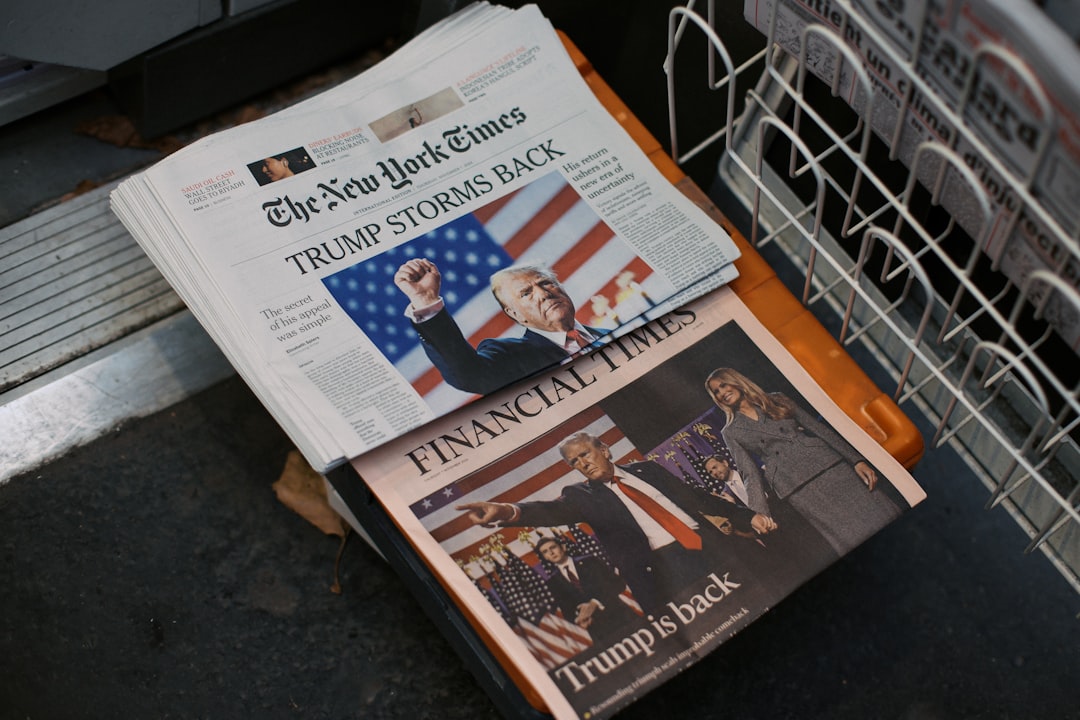
In All the King’s Men, Robert Penn Warren describes Willie Stark’s final victory. “And there wasn’t any Democratic party. There was just Willie, with his hair in his eyes and his shirt sticking to his stomach with sweat. And he had a meat ax in his hand and was screaming for blood.” Warren’s description is darkly poetic and metaphorical. Stark, the populist governor of a fictional state, did not murder his rivals, but he did destroy them, along with the political party he rode to power. Like Stark, Donald Trump has carved up the Republican Party of old, and in its place, there is just Trump. This is not the first time a politician has remade a political party, but the death of the G.O.P. threatens to unbalance our political system. We are defined by close elections, tight legislative majorities, and polarized preferences. Neither side in the cultural conflict can achieve core objectives, so the temptation to put more hope and power into the Executive, to skew the system, is mounting. We can argue about the degree to which past Republicans were truly restrained, especially in government spending, but at least the G.O.P. used to advocate for two seatbelts to keep the body politic safe from accidents: character to govern the self and constitutionalism to limit what government can do to others. As the G.O.P. grew to rival Democratic power, in the 1980s and 1990s, the New Deal coalition fractured, along with the assumption that simply more power, expertly applied, could solve our problems. Democrat Bill Clinton conceded “the era of big government is over.” Justice Elena Kagan recognized, “we’re all textualists now.” The tug of war between an evolving progressivism and a robust conservatism may not have made for an ideal way to solve problems, but it did encourage humility, born of the recognition that radical actions, even if successful, would be punished. Dr. Mark Caleb Smith serves as Professor of Political Science and the Director of the Center for Political Studies at Cedarville University. He teaches courses in American Politics, Constitutional Law, and Research Methodology/Data Analysis. His primary research interest is in the field of religion and American politics. View his profile Those days are over. Donald Trump’s Republicans are no longer a restraint of any kind. The seatbelts of the past have been snipped by the same leaders who claimed to buckle them in place. The Epstein Files are the exception of congressional pushback that proves the rule of the party’s degradation. But what of the appointment of unqualified and incompetent leaders in the F.B.I., H.H.S., Homeland Security, and the Department of Defense? Illegal and extra-judicial killings in the Caribbean? An unexplained and unauthorized military buildup in the same region? Shakedowns of universities and media outlets? Crypto corruption? Tariffs? Strong-arming law firms and firing career civil servants for seeking justice in our courts? The Republican response has mostly been crickets. There is no longer a major party that pretends to restrain the president through the law out of principle. The real disagreement between Trump Republicans and Biden Democrats is not about should the president abuse his power, but how. Unless something dramatic happens, the politics of the meat ax will come for us all. Mark is available to speak with the media regarding the state of politics in America. Simply click on his icon now to arrange an interview.


New AI model predicts harmful videos before they go viral
Certain short-form videos on major social media platforms can trigger suicidal thoughts among vulnerable viewers, according to new research led by the University of Delaware's Jiaheng Xie. His team developed an AI model that can predict and flag these videos. In the study, published Nov. 17 in Information Systems Research, UD professor Jiaheng Xie and his co-authors showed how AI can assist with safety by predicting high-risk videos before they go viral by looking through both the content and what people write in the comments. • Distinguish what creators choose to post from what viewers think or feel after watching. • Separate known medical risk factors from emerging social media trends, such as viral heartbreak clips or challenges that may influence teens. • This system is especially novel because it predicts the high-risk videos before they reach large audiences. Xie is available for a Zoom interview to share how the model was developed and how it could potentially change the way platforms such as TikTok moderate.


New findings from a recent survey conducted by CAA Manitoba (CAA MB) highlight a concerning trend: substance use, particularly cannabis, is on the rise both recreationally and behind the wheel. “Cannabis is more accessible than ever, and that means more Manitobans are not only choosing to drive after consuming it but are also getting behind the wheel soon after and expressing increased confidence in their ability to do so,” says Ewald Friesen, manager, government & community relations for CAA Manitoba. The data shows that 24 per cent of drivers admitted to consuming cannabis before driving, which is up six per cent from last year, while ten per cent of Manitobans reported driving after consuming cannabis in the past few months, a three per cent increase from 2024. Among cannabis-impaired drivers, most (63 per cent) say they drove within three hours of consumption, which is up 10 per cent from last year. Over a third of cannabis-impaired drivers acknowledged feeling high while driving. In addition to the survey conducted by CAA MB, a recent study with funding support from CAA, conducted by the University of Saskatchewan, examined 50 drivers aged 19 to 30 to assess how consuming edible cannabis influences collision risk. This age group of young drivers, identified as having the highest crash rates and a greater tendency toward risky driving behaviour, offers new insights into the impact of cannabis on driving. Drivers often have a false sense of confidence when driving high. This study examined how consuming edible cannabis affects collision risk. Findings indicate that critical driving skills, including reaction time, lane discipline, and speed control, were impaired even shortly after consumption. Contrary to popular belief that cannabis edibles take hours to take effect, this study shows that impairment is evident 90 minutes after consumption. When asked if they felt safe to drive after consuming edibles, only four per cent felt safe getting behind the wheel 90 minutes after eating an edible cannabis product. What is interesting about this is that in a controlled environment, young drivers feel unsafe driving under the influence of cannabis. However, the study conducted by CAA MB shows that drivers often have a false sense of confidence when they have driven high in the past. “This study marks an important first step in understanding how cannabis edibles impact driving performance,” adds says Friesen. “Too often, decisions about whether someone is fit to drive are made in the moment, relying on judgment rather than evidence. Cannabis impairment studies like this are essential. Each one brings new learnings that help us refine our approach and ensure that safety is never left to chance.” According to CAA Manitoba’s data, more drivers have reported feeling confident in their driving ability (77 per cent), which is up ten per cent from 2024. More drivers this year (33 per cent) also say that they are unsure about how much cannabis is needed for effects to kick in, up six per cent from 2024. Alarmingly enough, more than half of Manitobans are unaware that the penalties associated with driving under the influence of alcohol, drugs, or a combination of substances are the same. “Drivers may face enhanced roadside sanctions, including an administrative penalty of $700, vehicle impoundment, mandatory Ignition Interlock participation for one year, an impaired driver assessment and movement of 10 levels down the Driver Safety Rating scale,” says Friesen. “Depending on the severity of convictions, impaired drivers may be charged further under the Criminal Code of Canada.” This holiday season, CAA Manitoba is asking that those who do consume cannabis, alcohol or other drugs to plan ahead by making alternate arrangements, such as a designated driver or using a rideshare service, to get home safely. Methodology CAA MB The online survey was conducted by DIG Insights from June 27 to July 14, 2025, with 514 Manitoba drivers aged 19 and older. Based on the sample size of n=514 and with a confidence level of 95 per cent, the margin of error for this research is +/- 3%.) Methodology of University of Saskatchewan study The study collected extensive data from 50 young adult drivers (aged 19–30), resulting in 250 assessments across multiple realistic driving scenarios using a simulator after consuming a 10mg THC edible.



MEDIA RELEASE: New CAA Study Sheds Light on Edible Cannabis and Collision Risk Among Young Drivers
A recent study with funding support from CAA, conducted by the University of Saskatchewan, examined 50 drivers aged 19 to 30 to assess how consuming edible cannabis influences collision risk among young drivers. This demographic, which is known for having a higher tendency to engage in risky driving behaviour, currently holds the highest crash rates nationwide. “This study marks an important first step in understanding how cannabis edibles impact driving performance,” says Michael Stewart, Community Relations Consultant for CAA South Central Ontario. “Too often, decisions about whether someone is fit to drive are made in the moment, relying on judgment rather than evidence. Cannabis impairment studies like this are essential. Each one brings new learnings that help us refine our approach and ensure that safety is never left to chance.” The findings indicate that critical driving skills, including reaction time, lane discipline, and speed control, were impaired. Consumption times may vary to feel the effects of edible cannabis from driver to driver. However, the study found that impairment was most evident at 90 minutes after consumption, so its effects may not be noticeable until a motorist is already behind the wheel. When asked if they felt safe to drive after consuming edibles, only four per cent felt safe getting behind the wheel 90 minutes after eating an edible cannabis product. What is interesting about this is that in a controlled environment, young drivers feel unsafe driving under the influence of cannabis. However, a recent survey of 1,510 Ontario drivers from CAA SCO shows that drivers often have a false sense of confidence when they have driven high in the past. The perception of safety doesn’t match reality The survey found that the number of people admitting to cannabis-impaired driving in Ontario (nearly 20 per cent) has remained stable compared to last year. However, a concerning trend has emerged, with more cannabis-impaired drivers (78 per cent) saying they are confident in their driving abilities while under the influence – a 13 per cent overall increase from 2021. Why is this concerning? The perception of safety doesn’t match reality. More than a third of cannabis-impaired drivers acknowledged feeling high while driving, relying on their personal judgment for signs of impairment, such as drowsiness, slowed reaction time, or brain fog. “This misplaced confidence can lead to dangerous decisions, increasing the risk of collisions and endangering road users,” adds Stewart. “We must recognize that getting behind the wheel is not just a personal choice it’s a responsibility that affects the safety of everyone on our roads.” Growing issue of poly-use The research also points to a growing issue of poly-use, or the consumption of multiple substances and is on the rise. This trend adds another layer of complexity to road safety efforts, as the combined effects of different substances can further impair judgment and reaction times. Most respondents (57 per cent) say they consume cannabis in combination with other substances – most commonly, alcohol. However, painkillers, psilocybin, ecstasy, and MDMA are on the rise. CAA SCO continues to advocate for safer roads by encouraging motorists to make responsible choices. The message is clear: do not get behind the wheel when impaired. “While we’re all aware that alcohol-impaired driving can be dangerous, we should also take the same attitude towards cannabis-impaired driving,” says Stewart. “With the holiday season coming up, cannabis can be consumed legally and responsibly but should never be used when driving.” CAA is asking that those who do consume cannabis, alcohol or other drugs to plan ahead by making alternate arrangements, such as a designated driver or using a rideshare service, to get home safely this holiday season. Methodology The online survey was conducted by DIG Insights from June 27 to July 14, 2025, with 1,510 Ontario drivers aged 19 and older. Based on the sample size of n=1,510 and with a confidence level of 95 per cent, the margin of error for this research is +/- 2%.) Methodology of the University of Saskatchewan study The study collected extensive data from 50 young adult drivers (aged 19–30), resulting in 250 assessments across multiple realistic driving scenarios using a simulator after consuming a 10mg THC edible.


Georgia Southern faculty featured on prestigious top 2% of scientists list
Twelve outstanding active faculty members from Georgia Southern University were featured on Stanford and Elsevier’s 2025 list of the top 2% of scientists in the world. This annual list features scientists whose work has had the highest citation count and citation impact in their fields within a given year. This year’s Georgia Southern honorees represent a diverse range of disciplines, from physics and chemistry to epidemiology and business. Ten of the 12 faculty members were also featured on last year’s list. Vice President for Research and Economic Development David Weindorf, Ph.D, P.G., is among them and takes pride in seeing so many familiar names, and a couple of new ones, included. “Seeing names from so many different disciplines, both old and new, speaks volumes about our growth and consistency,” said Weindorf. “I’m so thankful for these faculty who relentlessly pursue excellence and truly embody growing ourselves to grow others in research.” Check out who made the list from Georgia Southern by clicking on the attached media release below: Looking to know more about Georgia Southern University and it's nationally recognized faculty — simply contact Georgia Southern's Director of Communications Jennifer Wise at jwise@georgiasouthern.edu to arrange an interview today.
