
Experts Matter. Find Yours.
Connect for media, speaking, professional opportunities & more.

Republicans are facing a political dilemma: Embrace former President Donald Trump and enjoy full party support, however, expect to lose favor with "never Trumpers" and moderate voters. Or … reject Trump to appeal to voters but face the sling, arrows and potential primary challenges of a vengeful Trump base. It seems like a lose/lose situation for the GOP, and it has been the topic of much conversation and media coverage. In Virginia, the stakes are high politically and The Washington Post recently spoke with UMW’s Stephen Farnsworth about this very situation. Virginia Republicans who oppose or criticize Trump are being shunned or sidelined within the party, said Stephen Farnsworth, a political science professor at the University of Mary Washington, while those who embrace him struggle to win statewide elections or suburban swing districts. The next test in Virginia will come this fall, when GOP gubernatorial nominee Glenn Youngkin, who embraced Trump and won the former president’s endorsement, will compete against the winner of the June 8 Democratic primary. “At the moment, these three former members of Congress are more like voices crying in a Republican wilderness,” Farnsworth said. “Will the party come around to their way of thinking? I think a lot depends on the success or failure of Republican candidates who are all in in their support of former president Trump. If Republicans get swept again in statewide elections, the arguments offered by Riggleman and Comstock and Rigell may make more sense to some of the die-hard activists.” May 22 – Washington Post There’s never a dull day inside or outside of party politics in America. And with mid-terms on the horizon and high expectations for 2024, the moves Republicans make with or without Trump could carry high consequences. And if you are a journalist following these developments within the Republican Party in Virginia or throughout the country, then let us help. Dr. Stephen Farnsworth is a sought-after political commentator on presidential politics. He has been widely featured in national media, including The Washington Post, Reuters, The Chicago Tribune and MSNBC. Dr. Farnsworth is available to speak with media any time. Simply click on his icon to arrange an interview today.


MEDIA RELEASE: Victoria Road in Prince Edward County voted Ontario’s Worst Road.
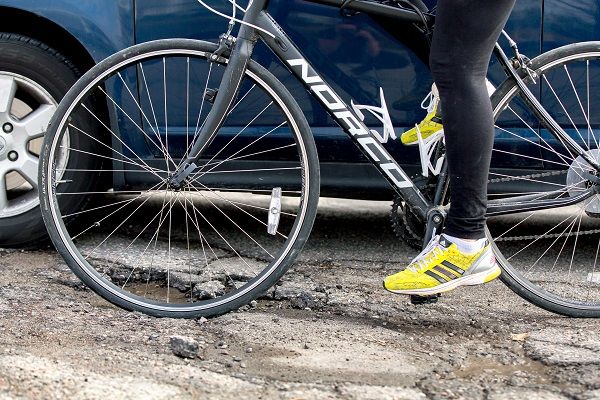
The votes are in and the CAA Worst Road for 2021 is Victoria Road in Prince Edward County. Making its debut on the Ontario top 10 list, voters cited potholes and crumbling pavement as the main concerns for the Prince Edward County road. Taking the second and third place spots are Carling Avenue in Ottawa and Barton Street East in Hamilton, respectively. “The quality of our roadways affect everyone,” says Tina Wong, government relations specialist for CAA South Central Ontario. “Our roads are the arteries used every day to keep essential workers, goods and services flowing. They should be maintained now more than ever.” Two notable changes in this year’s list include Riverdale Drive in Washago coming off the provincial top 10 list and Toronto’s Eglinton Ave East dropping from first to fifth place. “As people continue working from home and traveling locally during the pandemic, we are seeing different roads appear on the list. We should continue taking advantage of these lighter traffic patterns as an opportunity for necessary road repairs,” adds Wong. In Ontario, 117 municipalities saw roads in their communities nominated. Drivers accounted for a majority of the votes being cast, with cyclists and pedestrians accounting for about a quarter of the votes. Voters shared their primary reasons for selecting a road, with 81 per cent citing potholes or crumbling pavement, followed by traffic congestion (11 per cent) and no or poor walking infrastructure (7 per cent). Ontario’s top 10 list is verified by the Ontario Road Builders’ Association (ORBA). “We are very pleased to partner with CAA on the 2021 Worst Roads Campaign. ORBA provides analysis on the nominated roads, sheds light on why they were chosen and what issues are impacting them. Increased investment in our transportation infrastructure is vital in order to effectively maintain existing assets and plan for the future.” - Doubra Ambaiowei, Technical Director, Ontario Road Builders’ Association. Ontario’s Top 10 Worst Roads for 2021 Victoria Road, Prince Edward County Carling Avenue, Ottawa Barton Street East, Hamilton County Road 49, Prince Edward County Eglinton Avenue East, Toronto Hunt Club Road, Ottawa Eglinton Avenue West, Toronto Innes Road, Ottawa Algonquin Boulevard West, Timmins Queen Street, Kingston Worst Roads by Region Central— Bell Farm Road, Barrie Eastern— Victoria Road, Prince Edward County Halton-Peel-York-Durham— Speers Roads, Oakville Niagara— Whirlpool Road, Niagara Falls North— Algonquin Boulevard West, Timmins South West— Plank Road, Sarnia Western— York Road, Guelph The CAA Worst Roads campaign is a platform for Ontarians to make roads safer by helping municipal and provincial governments understand what roadway improvements are important to citizens and where they need to be made. Votes submitted to the CAA Worst Roads campaign are compiled and released as an annual provincial top 10 list along with a series on regional lists, all designed to spark a dialogue with governments and to help pave the way for safer roads across Ontario. For the full list of the 2021 Worst Roads, please visit www.caasco.com/worstroads


Climate Change-Related Natural Disasters Impact Short-Lived Assets and Interest Rates
For decades, scientists across the globe have warned about the effects of climate change. Given that these changes—global warming, rising sea levels—happen over time and that their disastrous results may not be obvious for decades, studying the effects of climate change on financial markets has posed a problem. According to Christoph Herpfer, assistant professor of finance, Goizueta Business School, most of the existing literature that deals with the effect of climate change on financial markets considers “indefinitely lived assets,” such as owning stock or owning a home—assets that “don’t have an expiration date,” explained Herpfer. To evaluate the effect of climate change in the long run on these assets then requires discount models—ways to value something today based on what it could be worth decades from now. Herpfer, a banking and corporate finance specialist, studies short-lived assets that, on average, expire after 4.5 years. Herpfer wondered if there could be “an alternative channel in which climate change already impacts companies today,” he explained. One that didn’t have to deal with all the “challenges associated with long run discount rates,” he added. In “The rising tide lifts some interest rates: climate change, natural disasters, and loan pricing,” Herpfer and his colleagues—Ricardo Correa, deputy associate director, Board of Governors of the Federal Reserve System, Ai He, assistant professor of finance, University of South Carolina, and Ugur Lel, associate professor, Nalley Distinguished Chair in Finance, University of Georgia, Terry College of Business—consider this question by studying corporate borrowing costs. In 2020, the paper received the best paper award at the Boca Corporate Finance and Governance Conference. The foursome had a novel idea: In recent years, there has been scientific consensus that climate change fuels natural disasters. So Herpfer and his fellow authors wondered if financial institutions took climate change-amplified natural disasters into account when pricing short-term loans. Their answer was, unequivocally, “yes.” Their work and research is captured in a recent article in Emory Business - it's attached and well worth the read. If you're a journalist looking to know more - then let us help. Christoph Herpfer is an assistant professor of finance at Goizueta Business School. He is also a financial economist working at the intersection of banking, law, and accounting. Christoph is available to speak with media about this research - simply click on his icon now to arrange an interview today.


Stress and pressure go hand-in-hand when it comes to college students across America looking to succeed and make the grade. But with the added anxiety of COVID-19 and students forced out of classrooms and lecture halls – the opportunity to cheat is now easier than ever and numbers are trending upwards. UMW’s Professor of Psychological Science David Rettinger, president emeritus of the International Center for Academic Integrity, was recently interviewed about this alarming trend by NBC News and lent his expert opinion on why more students may be making the choice to cheat and what professors and schools can do to make sure everybody stays on the honest path. If you are a journalist looking to cover this subject, then let us help with your stories. Dr. David Rettinger is available to speak with media regarding this issue of cheating and academic integrity. Simply click on his icon now to arrange an interview today.

Weight stigma is a burden around the world – and has negative consequences everywhere
Rebecca Puhl, Professor of Human Development and Family Sciences and Deputy Director, UConn Rudd Center for Food Policy and Obesity, University of Connecticut was recently featured in The Conversation discussing this very important topic. An excerpt of her article is included with the full piece attached. It's an excellent article and well worth the read. Lazy. Unmotivated. No self-discipline. No willpower. These are just a few of the widespread stereotypes ingrained in American society about people who have a higher body weight or larger body size. Known as weight stigma, these attitudes result in many Americans being blamed, teased, bullied, mistreated and discriminated against. There is nowhere to hide from societal weight stigma. Decades of research confirm the presence of weight stigma in workplaces, schools, health care settings, public accommodations and the mass media, as well as in close interpersonal relationships with friends and families. It’s everywhere. I’m a psychologist and researcher at the Rudd Center for Food Policy & Obesity at the University of Connecticut. For 20 years my team has studied weight stigma. We’ve examined the origins and prevalence of weight stigma, its presence across different societal settings, the harm it causes for people’s health and strategies to tackle this problem. We conducted a recent international study that clearly shows that weight stigma is widespread, damaging and difficult to eradicate. This societal devaluation is a real and legitimate experience for people across different countries, languages and cultures. June 01 – The Conversation The issue of weight stigma and shaming is having a devastating impact on all facets of American society – and if you are a reporting looking to cover this topic or to learn more, then let us help. Dr. Rebecca Puhl is Deputy Director for the Rudd Center for Food Policy & Obesity and Professor in the Department of Human Development and Family Sciences at UConn. She is responsible for identifying and coordinating research and policy efforts aimed at reducing weight bias. Dr. Puhl is available to speak with media regarding this important subject – simply click on her icon now to arrange an interview today.


Laughing through lockdown: why comedy is important in times of crisis
Author: Lucy Rayfield Most of us have needed a good laugh over the last 12 months. Searches on Netflix for horror dipped at the peak of the first lockdown, while stand-up comedy saw a huge jump in viewers. In the world of social media, accounts poking fun at responses to the virus have also gained enormous followings, with accounts like Quentin Quarantino and the Reddit thread CoronavirusMemes surging in popularity in the past year. We’ve spent a significant amount of time joking about Zoom meetings, hand-washing songs, and home haircuts. But what makes us switch so quickly between panicking at death tolls and chuckling at a video sent by a friend? As a scholar who’s spent much of my career studying laughter and comedy, I often come across surprising functions of humour. I’ve studied Italian comedy and its reception in 16th-century France, the political consequences of laughter in the Wars of Religion, and the historical antecedents to today’s main theories of humour. We can help you make informed decisions with our independent journalism. Much of my research has revealed fascinating things about how humour appeals to us in times of hardship. But the pandemic has really amplified the roles that comedy can play and brought home our reliance on humour. Humour in ancient Rome Our need to laugh in the face of disaster is by no means new. In ancient Rome, gladiators would leave humorous graffiti on barrack walls before going to their deaths. The ancient Greeks also sought new ways to laugh at deadly disease. And during the Black Death pandemic in 1348, the Italian Giovanni Boccaccio wrote the Decameron, a collection of often funny tales told by storytellers isolating from the plague. Comedy scene in a Roman mosaic on display in the National Archaeological Museum in Naples, Italy. Azoor Photo/Alamy The need to avoid offence with humour is just as ancient. In 335 BCE, Aristotle advised against laughing at anything painful or destructive. The Roman educator Quintilian also outlined in 95 CE the very fine line between ridere (laughter) and deridere (derision). It’s still generally accepted a common position that humour shouldn’t hurt, and this is particularly true when the object of laughter is already vulnerable. When the boundary between laughter and derision is respected, comedy can play a key role in helping us to recover from disaster, providing benefits which explain our tendency to seek humour in serious situations, especially in terms of enhancing our sense of physical and mental wellbeing. How humour helps during crises Laughter serves as a great workout (laughing 100 times burns as many calories as 15 minutes on an exercise bike), helping to relax our muscles and promote circulation. Combinations of exercise and laughter — such as the increasingly popular “laughter yoga” — can also provide significant benefits to patients with depression. Laughter also decreases stress hormones and increases endorphins. In tough times, when we have thousands of thoughts a day, a bout of giggling provides our brains with respite we desperately need. Home haircuts were the source of a number of jokes during the first lockdown. Rosanne Tackaberr/Alamy In the same way, we seek humour in a crisis because it is difficult to feel scared and amused at the same time, and most often, the combination of these emotions result in feeling thrill and not terror. Sigmund Freud explored this in 1905 when revising the so-called “relief theory”, suggesting that laughter feels good because it purges our system of pent-up energy. Even in the 1400s, clerics argued that mirth was vital for keeping up spirits, explaining that people are like old barrels which explode if they aren’t uncorked from time to time. As levels of loneliness reached a record high during the winter lockdown (in November, one in four UK adults reported feeling lonely), laughter has also been crucial in bringing people together. Not only is it typically a communal activity – some scientists believe that our human ancestors laughed in groups before they could speak – it’s even more contagious than yawning. Given that we’re far more likely to laugh at topics we find personally relatable, humour has helped people to identify with one another during lockdowns. This in turn creates a sense of unity and solidarity, alleviating our sense of disconnectedness. Literature scholar and author Gina Barreca maintains that “laughing together is as close as you can get without touching”. Laughter can also be a means of easing our worries. Joking around a fear, especially during a pandemic, can make it more manageable, a phenomenon known by comedians as “finding the funny”. This is linked to “superiority theory”, the idea that we laugh because we feel superior to something or someone else (for example, it’s funny when someone slips on a banana because we ourselves haven’t). We laugh because we are superior, unthreatened, and in control. In this way, joking about a virus heightens our sense of power over it and relieves anxiety. Joking can also be useful because it enables us to talk about our problems and to express fears we may otherwise find hard to put into words. Though many of us have felt guilty for seeking humour in the pandemic, let’s not add this to our list of worries. Certainly, our situation may not always be a laughing matter. But laughing itself matters, and when used appropriately, it can be one of our most effective coping mechanisms during a crisis, allowing us to find a healthier balance with others, with ourselves, and even with events beyond our control.


Does the road ahead for successful cities mean removing highways?
If hindsight is 20/20, there might be a lot of urban planners from 50s and 60s looking back and regretting how the layout of America’s cities went wrong. A recent New York Times piece featuring UConn’s Dr. Norman Garrick looked at 30 cities across America and how they’re trying to undo the damage from more than a half-century ago. As midcentury highways reach the end of their life spans, cities across the country are having to choose whether to rebuild or reconsider them. And a growing number, like Rochester, are choosing to take them down. In order to accommodate cars and commuters, many cities “basically destroyed themselves,” said Norman Garrick, a professor at the University of Connecticut who studies how transportation projects have reshaped American cities. “Rochester has shown what can be done in terms of reconnecting the city and restoring a sense of place,” he said. “That’s really the underlying goal of highway removal.” The project’s successes and stumbling blocks provide lessons for other cities looking to retire some of their own aging highways. Nearly 30 cities nationwide are currently discussing some form of removal. May 27 - New York Times The concept of urban renewal is front and center and is getting a lot of attention as the government looks to invest in infrastructure and new modern cities. And if you’re a reporter looking to know more about this topic, let us help. Dr. Norman Garrick is professor in the Department of Civil Engineering and co-director of the Sustainable Cities Research Group at the University of Connecticut. He is an expert in the areas of transportation behaviors, parking, public transit, and bicycle lanes. Dr. Garrick is available to speak with media – simply click on his icon now to arrange an interview today.


Baylor Consumerism Expert Shares Five Tips to Make the Most of Your Stimulus Check
With President Joe Biden’s $1.9 trillion American Rescue Plan Act, citizens nationwide received a second round of stimulus checks in the form of $1,400 per person and an additional $1,400 per dependent. The Rescue Plan also brought increased child tax credits and unemployment benefits. James Roberts, Ph.D., The Ben H. Williams Professor of Marketing in the Hankamer School of Business, is an internationally recognized expert on consumerism and the author of “Shiny Objects: Why We Spend Money We Don’t Have in Search of Happiness We Can't Buy.” He said the latest round of stimulus funds offer consumers bright opportunities, but he also cautioned against pitfalls in uncertain times. Roberts said that people should first consider building up their emergency savings funds – a step, he said, more Americans seem to be taking during this time of pandemic and economic fluctuation . “Over the last 20 years or so, Americans have not saved much. However, in the first nine months of the pandemic, the U.S. savings rate increased by a whopping 100 percent. By some estimates we are at a national savings rate that hovers around 20 percent – which is incredible,” Roberts said. Roberts shared a few tips on how to get the best value for your stimulus check and prepare for times ahead: 1. Enhance your savings. Save a portion of your stimulus check for the inevitable rainy days ahead. Start with $1,000 to your short-term emergency fund. If possible, every family should have a $2,500 emergency fund. This provides peace of mind and avoids having to borrow from friends or family, or even worse, max out your credit cards or take out a “payday” loan, which I strongly advised against. 2. Invest in experiences. Given that a lot of Americans have significantly increased their savings and lowered their credit card debt, I say people should splurge a little on something for themselves or their families with the remaining $400. Remember, experiences bring more lasting happiness than buying stuff. Good mental health is critical to our well-being. 3. Start early. Don’t forget that the $1,400 stimulus check is only a small part of the money that may come your way. The child tax credits are a great opportunity to save for your children’s college. The earlier you start saving, the better. This is the beauty of compounding interest. 4. Save while unemployed I suggest any extra boost you might get in your unemployment check be saved for the days ahead. Don’t let money burn a hole in your pocket. 5. Plan ahead. Every family’s goal should be to set aside six months in living expenses so if you do lose your job, it doesn’t put you and your family into an immediate financial death spiral. ABOUT DR. JAMES ROBERTS James Roberts, Ph.D., is The Ben H. Williams Professor of Marketing in Baylor University’s Hankamer School of Business. He is a nationally recognized expert on consumer behavior and has been quoted extensively in the media and has appeared on the CBS Early Show, ABC World News Tonight, ABC Good Morning America, NBC The Today Show, Yahoo.com’s “The Daily Ticker,” and has been quoted and/or featured in The New York Times, The Wall Street Journal, National Public Radio, USA TODAY, TIME, FOX News, The Doctors on CBS, US News & World Report, Cosmopolitan, Glamour, and many other media. His books include “Shiny Objects: Why We Spend Money We Don’t Have in Search of Happiness We Can't Buy” and “Too Much of a Good Thing: Are You Addicted to your Smartphone?” ABOUT BAYLOR UNIVERSITY Baylor University is a private Christian University and a nationally ranked research institution. The University provides a vibrant campus community for more than 19,000 students by blending interdisciplinary research with an international reputation for educational excellence and a faculty commitment to teaching and scholarship. Chartered in 1845 by the Republic of Texas through the efforts of Baptist pioneers, Baylor is the oldest continually operating University in Texas. Located in Waco, Baylor welcomes students from all 50 states and more than 90 countries to study a broad range of degrees among its 12 nationally recognized academic divisions. ABOUT HANKAMER SCHOOL OF BUSINESS AT BAYLOR UNIVERSITY At Baylor University’s Hankamer School of Business, top-ranked programs combine rigorous classroom learning, hands-on experience in the real world, a solid foundation in Christian values and a global outlook. Making up approximately 25 percent of the University’s total enrollment, undergraduate students choose from 16 major areas of study. Graduate students choose from full-time, executive or online MBA or other specialized master’s programs, and Ph.D. programs in Information Systems, Entrepreneurship or Health Services Research. The Business School also has campuses located in Austin and Dallas, Texas. Visit baylor.edu/business.



As the eleven-day war between Palestine and Israel sits on a razor-thin ceasefire, it is hoped that American intervention and influence can deliver support, aid and even a lasting truce between two warring factions. For diplomats, it will be like walking a tight rope in an effort to calm both the Israelis and Palestinians while also ensuring Hamas remains on the sidelines. U.S. Secretary of State Antony Blinken is in the region now, leading the cause. The truce that came into effect Friday has so far held, but it did not address any of the underlying issues in the Israeli-Palestinian conflict, something Blinken acknowledged after meeting with Israeli Prime Minister Benjamin Netanyahu. “We know that to prevent a return to violence, we have to use the space created to address a larger set of underlying issues and challenges. And that begins with tackling the grave humanitarian situation in Gaza and starting to rebuild,” he said. “The United States will work to rally international support around that effort while also making our own significant contributions.” He added that the U.S. would work with its partners “to ensure that Hamas does not benefit from the reconstruction assistance.” Blinken will not be meeting with Hamas, which does not recognize Israel’s right to exist and which Israel and the U.S. consider a terrorist organization. May 25 - Associated Press This will be a long and delicate process and there are a lot of questions to consider: Is it possible to negotiate in Gaza and not include Hamas? With Palestinian President Mahmoud Abbas and Israeli Prime Minister Benjamin Netanyahu both facing a political ousting - can a solution even be found? And what are the issues and is there any negotiating the long-sought after two-state solution? If you’re a journalist looking to cover the ongoing tensions between Israel and Palestine – then let us help with your stories and questions. Professor Ralph Carter is an expert in the areas of international politics, U.S. foreign policy, and Mideast conflicts. Dr. Carter is available to speak with media regarding the ongoing developments between Israel and Palestine – simply click on his icon now to arrange an interview today.


MEDIA RELEASE: CAA reminds motorists and cyclists to share the road ahead of the long weekend.
Ahead of the Victoria Day long weekend and the summer months, cycling is set to once again be a popular activity this year. As Ontarians start to prepare for the upcoming cycling season, CAA South Central Ontario (SCO) is reminding motorists and cyclists to prioritize safety when sharing the road. “After staying indoors all winter, we expect that more people will choose to get back on their bikes as the weather gets warmer,” says Michael Stewart, community relations specialist for CAA SCO. “With more cyclists re-emerging onto the roads, it is important to be vigilant and mindful of other road users.” All motorists and cyclists are also advised to follow public health guidelines, communicate their intentions with signals, be patient, regularly check blind spots and turn on their lights during dawn, dusk and dark hours when lighting is most limited. Another issue that CAA is reminding motorists to watch out for is dooring, which is described as when a cyclist is injured by the opening of a car door. CAA data shows that it continues to be a big safety concern for both cyclists and motorists alike. Last year the Toronto Police Service reported 77 dooring incidents. Recently the Minister of Transportation introduced the Moving Ontarians More Safely Act that proposes to update the collision reporting process. The proposed legislation would also change the definition of a reportable collision to include bicycles that collide with vehicle doors. A change that CAA supports. CAA is reminding all motorists of these important rules of the road: Pay attention. Avoid distractions like texting, adjusting your GPS or scrolling through your playlist. Yield to cyclists. Motorists should not be driving in a bike lane unless making a right turn. Watch for the approaching cyclists and never speed up and cut off a cyclist when making a right turn. Keep a safe distance. Drivers must keep at least a one-metre distance when passing a cyclist. If it is not possible, safely change lanes to pass. The penalty for not doing so is a $110 fine. Practice the Dutch Reach. Avoid “dooring” cyclists by doing the Dutch Reach. CAA launched a new Dutch Reach video for users to practice as more people are out on their bikes. Some cycling-specific safety tips: Ride with traffic. Riding against traffic flow is dangerous, illegal and a leading cause of car-bike collisions. Protect yourself. Cyclists, wear your helmets. Be visible. Use reflectors and lights in dark and overcast conditions. It’s the law. Be predictable. Obey traffic signs and be clear with your intentions with other drivers. Under Ontario’s Highway Traffic Act (HTA), a bicycle is considered a vehicle, just like a car or truck and must follow the same rules of the road. Ride close to home. As cyclists start to use their bikes for the first time in a while, remember to stay close to home as you are starting out. “By following these best practices and navigating the road respectfully, we can all do our part in keeping our roads safe for everyone,” says Stewart. For more information on cycling safety, visit caasco.com/cycling.
