
Experts Matter. Find Yours.
Connect for media, speaking, professional opportunities & more.

This presidential election will undoubtedly be the most contentious, controversial, and probably extraordinary in American history. If you thought 2016 was a spectacle, now Joe Biden and Donald Trump are facing off during a global pandemic, which will inevitably force the traditional styles of campaigning like whistle stops and rallies to pivot toward digital town halls and online chats. Despite polling, both parties know they cannot take anything for granted. And there are a lot of factors at play: Has anyone done an almost exclusively online campaign before? What will a lack of massive rallies mean for Donald Trump? What can Joe Biden learn from the Clinton campaign? What are the key states at play and why do they matter so much? Can either candidate bridge the divide between a very divisive America? The next 99 days will be a long and drawn out marathon of drama, policies, and political punches. And if you are covering, let Dr. Stephen Farnsworth be your go-to for everything you need to know during this election. Dr. Stephen Farnsworth is a sought-after political commentator on presidential politics. He has been widely featured in national media, including The Washington Post, Reuters, The Chicago Tribune, and MSNBC. He is author or co-author of six books on presidential communication. Dr. Farnsworth is available to speak with media and help with your coverage – simply click on his icon to arrange an interview today.


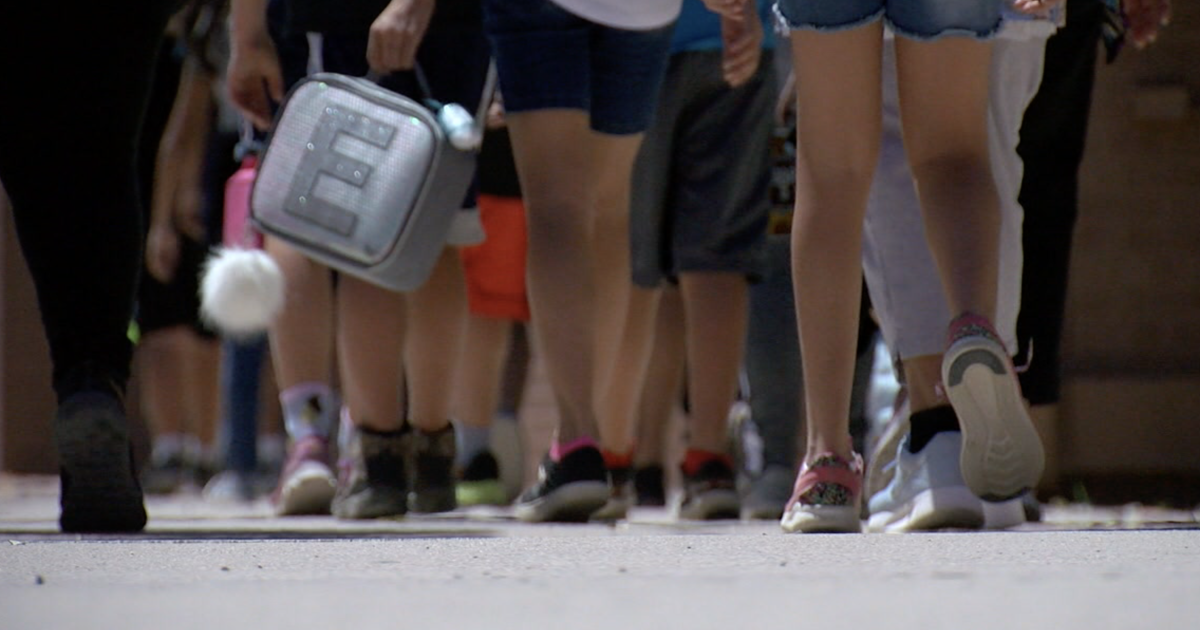
Back to school anxiety - How can parents prepare kids as the time to go back to school gets closer?
The new school year is usually an exciting time for kids and a time to celebrate for parents who have been keeping busy all summer long. A new grade and new adventures at school await. But this year, with children heading back to class in just a few short weeks, anticipation has been replaced by anxiety as a lot of kids are stressed about the idea of returning during COVID-19. For most children, predictability can play a major part in being comfortable and feeling secure. As well, with children seeing the news, having spent months in lockdown and knowing that they’ll likely be wearing a mask all day, the pressure of the ‘unknown’ may be enormous. “It is normal for kids to feel nervous about returning to school, especially if they have been learning from home for months,” said Dr. Meredith Rausch, a leading counselor education expert and associate professor in the Department of Advanced Studies and Innovation in the College of Education at Augusta University. “To help ease their anxiety, I encourage parents to reassure their children about the safety measures in place to keep them safe and remind them about the positives, such as being able to see their friends and teachers.” Rausch also recommends the following tactics parents can do at home to help ease the back-to-school anxiety. Wear a mask at home: Wear one while playing a game, reading a book or having some screen time. Normalizing life in a mask may be the new normal. Share how you feel: Parents who can share their feelings will likely prompt children to share their own. Let kids know that adults are nervous and are sometimes afraid too, and encourage young ones to open up and express any lingering or pent up emotions. This coming school year will be like no other in memory, and as parents get kids ready to head back into the classrooms – there are still a lot of questions remaining. If you’re a journalist covering this topic – then let our experts help. Dr. Meredith Rausch is a leading expert in counselor education, and her research focuses on underserved populations, particularly LGBTQ+ individuals and women. Rausch is available to speak with media regarding this important subject. Simply click on her name to arrange an interview today.

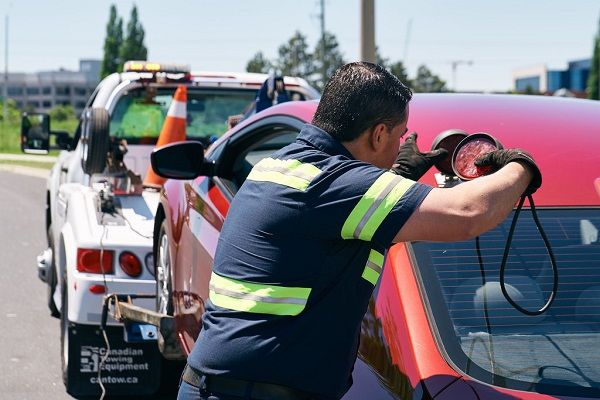
MEDIA RELEASE: CAA study reveals a majority of Ontario drivers favour provincial towing oversight
A recent study conducted on behalf of CAA South Central Ontario (CAA SCO) indicates that 90 per cent of Ontario drivers agree with regulations such as tow truck licensing, certification and provincial oversight. The study, commissioned in April 2020, revealed that only 1 out of 5 Ontario drivers feel “very protected” under the current system. “Consumers should have the confidence that they will be protected regardless of where in the province they are and what kind of towing services they may require,” says Teresa Di Felice, assistant vice-president of government and community relations. The study also showed that half of Ontario drivers believe that tow trucks in Ontario are licensed. This is not the case. A lack of provincial oversight in the towing industry has led to a municipal patchwork of bylaws, which includes inconsistent towing rates, processes, and standards. It has also left motorists unsure on what the rules are, and how to protect themselves from fraudulent activities particularly when it comes to collision tow services. At present, only 18 of Ontario’s 444 municipalities have bylaws regulating towing. That is less than five percent of all communities across the province. “Provincial oversight should provide consistent levels of training for operators, ensure the vitality of an important service on Ontario roads, establish penalties for those that do not follow the rules and recognize people drive outside of cities boundaries.” Some other interesting facts from the study are: An overwhelming majority (91%) of the respondents oppose the idea of anyone driving a tow truck without specific tow truck driver education or training. More than 4 out of 5 respondents agree that the cost of towing and related fees can be misleading. In June, the Ontario government announced its commitment to assemble a task force to review and reform the towing industry. For over a decade, CAA has been advocating for changes to the towing industry. The announcement of a provincial task force is a strong step in the right direction. As part of the journey toward a fair towing framework, please join CAA, the Ontario Provincial Police (OPP) and the Provincial Towing Association of Ontario (PTAO) for a virtual discussion on the challenges of the towing industry and an overview of what the future of towing could entail. The virtual townhall will take place on Wednesday, August 12, 2020 from noon to 1:30 p.m. To register and for more information, visit: https://www.caasco.com/blog/News/government-focuses-on-the-towing-industry-have-your-say The statistically representative study, commissioned by CAA SCO and conducted by Campaign Research between April 21st to 24th, 2020, surveyed 5,003 Ontarians that hold a valid driver’s license. The study was conducted through online surveys. A probabilistic sample of a similar size would have a margin of error of plus or minus 1.4%, 19 times out of 20.



Joke or not – could Kanye play spoiler in the 2020 election?
It’s set the internet abuzz – and as rap superstar Kanye West (with the help of his wife Kim Kardashian West and billionaire Elon Musk) took to Twitter to declare his intentions to run for president this November. One small problem – West has missed several key deadlines to get on the ballot. However, if he is determined to run, he can ‘t run in key states like Texan, New York or North Carolina. This all seems silly right now, but if the sometimes controversial and very unpredictable celebrity makes a run, in the end – who would it help and who would it hurt? Could West’s popularity siphon off votes from Joe Biden key battleground areas? Or would a West campaign steal the attention and airtime away from Donald Trump leaving him to pitch policy and drastically reducing his reach? In a year that knows nothing normal, if you are covering Kanye West and the 2020 election – let our experts help. Mark Caleb Smith is the Director of the Center for Political Studies at Cedarville University. Mark is available to speak with media regarding this topic and any aspects about the upcoming election. Simply click on his icon to arrange an interview.


Is there a path to a successful and productive life after imprisonment?
On July 8, Savannah Mayor Van Johnson announced the formation of a new task force focused on helping those formerly incarcerated or with a criminal history seek productive futures when they return to society. The Advocates for Restorative Communities in Savannah (ARCS) will bring together experts, including formerly incarcerated people, who currently work with those in the justice system. The goal is pooling their collective experiences to best serve those returning to Savannah from prison and help them toward a path of success. Georgia Southern University's Maxine Bryant, Ph.D., senior lecturer, Department of Criminal Justice and Criminology, is playing a lead role in the task force. According to Bryant, about 4% of all those in Georgia’s prisons call Chatham County home. Bryant says last year Georgia’s Department of Corrections reported there were around 53,000 people inside their prisons. “Four percent, that’s about 2,000 people, people who are currently incarcerated are probably going to be returning back to Chatham County,” said Bryant. “You add that year after year after year, and then it becomes clear that if we don’t do something, we are a part of the problem, and not the solution.” Bryant added two out of every three people who are released are rearrested within three years. “Not all of those arrests are new crimes,” she said. “Some of them are technical difficulties, technical violations. They couldn’t pay a fine because they didn’t have a job.” June 08 - WTOC TV If you are a journalist and would like to learn more about this program or this topic – then let our experts help. Maxine Bryant’s research interest specifically focuses on factors contributing to the successful community reintegration of released prisons. Specifically, she has written and presented on transitional jobs for newly released prisoners, the role of the Black church in successful offender reintegration, the impact of unaddressed childhood trauma and barriers to successful offender reintegration. She is available to speak with media any time – simply click on her icon to arrange an interview today.


Clarifying the electoral college before this November’s election – let our experts explain
With a divisive and hyper-charged election on the horizon in America, the Supreme Court may have done the country a favor and avoided a constitutional crisis before it happened. The court delivered a unanimous opinion on faithless electors and how those who represent states are to cast their votes in the electoral college. The Supreme Court ruled unanimously Monday that a state may require presidential electors to support the winner of its popular vote and may punish or replace those who don’t, settling a disputed issue in advance of this fall’s election. Justice Elena Kagan wrote for the court as it considered for the first time the issue of “faithless electors” and whether the Constitution sees members of the electoral college — whose votes ultimately elect the president — as representatives of the intent of their state’s voters or as independent thinkers. The Washington state law at issue “reflects a tradition more than two centuries old,” Kagan wrote. “In that practice, electors are not free agents; they are to vote for the candidate whom the State’s voters have chosen.” In layman’s terms, it simply means representatives to the electoral college are not casting a vote of conscience, but a vote that follows the will and intentions of the popular vote of each specific state. Popular votes and the electoral college have been hotly debated topics during this century’s elections, and if you are a journalist covering this Supreme Court decision or have questions about the upcoming elections – then let our experts help. Dr. Craig Albert is an expert in American politics and he is available to speak with media – simply click on his name to arrange an interview today.


As China clamps down on Hong Kong – Is Taiwan next?
As protests erupt again across Hong Kong against the recent imposing of new security laws essentially giving Beijing unprecedented powers – it has some worried about what is next as China pursues it’s One-China policy. In Taiwan people are watching, and concern is growing. Professor Elizabeth Freund Larus teaches political science at the University of Mary Washington and is an #expert on China and the field of Asian studies. She has also been interviewed by media such as CNBC, The Diplomat and CBN News regarding this topic. She has noted that the developments in China, especially with regards to Hong Kong and Taiwan are catching global attention and will impact economies and governments across the globe. Beijing has taken an especially hard line towards Taiwan since the 2016 election of President Tsai Ing-wen of the Democratic Progressive Party (DPP), ramping up military, economic and diplomatic pressure. Tsai views Taiwan as a de facto independent nation and not part of "one China". But the pressure campaign has done little to endear China to Taiwan's 23 million people. In January, Tsai won a second term with a historic landslide and polls consistently show a growing distrust of China... Social media is filled with messages of support for Hong Kong's democracy movement. Some back Taiwanese independence, or highlight China's rights abuses in regions such as Tibet and Xinjiang. Wendy Peng, a 26-year-old magazine editor who said she often shared pro-Hong Kong democracy messages on social media, said she would now avoid visiting the city. "The national security law makes me wonder how far would China go. Right now I don't see a bottom line and there's probably none. I think it's possible they will target Taiwan next," she said. July -7 Yahoo! New/AFP If you are a reporter covering this progressing story – then let our experts help. Elizabeth Larus is available to speak to media, simply click on her icon to arrange an interview.


Overshadowed by COVID – The opioid pandemic is still taking its toll across America
For more than two decades opioids have been ravaging American cities, towns, and communities. It prompted national attentions and official commissions advising the President. But lately, as the world has turned almost all its focus on COVID-19, the opioid issue has been sitting in the shadows. Not necessarily idle or waiting, but just no longer the topic of a national conversation to find a cure. Before COVID-19 turned our nation upside-down, policymakers were taking steps to help patients access evidence-based treatment for opioid use disorder. This included focusing on removing health insurers’ barriers to medication and requiring insurers to provide parity for mental illness and substance use disorders — and holding them accountable for violations of the law in Massachusetts, Pennsylvania and New Hampshire, to name a few recent examples. While we continue to take steps to address COVID-19 to help keep the public safe, the American Medical Association has seen reports from more than 30 states concerning increases in opioid-related mortality, mental health crises, suicide and addiction-related relapse. Reports are from every region in the nation. This includes a 20 percent increase in calls to the Jacksonville, Fla., fire department concerning overdoses; an “unusual spike” in overdoses in DuPage County, Ill.; increased emergency department visits in coastal North Carolina and spikes in fentanyl-related overdoses in Seattle. Georgia, too, has not been spared, causing increased concern for many. - Dr. Patrice A. Harris is the immediate past president of the American Medical Association and chair of the AMA Opioid Task Force. So – at what cost or how far back have efforts been set by COVID-19? And how much harder will it be for America to regroup and take on its addiction to opioids? There are a lot of questions to be asked – and if you are a journalist covering this topic or looking to learn more about the state of the opioid epidemic in America – then let our experts help. Justin Cole is an expert in clinical pharmacy, Pharmacogenomics, and the pharmacy industry. Justin has been following this issue closely and is available to speak with media. Simply click on his icon to arrange an interview today.

MEDIA RELEASE: CAA supports Ontario government's focus to reform the towing industry
CAA South Central Ontario supports the Ontario government’s move to assemble a task force to review and reform the towing industry. Changes to the towing industry is something that CAA has been advocating for over a decade and the task force announced today is a strong step in the right direction. “There are a number of measures that will go a long way to restore motorist confidence and keep our roads safe across the province,” says Teresa Di Felice, assistant vice-president of government and community relations. “We would like to see a tow truck licensing system, clearer rules around consumer protection and the establishment of a body to oversee the industry.” CAA has been actively working with stakeholders and government officials towards provincial oversight of the towing industry. Provincial oversight would provide consistent levels of training for operators, ensure the vitality of an essential service on Ontario roads and established penalties for those that do not follow the rules. It would also ensure consumers would have certainty when it comes to their towing services, regardless of when or where they require support. CAA is also advocating for the necessary regulation that would implement criminal background checks, discourage racing to accident scenes, charging consumers sky high towing bills, and fraud. “For years now the towing industry has been plagued with unscrupulous drivers who take advantage of consumers in their most stressful times of need. Regulating the industry would enhance consumer protection for motorists,” adds Di Felice.
With an economy on life support – is inflation inevitable?
As countries around the globe are flooding their respective economies with enough cash to hold back the financial tsunami that could be felt by COVID-19 … will all that cash inevitably come with an unfortunate consequence like inflation? Those who work the markets and do their best to see into the future … think so. With the world economy forecast to shrink 6% this year, it may seem like a strange time to fret about inflation. And sure enough, market-based gauges suggest an uptrend in prices may not trouble investors for years. U.S. and euro zone inflation gauges indicate that annual price growth will be running at barely over 1% even a decade from now. So if inflation really is, as the IMF put it in 2013, “the dog that didn’t bark”, failing to respond to all the central bank money-printing unleashed in the wake of the 2008-9 crisis, why should investors prepare for it now, especially as demographics and technology are also conspiring to tamp down inflation across the developed world? The answer is that some think the dog really will bark this time, partly because - unlike in the post-2008 years - governments around the world have also been rolling out massive spending packages, in a bid to limit the impact of the coronavirus pandemic. “We will be pushing, pushing, pushing on the string and dropping our guard, then 3-5 years from now...that’s when the (inflation) dog will start barking,” said PineBridge Investments’ head of multi-asset Mike Kelly, who has been buying gold on that view. “Gold worries about such things long in advance. It has risen through this coronavirus with that down-the-road-risk top of mind,” he added. June 22 - Reuters It’s a daunting and stressful scenario. How much inflation could America expect and what would it mean to household incomes and spending? What industries would be further devastated by this? Is there any way to reverse inflation or is there an upside to it for some? If you are a reporter covering this topic – then let our experts help. Jeff Haymond, Ph.D. is Dean, School of Business Administration and a Professor of Economics at Cedarville and is an expert in finance and trade. Dr. Haymond is available to speak with media regarding this topic – simply click on his icon to arrange an interview.
