
Experts Matter. Find Yours.
Connect for media, speaking, professional opportunities & more.

UCI scholars discuss how 9/11 changed America
In recognition of the 20th anniversary of the Sept. 11, 2001, terrorist attacks in the U.S., we asked UCI scholars a single question: How did 9/11 change America? They responded according to their expertise – which ranges from collective trauma, media, air travel, foreign relations, false narratives, political divisiveness, and the war on terror. Contact Tom Vasich at 949-285-6455, tmvasich@uci.edu, to arrange interviews. Roxane Cohen Silver, Distinguished Professor of psychological science, public health and medicine E. Alison Holman, professor of nursing Topic: Media and collective trauma Quote: “The Sept. 11 terrorist attacks – which hijacked our television screens that Tuesday morning as people who sought to do us harm hijacked four airplanes – captured people’s attention throughout the days and weeks that followed. It also ushered in 24/7 media attention to what has become known as a “collective trauma,” transmitting the horrible events of that day throughout the country and, indeed, throughout the world in a matter of seconds. …The 9/11 attacks were tragic for American residents, but they also taught us that the media can broadcast distress alongside the news it’s covering.” Jan K. Brueckner, Distinguished Professor of economics Topic: Air travel Quote: “In response to the revenue shock of 9/11 and to new competition from low-cost carriers, the major airlines behaved conservatively in adding back capacity as traffic returned, so that the carriers eventually offered fewer seats to an ultimately larger number of passengers, leading to fuller flights and today’s less comfortable flying experience. Even though 9/11 is long past, the airline industry continues to operate in a climate of fear of terrorism from the air.” Erin Lockwood, assistant professor of political science Topic: U.S. foreign policy Quote: “The attacks – and the U.S. response – set in motion decades of war, anti-Arab and anti-Islamic bias and violence, and a willingness to sacrifice military and civilian lives and civil liberties for the perception of security. As we mark the withdrawal of U.S. forces from Afghanistan this month, it’s all too apparent that many of those trends continue to reverberate today.” David Kaye, clinical professor of law Topic: National security Quote: “Despite my hopes for something better that might emerge, the attacks reinforced a cult of national security that the United States transformed into the torture of terrorism suspects, drone warfare, the invasion of Iraq, Guantanamo Bay’s indefinite detentions, anti-Muslim discrimination at home and the emergence of the contemporary surveillance state. … The predominance of national security as an ideology and apologia remains among the most significant legacies of that day, a feature of American political life that continues to constrain creativity and a return to normalcy in American law and policy.” Matthew Beckmann, associate professor of political science Topic: War on terror Quote: “To understand the legacy of 9/11 is to define the legacy of George W. Bush. For after the deadliest terrorist attacks on U.S. soil in our nation’s history, American citizens and lawmakers gave President Bush broad support and broader authority to wage the “war on terror” as he saw fit. … Twenty years after the attacks, having seen those lofty aspirations dashed in Afghanistan and Iraq, disregarded in Guantanamo Bay and black site prisons, and discounted even by our staunchest allies, the biggest legacy of Sept. 11 for the United States is that the “shining city on a hill” has less luster and a shorter reach.” David Theo Goldberg, professor of comparative literature Topic: Rise of false narratives Quote: “The events of 9/11 lent themselves to make-believe. The smoke hadn’t yet cleared when conspiracies began to abound, from “weapons of mass destruction” to “the deep state.” That the Trump administration adopted this as its own playbook while insisting on “draining the swamp” required cooking the rules. … Fabrication had become the rule book of the game. Invention and inventedness, disruption and innovation fueled the movement. The “truth” was, well, oh so yesterday.”

Bye-bye Bonnie and Clyde – Brazil is taking bank robbing to a whole new level
The media coverage reads like a scene out of a Michael Bay movie. Bank robbers using drones, strategically planting bombs across the city and taking hostages and placing them atop getaway cars. It’s surreal … but in Brazil, over the top bank heists are becoming the new normal. And the media are looking for experts to try and explain just what it is going on. That’s why the Daily Beast recently contacted Georgia Southern’s expert on Latin America, José de Arimatéia da Cruz, Ph.D. In the predawn darkness last Monday, a group of about 20 heavily armed commandos seized control of the downtown financial block in Araçatuba, a mid-sized Brazilian city in the eastern state of São Paulo. They then proceeded to rob three banks, while the surveillance drones they had deployed kept watch over head. When the heist was complete they accosted several bystanders, shot a man who had been filming them on his phone, and then bound the hostages they’d taken to the tops of their getaway vehicles so as to dissuade police from interfering with their escape…. Since 2015 these kinds of attacks have become so common that Brazilians even have a name for them: Novo Cangaço, which roughly translates into English as “New Struggle.” The name refers to a “social banditry” movement that flourished in Brazil’s hardscrabble northeast in the late 19th and early 20th centuries. The original Cangaço sought to battle back against widespread poverty and inequality. It involved Robin-Hood like figures who plagued wealthy landowners, donated to the poor, and pushed the government to jumpstart economic reforms. “The New Cangaço’s modus operandi is similar” to that of their predecessors, José de Arimatéia da Cruz , Ph.D., told The Daily Beast. The tactics might be alike, but the strategy between the old and new incarnations are quite different, according to da Cruz, who is originally from Brazil but now teaches international relations at Georgia Southern University. “The difference today is that the traditional cangaceiros [peasant bandits] were fighting against politicians. The Novo Cangaço today are attacking banks and are most basically interested in money for different purposes.” This is a sensational chain of events – and if you are a reporter covering these escalating crimes in Brazil – then let us help with your stories. José de Arimatéia da Cruz is available to speak with media regarding this topic — simply reach out to Georgia Southern Director of Communications Jennifer Wise at jwise@georgiasouthern.edu to arrange an interview today.


MEDIA RELEASE: Watch for higher traffic volume in school zones as students go back to class
After months of distance learning, many students will be excited to see their friends and classmates again as they return to the classroom. With higher traffic periods anticipated before and after school, CAA South Central Ontario (CAA SCO) is urging all pedestrians and motorists to stay alert and take extra caution while travelling through school zones. “Pedestrian safety begins with drivers,” said Raymond Chan, manager of government relations at CAA SCO. “When you’re behind the wheel, you have the responsibility to look out for everyone else around you, including parents, guardians and children.” While the pandemic reduced congestion around schools, a recent school zone survey conducted on behalf of CAA SCO found many of those previous bad behaviours persist. More than 20 per cent of parents say they witnessed speeding, illegal parking and U-turns or three-point turns. Of those surveyed, 41 per cent of parents and guardians say that motorists being in a hurry is the primary cause for unsafe driving behaviours within school zones. Pedestrian behaviours also play a role when it comes to road safety. According to the survey, parents are concerned about pedestrians crossing at undesignated areas; and failing to look both ways when crossing the street. “CAA is reminding pedestrians, cyclists and motorists to be fully aware of their surroundings by slowing down and putting away all distractions,” said Chan. “Whether you are a parent or guardian driving, or a child walking or wheeling to school, everyone plays a role in keeping school zones safe.” CAA is encouraging motorists to remember these top five school zone safety tips: Make eye contact with passing pedestrians and cyclists: With the excitement of going back to school, anticipate that children may not easily see or hear your moving vehicle. Use eye contact to ensure pedestrians are aware of you driving your vehicle. Help reduce traffic with active school travel: Encourage your kids to walk or ride to school to ease traffic congestion. If your school is a further distance, CAA encourages parents and guardians to park a block away and walk to school, if possible, to reduce traffic and make school zones safer. Slow down: Know the speed limit in your neighbourhood’s school zones and respect them. Ensure to give yourself plenty of time to drop off your kids at school to avoid rushing. Follow the rules of the road near school buses: Always stop for school buses with its lights flashing and/or stop arm activated, and wait for children to get safely on or off. Stay alert and watch for children or parents/guardians crossing the road when the bus moves on. Choose a safe spot to drop off and pick up your children from school: Follow your school’s rules and avoid double parking or stopping on crosswalks, dropping off or picking up your kids on the opposite side of the street, and stopping in moving traffic as kids rush out. Instead, use the designated drop off areas or consider a spot a bit farther away from school that is easily accessible and safe. CAA supports safety in school zones through the CAA School Safety Patrol® program. The program was developed to protect and educate elementary school children on safe road-crossing practices. CAA’s Ontario Road Safety Resource is a toolkit with valuable lesson plans for teachers to help educate students about road safety. The study, commissioned by CAA SCO and conducted by Dig Insights between April 16th to 23rd, 2021, surveyed 1,405 Ontario parents/guardians between the ages of 18 and 74 with children attending school from Kindergarten to Grade 8. A probabilistic sample of a similar size would have a margin of error plus or minus 2.6% at the 95% confidence level.



The Case for Career Advocates: An Organization Is Not a Meritocracy
This blog post is the first in a three-part series by Renee Dye 94PhD, associate professor in the practice of Organization & Management that summarizes the key messages she delivers to students in the hopes that it can catalyze and support the career success of a broader group of ambitious employees who aspire to make it to the C-Suite One of the paradoxes of the GenZs and Generation Alphas is their intuitive understanding of the phenomenon of social media…at the same time they maintain an almost ideological conviction that the workplace – apart from systemic biases – is otherwise a meritocracy, where talent is perfectly and objectively evaluated – and the best and most deserving rise to the top. Surely a cursory exploration of Instagram and TikTok would convince even the most skeptical of the fundamentally idiosyncratic nature of success in a networked world? The Real World is likewise characterized by outcomes in which success is imperfectly correlated with capability level. Someone whose capability level is less than yours may lap you in the race to the top of the organization. That may seem unfair, but that’s because you’re making the mistake of assuming that career success is predicated purely on capability. A survey of MBA graduates from Emory University's Goizueta Business School a few years ago produced a startling insight: of all the skills that we provided to our students during their MBA tenures, our students felt most unprepared to navigate “organizational politics” in their careers. The reason that I found this fact so astonishing is that today’s students, who are Digital Natives and in part Social Media Natives, are the most connected and self-promoting generation the world has ever seen. Yet today I find that my students continue to exhibit little practical understanding of how career success is forged…so much so that I now devote an entire class session in my core Strategy class to demonstrating the importance of relationship management and advocacy cultivation. Capability is not unimportant; far from it. As I tell my students, though, capability is table stakes these days as the level of education and skill sets continues to advance among individuals. If you’re not smart and capable you’re not getting in the door. But once you’re in, your career path and ultimate career success will be more determined by (1) your level of aspiration and unflagging commitment to achieving your goals; (2) your performance outcomes in your individual roles; (3) your work ethic and conscientiousness; and (4) the relationships you have with other people within your organization. And the relationships that matter the most are the individuals with influence and power over your future career opportunities. Let me put it starkly: without career advocates (notice the plural), it will be much, much harder to make it to the senior management ranks. Full stop. Some facts to bear this assertion out: • People with advocates are 23% more likely to move up in the careers • Women with advocates are 22% more likely to ask for a stretch assignment to build their reputations as leaders Ultimately, having an advocate confers a career benefit of 22-30%, depending on who’s doing the asking and what they’re asking for. That’s increasing your odds of making it to the C-Suite by nearly a third! If anecdotal evidence is more your thing, here are a couple of quotations for you: • A lot of decisions are made when you are not in the room, so you need someone to advocate for you, bring up the important reasons you should advance” (Catalyst Survey, as quoted in Elizabeth McDaid, “Mentor vs. Sponsor,” September 3, 2019) • When you get to the level in your career when decisions are not just being made by an individual manager, feedback from other leaders becomes crucial. Rosalind Hudnell, Chief Diversity Officer, Intel. As quoted in Hewlett, Sylvia Ann, Melinda Marshall, and Laura Sherbin. “The Relationship You Need to Get Right,” HBR 2011) • “I was great at building businesses and had tons of cheerleaders, but I had that typical Asian keep-your-head-down-and-you’ll-get-taken-care-of mindset.” My boss had to take me aside and tell me that if I didn’t actively cultivate her as my sponsor, I would never progress beyond senior associate” (quoted in Hewlett, Sylvia Ann, Melinda Marshall, and Laura Sherbin. “The Relationship You Need to Get Right,” HBR 2011) To reiterate: an organization is not purely a meritocracy where talent and hard work speak for themselves; and it’s much, much harder to advance within an organization without effective advocates. "This blog post is the first in a three-part series that summarizes the key messages I deliver to my students, in the hopes that it can catalyze and support the career success of a broader group of ambitious employees who aspire to make it to the C-Suite,” writes Renee Dye 94PhD, associate professor in the practice of Organization & Management. “Most of my lessons are derived from my own unlikely personal journey from literary scholar to top-tier management consultant to C-suite executive for a publicly traded company, but they are also heavily informed by leading researchers like Sylvia Anne Hewlett. In the final blog, I discuss the impact of remote work on career success.” For more insight and to continue reading this article and series, please visit Dye’s blog. To arrange an interview – simply click on Dye’s icon now to book a time today.



Millennials at Work – Let our experts offer insight into the next generation of employees
Millennial workers now total 56 million, representing 35% of the total US labor force. How can organizations harness their unique talents and strengths? Goizueta Professor Andrea Hershatter recently joined the Goizueta Effect to explore this generation’s use of technology as a “sixth sense,” their inherent trust in organizations, and their tendency toward an extrinsic sense of fulfillment. In the interview Hershatter uses her expertise and years of experience to discuss a wide variety of topics such as: Defining Generations What Makes a Millennial? Exploring Boomers, GenX and Zoomers Millennials’ Relationship with Technology & Organizations How COVID-19 Has Impacted Millennials Dynamics & Interplay Between Generations The Next Generation and The Future Andrea Hershatter is Senior Associate Dean and Director of the BBA Program in Emory’s Goizueta Business School. She regularly provides consultation to corporations and academia on the Millennial generation and has been an outside expert to the Graduate Management Admission Council in enhancing undergraduate student outreach. She is a frequent presenter on the topics of entrepreneurship, generational workplace culture, and management education. Andrea is available to speak with media about this topic – simply click on her icon now to arrange an interview today.

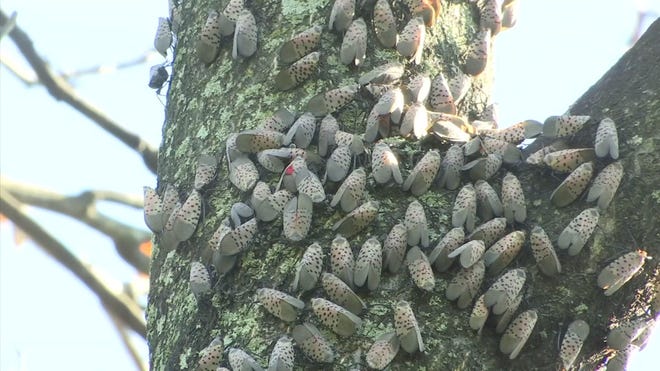
UMW entomologist can explain why it should be ‘lights out’ for the spotted lanternfly
The call for a cull has been made. Spotted lanternflies are popping up across the East Coast, and scientists are worried this invasive insect could wreak havoc on more than 70 tree and plant species, including many agricultural crops like apples, grapes, stone fruits and hop plants. Indigenous to Asia, spotted lanternflies have been latching on to anything that moves. Residents of several states are being asked to check their vehicles as these resilient bugs are crafty enough to travel by car – quite literally hitchhiking across America. Though harmless to humans and animals, the fast-breeding insect spews out a honey-like substance that covers plants and prevents photosynthesis, leading to an ultimate death of the plant. Experts are advising only one remedy so far – kill them on site. Extreme measures are warranted until scientists can come up with a better plan. There’s a lot to know about invasive species and the spotted lanternfly – and if you are a reporter covering this pressing topic, then let our experts help. Dr. Josephine Antwi is an entomologist whose research focuses on the effects that insect pests have on crops of economic importance. Dr. Antwi is available to speak with media, simply click on her icon to arrange an interview today.


As Pfizer gets full FDA approval – Georgia Southern’s experts are in the media and getting coverage
With a fourth wave of COVID sweeping America and beyond – the Pfizer vaccine receiving full FDA approval couldn’t come at a better time according to most health experts. And as news swept across the country, Georgia Southern University’s Isaac Chun-Hai Fung, Ph.D., associate professor of epidemiology, was front and center for media and reporters, helping to explain the importance and significance of this landmark announcement. The green light from the U.S. Food and Drug Administration to move Pfizer’s vaccine from emergency use to full approval Monday is a milestone in the national pandemic response, and one that comes as Georgia and much of the country battles another surge in infections and hospitalizations due to the delta variant. More than 60% of Americans have received at least one dose of the vaccine, and experts have long pointed to data that shows the shots are safe and effective. Still, the official thumbs-up is a significant piece of evidence to bolster that fact, said Isaac Chun-Hai Fung, Ph.D., associate professor of epidemiology at the Jiann-Ping Hsu College of Public Health at Georgia Southern University. “With this new formal approval from the FDA, the public should have the same confidence as they do with existing vaccines that we have used for years against other diseases,” Fung said. August 24, Georgia Recorder As the COVID story progresses and advances, there will be a lot of questions that need answers and stories for journalists to tell. And if you are covering – then let us help. Fung is available to speak with media regarding this topic — simply reach out to Georgia Southern Director of Communications Jennifer Wise at jwise@georgiasouthern.edu to arrange an interview today.

The Olympics have come and gone. As the world watched top athletes from across the globe compete, one key takeaway was not a new world record or a perfect 10 on the floor – but that Black female athletes faced unfair scrutiny and an obvious double standard when it came to issues of stress and mental health, policies and protocol, uniforms and hair, and more. UMW Assistant Professor of Communication Emily Deering Crosby's previous research has focused on how the media has portrayed Black female Olympians like Lolo Jones and Gabby Douglas. Here's what she had to say: There were numerous instances this summer of world class women athletes being sexualized, penalized, mocked and dismissed for a variety of issues from uniforms to motherhood to naturally occurring testosterone levels to mental health to archaic policy. This was particularly salient for Black women athletes, which is worth highlighting, since racism and sexism often function in tandem ways that many people misunderstand as “normal” or “insignificant” since it can be pervasive. My work aims to root out, point out and amplify why these practices are wrong, why they keep women from being appropriately valued, and how sports culture can be better and thus enhance communication scholarship and everyday practices by media, fans and athletes themselves. The silver lining in the most recent Games is how digital culture, particularly social media, gives athletes themselves a voice. Further, fans and athletes alike are becoming more knowledgeable of these problematic policies and are bravely and creatively calling them out. Thus, athletes such as Simone Biles, Naomi Osaka, Sha’Carri Richardson, Allyson Felix, Norway’s women’s beach handball team, etc. are key case studies to understand these communication and structural phenomena more deeply and ultimately bring more critical awareness and justice to women’s sports.” If you’re a journalist looking to know more about this important topic – then let our experts help with your questions and coverage. Assistant Professor of Communication Emily Deering Crosby is a rhetorical critic of popular culture with research concentrations in feminist criticism – and she’s a go-to expert on this topic for national media. Dr. Crosby is available, simply click on her icon now to arrange an interview today.


There’s billions of dollars flowing into Georgia – and with that economic development, comes good paying jobs. It’s getting a lot of attention and that means news coverage on local, state and national levels. Recently, media have been looking for expert perspective and opinion on the economic boom – and to help with their questions, Georgia Southern University’s Michael Toma is the go-to expert for reporters looking to break down the investments, the opportunities and the jobs that are coming with them. The SK Battery America plant is, appropriately, located in the city of Commerce, Georgia. The $1.6 billion project – expected to employ 2,000 – was finalized in early January 2019, but without investment from the state and local government, it might not have been built in Georgia. "They were looking at several other states, especially in the southeastern U.S.," said John Scott, director of economic development for Jackson County. "When we were working with them the final two sites were between here and somewhere in Tennessee." … According to Michael Toma, Ph.D., Fuller E. Callaway Professor of Economics at Georgia Southern University, a new project creating 1,000 jobs can have a huge impact, while 500 jobs is a significant project for medium-sized cities. How good the jobs are is a matter of debate, although state and local officials emphasize that they look for jobs that pay well. July 27 – USA Today/Savannah Morning News If you’re a reporter looking to know more about why business is booming in Georgia – then let us help. Michael Toma, Ph.D., is Georgia Southern University's Fuller E. Callaway professor of economics and is available to speak with media about this topic – simply click on his icon to arrange an interview today.
/cloudfront-us-east-1.images.arcpublishing.com/gray/VTFRFP3RLBDQNHSADLYVFHUNMI.jpg)
#Experts in the media - Political science professor discusses 2020 Census data
The 2020 Census is out - and media are coming to Georgia Southern University to help breakdown the numbers and explain the details about how it all impacts Georgia. America is becoming more diverse, according to new data from the 2020 Census. Analysts say the biggest jump came, in the multiracial category. It went from nine million in 2010 to 33.8 million in 2020. That’s a 276 % increase. The Latino and Asian communities also saw big jumps. A political science professor at Georgia Southern says this data has a big impact on local communities. “Another thing is the redistricting process in general. The results of the Census are going to have a big impact on the redistricting process this year in state legislatures. For instance, some states are losing representatives, and some states are gaining representatives,” Kimberly Martin, Ph.D., assistant professor of political science and international studies, said. While Georgia and South Carolina are keeping the same number of representatives, Martin says the Census affects funding, and also gives lawmakers an idea of how demographics in their districts have changed over the past decade. August 13 - WTOC If you are a reporter covering this topic - then let our experts help. Contact Georgia Southern Director of Communications Jennifer Wise at jwise@georgiasouthern.edu for an interview with Professor Martin today.