
Experts Matter. Find Yours.
Connect for media, speaking, professional opportunities & more.

Social class has a significant role to play in career success in the United States. A growing body of research is shedding disquieting light on the extent to which working class Americans face discrimination in recruitment, pay and promotion – despite having a college degree. This demographic is up to four times less likely to get hired, 34% less likely to accede to leadership roles, and earns around 17% less on average than counterparts from middle or upper-class backgrounds. But while research is starting to document how class can impede or accelerate professional success, it remains unclear why these discrepancies exist. What are the mechanisms or dynamics at play that make it so much tougher for working class people to succeed than others? Goizueta Business School Assistant Professor of Organization & Management Andrea Dittmann has an interesting hypothesis. She believes that employees from different backgrounds can bring inherently different strengths and weaknesses to the workplace; advantages and disadvantages that speak to certain norms governing how we think about work and leadership. And it boils down, she says, to the way we work with others. “People from working-class backgrounds—those with blue-collar parents, who might be the first in their family to get a college degree—typically relate a certain way to other people. They are better connected to others, more team-like in their approach, than their middle-class counterparts who see themselves as more independent or unique,” says Dittmann. This team spirit could be working against lower-class employees, she says, in the sense that they see themselves or are perceived by bosses as being less adept at working autonomously or as individuals within organizations; and are therefore viewed by others as less poised to advance into roles of greater responsibility. On the flip side, this very capacity to work well with other people could actually give working class employees an advantage in team-based activities or cultures; an advantage that might translate into concrete benefits for organizations. To put this to the test, Dittmann conducted a series of studies aimed at unpacking how individuals perceive themselves within the context of work, and at the interactions that occur between employees and the workplace. Among these studies were qualitative interviews with MBA students from different social class backgrounds about their experiences navigating white-collar workplaces after graduating from college. She also ran a number of experiments to assess how well working-class people performed in teams and individually, and how environments that prioritize collaborative dynamics or interdependence might produce better experiences and outcomes for employees than environments geared to working individually or independently. A full article detailing Dittmann’s work is attached here and offers very compelling research showing how social class plays out in the workplace. It covers important aspects such as: The Catch-22 of Working Well with Others “It’s a kind of catch-22. Working class kids don’t make it into the gateway settings of school or college as much as middle-class kids in the U.S. They are significantly underrepresented in leading business schools like Goizueta, at roughly 15% of the student population,” she notes. “So, the higher-educational context—the talent pool for corporate America—is very much geared to a different social demographic and dynamic; one that inherently favors independent work ethics and approaches and sees them as the norm. Other ways of working, collaborating, and contributing risk are being undervalued as much as they are underrepresented.” When Considering Diversity, Companies Stand to Benefit “We know that companies that are more diverse perform better than others, and diversity needs to extend to social class. What my research and others are showing is that people from a working-class background tend towards behaviors that are more relational, that they are better at working together. If they fail to make it into the workforce in a more representative fashion, companies are basically missing out on opportunities to form better teams.” Faculty research like Dittmann’s is a critical element in Goizueta Business School’s drive to develop principled leaders who are better prepared to engage in the business of tomorrow. If you are interested in learning more, then let us help. Andrea G. Dittmann is an Assistant Professor of Organization & Management at the Goizueta Business School. She is an expert in the areas of diversity and inequality, particularly employees' social class backgrounds, aiming to promote equity and inclusion at work. Dr. Dittmann is available to speak with media about this research – simply click on her icon now to arrange an interview today.


Aston University experts look at how cash and social media are part of 'coping with success'
"It's the whole 'money doesn't make you happy' adage... two fifths of football players are bankrupt within 5 years of retirement, while a third divorce in the same period" Professor Andy Lymer, Aston University In this episode, Steve chats to Dr Tahmineh Tayebi and Professor Andy Lymer and the social media abuse and financial responsibility that comes with being a top footballer and athlete. Dr Tahmineh Tayebi looks at the linguistics of social media abuse. She starts by understanding the fans' perspective. They've invested time, money and trust in clubs/players and feel entitled to opinions/criticism - but the issue is the language used. Explicit and hateful language - often racist and/or violent - is the easiest to cope with, as it can be banned. But there's lots of "clever" offensive language which breaks no laws and is difficult to spot but still hurtful. Tahmineh discusses loose boundaries between freedom of expression and bullying. She also points to the recent social media boycott and the BT Hope United project. Professor Andy Lymer looks at the issues faced by wealthy players. He cited interesting research showing 2/5 of football players are bankrupt within 5 years of retirement, while 1/3 divorce in the same period. Players have short careers and either need to earn enough to last them with good advice or need to do something else after playing. However, Professor Lymer says many still quickly burn through their fortunes. He notes Britain is bad at educating people in dealing with money, especially in 'decumulation' - e.g. making it last, planning savings for pensions and downsizing. He points to various government-backed schemes/helplines which can help anyone. The big issue is top footballers attracting long queues of people wanting to advise their slice. Getting the right, trustworthy advice is the problem. In football itself, big clubs are guiding young, vulnerable players as part of their development, and various players' organisations also help, such as a 24-hour helpline. But the stats show us it's not enough, and Andy calls for the sector to do more in education.


MEDIA RELEASE: What Canadian travellers need to know before beginning their next trip.
Orion Travel Insurance highlights how travelling around the world will be different With the recent announcement of relaxed quarantine restrictions for fully vaccinated Canadians, many eager travellers may be considering embarking on international travel as soon as possible. Orion Travel Insurance reminds travellers, that a Level 3 Global Affairs travel advisory remains in effect, and Canadians need to understand the ongoing uncertainty associated with international travel. “Entry requirements can vary by destination whether it be a different province, state or country. Travellers need to monitor those requirements closely and be prepared to carry additional documentation like proof of vaccination, and proof of valid COVID travel insurance,” says Kellee Irwin, Vice President, Orion Travel Insurance. “Many Canadians are excited to resume travelling, however a government advisory to avoid non-essential travel remains in place, and Canadians need to take the necessary precautions to ensure they protect themselves before embarking on their vacation.” With many Canadians now looking to book future vacations, Orion Travel Insurance wants to ensure travellers are protected. As of July 1st, Canadians are eligible for full emergency medical coverage with Orion Travel Insurance, even during a Level 3 COVID-19 related travel advisory, if they are fully vaccinated (having received all doses of a Health Canada-approved vaccine) at least 14 days prior to departure. Irwin advises travellers that insurance policies do vary by provider, and may have changed due to COVID-19, so it’s important to review your policy, and understand what you’re covered for before you travel. “Orion Travel Insurance supports the safe return to travel and recognizes the health and safety of Canadians should remain top of mind. We strongly encourage all travellers to ensure their travel insurance includes appropriate medical coverage, and that they continue to monitor evolving entry requirements of their destinations.” Anyone Canadians travelling in the near future should also consider the following tips: A Level 3 Global Affairs travel advisory remains in effect. Before planning any form of travel, Canadians should take steps to protect themselves and others. Canadians and permanent residents will be able to upload a copy of their vaccine certificates to the ArriveCAN app, allowing them to bypass mandatory hotel quarantine when they return to Canada. Travelling standards will vary by destination, and not all services or businesses may be open, or offer full services. Book your accommodations and activities before you go and check out their protocols in advance. Pack face masks, cleaning supplies, travel-sized snacks, water, and hand sanitizer – not only for the trip, but to have on hand at your destination. Monitor local media and government websites to stay informed of conditions and potential changes to entry requirements at your destination. Update your passport so it is ready when you are. And be prepared to pack additional documentation required for your destination, such as proof of vaccination, negative COVID test documentation, and proof of travel insurance. Insurance policies vary by provider. Review your policy and understand what you’re covered for before you travel. Don’t travel if anyone in your party or household is sick.




Victory for Kim Leadbeater, relief for Keir Starmer. Peter Byrne/PA Images/Alamy Stock Photo Parveen Akhtar, Lecturer in Political Science, Aston Centre for Europe at Aston University, dissects the close vote. The Batley and Spen by-election was a close contest that went right down to the wire with few commentators risking calling the result before it was announced. At 5:25am it was declared. Kim Leadbeater was the new Labour MP for Batley and Spen, beating her nearest rival, the Conservative candidate Ryan Stephenson, by 323 votes. It was close but a clear victory for Labour. Leadbeater’s acceptance speech was always going to be poignant. This was the seat held by her older sister, Jo Cox, at the time of her murder in 2016. Cox, who won the seat for Labour in 2015, was killed by a terrorist who held extreme right-wing views and targeted Cox because of her work with refugees. But what was striking – if also sobering and shocking in equal measure given the context – was that Leadbeater also had recourse to thank West Yorkshire police for their protection of her during the campaign. “Sadly”, she said, “I have needed them more than ever.” In fact, even before her victory had been declared, she released a statement pointing to the “intimidation and violence of those who had convened in the constituency with the sole aim of sowing division”. Discord, division and dirty tricks A total of 16 candidates put their hats in the ring for the race in Batley and Spen – a number of whom represented far-right political parties. But it was the presence of George Galloway standing as an independent for the Workers Party which seriously threatened to undermine Labour’s chances of retaining the seat it had held since 1997. Galloway was determined to woo traditional Labour supporters, including the significant Muslim constituent in Batley and Spen. Capitalising on escalating tensions in the Middle East, Galloway sought to paint the Labour leader Sir Keir Starmer as anti-Muslim. His intention was to set up the vote as a referendum on Starmer’s leadership, to split the Labour vote and ultimately force Starmer out of office. To this end, he also attempted to attract white working-class voters by building a narrative of the Labour leader as “woke” rather than for the working class. In the run-up to July 1 there were deeply disturbing reports coming out of Batley and Spen detailing the intimidation and abuse of candidates. There were accusations of dog-whistle racism and homophobia, fake leaflets and foul play. The campaign descended into one of the most bitter and divisive by-elections of recent years. Tracy Brabin, who had won the seat after the murder of Cox and whose win in the West Yorkshire mayoral election triggered the by-election, described witnessing her group of canvassers “being egged, pushed and forced to the ground and kicked in the head”. It was by no means the only time such disturbing strategies have been exploited. In fact, similar divisions were present in the 2015 general election in Bradford West, an election in which Galloway was again present, this time fighting to retain his seat. At a hustings at the university, the then conservative candidate, George Grant, captured the “wild west” nature of the campaign by likening it to a 19th-century rotten borough rather than a 21st-century parliamentary democracy. That election too descended into discrediting individuals and delving into their private lives rather than concentrating on the issues faced by people on the ground. Changing nature of campaigns Electioneering is by its very nature divisive, effectively asking the electorate to vote for party or candidate A and not party or candidate B. But dirty tricks or underhand tactics used to discredit opponents are by no means inevitable. And yet, while the notion of a sense of fair play and decency may be engraved in the nation’s idea of itself, the 2019 general election demonstrated how easy it is to resort to electioneering in bad faith in the age of social media. From faking fact checks to manipulating videos, the 2019 election threw up a whole catalogue of ways in which to unduly undermine political opponents. Indeed, divisive and personal campaigns may become more prevalent in an era of online campaigning. Something not unique to the UK, of course. The 2020 US presidential election was also divisive in nature as were the state elections in India’s West Bengal earlier this year. In Batley and Spen, in the end, as the Leadbeater pointed out in her speech, the people voted for hope not hate. Yet the constituency is deeply divided and will take much work to bring together. Leadbeater was the only major candidate on the ballot box who was local to the area. While the others leave, she remains, in her words, “the best person” to get on with the job of reconciliation.

Many of us think of ADHD (attention deficit hyperactivity disorder) as a childhood condition – which is typically when it’s diagnosed. But a growing number of people are sharing their experiences of being diagnosed with ADHD in adulthood. Social media has even played a role in this, with reports of people going to see their doctor after first learning about symptoms on TikTok. In fact, around 2.5% of adults are thought to live with ADHD – including us. Yet despite this growing awareness, many adults continue to struggle to get a diagnosis. ADHD is a genetic neurodevelopmental disorder, in which the brain grows differently, lacking action from specific chemicals involved in pleasure and reward. This means ADHD brains often search for ways to stimulate these chemicals, which is why people can experience inattentiveness, hyperactivity and impulsivity. Common traits of ADHD include: Not following through on longer tasks (or not starting them) Getting distracted by other tasks or thoughts Seeking out risk or activities that provide immediate reward Restlessness (either outwardly or internally) Interrupting other people (without wanting to) Symptoms are similar for both adults and children, although elements of them differ or change as we age. For example, inattention is the most persistent symptom in adults. ADHD can be debilitating and is associated with higher likelihood of lower quality of life, substance use issues, unemployment, accidental injuries, suicide and premature death. In addition, ADHD can cost adults around £18,000 per year because of things like medical care or paying for social support. It’s also commonly associated with a wide range of co-existing conditions in adults. For example, depression is almost three times more prevalent in adults with ADHD. And nearly half of all adults with ADHD also have bipolar spectrum disorder. Around 70% of adults with ADHD also experience emotional dysregulation, which can make it more difficult to control emotional responses. It’s also thought that almost all adults with ADHD have rejection sensitive dysphoria, a condition where perceived rejection or criticism can cause extreme emotional sensitivity or pain. On top of this, adults with ADHD may have poor working memory – such as being unable to remember a simple shopping list – and “time blindness” (the inability to perceive time). Some may also have oppositional defiant disorder, which means they often react poorly to perceived orders or rules. While none of these co-existing conditions are used to diagnose ADHD, they can make ADHD feel all the more difficult to live with. Being diagnosed Getting an ADHD diagnosis as an adult in the UK is notoriously difficult – with reports of some people waiting up to five years. Waiting for a diagnosis is common for adults with ADHD. Roman Kosolapov/ Shutterstock This is because you can only be diagnosed by a specialist psychiatrist. But even with a referral to a specialist, a person has to show clear evidence of almost all ADHD traits, having had these traits since childhood, and that they’re having a serious affect on their life – such as causing issues with work, education, or maintaining relationships. For us, our experiences of being diagnosed with ADHD aren’t all that different from what other adults have gone through. Like many people I (Alex) was only diagnosed with ADHD “by accident” after being referred to an NHS psychiatrist to get help with (what I now know to be) alcohol self-medication. Because of my ADHD, my brain demands quite extreme inputs most of the time. Ironically, I’ve published scientific papers on ADHD and – probably due to a classic ADHD lack of self-awareness – it didn’t cross my mind that I could have it. The “label” has since helped me move away from feeling broken toward an understanding of my behaviour. My main challenges remain prioritising tasks based on importance (instead of excitement) and quite extreme anti-authority behaviour (sometimes called oppositional defiance). I am also a terrible spectator, struggling to attend conference talks or sit still at the theatre – it can feel like physical pain. On the other hand, I (James) was diagnosed pretty quickly because I used a private clinic – though there was still a long wait for medication. Yet I’d known for five years before this that I probably had ADHD, but coped with it well until the pandemic. The added pressure of isolation and increased workload impacted my mental health, so I sought a diagnosis. Now diagnosed and medicated, life is getting easier to cope with – although there are still many challenges every day. I frequently get anxiety about the silliest things, like talking to a friend, but appearing on television is fine. On a daily basis I forget many simple things, such as where I left my keys, or that I am running a bath. I struggle immensely with controlling my emotions and with rejection especially. For example, when no one responded to a joke I made about my ADHD on a senior management messaging group I was tempted to quit my job. I am utterly unable to pay full attention in meetings or seminars and cannot control my impulse purchasing. While there’s a growing recognition of ADHD in adults, many people still live with it undiagnosed for any number of reasons – sometimes even because they’re unaware that what they experience is actually different from other people. Understanding the condition in adults, taking it more seriously as a disorder, raising awareness of it, and investing in services to improve diagnosis times are key. Diagnosis opens the door to treatment, which can have a marked impact on living with the disorder – such as improving self-esteem, productivity and quality of life. This article was co-written by Dr James Brown (Aston University) and Dr Alex Connor (University of Birmingham)
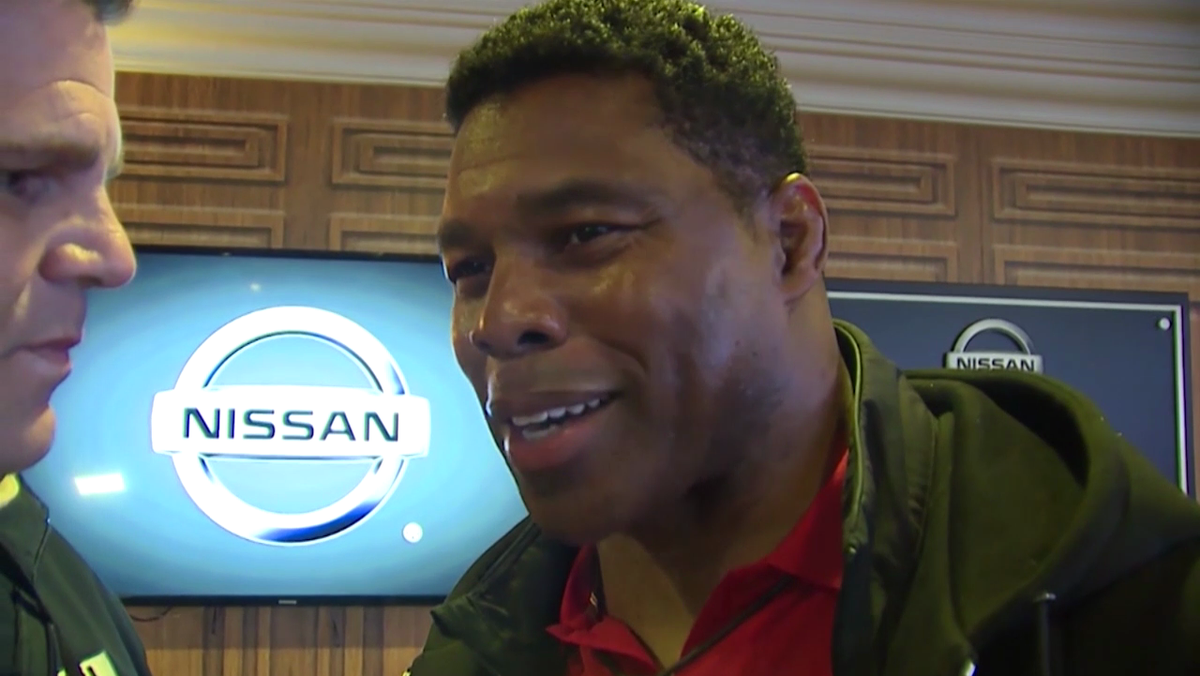
Is Herschel Walker game-ready for the gridiron of Georgia politics?
He once dominated the NFL and is still considered the greatest college running back of all time. But Herschel Walker is now suiting up for a different game and as the original GOAT gets ready to enter the political arena, Joshua Kennedy, Ph.D., an associate professor of political science at Georgia Southern University, is being contacted by media for what he thinks the former superstar needs to do to get across the electoral goal line. In a recent interview with WJCL, Kennedy said, "When it comes to a potential candidate like Herschel Walker who has the celebrity factor in the state of Georgia, who helped bring UGA their national title in 1980, who won the Heisman trophy, is still very well-beloved by the people of Georgia, it could make for an interesting race." At this point, Kennedy believes Warnock would be more likely to win the race. "I think Sen. Warnock has an engaged base and if I were prognosticating at this point, I would say he is a little likelier than not to win," he said. However, Kennedy believes the former president's endorsement of Walker would help the Georgia Bulldog secure a significant number of votes. "The fact that he has the endorsement and support of the former president would carry a lot of weight with Republican voters in the state," he said. In order for someone like Walker to win, Kennedy said he would have to appeal to both the Republican base and independents. "I think that Walker needs to energize the base first and foremost, then focus on finding particular issues that speak to the concerns of Georgians including those non-affiliated voters who could be gettable for a Republican," Kennedy said. He would also need to instill a sense of reliance and competence in Georgians. "Voters want politicians who are oriented towards solving problems," Kennedy said. "He’s going to have demonstrate that he is able to do that, that he has that level of competence, which will be difficult considering he has not been in political office before. That will give Raphael Warnock a bit of that incumbent advantage by virtue of being in office, he can point to things he's worked on that Herschel Walker can’t." Kennedy said if Walker were to win, it would make it difficult for Democrats to maintain control of the senate. June 30 – ABC News If you are a reporter looking to cover this subject – then let our experts help. Contact Georgia Southern Director of Communications Jennifer Wise at jwise@georgiasouthern.edu for an interview with Joshua Kennedy.


At the age of 88, American political giant and two-time former Secretary of Defense Donald Rumsfeld is dead. Donald Rumsfeld, the two-time defense secretary and one-time presidential candidate whose reputation as a skilled bureaucrat and visionary of a modern U.S. military was unraveled by the long and costly Iraq war, died Tuesday. He was 88. In a statement Wednesday, Rumsfeld’s family said he “was surrounded by family in his beloved Taos, New Mexico.” President George W. Bush, under whom Rumsfeld served as Pentagon chief, hailed his “steady service as a wartime secretary of defense — a duty he carried out with strength, skill, and honor.” Regarded by former colleagues as equally smart and combative, patriotic and politically cunning, Rumsfeld had a storied career in government under four presidents and nearly a quarter century in corporate America. June 30 - Associated Press If you're a journalist looking to know more about Rumsfeld's legacy and impact on American foreign policy, then let our expert help. Professor of Political Science and International Affairs Jason Davidson is an expert in American foreign and security policy, and international security. His study, The Costs of War to United States Allies Since 9/11, recently received an onslaught of media attention, landing in Forbes, The Guardian and Daily Mail. If you’re looking to arrange an interview with Dr. Davidson, simply click on his icon now to arrange an interview today.


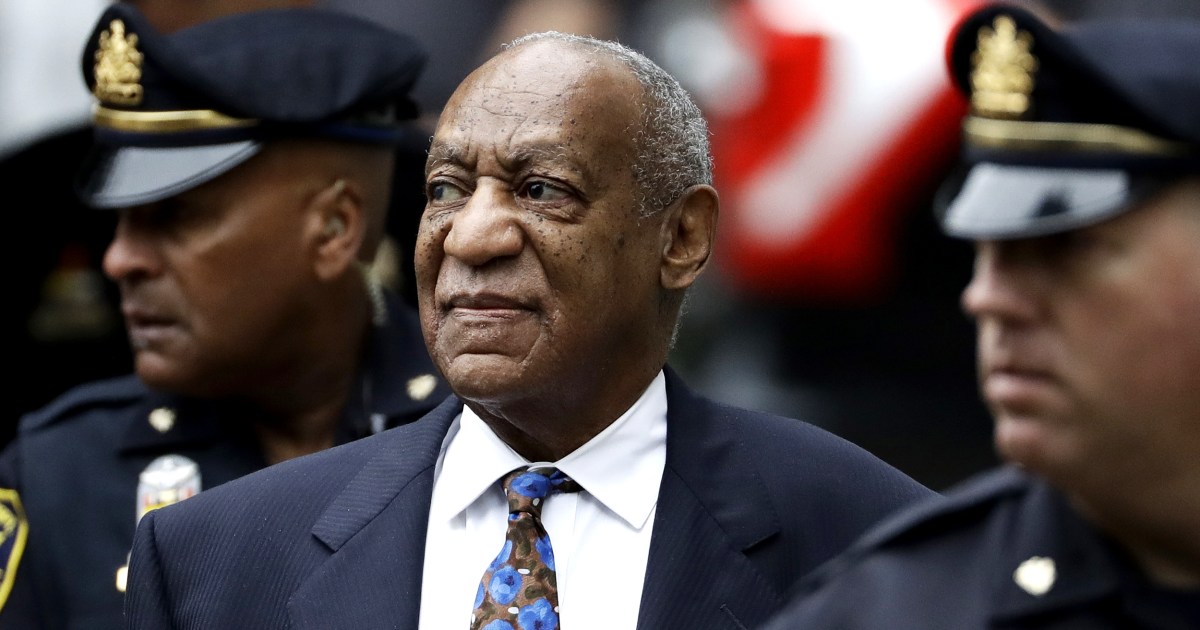
Covering Cosby? Connect with UMW psychological trauma expert Laura Wilson
It’s news that has everyone shocked. Bill Cosby is getting out of jail and will be a free man. Pennsylvania's Supreme Court vacated the sexual assault conviction of Bill Cosby on Wednesday and ordered his release from prison after finding that he was denied protection against self-incrimination. The court said that a prosecutor's decision not to charge Cosby, 83, opened the door for him to speak freely in a lawsuit against him — and that testimony was key in his conviction years later by another prosecutor. Cosby was convicted in 2018 of drugging and sexually assaulting a woman in 2004, and was serving a three- to 10-year sentence. He has served two years of the sentence. The state Supreme Court said Cosby cannot be retried on the same charges. June 30 – NBC News This is a story that will be dominating the news cycle for some time – and if you are a reporter covering this story, then let our expert help. University of Mary Washington Associate Professor of Psychological Science Laura C. Wilson has provided sought-after commentary to The Washington Post, NPR, Reuters, Huffington Post, NBC, The Atlantic and more on the psychological trauma experienced by survivors of rape and sexual assault, as well as mass shootings. Dr. Wilson is available to speak with media, simply click on her icon to arrange an interview today.


Records are going up in flames - is there any break to America's current heat wave?
To call it a heat wave may be an understatement. But as June ends and July rolls in, a blanket of hot and humid weather is covering most parts of America with temperatures not seen since the end of the Great Depression. The trend has scientists and meteorologists looking for answers. AccuWeather's team of expert forecasters were describing the then upcoming heat wave as "unprecedented," "life-threatening" and "historic" as early as the middle of last week, and these descriptions have been accurate in the first days of the Northwest scorcher. The weekend marked the beginning of the extended stretch of extreme temperatures. Portland, Oregon, a city that typically experiences temperatures in the middle to upper 70s in late June, soared to a staggering 112 degrees Fahrenheit on Sunday, breaking the all-time record high of 108 set just a day before. Prior to the current heat wave, the highest temperature ever recorded in the city was 107 set once in July of 1965 and twice in August of 1981. Portland is also expected to obliterate its daily record high of 100 on Monday and possibly set an all-time high temperature record for the third straight day. AccuWeather is predicting a high of 113 on Monday, which would make it the hottest day ever recorded in the city. The highest temperature ever recorded in the state of Oregon is 117, which was set in Umatilla on July 27, 1939. June 28 - AccuWeather And as Americans keep an eye on the mercury that continues to rise, there’s a lot of questions to be asked: Is this a weather phenomenon? Has climate change showed its hand? Are these new temperatures the new normal for the summer months? How can cities and communities adapt to these drastic conditions? And is there any turning back these rising numbers? If you’re a journalist looking to learn more about this topic, then our experts are here to help. Dr. Pamela Grothe is an assistant professor in the Department of Earth and Environmental Sciences as the University of Mary Washington, who earned a Ph.D. in the Paleoclimatology Lab at the Earth and Atmospheric Sciences department at Georgia Institute of Technology. She’s also an #expert in climate change and specializes in how cities can cope and adapt to hotter temperatures and stay livable places. Dr. Pamela Grothe is available to speak with media – simply click on her icon to arrange an interview.


Is a four-day workweek on the horizon?
Is Thursday about to become the new Friday? UConn’s Robert Bird spoke with the Washington Post about the possibility of a four-day workweek and what might be the driving force behind it: New Zealand's and Finland's prime ministers have floated the idea of a four-day workweek. The U.K. Labour Party in 2019 campaigned on the idea that workweeks would be shortened in the next decade. A number of employers have also begun to move in that direction. On Tuesday, Kickstarter announced it would reduce employees' hours without reducing pay next year, reported the Atlantic. Microsoft in Japan instituted a temporary three-day weekend in August 2019 - which resulted in a reported 40% increase in productivity, according to the company, and reduced electricity consumption and paper printing. "A five-day workweek was never a given," Robert Bird, a professor of business law at the University of Connecticut, told The Washington Post, adding that unions fought hard to scrap the six-day workweek norm in the early 1900s. "A five-day workweek was never something that was unchangeable or immutable." "Younger people are demanding more out of their work environment than just a paycheck," he said. "They want to work with someone who believes in their values - and the expression of a four-day workweek sends a signal that the company cares about work-life balance in a significant and meaningful way." June 25 – Washington Post It’s an interesting concept, and one that will be getting a lot of attention. If you are a journalist looking to cover this topic, let our experts help with your stories. Robert Bird is an expert in the areas of corporate compliance, employment law, legal strategy, business ethics, and corporate governance. Professor Bird is available to speak with media – simply click on his icon now to arrange an interview today.

