
Experts Matter. Find Yours.
Connect for media, speaking, professional opportunities & more.

Even with a drastic reduction in driving due to the COVID-19 pandemic, Black Americans saw the largest increase in traffic-related deaths in 2020 when compared to other racial groups. An estimated 38,680 people died in motor vehicle traffic crashes in 2020 — the largest projected number of deaths since 2007 — and the number of Black people who died in such crashes was up 23 percent from 2019, according to the U.S. Department of Transportation’s National Highway Traffic Safety Administration. UConn’s Dr. Norman Garrick spoke with NBC News about the new report: Norman Garrick, a civil and environmental engineering professor at the University of Connecticut, said the numbers are saddening, but not surprising. “Black people tend to be overrepresented as walkers in this country,” Garrick said. “This is not by choice. In many cases, Black folks cannot afford motor vehicles. And people that walk in this country tend to experience a much, much higher rate of traffic fatality. We’re talking eight to 10 times more. It’s a perfect storm of a lot of horrible forces.” This most likely represents yet another way the health crisis has had an outsize effect on Black people. Even in the early days of the pandemic, the National Safety Council found that the emptier roads were proving to be more deadly, with a 14 percent jump in roadway deaths per miles driven in March. And Black people are more likely to face traffic injuries in general; from 2010-2019, Black pedestrians were 82 percent more likely to be hit by drivers, according to a 2021 report from Smart Growth America, a Washington, D.C.-based advocacy group focused on urban development. June 22 - NBC News Dr. Garrick is a professor in the UConn School of Engineering's Department of Civil Engineering and is co-director of the Sustainable Cities Research Group. He is an expert in the areas of transportation behaviors, parking, public transit, and bicycle lanes. Dr. Garrick is available to speak with media – simply click on his icon now to arrange an interview today.


A veteran police officer and a bystander were gunned down in a Denver suburb earlier this week in what authorities are saying was a targeted attack by someone who “expressed hatred” for police. A 19-year veteran of the force, Gordon Beesly was allegedly killed because he was simply wearing a uniform and a badge. The tragic fatality is getting massive coverage and UMW’s Laura C. Wilson was interviewed by The Washington Post to provide her expert perspective on the impact this incident will have on survivors. Laura C. Wilson, an associate professor of psychology at the University of Mary Washington in Virginia, said that years ago she might have thought about each mass shooting or shooting in a public place as having unique characteristics that affect survivors. But she now considers the trauma of multiple events. “When we start to see a lot of these events happening in a small community or within the country, we start to have these compounding impacts,” she said. “People now have more evidence that the world is unpredictable, more evidence that regardless of what I do I can’t keep myself safe.” But Wilson stressed that the effects of trauma are unique to every individual, every survivor. There will be extensive coverage of this killing and if you are a reporter looking to cover the issues survivors of mass shooting events will experience, then let us help. Dr. Laura C. Wilson is a clinical psychologist whose expertise focuses on post-trauma functioning, particularly in survivors of sexual violence or mass trauma (e.g., terrorism, mass shootings, combat). Her research interests extend to predictors of violence and aggression, including psychophysiological and personality factors, as well as indicators of PTSD following mass trauma, long-term functioning among first responders, outcomes among survivors of sexual violence and the influence of media on mental illness stigma. Dr. Wilson is available to speak with media, simply click on her icon to arrange an interview today.



"Apocalypse" - A period of mass extinction threatens insects – and the world that depends on them
UConn entomologist and professor David Wagner says all kinds of insects are at risk for “a death by a thousand cuts" -- decline attributed to multiple factors, including the climate crisis, agricultural intensification, development, deforestation, and the introduction of exotic and invasive species into new environments. He discusses the threats to the world's insect populations in this compelling new video report from UConn Today: Wagner cautions that many of these creatures will not be with us for much longer, and says people must act swiftly to help prevent these tremendous losses before it is too late. Wagner remains hopeful, and says there are many actions that can be taken now — from encouraging political leaders to enact policy changes, to simply letting part of the front lawn grow freely to provide a food-rich environment for insects. “This planet isn’t here for us to exploit,” Wagner says. Dr. David Wagner is an expert in caterpillars, butterflies, moths, insect conservation, and global insect decline, and he’s available to speak with media. Simply click on his icon now to arrange an interview today.


Covering the cicadas across America? Let our expert help.
This spring, Americans have been captivated, curious and even bugged out by the trillion cicadas that finally emerged from 17 years underground to enjoy a loud month of mating calls, feverish breeding and egg laying, all before passing into that good night. Brood X, as it is called, emerged this year as one of the largest on record. Scientists estimate their population to be about a trillion – and numbers like that won’t be seen until the next generation re-emerges in another 17 years. The bugs are harmless, and the story behind their behavior is truly unique – and there’s a lot to know about cicadas before they expire by June’s end. What do cicadas do underground for 17 years? Will climate change alter the behavior of the cicadas? Why do they only emerge every decade and a half? Why are they so loud? What characteristics do they display when they emerge? What can scientists learn as each brood surfaces? There’s a lot to ask, and if you’re looking to cover or learn more – then let our experts help. Dr. Josephine Antwi is an entomologist at the University of Mary Washington and is the go-to expert on this buzzing breed and other insects. Dr. Antwi is available to speak with media regarding cicadas, simply click on her icon now to arrange an interview today.

Cyber attacks and ransomware are incidents that are happening more and more often. They are threatening America’s energy supply, food chain and critical infrastructure. Recently, two Georgia hospitals were victims of a recent attack. Media from across the country asked experts like Frank Katz, director of Georgia Southern University's Center for Applied Cyber Education, who is vulnerable and why. Katz, who directs the Center for Applied Cyber Education at Georgia Southern University’s Armstrong Campus in Savannah, said hospitals can be targets for extortion as well as sources of personal identifying information that can aid in further fraud. “They are more likely to pay than another type of business because it’s a life and death situation,” Katz told WSAV-TV. “It really has become a situation of money, pure and simple. These are thieves that know they can extort the money and often get it.” June 21 – Associated Press Frank Katz, director of the Center for Applied Cyber Education at Georgia Southern University, says hospitals are often easy targets. Having so many employees, he says user IDs and passwords can be easy to figure out. Plus, they’re dealing with emergency medical care. “They are more likely to pay than another type of business because it’s a life and death situation,” Katz said. June 21 – NBC News If you are a reporter looking to cover this subject and speak with Frank Katz, Georgia Southern’s Director of the Center for Applied Cyber Education – then let our experts help. Frank Katz, director of the Center for Applied Cyber Education is available, simply click on his icon or reach out to Georgia Southern Director of Communications Jennifer Wise at jwise@georgiasouthern.edu and she’ll assist with connecting you for an interview today.

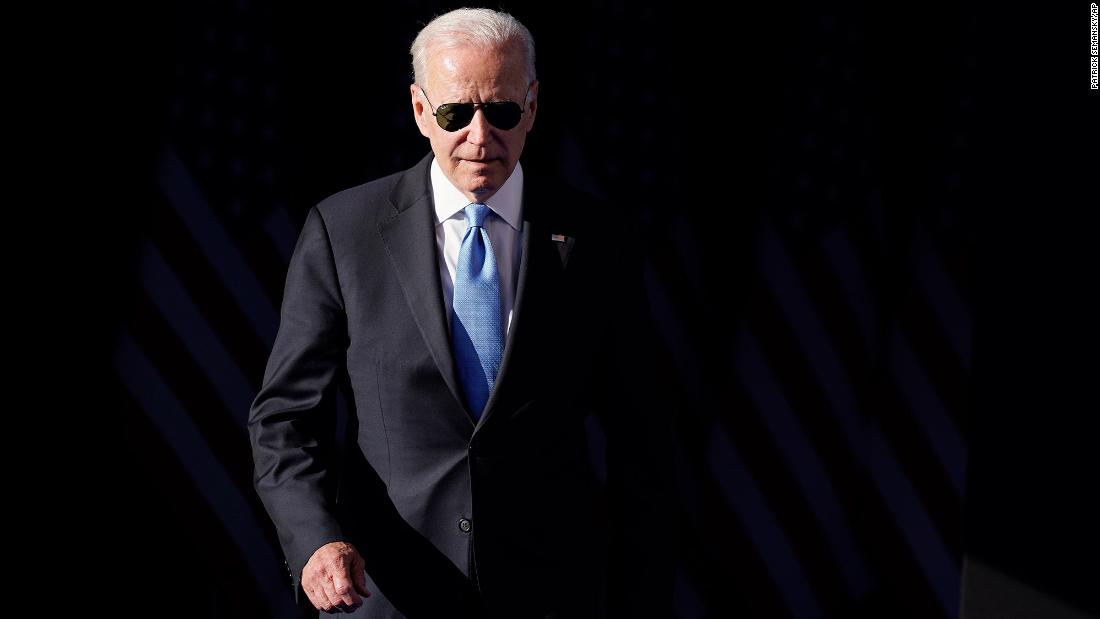
The odd couple – Can Biden and Putin find a way to thaw relations between America and Russia?
It was a meeting of two world powers that came with low expectations but much anticipation. The face-to-face meeting between American President Joe Biden and Russian President Vladimir Putin may not have accomplished much, but it did allow Biden to set a tone on his approach to foreign relations. President Joe Biden's meeting Wednesday with his Russian counterpart came after months of diplomatic wrangling over the details, days of preparation with reams of research and the elaborate construction of two separate lakeside venues for the leaders to appear afterward. But after the summit had concluded, the ornate French style manor home was locked up and the leaders were jetting in opposite directions home, the state of relations between the United States and Russia seemed about the same as before. That is not necessarily a surprise, least of all for Biden, who entered the summit with the vague and modest goal of establishing a "predictable and rational" relationship with Vladimir Putin. Putin's performance afterward was certainly predictable, if not entirely rational. Ultimately, Biden set expectations so low for his first face-to-face encounter with Putin that anything more than someone not showing up at all amounted to breaking even. June 16 - CNN What comes next is up to both leaders – but the world will be watching. Is there a chance to find common ground between the two countries? Will Russia continue to interfere in U.S. elections and hack American agencies - and how will American respond? What happens if Russian opposition leader Alexei Navalny dies in prison? And, did this meeting give Putin the elevated push he needs internationally? If you are a journalist looking to cover this subject – then let us help. Dr. Stephen Farnsworth is a sought-after political commentator on presidential politics. He has been widely featured in national media, including The Washington Post, Reuters, The Chicago Tribune and MSNBC. Dr. Farnsworth is available to speak with media any time. Simply click on his icon to arrange an interview today.


Without Trump – Is Late Night Television Struggling for New Jokes?
For four years, just about every talk show host and comedy show had a fresh supply of almost daily content. The unfiltered comments, gaffes and chaotic ongoings in the White House offered up a steady stream of material for jokes, monologues and coverage. But those days are over. Does Joe Biden's calm presidency and his capable administration mean a deficit of humor for the country’s comedians? UMW’s Dr. Stephen Farnsworth was recently featured in Variety Magazine about his perspective on the current state of late-night political content. Viewers are likely to continue to expect a robust political discussion. “In Washington, the political divisions are as intense as ever, and so it seems that there would be a ready audience for a continuing focus on political humor in late night,” said Stephen Farnsworth, co-author of the 2019 book “Late Night With Trump: Political Humor and the American Presidency” and director of the Center for Leadership and Media Studies at the University of Mary Washington. “The environment may not look all that different post-pandemic.” June 14 - Variety Magazine Dr. Stephen Farnsworth is a sought-after political commentator on presidential politics. He has been widely featured in national media, including The Washington Post, Reuters, The Chicago Tribune and MSNBC. Dr. Farnsworth is available to speak with media any time. Simply click on his icon to arrange an interview today.

America in the 1950’s was all about building highways to pump up the post-war economy and make sure everyone could criss-cross a connected America by car. Urban planners didn’t hesitate to bulldoze neighborhoods that were in the way of this progress. However, history shows that most of those communities that were destroyed housed Black and lower income residents. The result left areas with hot pavement, few green spaces and little tree canopy to provide shade. Recently, UMW’s Pamela Grothe joined the host of With Good Reason to talk about how America needs to undo these past mistakes and make better choices. Grothe recently worked with Jeremy Hoffman, chief scientist at the Science Museum of Virginia, who also appears on the episode, and UMW 2021 graduate Allison Grant on research that explores how redlined communities in Richmond, Virginia, designed to keep Black residents in less desirable neighborhoods, show records of being significantly hotter over the last 30 years than white neighborhoods, which has resulted in more heat-related health issues for Black and lower income residents. Aside from jumping in a pool, trees are our best bet to cool summer heat. Pamela Grothe says we have to be intentional about putting trees in the right places. If you’re a journalist looking to learn more about this topic, then our experts are here to help. Dr. Pamela Grothe is an assistant professor in the Department of Earth and Environmental Sciences as the University of Mary Washington, who earned a Ph.D. in the Paleoclimatology Lab at the Earth and Atmospheric Sciences department at Georgia Institute of Technology. She’s an #expert in climate change and is available to speak with media – simply click on her icon to arrange an interview.

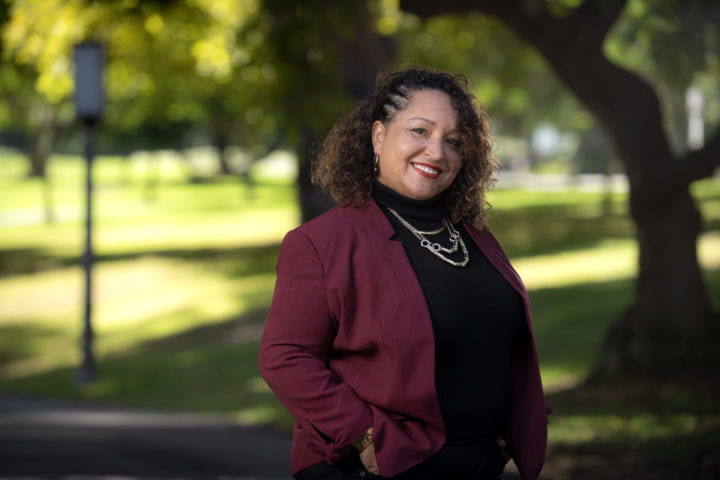
Juneteenth is this Saturday? Our experts can help with your coverage and questions
June 19 — Juneteenth — marks the day in 1865 that the Union Army announced in Texas that the African American slaves were free. Black Americans since then have honored the day, even as it has gone unnoticed by many others. In 2020, Jessica Millward, an associate professor of history at UCI, appeared on the UCI Podcast to discuss the history behind Juneteenth, the decades upon decades of continued struggle, and the hope she feels in this moment. And if you’re a reporter covering this important date in American history – then let our experts help with your stories. Dr. Jessica Millward is an Associate professor in the Department of History at the University of California, Irvine. Her research focuses on comparative slavery and emancipation, African American history, gender and the law. Dr. Millward is available to speak with media about Juneteenth – simply click on her icon now to arrange an interview today.


Did you know in America more than 6 million people are living with Alzheimer’s disease? June is Alzheimer's and Brain Awareness Month and the experts from Georgia Southern University have been busy talking with reporters and media about the importance of brain health and how to monitor your memory for any signs that may require attention. Earlier this month, Georgia Southern’s Adrienne Cohen spoke to NBC News about Dementia and the many types of brain disorders. Alzheimer’s is one of the many types of Dementia, a brain disorder that causes the brain to create gaps, initially effecting the short-term memory. “It can have several stages,” said Adrienne Cohen, Ph.D, associate professor and director, Center for Social Gerontology . “It can effect your memory, it can effect your mood, it can effect the way you interact with other people. It’s a slow progression, initially people might just be confused or can’t remember things and sadly that happens to all of us.” For many, it can be difficult to determine whether a person’s forgetfulness is caused by a number of underlying factors, like vitamin deficiencies or metabolic-related issues, or if it could potentially be something more serious. June 07 – NBC News With nearly six million Americans effected by Alzheimer’s disease, the chance of being effected doubles every five years for every American as they age after 65. This is an important topic and if you are a reporter looking to cover this subject – then let our experts help. Simply reach out to Georgia Southern Director of Communications Jennifer Wise at jwise@georgiasouthern.edu and she’ll assist with connecting you with Dr. Cohen today.