
Experts Matter. Find Yours.
Connect for media, speaking, professional opportunities & more.
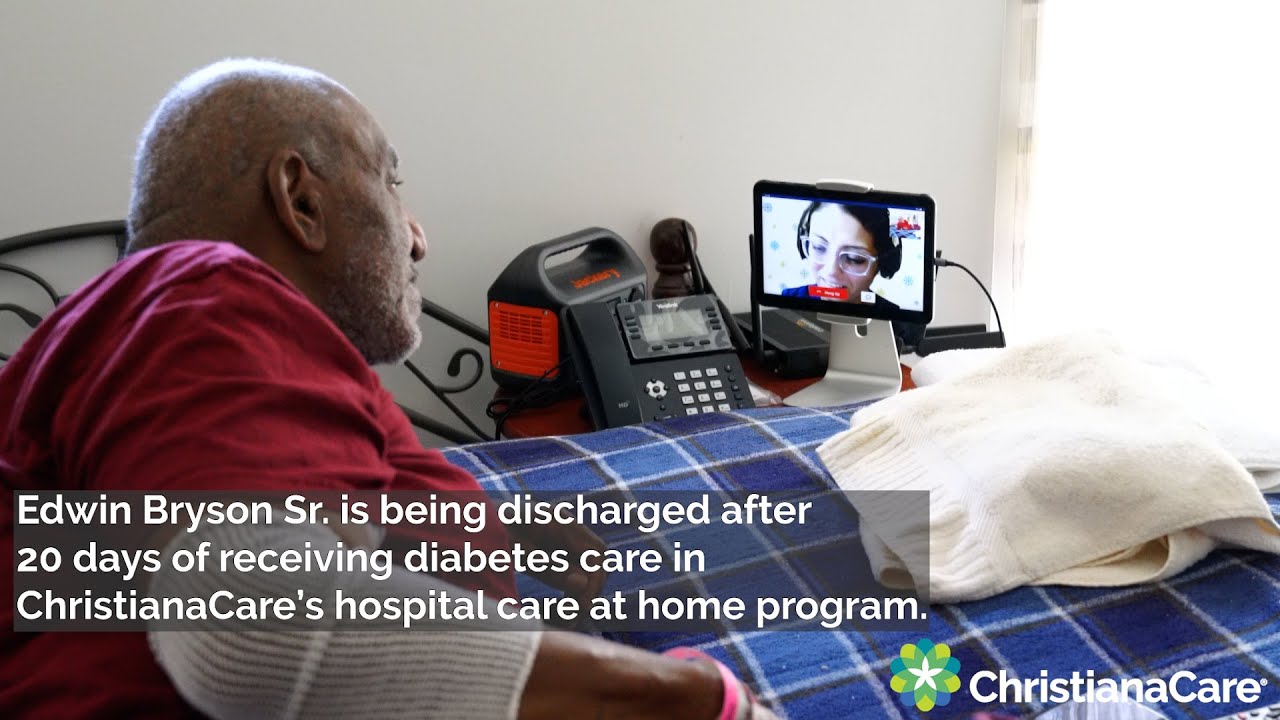
As he arrived at ChristianaCare’s emergency department because of diabetes complications that were causing excruciating pain in his left foot, Edwin Bryson Sr., 71, of Wilmington, Del., had resigned himself to what seemed inevitable—he was going to need hospitalization. But he was surprised when his care team offered him the chance to get the hospital care he needed in the place he likes best — his own apartment. For 20 days, Bryson was a patient in the ChristianaCare hospital care at home program, which offers in-home services to patients who would otherwise require inpatient hospitalization. Daily, members of his care team visited his home to take his vital signs, give him medication and assist him with getting dressed. They also helped with additional tasks to improve his overall health and safety, such as buying an extra lamp and flashlights to ensure the lighting in his home was adequate for his safety, and assisting him with ordering food. “It was a good feeling to be at home,” Bryson said. “My friends would knock on my door and make sure I was OK. My son and my nephews could stop to see me when they felt like it or had the time. They always say, ‘There’s no place like home,’ and it’s true. All I do is hit the button and a nurse comes on to assist me with anything I need and check on my vitals. It was 24-hour service here, just like I was in the hospital.” ChristianaCare has admitted and cared for more than a dozen patients in the hospital care at home program since it launched in December 2021, designed in partnership with the Medically Home Group Inc. The program, which offers the highest level of in-home acute care in Delaware, combines virtual and in-person care provided by a team of physicians, nurse practitioners, registered nurses and other providers. In-person and virtual visits from the health care team, along with mobile imaging and lab services, delivery services for meals and nutrition, and pharmacy medication and management, mean a patient doesn’t need to leave home to get better. Virtual technology and home health equipment brought into the patient’s home ensure round-the-clock monitoring and care that mirrors a traditional hospital setting. “One of the things we’ve learned in a short time about the hospital care at home program is how patient-centered this approach is and how we’re able to customize the care we deliver,” said Sarah Schenck, M.D., medical director of the program. “Most of the things we can do in the hospital we can also do at home. And it turns out patients really prefer that venue. They’re in their own home with their loved ones, their pets, sleeping in their own bed and eating their own food.” Currently, to be considered for hospital care at home, patients must live within 25 miles of Christiana and Wilmington hospitals. Patients who come to the emergency department with common chronic conditions such as congestive heart failure, respiratory ailments, diabetes complications and infections like pneumonia, are eligible for consideration. All hospital care at home patients receive a technology kit that connects them to the command center, powered by the ChristianaCare Center for Virtual Health. With a touch of a button, patients can access an expert team of ChristianaCare physicians and nurses. When patients are well enough to be discharged, the care team collaborates with the patient’s primary care physician to ensure a seamless transition. ChristianaCare joins an elite group of health systems nationwide offering at-home hospital care. Clinical research studies comparing patients in traditional hospitals with patients who received hospital-level care at home have found those who received in-home care experienced fewer readmissions, lower mortality rates, reduced falls and lower costs. “Patient satisfaction is really high with this program,” said Steaphine Taggart, director of operations for the program. “There’s more caregiver interaction with families because they are allowed to come into the home. And overall, there’s more patient-centered care and delivery because it’s in the home,” Registered nurse Mary Pat McCabe has treated patients for 17 years. Working in the hospital care at home command center, she has the opportunity to be even more personable in the virtual setting than a traditional inpatient encounter. “You get to know them and their family members and if they have a pet. You can see into their home and get more of a feel for who they are,” McCabe said. Dr. Schenck said hospital care at home is an exciting example of how new, innovative models of care can improve patient outcomes, reduce costs and transform care. “It’s really foundational for the future of health care delivery. This is our first step, but it’s definitely going to grow,” she said. For Bryson, who was recently discharged, it’s even simpler: “You get better, get back out there and get back into life again.”


Villa Vision provides over 2,000 inner-city children with the tools to improve educational prospects
Villa Vision, an innovative collaboration between Aston University, the Aston Villa Foundation and optical lens supplier Essilor Vision For Life is celebrating the end of its second year having engaged with around 4,500 individuals to raise awareness around the importance of eye health and equip inner-city children with the tools to learn in order to enhance their educational experience and help with their longer-term prospects. Launched in 2020 and delivered by the Aston Villa Foundation, the initiative was the first of its kind in the UK and sought to deliver a programme of eye-health awareness lessons in the classroom, free vision and colour vision screening, followed by a more comprehensive eye test and free glasses to those children who require them, using a fully operational custom-designed mobile eye care unit. With the successful completion of Villa Vision’s second Autumn Term in December, a challenging yet successful year means that the project has now benefited schoolchildren in many local inner-city schools, including: Over 2,200 children receiving the Villa Vision workshop across 30 schools Almost 1,800 children having a vision and colour vision screening check in local primary schools Approximately 280 children (around 16%) being flagged for further investigation Around 100 fully comprehensive eye tests being conducted at schools using the Villa Vision eyecare van Nearly 120 pairs of glasses being provided to children requiring them, helping to support both their educational and social development. Nikhil Sonpal, Villa Vision Project Manager and optometrist at Aston Villa Foundation, said: “The Villa Vision team is extremely proud to have directly reached several thousand local children in supporting their visual health and eye care knowledge through the Foundation’s established network of local primary schools and community organisations.” Leon Davies, professor of optometry and physiological optics in the School of Optometry at Aston University and Vice President of the College of Optometrists said: “We are delighted to see the results that our clinical and research expertise in evidence-based eye care is providing our local community. “The provision of free eye care and raising awareness of the importance of eye health is vital in increasing the long-term prospects of schoolchildren and I am looking forward to future developments of the project in 2022.” Funded by the Premier League, the Professional Footballers’ Association (PFA) and Aston University and delivered by the Aston Villa Foundation, the project is designed to fill a crucial lack of knowledge surrounding the importance of having an eye test and how preventative measures can ensure, among a host of benefits, a lifetime of good vision.



How to choose the best Canadian bank account as a newcomer
During your first few days as a newcomer in Canada, you will need to complete certain tasks to set the foundation for your long-term financial success. Opening a bank account and applying for a credit card should be a top priority on your list. The Canadian banking industry is large and you’ll have many options to choose from. However, newcomers to Canada have distinct financial needs and not all products will be well-suited to your requirements. Typically, you should start researching banking options in Canada several weeks before your arrival to avoid delays in the bank account opening process. This article will give you an overview of banks and banking products in Canada and some essential tips on choosing the best bank account and credit card for you. Banking options in Canada Most newcomers opt for one of the “Big Five” banks, given their size and presence across the country. By market capitalization, these include Royal Bank of Canada (RBC), Toronto-Dominion Bank (TD), Bank of Nova Scotia (Scotiabank), Bank of Montreal (BMO), and Canadian Imperial Bank of Commerce (CIBC). These banks have both a physical and a digital presence. For instance, RBC has 1,201 branches and 4,240 ATMs across Canada, as well as easy-to-use online, mobile, and phone banking options. In addition to the traditional banks, Canada also has a few digital-only banks, such as Tangerine, EQ Bank, Motusbank, and Simplii Financial. These banks also offer financial products, but may not have the full range of services that larger banks offer. Types of bank accounts There are two main types of bank accounts in Canada that serve distinct purposes: Chequing account: Your chequing account is an essential basic account. This is where you keep money that you’ll use for daily transactions, making purchases, and all of your recurring expenses. Typically, with your chequing account, you’ll earn a low or no yearly interest rate on deposits. You may also get a debit card to access this account. Savings account: A savings account is a high-interest account to help you save money over the longer term. This account is not intended for regular, everyday spending transactions. It’s ideal for money that you won’t need daily access to and can set aside as savings for an emergency fund or longer-term needs. Things to keep in mind while choosing a banking partner With all the choices available to you, selecting a banking partner that’s right for your financial needs can be confusing. As this is a crucial decision to make, there are many factors you’ll need to keep in mind to ensure your bank meets your needs. Does the bank have specialized accounts or offers for newcomers or international students? Whether you’re coming to Canada as a permanent resident or an international student, your financial needs as a newcomer will be different from those of residents who’ve been here longer and don’t have financial ties abroad. Some of the larger banks, like RBC, have distinct newcomer banking products that are specially designed to meet your requirements. Does the bank have branches or ATMs near you? Also, look at the overall presence of the banking partner to determine whether you’ll have easy access to your money. You can use the branch locator on the bank’s website to find branches or ATMs close to your home or workplace. Do they have a good reputation of service and does their mission align with your interests? Be sure to check if the bank you’re choosing has a good reputation, has advisors who are able and willing to explain financial products to you, and answers your questions. As a newcomer, you want a trusted banking partner who understands your needs, so compare customer reviews and ask your friends in Canada about their experience with their banks. Also, look at awards or recognitions the banks may have received. For instance, the Global Finance magazine ranked RBC as the #1 World’s Best Bank in North America in 2021. Does the bank offer a wide range of financial products? As a newcomer, your financial needs may be limited initially, but will likely expand over the next few years. Make sure that your bank can offer you the entire range of products from banking basics like chequing accounts and credit cards to products you’ll need over a longer term like mortgages, RESPs, auto loans, and insurance. Does the bank have staff members who speak your language? Language barriers and cultural differences should not stand in the way of your financial success in Canada. If your first language is not English or French, be sure to check if the bank you’re considering has financial advisors who can answer your questions and explain financial products in a language you’re comfortable with. How to choose the right bank account for you Not all bank accounts are the same. The requirements, fees, and account features may vary based on the financial institution and the banking product you’ve picked. Here are some things you should compare to find a bank account that meets your needs: Minimum balance requirements: Some bank accounts require you to maintain a minimum daily or monthly balance. If your balance dips below this required level, you may be charged a penalty. RBC Day to Day Banking, RBC Signature No Limit, and RBC VIP Banking accounts don’t have any minimum balance requirements, allowing you to access all your money, whenever you need it. Speak to a financial advisor to find the best bank account for your needs. Banking fees: Most chequing accounts have a monthly banking fee, which can range from $0 to $30.95. In some cases, the monthly fee can be waived if you maintain a minimum balance in the account. Statement fees: Some banks charge a small monthly fee for issuing paper bank statements. In most cases, you can opt for paperless, e-statements for no charges. Cheque or draft fees: Some chequing accounts come with free personalized cheques or bank drafts. In others, a chequebook with 50 leaves can cost as much as $50 and a bank draft can cost up to $10. Automated Teller Machine (ATM) or Interac e-Transfer limits and charges: Some accounts may have limits for how many ATM withdrawals or peer-to-peer Interac e-Transfers you can make in a month. You should also check if there’s a fee for withdrawing money from another bank’s ATM or making Interac e-Transfers to an account in a different bank. International remittance fees: As a newcomer in Canada, you may want to continue financially supporting your family back home. If you’re planning to make international money transfers regularly, be sure to check the international remittance fees for the chequing accounts you’re considering. RBC offers newcomers up to two free international remittances per month for their first year with an eligible RBC bank account. Interest rates: The interest you’ll receive in savings accounts in Canada may be much less than what you’re used to in your home country. However, High Interest Savings Accounts (HISA) usually offer a higher rate of interest to help you grow your savings faster. Offers: Some bank accounts offer incentives at the time of account opening. For instance, you may receive cash incentives, higher interest rates, or free services if you open a new account and meet some qualifying criteria. As a newcomer in Canada, choosing a bank account will likely be a top priority for you. The banking system and financial products may be very different from those in your home country, so take the time to understand each product and select a bank account and credit card that best fits your needs. Remember that you are not tied down to the banking products you choose when you first arrive, so you can always upgrade to a higher tier account or credit card later. Original article located here, published by Arrive. About Arrive Arrive is powered by RBC Ventures Inc, a subsidiary of Royal Bank of Canada. In collaboration with RBC, Arrive is dedicated to helping newcomers achieve their life, career, and financial goals in Canada. An important part of establishing your financial life in Canada is finding the right partner to invest in your financial success. RBC is the largest bank in Canada* and here to be your partner in all of your financial needs. RBC supports Arrive, and with a 150-year commitment to newcomer success in Canada, RBC goes the extra mile in support and funding to ensure that the Arrive newcomer platform is FREE to all. Working with RBC, Arrive can help you get your financial life in Canada started – right now. Learn about your banking options in Canada and be prepared.


How to protect yourself against financial fraud as a newcomer in Canada
As a newcomer in Canada, your financial security is of prime importance. However, fraudsters and scammers recognize that newcomers can be easy targets, as they don’t necessarily have the information needed to protect themselves against fraud. Being in a new country, you may not be aware of the ways in which financial fraud occurs, how to identify fraudulent situations, or where to report fraud. This article gives you an overview of the various types of financial fraud and scams that occur in Canada and provides valuable tips to help protect you against financial fraud as a newcomer. Recognizing common financial fraud and scams in Canada Phishing emails or text messages Phishing emails or text messages are often designed to look like they are from a source or website you trust, like your bank or an online store. The sender will ask you to click on a link or download a file, or will try to create a sense of urgency, such as saying there has been some suspicious activity from your account or that you need to update your payment information to keep your account active. Be sure to check the email address the email originated from. If the domain name doesn’t match the organization’s name, it’s likely a phishing attempt. Other red flags can be bad grammar, a generic greeting, or unsolicited attachments in the message. If you suspect that an email or text is fraudulent, call the organization to verify before clicking on any links or sharing any personal information. Generally, Canadian banks will never ask you to share personal information, such as account numbers or Social Insurance Number (SIN), over email or text message. Debit or credit card fraud Debit or credit card fraud happens when someone steals your credit card, PIN, or bank card information and uses it to make purchases or withdrawals from your account. Fraudsters can use different ways to get your credit card information, including stealing bank statements from your mailbox or garbage, hacking into company databases to steal information, prompting you to use your credit card on a fake website, or through phishing emails. You can prevent debit and credit card fraud by keeping your credit card and personal information safe. Check your bank statements or banking app regularly to ensure that you can identify all the transactions. If you think you have been a victim of credit card fraud, call the phone number on the back of your credit card immediately to get in touch with your bank and lock your card to avoid additional fraud. Immigration and citizenship fraud There are several private immigration consulting organizations that specialize in helping newcomers come to Canada. However, if you come across a website that asks you to pay for immigration or application forms or guides that are otherwise available for free on the Immigration, Refugees, and Citizenship Canada (IRCC) website, it might be fraudulent. You may also receive fraudulent phone calls or emails from someone posing as an immigration or citizenship service provider, claiming that they can guarantee entry into Canada, provide jobs, or fast-track your immigration processing for a fee. Never share your financial details with such organizations without contacting the website owner and checking online reviews to confirm the legitimacy of the business. Also, learn about the immigration and citizenship process so you can identify fake claims. Employment fraud While looking for a job as a newcomer in Canada, be on your guard against fake “employment agencies” who ask you to pay for “training” in order to get a job or promise you a guaranteed job if you pay a large upfront fee. Legitimate recruiters or agencies in Canada will never guarantee job placements or force you to undergo mandatory training. Typically, when employers use external recruiters or agencies to find candidates, the organization, not the candidate, pays the agency’s fee. Fake phone calls from “CRA” or tax fraud Many newcomers receive fraudulent phone calls from someone claiming to be from the Canada Revenue Agency (CRA) or Service Canada. Typically, the caller (or recorded message) will state that you have unpaid tax liabilities or that your Social Insurance Number (SIN) has been compromised. In some instances, scammers may even claim there is a warrant out for your arrest, which can be quite alarming. They may ask you to share your SIN number or make a payment through wire transfer, bitcoin, or prepaid gift cards. These callers are often aggressive and use threatening language to scare the recipient. In a variation of this type of fraud, the caller (supposedly the CRA) will claim that you’re entitled to a tax refund and will need to share your banking information to get it. The CRA typically contacts individuals by message in their secure online portal, so if there is an issue with your tax return, you will see a message about it there. If you’re unsure about the legitimacy of a call, hang up and call the agency to verify its authenticity. Educate yourself on the ways legitimate government agencies can contact you and the questions they may ask. Pyramid or Ponzi schemes A pyramid scheme is a business model where you’ll be offered payment or commission for enrolling other members, rather than for selling actual products or services. You’ll be asked to pay an upfront “membership fee,” with promises of being able to turn a profit once you start bringing in more members. A Ponzi scheme is a type of fraud where you’re lured into investing money with the promise of very attractive dividends. In reality, your money is not being invested anywhere and is instead being used to pay “dividends” to other investors. Investors may receive lucrative dividends for some time until the pool of new investors dries up. If the promised returns seem too good to be true, it may be a Ponzi scheme. Be sure to carefully vet investment opportunities or speak to your financial advisor before making any investments. Catphishing or romance fraud If you’re active on dating sites or apps, keep an eye out for romance fraud. Catphishing, or catfishing, is when a person pretends to be someone else online, using a fake name, photograph, or story. A fraudster may spend time talking to you online, and once they’ve established a romantic connection, they’ll ask you for money, claiming that they need it to help a sick relative or get over a bad stretch. In some cases, the scammer may even meet you in person to make the relationship seem more legitimate. Fake computer virus or ransomware In this type of scan, the victim gets a call or email claiming that their computer has been infected with a virus. The scammer may ask for money to remove the virus or could try to access personal information and passwords through their device. Be sure to install an anti-virus to protect your laptop and mobile device. Fake prizes If you receive a message, email, or phone call saying you’ve won a prize for something you don’t remember participating in, it’s probably a scam. Fraudsters may use this opportunity to collect your personal information or verify your contact details, so avoid responding to such messages or sharing any information. If you’re unsure about the legitimacy of the prize, check the organization’s website to confirm whether the contest or offer is real. Tips to protect yourself against financial fraud as a newcomer Financial fraud can impact your financial stability and, as a newcomer, it’s important to safeguard yourself against potential threats and fraudulent activities. Here are some key things you should keep in mind to protect yourself against financial fraud: Keep close track of finances. Review your bank account, credit card statements, and credit report regularly and report any inconsistencies early. If you’re unsure about what to look for, speak to a financial advisor for more information. Protect your personal and financial information. Change your banking passwords often and don’t write them down. Keep your credit card and credit card information safe, and don’t use your credit card on untrustworthy websites. Don’t share your personal or financial information, including your SIN, unless you know why it’s needed and how it will be used. Educate yourself on who can ask for your SIN or credit history, and only share this information if it’s absolutely necessary. Learn to identify fraud. If an offer seems too good to be true, it’s likely fraudulent. Always review the terms and conditions of the service or financial product you’re purchasing before making any payments. Borrow only from trustworthy financial institutions. Credit is an essential part of Canada’s financial ecosystem. Financial institutions like banks, credit unions, mortgage providers can provide you with credit to cover your expenses. Avoid going to illegitimate local lenders or payday loan providers as they could misuse your financial information or lead you into debt. Verify suspicious phone calls or emails and report fraud. If you’re unsure about the legitimacy of an email or call you received, check for signs of phishing or contact the organization or agency to verify whether the information is accurate. Don’t share your financial or personal information with anyone or click on any links until you’ve verified the authenticity of the message. If you suspect that you’ve received a fraudulent phone call or email, report it to the Canadian Anti-Fraud Centre by telephone at 1-888-495-8501, through their website, or by email (info@antifraudcentre.ca). If your SIN has been stolen, report it to Service Canada at 1-866-274-6627 as soon as possible. Keep your laptop and mobile devices safe. Never give physical or virtual access to your devices to someone who isn’t an authorized service professional or someone you didn’t contact for service or repair. Your devices may contain saved passwords, login details, or other personal information that fraudsters can extract and misuse. Always wipe your devices by restoring factory settings before selling or scrapping used laptops or mobile phones. As a newcomer in Canada, receiving phone calls from someone posing as a CRA official can be alarming. By learning to recognize common financial scams and verifying potentially fraudulent claims, you can safeguard yourself against fraud. Remember, by reporting fraudsters, you are protecting not just yourself but also countless others who may otherwise be targeted by financial scams. Original article located here, published by Arrive. About Arrive Arrive is powered by RBC Ventures Inc, a subsidiary of Royal Bank of Canada. In collaboration with RBC, Arrive is dedicated to helping newcomers achieve their life, career, and financial goals in Canada. An important part of establishing your financial life in Canada is finding the right partner to invest in your financial success. RBC is the largest bank in Canada* and here to be your partner in all of your financial needs. RBC supports Arrive, and with a 150-year commitment to newcomer success in Canada, RBC goes the extra mile in support and funding to ensure that the Arrive newcomer platform is FREE to all. Working with RBC, Arrive can help you get your financial life in Canada started – right now. Learn about your banking options in Canada and be prepared.

MEDIA RELEASE: What CAA members need to know about the highway tow zone pilot program
As Ontario’s new highway tow zone pilot launches on Monday, CAA South Central Ontario (CAA SCO) is reinforcing its commitment to ensure members are safe no matter the location. “CAA members should be confident knowing that if they find themselves stuck in one of the tow zones, we are here to help as always,” says Teresa Di Felice, assistant vice-president of government and community relations. “As a CAA member, call us and we will help navigate the rescue with the appropriate tow provider.” Getting stuck on the side of the road can be an intimidating situation. CAA's best advice is first to assess your situation and if it's an emergency, call 911. Otherwise, we are encouraging members to press *222, and CAA will help coordinate a rescue, either with one of CAA’s tow providers or through MTO, depending on the situation. CAA has a commitment to road and consumer safety in Ontario. Every year CAA SCO responds to over 1.2 million rescue calls and of that number, only about 2 per cent of our calls originate in these zones. “At CAA, our mission is to help you stay safe, mobile and protected. That’s why we want you to know that if you find yourself in need of a tow in one of the designated pilot program tow zones, we will be here to help make the process safe and easy,” says Di Felice. In a survey conducted in August 2021 by CAA SCO, 93 per cent of members agree that roadside assistance providers, like CAA, should be permitted to operate in regulated highway towing sections of the GTHA highways. If an MTO tow zone approved provider needs to remove your vehicle, CAA will cover the cost of your tow based on the limits of your membership level. For over a decade, CAA has been advocating for towing industry reforms and working towards greater consumer protection. Motorists should also ensure that they know their rights. In 2018 CAA created the Towing Bill of Rights, a glove box reference card, to help avoid any confusion regarding motorists' rights when they need towing services. For more information, please visit caasco.com/towzonepilot



'Tangled Up' reveals science and history of Alzheimer's
A new book from leading University of East Anglia dementia expert Prof Michael Hornberger investigates the science and history of Alzheimer's disease. 'Tangled Up - The science and history of Alzheimer's disease' is available as a paperback or e-book. Prof Hornberger researches groups that are at higher risk of developing dementia (because of genetics, lifestyle or their other health condition) and works to help reduce this risk or delay the symptoms of dementia. He also explores the nature of support for those who have been diagnosed with dementia and helping the patients and their families and carers prepare for the future. His background is as a neuroscientist and his work involves using innovative techniques (such as online games and driver behaviour) to identify the spatial or navigation issues that can occur long before before diagnosis of dementia and before the traditional impacts on memory arise. He developed the mobile game Sea Hero Quest that can detect people at risk of Alzheimer's. His work enables early prediction of the likelihood of dementia (sometimes a decade ahead) and the opportunity to manage the onset and reduce risk by as much as 30 per cent. Prof Michael Hornberger, from UEA’s Norwich Medical School, said: “Alzheimer's disease is the most common cause of dementia in the UK. It affects around one in 14 people over the age of 65 and one in every six people over the age or 80 – and it can affect memory, thinking skills and other mental abilities. “I wanted to write a book to help people better understand the science and history of Alzheimer’s disease. “It covers everything from the causes of Alzheimer’s, through to why people with Alzheimer’s ‘live in the past’ and practical advice for how people can reduce the risk of developing it. “At the end of the book, you will have become an Alzheimer’s disease science expert and can use your newfound knowledge to untangle this devastating disease,” he added.


MEDIA RELEASE: Is your vehicle ready for winter? What you need to do to prepare for the season ahead
Temperatures are getting colder, Ontarians are bundling up, and CAA South Central Ontario (CAA SCO) is recommending that now is the right time to get your vehicle winter ready. “Preparing for unpredictable driving conditions will help ease the frustration and anxiety that comes with colder weather,” says Kaitlynn Furse, director, corporate communications, CAA Club Group. “Before the winter season starts ensure your car is in tip top shape.” If you’re uncertain of when or how to get ready for winter driving, the top three things you can do right now are: packing an emergency roadside kit, installing your winter tires, and checking your car battery. CAA recommends packing a fully stocked emergency roadside kit so in case something does happen while on the road, you have everything to stay safe until help arrives. The kit should include a flashlight and extra batteries, warning devices (e.g., flares, reflective vests/strips), a first aid kit, blankets, jumper cables, non-perishable food and water plus a phone charger. Be sure to also keep an ice scraper, small shovel and snow brush handy in your car at all times. With the temperature consistently hovering around 7° Celsius, it’s important to install four matching winter tires to fully optimize your vehicle’s handling, stability and braking. “Compared to all-season tires, winter tires stay flexible in cold temperatures giving you better traction, whether or not there’s snow on the ground,” says Furse. “This may reduce your stopping distance by a few feet which can be the reason for preventing a collision.” While installing your winter tires, CAA recommends also asking your mechanic to check your car battery. “Even a fully charged battery can lose power when the temperature dips below 0° Celsius,” says Furse. “It’s important to have your car battery tested in the fall to ensure it’s ready for the winter.” Are you unsure if your car battery will make it through the winter months? Watch for the following warning signs that a battery may need to be replaced: Your vehicle cranks slowly when trying to start. It takes 175 to 250 amps of battery power to get a car going. If your car is slow to start, you might be dealing with an insufficient charge. Your headlights dim while idling. When idle, a car may draw more power than the alternator alone can produce, so your battery kicks in. If your headlights dim when you are idling but brighten when you rev the engine, it could mean a drained battery. Your digital systems power down quickly. Electronics like the radio, GPS, dash cams and other accessories, especially in modern cars, use battery power when the engine is off. If they stop functioning properly, it could suggest a weak battery. You hear a grinding, clicking or buzzing noise when you turn on the ignition. It’s important to be able to distinguish the reason your vehicle may be making noises, usually these sounds mean your battery has lost its charge but if you’re still unsure, get your vehicle checked by a professional. Your vehicle has stalled. The stored energy in your car battery is essential for starting the engine, without its juice, you won’t be going far. If your battery is giving you problems or you are unsure if it’s time to replace it, you can call CAA’s Mobile Battery Service at *222 to have a trained CAA SCO Battery Service Representative come test your battery and provide a helping hand.


Canadian finances 101: What you should know as a newcomer
Canada’s financial ecosystem is made up of banks, credit unions, trusts, and other financial and insurance companies and it is considered to be one of the most sound and safest in the world. According to the Global Competitiveness Report 2019, published by the World Economic Forum, Canada ranked 9th globally for its financial system, showcasing stability and reliability. As you plan your move, familiarizing yourself with the Canadian banking and financial landscape can help provide context to key tasks like opening bank accounts, building credit history, borrowing money, and filing taxes. In this article: Types of financial institutions in Canada Getting started with taxes: The Canada Revenue Agency (CRA) Canada: A credit-based economy Banking, investments, and money transfers What are the types of financial institutions in Canada? Financial institutions in Canada can be classified into three main categories: 1. Banking institutions These are places where you can deposit, withdraw and borrow money. Examples of such institutions include banks, online-only banks, credit unions, trust companies, mortgage companies, etc. Banks A bank is licensed to receive deposits and make loans. Most banks are managed by the national government. The five largest banks in Canada are often referred to as the “big five” in banking. They are: Royal Bank of Canada (RBC), Toronto-Dominion Bank (TD), Bank of Nova Scotia (Scotiabank), Bank of Montreal (BMO), and Canadian Imperial Bank of Commerce (CIBC). Sometimes, you may hear the term “big six,” including the National Bank of Canada – although, note that its operations are primarily focused in the provinces of Quebec and New Brunswick. Digital-only banks In addition to these banks, there are a few digital-only banks, such as Tangerine (a subsidiary of Scotiabank), Simplii Financial (a subsidiary of CIBC), and EQ Bank. They provide all services online only and do not have any physical branches. Credit unions A credit union is a smaller financial institution that is owned by its members, who are also typically account holders. They operate under provincial legislation and regulations and provide similar services as banks. The main difference between a credit union and a bank is their structure; credit unions are owned by anyone with money in the credit union. The operations are supervised by a democratically elected board of directors made up of local community members. Due to their scale of operations, note that credit unions may have fewer branches and ATMs than a big bank would. Tip: As a newcomer to Canada, you can choose any financial institution of your choice. However, it is helpful to know that the big five banks (like RBC) have newcomer banking packages that specifically cater to permanent residents and international students and are thus better positioned to assist you in your unique situation. Trust companies Trust companies are legal entities similar to banks that act as an agent (on behalf of a person or business) for the purpose of administration, management and the eventual transfer of assets to a party. Mortgage companies Money lending entities such as mortgage finance companies (MFCs) and mortgage investment corporations (MICs) provide real estate financing. MFCs are non-depository financial institutions that underwrite and administer mortgages sourced through brokers. Their lending is funded mainly through securitization or direct sales to third parties, primarily the big six banks. MICs and other private investors typically deal in uninsured, customized mortgage products that are not available through traditional channels. These products include non-prime loans, second mortgages and very short-term mortgages. Key financial authority: The Bank of Canada The Bank of Canada is the nation’s central bank. Its principal role is to promote the economic and financial welfare of Canada. The Bank influences the supply of money circulating in the economy, using its monetary policy framework to keep inflation low and stable. It promotes safe, sound and efficient financial systems, within Canada and internationally, and conducts transactions in financial markets in support of these objectives. Additionally, the Bank of Canada also designs, issues and distributes Canada’s bank notes and acts as the “fiscal agent” for the government of Canada, managing its public debt programs and foreign exchange reserves. It also sets the interest rates in Canada. 2. Insurance companies These are entities that sell insurance to cover the risk of loss in various situations, caused due to a variety of factors. They include homeowner or renter’s insurance, health insurance, car insurance, life insurance, and more. They compensate you for any loss that’s covered by your insurance policy. Once you purchase a specific type of insurance, you are required to make periodic payments, called premiums, to the insurance company to avail of the agreed-upon coverage. 3. Investment companies These are organizations that focus on investing, administering or managing funds or money on behalf of other persons. Examples of such companies are investment banks, hedge funds, underwriters, and brokerage firms. Note: There might be an overlap in the services provided by financial institutions. For instance, a leading bank like RBC offers banking services, mortgages, a wide variety of insurance options, investment solutions, and more. Tip: Beware of predatory lenders offering payday, instalment, and other types of loans with very high interest rates. These lenders often prey upon people who need cash quickly and who have run out of all other options. They usually have exorbitant interest rates, confusing and misleading representations, and a lack of transparency and documentation. Therefore, always double-check money lending claims that seem too good to be true. Note that payday loans are provincially regulated while instalment loans are unregulated. What this means is – while interest rates cannot exceed 60 per cent, lenders are effectively free to change terms and add fees and other charges almost at will. Getting started with taxes: The Canada Revenue Agency (CRA) The CRA administers tax laws for the Government of Canada and for most provinces and territories. It administers various social and economic benefit and incentive programs delivered through the tax system. The CRA website is the go-to place for everything related to your taxes: filing annual tax returns, checking receipt of Government benefits and subsidies, viewing tax documents, etc. Important: To register for CRA’s “My Account,” you must have filed a tax return for the current or a previous year. Download Arrive’s free tax guide for newcomers for insights on how to file your taxes and to make sure you’re prepared to manage the expectations that come with paying taxes in Canada. Note: Beware of a long-running CRA scam with callers posing as representatives of the CRA. The CRA will never use threatening language nor ask for information about your passport, health card, driver’s license, or demand immediate payment by Interac e-transfer, bitcoin, prepaid credit cards or gift cards from retailers such as iTunes, Amazon. Canada: A credit-based economy North American countries such as the U.S. and Canada are known to be credit-based economies. This essentially means that most people use their credit cards (instead of debit cards or using cash) to make purchases and then repay the entire amount owed either at the end of their credit card billing cycle or in installments. You will need to build your own credit history, since this is essential to many aspects of life in Canada. Once you receive your first credit card, start by making payments for small expenses such as phone bills or groceries, and be sure you pay the balance in full by the end of the billing cycle. Tip: Keep in mind that credit cards have limits and do not offer free money. They can carry very high-interest rates, so your balance should be managed and paid down promptly – this will help you maintain a good credit rating. A credit score is a way for financial institutions to measure your ability to repay loans. Some scenarios where you may be asked for a credit report are while renting accommodation, applying to certain jobs, and obtaining mortgages or other loans from the bank. Additional resources Download Arrive’s free Credit guide to learn more about credit cards, credit scores, and credit ratings in Canada. For tips on staying debt-free and building your credit history in Canada, read How to build a good credit score from scratch as a newcomer. Banking, investments, and money transfers in Canada Banking Like many other countries, in Canada, you can conduct all your banking and money transfer transactions by walking into a branch or online, through internet banking. See How to open a bank account in Canada as a newcomer to know the process of opening a newcomer account. The article will also provide tips and resources to help you learn more about credit and direct deposits. Investments There are many financial products available to save and invest your money in Canada. They can be broadly classified into savings accounts, registered savings plans and investment products. Depending on your goals and your appetite for risk, you can choose one or a combination of several of these. Read Savings and investments for newcomers in Canada for deeper insights into all available investment products. Money transfers For domestic peer-to-peer payments (think: sending money to a friend, relative, co-worker, or acquaintance in Canada), there are a couple of ways to send and receive money online: Interac and Paypal. Interac is a bank-based tool, while Paypal is a non-bank, third party service. Among these, Interac e-transfers are the most popular and widely used form of peer-to-peer payments in Canada. You can send money overseas through online or mobile banking, by telephone, by email, or in-person. Banks like RBC have a simplified, affordable, and convenient process for international money transfer through online banking. If you have the recipient’s banking information handy, all it takes is a few clicks! Some popular options for international remittances are: Banks Credit unions Money transfer operators like Western Union, MoneyGram, WorldRemit, etc. Peer-to-peer transfer providers such as Transferwise (now, Wise), CurrencyFair, Paypal, etc. Currency exchange businesses When sending money overseas, the Canadian federal government tracks large sums (over $10,000 CAD) through Financial Transactions and Reports Analysis Centre of Canada (FINTRAC) to prevent money-laundering, terrorism funding, and related crimes. Understanding financial products and regulatory agencies in Canada can make you feel overwhelmed. Start with the basics so you can build awareness and a strong foundation to manage your finances in Canada. Original article located here, published by Arrive.

How to build a good credit score from scratch as a newcomer in Canada
Having a credit rating or a credit score is essential for life in Canada. A good credit score can ensure you qualify for better interest rates on mortgages and other loans down the line. To get started with building your credit history, having and using a credit card is essential. In this article, we will outline what a credit score is, share valuable tips to help you build a good credit history as a newcomer in Canada, and provide information on how to check your credit score and order a credit report. What is a credit score? When you borrow money from a bank (or lender), certain information is shared with a credit bureau. Over time, additional information, such as whether you’ve paid your bills on time, whether you’ve missed payments, and how much debt you have outstanding, will get shared with the credit bureau. These factors go into calculating your credit score – a three-digit number that indicates to lenders your capacity to repay a loan – as reported on your credit rating report. Credit scores range from – 300: The lowest score or the starting point; to 750: The magic middle number, which will likely qualify you for a standard loan; all the way up to 900: The highest score awarded for excellent credit history. The higher your score, the lower the risk is to the bank, and vice versa. A score under 750 will likely make it more difficult to acquire loans or credit cards – you may receive a lower credit limit and get charged higher interest rates. For newcomers to Canada, however, most banks offer a credit card when you open a newcomer account with them – this usually suffices to get you started on your journey of building a good credit history in Canada. Learn more about credit scores in Canada See Credit in Canada: What every newcomer needs to know for information on the different types of credit in Canada. Get insights on the factors that affect your credit score, understand why building a good credit history is important, and dive into how a credit score is calculated. Who can see and use your credit report? Credit bureaus follow rules that define who can see your credit report and how they can use it. Those allowed to see your credit report include: banks, credit unions and other financial institutions, credit card companies, car leasing companies, retailers, mobile phone companies, insurance companies, governments, employers, and landlords. These businesses or individuals use your credit report to help them inform lending decisions about you. Generally, you need to give permission or your consent, for a business or individual to access your credit report. In the provinces of Nova Scotia, Prince Edward Island and Saskatchewan, a business or an individual only needs to tell you (verbally) that they are checking your credit report. Other provinces require they obtain your written consent to check your credit report. Some provincial laws allow government representatives such as judges and the police to see parts of your credit report without your consent. 5 tips to build a good credit score 1. Make payments on time and pay off your balance in full each month When lenders review your credit report and request to see your credit score, they want to know how reliable you are with paying your bills – because usually, past payment performance is considered a good predictor of future performance. To build a good credit history, it’s important to make all your payments on time. While your credit card bill will always indicate the minimum amount owed, as someone just getting started with building credit in Canada, it’s best to pay off the balance in full each billing cycle. Paying the entire balance each month also helps you avoid racking up credit card debt. 2. Use credit wisely Always stay within your credit limit. If you have a credit card with a $2,000 CAD limit, try to not go over that limit. You should spend only what you can afford to pay back. Spending more than the authorized amount on a credit card can lower your credit score. As a rule of thumb, try to use less than 35 per cent of your total credit in each billing cycle. This includes all your credit products such as: line of credit, credit card from Canadian banks/lenders, loans, etc. For example, if you have a credit card with a $2,000 CAD limit and a $5,000 CAD line of credit from a bank, you should limit your total spending to approximately $2,450 CAD (35 per cent of 7,000) or less, while also maintaining the 35 per cent rule (in this case, $700 CAD) specifically for your credit card. Tip: Start small – use your credit card for groceries, monthly utility payments, phone bills, etc. Over time, this will help you build a strong credit history. If you max out your credit limit each month, lenders perceive you to be a greater risk. This holds true even if you pay your balance in full by the due date. 3. Limit your number of credit applications and/or credit checks As you settle in Canada, it is normal and expected that you’ll apply for credit from time to time. A lender or other organization offering credit-based products may ask to “check your credit” or “pull your report”. When they do so, they are asking to access your credit report at the credit bureau. This results in an inquiry in your credit report. Tip: To build a good credit history faster, it is recommended that newcomers to Canada start off with a single credit card (avoid holding multiple credit cards) and keep paying the balance in full. There are two types of credit checks: hard hits and soft hits. Hard hits: These are credit checks that will appear in your credit report and can impact your credit score. Anyone who views your credit report will see these inquiries. Examples include an application for a credit card or mortgage, some rental applications, and some employment applications. If there are too many (hard) credit checks in your credit report, lenders may think that you’re urgently seeking credit and/or trying to live beyond your means. Soft hits: These are credit checks that appear in your credit report but only you can see them. These checks do not affect your credit score in any way. Examples include requesting your own credit report or businesses asking for your credit score to update their records about an existing account you have with them. To control the number of credit checks in your report: Limit the number of times you apply for credit; When shopping around for a car or a mortgage, get your quotes from different lenders within a two-week period. Your inquiries will be combined and treated as a single inquiry for your credit score; Apply for credit only when you really need it. 4. Report any inaccuracies on your credit report Once you get your report, check for: Errors in credit card and loan accounts, such as a payment you made on time that is shown as late – this could impact your credit score negatively; Mistakes in your personal information, such as a wrong mailing address or incorrect date of birth; Accounts listed that you never opened, which could be a sign of identity theft; Negative information about your accounts that is still listed after the maximum number of years it’s allowed to stay on your report. Any inconsistencies or incidents of fraud should be reported to the respective credit bureaus without any delay and get it corrected. Monitoring your credit on a regular basis can help you spot inaccuracies before they impact your credit rating. Note: A credit bureau can’t change accurate information related to a credit account on your report. For example, if you missed payments on a credit card, paying the debt in full or closing the account won’t remove the negative history. 5. Use different types of credit: card, loan, line of credit The number of credit products you have (such as a credit card, line of credit, loans, etc.) affects your credit score. For newcomers to Canada, it is recommended to start off with a single credit card and gradually apply for other credit products at a later stage. As you become more established in Canada, diversifying your credit and having a mix of credit products may improve your credit score. However, make sure you can pay back any money you borrow, otherwise, you could end up hurting your score by taking on too much debt. How to check your credit score It takes at least a few weeks to a month for newcomers to receive their first Canadian credit card and a few additional months of credit transactions to generate a credit history. You can check your credit score in the following ways: 1. Through credit bureaus: EQUIFAX and TransUnion are the two major credit rating organizations in Canada, and you can choose either one to get your credit report. Detailed instructions to obtain the report are available on the respective websites. Your credit score on each credit bureau may slightly differ as each organization may consider different factors while calculating your credit score. Equifax refers to your credit report as “credit file disclosure” while TransUnion refers to it as “consumer disclosure”. Remember: Ordering your own credit report has no effect on your credit score. 2. Through select banks: If you have an account with the Royal Bank of Canada (RBC), you can view your credit score for free, anytime, through online banking. 3. Through third-party companies: Some companies offer to provide your credit score for free. Others may ask you to sign up for a paid service to see your score. Make sure you do your research before providing a company with your information. Carefully read the terms of use and privacy policy to know how your personal information will be used and stored. For example, find out if your information will be sold to a third party. This could result in you receiving unexpected offers for products and services. Beware of fraudsters who offer free credit scores in an attempt to get you to share your personal and financial information. Tips: Consider requesting your report from one bureau/company, then wait six months before you order from the other organization. By spacing out your requests, you may be able to detect problems sooner. Always check to see if a website is secured before providing any of your personal information. A secured website will start with “https” instead of “http.” How to order a credit report in Canada You can get a physical or a virtual copy of your credit report. A physical copy may take some time to be delivered to you while a virtual copy can be obtained immediately. You usually need to pay a fee when you order your credit score online from the two credit bureaus: TransUnion and Equifax. Tip: TransUnion allows you to order your credit report online once a month for free. Note: A free credit report is only available as a physical copy and cannot be ordered online; separate processes exist for both Equifax and TransUnion. You must place your order by phone, mail or fax. How long does information stay on your credit report? Positive information in your credit report stays indefinitely, from the time the report was created. Negative information (that affects your credit score) such as late payments or defaults generally stays on your credit report for six years. However, some information may remain for a shorter or longer period of time. Learn more about the timelines for specific cases on the Financial Consumer Agency of Canada website. Credit is essential to life in Canada and building a good credit history takes time, so, be patient. Being aware of factors that affect your credit rating can help you make better financial choices. Original article located here, published by Arrive.

Your First Week as an International Student in Canada
Canada is one of the world’s leading study destinations, due to its high quality of education, diverse culture, and overall quality of life. Each year, the country welcomes thousands of international students and sets them on a path to academic and personal success. Whether you have just started researching options on where to study or have already been accepted into a Canadian university of your choice, this article will serve as a handy guide for what to expect during your first week in Canada as an international student. In this article: Getting settled in Following quarantine protocol Financial basics for international students Registration at your university Familiarizing yourself with the neighbourhood and campus Getting connected Understanding student life Getting settled in Once you’ve completed your landing formalities at the airport, you are ready to get started on your exciting journey as an international student in Canada. The first item on your agenda will be getting settled into your new accommodation or temporary quarantine location. You can use ride-sharing services like Uber or Lyft or ask a friend or relative to pick you up at the airport and take you to your accommodation. Note: Due to quarantine restrictions, all international travellers landing in Canada are required by law to go directly to their accommodation or quarantine location, without making any stops on the way. As an international student, you will need to secure accommodation (at least on a temporary basis) prior to your arrival in Canada. You can choose to live either on- or off-campus, depending on your budget and requirements. If you haven’t been able to secure accommodation on-campus, there are plenty of other housing options available for international students. Following quarantine protocol The Canadian government has recently eased border restrictions for fully vaccinated travellers, including international students. All international students, regardless of vaccination status, must have a quarantine plan in place and need to follow quarantine protocol as per the Government of Canada ArriveCAN app (this is unrelated to the Arrive app for newcomers). Fully vaccinated students are now exempt from most mandatory quarantine requirements. However, in addition to the pre-arrival COVID-19 (Coronavirus) test, you will also be required to take another COVID test upon arrival in Canada and must quarantine until a negative test result is received. International students who are NOT fully vaccinated will be required to: Take a COVID test immediately after arrival, Book a three-day stay at a government-approved hotel, where they must remain in quarantine until they obtain a negative result to their first post-arrival COVID test. You may leave the hotel as soon as the result comes in, without having to wait the full three days, and go to your personal quarantine location. Get a second post-arrival COVID test on day 8 before exiting their quarantine on day 15. Tip: Your Designated Learning Institution (DLI) may have a quarantine protocol in place for international students. Before arranging short-term accommodation for your first few days in Canada, check if your DLI will be making quarantine arrangements in an on-campus dorm. Financial basics for international students As an international student in Canada, there are some essential financial basics you will need to complete in your first few days here. You might be able to begin some of these tasks during your quarantine period to get a head start on your checklist. Obtaining a SIN If you plan to work part-time while you study in Canada, you will require a Social Insurance Number (SIN). Depending on the airport you land in and your time of arrival, you may be able to get your SIN at the airport. If you are unable to obtain a SIN at the airport, you have the option to apply online or by mail. Opening a bank account Use your quarantine period to explore the different banking options and offers available for international students. As an international student, you want a trusted partner who understands your banking needs and is committed to newcomer success. Some banks (like RBC) are currently allowing international students to open student bank accounts remotely while in quarantine. To open a student bank account with RBC, you will require the following documents: Your passport Student permit (IMM 1442) or Temporary Resident Visa (TRV) Proof of enrollment (optional, good-to-have) Social Insurance Number (SIN) or proof of residence (optional, good-to-have) Information: Book an appointment with an RBC Advisor to get answers to your questions about student banking, and to learn more about opening an RBC student bank account remotely while in quarantine. Getting a credit card Having a good credit score is essential for financial success in Canada. As an international student, you may need a credit score for accommodation rental or lease application, or a car loan. Getting a credit card is your first step towards building a good credit history in Canada. Credit cards are a convenient option for making payments, without having to carry cash. Unlike a debit card, a credit card allows you to make purchases first and pay later. However, credit cards typically have very high interest rates, and late payments can result in high penalties. Make sure you speak with your banking advisor to have a good understanding of how your credit card works before signing your contract. You can gradually build your credit history by paying off your credit card bills on-time and in full. Creating a budget A good budget can help you plan your expenses, save money for the future, and prevent financial worries as you study in Canada. As an international student, your biggest expense aside from tuition fees will likely be accommodation. In addition, you will also need to budget for utilities, transportation, food, groceries, phone and internet expenses, furniture, insurance, and entertainment. It is also a good practice to set aside a small sum each month for emergency expenses. Tip: The cost of living in Canada may be very different compared to your home country. The Arrive Monthly Expenses Calculator can help you estimate and plan your monthly budget in Canada. Registration at your university With quarantine and social distancing considerations in place, the registration and course enrollment process at your university might be fully or partially virtual. Check your university website or contact your university to get information about your semester timetable, the dates and process for class registration, and getting a student card. You can also sign up for the International Student Identity Card (ISIC) for special discounts from featured partners in Canada. Many universities in Canada are offering a mix of virtual and in-person classes, and your class schedule may vary depending on the course you’ve enrolled in. Sign up for orientation classes to prepare for your academic journey. Familiarizing yourself with the neighbourhood and campus You will likely be spending a lot of time in and around your campus. Walk around your campus and new neighbourhood (if you are living off-campus) to familiarize yourself with the area. Review your campus map or ask around to locate the gym, health services, library, dining hall, class buildings, restaurants, and grocery stores. Don’t hesitate to check if the stores or restaurants you visit offer discounts to students. Most cities in Canada have an extensive public transportation network. Whether you plan to commute to campus or explore the neighbourhood, the public transit system can be a convenient way of getting around. Learn about the transit system in your city, get a transit pass, and start exploring. Information: Get to know more about public transportation in key Canadian cities through our Getting Around article series for Toronto, Ottawa, Edmonton, Montreal, Calgary, Vancouver, and Winnipeg. Getting connected With “virtual” becoming the norm in student life, staying connected to your friends, family, and university will likely be on your list of essentials. In Canada, you have the option of choosing between a pay-as-you-go (prepaid) or postpaid phone plan. However, since postpaid plans typically require a credit check, most international students start with a prepaid phone service. Some carriers also allow you to purchase a prepaid SIM card online and have it delivered to your address. International students living on-campus typically have internet access through their local Wi-Fi network. If you are living off-campus, you may need to sign up for an internet service. The cost of a monthly internet plan typically ranges between $50 to $80 CAD, depending on the provider and plan. Do your research on comparative costs, offers, and typical usage limits, before selecting a phone and internet provider. Understanding student life Student life in Canada is about more than just academic success. Take the time to meet your new classmates, either in-person or virtually, to forge new connections and friendships. Many universities have on-campus student groups where you might find people with similar interests or backgrounds. Most academic institutions will be offering a mix of virtual and in-person classes in the coming semesters. Use your first week to ensure that you’re all set up for online learning, technology-wise, to avoid interruptions in classes later. Once you have your course timetable, keep your schedule in mind while planning extracurricular activities, such as socializing, sports, exercising, exploring the city, or working part-time. Working part-time can not only bring in extra income but can also help you build skills, grow your network, and explore future career opportunities. If your study permit allows you to work part-time as an international student, evaluate how many hours you might reasonably be able to work, without impacting your academic success. Your first week as an international student in Canada may seem overwhelming at first as you get the basics in place. But with some prior research and planning, you will be able to settle into your new schedule, make the most of your student life, and set yourself up for long-term success. The Arrive mobile app is your essential companion to prepare for and navigate life as an international student in Canada. Whether you’re just exploring study options in Canada or are getting ready for your move, you’ll get the information and resources you need, when you need them, all in one place. Original article located here, published by Arrive.