
Experts Matter. Find Yours.
Connect for media, speaking, professional opportunities & more.

Aston University experts look at how cash and social media are part of 'coping with success'
"It's the whole 'money doesn't make you happy' adage... two fifths of football players are bankrupt within 5 years of retirement, while a third divorce in the same period" Professor Andy Lymer, Aston University In this episode, Steve chats to Dr Tahmineh Tayebi and Professor Andy Lymer and the social media abuse and financial responsibility that comes with being a top footballer and athlete. Dr Tahmineh Tayebi looks at the linguistics of social media abuse. She starts by understanding the fans' perspective. They've invested time, money and trust in clubs/players and feel entitled to opinions/criticism - but the issue is the language used. Explicit and hateful language - often racist and/or violent - is the easiest to cope with, as it can be banned. But there's lots of "clever" offensive language which breaks no laws and is difficult to spot but still hurtful. Tahmineh discusses loose boundaries between freedom of expression and bullying. She also points to the recent social media boycott and the BT Hope United project. Professor Andy Lymer looks at the issues faced by wealthy players. He cited interesting research showing 2/5 of football players are bankrupt within 5 years of retirement, while 1/3 divorce in the same period. Players have short careers and either need to earn enough to last them with good advice or need to do something else after playing. However, Professor Lymer says many still quickly burn through their fortunes. He notes Britain is bad at educating people in dealing with money, especially in 'decumulation' - e.g. making it last, planning savings for pensions and downsizing. He points to various government-backed schemes/helplines which can help anyone. The big issue is top footballers attracting long queues of people wanting to advise their slice. Getting the right, trustworthy advice is the problem. In football itself, big clubs are guiding young, vulnerable players as part of their development, and various players' organisations also help, such as a 24-hour helpline. But the stats show us it's not enough, and Andy calls for the sector to do more in education.


Cyber attacks and ransomware are incidents that are happening more and more often. They are threatening America’s energy supply, food chain and critical infrastructure. Recently, two Georgia hospitals were victims of a recent attack. Media from across the country asked experts like Frank Katz, director of Georgia Southern University's Center for Applied Cyber Education, who is vulnerable and why. Katz, who directs the Center for Applied Cyber Education at Georgia Southern University’s Armstrong Campus in Savannah, said hospitals can be targets for extortion as well as sources of personal identifying information that can aid in further fraud. “They are more likely to pay than another type of business because it’s a life and death situation,” Katz told WSAV-TV. “It really has become a situation of money, pure and simple. These are thieves that know they can extort the money and often get it.” June 21 – Associated Press Frank Katz, director of the Center for Applied Cyber Education at Georgia Southern University, says hospitals are often easy targets. Having so many employees, he says user IDs and passwords can be easy to figure out. Plus, they’re dealing with emergency medical care. “They are more likely to pay than another type of business because it’s a life and death situation,” Katz said. June 21 – NBC News If you are a reporter looking to cover this subject and speak with Frank Katz, Georgia Southern’s Director of the Center for Applied Cyber Education – then let our experts help. Frank Katz, director of the Center for Applied Cyber Education is available, simply click on his icon or reach out to Georgia Southern Director of Communications Jennifer Wise at jwise@georgiasouthern.edu and she’ll assist with connecting you for an interview today.


Baylor Consumerism Expert Shares Five Tips to Make the Most of Your Stimulus Check
With President Joe Biden’s $1.9 trillion American Rescue Plan Act, citizens nationwide received a second round of stimulus checks in the form of $1,400 per person and an additional $1,400 per dependent. The Rescue Plan also brought increased child tax credits and unemployment benefits. James Roberts, Ph.D., The Ben H. Williams Professor of Marketing in the Hankamer School of Business, is an internationally recognized expert on consumerism and the author of “Shiny Objects: Why We Spend Money We Don’t Have in Search of Happiness We Can't Buy.” He said the latest round of stimulus funds offer consumers bright opportunities, but he also cautioned against pitfalls in uncertain times. Roberts said that people should first consider building up their emergency savings funds – a step, he said, more Americans seem to be taking during this time of pandemic and economic fluctuation . “Over the last 20 years or so, Americans have not saved much. However, in the first nine months of the pandemic, the U.S. savings rate increased by a whopping 100 percent. By some estimates we are at a national savings rate that hovers around 20 percent – which is incredible,” Roberts said. Roberts shared a few tips on how to get the best value for your stimulus check and prepare for times ahead: 1. Enhance your savings. Save a portion of your stimulus check for the inevitable rainy days ahead. Start with $1,000 to your short-term emergency fund. If possible, every family should have a $2,500 emergency fund. This provides peace of mind and avoids having to borrow from friends or family, or even worse, max out your credit cards or take out a “payday” loan, which I strongly advised against. 2. Invest in experiences. Given that a lot of Americans have significantly increased their savings and lowered their credit card debt, I say people should splurge a little on something for themselves or their families with the remaining $400. Remember, experiences bring more lasting happiness than buying stuff. Good mental health is critical to our well-being. 3. Start early. Don’t forget that the $1,400 stimulus check is only a small part of the money that may come your way. The child tax credits are a great opportunity to save for your children’s college. The earlier you start saving, the better. This is the beauty of compounding interest. 4. Save while unemployed I suggest any extra boost you might get in your unemployment check be saved for the days ahead. Don’t let money burn a hole in your pocket. 5. Plan ahead. Every family’s goal should be to set aside six months in living expenses so if you do lose your job, it doesn’t put you and your family into an immediate financial death spiral. ABOUT DR. JAMES ROBERTS James Roberts, Ph.D., is The Ben H. Williams Professor of Marketing in Baylor University’s Hankamer School of Business. He is a nationally recognized expert on consumer behavior and has been quoted extensively in the media and has appeared on the CBS Early Show, ABC World News Tonight, ABC Good Morning America, NBC The Today Show, Yahoo.com’s “The Daily Ticker,” and has been quoted and/or featured in The New York Times, The Wall Street Journal, National Public Radio, USA TODAY, TIME, FOX News, The Doctors on CBS, US News & World Report, Cosmopolitan, Glamour, and many other media. His books include “Shiny Objects: Why We Spend Money We Don’t Have in Search of Happiness We Can't Buy” and “Too Much of a Good Thing: Are You Addicted to your Smartphone?” ABOUT BAYLOR UNIVERSITY Baylor University is a private Christian University and a nationally ranked research institution. The University provides a vibrant campus community for more than 19,000 students by blending interdisciplinary research with an international reputation for educational excellence and a faculty commitment to teaching and scholarship. Chartered in 1845 by the Republic of Texas through the efforts of Baptist pioneers, Baylor is the oldest continually operating University in Texas. Located in Waco, Baylor welcomes students from all 50 states and more than 90 countries to study a broad range of degrees among its 12 nationally recognized academic divisions. ABOUT HANKAMER SCHOOL OF BUSINESS AT BAYLOR UNIVERSITY At Baylor University’s Hankamer School of Business, top-ranked programs combine rigorous classroom learning, hands-on experience in the real world, a solid foundation in Christian values and a global outlook. Making up approximately 25 percent of the University’s total enrollment, undergraduate students choose from 16 major areas of study. Graduate students choose from full-time, executive or online MBA or other specialized master’s programs, and Ph.D. programs in Information Systems, Entrepreneurship or Health Services Research. The Business School also has campuses located in Austin and Dallas, Texas. Visit baylor.edu/business.


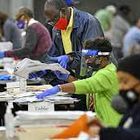
Fourth time a charm? Election audits are getting political in the Peach State
If at first you don’t succeed – try and try again. And Republicans did in Georgia, demanding multiple audits of last November’s presidential election, looking under every ballot box for evidence of election fraud, tampering or other shenanigans that could be used to put the results in doubt. So far, nothing has been found. But that’s not stopping those with an eye on a political future from backing down. In fact, election audits are now a hot topic for those looking to occupy the governor’s mansion in Atlanta. In a bid to bolster former President Donald Trump's lies about widespread fraud in the 2020 election, Trump's Republican allies are now seeking Arizona-style audits in other swing states – including Georgia, where the former President's false claims have set off an intraparty war. A day after Trump said in a statement that Georgia should follow Arizona's lead, former Georgia state Rep. Vernon Jones, a Trump supporter who is challenging incumbent Republican Gov. Brian Kemp in next year's GOP primary, proposed an audit Wednesday. "Georgians still have questions about irregularities found in the 2020 election and they deserve answers," he said in a statement. "We must get to the bottom of all of this and other irregularities to restore trust in our election process. If Mr. Kemp refuses to demand an audit, then I will when I am elected to replace him." Jones' characterization of the election was false: Georgia has already tallied the results to confirm Biden's victory there three times and conducted an audit of absentee ballot signatures. The state found no evidence of fraud, and Kemp and other Republican state officials have backed the findings. May 19 – CNN “This call for yet another ballot review is nothing but political theater," says Dr. Gregg R. Murray, professor of political science at Augusta University. "It’s extremely unlikely it would uncover anything that would overturn the 2020 election or substantial irregularities. It would be a huge waste of taxpayer money.” Despite the findings, this is an issue that won’t likely be going away soon, and if you are covering this topic, then let our expert help with your story. Dr. Gregg R. Murray, is available to talk about the election audit and what it might mean for voters in Georgia and across the country. Murray’s research focuses on political behavior and psychology with specific interests in voter mobilization and turnout. He is also executive director of the Association for Politics and the Life Sciences. Simply click on Murray's icon to arrange an interview today.


Queen's Speech: Measures to tackle obesity and food advertising bans
Two University of Warwick experts comment on measures to tackle obesity and food advertising that have been announced in the Queen’s Speech at the State Opening of the UK Parliament today. Dr Paul Coleman (pictured), from Warwick Medical School and the Warwick Obesity Network, said: We welcome the government's intention to tackle rising rates of obesity by restricting the advertising of products high in fat, sugar or salt (HFSS) shown on TV before 9pm and a total online advertising ban However, the government must focus on all forms on online advertising, not simply traditional commercials. This ban must cover online ‘advergames’, which encourage children to win points by placing branded food item in the mouth of children’s characters. These games are notoriously difficult for the government to regulate. While we also welcome the decision to incentivise individuals to both eat better and exercise more, the government must recognise that increased wages, rather than one-off payments, are needed to ensure all families can access healthy food For many families the main barrier in purchasing healthy food is cost, with families regularly limiting the amount of money spent on food to cover the cost of other essentials. All families require the financial means to purchase healthy food. We would like to see new targets to end household food insecurity by the year 2030. Dr Thijs van Rens of the University of Warwick Department of Economics and the Warwick Obesity Network, said: Required calorie labelling for large out-of-home businesses is a welcome start to address the restaurant and take-away sector, where many people get a large and increasing share of their food. A ban on "junk food" advertising on TV and online is long overdue. While we welcome the government renewed commitment to announce a ban on advertising, it is now time to take action. We are still waiting on the government to publish the result of its consultation on this matter, which was announced in November of last year. In the meantime, overweight and obesity are set to overtake smoking as the biggest cause of preventable death in the UK. Overweight is the silent killer that we can do something about, just as deadly as Covid-19 and much more under our control. Advertising is one of the elements of an environment that nudges, forces and tricks parents and children into buying and consuming food that makes them unhealthy, overweight and eventually kills them. Effective action against HFSS food advertising means banning advertising anywhere where children are likely to see it, which means both on telly and online


New CBS Sitcom "United States of Al" Taps Experience of Social Work Student and Veteran
On April 1, 2021, CBS premiered United States of Al - a new comedy from producer Chuck Lorre (Two and a Half Men, Big Bang Theory) about a Marine combat veteran struggling to readjust to civilian life and the interpreter who served with his unit in Afghanistan and has just arrived to start a new life in America. The show explores the relationship between these two men and how they help each other adjust to their new lives. So, what does a CBS sitcom have to do with the USC Suzanne Dworak-Peck School of Social Work? Enter Master of Social Work (MSW) student Josh Emerson, who landed in the right place at the right time through his field internship at No One Left Behind. No One Left Behind (NOLB) is an all-volunteer, national nonprofit organization that supports recipients of the Special Immigrant Visa (SIVs), and those pursuing an SIV. The founders of No One Left Behind believe the U.S. has a moral obligation to protect these interpreters, and their families, who served side-by-side with American soldiers. Emerson, a veteran of the U.S. Army who deployed to Iraq and Afghanistan, is very familiar with Iraqi and Afghan interpreters. “I went on missions with these interpreters, got to know them, built relationships with them,” he said. “I was so very happy to be able to work with them in this capacity. In addition to providing resources for SIV ambassadors living in the United States, NOLB advocates on behalf of the SIV population to the executive and legislative branches of government provides subject matter expertise to the media, and partners with U.S. businesses to provide opportunities for what they call “this next generation of Americans.” Alea Nadeem, MSW ’15, is a board member of NOLB and reached out to USC with a field internship opportunity for social workers to do macro-level clinical work in a nonprofit setting. Nadeem became Emerson’s field instructor. “What Josh has brought to No One Left Behind has never been brought to the board before,” Nadeem said. “They now see the value in social work.” Bringing the issue to a larger audience Chase Millsap, a consultant and writer on United States of Al, is a former board member of No One Left Behind. “I am still very supportive, impressed and proud of all the work the NOLB team does on a daily basis,” he said. A veteran of the U.S. Marine Corps and U.S. Army Special Forces, he holds a master’s degree from USC Sol Price School of Public Policy. "USC helped me to learn the tools about how to connect entertainment and policy,” Millsap said. “United States of Al is a perfect example of those two worlds coming together in a powerful (and funny) way.” Millsap’s idea was to bring the issues around SIVs into America's living rooms, in a way that would make them relatable. Emerson’s experience as a veteran, his clinical and project management skills obtained through his social work studies and his stellar ability to work one-on-one with SIV recipients and applicants allowed him to inform the show’s stories with a wide breadth of knowledge. Emerson joined James Miervaldis, chairman of the NOLB board, in helping the writers and actors on the show understand the SIV issues, the ways in which NOLB provides assistance and advocacy, and sharing funny stories of cultural differences between Afghans and Americans. Emerson and Miervaldis have also been able to include some of NOLB’s SIV ambassadors in the process, those with an SIV who have already established themselves in the U.S. and are contracted by NOLB to help others assimilate. “They’re talking to the exact people they're portraying,” Emerson said. Nadeem sees Emerson’s contribution to the show as another platform through which to educate. “There are a lot of different tentacles to social work, and it may not seem like the most obvious place in TV and film, but it is,” she said. The show itself touches on everything social workers value ― service, challenging social injustice, dignity and worth of a person, the importance of human relationships and integrity. “This just makes so much sense that a social worker would be involved in this show because that's what we're always trying to communicate to a larger audience,” Nadeem said. “Through this show, you can make a greater impact for these folks to sort of assimilate them to be American citizens, and then also have the whole world appreciate their culture and appreciate what they've done for our nation to keep U.S. service members safe.” A valued member of the team Emerson, a father of five who resides in New Hampshire, knew he wanted to work with veterans after leaving military service. He felt that an MSW was the most versatile degree for this and chose the USC Suzanne Dworak-Peck School of Social Work because of its military social work track. “I think to be a good social worker you need to have experience in life,” Emerson said. “To have seen some things, or been through some things, to understand the population you're dealing with and what they're going through.” When Emerson began his internship at NOLB in 2020, Miervaldis immediately began working with him to focus on SIVs who recently had come to the United States. The first case Miervaldis assigned to Emerson was an SIV family with two young children who needed emergency surgery at a specialty hospital in Washington D.C. “This SIV packed up his family, his pregnant wife and the two kids, used up all his money to take them by bus from Texas to D.C. in the middle of a pandemic and ended up in a bad part of town,” Miervaldis said. As the SIV’s assigned caseworker, Emerson established a relationship and trust with the SIV, helped him obtain safe housing and a job interview, and coordinated details for the children’s surgery with the hospital. “He’s gone and done everything,” Miervaldis said. “We are very proud of Josh’s initiative and empathy for a family in such need. No One Left Behind is the safety net for our allies.” Last year, NOLB helped over 600 families with visas and resettlement. “Josh has exceeded all our expectations and done so while communicating with clients who speak in broken English, Dari and Pashtu, struggling during a pandemic,” Miervaldis said. “His professionalism and empathy are great credits to USC. We would not be where we are today without him. That is not hyperbole.” Miervaldis hopes NOLB will have more social work interns from USC to continue Emerson’s work. For him, Emerson’s project management skills have been the greatest asset, creating a new process for how NOLB provides help for SIV families. “We told Josh, you're a pathfinder, you're a pioneer,” Miervaldis said. “We need to figure out very quickly what works, what doesn't work, and he took it and said, ‘okay, point me in the right direction.’ He’s very much valued as a member of the team.” From advocacy to TV No One Left Behind gets about 20 messages every day from Iraqi or Afghan interpreters who served with U.S. forces in their countries, and who now receive daily death threats from the Taliban. “They're not allowed to live in their homes or their neighborhoods anymore because they helped the U.S.,” Emerson said. “Now the U.S. is withdrawing from all these countries, and the Taliban and terrorist activities in general are picking up, and these people are getting pressured and killed. NOLB has over 300 cases of SIVs who have been killed waiting for their visas.” Emerson hopes that the added exposure from United States of Al will bring awareness particularly to service members about what these interpreters are experiencing and how they can help. One of the requirements for an SIV is a letter of recommendation from the U.S. service member with whom they served, and those have been the most difficult items for SIV applicants to secure. “I have been able to provide some input to what should be addressed in the show,” Emerson said. “It's interesting to see how advocacy on an issue can turn into something this large scale.” See more news from USC Suzanne Dworak-Peck here.


Kelley expert available to discuss Bernard Madoff's legacy, long-term effect of his scheme
Bernard “Bernie” Madoff, convicted architect of an infamous and epic securities Ponzi scheme with thousands of investors, died behind bars on April 14 at the age of 82. Noah Stoffman, an associate professor of finance and Weimer Faculty Fellow at the Indiana Kelley School of Business, has researched the effect of such fraud beyond the direct investments that were lost by victims. His 2018 paper, “Trust Busting: The Effect of Fraud on Investor Behavior,” co-authored with professors at Cornell University and the University of Texas-Dallas, showed that the collapse of the Madoff Ponzi scheme had an effect not only on his many direct victims, but also on the general level of trust in financial services. “People who live in the same areas as victims of the fraud withdrew assets from investment advisers and increased their deposits in banks. Financial advisers in these areas were also more likely to close. Our analysis shows that advisers who provided services that can build trust—such as financial planning advice—saw lower levels of withdrawals. Our evidence suggests that this decline in trust shock was transmitted through social networks,” Stoffman said. Stoffman’s research focuses on the investment decisions of professional money managers and individual investors, and on the effect of technological innovation on asset prices. Much of his work highlights the importance of social interaction in the spread of information in financial markets. Stoffman teaches courses on analysis of financial data to undergraduates, MBAs, and doctoral students at the Kelley School. He can be reached at 812-955-1758 (m) or nstoffma@indiana.edu.


Villanova University Professor Breaks Down Wage Gaps as Equal Pay Day Approaches
March 24 marks Equal Pay Day, dedicated to public awareness of the difference in average earnings between men and women. This will be the 25th Equal Pay Day since it was created by the National Committee on Pay Equity. David Anderson, PhD, is an associate professor of analytics at the Villanova School of Business, whose academic research focuses on how companies can measure and address gender pay gaps. (Along with his doctoral advisor, Dr. Anderson also started PayAnalytics, which helps companies measure and close gender and racial pay gaps. They've worked with companies that have from 40 to 100,000 employees to help them close pay gaps.) He explains that there are two key numbers to consider regarding pay gaps: "The 'raw' or 'unadjusted' pay gap is the number when we say, 'women earn 77 cents on the dollar compared to men,'" said Dr. Anderson. "The second is the 'adjusted' pay gap, which is typically smaller, in the single digits of percentages. This is what equal pay for equal work laws usually target." Anderson notes that these divides are calculated differently: "The unadjusted pay gap is a society issue in terms of who has access to education and opportunity, who gets promoted and which types of work are paid more or less money. The adjusted pay gap is calculated within companies and measures how much less women are paid on average compared to men with similar qualifications doing similar work. These are driven by such things as access to overtime, but also this is where bias comes into play—both individual bias and systemic bias." The intersection of gender and sexuality poses additional influence on pay gaps (as well as other workplace discrepancies), and progress on addressing wage gaps is also changing due to our current world. "I think with COVID and the impact it has taken on women's careers, particularly on mothers, it is quite likely we are moving backwards right now," said Dr. Anderson. So how do we combat these gaps? Dr. Anderson believes one step is instituting company regulations. "There's a ton of work on the adjusted pay gap, but very little on the raw pay gap. This is understandable—no one company can fix the unadjusted pay gap by itself, but they can be expected to meet equal pay for equal work requirements. The adjusted pay gap is a company-level responsibility, so it is a really nice target for regulations, while the unadjusted pay gap requires broader social changes, e.g., more flexible parental leave and more access to managerial positions." For the future, Dr. Anderson predicts changes due to COVID: "I think on the domestic front the effects of COVID will definitely make things worse in the short-term. But I think equal pay is on the Biden administration's agenda, so there's probably going to be forward movement on that front on a national level as well as in states, such as California, Massachusetts and New York, that are passing and enforcing stricter laws which will start to have an impact as well," said Dr. Anderson.


What’s it all mean as ‘Big-Tech’ pivots to privacy? Let our Experts help explain if you are covering
The business of the internet as we know it, is about to change. As companies in the past have thrived, boomed, and found serious cash and success harvesting your data – that model may soon be coming to an end. With companies like Google and Apple leading the way, odds are a serious transformation is about to come and the know that notice has been served, it is getting a lot of attention. The decision, coming from the world’s biggest digital advertising company, could help push the industry away from the use of such individualized tracking, which has come under increasing criticism from privacy advocates and faces scrutiny from regulators. Google’s heft means the change could reshape the digital ad business, where many companies rely on tracking individuals to target their ads, measure the ads’ effectiveness, and stop fraud. Google accounted for 52% of last year’s global digital ad spending of $292 billion, according to Jounce Media, a digital ad consultancy. About 40% of the money that flows from advertisers to publishers on the open internet—meaning digital advertising outside of closed systems such as Google Search, YouTube, or Facebook—goes through Google’s ad buying tools, according to Jounce. March 03 – The Wall Street Journal. But what will this mean for powerhouses like Facebook or the multitude of apps and carriers who rely on data, and the money that comes with it to succeed? What lies ahead will be interesting, and if you are a journalist looking to cover this topic – then let our experts help. Vilma Todri is an Assistant Professor of Information Systems & Operations Management at Emory University’s Goizueta Business School. Previously, she worked for Google where she was developing integrated cross-platform advertising strategies for large business clients that partnered with Google and recently wrote a comprehensive paper on this very topic. Vilma is available to speak with media about this subject – simply click on her icon now to arrange an interview today.



With the topic of reparations under discussion and debate, Thomas Craemer -- an expert from the University of Connecticut -- had this to offer in a new essay for The Conversation: The cost of slavery and its legacy of systemic racism to generations of Black Americans has been clear over the past year – seen in both the racial disparities of the pandemic and widespread protests over police brutality. Yet whenever calls for reparations are made – as they are again now – opponents counter that it would be unfair to saddle a debt on those not personally responsible. In the words of then-Senate Majority Leader Mitch McConnell, speaking on Juneteenth – the day Black Americans celebrate as marking emancipation – in 2019, “I don’t think reparations for something that happened 150 years ago for whom none of us currently living are responsible is a good idea.” As a professor of public policy who has studied reparations, I acknowledge that the figures involved are large – I conservatively estimate the losses from unpaid wages and lost inheritances to Black descendants of the enslaved at around US$20 trillion in 2021 dollars. But what often gets forgotten by those who oppose reparations is that payouts for slavery have been made before – numerous times, in fact. And few at the time complained that it was unfair to saddle generations of people with a debt for which they were not personally responsible. There is an important caveat in these cases of reparations though: The payments went to former slave owners and their descendants, not the enslaved or their legal heirs. Dr. Craemer discusses such aspects as the “Haitian Independence Debt,” British ‘reparations,’ and paying for freedom. Dr. Craemer is an expert on slavery reparations, racial bias, and the psychology of racism, and he is available to speak with media – simply click on his icon now to arrange an interview today.

