
Experts Matter. Find Yours.
Connect for media, speaking, professional opportunities & more.

Florida Tech Scientist to Study Deep-Space Agriculture After Planetary Society Grant Award
No matter where humans travel, sustenance remains a necessity. Finding a bite to eat during a visit to New York, for example, is no problem. When the destination is a bit farther away, such as Mars, the options are not as plentiful there or on the long journey to get there. That’s where Florida Tech’s Andrew Palmer comes in. He and other scientists are exploring ways to feed our explorers, and a new competitive grant from the Planetary Society will fund work that examines the two most likely ways to produce food during travel to these far-flung spots: in soil or something like soil, or in water. Palmer and his team were awarded a $50,000 Science and Technology Empowered by the Public (STEP) grant, the Planetary Society recently announced. Their project: “Evaluation of food production systems for lunar and Martian agriculture.” For the next year, they will grow radish microgreens, lettuce and tomatoes in identical environmental conditions with one major exception: one batch will be grown hydroponically, and another will be grown in regolith – like lunar or Martian soil. The aim of the experiment is to characterize and compare the two methods, both of which have merits and shortcomings. “It may be that a combination of these approaches, tailored to the diverse needs of different crops, is the best way to provide sustainable and productive agriculture,” Palmer said. “Until now, there have been no direct comparison studies between hydroponic and regolith-based systems for any crop targeted for space applications. We are excited to address this knowledge gap.” The team, which includes experts in plant physiology and biochemistry as well as space agriculture and systems efficiency analysis, will test their hypothesis that faster growing crops like microgreens will be better suited for hydroponic systems even in the long term, while slower-growing crops like tomatoes may favor a regolith-based production system. Palmer and his co-investigator, Rafael Loureiro from Winston-Salem University, are joined by collaborators J. Travis Hunsucker and Thiara Bento from Florida Tech, Laura E. Fackrell at the Jet Propulsion Laboratory and Jéssica Carneiro Oliveira at Universidade Federal do Estado do Rio de Janeiro, Brazil. Care to delve a little deeper? Palmer and a second STEP grant recipient, Dartmouth College professor Jacob Buffo, spoke to the Planetary Society senior communications advisor Mat Kaplan about their respective projects. The segment with Palmer begins at the 23:57 mark and the piece is linked above. Looking to know more about what it will take to feed our deep-space explorers? Then let us help with your questions and coverage. Dr. Andrew Palmer is an associate professor of biological sciences at Florida Tech and a go-to expert in the field of Martian farming. He is available to speak with media regarding this and related topics. Simply click on his icon now to arrange an interview.



Ask an Expert: Can a Recession Boost Employee Job Satisfaction?
Will the United States tip into recession in 2023? The jury for many remains out, though there are enough clouds forming on the horizon to cause consternation for firms eyeing the next financial quarter. But while recessions invariably spell belt-tightening, are they always plain bad for business? Could there be some kind of silver lining to hard times? New research led by Goizueta Business School’s Emily Bianchi suggests there is in fact an upside to economic downturns: higher employee job satisfaction. Bianchi and colleagues from Oglethorpe and Hong Kong Polytechnic Universities have found that in times of increased financial uncertainty, people tend to think less about other opportunities or openings, and focus more on the jobs they actually have. This in turn makes us see our jobs and workplace more favorably, says Bianchi. “It might feel counter-intuitive because there’s reason to think that tumultuous times make the workplace and workplace relations more tense or challenging. But we wanted to explore whether the security of having a job in an economic slump might positively impact the way people think about their roles and employers,” Bianchi says. Our hunch was that fewer available jobs outside the organization may translate into greater satisfaction with the jobs we have in hand when there’s a recession. To test this possibility, Bianchi and co-authors ran three studies. The first looked at almost 50 years of data from the U.S. General Social Survey, a cross-sectional barometer of people’s attitudes and opinions, including their assessment of the economy and satisfaction with the work they do. Through analyses of respondents’ answers between 1974 and 2016, Bianchi et al. found compelling evidence to support their hypothesis: at both the national and state level, job satisfaction rose during recessions and fell off again when the economy did better. A second study analyzed data from the U.K. where recessions tend to hit at the same time as the United States, but can be more or less severe. Two surveys conducted by the University of Essex followed the same respondents between 1991 and 2013, allowing Bianchi et al. to measure how individual job satisfaction fluctuated with macro-economic changes. Limiting their analysis to those people who remained employed over the time period and controlling for things like age, gender and income, the researchers were able to isolate the impact of recession based on the way that a group of just over 8,500,000 employees felt about their jobs. They found the same pattern. “By looking at the same individuals over time, we’re able to eliminate any impact coming from changes in the composition of the workforce across economic cycles,” says Bianchi. The same pattern emerged: during bad economic times, people reported greater job satisfaction even within the same group. Unlocking the Upside of Downturns To dig deeper into the psychological mechanisms undergirding these patterns, Bianchi et al. ran an experiment. One group was shown “bad news” about the economy, while the other read a report on economic growth and “plentiful jobs.” Both groups were then asked to self-report on job satisfaction. Those who had read the news article on recession and unemployment reported greater contentment with their current jobs. Moreover, when reminded of recessions, they reported that alternative jobs became less salient, which in turn led to greater job satisfaction. In other words, their own jobs were “more satisfying.” One implication of these findings is that they challenge the notion that job satisfaction is exclusively dictated by what happens inside the organization. We tend to think of businesses as bubbles that are somehow impervious to the outside world. But these studies show broader societal events can affect us in surprising ways. A Silver Lining for Employers Recessions are rarely welcome news. And for employers, they can engender feelings of hopelessness, says Bianchi. The insights shared in her paper should provide some reassurance, nonetheless, that even when the chips are down, they might have one less thing to worry about. But there’s a caveat. Our findings suggest that there might actually be a bright side to recessions for employers; that greater job satisfaction during these difficult times might help people psychologically weather an otherwise challenging situation. “Of course, this does not mean that employers should take advantage of this surprising goodwill by asking more of their employees. Rather, while employers likely believe that there is little they can do to bolster job satisfaction during tough times, our research suggests that satisfaction-boosting efforts may be even more effective. Moreover, our findings suggest that employers should be more attuned to bolstering satisfaction when times are good and employees are particularly apt to be looking at other opportunities.” Interested in learning more about how a recession may impact the workplace? Then let us help with your coverage and questions. Goizueta Business School’s Emily Bianchi is available to speak regarding this important topic - simply click on her icon now to arrange an interview today.


Expert Insight: The Voice of Alexa: How Speech Characteristics Impact Consumer Decisions
In the 2020 film “Superintelligence,” an all-powerful artificial intelligence attempts to take over the world, and it studies an average person, played by Melissa McCarthy, to decide if humanity is worth saving. The AI is voiced by James Corden—a voice it chooses because it knows it’s one McCarthy’s character will engage with. Rajiv Garg, associate professor of Information Systems & Operations Management at Emory’s Goizueta Business School, shows the “Superintelligence” trailer before his research presentations to set the tone. Garg conducts research that explores the impact of artificial intelligence voices on consumer behavior and purchase intent, along with Haris Krijestorac, a professor at HEC Paris, and Vijay Mahajan, a professor from The University of Texas at Austin. Garg’s research began when Amazon launched celebrity voices for its Alexa device in 2019. From Samuel L. Jackson to Shaquille O’Neal, users can now get their news and entertainment, while interacting with their favorite superstars. “I questioned if certain voices could get more engagement or more purchases from consumers,” Garg says. If Alexa starts talking to you in Samuel L. Jackson’s voice, will you continue the conversation? What could Samuel L. Jackson’s voice sell you that you would buy? Garg and his team began their research by collecting more than 300 celebrity voice samples, which they analyzed based on their sound characteristics, such as amplitude, frequency, and entropy. They looked at 20 sound characteristics and identified that all the voices could be segmented into six clusters: ostentatious, colloquial, friendly, authoritative, seductive, and suave. The team then created advertisements for select products using computer generated voices for each of the six clusters, opting for artificial intelligence-created speech instead of celebrity deep fakes due to permission legalities. They chose a shoe and an office chair as their products, and created two different advertisements for each product. One ad was simple, denoting the shoe as comfortable for all-day wear and the office chair as comfortable for sitting in for extended time periods. The other ad was hedonic, denoting the shoe as crafted with Italian leather and the office chair equipped with several massage features. They recorded the four advertisements using both a female and male voice for all six voice clusters. Study participants listened to each of the four advertisements in one of the 12 voices, which was randomly selected. After the advertisement was played, participants were asked if they wanted more information, and later, if they wanted to buy the product (omitting the price as to not add another factor to their decision making). Influencing Consumer Behavior For simple, utilitarian products, they found no significant effect of voice on information seeking behavior. Garg says once participants hear this type of advertisement, they simply decide to purchase or move on. Participants do, however, engage more in information seeking behavior for hedonic products when the voice is ostentatious, seductive, or authoritative. The team also found men were more likely than women to engage with ostentatious or seductive voices, and women were more likely to engage with friendly or colloquial voices. Overall, they found participants did not seek information with male voices. For information seeking, men and women only engage if the voices are female, which is somewhat intuitive. The industry is doing this—Alexa, Google, and Siri all have a female voice. In terms of purchase intention, they found ostentatious voices have higher yields for utilitarian products. Men, especially, were more likely than women to purchase a utilitarian product advertised in an ostentatious voice. Think about advertising a stapler. It’s a stapler—it staples paper—but you advertise it in a French accent to make it sound interesting. Conversely, for hedonic products, an ostentatious voice has a negative effect on purchase intent because Garg says it can make the product sound gimmicky. Their research shows colloquial voices do the best here because people focus more on the advertisement’s content. Across the board, they found seductive voices have a negative effect on purchase intent, but more so on utilitarian products compared to hedonic ones. Men were more likely than women to respond positively to seductive and suave voices. Applying the results Voices are another way smart device companies can personalize their customers’ experiences. Garg says these companies should be aware that there may be a certain voice that will garner the best engagement. Their findings are not isolated to business, but may apply to other industries, such as the media. Garg says, for example, if publications intend to increase reader curiosity and engagement, they should use a female colloquial voice on “click to listen” features. Although not yet tested, Garg says he wouldn’t be surprised if their results extend to real-world settings with real human voices as well. During their research, Garg’s team asked participants if they had heard the advertisement voices before, and about 15 percent of respondents says they had. "These were voices we’d created for the first time,” Garg says. “If they say they’ve heard the voice before, that means they were thinking of them as human voices. Although we didn’t study it that way, I do believe what we’re seeing will be relevant for actual human being’s voices and interactions.” Having researched this for years, Garg says every time he listens to a voice, whether a customer service representative or podcast host, he questions whether or not it is impacting his behavior. A lot of times when I’m making a decision, I know that I’m making that decision passively because of the voice. “I’m acting 50 percent based on the rational information in the voice, but the other 50 percent I just want to listen more. There is an inherent desire for a certain voice.” Garg says his favorite part of the research are those “aha moments,” whether they be the influence of voice in his own life or in the industry—such as large companies using female voices in their products to draw engagement. He says he hopes to continue doing this kind of research to help startups and other companies perform better, as AI-powered voices continue to change the way people interact with technology and consume information. “We’re finding these interesting phenomena that can help create new products that are more effective,” Garg says. “I am trying to increase the economic surplus, in some ways to improve society, and this technology presents numerous opportunities.” Looking to know more? Rajiv Garg from Emory’s Goizueta Business School is available to speak with media – simply click on his icon now to arrange an interview today.


Expertise Marketing and Content Marketing - Is There a Difference?
We often get asked the question about how Content Marketing compares to Expertise Marketing. It’s ironic that still to this day many of our academic clients don’t refer to what they do as “content marketing.” But corporate customers are well acquainted with the importance of developing content to build reputation, relationships and revenue. Adding to the confusion are all the names that are bantered about by marketing departments and agencies - There’s inbound marketing popularized by companies such as Hubspot. And there are more bespoke “Thought Leadership” programs that are often developed by outside agencies such as Weber Shandwick and Edelman. While there are a lot of common elements to these programs there are some important differences that we focus on when developing and launching Expertise Marketing programs with our institutional and corporate clients. Here’s a deeper dive to help you better understand the value of Expertise Marketing. Introducing Expertise Marketing Expertise marketing is the practice of making the knowledge and skills of your human resources more visible to your partners and audiences. It draws attention to the value that your people can bring as brand ambassadors and strategically leverages the work your experts are doing to tell a more personal story. In many cases, expertise marketing can also be used to showcase your strengths in research and innovation. Creating a stronger digital presence, expertise marketing more effectively uses your channels to connect with audiences such as media, customers, partners and donors. It builds a sense of trust with your customers and above all else, it helps establish your reputation as an industry leader. ex•per•tise mar•ket•ing 1. The practice of collectively promoting an organization’s experts as brand ambassadors to demonstrate their skills or knowledge. 2. Best practices to publish and connect The Value of Expertise Marketing Reputation - Positions research, client work, thought leadership perspectives and achievements in the context of relevant topics that are in the news. Market Awareness - Expertise marketing makes it easier for key audiences to find expert content and people in search engines and on the organization’s website. Audience Engagement - Provides more intuitive search features for visible content which can be expanded to include assets such as video, social, and publications to drive richer conversations with audiences. Metrics on performance in areas related to expert development, content contribution and audience engagement page views and inquiries can be tracked. Demand Generation - Increased number of direct leads/ inquiries from audiences such as: Customers/Students Industry Partners Alumni Donors Media New Employee Recruits Conference Organizers Talent - Better engage stakeholders, researchers & subject-matter experts in the development and distribution of content while improving recruitment and retention of talent. Internal Collaboration - Better coordinate the knowledge and resources across internal communications teams and other departments as they engage experts. Provide a faster, more efficient way to generate content for breaking news and events. Content Contribution - Increase the size of the organization’s digital footprint by aggregating more content and distributing it contextually to multiple websites and third-party databases. Efficiency - Help employees get their jobs done faster and more efficiently. Enable them to find information faster, speed up internal processes and foster collaboration among people in multiple locations. Leverage Current and Future Infrastructure - Properly integrated, new technology investments should integrate seamlessly to leverage existing/proposed infrastructure such as content management systems (such as WordPress™) and marketing automation systems (such as Hubspot) How is Expertise Marketing Different from Content Marketing? A More Human Approach: People buy from people. That’s why content that is more personalized and attributed to specific experts who are well-identified as expert sources is far more trusted than most company-sponsored content. A More Collaborative Process that Engages Employees: A more structured “win-win” model empowers experts to contribute their knowledge. Expertise marketing is a proven way to build culture and celebrate diversity which assists with talent retention and recruitment. An Efficient Way to Create More Content to Boost SEO & Website Traffic: Engaging your experts creates a larger hub of “owned” content that is proven to boost PageRank in search engines and site traffic. Expert content is used by organizations to enhance their “About Us” page, staff/faculty/physician directories, newsroom pages, research pages and speakers bureaus. Optimized Content Formats Better Connect with Audiences: A variety of short format, long format and visual content formats (such as expert profiles, blogs, Q&A and videos) are designed to engage specific audiences at various stages of the customer journey. Improved Calls to Action & Analytics Boost Demand Generation & Leads/Inquiries: Experts become more approachable as “lead magnets” that generate measurable inbound opportunities, avoiding common issues of lost customer leads due to poor processes and workflow. You might be surprised at how much value expertise marketing can bring to your organisation. The chances are, that the time you are currently spending on ineffective content marketing strategies will be greatly reduced with a redefined focus on expertise marketing. By putting the focus back on the skills and relevance of your experts, as people, you're not only making them more visible but also establishing your brand reputation which will simultaneously generate more leads and increase efficiency.




Vanderbilt historian and Henry Kissinger biographer on Kissinger legacy ahead of 100th birthday
Thomas Schwartz, Distinguished Professor of History, is available for commentary surrounding the legacy of Henry Kissinger, former U.S. Secretary of State and National Security Advisor, ahead of his 100th birthday (May 27, 2023). A historian of U.S. foreign relations, American politics, international relations and Modern European history, Thomas is the author of “Henry Kissinger and American Power: A Political Biography.” Thomas can discuss Kissinger’s: Mixed bag legacy, receiving both praise for his guidance throughout the decades and criticism for his more controversial decisions Approach to foreign policy and leadership style, including: ability to recognize failures, penchant for backbiting and reliance on flattery and praise of the president as a source of power Invention of himself as a celebrity diplomat and his domination of TV news Sensitivity to domestic and partisan politics



Is there a link between CTE and mass shootings? Let our expert explain
This spring news of mass shootings has dominated the headlines almost weekly with stories of tragedy in Michigan, Tennessee, Kentucky and Alabama. To date, there have been an estimated 160 mass-shootings in America this year. In the wake of each tragedy, Americans are left asking 'How this could happen?' and 'Why did this happen?' In the case of the April 10 shooting in Louisville, the parents of the gunman are also seeking answers as they claim prior trauma and CTE may have played some part in the shooter's actions and motivation. It's a theory that's getting a lot of attention from doctors and journalists. The family of Connor Sturgeon – who was killed after he fatally shot five people Monday morning at the Old National Bank in Louisville, Kentucky – plans to have his brain tested for chronic traumatic encephalopathy, commonly known as CTE, his father and a spokesperson for the family told CNN on Thursday. “Yes, Connor is being tested for CTE. Probably will take a while to get results,” Todd Sturgeon, Connor Sturgeon’s father, texted to CNN. Pete Palmer, a family friend who is speaking for the Sturgeons, said the family and the state medical examiner are looking to have Connor Sturgeon’s brain tested. April 14 - CNN There's a lot to know when reporting on CTE, especially when it involves the potential links to tragedy and a mass shooting. And that's where clinical experts can help and make sure reporters have the details, terminology and facts correct when covering such important topics. With over 40 years of clinical practice, Wayne Hulon is an American Board Certified Psychotherapist, and is also recognized by the State of Georgia as a Licensed Professional Counselor. In addition to his private practice, Wayne serves as a member of the American College of Psychotherapy and is currently serving as its Executive Director. Wayne is available to speak with media regarding this subject - simply click on his icon now to arrange an interview today.



Candida auris: The deadly fungus is spreading and proving difficult to fight
Candida auris is making headlines - and for all the wrong reasons. The fungus can lead to severe infections causing long term health issues and even death. Recently, Fox News in Los Angeles was covering this emerging threat and reached out to Augusta University's Dr. Jose Vazquez for his expert insight and opinion. Here's the piece: The Centers for Disease Control & Prevention says Candida auris, or C. auris, is an emerging health threat, a type of fungus can cause severe, potentially life-threatening infections in people hospitalized with compromised immune systems. Dr. Jose Vasquez, chief of infectious diseases at the Medical College of Georgia at Augusta University, says there are several reasons for concern about this fungus. "The biggest fear is that it is multi-drug resistant," he says. "So, it is resistant to many different drugs." The CDC says most C. auris infections respond to antifungal medication, but some do not. Vasquez says C. auris is also hard to detect without highly specialized lab equipment that many hospitals do not have. And, he says, it is hard to stop the fungus once it gets into a hospital setting, such as an ICU or nursing care facility. C. auris can live on a person's skin without causing symptoms, allowing it to be transmitted from one person to another, or to get into a patient's body through contaminated surfaces or medical equipment like mechanical ventilators, feeding tubes and central lines. 'It is one of the Candidas that lives the longest on a surface, and we're talking about weeks," he sys. "So it can live there, dry and desiccated. Once it gets there, it kind of sets up shop, and it is very, very difficult to eradicate." The rest of the news story is attached: Looking to know more? That’s where Augusta University can help. Dr. Jose Vazquez, division chief and professor of Medicine at the Medical College of Georgia, is an expert in the realm of infectious diseases. He studies and treats infectious diseases, including antibiotic-resistant superbugs and fungal infections. He has been a reliable source for local, statewide and national media regarding the coronavirus outbreak. Dr. Vazquez is available to speak with media regarding this topic – simply click on his icon to arrange an interview.



Cyber threats have become one of the leading issues for corporations, governments, and public institutions across America. With ransomware attacks, hackers, and other nefarious threats, the issue is becoming a daily occurrence and leading news story. Rensselaer Polytechnic Institute’s James Hendler, director of the Future of Computing Institute, Tetherless World Professor of Computer, Web, and Cognitive Sciences, and director of the RPI-IBM Artificial Intelligence Research Collaboration, weighs in on what we should all know about cybersecurity. Overview Think about cybersecurity the way you think about home security – the more valuables you have, the more security you need. A normal user needs the equivalent of a lock on the door, which most of our computers provide out of the box. However, a user with a fair amount of personal information, who keeps financial records or runs a small business, probably wants a firewall or other additional protection. We used to tell people to protect their computers with firewalls, malware detectors, and the like, but now it is much more important to protect your web access, be wary of external sites, and keep your passwords secure and not easily guessed. Use of a password manager program can be really helpful for people who use a lot of different accounts. Threats The biggest threat facing individuals is identity theft caused by someone getting into an account that you don’t control. Most malware or password stealing comes via a phishing attack (a fake email that convinces you to click a bad link), so if you see an offer that looks too good to be true, don’t believe it. Never give out a password or personal information without confirming that it is legitimate. We also recommend not using major accounts (like Google, Facebook, etc.) to log in to new apps where you aren’t completely sure of the reliability – you’re safer if you use a separate password. It’s also worth noting that these kinds of attacks are now happening on cell phones – if you get a text saying your Amazon, Netflix, or other services have been shut off, be very careful. These companies almost never send out such messages, and if they do, they come via email, not text. For businesses, ransomware is becoming an increasing challenge. Frequent backups and dual authentication are absolute musts for small businesses. Large businesses, and especially those with cyber-physical connections such as a manufacturing device, must have someone on the team who understands internet technology. Outside audits done annually, at least, are also highly recommended. The biggest danger in cybersecurity is that people, especially in businesses, think that the software industry will fix things and that they don’t have to worry. That’s like expecting auto manufacturers to stop car theft, or the government to prevent all crime – these organizations certainly need to help, but they cannot be perfect. So while there definitely needs to be a role for manufacturers and government, people need to understand that the threats are now coming from social interactions such as phishing, or serious criminal enterprises such as ransomware attackers, and not just maladjusted teenagers. They must be ready to pay for some security if they have things on their network that need protection. The Cloud Cloud-based services are a major boon to cybersecurity for individuals and small businesses if, and only if, people protect their access. If a breach is reported to you by a company, don’t ignore it, change your password, and, whenever possible, use dual authentication. The cloud companies can afford to spend more on security than you can and thus your information stored in these services tends to be quite secure. However, people need to be careful in using the cloud. Just as you may trust a bank with your money, you want to be sure not to be robbed on your way there. Future Computing Systems and Cybersecurity New technologies, such as artificial intelligence (AI), are arising all the time in today’s fast-moving cyber world. As these technologies arise, they can create new opportunities for cybersecurity, but can also create new challenges. Cybercrime will never disappear, and each new capability comes with a price. Increased education and awareness of emerging computing technologies (blockchain, quantum, etc.) are important not just for the expert, but also for the general public. It is important to stay informed and pay attention to what is being reported. Just as buying a new appliance can be a great advantage at home (I love my new air-fryer), you also have to be sure to be using it appropriately (used wrong, it can cause fires). Looking to learn more or connect with an expert for your questions and coverage? James Hendler is the director of the Rensselaer Future of Computing Institute, Tetherless World Professor of Computer, Web, and Cognitive Sciences, and director of the RPI-IBM Artificial Intelligence Research Collaboration. Hendler has authored over 400 books, technical papers, and articles in the areas of Semantic Web, artificial intelligence, cybersecurity, and high-performance processing. Hendler is available to speak with media - simply click on his icon now to arrange an interview today.


UCI expert: federal standards of chemicals in country's waterways
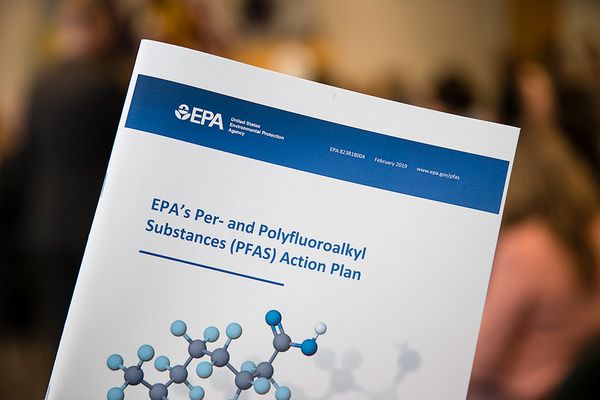
The Biden Administration announced today that they are prepared to finally set federal standards on the amount of PFAS chemicals in the country’s waterways. This is long overdue oversight into regulating chemicals, specifically perfluoroalkyl and polyfluoroalkyl substances, which when exposed to can cause debilitating, deadly diseases, and conditions such as cancer, liver damage, fertility and thyroid problems, asthma and more. For an expert source on this breaking news, Scott Bartell, MS, PhD, UC Irvine professor of environmental and occupational health, is available for interviews. For the past 25 years, Bartell has dedicated his research to quantifying human exposures and health effects caused by environmental contaminants such as PFAS – specifically the presence and epidemiology of PFAS in U.S. water sources. He is also the lead researcher on a study surveying Orange County, Calif. residents to find a link between PFAS and adverse health effects. To reach Prof. Bartell, reach out to Brianna Aldrich at brianna.aldrich@uci.edu or 760-809-5193.


Is America's banking system in trouble once again?
Nerves are rattled and many are worried as the markets opened Monday to news of another US bank collapse, making that two large banks shuttered in less than a week. It's news that's rocking the financial world on a massive scale. Federal regulators announced on Sunday that another bank had been closed and that the government would ensure that all depositors of Silicon Valley Bank — which failed Friday — would be paid back in full as Washington rushed to keep fallout from the collapse of the large institution from sweeping through the financial system. The Federal Reserve, Treasury and Federal Deposit Insurance Corporation announced in a joint statement that “depositors will have access to all of their money starting Monday, March 13.” In an attempt to assuage concerns about who would bear the costs, the agencies said that “no losses associated with the resolution of Silicon Valley Bank will be borne by the taxpayer.” March 12 - New York Times With an economy already on edge as Americans feel the grip of inflation and worries of recession - this is frightening news and media are scrambling for answers. What is causing the closures of these big banks and how many more will follow? How much money is lost and how much has been protected? Is this 2008 all over again? Is the federal government doing enough to stop the damage from spreading? What measures need to be put in place by government to assure citizens that their savings, retirement plans and mortgages aren't at risk? And will anyone be held accountable for the billions already lost? There's a lot to explain - and that's where our experts can help. Rebel Cole, Ph.D., a Lynn Eminent Scholar Chaired Professor of Finance, has expertise in global financial institutions, commercial banking and small business finance. He spent 10 years working in the Federal Reserve System and has experience at the the International Monetary Fund and the World Bank. Cole has been interviewed by numerous national media outlets, such as The Wall Street Journal, The New York Times, The Washington Post and Fox Business. Rebel is available to speak to media regarding the current state of banking and what Americans need to watch for or worry about. Simply click on his icon now to arrange an interview today.

