
Experts Matter. Find Yours.
Connect for media, speaking, professional opportunities & more.

It's a recent news story that has captured international attention and has parents, experts and child care advocates swirling: US boy, 11, allegedly shoots father to death after Nintendo Switch taken away If you’re planning a story on screen-time conflict, Harshi, a Digital Dependency therapist, is available for on-the-record comment, rapid written quotes, and short interviews on practical de-escalation and safer screen-limit routines. “The headline is about a device. The deeper story is what happens when a predictable boundary becomes an unplanned confrontation without a de-escalation routine.” Offline.now is a new wellness platform dedicated to helping families achieve healthy digital balance. What Harshi can help journalists cover On-the-record context and practical guidance for stories touching screen-time conflict, including: Why device removal moments can trigger outsized reactions in some kids (transition & regulation) How parents can de-escalate safely without turning limits into power struggles How to design screen rules that rely on systems, not willpower What to do after a blow-up (repair & resetting the plan) When “this-is-bigger-than-screens” and families should seek professional support Insights from our expert Use any of these as on-the-record quotes: Start with regulation, not the rule. “When emotions spike, it’s not a teachable moment. The first goal is to help everyone get calmer, then you can talk boundaries.” Don’t match intensity with intensity. “If you argue, lecture, or negotiate in the heat of the moment, you keep the conflict alive.” Use a short script - and stop talking. “Two sentences is enough: ‘I’m not debating this. We’ll talk when we’re calm.’ Then pause. Silence can be a tool.” Avoid surprise confiscations. “Taking a device without warning can feel like an ambush. Predictable routines reduce the power struggle.” Offer an off-ramp, not a cliff. “Transitions are hard. A timer, a closing ritual, and a clear ‘what’s next’ can prevent escalation.” Make boundaries about the system, not the child’s character. “This isn’t ‘you’re bad’ or ‘you’re addicted.’ It’s ‘our home has screen rules and we follow them consistently.’” Repair matters more than punishment. “After a blow-up, repair is the reset - name what happened, reset the plan, and practice the next transition.” Know when this is bigger than screens. “If threats, aggression, or extreme reactions show up, that’s a signal to seek professional support - not just enforce a stricter rule.” What parents can do right now Create a neutral device ‘parking spot.’ Devices live in one predictable place (not a tug-of-war in someone’s hand). Use a consistent transition routine. When time’s up, share a “shut it down” cue, park the device, and then move on to a 2-minute action (teeth, pajamas, snack, shower). Pick one calm script and repeat it verbatim. “I’m not debating this. We’ll talk when we’re calm.” (Then disengage and model calm.) Important context Harshi does not speculate about individuals involved in the news story and does not claim that gaming or screens “cause” violent behavior. Her focus is on what families can do - before conflicts escalate - using practical de-escalation tools, predictable routines, and supportive repair strategies.



Sleep Is the First Casualty of Your Screen Habit
Everyone says they want to “sleep better” in the new year. Most start with new pillows, supplements or blackout curtains while the biggest sleep disruptor in the room is still glowing inches from their face. Digital wellness platform Offline.now, founded by author and strategist Eli Singer, has found that we now spend about 10 of our 16 waking hours on screens, roughly 63% of our day. Psychotherapist Harshi Sritharan, MSW, RSW, who specializes in ADHD and modern anxiety, says sleep is often the first system to collapse under that load. Harshi explains that phones and screens emit blue light that hits the retinal ganglion cells in our eyes and tells the brain it’s time to be alert, the opposite of what we need at night: “When we’re leaning towards using our phones right before bed, that blue light hits our system and says, ‘We should be awake.’ It disrupts our circadian rhythm. For people with ADHD or other neurodiversity, whose rhythms are already fragile, adding late-night screen exposure completely throws things off.” She notes that exposure between roughly 11 p.m. and 4 a.m. is particularly damaging for stress and sleep regulation, leaving people “tired all the time throughout the day.” Morning habits can be just as destructive. Sritharan warns that checking your phone first thing essentially programs your brain to chase distraction: “Don’t be on your phone first thing in the morning — it hijacks your attention and your dopamine for the rest of the day. After that kind of stimulation, everything else feels harder and less interesting.” She also calls the snooze button “a pattern that’s making us more tired,” because it fragments REM sleep instead of helping us feel rested. The good news: the data suggests you don’t need a perfect digital detox to see real benefits. A JAMA Network Open study on young adults found that reducing social media use for just one week, not quitting entirely; led to about a 24.8% drop in depression, 16.1% drop in anxiety, and 14.5% improvement in insomnia symptoms. Singer argues that the real barrier isn’t willpower, it’s confidence. Offline.now’s research shows 8 in 10 people want a healthier relationship with tech, but more than half feel too overwhelmed to know where to start. “When people tell us they feel overwhelmed, it’s not laziness. It’s a crisis of confidence,” says Singer. “Lasting change doesn’t require deleting Instagram or TikTok tomorrow. You need to win one personal victory today, and then another tomorrow. That’s how confidence rebuilds.” For journalists covering sleep, mental health, or digital dependency, this story connects the dots between phones, dopamine and insomnia and offers a realistic alternative to the all-or-nothing “digital detox.” Featured Experts Harshi Sritharan, MSW, RSW – Psychotherapist specializing in ADHD, anxiety, insomnia and digital dependency. She explains how blue light, dopamine cycles and “doomscrolling before bed” undermine sleep, especially for neurodivergent clients. Eli Singer – Founder of Offline.now and author of Offline.now: A Practical Guide to Healthy Digital Balance. He speaks to the behavioral data behind digital overwhelm, the confidence gap, and the Offline.now Matrix that turns vague resolutions into actionable micro-steps. Expert interviews can be arranged through the Offline.now media team.


The Doomscrolling Couple: Spending Time Together on Different Screens
In 2025, a lot of couples end their day the same way: lying in bed, each silently scrolling through an endless stream of bad news. They’re physically together, but emotionally somewhere else. Licensed Marriage & Family Therapist Gaea Woods sees this pattern constantly in her practice — and says doomscrolling has become a quiet third party in many relationships. “Phones are killing interpersonal relationships — not because tech is evil, but because we use it unconsciously at the moments connection matters most,” she says. “Even something as simple as being on your phone at dinner is a way to express, ‘I’m more interested in my phone than I am in you.’” Instead of talking about their day, fears, or plans, partners lie next to each other consuming the same distressing content, letting shared anxiety take the place of actual conversation. Research on doomscrolling backs up what Woods sees in the therapy room. Studies and reviews have found that compulsively consuming negative news online is linked with higher anxiety, depression, stress, sadness, and feelings of overwhelm, and even existential anxiety and pessimism about life. “Doomscrolling feels like you’re staying informed together,” Woods says, “but what’s really happening is that both nervous systems are getting more activated while neither partner is actually talking about what they’re feeling.” Relationship science adds another important piece: phubbing — phone snubbing during interactions. Multiple studies (including a recent meta-analysis published by Frontiers in Psychology) show that partner phubbing is associated with lower relationship and marital satisfaction, less intimacy and emotional closeness, and more conflict and jealousy. Woods describes what that looks like in real life: “You pick up your phone instead of saying, ‘That hurt my feelings.’ Your partner wonders, ‘Is she okay? Is he mad at me?’ and then they grab their phone too. Suddenly you’re two people on your phones instead of two people connecting.” Her core message for couples and for journalists covering modern relationships is that: scrolling together isn’t the same as being together. When screens become a third party at the table or in bed, intimacy quietly leaves the room. Featured Expert Gaea Woods, MA, LMFT – Licensed Marriage & Family Therapist specializing in digital dependency, intimacy and communication. She speaks to how doomscrolling and phone use act as a “third party” in relationships, why scrolling side-by-side increases emotional loneliness, and the practical phone rules that help couples rebuild genuine connection. Expert interviews can be arranged through the Offline.now media team.


Sun-Sentinel: What happens when parents go beyond sharenting?
So many parents routinely share photos and news about their kids on social media that the behavior has a name: sharenting. Usually harmless and well-meaning, it can also take a dangerous turn, exposing children to online predators, allowing companies to collect personal information and creating pathways for children to become victimized by identity theft. The risks are most pervasive when parents overshare to profit from their social media accounts. Whenever parents share, they are the gatekeepers, tasked with protecting their children’s information, but they are also the ones unlatching the gates. When parents profit from opening the gates, it is especially challenging to balance protecting their kids’ privacy against sharing their stories. Federal and state laws typically give wide deference to parents to raise their children as they see fit. But the state can and does intervene when parents abuse their children. Those laws protect children in the physical world. However, few laws shield children when parents risk harming them online. Let’s consider this hypothetical situation based on a composite of real-life events. Mia (fictional name) is a 7-year-old girl growing up in Orlando. Her mother is a stay-at-home parent who has a public Instagram account and considers herself an influencer. Many lingerie brands pay Mia’s mom to model their clothing. When a lingerie company from overseas offers Mia’s mom some money to have Mia also pose in their clothing, Mia’s mom says yes. Over the next few weeks, Mia and her mom model the clothing together in pictures and videos, sometimes wearing the outfits while reading together in bed, having pillow fights or being playful around the house — always in clearly intimate but arguably appropriate settings. Mia’s mom’s social media page explodes with new followers, many of whom appear to be grown men. The images on the page receive hundreds of likes and multiple comments. Mia’s mom deletes the most inappropriate comments but leaves others, hoping to increase engagement. As Mia’s mom’s social media following grows, so does the amount of money she earns. Mia tells her teacher about the social media page. Her teacher reaches out to Mia’s parents, to no avail. Mia’s mom keeps sharing. The teacher sees this as a potential form of abuse and neglect and, according to her obligation as a mandatory reporter of abuse, she calls in a report to the state’s central abuse registry. The teacher isn’t trying to get Mia’s mom in criminal trouble, but she thinks the family could use some education surrounding safe social media use and possibly access to financial support if they need this type of online exposure to pay the bills. The intake counselor declines to accept the hotline call. The counselor explains that the posting of pictures is not grounds for an abuse, abandonment or neglect investigation. The parent is sharenting, the counselor says, and that is within a parent’s right. Of course, child sexual abuse material is illegal, but the photos posted by Mia’s mom fall into a gray area — not illegal material, but likely harmful to Mia. Should there be a law to stop this? I believe there should be. Just as our views regarding child abuse have evolved, so must our views on sharenting. Merely 150 years ago, it was legal for parents to beat their children. It wasn’t until 1874, when a little girl named Mary Ellen was beaten severely by her caregiver, that courts began to step in. Drawing from existing laws prohibiting animal cruelty, the Society for the Prevention of Cruelty to Animals argued that Mary Ellen had the right to be free from abuse. At the time, there were laws protecting animals from harm by their caregivers but no laws protecting children from such harm! Back to the present: Mia’s disclosure to her teacher could have changed her life and led to her family getting online safety help, if only the child welfare laws were suitably tailored to protect her in the online world as they attempt to do offline. Child protection laws should be expanded to include harms that can be caused by online sharing. The law can both protect parental autonomy and honor children’s privacy through a comprehensive and multidisciplinary new approach toward protecting children online — one that allows for thoughtful investigation, education, remediation and prosecution of parents who use social media in ways that are significantly harmful to their children. This conduct, which falls beyond sharenting, is ripe for legal interventions that reset the balance between a parent’s right to share and a child’s right to online privacy and safety. Stacey Steinberg grew up in West Palm Beach and now lives in Gainesville, where she is a professor at the University of Florida Levin College of Law; the supervising attorney for the Gator TeamChild Juvenile Law Clinic; the director of the Center on Children and Families; and the author of “Beyond Sharenting,” forthcoming in the Southern California Law Review. This piece was also published in the South Florida Sun-Sentinel.


Why Your Digital Detox Resolution Fails by January 15
Every January, millions of people make the same promise: “This year I’m going to spend less time on my phone.” By mid-month, most are back to doomscrolling in bed, feeling like they’ve failed yet another resolution. According to Offline.now founder and author Eli Singer, that story is not about laziness, it’s about confidence. Offline.now’s proprietary research shows 8 in 10 people want to change their relationship with technology, but more than half feel so overwhelmed by their habits they don’t know where to start. “If you don’t learn how to manage the screens in your life, they will manage you,” says Singer. “When people tell us they feel overwhelmed, it’s not laziness. It’s a crisis of confidence. And confidence is something that can be built.” At the heart of the platform is the Offline.now Matrix, a behavioral framework that maps people into four quadrants: Overwhelmed, Ready, Stuck, or Unconcerned - based on their motivation and confidence levels. Someone who is “Overwhelmed” needs reassurance and tiny first steps; someone who is “Ready” can handle bigger commitments. Treating everyone as if they’re in the same place (“just delete Instagram”) virtually guarantees most resolutions will collapse. Psychotherapist Harshi Sritharan, MSW, RSW, who specializes in ADHD and modern anxiety, sees how this plays out in the brain. For many of her clients, especially those with ADHD, digital devices provide a fast dopamine hit that everyday life simply can’t match. “With ADHD, you’re working with a dopamine deficiency,” she explains. “Phones and apps are designed to give you highly stimulating, personalized content. You get this huge dopamine surge, and when you put the device down, everything else feels flat, boring and harder to start.” She notes that common habits like checking your phone the second you wake up, quietly undermine even the best January intentions: “If you’re on your phone first thing in the morning, you hijack your attention and dopamine for the rest of the day. Your brain has already tasted the highest stimulation it’s going to get, and it will keep seeking that level. That’s not a willpower issue, it’s neuroscience.” The good news: the science suggests you don’t need a perfect detox to see benefits. A JAMA Network Open study on young adults found that reducing social media use for just one week - without going completely offline; led to about a 24.8% drop in depression, a 16.1% drop in anxiety, and a 14.5% drop in insomnia symptoms. “Lasting change doesn’t require deleting Instagram or TikTok tomorrow,” says Singer. “You need to win one personal victory today, and then another tomorrow. That’s how confidence rebuilds.” Featured Experts Eli Singer – Founder of Offline.now and author of Offline.now: A Practical Guide to Healthy Digital Balance. Speaks to the behavioral data behind failed resolutions, the confidence gap, and the Offline.now Matrix framework. Harshi Sritharan, MSW, RSW – Psychotherapist specializing in ADHD, anxiety and digital dependency. Explains the dopamine science behind compulsive scrolling and offers brain-friendly strategies that work better than “willpower.” Expert interviews can be arranged through the Offline.now media team.

A year in the spotlight: University of Delaware’s most notable media mentions of 2025
In 2025, the University of Delaware had many exceptional media mentions. Here are some of the most notable. Science coverage dominated Where will the next big hurricane hit? Ask the sharks. (The Washington Post) – Aaron Carlisle, a marine ecologist, was featured for his revolutionary work using sharks to predict major weather events. Scientists could soon lose a key tool for studying Antarctica's melting ice sheets as climate risks grow (NBC News) – Carlos Moffat, an associate professor and oceanographer, spoke about the national budget and how it's impacting climate research. These Katrina Survivors Feel Overlooked. Now, They’re Using TikTok to Tell Their Stories (Rolling Stone) – Jennifer Trivedi, a disaster researcher, spoke about why Hurricane Katrina was such a major story. Malala Yousafzai, Migration and Sustainability (Forbes) – Saleem Ali, a professor of energy and environment, contributed regularly to Forbes on environmental topics. Scientists went hunting for freshwater deep beneath the Atlantic Ocean. What they found could have global implications (CNN) – Holly Michael, a professor of Earth sciences and civil and environmental engineering, spoke about the history of freshwater. Engineering Professor Answers Electric Car Questions (WIRED) – Willett Kempton, a professor of engineering, joined WIRED to answer the internet's most interesting questions about electric cars. Plastic shopping bag policies are actually working, a new study suggests (CNN) – Kimberly Oremus, associate professor of marine science and policy, was featured in several major outlets on the effectiveness of plastic bag bans. Insects are dying: here are 25 easy and effective ways you can help protect them (The Guardian) – Douglas Tallamy, an entomologist, was featured in dozens of outlets for his expertise. Political news coverage was front and center U.S. Chamber of Commerce sues Trump administration over $100,000 H-1B visa fees (NPR) – Daniel Kinderman, a political science professor, was interviewed for his expertise on a lawsuit involving changes in work visas. The government shutdown is over, but expect more fights and higher insurance prices to come (Delaware Public Media) – David Redlawsk, a political psychologist, discussed the recent government shutdown and what an end to it signals. Wrestling Over Charlie Kirk’s Legacy and the Divide in America (The New York Times) – Dannagal Young, a communications professor, commented on how media reacted to the death of Charlie Kirk. Consequences for colleges whose students carry mountains of debt? Republicans say yes (NPR) – Dominique Baker, associate professor of education, was quoted in multiple national outlets for her education expertise. General expertise came in clutch Why the U.S. struggles with passenger service despite having the most rail lines (NPR) – Allan Zarembski, a professor of railroad engineering, was featured in dozens of national publications for his expertise. From folklore to your front porch: The history of the jack-o'-lantern (NPR) – Cindy Ott, an associate professor of history, detailed the history of this autumn staple in multiple outlets. Nexstar Media Group buying Tegna in deal worth $6.2 billion (AP) – Danilo Yanich, professor of public policy, noted the ways the media giant duplicates work across networks. Warren Buffett hired Todd Combs to take over Berkshire's portfolio one day. Here's what close watchers say about his surprise exit. (Business Insider) – Lawrence Cunningham, director of UD's Weinberg Center, was featured throughout the year for his business and economic expertise. Enlighten Me: How to make your holidays truly happy (Delaware Public Media) – Amit Kumar, a professor of marketing, discussed strategies for finding happiness during the holidays throughout the winter season. Students and their stories shined throughout the year Networking: Is it what you know or who you know? (The Chronicle of Higher Education) – UD's career-development office, which assists students on their job journeys, was featured. U of Delaware Creates Yearlong Co-Ops for Business Students (Inside Higher Ed) – A new partnership with the state of Delaware connects business students to local employers, with the goal of reducing brain drain in the region was featured. Wilmington’s 'STEM Queen' earns national Obama–Chesky honor (The News Journal/Delaware Online) – Jacqueline Means, a management information systems major, was featured for earning a national recognition. Vita Nova Restaurant Gives Culinary Students Hands-on Training (Delaware Today) – The student-staffed restaurant, Vita Nova, was featured. Delaware professor transforms writing class by teaching students to use AI as the technology reshapes the workforce (WHYY) – Matt Kinservik, a professor of English, was featured for teaching students to use AI responsibly, exploring its capabilities and fact-checking tools. Pop culture experts weighed in 'Stranger Things' expert at UD chats about Netflix show's appeal (The News Journal/Delaware Online) – Siobhan Carroll, an associate English professor, sat down with a reporter to discuss the latest season and how the horror genre is often a mirror of our real world. “Horrendous And Insulting”: Backlash Erupts Over “Misrepresentation” In 2026 Wuthering Heights (Bored Panda) – Thomas Leitch, an English professor, said that “literal adaptations of classic novels are exceedingly rare, maybe impossible.” Major changes at UD highlighted University of Delaware appoints interim president to the permanent post (The Philadelphia Inquirer) – News of UD's new president, Laura A. Carlson, was covered throughout the region. Retiree learning center gets boost with $1M gift for downstate OLLI classes (Spotlight Delaware) – a large donation to the southern Delaware chapter of the Osher Lifelong Learning Institute, was featured. To speak with any of these experts in 2026 on these stories or others, please reach out to MediaRelations@udel.edu. Happy holidays and cheers for a bright and healthy new year!






With OpenAI’s latest release, GPT-5.2, AI has crossed an important threshold in performance on professional knowledge-work benchmarks. Peter Evans, Co-Founder & CEO of ExpertFile, outlines how these technologies will fundamentally improve research communications and shares tips and prompts for PR pros. OpenAI has just launched GPT-5.2, describing it as its most capable AI model yet for professional knowledge work — with significantly improved accuracy on tasks like creating spreadsheets, building presentations, interpreting images, and handling complex multistep workflows. And based on our internal testing, we're really impressed. For communications professionals in higher education, non-profits, and R&D-focused industries, this isn’t just another tech upgrade — it’s a meaningful step forward in addressing the “research translation gap” that can slow storytelling and media outreach. According to OpenAI, GPT-5.2 represents measurable gains on benchmarks designed to mirror real work tasks. In many evaluations, it matches or exceeds the performance of human professionals. Also, before you hit reply with “Actually, the best model is…” — yes, we know. ChatGPT-5.2 isn’t the only game in town, and it’s definitely not the only tool we use. Our ExpertFile platform uses AI throughout, and I personally bounce between Claude 4.5, Gemini, Perplexity, NotebookLM, and more specialized models depending on the job to be done. LLM performance right now is a full-contact horserace — today’s winner can be tomorrow’s “remember when,” so we’re not trying to boil the ocean with endless comparisons. We’re spotlighting GPT-5.2 because it marks a meaningful step forward in the exact areas research comms teams care about: reliability, long-document work, multi-step tasks, and interpreting visuals and data. Most importantly, we want this info in your hands because a surprising number of comms pros we meet still carry real fear about AI — and long term, that’s not a good thing. Used responsibly, these tools can help you translate research faster, find stronger story angles, and ship more high-quality work without burning out. When "Too Much" AI Power Might Be Exactly What You Need AI expert Allie K. Miller's candid but positive review of an early testing version of ChatGPT 5.2 highlights what she sees as drawbacks for casual users: "outputs that are too long, too structured, and too exhaustive." She goes on to say that in her tests, she observed that ChatGPT-5,2 "stays with a line of thought longer and pushes into edge cases instead of skating on the surface." Fair enough. All good points that Allie Miller makes (see above). However, for communications professionals, these so-called "downsides" for casual users are precisely the capabilities we need. When you're assessing complex research and developing strategic messaging for a variety of important audiences, you want an AI that fits Miller's observation that GPT-5.2 feels like "AI as a serious analyst" rather than "a friendly companion." That's not a critique of our world—it's a job description for comms pros working in sectors like higher education and healthcare. Deep research tools that refuse to take shortcuts are exactly what research communicators need. So let's talk more specifically about how comms pros can think about these new capabilities: 1. AI is Your New Speed-Reading Superpower for Research That means you can upload an entire NIH grant, a full clinical trial protocol, or a complex environmental impact study and ask the model to highlight where key insights — like an unexpected finding — are discussed. It can do this in a fraction of the time it would take a human reader. This isn’t about being lazy. It’s about using AI to assemble a lot of tedious information you need to craft compelling stories while teams still parse dense text manually. 2. The Chart Whisperer You’ve Been Waiting For We’ve all been there — squinting at a graph of scientific data that looks like abstract art, waiting for the lead researcher to clarify what those error bars actually mean. Recent improvements in how GPT-5.2 handles scientific figures and charts show stronger performance on multimodal reasoning tasks, indicating better ability to interpret and describe visual information like graphs and diagrams. With these capabilities, you can unlock the data behind visuals and turn them into narrative elements that resonate with audiences. 3. A Connection Machine That Finds Stories Where Others See Statistics Great science communication isn’t about dumbing things down — it’s about building bridges between technical ideas and the broader public. GPT-5.2 shows notable improvements in abstract reasoning compared with earlier versions, based on internal evaluations on academic reasoning benchmarks. For example, teams working on novel materials science or emerging health technologies can use this reasoning capability to highlight connections between technical results and real-world impact — something that previously required hours of interpretive work. These gains help the AI spot patterns and relationships that can form the basis of compelling storytelling. 4. Accuracy That Gives You More Peace of Mind...When Coupled With Human Oversight Let’s address the elephant in the room: AI hallucinations. You’ve probably heard the horror stories — press releases that cited a study that didn’t exist, or a “quote” that was never said by an expert. GPT-5.2 has meaningfully reduced error rates compared with its predecessor, by a substantial margin, according to OpenAI Even with all these improvements, human review with your experts and careful editing remain essential, especially for anything that will be published or shared externally. 5. The Speed Factor: When “Urgent” Actually Means Urgent With the speed of media today, being second often means being irrelevant. GPT-5.2’s performance on workflow-oriented evaluations suggests it can synthesize information far more quickly than manual review, freeing up a lot more time for strategic work. While deeper reasoning and longer contexts — the kinds of tasks that matter most in research translation — require more processing time and costs continue to improve. Savvy communications teams will adopt a tiered approach: using faster models of AI for simple tasks such as social posts and routine responses, and using reasoning-optimized settings for deep research. Your Action Plan: The GPT-5.2 Playbook for Comms Pros Here’s a tactical checklist to help your team capitalize on these advances. #1 Select the Right AI Model for the Job: Lowers time and costs • Use fast, general configurations for routine content • Use reasoning-optimized configurations for complex synthesis and deep document understanding • Use higher-accuracy configurations for high-stakes projects #2 Find Hidden Ideas Beyond the Abstract: Deeper Reasoning Models do the Heavy Work • Upload complete PDFs — not just the 2-page summary you were given • Use deeper reasoning configurations to let the model work through the material Try these prompts in ChatGPT5.2 “What exactly did the researchers say about this unexpected discovery that would be of interest to my <target audience>? Provide quotes and page references where possible.” “Identify and explain the research methodology used in this study, with references to specific sections.” “Identify where the authors discuss limitations of the study.” “Explain how this research may lead to further studies or real-world benefits, in terms relatable to a general audience.” #3 Unlock Your Story Leverage improvements in pattern recognition and reasoning. Try these prompts: “Using abstract reasoning, find three unexpected analogies that explain this complex concept to a general audience.” “What questions could the researchers answer in an interview that would help us develop richer story angles?” #4 Change the Way You Write Captions Take advantage of the way ChatGPT-5.2 translates processes and reasons about images, charts, diagrams, and other visuals far more effectively. Try these prompts: Clinical Trial Graphs: “Analyze this uploaded trial results graph upload image. Identify key trends, and comparisons to controls, then draft a 150-word donor summary with plain-language explanations and suggested captions suitable for donor communications.” Medical Diagrams: “Interpret these uploaded images. Extract diagnostic insights, highlight innovations, and generate a patient-friendly explainer: bullet points plus one visual caption.” A Word of Caution: Keep Experts in the Loop to Verify Information Even with improved reliability, outputs should be treated as drafts. If your team does not yet have formal AI use policies, it's time to get started, because governance will be critical as AI use scales in 2026 and beyond. A trust-but-verify policy with experts treats AI as a co-pilot — helpful for heavy lifting — while humans remain accountable for approval and publication. The Importance of Humans (aka The Good News) Remember: the future of research communication isn’t about AI taking over — it’s about AI empowering us to do the strategic, human work that machines cannot. That includes: • Building relationships across your institution • Engaging researchers in storytelling • Discovering narrative opportunities • Turning discoveries into compelling narratives that influence audiences With improvements in speed, reasoning, and reliability, the question isn’t whether AI can help — it’s what research stories you’ll uncover next to shape public understanding and impact. FAQ How is AI changing expectations for accuracy in research and institutional communications? AI is shifting expectations from “fast output” to defensible accuracy. Better reasoning means fewer errors in research summaries, policy briefs, and expert content—especially when you’re working from long PDFs, complex methods, or dense results. The new baseline is: clear claims, traceable sources, and human review before publishing. ⸻ Why does deeper AI reasoning matter for communications teams working with experts and research content? Comms teams translate multi-disciplinary research into messaging that must withstand scrutiny. Deeper reasoning helps AI connect findings to real-world relevance, flag uncertainty, and maintain nuance instead of flattening meaning. The result is work that’s easier to defend with media, leadership, donors, and the public—when paired with expert verification. ⸻ When should communications professionals use advanced AI instead of lightweight AI tools? Use lightweight tools for brainstorming, social drafts, headlines, and quick rewrites. Use advanced, reasoning-optimized AI for high-stakes deliverables: executive briefings, research positioning, policy-sensitive messaging, media statements, and anything where a mistake could create reputational, compliance, or scientific credibility risk. Treat advanced AI as your “analyst,” not your autopilot. ⸻ How can media relations teams use AI to find stronger story angles beyond the abstract? AI can scan full papers, grants, protocols, and appendices to surface where the real story lives: unexpected findings, practical implications, limitations, and unanswered questions that prompt great interviews. Ask it to map angles by audience (public, policy, donors, clinicians) and to point to the exact sections that support each angle. ⸻ How should higher-ed comms teams use AI without breaking embargoes or media timing? AI can speed prep work—backgrounders, Q&A, lay summaries, caption drafts—before embargo lifts. The rule is simple: treat embargoed material like any sensitive document. Use approved tools, restrict sharing, and avoid pasting embargoed text into unapproved systems. Use AI to build assets early, then finalize post-approval at release time. ⸻ What’s the best way to keep faculty “in the loop” while still moving fast with AI? Use AI to produce review-friendly drafts that reduce load on researchers: short summaries, suggested quotes clearly marked as drafts, and a checklist of claims needing verification (numbers, methods, limitations). Then route to the expert with specific questions, not a wall of text. This keeps approvals faster while protecting scientific accuracy and trust. ⸻ How should teams handle charts, figures, and visual data in research communications? AI can turn “chart confusion” into narrative—if you prompt for precision. Ask it to identify trends, group comparisons, and what the figure does not show (limitations, missing context). Then verify with the researcher, especially anything involving significance, controls, effect size, or causality. Use the output to write captions that are accurate and accessible. ⸻ Do we need an AI Use policy in comms and media relations—and what should it include? Yes—because adoption scales faster than risk awareness. A practical policy should define: approved tools, what data is restricted, required human review steps, standards for citing sources/page references, rules for drafting quotes, and escalation paths for sensitive topics (health, legal, crisis). Clear guardrails reduce fear and prevent preventable reputational mistakes. If you’re using AI to move faster on research translation, the next bottleneck is usually the same one for many PR and Comm Pros: making your experts more discoverable in Generative Search, your website, and other media. ExpertFile helps media relations and digital teams organize their expert content by topics, keep detailed profiles current, and respond faster to source requests—so you can boost your AI citations and land more coverage with less work. For more information visit us at www.expertfile.com



At Texas Christian University, Dr. Andrew Ledbetter, Chair of the Communication Studies Department, is turning his scholarly attention to one of pop culture’s biggest phenomena: Taylor Swift. His research uses data-driven analysis to reveal how Swift’s albums and songs build an interconnected narrative universe — what he calls her “Taylorverse.” Ledbetter ran lyrics across ten albums through semantic-network software to show how certain songs act as linchpins connecting themes of fame, womanhood, love and storytelling. “I was interested in interconnections among the song lyrics,” says Ledbetter. “The songs that are most central have a lot of overlap with other songs, might tend to be songs that are the most popular.” November 03 0 NBC News The work stands out not just for its pop-culture relevance, but for its academic innovation: combining computational text-analysis with narrative theory to unlock why certain tracks resonate more deeply than others. For journalists, cultural commentators or anyone covering the evolving intersection of music, identity and media, Dr. Ledbetter is a go-to expert. He can speak to how storytelling in music shapes audience engagement, how media fandom becomes scholarship, and why Swift’s songwriting continues to spark new research just as much as chart-topping hits. Andrew Ledbetter is available for interviews - Simply click on his icon now to arrange an interview today.


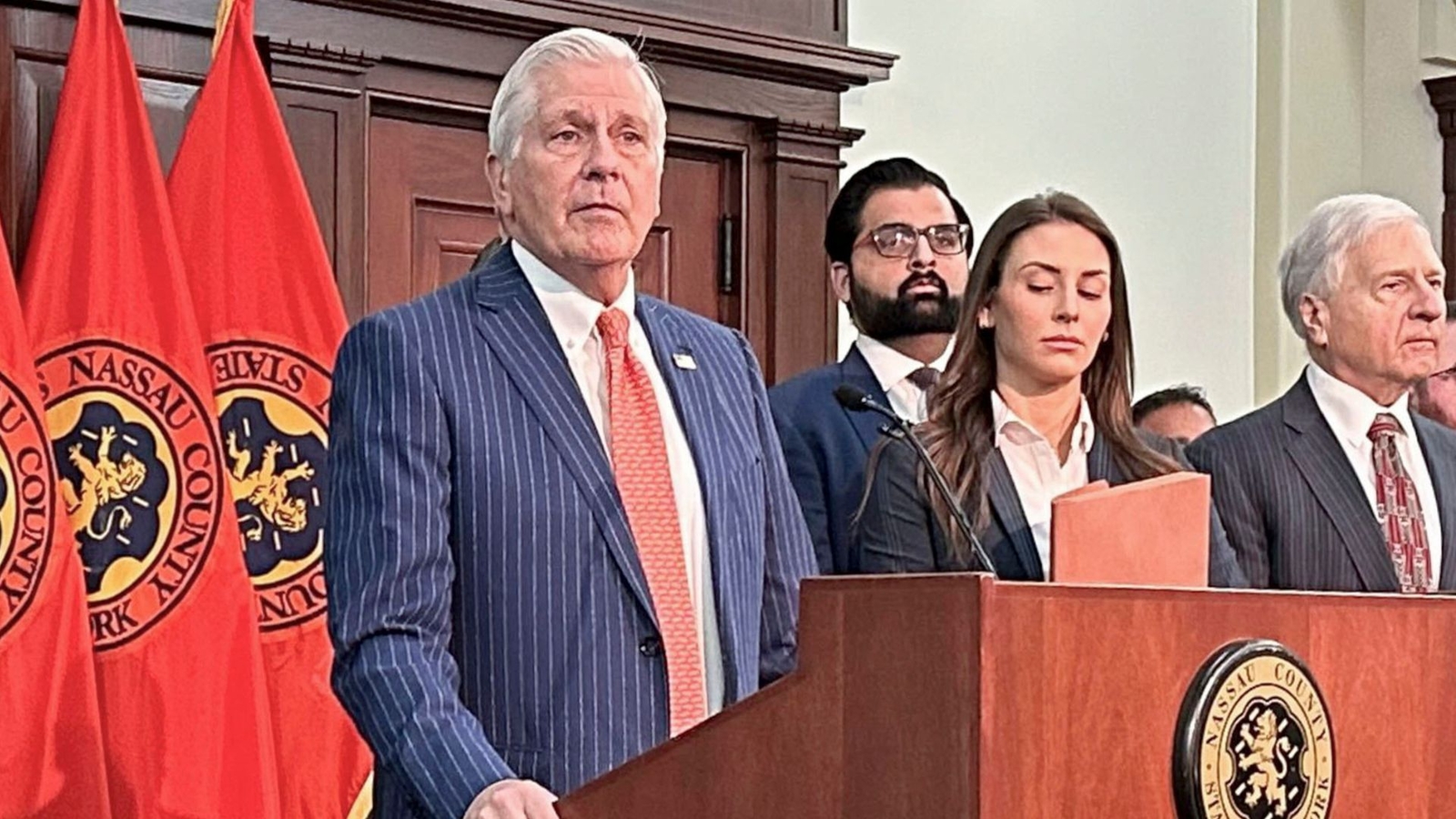
Spectrum News NY 1, WABC-TV, and City & State NY interviewed Lawrence Levy, associate vice president and executive dean of the National Center for Suburban Studies, after Nassau County Executive Bruce Blakeman announced his intention to run for New York governor against incumbent Kathy Hochul. To do so he will have to face off against Rep. Elise Stefanik in the Republican primary.


As interest in cryptocurrencies move from the fringes to mainstream conversation and public policy debate, Derek Mohr, clinical associate professor of finance at the Simon Business School at the University of Rochester, offers a clear-eyed voice on the subject. Mohr specializes in financial innovation and digital assets, and he’s been in demand with reporters looking to understand the economics behind everything from “Bitcoin-powered” home heaters to gas stations offering discounts for crypto purchases. His message? Not everything that markets itself as a breakthrough actually adds up. For instance, some companies have pitched devices that promise to heat a home using excess energy generated from bitcoin mining. Mohr recently told CNBC the idea might sound clever, but that its practicality collapses under basic financial and engineering realities. “The bitcoin heat devices I have seen appear to be simple space heaters that use your own electricity to heat the room . . . which is not an efficient way to heat a house,” Mohr said. “Yes, bitcoin mining generates a lot of heat, but the only way to get that to your house is to use your own electricity.” Bitcoin mining, he explained, has become so specialized that home computers have virtually zero chance of earning a mining reward. Industrial mining farms operate on custom-built chips far more powerful than any consumer device. In other words, consumers who think they’re heating their homes and earning crypto are, in reality, just paying for electricity and getting no real mining benefit. A pragmatic voice in a volatile space Mohr’s research and commentary help explain not just what is happening in the crypto world, but why it matters for consumers, businesses, and regulators. Whether evaluating the economics of mining or the viability of crypto payments, he brings a steady, analytical perspective to a domain dominated by hype and fast-moving news cycles. For journalists covering cryptocurrency, fintech, and the future of financial transactions, Mohr is available for interviews on digital payments, bitcoin mining economics, crypto regulation, and emerging trends in financial technologies. Top contact him, reach out to University of Rochester media relations liaison David Andreatta at david.andreatta@rochester.edu.
