
Experts Matter. Find Yours.
Connect for media, speaking, professional opportunities & more.

Free masks are coming - here's what you need to know
As stores across America prepare to receive "the largest deployment of personal protective equipment in U.S. history," UConn epidemiologist Dr. David Banach is answering the questions about N95 respirators, how they work, and how to use them properly in a new interview with Buzzfeed news: There are several different types and shapes of N95s; some look like duck bills, others like domes, and several have three panels. The main difference between nonsurgical and surgical N95s is that the latter are also fluid resistant to protect doctors and nurses from blood and other bodily fluid sprays, Dr. David Banach, an infectious disease physician and hospital epidemiologist at UConn Health of the University of Connecticut, told BuzzFeed News. ****** N95 respirators are regulated by the US with standards set by the National Institute for Occupational Safety and Health (NIOSH), while KN95s (and KF94s and others) follow international standards, meaning they also should screen out about 95% of germs and particles, but their effectiveness can vary between brands sold in the US. That’s why Banach advises extra caution if you choose to wear these masks. ****** N95 respirators do expire, Banach said, but it’s usually several years after they are made. As long as you store your N95s according to its box instructions, you’ll be fine — unless you’re saving them for the next inevitable pandemic. Dr. David Banach is an expert on infectious diseases and epidemiology and is a leading expert on COVID-19 in America. To book an interview with Dr. Banach, click on his icon today.


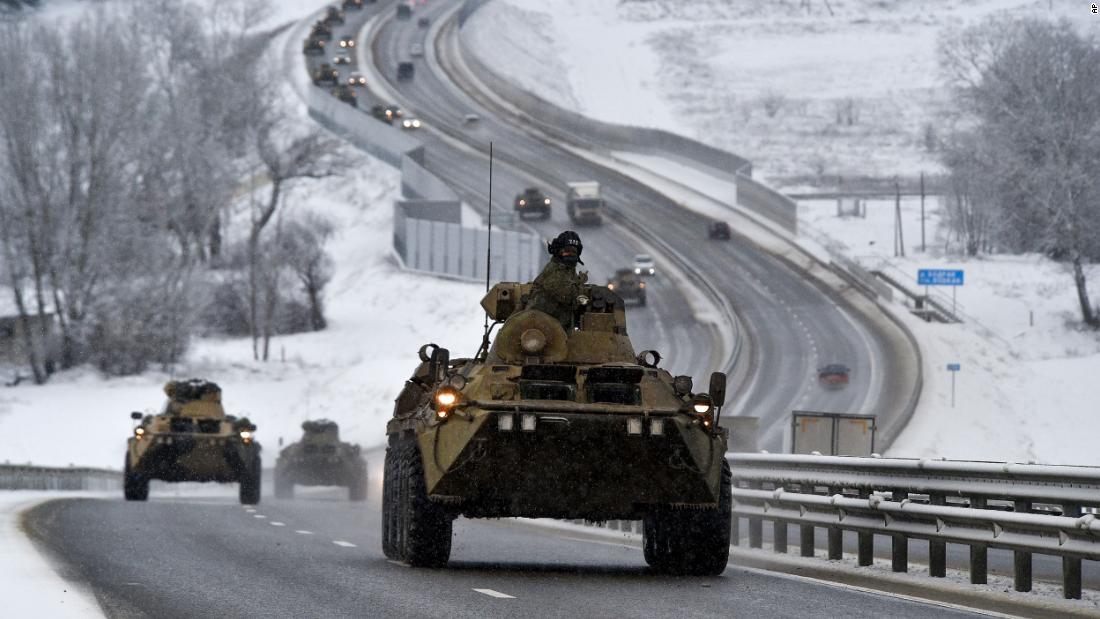
Tension are rising in Eastern Europe as troops, tanks and weapons are piling up on both sides of the border separating Russia and Ukraine. And with each passing day, the invasion of Ukraine and the possibility of outright war seems to be increasing. Is war inevitable? How did this situation escalate so quickly? Is this a power-play but Vladimir Putin? Should other neighboring countries be worried? And what is the strategic and historical significance of Ukraine when it comes to Russia wanting to invade? How could this affect the U.S.? There's a lot of questions to be answered - and if you are a reporter covering this escalating news story, then let our experts help. Jacek Lubecki, Ph.D., is an associate professor of political science and international studies at Georgia Southern University. He is also expert in Polish and European military history. Lubecki is available to speak with media regarding this topic - simply click on his icon now to arrange an interview today.


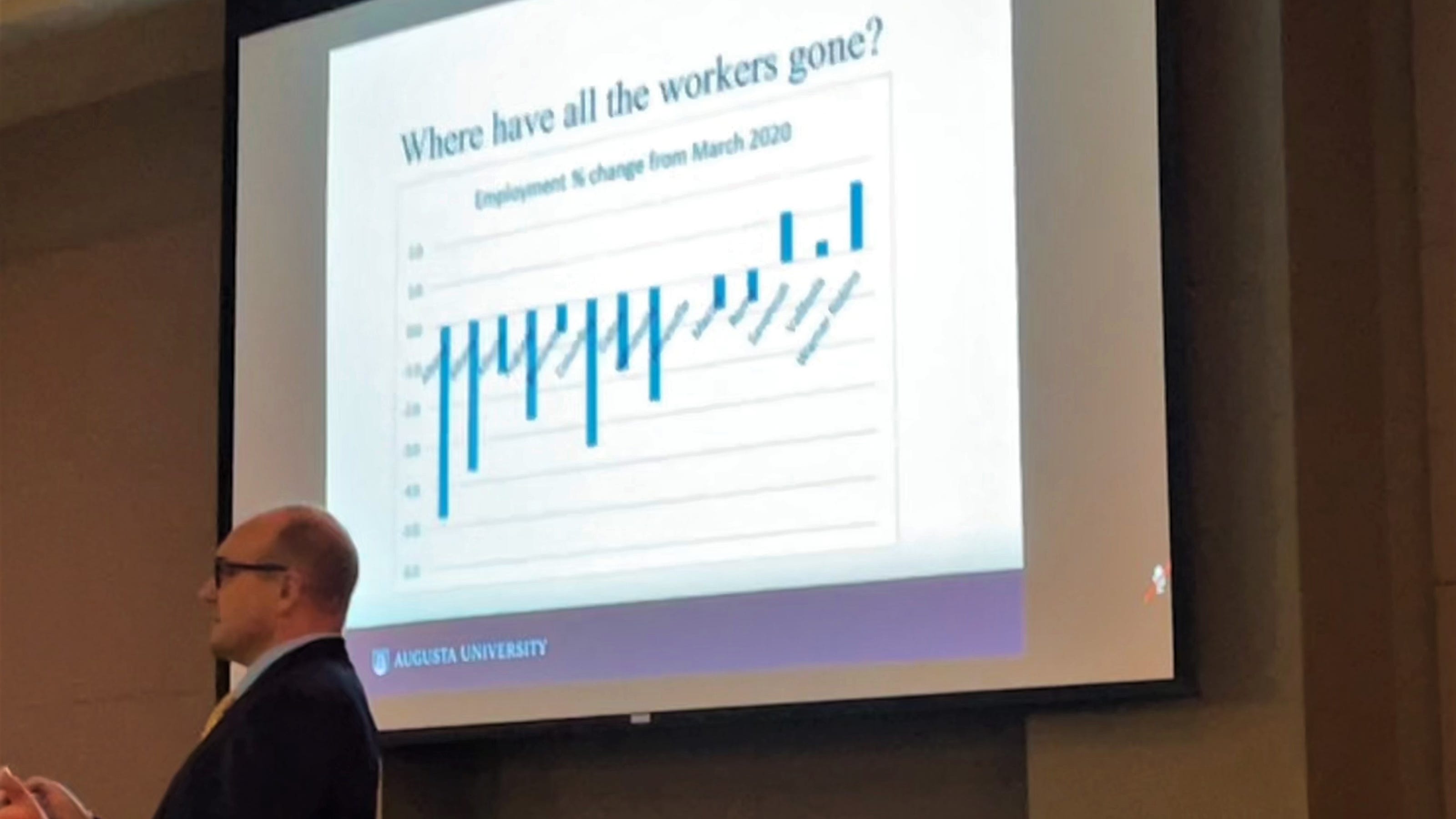
Across America it seems deliveries are delayed; shelves are looking increasingly bare and there’s an elevated sense of anxiety when it comes to what lies ahead for America’s economy. All of these important topics are forefront in the minds of many and reporters are covering these stories locally and nationally on a daily basis. It's making news, and that’s why we’ve asked Dr. Richard M. Franza, the Dean of the James M. Hull College of Business at Augusta University, a few quick questions that we’re seeing pop up in media coverage across Georgia. Q 1 - What is causing shortages here at home, especially in grocery stores? “Like most things, it is complicated, not a lot of easy answers, but there are clearly a few things in play here. First, companies have been having a hard time finding workers throughout the supply chain. It starts at the producer level, whether it is meat processing plants or producers of other foods and sundry items, production levels are down due to limitations on workers. Then, there have also been worker issues at the transportation/logistics part of the supply chain. Particularly in the area of trucking. So, even when producers have enough supply, they are having difficulty getting it to the stores. Finally, there are issues at the grocery stores themselves. Both at their distribution locations and the store themselves, they have been short on labor unloading and picking items, again delaying products from getting on the shelves. The problem has gotten worse in the past few weeks due to the COVID spikes due to omicron. While omicron is causing less serious results, it appears to be easier to catch. So, lots of people are getting it, making people have to miss work for five days, putting a further crunch on the labor force.” Q 2 - Is this a problem we are likely to see continue through the first quarter or half of the year? “I am optimistic that we can get past the omicron crunch in the coming weeks (by mid to late February, if not sooner). So, things should get better this quarter. However, this will just put us back to where we were pre-omicron, with still some lingering issues. I am hopeful that as the pandemic evolves into an endemic, things will resemble a more normal environment. While this virus has been unpredictable, I am hopeful that we can return to more normal environment no later than the end of the second quarter.” Q 3 - What we can we expect once the pandemic finally subsides? “I am extremely optimistic concerning our economy post-COVID. We have been pretty resilient to date, so I think if COVID transitions to endemic, I think we will see more spending and more people going to work.” If you’ve got more questions to be answered, or if you’d like to speak with him one on one – then let us help. Dr. Richard M. Franza is available to speak with media about important issues like America’s supply chain and the economy – simply click on his icon now to arrange an interview today.


Wordle: How to Play (and Win) Like a Linguist
Wordle. If you haven’t heard of it, maybe you're on vacation, on a remote island, with no WiFi. If you have, maybe you've seen friends post their results to Twitter or Facebook and wondered what it was about. Maybe you heard about the game from reading the news. Either way, you're probably in deep. But for those of us who are unfamiliar, what is the game and how does it work? Why is it just so popular? And most importantly, how do you win? To answer these questions and more, we spoke with Villanova University professor and linguist Grant Berry, PhD. "I think word games have to some degree always been popular (think of Scrabble or the New York Times crossword, for example), and a big reason for that is that every human being has a lifetime of experience with language—it's familiar ground for all of us who speak a given language," Dr. Berry says. The appeal of the game, then, makes a lot of sense. It's not a new phenomenon. Rather, it's a reimagining of an established pastime. And Wordle is delightfully simple; each player is tasked with guessing a five-letter word in six tries. The tiles turn gray to show when letters are not in the word, yellow when letters are in the word but in the wrong position and green when letters are in the word and in the correct position. "To start, you need to find a five-letter word that maximizes the likelihood that you'll find at least one of the letters in the target word," Dr. Berry says. "I parsed a word list from powerlanguage’s GitHub page (the person who created Wordle), and the five most frequent letters in that list are A (7,646), E (7,563), S (6,612), O (5,007) and R (4,937). There is one word in English that contains all of these: SOARE (a young hawk). This word is not very common, and it's very unlikely to be the correct word, but it should give you a few pieces of the puzzle. Odds are the target word is fairly common, so it's unlikely to have the least common letters: W, V, Z, X, J or Q." Okay, so you should now have one or two correct letters. If not, Dr. Berry recommends "guessing a word (with the other two vowels) that doesn't contain any letters we've tried yet." (Some options are CUMIN, UNTIL, TULIP and INPUT.) After this, start thinking about common sequences of letters in English using the letters you've uncovered. "The ten most common consonant clusters in the dataset were ST, CH, TS, SH, TH, NG, NT, NS, LL and LY. Alternatively, you could appeal to the tendency in English syllable structure to favor what's called sonority sequencing." For those non-linguists out there, sonority sequencing means, "you're more likely to see harder, obstruent sounds like P, T, C, D, B and G followed by more resonant or continuant sounds like R, L, N, H or S at the beginning of syllables (i.e., before a vowel) and the opposite order at the end of syllables (i.e., after a vowel). For example, DRINK follows this principle." And a helpful tip? "If you have an S in the word and not much other information besides vowels, your best bet is to put it at the beginning of the word or at the very end," Dr. Berry says. "The S sound is the only one in English that can form consonant clusters with more than two distinct sounds (e.g., STRAP); it's also commonly found at the end of words in plurals." Congratulations, you're on a roll! "From this point, move forward without forgetting what you've learned so far, meaning that if a letter is gray from a previous guess, do not use it in another guess. Similarly, if a letter was in yellow in a previous guess, use it in a different position. If the new position is wrong, choose a third position that's different from the previous two. This way you aren't throwing away the useful positional information from your previous failed guesses." And there you go. With some expert tips and a bit of calculated guessing, you've uncovered the word of the day! Now that we know what Wordle is and how to win, we talked with Dr. Berry about the puzzle's virality. "The short duration of the game and its simplicity make it easily shareable, and the fact that there's only one word per day makes it easy for a large group of people to have common ground and a central topic of discussion. Those two things combined are the recipe for a viral phenomenon." Ever finish someone's sentence? Wordle taps into that experience and in a sense replicates it. "There’s strong evidence to suggest that human beings are capable of tracking distributions of words and sounds, using them to help predict what's coming next when reading or listening," Dr. Berry says. "In a sense, then, this game is asking players to do what they've always done: use what you know about the structure of words in English alongside feedback you get to come up with the appropriate target." How many tries did it take you to uncover the word of the day? With Dr. Berry’s help, you probably have a score worth bragging about.


Good COP or bad COP? | The Aston Angle
Four Aston University experts reflect on COP26 and what it means for transport, community and global action on decarbonisation, support for small businesses and China’s coal consumption. COP26 was the 26th United Nations Climate Change conference held in Glasgow from 31 October to 13 November 2021. The participating 197 countries agreed a new deal, known as the Glasgow Climate Pact, aimed at staving off dangerous climate change. But will it be enough? Dr Lucy Rackcliff explains why replacing petrol and diesel vehicles with electric ones alone is not radical enough. The overwhelming message coming from COP26 transport day seemed to be that moving to zero emission-vehicles would solve the well-documented issues created by petrol and diesel fuelled vehicles. As noted at the conference itself, transport is responsible for 10% of global emissions, and emissions from transport continue to increase. The WHO estimates that transport-related air pollution affects the health of tens of thousands of people every year in the WHO European Region alone. However, on-street pollution is not the only effect we should seek to address. Transport is responsible (directly or indirectly) for a wider range of environmental issues, and a wider range of health impacts. Moving to electric vehicles will not address impacts such as loss of land for other activities, use of finite resources in the manufacturing process, the need to dispose of obsolete materials such as used tyres, and the health effects of sedentary lifestyles, facilitated by car-use. In urban areas in particular, re-thinking policy to focus on walking, cycling and public transport-use could free up land for other activities. Car parks could become actual parks, in turn encouraging more active lifestyles, creating space for people and plants, and leading to a range of wider societal benefits. Assuming that replacing petrol and diesel vehicles with electric ones will solve all our problems is a strategy which lacks ambition, and thus denies us the benefits that more radical thinking could deliver. Dr Lucy Rackcliff, Senior Teaching Fellow, Engineering Systems & Supply Chain Management, Aston Logistics and Systems Institute, College of Engineering and Physical Sciences. "Assuming that replacing petrol and diesel vehicles with electric ones will solve all our problems is a strategy which lacks ambition." Professor Patricia Thornley reflects on the role that Aston University and EBRI can play in empowering community action and informing global action with research. COP26 energy day was a fabulous experience. I have never before seen so many people in one place with one ambition: to support and accelerate decarbonisation of the UK’s energy systems. We ran a “fishbowl”, which allows people with different perspectives on a topic (experts and non-experts) to participate in dialogue around a common interest. Our researchers, local government representatives, industrialists and students shared their thoughts on what our future energy mix should look like, how it should be delivered and who needs to act. Without doubt the consensus was that many different technologies have a role to play and there is an urgent need to accelerate implementation. There were reflections on the importance of governance at different levels and an interesting discussion around the relative merits of centralized solutions and devolved actions. The reality is that of course we need both and that made me think about what Aston University and EBRI can do. Of course we should implement centrally with initiatives like the impressively low carbon Students’ Union building, but we also need to raise awareness among our students. Our film showing with the Students’ Union a week later helped with that I hope, and many more of our courses are incorporating sustainability elements which is fantastic. But what we haven’t quite achieved yet is an empowered, proactive voice that would lead to wider community action. There are pockets of excellence but a lot still to be done. My second week at COP26 was very different with police presence outside a building where I had three meetings with industrialists on the controversial topics of forestry and land-use. It was sad to be working with key players to improve sustainability and increase carbon reductions through UK bioenergy while listening to drumbeats outside from objecting protestors. There is a real lack of understanding around forest management and global land use and we need to work harder to improve that. It is a huge challenge, but one that EBRI will work hard to address. Professor Patricia Thornley, Director of EBRI, Energy and Bioproducts Research Institute (EBRI), College of Engineering and Physical Sciences. "There is a real lack of understanding around forest management and global land use and we need to work harder to improve that." Professor Presanta Dey explores whether Government pledges on climate change will translate to practical support for small businesses Following the COP26 climate change summit, the UK Government led the way in making a series of pledges and policy commitments to combat climate change. The question is: how will this translate to practical support for SMEs? Large corporations often take centre stage at COP, which is welcomed, but if we are to see real change, everyone needs to be involved. COP26 provided a refreshing voice for UK small businesses which featured panel discussions on the ‘SME Climate Hub’, highlighting net zero opportunities and challenges for SMEs. The momentum of COP26 has already inspired over 2,000 UK small businesses to sign up to the UN's Race to Zero campaign, which is designed to accelerate the adoption of credible net-zero targets. A long journey ahead still awaits us, however campaigns like these will hopefully start a ripple effect inspiring the remaining six million UK SMEs to take climate action. Small businesses have been crying out for more assistance from the government in the form of ‘green’ grants and financial support to enable them to make the necessary long-term changes. The timely announcement of HSBC’s £500m Green SME Fund at COP26 marks a promising first step towards making it easier for SMEs to fund their green ambitions. In summary, COP26 provided some comfort to UK SMEs seeking a higher level of commitment from government, financial services and businesses. This moment must act as a catalyst for policy makers to continue removing the barriers that are holding small businesses back. Professor Presanta Dey, Professor of Operations & Information Management, College of Business and Social Sciences. Professor Jun Du explains what China’s deal means for the rest of the world following its own energy crisis earlier this year… Despite the many disappointments expressed around the COP26 outcomes, important progess has been made for the world economy moving towards carbon neutrality. Among the noticeable achievements China and the US, which together emit 43% of the total CO2 in the air, have agreed to boost climate co-operation despite many disagreements. This includes China’s pledge to more actively control and cut methane emissions during the next decade - even when the country did not sign up to the global methane pledge made in Glasgow. Reaching net zero will be an unprecedented challenge for all countries. China will need to do the heaviest lifting among all. The country’s energy crisis earlier this year has shown just how hard it will be to reach net zero. The exceptionally early and cold winter this year will demand even more coal, so China’s willingness and resolve for climate commitments are good news to all. While lots of attention was turned to the absence of China’s president, Xi Jinping, from the COP26 climate summit, what is less appreciated is the fact that China is serious about decarbonisation. Few countries invest as much as China in that area, nor grow as fast in finding alternative energy to coal and in green industries like electric cars. China has set specific plans in its 14th national five-year plan for economic and social development to reach peak carbon emissions by 2030 and carbon neutrality by 2060. COP26 could be an additional driver for “an era of accountability” for China. Professor Jun Du, Professor of Economics, Finance and Entrepreneurship, Centre Director, Centre for Business Prosperity, Aston Business School levy.


Inflation's on the rise - can it be reigned in for 2022?
It seems the cost of everything is going up. For most Americans, filling up your car and filling up your grocery cart are now noticeably more expensive. Costs of goods are going up and that's taking a toll on the cost of living for a lot of people across the country. But what's causing the prices of goods and services to creep upwards - and what will it take to tame the upward trend that has inflation at its highest rate in more than 30 years? Recently, Andrew Butters and Kyle J. Anderson from Indiana University’s Kelley School of Business sat down with Indiana NewsDesk to help explain what's going on. Inflation might be the one the leading news stories of 2022 - and if you are a reporter looking for answers - then let us help with your coverage. Andrew Butters is an Assistant Professor of Business Economics and Public Policy at Indiana University’s Kelley School of Business. He is also an expert in the areas of industrial organization, productivity, market integration, demand and business cycles. Kyle J. Anderson is a Clinical Assistant Professor of Business Economics. He is an is an economist researching business and pricing in online environments. Both Kyle and Andrew are available to speak with media regarding this important topic – simply click on either expert's icon now to arrange an interview today.

As the legendary political guru James Carville used to say, "It’s the economy, stupid." And these days with housing prices, inflation and the cost of living all pointing up in a very steep trajectory – the state of the economy is front and center for a lot of politicians, Americans and families as the year comes to a close. There’s a lot to be considered, and that’s where experts like Augusta’s Dr. Simon Medcalfe are being sought out to explain economic trends what is behind them. “U.S. retail sales are high,” explains Medcalfe “We had a lot of stimulus checks coming through the door and that’s really spurred extra spending and it’s across a whole range of retail sectors.” According to Medcalfe, household items are also seeing double-digit price increases. “What we’ve seen over the last 18 months during the pandemic, is a shift in our consumer preferences and consumer behavior.” • Furniture sales are up 29% • Used cars and cars in general are up 25-26% • Gardening and building supplies are up 14% • Electronics have seen an almost 30% increase • Clothing sales are up a whopping 50% But it’s not all good news - as the price of everything as we know is going up. “Inflation is running about 6.8% nationally,” Medcalfe explains. “It’s running about 7.2% in the south and it’s certainly a concern of policymakers and economists.” But theirs is sunshine behind those clouds as Medcalfe believes 2022 will see a return to normal. “I think next year inflation will come down. I know it won’t be at these high levels, but I still think it’ll be above the Feds target level of inflation, so look for those interest rate increases next year.” The economy and what to expect locally and nationally are hot topics – and if you are a reporter covering this topic – that’s where we can help. Dr. Simon Medcalfe is a highly regarded economics expert and the Cree Walker Chair in the Hull College of Business at Augusta University. Medcalfe is available to speak with media regarding the economy and its outlook – simply click on his icon now to arrange an interview today.


Christmas is here! And with the hustle and bustle of shopping and scouring the internet for that perfect gift or deal, odds are there are people lurking in the dark corners hoping to stuff their stockings with scams if you’re not too careful. At Thanksgiving, when the official start to the shopping season began – the experts from Indiana University’s Kelley School of Business were front and center answering media calls and doing interviews about this very topic Scott Shackelford, a professor at Indiana University specializing in cyber security, said there are some red flags to be on the lookout for while shopping online. “There’s some easy ones to spot right off the bat, including if on the URL,” said Schackelford. “If you see it just as HTTP and not HTTPS. That S stands for secure, which means your information is encrypted when you use that site.” Shackelford also said to be on the lookout for funny wordplay involved on the website. Maniscalo says most of these fake websites originate from outside the country. “English is not their native tongue, so they will a lot of times have misspellings, or say things in kind of an awkward way, not how we would say it, or how we would print it out there,” said Maniscalo. There is also the problem of what Shackelford calls Grinch Bots. These are automated bots that monitor major retail sites to see what items are the hottest and buy them out as soon as they are restocked. “There’s actually been bills that have been proposed in Congress to deal with example of that phenomenon. But of course, they’re not enacted yet, so it’s still up to consumers,” said Shackelford. November 25 – Fox News It’s going to be a busy holiday shopping season – and if you’re a journalist looking to cover this important top, then let us help. Scott Shackelford is an Assistant Professor of Business Law and Ethics at Indiana University’s Kelley School of Business. He’s an expert in the field of cybersecurity law and policy. Scott is available to speak with media about this subject – simply click on his icon now to arrange an interview today.

Experts in the Media – Learn how UMW is doing its part to preserve Indigenous history
The members of Virginia’s Rappahannock and Patawomeck tribes can trace their roots back to the times before the first European contact. For hundreds of years, their people fished the rivers and inhabited the area near the Potomac and Rappahannock rivers. It was a rich history and today the efforts to preserve the stories and records of those times are being bolstered by UMW students and faculty. The work was recently featured in a piece by NBC-4 in Washington, D.C. Professor Lauren McMillan and her students are helping with that mission. King George County economic development officials approached her with an idea to create a Native American heritage trail, hopeful that it would drive ecotourism and draw visitors to public access points. “The first step that we did was say we need to consult with the tribes whose stories we’d be telling," McMillan said. Then the class did a deep dive. "We then started diving into the archives, the historical records, oral histories and the archaeological record as well,” McMillan said. They’ve created signs that will go up in seven different locations in King George. Each one tells a different story about the local tribes, spotlighting the past and present. “When you learn Virginia history, you learn about a lot of stuff that happened in Jamestown and that’s kind of the last place you learn about Indians in Virginia history, but we've been here all along,” Brad Hatch, a member of the Patawomeck Tribe, said. “We’ve been preserving our own culture and heritage and it's here for everybody to see." The students worked hard to put that heritage and culture on full display. They also envision their project inspiring others to do some research of their own about Virginia’s first residents. December 07 - NBC News Indigenous history is a fascinating topic – and one being covered more and more by media. And if you’re a reporter looking to know about the work UMW is doing with of the Rappahannock and Patawomeck tribes or other topics – then let us help. Lauren McMillan is the University of Mary Washington's resident historical archaeologist and an expert on middle-Atlantic American history. Dr. McMillan is available to speak with media – simply click on her icon now to arrange an interview today.

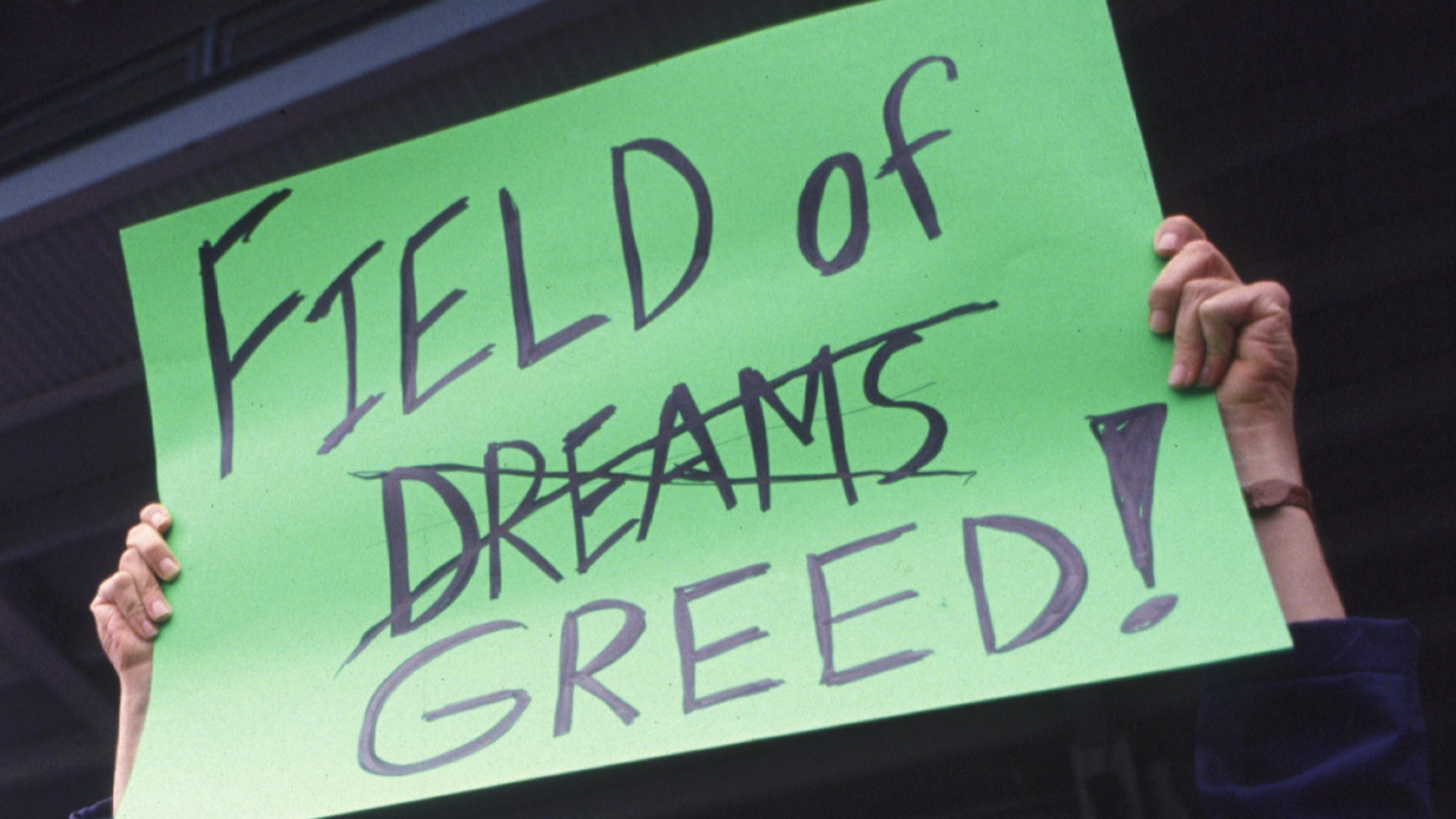
In any disagreement or dispute, sides are taken - by those involved, by those invested or sometimes just by those most interested in the conflict that is occuring. And when it comes to the matter of superstar athletes squaring off against billionaire owners, it's often the fans that speak the loudest and media are doing their best to cover both sides - and get to the root of the matter. Lately, experts from IU's Kelley School of Business have been front and center - providing expert perspective, opinion and analysis. And earlier this month as players were locked out - Nathaniel Grow was getting calls by reporters for insight. “The players have been seeing their financial position deteriorate over the last few cycles, and the last few years in particular, when the average player salary has declined, which is unprecedented for MLB,” said Nathaniel Grow, an associate professor of business law and ethics at Indiana University’s Kelley School of Business who has written extensively on baseball’s CBA topics and issues for several years. “Within that bucket is the service-time manipulation, which helps feed into some of these salary issues.” “The players don’t think they’re getting a fair shake, is a fair general consensus. The question becomes, where do they go and how do they try to improve their financial position?” December 02 - Sporting News The ongoing labor dispute between players and owners will be long, protracted and at times tense - and if you are a reporter looking to cover this trending topic, then let us help with your stories and questions. Nathaniel Grow is an Associate Professor of Business Law and Ethics and the Yormark Family Director of the Sports Industry Workshop. He's also an expert in the areas of sports and labor law. Grow is frequently quoted by media outlets such as The Washington Post, The Wall Street Journal and ESPN regarding current legal issues in the sports industry. Nathianiel is available to speak with media regarding the MLB lockout - simply click on his icon now to arrange an interview today.