
Experts Matter. Find Yours.
Connect for media, speaking, professional opportunities & more.
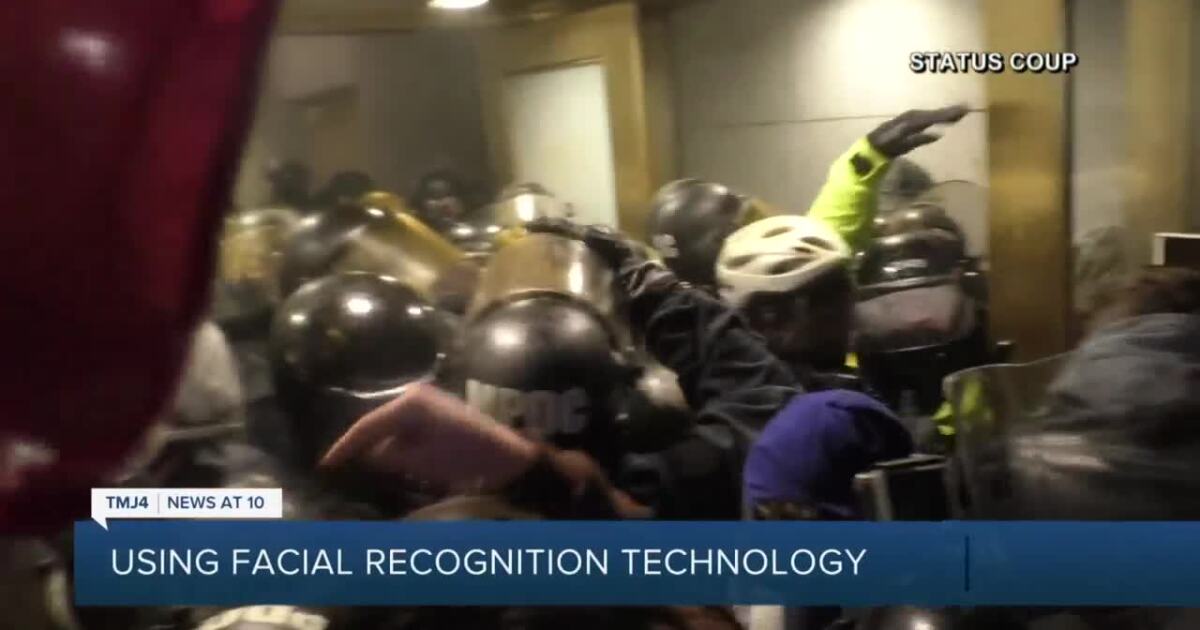
On January 06, America watched with shock as a mob of protesters stormed the gates in Washington, D.C. and invaded the Capitol buildings. For hours, the rioters looted and occupied America’s halls of power and though some were apprehended, many found a way to get out and get back home avoiding arrest. However, media coverage was substantial and some of the protesters were even bold enough to be caught posing for social media. Slowly, authorities are tracking them down, and Dr. Derek Riley, an expert at Milwaukee School of Engineering (MSOE) in the areas of computer science and deep learning, has been explaining how artificial intelligence (AI) technology that’s taught at MSOE is capable of enabling law enforcement's efforts to identify individuals from pictures. "With these AI systems, we’ll show it example photos and we’ll say, 'OK, this is a nose, this is an ear, this is Billy, this is Susie,'" Riley said. "And over lots and lots of examples and a kind of understanding if they guess right or wrong, the algorithm actually tunes itself to get better and better at recognizing certain things." Dr. Riley says this takes huge amounts of data and often needs a supercomputer—like MSOE's "Rosie"— to process it. To get a computer or software to recognize a specific person takes more fine-tuning, Riley says. He says your smartphone may already do this. "If you have a fingerprint scan or facial recognition to open up your phone, that’s exactly what’s happening," Riley said. "So, they’ve already trained a really large model to do all the basic recognition, and then you provide a device with a fingerprint scanning or pictures of your face at the end to be able to fine-tune that model to recognize exactly who you are." Riley says this technology isn't foolproof—he says human intelligence is needed at every step. He added we might be contributing to the data sources some of the technology needs by posting our pictures to social media. "Folks are uploading their own images constantly and that often is the source of the data that is used to train these really, really large systems," Riley said. January 14 – WTMJ, Ch. 4, NBC News The concept of facial recognition and the use of this technology in law enforcement (and several other applications) is an emerging topic – and if you are a reporter looking to cover this topic or speak with an expert, then let us help. Dr. Derek Riley is an expert in big data, artificial intelligence, computer modeling and simulation, and mobile computing/programming. He’s available to speak with media about facial recognition technology and its many uses. Simply click on his icon now to arrange an interview today.



Trump, the Capitol, and Social Media – Let our expert answer the questions everyone is asking
Social media played a significant role in the storming of the U.S. Capitol, and its influence in shaping American politics is unlikely to wane, says UConn's Marie Shanahan. And that’s why UConn recently published a piece where Professor Shanahan took on a lot of the trickier questions people are asking in the wake of the storming of the U.S. Capitol on January 6. In a piece just published – she addresses these key questions: While obscure social media platforms like Parler, Gab, and Telegram have gotten a lot of attention recently as gathering places for the kinds of far-right activists who were instrumental in what happened at the Capitol, most of the planning for that event seems to have taken place in the open, on sites like Facebook and Twitter. To what extent was this event a product of social media? It’s hard to talk about Donald Trump’s presidency without talking about social media. What might change now that he seems to have been permanently banned from the most popular platforms? Speaking of that deplatforming, even though Facebook and Twitter can ban any user who violates their terms of service, is there some validity to the argument that in doing so they’re restricting free speech? What kinds of things can be done to address some of these problems in how the public discourse is shaped? Is repealing Section 230 actually a good idea? The piece is attached and it is an insightful must-read for anyone following these developments. Professor Shanahan is an expert in the intersection of journalism and digital communication technology, online news, and digital discourse. If you are a journalist looking to cover this topic and would like to arrange an interview with Professor Shanahan – simply click on her icon now to arrange a time to talk today.



It’s as if there’s an all-out war on the world’s insects – and experts from across the country are all buzzing with some very bad news. Recently, University of Connecticut’s Professor of Ecology and Evolutionary Behavior, David Wagner was featured on CBS National News in an in-depth story about the potential apocalypse the world’s insect kingdom faces. “The world's vital insect kingdom is undergoing "death by a thousand cuts," the world's top bug experts said. Climate change, insecticides, herbicides, light pollution, invasive species and changes in agriculture and land use are causing Earth to lose probably 1% to 2% of its insects each year, said University of Connecticut entomologist David Wagner, lead author in the special package of 12 studies in Monday's Proceedings of the National Academies of Sciences written by 56 scientists from around the globe. The problem, sometimes called the insect apocalypse, is like a jigsaw puzzle. And scientists say they still don't have all the pieces, so they have trouble grasping its enormity and complexity and getting the world to notice and do something. Wagner said scientists need to figure out if the rate of the insect loss is bigger than with other species. "There is some reason to worry more," he added, "because they are the target of attack" with insecticides, herbicides and light pollution… Insects "are absolutely the fabric by which Mother Nature and the tree of life are built," Wagner said. January 12 - CBS News The story is attached above – and must-read material for anyone concerned about insects and the vital role they play in just about every aspect of our world. If you’re a journalist looking to know more about this topic and would like to contact Dr. Wagner – simply click on his icon now to arrange an interview today.


The events that led to the storming of the Capitol buildings last week have garnered attention from just about every news organization across the planet. Pundits and politicians have weighed in on both sides regarding whether President Trump’s words and actions need to be held accountable for the damage to America’s democratic institutions as well as the five people who have since died as a result of the events that occurred on January 6, 2021. Recently, University of Connecticut’s Richard Ashby Wilson, the Gladstein Chair and Professor of Anthropology and Law and an expert on hate speech and incitement on social media shared his perspective in an Op-Ed published in the Los Angeles Times. It’s a thoughtful, methodical, and excellent piece outlining why he believes, in his expert legal opinion, that President Trump crossed the line and now deserves to be held accountable for his crimes. This is a burning topic, and if you are a journalist looking for objective and expert opinion on this topic – then let us help. Richard Ashby Wilson is available to speak with media about this issue – simply click on his icon now to arrange an interview today.


Lockdown teleworking impacts productivity of women more than men
When the COVID-19 pandemic led countries all over the world to lock down their economies in early 2020, there was an unprecedented global shift to teleworking in white collar sectors. A trend that had been gathering traction was suddenly and exponentially accelerated and many of the world’s largest corporations, Google and Facebook among them, have announced plans allowing employees to work from home well into 2021 or indefinitely. Remote working not only appears to work, but it appears to have a number of advantages—savings in office maintenance costs and time spent commuting, not to mention enabling organizations to safeguard productivity when there’s a major shock or crisis. But is it all good news? Or good news for all? A new paper by Ruomeng Cui, assistant professor of information systems and operations management at Emory’s Goizueta Business School, reveals an important drop in the productivity of female academics around the world in the wake of the COVID-19 lockdowns. In fact, in the ten weeks following the initial lockdown in the United States, their productivity fell by a stunning 13.9 percent relative to that of male colleagues. And it’s likely to do with the disproportionate burden of responsibility for household needs and childcare that persistently falls on women, Cui said. “We know that gender inequality persists both in the workplace and at home, and we were curious to see how the lockdown scenario would attenuate or exacerbate the situation for women,” Cui said. Anecdotal evidence from her own field—academia—showed that in the weeks following the stay at home mandate in March, there was an upswing of around 20 to 30 percent of papers submitted to journals. However, the overwhelming majority of these were being authored by men. Intrigued, Cui teamed up with Goizueta doctoral student Hao Ding and Feng Zhu from Harvard Business School to conduct a systematic study of female academics’ productivity and output during this period. “We knew that the lockdown had disrupted life for everyone, including academics. With schools and kindergartens closed and people taking care of work and household obligations at home, we intuited that women would be affected more than men as they are disproportionately burdened with domestic and childcare duties,” Cui said. For female academics this would theoretically be particularly acute, as the critical thinking that goes into research calls for quiet, interruption-free environments. To put this to the test, Cui and her co-authors created a large data set covering all the new social science research papers produced by men and women, across 18 disciplines and submitted to SSRN, a research repository, between December 2018 to May 2019 and then from December 2019 to May 2020. From this set, they were able to extract information on titles, authors’ names, affiliations, and addresses to identify their countries and institutions, as well as faculty pages to distinguish between men and women. In total they collected just under 43,000 papers written by more than 76,000 authors in 25 countries. Looking at the data, Cui and her colleagues were able to compute the total number of papers produced by male and female academics each week and then compare the productivity of both before and after the start of the lockdown. Prior to the pandemic, the 2019 period showed no significant changes in productivity in either gender. But in the 10 weeks following the shock of lockdown, a clear gap emerges between men and women, with female academics’ productivity falling by just under 14 percent in comparison to their male colleagues. Interestingly the effect was more pronounced in top-ranked research universities. This is likely because top schools require faculty to publish research as the primary requisite for promotion, so men would be motivated to continue authoring papers before and after the lockdown. These findings lend solid, empirical clout to the notion that women do take a hit to productivity when care and work time are reorganized, Cui noted. “We see clearly that women are producing less work as a consequence of working from home. In the field of academia, that has huge implications as achieving a permanent position, or tenure, is generally linked to your research output,” she said. “So, there is a serious fairness issue there. If women are producing less because the burden of household responsibility is greater for them than for men, then you’re likely to see fewer female academics get tenure through no fault of their own.” Indeed, one of the other findings of the study shows that while productivity fell, the quality of female-authored research measured by downloads and citations did not. Then there’s the issue of teleworking and gender. With a significant proportion of the world’s white-collar organizations still working from home and unlikely to head back to the office any time soon—and as many schools and childcare facilities remain closed due to the pandemic—Cui is concerned that productivity as a measure of value and a marker of success might mean the odds are further stacked against women. And not just in academia. “We looked at universities in particular, but our findings can really be externalized to any other industry because the underlying issues here are universal. So, with remote working becoming normalized, I think there’s a real onus on organizations of every type to think about how to mitigate these unintended consequences,” she said. “There needs to be more thought about how we measure value or potential of employees.” Cui calls for organizations and institutions to consider these factors when they evaluate male and female workers in the present context and looking to the future. Among the kinds of proactive moves they might consider are to make training programs for male and female employees that explore fairness and encourage a more even distribution of responsibility in the home and for children. “There’s nothing to be gained in prioritizing productivity as a tool for evaluation and just giving women more time, say, to produce as much,” Cui warned. “You’re just left with the same scenario of women doing more than their fair share. Solving this issue is really much more about being aware of it, getting educated about it, and changing your mindset.” If you are a journalist looking to cover this research or speak with Professor Ciu about the subjects of telework and productivity, simply click on her icon now to arrange an interview today.


Political playoffs – if you are covering the run-off election in Georgia, let our experts help.
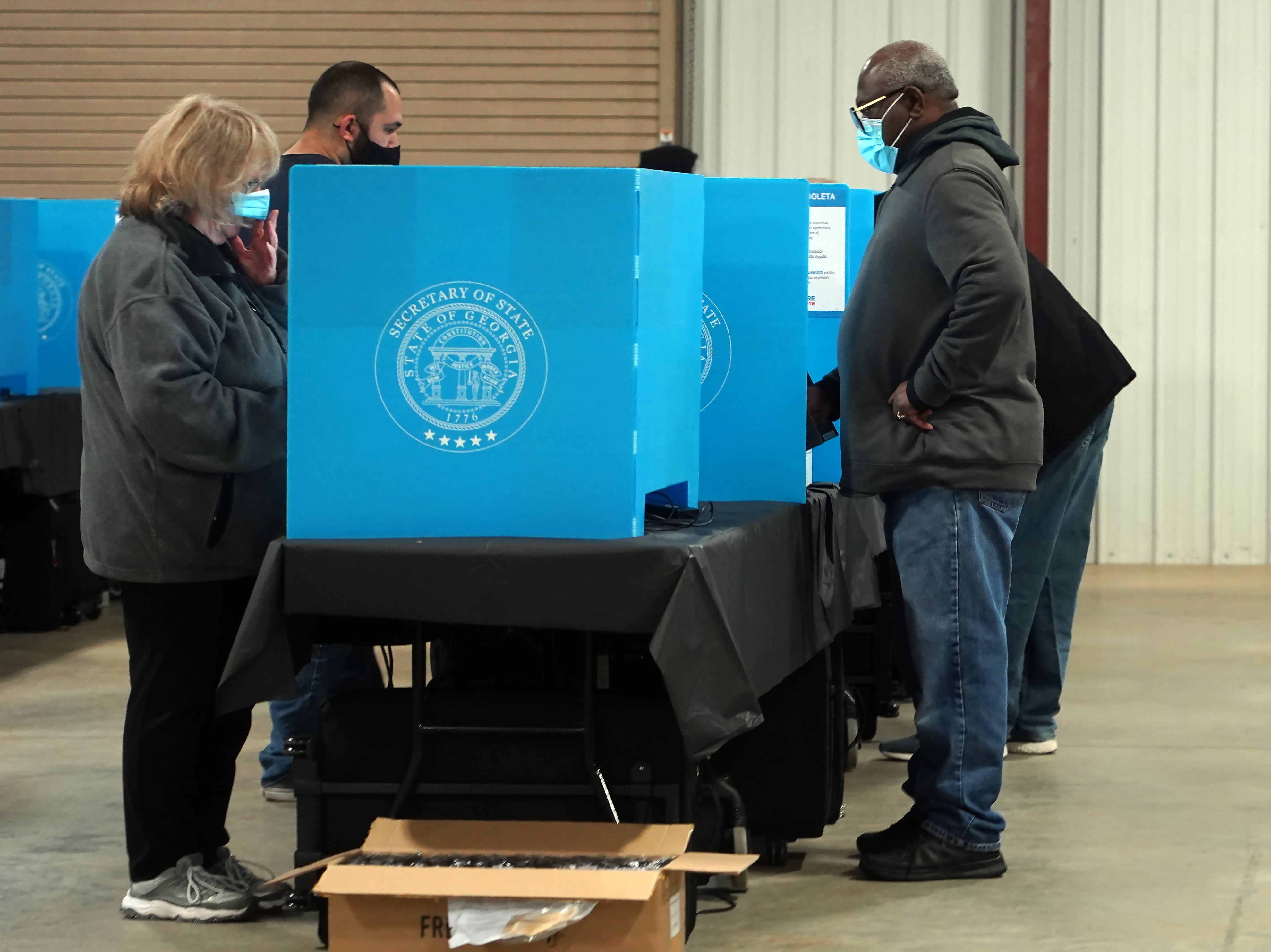
It’s a political junkie’s dream. After a drawn-out and contentious presidential election – the question over who will hold the balance of power in Washington now rests in two Georgia senate races that have each gone into overtime. There’s a lot on the line for both parties and especially President-elect Biden, who faces high expectations from not just Americans, but from various factions across the broad spectrum of the Democratic party who feel owed for their part in narrowly defeating President Donald Trump. In the final push before the crucial Georgia U.S. Senate run-offs on Tuesday, Republicans and Democrats share this closing message: The stakes can’t be any higher, and the fate of each party’s agenda rests on the two races. Incumbent GOP Sens. David Perdue and Kelly Loeffler face respective challenges from Democrats Jon Ossoff and Rev. Raphael Warnock. The races will decide which party controls the Senate, and thus, the extent to which Democratic President-elect Joe Biden can enact his legislative priorities. “The future of the country is on the ballot here in Georgia,” Loeffler told Fox News on Tuesday. If at least one Republican candidate wins their race, the GOP will maintain control of the upper chamber. If Ossoff and Warnock win, the Democratic caucus and GOP would each have 50 members, giving Vice President-elect Kamala Harris the tiebreaking vote. January 04 - CNBC If you’re a journalist covering Tuesday’s run-offs, then get in touch with our experts to help with your questions and stories. Dr. Rosalyn Cooperman, professor of political science at the University of Mary Washington and member of Gender Watch 2018, is an expert on women in politics. Dr. Cooperman is available to speak to media – simply click on her icon to arrange an interview today.



Network Science Offers Key Insights into Polarization, Disinformation, and Minority Power
People tend to think of the arena of politics as being driven by human decision and emotions, and therefore unpredictable. But network scientists like Boleslaw Szymanski, a computer science professor at Rensselaer Polytechnic Institute, have found that the country’s political activity – from American society’s ever-growing partisan divide to its grappling with the spread of misinformation online – can be explained by abstract and elegant models. These models provide insights — and even answers — to a number of pressing questions: Is increasing access to information driving us apart? Can an entrenched minority ultimately prevail? Could structural changes be made that insulate us from misinformation and reduce the polarization that divides us? Szymanski studies the technical underpinnings of our choices, how we influence one another, and the impact of the algorithms we rely upon to navigate a growing ocean of information. His work has yielded fascinating insights, including research on how a committed minority will overcome less determined opposition and the development of a parameter to determine what drives polarization in Congress. Through his research on the influence of minority opinions, Szymanski found that when just 10 percent of the population holds an unshakable belief, it will ultimately be adopted by the majority of the society. “When the number of committed opinion holders is below 10 percent, there is no visible progress in the spread of ideas. It would literally take the amount of time comparable to the age of the universe for this size group to reach the majority,” said Szymanski, a computer science professor at Rensselaer Polytechnic Institute. “Once that number grows above 10 percent, the idea spreads like flame.” In his present work, Szymanski is researching tools for measuring the level of polarization in specific news sites, search engines, and social media services, and developing remedies, like algorithms that offer better data provenance, detect misinformation, and create internal consistency reasoning, background consistency reasoning, and intra-element consistency reasoning tools. “Informed citizens are the foundation of democracy, but the driving interest of big companies that supply information is to sell us a product,” Szymanski said. “The way they do that on the internet is to repeat what we showed interest in. They’re not interested in a reader’s growth — they’re interested in the reader’s continued attention.” With the political environment becoming increasingly bitter and dubious information becoming ever more prevalent, Szymanski is available to discuss his research on polarization, disinformation, and the power of a committed minority.


Lann Le, a senior in the Betty Foy Sanders Department of Art at Georgia Southern University, is drawing inspiration from public response to the COVID-19 pandemic for her senior thesis exhibition, “Good Without.” The interactive exhibition will explore what items people can live without, a choice many people have had to make due to the pandemic. Oct. 20th, a panel discussion related to the project took place over Zoom, featuring Professor of Art Rachel Green, Associate Professor of Education Katie Brkich, Ph.D., and Professor of Economics Richard McGrath, Ph.D. Audio from the discussion will be recorded and played throughout the exhibition. Le said she got the idea for the exhibition after seeing how society reacted to COVID-19 at the beginning of the pandemic in the U.S. “In March, I was told to stock up all necessities and saw shelves being emptied in hours,” she said. “I heard stories of struggles and issues associated with stores being closed, businesses paused, unemployment, stress, food shortage and boredom to name a few. I also saw some drop-off items at donation centers and also more online shopping. Here I question what we need and what we’re conditioned to need.” After getting approval from her professor, Bridget Conn, Le wanted to showcase items people believe they can live without. She approached students, professors and strangers on the internet and in person to ask what their choices would be. She also made a website and Instagram account to keep a log of images of the items. Both will continue to be updated until next August. Le’s exhibition, which will run from Nov. 9 to Dec. 4 in the Fine Arts Gallery on the Armstrong Campus, will feature physical items, photographs, audio and collages installed in an interactive environment. It has also been getting the attention of local media and was recently profiled in the Savannah Morning News. “Lann’s project is unique in that she is really embracing the practices of conceptual and interactive art,” Conn said. “This means that unlike traditional art media, where the artist is in control of making their own paintings or sculptures or the like, she is inviting strangers to direct the project by asking them to submit photographs or items that they have learned they are good without.” To learn more about the exhibition - simply visit the site below: If you are a journalist looking to learn more about this project or if you would like to arrange an interview - simply reach out to Georgia Southern Director of Communications Jennifer Wise at jwise@georgiasouthern.edu to set and time and date.


This is a business imperative, not a tech issue, says Brunswick’s Cybersecurity and Privacy team Cyber threats are generating some scary statistics: $400 billion a year in losses from attacks, with some larger businesses experiencing more than 12,000 attacks each year. But there is also good news. Companies are recognizing that cybersecurity is not a technology concern but rather a critical business issue and one they are preparing to deal with. To address the significant business and reputational risks involved, companies are using a cross-functional, top-to-bottom approach, one that treats cybersecurity as a business imperative. Many companies are beginning to strengthen their “human firewall,” creating a business culture where every employee sees cybersecurity as their responsibility. People, not software, are often the weakest link in a security system and that is a problem no software patch will solve. Regulation is growing increasingly complex and governments’ expectations differ from those of companies and consumers. The rules are murky and lag far behind the technology – and the threat. To deal with competing and at times conflicting requirements, some companies are moving beyond the minimum demanded of them, and aiming for a higher standard. To be effective, a company’s cybersecurity program needs to weave these threads into its underlying business plan. Cybersecurity is more than just a strong defense, more than compliance. It must be a part of corporate culture. It represents an opportunity to differentiate yourself from your competitors, increase the efficiency of your operations and earn a greater level of trust from customers, shareholders and the community.




Best-selling author Peter Singer talks with the Brunswick Review about winning the increasingly crowded and contentious war for attention What do Isis and Taylor Swift have in common? According to author and digital-security strategist Peter Singer, both the terrorist organization and pop star are fighting for your attention online and employing similar tactics to try and win it. ISIS kicked off its 2014 invasion of Mosul with the hashtag, “#AllEyesonISIS.” More recently, the terror group posted photos of its members holding cute cats in an effort to make them more relatable – tactics familiar to most celebrities and online marketers around the world. These online battles, the rules governing them, and their real-world impact are the focus of Mr. Singer’s latest book, LikeWar, which he coauthored with Emerson T. Brooking, at the time a research fellow with the Council of Foreign Relations. “A generation ago people talked about the emergence of cyber war, the hacking of networks. A ‘LikeWar’ is the flip side: the hacking of people and ideas on those networks. Power in this conflict is the command of attention,” says Mr. Singer, who in addition to his writing is also a strategist and Senior Fellow at the New America Foundation. Pretty much everyone who posts online – from governments to marketers to reality TV stars – is a combatant in this fight for virality, according to Mr. Singer. Triumph in a “LikeWar” and you command attention to your product or propaganda or personality. Lose and you cede control of the spotlight and the agenda. Mr. Singer recently spoke with Brunswick’s Siobhan Gorman about the trends he’s seeing in LikeWars around the world, and what companies can do to avoid being on the losing end. What were you most surprised by in researching LikeWar? One of the more interesting characters in the book was at one time voted TV’s greatest villain: Spencer Pratt, a reality TV star on MTV’s “The Hills.” He’s basically one of these people who became famous almost for nothing. But what Pratt figured out really early was the power of narrative, which allowed him to become famous through, as he put it, “manipulating the media.” In the same week, I interviewed both Pratt and the person at the US State Department who’s in charge of the US government’s efforts to battle ISIS online. And Pratt, this California bro who’s talking about how to manipulate the media to get attention, understood more of what was playing out online than the person at the State Department. Spencer Pratt, a reality TV star… understood more of what was playing out online than the person at the State Department.” How much have online conflicts changed the rules in the last few years? First, the internet has left adolescence. It’s only just now starting to flex its muscles and deal with some of its responsibilities. The structure of the network changes how these battles play out. So, it’s this contest of both psychological but also algorithmic manipulation. What you see go across your screen on social media is not always decided by you. The rule makers of this global fight are a handful of Silicon Valley engineers. Another aspect of it is that social media has effectively rendered secrets of any consequence almost impossible to keep. As one CIA person put it to us, “secrets now come with a half-life.” Virality matters more than veracity; the truth doesn’t always win out. In fact, the truth can be buried underneath a sea of lies and likes. And the last part is that we’re all part of it. All of our decisions as individuals shape which side gets attention, and therefore which side wins out. But you highlight that this is playing out differently in China. Exactly. There are two different models shaping the internet, and shaping people’s behavior through the internet, playing out in the West and in China. Essentially, internet activity in China is all combined. Look at WeChat, which is used for everything from social media to mobile payment; it’s Amazon meets Facebook meets Pizza Hut delivery. And you combine that with an authoritarian government that’s had a multi-decade plan for building out surveillance, and you get the social credit system, which is like Orwellian surveillance crossed with marketing. The social credit system allows both companies and the government to mine and combine all the different points of information that an online citizen in China reveals of themselves, and then use that to create a single score – think of it as your financial credit score of your “trustworthiness.” For example, if you buy diapers your score goes up, because that indicates you’re a parent and a good parent. If you play video games for longer than an hour your score goes down because you’re wasting time online. And it’s all networked. Your friends and family know your score. It creates a soft form of collective censorship; if your brother posts something that’s critical of the government, you’re the one who goes to him and says, “Knock it off ’cause you’re hurting my score.” And you do that because the score has real consequences. Already it’s being used for everything from seating on trains and job applications to online dating. Your score literally shapes your romantic prospects. So, you have this massive global competition between Chinese tech companies and other global tech companies not only for access to markets, but also for whose vision of the internet is going to win out. How can companies win a “LikeWar”? Everyone’s wondering: What are the best ways to drive your message out there and have it triumph over others? The best companies I’ve seen create a narrative, have a story and have emotion – in particular, they have emotion that provokes a reaction of some kind. It’s all about planned authenticity. That sounds like a contradiction, but it’s about acting in ways that are genuine, but are also tailored because you’re aware that the world is watching you. A good comparison here is Wendy’s versus Hillary Clinton. Wendy’s is a hamburger chain – not a real person – but it acts and comes across as “authentic” online and has developed a massive following. They’re funny, irreverent. Yet Hillary Clinton – a very real person – never felt very authentic in her online messaging. And that’s because it involved a large number of people – by one account, 11 different people – all weighing in on what should be tweeted out. Inundation and experimentation are also key. Throwing not just one message out there, but massive amounts of them. Treating each message as both a kind of weapon, but also an experiment that allows you to then learn, refine, do it again, do it again, do it again. How do you measure and gauge battles online now? Is it just volume? It all depends on what your battle is, what your end goal is. Is it driving sales? Is it getting people to vote for you, to show up to your conference? This is what the US gets wrong about Russian propaganda and its disinformation campaigns. We think they’re designed to make people love or trust a government. From its very start back in the 1920s, the goal of propaganda coming from the Soviet Union, and today Russia, has been instead to make you distrust – distrust everything, disbelieve everything. And we can see it’s been incredibly effective for them. First, we need to recognize that we’re a part of the battle. In fact, we’re a target of most of the battles. How effective have disinformation campaigns actually been in the US? What can be done? One of the scariest and maybe saddest things we discovered is that the US is now the story that other nations point to as the example of what you don’t want to have happen. There’s no silver bullet, of course. But one example was something called the Active Measures Working Group, a Cold War organization that brought together the intelligence community, diplomats and communicators to identify incoming KGB disinformation campaigns and then develop responses to them. We’re dealing with the modern, way more effective online version of something similar, and we haven’t got anything like that. There are also digital literacy programs. I find it stunning that the US supports education programs to help citizens and kids in Ukraine learn about what to do and how to think about online disinformation, but we don’t do that for our own students. What can people like you or me do? First, we need to recognize that we’re a part of the battle. In fact, we’re a target of most of the battles. And we need to better understand how the platforms work that we use all the time. A majority of people actually still don’t understand how social media companies make money. The other is to seek out the truth. How do we do that? And the best way is to remember the ancient parable of the blind man and the elephant – don’t just rely on one source, pull from multiple different sources. That’s been proven in a series of academic studies as the best way to find the facts online. It’s not exactly new, but it’s effective. Where will the next online war be fought? The cell phone in your pocket, or if we’re being futuristic, the augmented reality glasses that you wear as you walk down the street. It’ll come from the keepsake videos that you play on them. If you want to know what comes next in the internet there have always been two places to go: university research labs and the porn industry. That’s been the case with webcams, chat rooms and so on. What we’re seeing playing out now are called “deep fakes,” which use artificial intelligence to create hyper-realistic videos and images. There’s also “madcoms,” which are hyper-realistic chat bots that make it seem like you’re talking to another person online. Combine the two, and the voices, the images, the information that we’ll increasingly see online might be fake, but hyper-realistic. The tools that militaries and tech companies are using to fight back against the AI-created deep fakes are other AI. So, the future of online conflict looks like it’ll be two AIs battling back and forth. Let me give you a historic parallel, because we’ve been dealing with these issues for a very long time. The first newspaper came when a German printer figured out a way to monetize his press’s downtime by publishing a weekly collection of news and advice. And in publishing the first newspaper, he created an entire industry, a new profession that sold information itself. And it created a market for something that had never before existed – but in creating that market, truth has often fallen by the wayside. One of the very first newspapers in America about a century later was called the New England Courant. It published a series of letters by a woman named Mrs. Silence Do-good. The actual writer of the letters was a 16-year-old apprentice at the newspaper named Benjamin Franklin, making him the founding father of fake news in America. In some sense it’s always been there, using deception and marketing to persuade people to your view.