
Experts Matter. Find Yours.
Connect for media, speaking, professional opportunities & more.
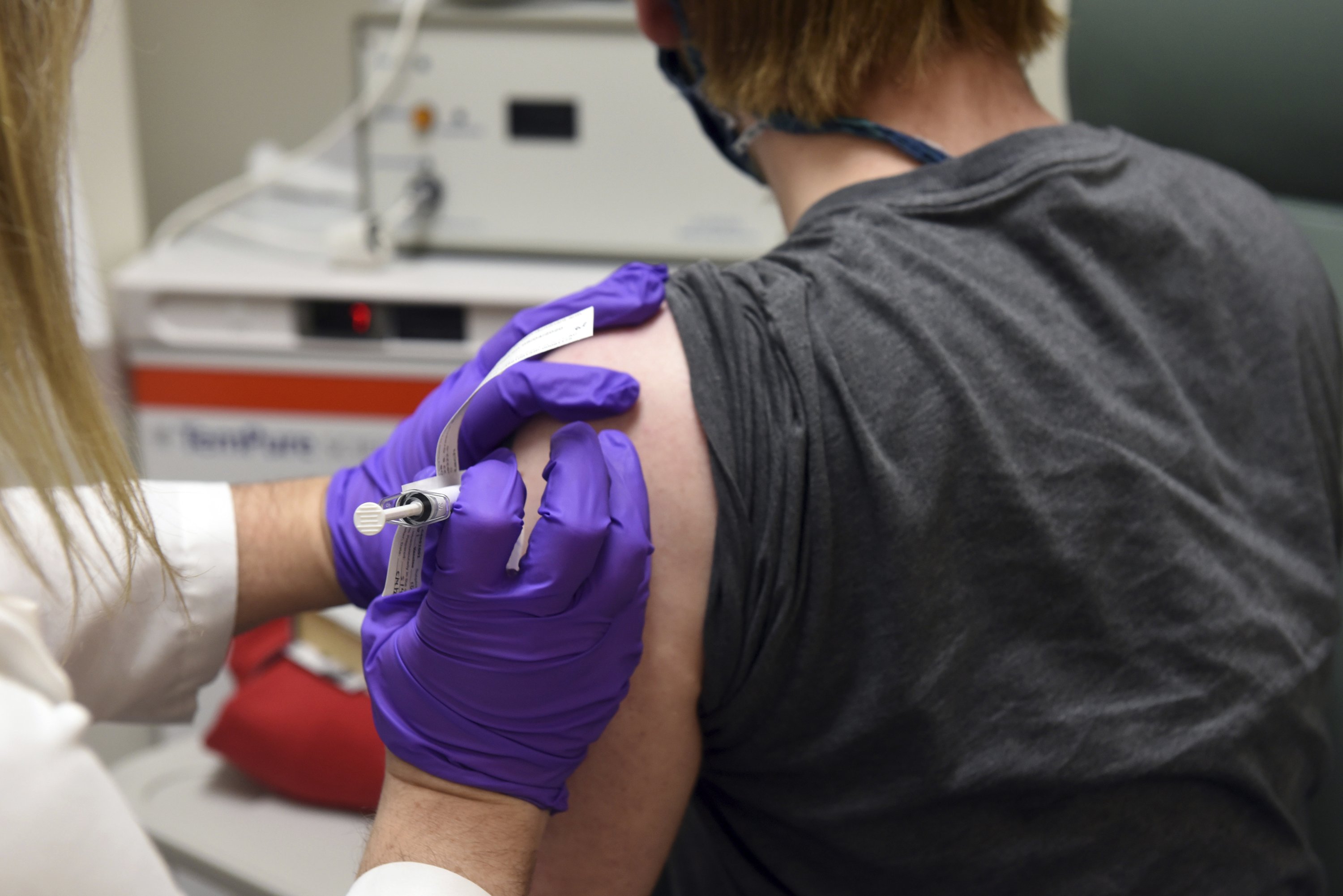
Are we on the verge of a vaccine? Let our COVID-19 expert explain if you are covering
It’s breaking news that is dominating headlines, impacting financial markets and perhaps finally relieving some of the anxiety that has been growing across America since late winter. On Monday, Pfizer announced that early results from its coronavirus vaccine indicate that it is 90 percent effective at preventing COVID-19. The pharmaceutical giant expects to be applying as soon as this month for emergency use approval from the Food and Drug Administration. If you are covering this breaking news and need to know about: What is the testing process for vaccines? How they are developed? What is involved in final approval? How will it be administered? And how quickly will it take to show positive results in our population? Then let the experts from UConn help with your coverage. Dr. Paulo Verardi is a virologist who specializes in vaccine research and development. He is an Associate Professor at UConn and a member of the Center of Excellence for Vaccine Research. Dr. Verardi is available to speak with media regarding this emerging development – simply click on his icon now to arrange an interview today.


Experts available to discuss the 2020 election challenges
When voters cast their ballots across this country to participate in the Nov. 3 election, their votes — much like many of the events of 2020 — were like no other. Below are a few of the news stories to consider for your coverage of the 2020 presidential election. Clarifying the Electoral College and the popular vote As votes filtered in on election night, both presidential campaigns were focused on the number 270, the total of Electoral College votes needed to win the White House. Schedule an interview with American politics expert Dr. Gregg Murray to learn how a candidate can win the popular vote and another wins the electoral vote and presidency. To arrange an interview with Dr. Murray - simply click on his icon now to arrange a time. COVID-19’s impact on the 2020 presidential election Speculations are growing on how the COVID-19 pandemic influenced voters’ decisions. Schedule an interview with Dr. Mary-Kate Lizotte, an expert in public opinion and political science professor in Augusta University’s Department of Social Sciences, to gain more insight into how the health crisis may have deepened already wide differences among Americans. To arrange an interview with Dr. Lizotte - simply click on her icon now to arrange a time. View a complete list of our experts available for your coverage of the 2020 presidential election. CONTACT: Lisa Kaylor, 706-522-3023, lkaylor@augusta.edu Teleconferencing and phone interview opportunities are available for these story ideas. Call 706-522-3023 to schedule an interview on any of these topics. Also, check out the Augusta University Expert Center to view a complete list of our experts.


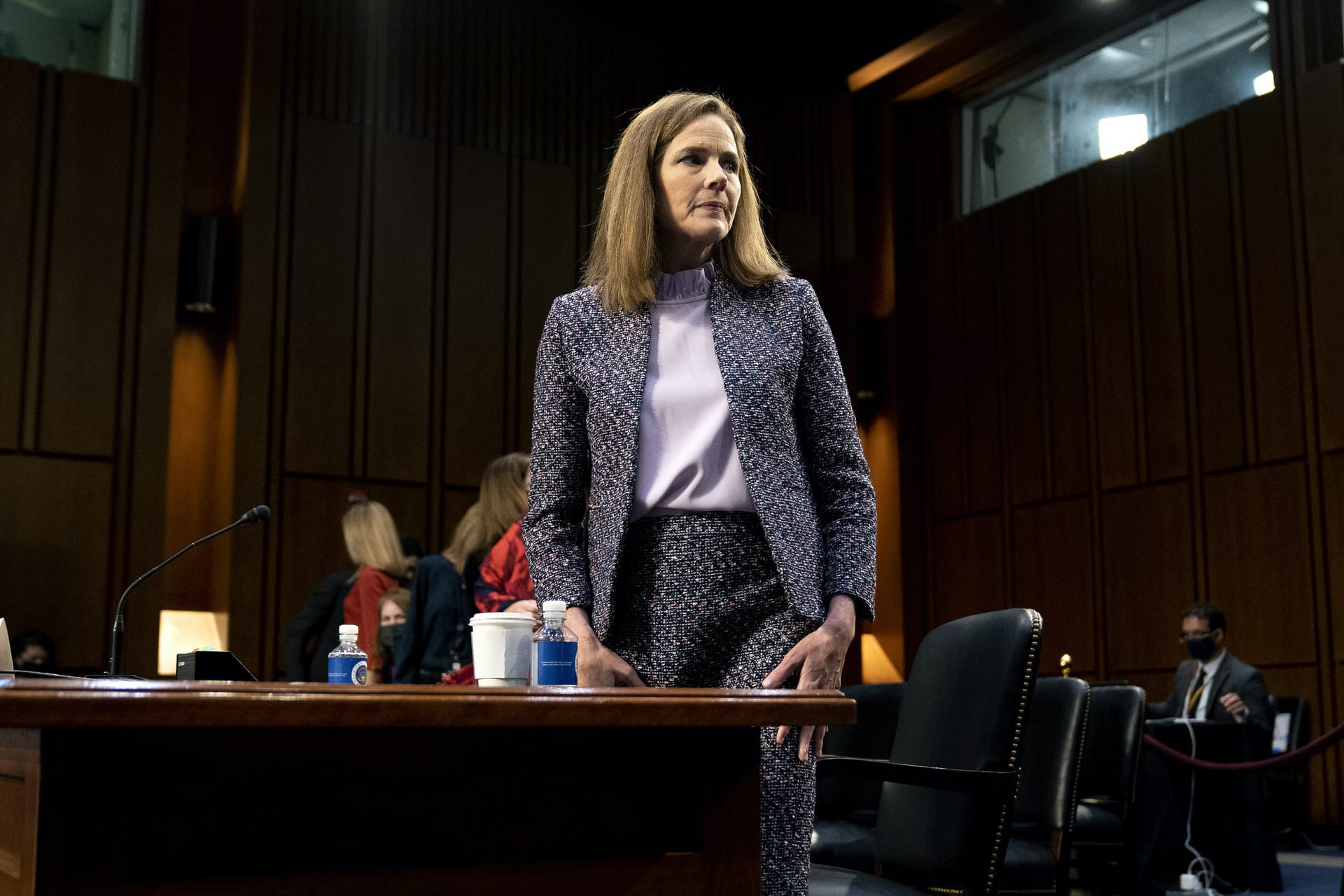
How will the newest pick to the Supreme Court impact America for decades to come?
It was quick, controversial and the outcome was all but obvious once set into motion, but this week Amy Coney Barret t became the youngest female sworn in as a Supreme Court Justice. A sitting judge, a former professor at Notre Dame Law School and mother of seven became President Donald Trump’s third appointee to America’s highest court during his term. The confirmation has left Democrats concerned that the now conservative make-up may sway some very important upcoming decisions. Barrett's confirmation has left Democrats concerned about the fate of the nation's health care law, the Affordable Care Act, and Roe v. Wade, the landmark decision allowing women to have access to abortions. The court will be hearing a case on the constitutionality of the ACA's individual mandate in November. Barrett could also end up weighing in on a general election-related case involving the man who nominated her, should the results of the race between President Trump and Joe Biden come before the Supreme Court. October 26 - CBS News In an election that may see several lawsuits about voting, mail-in ballots and other key elements that could decide the fate of a state or even the presidential election – the Supreme Court where Donald Trump may have a say indecisions and outcomes. If you are a journalist covering this ongoing story, that’s where our experts on this topic can help. Dr. Martha Ginn, professor of political science at Augusta University, is an expert on the judicial process, constitutional law and the U.S. Supreme Court. Dr. Ginn is available to speak with media about this topic – simply click on her icon now to arrange an interview today.
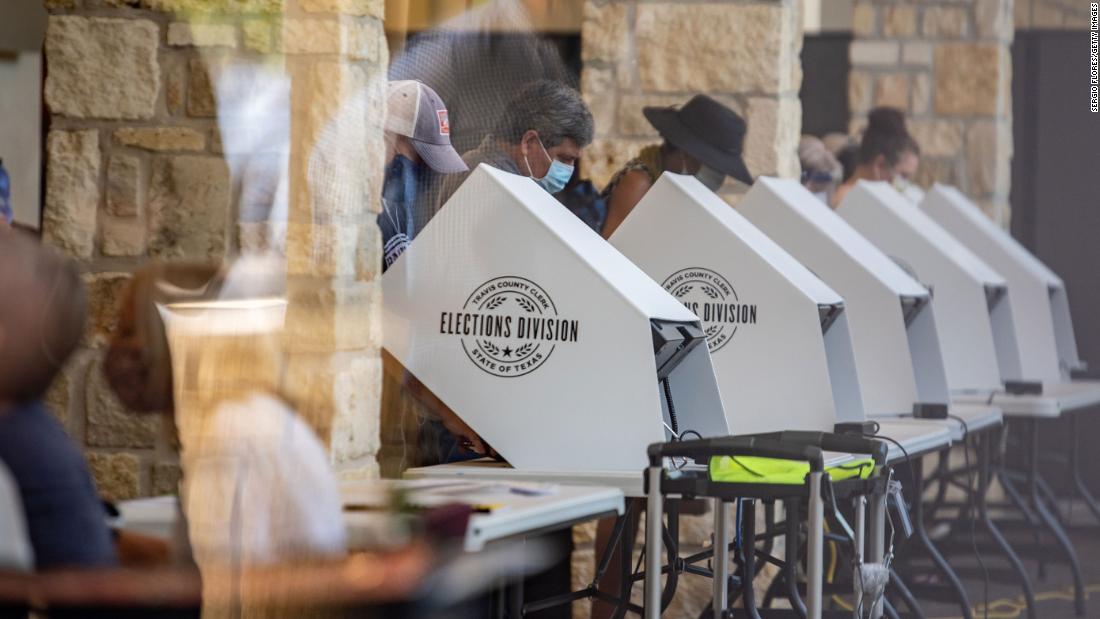
It’s finally here. The campaigns are on their final push and as of Tuesday night – the results will start rolling in. This has been one of the most unique elections in modern history. A divisive and bitter campaign fought during a global health crisis. Texas, which has 38 electoral college votes, second only to California in number – may be in play. Though Texas has not swung blue since 1976, Tuesday night a lot of eyes will be watching Texas to see what role it takes in deciding the outcome of the election. If you are a reporter covering the election in Texas, the key issues in the state and what motivates it to vote for either candidate – then let our experts help. Jim Riddlesperger is professor of Political Science at TCU and focuses on American politics, with emphasis in the presidency, Congress, and Texas politics. Professor Adam Schiffer writes and speaks on media bias, presidential nomination contests, political news, elections, and public opinion. Both are available to speak with media – simply click on either expert’s icon to book an interview today.



As the persistent turmoil of protests grips America on an almost daily basis, people are becoming more aware of issues, getting engaged and taking sides. Be it around the dinner table debating, marching in the streets or even arguing on a national news panel – topics like Black Lives Matter, masks during COVID, the upcoming election or a host of other hot-topic issues are all part of the American conversation these days. It’s easy and even healthy for people to debate the issues – but for a business to pick a side on a controversial topic, it’s a much different picture. One recent example was Nike’s support of NFL quarterback Colin Kaepernick. However, Nike also had the resources to bolster their support. They had a multi-million-dollar ad budget, a public relations machine generating hours of earned media – and the company was, for the most part playing to its core audience. Though there was push-back, Nike was rewarded with increased sales and its stock surged. For almost a decade now, Chick-fil-A has also boldly taken a stance with its opinion on gay marriage. The restaurant chain has faced mountains of negative press and protests, but the fast-food giant’s bottom lined never suffered. It still sees sales over 10 billion a year. For Nike and Chik-Fil-A and their deep pockets to wade into the fray with an opinion – it’s one thing, but for a small business to share how it feels, there’s a matter of weighing risk versus reward no matter how important the topic might be. “It may well be that it’s harder for entrepreneurs to create a viable business model for their venture in a more polarized context, says Giacomo Negro, a Professor of Organization & Management at Emory University’s Goizueta Business School. “If your business is more hybrid—if you’re supportive of a cause without being overtly affiliated with it—then it could be harder to engage other customers or clients who are uncomfortable doing business with a firm that is even vaguely linked to a specific social group or movement. Similarly, the core supporters of the cause can look at the same organization as not authentically engaged with them.” His findings certainly suggest that existing in a “gray zone,” where you take neither one side or the other, is a hard place for organizations to thrive in times of social change. “If protest activates the cultural boundary surrounding a group’s identity, then increasing protest participation will threaten the viability of precisely those organizations trying to engage inside and outside audiences,” Negro said. “At the same time, bridging inside and outside audiences also conveys a confusing identity and a more limited commitment to pursuing goals relevant to either audience.” With a global pandemic impacting all aspects of national and local economies – small businesses are under pressure to sustain and survive like never before. And if you are a journalist looking to cover the state of small businesses in America and whether or not small business has a role to play in protests and politics in America – then let our experts help with your coverage. Giacomo Negro is a Professor of Organization & Management at Emory University’s Goizueta Business School and is an expert in the area of economic sociology. His resent research study research study, “Which Side Are You On? The Divergent Effects of Protest Participation on Organizations Affiliated with Identity Groups’ focuses on this very subject. Professor Negro is available to speak with media about this topic – simply click on his icon to arrange an interview today.



Continuing to Learn and Explore American History
In the United States, students take several American history courses throughout their K-12 experience. So, why should students bother to continue taking American history courses in college? For Southern Utah University's Dr. Mark Miller, the answer is simple. “When I teach a history course, I am always looking for ways to point out how an issue or event in the past is relevant to something going on in today's world,” said Dr. Miller. “With this year's presidential election going on there have been plenty of examples to tie into regarding past politics and past political crises we have lived through as Americans.” Dr. Miller has conducted some exciting research that will be published in 2021. His upcoming articles includes: “Polygamy under the Red Cliffs: Women’s Voices and Historical Memory at Centennial Park” in Utah Historical Quarterly, “A River Again: Fossil Creek, Desert Fishes, and Dam Removal in the American Southwest” in Pacific Historical Review, and “‘One Territory, Many Peoples:” Racial and Ethnic Groups and the Development of Arizona Territory” in The Smoke Signal. “I think my work on plural marriage and environmental history shows that history is never dead,” said Dr. Miller. “It reveals that in current debates history is quite important. What happened in the past still informs the present. Since both of these topics are quite controversial today, I think historians provide a valuable service by exposing the history behind debates over allowing polygamy in modern America or whether we should make trade offs in development and water use to preserve unique species. Knowledge of people who practice plural marriage and their religious history as well as the history of preservation efforts toward endangered species is vital to all participants in the debates.” Dr. Mark Miller is a professor of history and the department chair of History, Sociology, & Anthropology at Southern Utah University. His research and teaching specialties include United States History, American West, Borderlands, Indigenous Culture and History, World Civilization, and Latin America. He has published articles and books on modern American Indian History, most recently Forgotten Tribes (2006) and Claiming Tribal Identity (2013). He has published articles on race and ethnicity, on indigenous identity and politics in several journals. Dr. Miller is familiar with the media and available for an interview. Simply visit his profile.


MEDIA RELEASE: CAA MyPace™ pay-as-you-go auto insurance now available in Atlantic Canada
CAA MyPace™, Canada’s only pay-as-you-go auto insurance payment program, is now officially available to consumers in Nova Scotia. First announced in Ontario in May 2018 by CAA Insurance Company, the program puts choice and control back in the hands of consumers. CAA MyPace will become available to drivers on in New Brunswick on December 1, 2020 and in PEI on February 15, 2021. “CAA MyPace has been generating a great deal of interest in the market, and we’re excited to offer this new program to the Maritime provinces,” said Matthew Turack, president, CAA Insurance Company. “Drivers now have access to an insurance option designed to meet the needs of their individual lifestyles and puts choice and control back in their hands.” The program is ideal for those who are driving less amidst the COVID-19 pandemic, or the Monday to Friday public transit commuter who leaves their car at home, retirees who like to visit family on weekends, or any motorists that drives under 9,000 kilometres. Consumers in Nova Scotia can now get a quote for CAA MyPace through their insurance broker, or by visiting www.caamypace.com, by calling 1-877-552-5717 or visiting a CAA retail store.


As battle-weary Americans struggle to emerge from the anxiety and worry of COVID-19, there might be even more bad news around the corner this fall for parents of young children. The U.S. Centers for Disease Control and Prevention (CDC) is sounding the alarm now about increased cases of acute flaccid myelitis (AFM) in the coming fall. It is of a rare but serious polio-like condition that surfaces every two years and children under five are its main target. On average, patients during the last outbreak in 2018 were aged 5 years old. Limb weakness and paralysis is the most common symptom of the condition which affects the nerve cells in the gray matter of the spinal cord. Others include a fever, pain, or numbness in one or more limbs, problems walking normally, a headache, back or neck pain, issues with swallowing or talking, and weakness in the face or neck. Patients may also have had a recent or current respiratory illness. August 05 - Newsweek In what has already been a harrowing year, it looks like there may be another serious health concern on the horizon. And if you are an expert covering children’s health the potential for acute flaccid myelitis to peak in 2020 – then let our experts help. Dr. Elizabeth Sekul is a highly acclaimed pediatric neurologist specializing in electrodiagnostic medicine and neuromuscular diseases. She also works as an associate professor at the Medical College of Georgia's Department of Neurology and the Department of Pediatrics and Child Neurology. If you are a journalist looking to book an interview – simply click on Dr. Sekul’s icon and arrange a time today.

Georgia Southern University saw a significant increase in grant and contract funding awarded to its faculty for research in the 2020 fiscal year. Georgia Southern faculty and staff received 144 awards totaling $10.7 million, which represents nearly a 67% increase over the previous year. The University received $6.4 million in FY2019 and $5.6 million in FY2018. This year marks the first time that faculty-led research at Georgia Southern broke the $10 million threshold. Vice Provost for Research Christopher Curtis, Ph.D., praised the faculty for their achievements. “These are highly competitive awards from the state, the federal government and private enterprises,” he said. “To grow our research portfolio in a national environment of diminishing funding is truly remarkable and a testament to the intellectual firepower and creativity of our professors. Georgia Southern is a Public Impact Research university, which means that the success of these researchers will be felt well beyond the confines of the University and will extend across the region.” Faculty engage in research that contributes significantly to the University’s $1.4 billion economic impact on the coastal region and that makes Georgia Southern a leading Public Impact Research university in the Southeast. The Allen E. Paulson College of Engineering and Computing, the College of Science and Mathematics and the Jiann-Ping Hsu College of Public Health each received over $2 million in sponsored awards in FY2020. If you have any questions about the faculty research being conducted at Georgia Southern University, or if you are a journalist looking to cover this topic - let us help. Christopher Curtis is the Vice Provost for Research at Georgia Southern University. Simply click on his icon to arrange an interview today.


Airing commercials after political ads actually helps sell nonpolitical products
About $7 billion reportedly will be spent this fall on television and digital commercials from political campaigns and political action committees, filling the airwaves with political ads many viewers dislike. Companies running ads immediately afterward have been concerned about the potential of a negative spillover effect on how they and their products and services are perceived. But new research from the Indiana University Kelley School of Business finds that the opposite is true. Contrary to mainstream thought, political ads instead yield positive spillover effects for nonpolitical advertisers. And this happens regardless of whether the political ad is an attack ad or not, who the ad supports, and whether it's sponsored by a candidate, political party or PAC. Political advertising accounts for nearly 10 percent of all U.S. television ad revenue. The findings are in the article "Impact of Political Television Advertisements on Viewers' Response to Subsequent Advertisements" -- accepted for publication in Marketing Science -- by Beth Fossen, assistant professor of marketing; Girish Mallapragada, associate professor of marketing and Weimer Faculty Fellow; and doctoral candidate Anwesha De, all from the Kelley School of Business. "Our investigations provide insights into the previously unexplored ad-to-ad spillover effects and, more broadly, provides insights into how political messages influence consumers," Fossen said. "Nonpolitical ads that follow political ads benefit through a reduction in audience decline and an increase in positive post-ad chatter." Using data for 849 national prime-time ads during the 2016 U.S. general election, the researchers found that ads airing after a political commercial saw an 89 percent reduction in audience decline and a 3 percent increase in post-ad chatter online. Their findings remained consistent when examining the effect by TV network and political party affiliation. "It seems reasonable to assume that Fox News viewers are more likely to be positively stimulated by pro-Republican ads than viewers of other channels," researchers wrote. "However, evidence from our data suggests that the positive spillover from pro-Republican ads is not higher and is nearly lower on Fox News viewership decline than when pro-Republican ads air on other channels." They found a similar trend when it came to advertising on MSNBC, whose viewers frequently identify with the Democratic Party and progressive causes. Mallapragada said the findings show that television networks and stations can leverage the positive spillover effects on subsequent ads by implementing differential pricing and systematic ad sequencing. Prevailing belief in the business industry has suggested that political ads on television hurt the effectiveness of subsequent ads. To illustrate this concern, during the 2020 Super Bowl, game broadcaster Fox isolated political ads from other paying advertisers in their own ad breaks, a decision that cost the network millions in ad revenue, because it ran nonpaid show promos alongside the political ads instead of commercials from paying advertisers. "The insights from this research enable advertisers to advocate for the inclusion of ad positioning in ad buys and, specifically, negotiate that their ads follow political ads," he said. "Our results may also encourage advertisers outside of the television context to experiment with advertising next to political content, an experimentation that may be especially beneficial for online advertisers given that they commonly blacklist political topics to avoid having their ads appear near political content." Editors: Contact George Vlahakis at vlahakis@iu.edu for a copy of the paper.
