Experts Matter. Find Yours.
Connect for media, speaking, professional opportunities & more.
The killing of Iranian military leader Maj. Gen. Qassim Suleimani by an American ordered drone strike has put the world is on edge. As leaders call for calm, hundreds of thousands are protesting across the Middle East and war seems almost inevitable. As news broke of the attack late last week, media were scrambling to find experts to lend their perspective, opinions and expertise about what’s next. That’s where the University of Connecticut’s Director of Middle East Studies Jeremy Pressman was able to help. Pressman said it’s “too early to say” what kind of repercussions the killing of Iranian Maj. Gen. Qassim Suleimani will have in Iran, Iraq or in other countries like Saudi Arabia or Lebanon, in part because it’s not known yet how much planning went into the decision. “The Trump administration is an administration that, on foreign policy, has not demonstrated that it usually plans much in advance,” he said. “You want to have thought what ways Iran could respond, and how you are going to defend yourselves in those situations and respond to those situations.” January 03 – Middletown Press If you are a reporter covering this ongoing and progressing situation – the let our experts help with any of your questions or stories moving forward. Jeremy Pressman (MIT, PhD) studies international relations, the Arab-Israeli conflict, Middle East politics, and U.S. foreign policy. He is the Director of Middle East Studies at the University of Connecticut and is available to speak with media, simply click on his icon to arrange an interview today.


A President is Impeached – Now What?
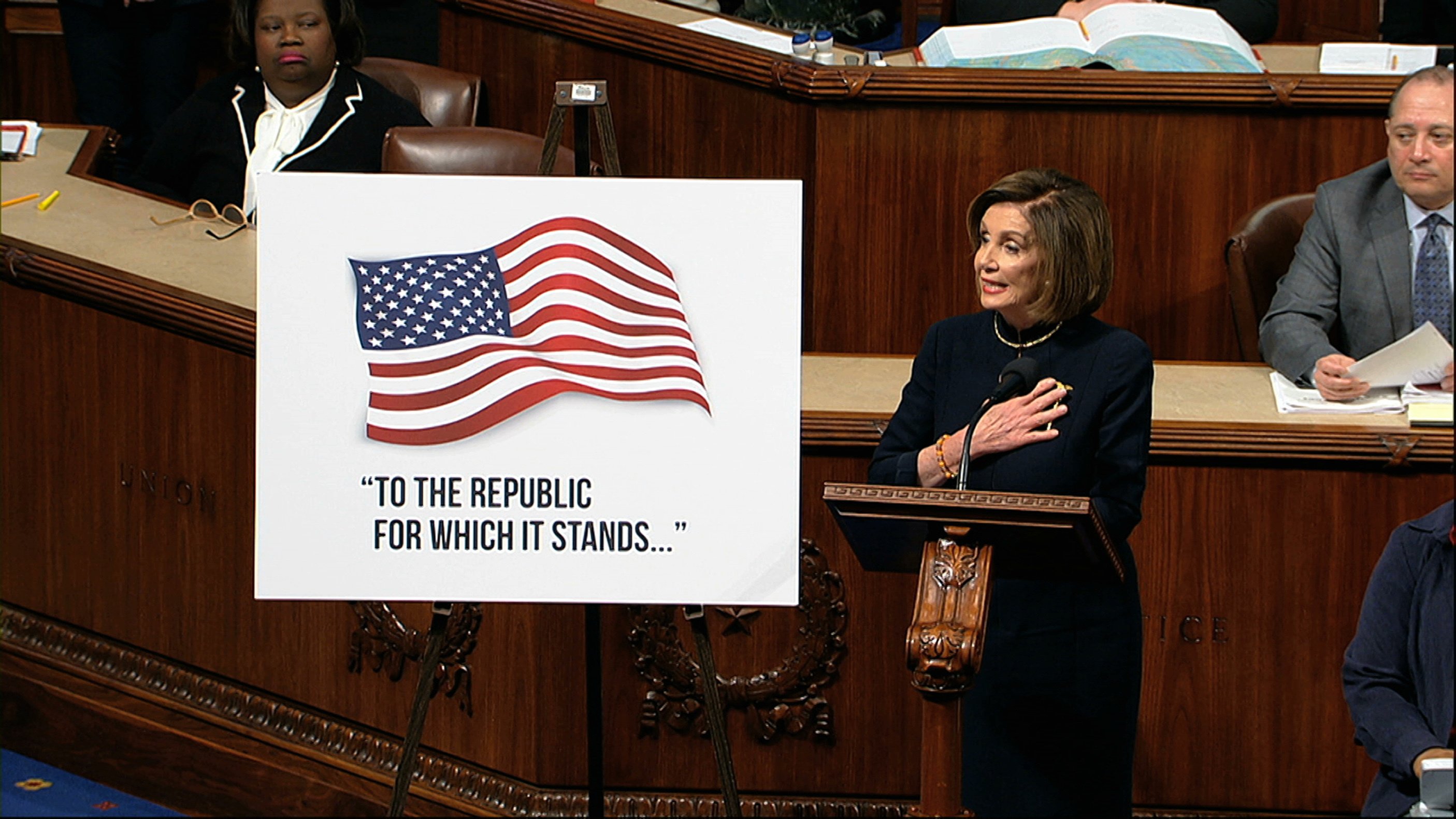
The numbers are in and for the third time in history – a sitting United States President has been impeached. But now what? There will be rhetoric, threats and predictions – but what is the process and what are the actual potential outcomes? This is a serious issue, and not just for either political party, but for the government and country as well. So, if you are covering – let one of the leading political experts in the country help with your stories. Dr. Stephen Farnsworth is a sought-after political commentator on subjects ranging from presidential politics to the local Virginia congressional races. He has been widely featured in national media, including The Washington Post, Reuters, The Chicago Tribune and MSNBC. He is author or co-author of six books on presidential communication. His latest work, "Presidential Communication and Character: White House News Management from Clinton and Cable to Twitter and Trump," examines how the last four U.S. presidents sell themselves and their policies in an ever-expanding and sometimes precarious media environment. Dr. Farnsworth is available to speak with media – simply click on his icon to arrange an interview today.



Is your social media ready for when the next crisis strikes? Let our experts help!
At the National Institute for Social Media, response plans are the priority. A response plan is the high-level look, or the umbrella overview, that crisis management falls under. Your response plan details how you respond to positive, negative feedback, and any neutral feedback that comes your way. Take a compliment and make the most out of it: Positive feedback feels like you’re off the hook. If feedback is all positive, you feel like you don’t have to do anything. But that’s your opportunity to nurture and strengthen those who are already your supporters. They then become your brand champions. Avoid the neutral zone traps – react and respond accordingly: Questions or posts that aren’t really positive or negative land in neutral space, and that’s really not crisis communication, responding to those is just good customer service. When crisis strikes: If you have a crisis, most people associate it with an isolated event, and sometimes you can plan for it, sometimes you can’t. A few years ago, when Nordstrom’s discontinued Ivanka Trump’s clothing line, they anticipated a negative backlash by those who would accuse them of being politically motivated. They stated sales was the reason, and 100 percent came out neutral, but they could anticipate that particular feedback. Whereas, in the viral video of a passenger being physically dragged off an airplane, the airline couldn’t have anticipated that event. However, with an online response plan, they would have been prepared to respond to the unexpected event. A quick response is important but an informed response is more important than anything else. If it fits the situation, you may buy yourself time to do a little research by commenting that you’ve passed their question on and will respond soon. If you don’t have a strategic plan to fall back on, and you respond quickly but poorly, you run the risk of doing more harm than good. With an online response plan, people understand how to assess a given situation. Respond: To show transparency, we want everyone to see we are responding to customer; we have a planned response where we acknowledge the customer. Take offline: Give them an offline option for sharing additional information. Resolve: This allows the customer to have their issue resolved and be heard but discourages them from sharing ugly details on that highly visible platform. The plan is for a social media manager to have a path when they don’t know what to do. The viral airplane video is one example because by the time their social media people saw it, it was already going viral. They had every indication they should be panicking. Did they have a person to talk to help them make the decision about how it needs to be addressed? For those crises we can’t anticipate, there needs to be a clear path to a leader who can help with this difficult situation. One of my favorite things to tell people is that you don’t have to be victimized online just because you’re a professional organization. You can set up community guidelines. Some businesses think, what if someone starts using racial slurs or inappropriate comments? You can post community guidelines that state these are our expectations of how our customers can participate respectfully, and we reserve the right to delete your content. You can set the expectation that you want people to engage respectfully. You have to get to the heart of what people are really asking or wanting. In the case of Ivanka Trump’s clothing line, nobody was upset because Nordstrom’s wasn’t carrying the clothing line; what they were really upset about was that a large organization could be taking a political stance against the at-that-time republican candidate. Are you looking to know more about how corporations and institutions need to be prepared and how they need to react when bad news goes viral? That’s where we can help. Amy Jauman is social media expert, consultant, writer, and professor at Saint Mary’s University of Minnesota. Dr. Jauman authored a (National Institute for Social Media) NISM textbook for social media strategists and is available to speak to speak with media – simply click on her icon to arrange an interview.


2020 is going to be the year of politics – let Stephen Farnsworth be the expert you call first when you’re covering it. Like the final act in a great Shakespearean play – 2020 looks to be a year of tragedy, irony, comedy and intrigue. We can expect betrayal, vengeance, protagonists, antagonists, heroes and villains. With impeachment hearings, the DNC primaries, summer conventions, trade deals and the election that promises to be an epic display of speeches and stumping as well as vicious and vitriolic attacks. Dr. Stephen Farnsworth is a sought-after political commentator on subjects ranging from presidential politics to the local Virginia congressional races. He has been widely featured in national media, including The Washington Post, Reuters, The Chicago Tribune and MSNBC. He is author or co-author of six books on presidential communication. His latest work, 'Late Night with Trump Political Humor and the American Presidency' shows how late-night political humor, have responded to the Trump presidency. Employing a dataset of more than 100,000 late night jokes going back decades, Farnsworth and S. Robert Lichter discuss how the treatment of Trump differs from previous presidents, and how the Trump era is likely to shape the future of political humor. Stephen is available to speak with media – simply click on his icon to arrange an interview today.

It may be the most wonderful time of the year, but for those delivering packages to houses and homes across America this holiday season it’s also the busiest one. In fact, it’s expected that Amazon alone will ship close to 300 million packages for Christmas. Customers want their purchases quicker and cheaper and it’s changing how the landscape works. It's estimated that free shipping will cost Amazon more than a billion dollars this quarter alone. This explains why shippers are looking at some radical new technologies to cut the cost of the last mile – and this is not just limited to the retail shopping industry. “Technology-driven innovations such as delivery drones or driverless vehicles not only facilitate last-mile delivery, they help with the inclusion of new sets of “customers, especially those in remote locations or rural areas with poor infrastructure, says Morvarid Rahmani, assistant professor of Operations Management at Scheller College of Business at Georgia Institute of Technology. For instance, companies like UPS, CVS, and WakeMed are exploring the idea of drugs and other health-related items being delivered by drones. In a first, collaboration between the FAA and UPS partner Matternet made deliveries from a CVS pharmacy in Cary, North Carolina as well a customer’s retirement community in November. Rahmani thinks this type of delivery shows promise. “Using drones to deliver medical packages can give rural communities access to products and medical supplies, which they would not be able to access otherwise. This delivery model is a way of incorporating social concerns and conditions of underserved populations into business practices. Using drones to deliver medial packages is a great example of collaboration between a governmental agency and for-profit companies, which is toward the dual goals of promoting efficiency and inclusion,” she notes. So, while most consumers are coming to terms with drone technology as a means for the Amazons of the world to replace it’s fleet of trucks, many customers are seeing the future of receiving essential, potentially life-saving drugs to their doorstep. “These technologies enable inclusive retailing and distribution for large (excluded) communities all over the world, says Rahmani. “Successful implementation of inclusive business practices requires collaboration of for-profit firms with the public sector, civil society organizations, and communities”.CBS News - December 15, 2019 Morvarid Rahmani is an Assistant Professor of Operations Management at Scheller College of Business at Georgia Tech. She is an expert in the areas of research is on collaboration in work processes such as new product development, management/IT consulting, and education. Dr. Rahmani is available to speak with media regarding this topic – simple click on her icon to arrange an interview. About Scheller College of Business The Georgia Tech Scheller College of Business is located in a state-of-the-art building in Georgia Tech’s vibrant Technology Square, the core of the Atlanta’s high-tech business community. The College offers an internationally recognized business education, including full-time, evening, and executive MBA options as well as undergraduate and Ph.D. degrees, to approximately 2,000 degree-seeking students each year. Scheller College collaborates across Georgia Tech to offer joint MS degrees in quantitative and computational finance and business analytics. Custom and open enrollment programs for executives and professionals are offered through the Huang Executive Education Center, located within the College. Interdisciplinary centers for teaching and research within the College enrich the educational experience, the campus and the community by providing a direct connection with the real world. They fuel collaborative teaching and research in some of the most relevant areas in business today: leadership, innovation, sustainability, the global enterprise, and business ethics. For more information, contact media@scheller.gatech.edu


Myanmar Faces Allegations of Genocide
A United Nations report in September alleged Myanmar security forces had engaged in arson, rape and killings that forced more than 730,000 people to flee for Bangladesh. The countless Rohingya Muslims that remain in Myanmar face the threat of genocide. At a recent International Court of Justice hearing, Nobel Peace Prize laureate Aung San Suu Kyi defended her country's government against the allegations of genocide. Timothy Horner, a professor at Villanova's Center for Peace and Justice Education with a focus on genocide, said it is not new for leaders to defend their countries against charges of atrocity, even genocide. However, it is new to have that leader be a Nobel Prize winner. "Aung San Suu Kyi was given the award in 1999 while she was under house arrest in Myanmar," says Horner. "She was released in 2010 and rose to become the de facto leader of Myanmar since 2016. Her contention is that the West has been duped by 'fake news.' It is mystifying to many international observers to see her turn from an activist for democracy and open government to a nationalistic defender of the Myanmar military. But her willingness to represent Myanmar at the ICC [International Criminal Court] has only increased her already booming popularity within the country." "Since 2017, satellite imagery, video footage and numerous reports from the hundreds of thousands of Rohingya fleeing the country have catalogued a long list of structured ethnic violence, ethnic cleansing and perhaps even genocidal actions taken against this beleaguered ethnic Muslim group. These have allegedly been carried out by the Myanmar military in operations that have been widely supported not only by Myanmar civilians, but also by radical Buddhist monks who see in the Rohingya an existential threat to Myanmar's national security. "There have been deaths on both sides, but the dozens of deaths at the hands of the Rohingya are dwarfed by the tens of thousands of deaths that have come at the hands of the military and vigilante groups in the region. Nearly 750 thousand Rohingya have fled the country since 2017. Many are still stranded in camps on the border in Bangladesh. They have no recourse to the courts in Myanmar because they are not considered citizens by any government. The international community has seen this coming for a long time, but the presence of Suu Kyi has added an ironic twist to the proceeding." Horner says it's very hard to prove genocide—and that it will take time. "It will take years. Individual generals could be imprisoned. Architects as well. It is very hard to prove genocide. It's only been done a few times. Proving genocide is all about intention. You have to prove that the intention behind the actions is designed to destroy the group. Leaders have gotten better at hiding their tracks. But it's possible to work back from the action, but problematic. They have to eliminate every possible intention, leaving only genocide."


Villanova Experts Reflect on the 2010s
The iPad. Hurricane Sandy. Affordable Care Act. #MeToo. Brexit. Streaming services. Since 2010, there have been so many memorable and historic events that have shifted culture and society into unfamiliar territory around the world. Two Villanova experts have put together thoughts on a few of the decade's top stories that will continue to be relevant for the next ten years—and beyond. Stephen Strader, assistant professor of geography and the environment Over the last decade we have seen the issue of anthropogenic or human-induced climate change shift from something discussed between select, interested scientists to the front page of the news on a daily basis. This dramatic change in the importance and coverage of climate change makes complete sense given six of the last ten years globally have been in the top ten warmest on record. Actually, it's very likely, if not certain, that the last five years will be the hottest globally on record. The odds of that happening naturally are very close to zero. Nowhere have the effects of a changing climate been realized more so than in the western United States, where wildfires have wreaked havoc year after year in the 2010s. States such as California, Colorado, Kansas, Oklahoma, New Mexico and Washington all experienced record-breaking wildfires over the last decade. Specifically, the Camp Fire in 2018 became the deadliest and most destructive wildfire in California history, destroying 18,000-plus homes and killing 85 people in the town of Paradise. Additionally: Hurricanes Dorian, Irma, Harvey, Maria, etc. damaged entire countries (Puerto Rico and Bahamas) so much that there is question whether they will ever recover from the effects. The deadliest tornado season on record occurred in 2011, including the devastating April 27, 2011, tornado outbreak and the deadliest U.S. tornado in modern history, which struck Joplin, Missouri (158 fatalities). Between 2011 and 2017, drought and water shortages impacted the western U.S., with California seeing its worst drought in history (or worst in 1,200 years). The drought killed 100-plus million trees and resulted in water shortages that affected crops and caused municipalities to limit water use. Record-setting rainfall and floods occurred in locations such as Colorado, New York, Oklahoma, Texas, etc., resulting in hundreds dead and millions of dollars in crop losses. If the last 10 years have taught scientists, climatologists, policy makers and the general public anything, it's that we have our work cut out for us if we are to reverse this trend of increasing disasters around the world. The atmosphere continues to warm, and all model projections point to a progressively warmer future Earth if action is not taken. And this action can't be tomorrow or by 2025, 2050 or some other arbitrary year; it has to happen now if we want to reduce future economic and societal losses. Yes, it's easy to be afraid and fearful of the future when all we see as scientists and citizens are rising temperatures, deadlier disasters and a lack of drastic climate action. However, we can't let this fear result in crippling inaction; we have to let it motivate us to fight, not for just our futures but our children's, grandchildren's and great-grandchildren's futures. Let's give them a chance to see the world the way we used to: beautiful. Jerusha Conner, associate professor of education and counseling The latter half of this decade witnessed a resurgence of student activism, sparked by Black Lives Matter protests and the dramatic events at the University of Missouri in the fall of 2015. Highlighting 2015 as a pivotal year for student activism, the authors of the American Freshman National Norms survey deemed the 2015 freshman class "the most ambitious" group in 49 years of the survey's administration in terms of their expectations for participating in protests, connecting to their communities and influencing the political structure; and the numbers of freshmen who report having participated in demonstrations as high school seniors has ticked up every year since. In my own research with college student activists in 2016, I found three striking trends: Nearly half came to college already seeing themselves as activists; only 10% consider themselves single-issue activists (with more than half identifying seven or more issues their activism addressed); and a significant share were not protesting their own institution's policies or practices, but instead concerning themselves with broader social and political issues. They are what I call "outward-facing activists," who use their campuses to stage and mobilize campaigns, rather than as the targets of their change efforts. In the last couple of years, we have seen activism among high school students take off, as students have staged walkouts and school strikes to protest inaction on climate change and gun violence. Although these movements may appear narrowly focused on a single issue, the students involved have intentionally advanced an intersectional perspective, which draws attention to the racialized, economic and gendered dimensions of the multifaceted problems they are seeking to address. Digital natives, these young people have deployed the affordances of social media not only to mobilize their peers in large-scale collective action, but also to attract and sustain the attention of the media, pressure business leaders and politicians and shape public understanding of the issues. One interesting shift with this generation of student activists is that, rather than turning their backs on the system or seeking to upend it, they are focused on enhancing voter registration and turnout, especially among young people. And their efforts appear to be working. Youth turnout in the 2018 midterms was double that of 2014, and record numbers of youth are continuing to register to vote. As the decade comes to a close and the 2020 campaign season revs up, the engagement of student activists in electoral politics will be important to continue to track.


Optimizing Expertise in the Higher Education Sector: Southern Utah University
Higher education institutions are amongst the wealthiest knowledge-based organizations when it comes to expert resources. While many of these organizations acknowledge the value of their in-house experts, they often struggle to harness their expertise and communicate their strengths to external audiences. But when higher education institutions do take steps to market their expertise, the payoff is exponential. Here’s how Southern Utah University (SUU) leveraged expertise marketing to celebrate their staff, grow their digital presence and drive close to a 10x increase in media inquiries. Embracing Expertise SUU has been acknowledged as a leading university in the U.S. Most recently, the U.S. News and World Report’s 2019 Best Colleges list ranked SUU as one of the top Regional Universities in the West and the highest-ranked public school in all of Utah. Southern Utah University President, Scott L. Wyatt, attributes these accolades to the people within his organization: “Our faculty and staff have dedicated themselves to creating the best educational experience at Southern Utah University,” said Wyatt. “This recognition acknowledges their success and the wonderful learning community they have created!” In fact, SUU is so proud of their people that their initial motivation for expertise marketing was to show their experts exactly how much they were valued. SUU’s faculty and staff bring a wealth of expertise in their professional disciplines, but they’re also deeply immersed in the university’s culture and surrounding environment – including the region’s breathtaking national parks. With this in mind, SUU set out to celebrate their experts’ professional and personal achievements through expertise marketing. Optimizing Expert Content While SUU had expert content on their website, they didn’t have a great process for structuring, organizing and publishing. “We had an Expert Directory, but it just didn’t have background structure we needed to nimbly change profiles and deliver up-to-date content,” said Kenzie Lundberg, Internal Communications Specialist at SUU. ExpertFile’s Platform gave SUU the tools they needed to manage their content, but they still needed a bit of help optimizing their expertise marketing program. They reached out to our customer success team to see how they could better leverage the ExpertFile tool and implement best practices for expertise marketing. After auditing their digital presence, we identified three main areas for SUU to focus on: Showcasing Faculty with Relevant Stories: While SUU had some expert content on their website, it wasn’t structured in a user-friendly way. ExpertFile suggested that Spotlight posts would help them make their content more accessible and encourage audiences to get in touch with their organization. Unlike a standard blog post, ExpertFile’s Spotlights enable users to connect with experts or media relation teams directly from the post while simultaneously distributing the post to the Associated Press, Dejero and ExpertFile Search. By using Spotlights in multiple areas of their website, SUU would be able to drastically improve their visibility and gain better traction with media outlets. Highlighting Specialized Areas of Expertise within SUU: SUU used the ExpertFile Platform to organize and attribute areas of expertise in their expert profiles, but our audit revealed that the topics needed to be more specific to garner audience engagement. ExpertFile recommended that SUU add areas of niche expertise to their expert profiles. For example, a biology professor might list topics like “Invertebrate Evolution” or “Cardiovascular Physiology” in addition to the term “biology.” This optimization would make it easier for audiences like journalists and media outlets to find experts on specific topics. Expanding SUU’s Digital Footprint: One of the key advantages of the ExpertFile Platform is how easy it is for organizations to improve their digital presence. For example, the ExpertFile Design Lab allows marketers to quickly create, publish and manage Expert Directories and Spotlights across various pages on their website (click links for examples). To help SUU better utilize this feature, we suggested linking to their Expert Directory and Spotlights directly from the homepage. This would make it easier for audiences to find their expert content and increase opportunities for engagement. SUU’s Results SUU took the ExpertFile Customer Success team’s advice and their results reflected just how valuable expertise can be to the bottom line. From Q1 in 2018 to Q1 in 2019, SUU went from 3,030 views and 12 media inquiries to 11,949 views and 115 media inquiries. And their success didn’t end there. SUU’s latest analysis of their expertise marketing program revealed some truly impressive results: CALmatters Feature: David Berri, professor of economics, was requested for an interview on equal pay in sports in September 2018. From the interview and stories that followed, SUU received the equivalent of $112,500 in publicity value and 25.3 million unique views. The State Journal Feature: Michael Mower, executive director of SUU Aviation, was asked to be featured in a story highlighting SUU’s partnership with Marshall University in March 2019. The story was published on The State Journal’s website and had the potential to be seen by 800,000 unique visitors. Qualtric’s X4 Conference: Ravi Roy, assistant professor of political science, was asked to join the ranks of the visionaries and leaders behind the world’s most iconic organizations and present at the 2019 X4 conference. Other presenters included President Barack Obama, Oprah Winfrey, and Sir Richard Branson. Over 15,000 people attended the conference. “I really enjoy using the ExpertFile Platform,” said Lundberg. “It’s great that I’ve been able to learn about our experts’ backgrounds – we have some really fascinating people. It’s so unique to be able to see all of their talents and to be able to highlight that for them.” Kenzie Lundberg – Internal Communications Specialist SUU The team at ExpertFile is thrilled that SUU has seen so much success from the optimization of their expertise marketing program. We can’t wait to see what the future holds for their organization and their experts. Download the Complete Guide to Expertise Marketing For a comprehensive look at how expertise marketing benefits the entire organization and drives measurable return on investment, follow the link below to download a copy of ExpertFile’s Complete Guide to Expertise Marketing: The Next Wave in Digital Strategy or download one of our tailored Guides for Corporate & Professional Services, Higher Education Institutions, Healthcare Institutions or Association & Not-for-Profits.



7 Tips for Executing Expertise Marketing
Now that you understand the value of expertise and have defined who your experts are, you might find yourselves asking, “What’s next?” Our research with hundreds of organizations reveals that there are major gaps in the way organizations present their expertise and how it impacts the effectiveness of their digital content. The challenge for many marketers is that they don’t know how to approach the creation and publication of expert content, but it starts making a lot more sense when you look at the bigger picture. Expertise marketing is about evolving our content marketing initiatives to deliver a more engaging experience to audiences. And because it’s so closely related to content marketing, it borrows several of the core principles we already use for our digital channels – but with an expert spin. At the end of the day, we’re simply collaborating with experts to ramp up the credibility, authenticity and integrity of your digital presence. The Core Principles of Expertise Marketing In the list below, you can see that expertise marketing shares a number of best practices with content marketing. The difference is in how we execute them and the quality of the end product. By following these seven core principles of expertise marketing, you’ll be able to create and deliver the content your audiences are looking for. Discoverable: If you work in the digital space, you know how important search is to your success. Experts produce a wealth of structured information that can be optimized to improve your rank on Google and increase your overall market visibility. Rather than limiting content to an About Us page or corporate intranet, you should make it more discoverable by publishing it across multiple areas of your website. Personal: Expertise marketing takes an inclusive approach to getting expert content mobilized across the organization. But even when we ask our experts to create content, we tend to attribute the outputs to the organization rather than the individual. When showcasing the work of your key employees, it’s important to personally recognize this. It builds trust with your audiences. Remember that people want to deal with people so let your experts be recognized and they will support your growth. Relevant: Organizations often miss opportunities to position their expertise for breaking news and emerging stories. In many cases, you may be an expert in the field, but if your content doesn’t align with current news topics, broadcasters and reporters won’t know to come to you for insights. Your overall readiness to speak to the topics in today’s news cycle greatly impacts customer engagement and your potential for earned media. Credible: Journalists and other audiences looking for expert sources require proof that your employees and their content are trustworthy. It’s not enough to have a headshot and bio on your About Us page. Enhanced profiles should be easy to scan and complete with important fields like education, certifications, research, publications, awards and media/speaking appearances. Visual: If you want interaction, you’ll need to first get your audiences’ attention. Rich media such as video, social media feeds and interactive content are proven to outperform text which can be tedious for audiences to read. It’s now critical to feature multimedia assets in a way that creates a more dynamic presence and maximizes audience engagement. Curated: Audiences are consuming more digital content than ever and it takes a lot of work to feed the content beast. Rather than rushing to market with sub-par content, organizations need to think about how their content serves a range of audiences looking for expertise. Is your content aligned with today’s emerging topics? Is it specialized enough to be relevant? Is it up to date or does it look tired? Audiences are becoming more discerning and even Google is determining search rank based on these factors. Distributed: As specialized third-party search sites grow in popularity, organizations need to ensure that expert content isn’t confined to a single website. This means thinking about social channels, directories, and reputable sites that help get your message out there. By dynamically synchronizing your expert content across internal and third-party sites, you’ll increase your reach, drive more visitor traffic and initiate better digital conversations. Download the Complete Guide to Expertise Marketing For a comprehensive look at how expertise marketing benefits the entire organization and drives measurable return on investment, follow the link below to download a copy of ExpertFile’s Complete Guide to Expertise Marketing: The Next Wave in Digital Strategy or download one of our tailored Guides for Corporate & Professional Services, Higher Education Institutions, Healthcare Institutions or Association & Not-for-Profits.

3 Steps to Earn Local News Coverage
“HOW DO WE GET OUR COMPANY FEATURED POSITIVELY IN THE LOCAL NEWS?” This is the question I get asked the most as a public relations professional, media coach and as a former long-time journalist with the Canadian Broadcasting Corporation (CBC): how do we get in the local news? The question usually comes from a small, independently-owned business owner — a company or organization that doesn’t have anyone doing marketing or communications. They are looking for LOCAL media coverage primarily — but they don’t even know where to start. It’s understandable for them to ask this question. Earned media is the holy grail of building credibility and reputation — having your executives featured in the news media as experts on a subject. Those stories then get shared on social media and it becomes the gift that keeps on giving, living on in perpetuity on the Internet, helping your search engine optimization. I can tell you this — the local media wants your story pitches. That doesn’t guarantee you’ll get covered. However, local media has been cutback so much and is forced to do so much work in such little time now, that they appreciate a good story idea landing on their desk for consideration — especially during a slow news cycle — and especially if it’s not coming from a slick PR agency voice on the other end of the line. They want authenticity. So, how do you get there? Here are 3 simple tips based on my experiences. In no way am I saying this is the only way to do it — but I’ve seen others have success with it and hopefully you will as well: #1 – Do NOT Hire An Agency Yup. I just said that. And, yes, I do realize I am a public relations professional. However, based on experience, I can tell you the majority of small, independent businesses aren’t going to be able to afford PR firms to get local news. I reiterate we are talking about getting local news coverage — not national news. So, if they’re not going to pay for it anyways, why not give them a hand? I believe in karma. With a little bit of guidance on this blog, you’ll be able to do it yourself. In the past, I’ve helped small companies, pro-bono, get in the media (hoping they make it big and hire me later). In the future, I’ll just send them the link for this blog and save me some time. You can do this. Just stick to the basics. #2 – Prepare A Newsworthy Pitch This is important. And, it can be as complicated and detailed as you want — but for the sake of this blog, I recommend keeping it very simple and keeping it authentic. Answer these questions to decide whether the story you want the media to cover is actually newsworthy from the reporter’s perspective — because they are the people who assess the newsworthiness of a pitch. What is the story? You should be able to summarize the story in less than 30 seconds. Just like a good pitch deck for potential investors, a good media pitch typically involves the identification of a problem or a trend and coming up with a solution for it or insightful analysis in the case of a media story. This is simplified but you get the picture. Why should people care about this story? A good reporter wants stories that appeal broadly to their audience, the public. So, be prepared to proactively explain why people will care about this? Is it timely? Does it impact a broad group of people? Does it solve a problem that’s been impacting society? Who is driving this story? Is it you? Is it one of your employees? Who will be the main interview for the reporter and why them? (FOR TV) What are the visuals? If it’s television, what are some strong visuals the news crew will be able to capture on video? What can viewers expect to see in this story? It will help your TV pitch if you can illustrate a visual image for them ahead of time. #3 – Pick Up The Phone Pick one media outlet you want to pitch your story to and make the call. First decide what news media is good for your story? Is it a story with very strong visuals? Perhaps TV is the way to go. Is it a story that requires a more fulsome conversation? Maybe public radio is the best option. Newspaper is the best if you’re a nervous person and worried about being on TV or radio. Newspaper is the least intrusive of the media. Once you’ve decided what outlet, decide which reporter specifically. No emails at first in my opinion. It’s too impersonal for local news and you risk getting lost in the inbox shuffle. Doing it by phone also allows the reporter to ask any clarification questions they may have, right then and there. Now, if you call the general media outlet phone number, you can end up in phone transfer Hell or end up getting an editor or producer who is putting out six fires and juggling 4 balls. So, you are better to call an individual reporter (perhaps your favourite one). Do this in the first part of the morning before they get too busy. If they’re not there, leave a message and be prepared to call back later. Reporters are busy and may forget to call you back. Don’t take it personally. If you reach them, thank them for taking your call and make your pitch. Get to the point. A few minutes tops for the pitch. If they like it, they’ll tell you. If they don’t like it — again — don’t take it personally and don’t burn any bridges. Thank them for their time. When you get off the phone, contact a reporter with a different media outlet and do it again. Shop that story around and you’re likely to get a nibble. Final Thoughts: This isn’t a science. There are no guarantees. This process is just my personal opinion based on experience. Just be yourself. Be genuine. The reporters will like that as opposed to dealing with professional PR people or communications officers. They may find it refreshing to deal with a “real person” who isn’t trying to spin them. Beyond the initial pitch, whether it’s successful or not, offer yourself as a research resource to them on issues related to your industry — even if it means you won’t be in the story. This is how you build a relationship with a reporter and it may bode well for you in the future. Good luck. Let me know how it goes.