
Experts Matter. Find Yours.
Connect for media, speaking, professional opportunities & more.

Preaching to choirs, playing it safe and not saying much at the State of the Union
One Tuesday evening – pretty much everything seemed to go to plan. President Trump stuck to script, Republicans stood and clapped on cue, Democrats scoffed and scowled when required and we all listened closely for a total of one hour and twenty minutes – the second longest SOTU ever given. President Trump called for unity, touted the economy, acknowledged the white-wave of females on Congress and how there are now more women employed in America. He played to his base on topics like immigration and abortion and then oddly let everyone know that the only thing holding America back were expensive wars and pointless investigations. He also thanked veterans for defeating the Nazis. Left out was any mention of climate change or Russia. Of course, afterwards the Democrats responded, politicians flocked to reporters and pundits weighed in. President Trump played it safe and kept to the prompter, and according to CBS Evening News an overwhelming 76 percent of Americans liked what they heard. But the day after … there are still a few questions to be asked: Did President Trump deliver the speech e needed to deliver? Outside of the beltway, how was this received by voters? Does this point out a pathway for either Democrats or Republicans for 2020? And by not saying much, did Trump say everything he needed to? If you are covering, let an expert from the University of Mary Washington help. Dr. Stephen Farnsworth is professor of political science and international affairs at the University of Mary Washington. A published author and a media ‘go-to’ on U.S. politics, he is available to speak with media regarding this issue. Simply click on his icon to arrange an interview.



There were only two things happening this past weekend: The Super Bowl and what appears to be the downward spiral of the once prominent and popular Virginia Governor Ralph Northam. It was news that had pundits, journalists and political junkies glued to their televisions and smart phones as the story progressed and played out. As the Governor fought to hold on to his office and career by a string, media from across the country were contacting the University of Mary Washington’s Dr. Stephen Farnsworth to find out what was going on and what would happen next. Here are a few samples and snippets from some of the media that Dr. Farnsworth spoke to over the weekend. “Northam's appeal to the voters was that he wasn't an ordinary politician. But if he had been more of an ordinary politician, that press conference probably wouldn't have gone as badly as it did," said University of Mary Washington political science professor Stephen Farnsworth. Chicago Daily Herald and the San Francisco Chronicle Stephen J. Farnsworth, a political scientist at the University of Mary Washington, said the Northam controversy may trigger more revelations of racial misconduct, the same way that the #MeToo movement emboldened women to come forward after years of silence. “Other politicians who have similar controversies in their past have to be prepared for them to be disclosed,” Farnsworth said. “And there may be additional pressure on Virginia government to deal with legacies of the Confederacy and Jim Crow in terms of statues and renaming of public parks.” Washington Post “Ralph Northam’s time as governor is hanging by a thread,” University of Mary Washington political science professor Stephen Farnsworth said earlier in the day. “The forward movement of any agenda items that the governor has, has stopped.” ABC News, Washington When news was breaking – media knew who to call and how to reach them. When you have breaking news any day of the week, let an expert from the University of Mary Washington help. Dr. Stephen Farnsworth is professor of political science and international affairs at the University of Mary Washington. A published author and a media ‘go-to’ on U.S. politics, he is available to speak with media regarding this issue. Simply click on his icon to arrange an interview.
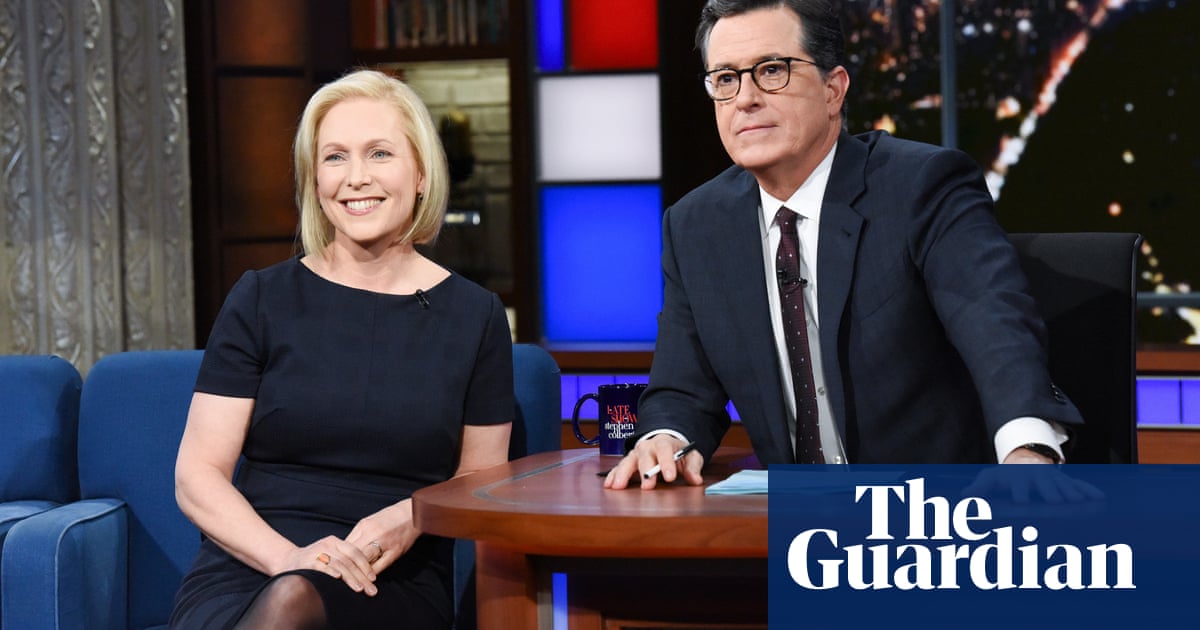
Is Late Night – the Place to Be on TV for Those Running in 2020
It used to be that stopping by a late-night talk show for any political candidate was a just an added bonus of exposure and safe coverage for a campaign. Think of Bill Clinton answering softballs and playing the saxophone on The Arsenio Hall Show a quarter century ago. Now there’s no qualitative proof – but most political scientists will tell you that night helped introduce the then Governor Bill Clinton to a new audience and helped shape his image as that of a cool and relatable candidate. It may have been one of the many factors that saw him win the Whitehouse in 1992. Fast forward to today, and now securing a spot on the sofa beside any of the late-night hosts is a must for any presidential candidate who wants to be taken seriously. What Oprah was once for books and authors, hosts like Stephen Colbert have become for candidates – he’s the perennial gatekeeper for politicians. “Any Democratic candidate who thinks they can ignore Stephen Colbert might as well not run for president,” said Stephen Farnsworth, director of the Center for Leadership and Media Studies at the University of Mary Washington in Fredericksburg, Virginia. “Colbert once joked that the road to the White House runs through his show but it’s no joke; it is exactly so.” - Washington Post, November 2018 In this new era of social media, 24-hour news and even fake news – why is late night suddenly the place to be for politicians? Is it because it is safe? Has comedy suddenly become the only credible and objective place for politicians? Is it because that’s where undecided audiences tune in and can be reached? Or is it because late night is now segmented and postable on YouTube? Is the internet audience after the show just as valuable as the viewers who tune in? There are a lot of questions about what it will take and what we can expect along the long road to the 2020 election – and that’s where the experts from the University of Mary Washington can help. Dr. Stephen Farnsworth is professor of political science and international affairs at the University of Mary Washington. A published author and a media ‘go-to’ on U.S. politics, he is available to speak with media regarding this issue. Simply click on his icon to arrange an interview.

A new year with new changes for how small businesses are taxed.
The only thing surer than death and taxes, might be the annual changes and adjustments to the way small businesses are taxed in Canada. New restrictions, and rates can have positive and negative impact on business owners and their companies. This coming year, changes to Employment Insurance and the Canada Pension Plan could make the bottom line of some small businesses tighter. However, the overall corporate tax rate applicable to many small businesses in Ontario has fallen to 12.5%. We may see more money going back in the pocket of owners or their growing companies. “We know that the average small business owner doesn’t know a lot about these changes.” Bill Moreau, Minister of Finance There are a lot of changes to the current system this year; as small business owners prepare to file, it is in their best interest to contact an expert. The government itself has even admitted that some businesses might not be fully up to speed, that’s where our team can help! Cleo Melanson, Tax Partner at Freelandt Caldwell Reilly LLP practices in the areas of tax and owner-managed businesses. To contact Cleo, simply click here to arrange an appointment regarding this topic. Article: https://globalnews.ca/news/4804039/tax-changes-canada-cpp-ei-small-business/


Battling Election Fatigue? Balance It Out with Other Important Things in Life, Baylor Expert Says
It’s happening. Again. Another U.S. presidential campaign. The contentious 2018 midterm elections are barely in the mud-encrusted rear-view mirror, and the next general election is nearly two years away, but telltale campaigning has already begun as presidential hopefuls emerge to take on each other and Donald Trump, who consistently talks and tweets about Election Day 2020. Does this ubiquitous campaigning make you weary? If so, you’re not alone, said expert Patrick Flavin, Ph.D., associate professor of political science in Baylor University’s College of Arts & Sciences. “Election fatigue is real in the United States,” said Flavin, who researches the impact of politics and policies on citizens’ quality of life. “The U.S. holds more elections than just about any other country in the world: primary elections, school board elections, city council elections and more. So, it’s not unreasonable for someone to say, ‘I’m tired of voting because it seems like I’m voting all the time.’” But it’s not just the number of elections that takes a toll. The presidential election cycles are longer now than in years past. Much of that is due to the race for resources, Flavin said. Over the past few weeks, potential Democratic candidates like former Vice President Joe Biden, former San Antonio Mayor Julian Castro, U.S. Sens. Elizabeth Warren, Kamala Harris, Bernie Sanders, Kirsten Gillibrand and Amy Klobuchar have been making moves – either announcing candidacies or testing the political waters. “Right now, we’re at the start of the ‘invisible primary’ for Democratic candidates whereby they compete for staff, endorsements from other politicians and party leaders, name recognition and fundraising sources,” Flavin said. “For relatively unknown candidates, in particular, it is important to get into the race early to give yourself a head start in trying to compete for those scarce resources. In contrast, a more well-known candidate like Joe Biden can afford to wait for a while before starting his campaign – if he does decide to run.” Flavin said it’s important for citizens to know what’s happening on the national political scene, but he advises people to take a break when it becomes overwhelming. “Being an informed citizen is good and to be admired, but I don’t think it’s healthy to obsess over every single day-to-day political development – especially in the era of 24/7 news,” he said. “Balance it out with other important things in life.” And if you’re in a position (a political science professor, for example) that doesn’t often afford the time to break away, Flavin advises taking the time to approach politics as an observer. “Just like anyone else, political science professors would go crazy if they focused on politics 24/7. So, balance is important. In addition, it is healthier, I think, to approach campaigns and elections as an observer who is interested in better understanding why the candidates take the positions they do, why voters support this candidate over that candidate, etc.” Flavin also said that focusing too much on the national landscape pulls people away from critical state and local issues. “There are important decisions being made at the state and local levels that we need to be aware of,” he said. Flavin’s newest research shows that Americans are happier in states where governments spend more on public goods, such as libraries, parks, highways, natural resources and police protection. ABOUT BAYLOR UNIVERSITY Baylor University is a private Christian University and a nationally ranked research institution. The University provides a vibrant campus community for more than 17,000 students by blending interdisciplinary research with an international reputation for educational excellence and a faculty commitment to teaching and scholarship. Chartered in 1845 by the Republic of Texas through the efforts of Baptist pioneers, Baylor is the oldest continually operating University in Texas. Located in Waco, Baylor welcomes students from all 50 states and more than 80 countries to study a broad range of degrees among its 12 nationally recognized academic divisions. ABOUT BAYLOR COLLEGE OF ARTS & SCIENCES The College of Arts & Sciences is Baylor University’s oldest and largest academic division, consisting of 25 academic departments and seven academic centers and institutes. The more than 5,000 courses taught in the College span topics from art and theatre to religion, philosophy, sociology and the natural sciences. Faculty conduct research around the world, and research on the undergraduate and graduate level is prevalent throughout all disciplines. Visit www.baylor.edu/artsandsciences.



It seemed all of America tuned in Tuesday evening at 9 PM Eastern to hear just what President Donald Trump had to say as he spoke to a nation caught in the middle of a government shutdown. With federal services all but stagnant across the country, and those employees considered essential forced to work without pay, most expected a pitch to a nation that included a solution and ideally a moderated and mature speech. After all, there is a lot at stake for every American who is either employed by, engaged with or in need of the federal government. However, that was not the case. What did come was a short speech that was long on rhetoric, blame and ultimatums instead of resolution. In the past, when addressing the nation, a President would do so to share information of national importance, like Obama’s speech about the killing of Osama Bin Laden or Ronald Reagan speaking to America about the Iran-Contra Hearings. These were big deals with a significant message. Speaking with Canada’s national broadcaster, University of Mary Washington’s Stephen Farnsworth had this observation to share. “By taking such partisan swipes from the grandeur of the Oval Office during a prime-time address, Trump runs the risk of "overexposure," or of being accused of cheapening a time-honoured tradition, said Stephen Farnsworth, a political science professor with the University of Mary Washington who specializes in presidential communications. It's not clear whether the president's speech will have any impact on the border security stalemate. But Trump's speech may even have implications for future Oval Office broadcasts, Farnsworth said.” So, what was gained by the address? Did President Trump essentially ‘cry-wolf’ and cheapen the significance of a national address? Or did it serve his purpose and support his base? And, did the Democrats blow an opportunity to effectively respond? There will be a lot of analysis of Tuesday’s TV-time and that’s where the experts from the University of Mary Washington can help. Dr. Stephen Farnsworth is professor of political science and international affairs at the University of Mary Washington. A published author and a media ‘go-to’ on U.S. politics, he is available to speak with media regarding this issue. Simply click on his icon to arrange an interview.

Cybersecurity expert offers holiday shopping tips for protecting identity
Amid the many warnings this holiday season about protecting your identity while shopping online comes advice from Scott Shackelford, associate professor of business law and ethics in the Indiana University Kelley School of Businessand one of the nation's leading cybersecurity experts. "In some ways shopping online is getting safer," said Shackelford, also chair of the Kelley School's Cybersecurity Program in Risk Management and director of the Ostrom Workshop Program on Cybersecurity and Internet Governance. "For example, a few years ago it was relatively uncommon for many sites to use encrypted https technology, but that's become the norm. However, as may be seen by a quick scan of the news, data breaches continue. "The good news is that the cost of those breaches is going up with Federal Trade Commission and European Commission investigations ongoing into firms like Equifax and Facebook, and consumer patience is also wearing thin," he added. "One recent survey, for example, found that 20 percent of consumers would not shop again at a firm that experienced a data breach." Shackelford offers practical advice for holiday shoppers. In essence, there's a lot you can do to become harder targets for cyber criminals, including: Consider freezing your credit. You don't need it open unless you open a new credit card or loan, and even then you can unfreeze it for a short window to allow for the credit check. Install antivirus and antispyware software, use auto-update, and always enable multifactor authentication on all of your accounts. When using public Wi-Fi, use browsers like Tor to make it more difficult for hackers to spy on you. Keep all software up to date -- especially Windows, but also programs like Adobe Reader, Flash and Java, which are often convenient backdoors that can be closed through frequent updates. Use strong passwords of at least 14 characters, keep them secret, and change them often. Consider starting with a favorite sentence, and then just take the first letter of each word. Add numbers, punctuation or symbols for complexity. And be sure to change any default passwords on your new smart devices. Never turn off your firewall; it's an important software program that helps stop viruses and worms. Use flash drives cautiously; they are easily infected. In fact, one of the biggest breaches of U.S. military systems to date was due to a flash drive. Encrypt sensitive information on your computer. Be conscious of what you click on, both in emails and on the web. When in doubt, double check before accessing new files. Look for sites with "https" in the URL. Do not use banks or other sensitive websites that do not have the "s."


Next Level Thought Leadership and Content Marketing
We are entering an era of elevated thought leadership. Thought Leadership often focuses on a select few in an organization and misses opportunities to showcase everything your organization has to offer. It’s rarely scalable, often expensive and almost always wagers on a small pool of topics in any given quarter. The fact is that you have more expertise operating behind the scenes than you’re showing off. Enter Expertise Marketing, the next generation of content marketing. Opening up a world of new opportunities, here is how Expertise Marketing stacks up against more traditional thought leadership programs. SCOPE Inclusive vs Exclusive Expertise Marketing is designed to engage a diverse set of experts throughout the organization. It focuses on broader coverage of relevant topics that engage a wider variety of audiences and expand your opportunities for valuable connections. Thought Leadership programs tends to focus on fewer select experts. Often designed as a bespoke program aimed at involving only senior executives. TIMING Sustained vs Campaign Focussed Expertise Marketing creates a sustained digital presence that leverages the content that experts are producing across the organization and distributes it across a range of channels. Most Thought Leadership programs tend to align with a specific event (such as a product launch, industry conference or social cause) that maps to a defined budget and timeframe. STRUCTURE Agile vs Controlled The agile nature of good Expertise Marketing provides the ability to quickly mobilize experts to position their expertise in the context of breaking news to create higher engagement with audiences such as the media. This compares to the more controlled approach of a traditional Though Leadership programs that requires careful planning to ensure alignment with corporate strategy and messaging - often missing time-sensitive opportunities. COST Low vs High Expertise Marketing can efficiently leverage client or agency resources and services through technology versus Thought Leadership programs that are often structured as long-term projects that require specialized resources in agencies. Take the steps to transform your content marketing overnight. Download the Expertise Marketing whitepaper or talk to us about how you can evolve quicker and generate a new competitive edge. About ExpertFile For a comprehensive look at how expertise marketing benefits the entire organization and drives measurable return on investment, follow the link below to download an industry-focussed copy of ExpertFile’s Complete Guide to Expertise Marketing: The Next Wave in Digital Strategy.





Top 9 ROI Metrics for Expertise Marketing
When it comes to digital marketing, organizations are looking for data-driven solutions that are proven to support their bottom line. Here are 9 families of quantitative and qualitative metrics that will help you measure and track the success of your organization’s Expertise Marketing. (Taken from Chapter 5 of Expertise Marketing Whitepaper: Next Wave in Digital Strategy) REPUTATION Move Brand Metrics - Position research, client work, thought leadership perspectives and achievements in the context of relevant topics in the news. MARKET AWARENESS Move Search Metrics - Boost search-engine rankings and increase overall breath of search results. LEAD GENERATION Grow Inbound Leads - Increase the number of direct lead inquiries from the following audiences: Customers | Students | Patients | Donors | Patients | Media | Recruits | Conferences | Partners | Alumni | & More... AUDIENCE ENGAGEMENT Drive Engagement Metrics - A single familiar digital touchpoint provides access to all content marketing assets and encourages enhanced content browsing. Download our Free Whitepaper Expertise Marketing: The Next Wave in Digital Strategy TALENT DEVELOPMENT Boost People Performance - Better engage stakeholders, researchers & subject-matter experts in the development and distribution of content. INTERNAL COLLABORATION Improve Teamwork & Internal Efficiency - Better coordinate the knowledge and resources across internal communications teams and other departments as they engage experts. Provide a faster, more efficient way to generate content for breaking news and events. CONTENT CONTRIBUTION Expand Reach - Increase the size of the organization’s digital footprint by aggregating more content and distributing it contextually to multiple websites and third-party databases. EFFICIENCY Deliver More with Less - Help employees get their jobs done faster and more efficiently. Enable them to find information faster, speed up internal processes and foster collaboration among people in multiple locations. LEVERAGE CURRENT & FUTURE INFRASTRUCTURE Extract More Value From Existing Investments - Properly integrated, new technology investments should integrate seamlessly to leverage existing/proposed infrastructure such as content management systems (CMS). What’s most important to you? Get in touch with Deanne and start the conversation about how ExpertFile can begin moving that dial within 6 weeks. Get Your Copy and Get Started Expertise Marketing: The Next Wave in Digital Strategy About ExpertFile ExpertFile is the world’s first Expertise Marketing Platform that helps organizations solve the challenge of creating, managing and amplifying expert content. Our software platform and services help you showcase your people and their insights to the audiences that matter across a range of channels including distribution through the Associated Press to over 15,000 newsrooms. Learn more about ExpertFile.

Fundamental research hailed as new horizon in hypersonic flight
PHOTO Cutline: Mohamed Gad-el-Hak, Ph.D., professor emeritus in Virginia Commonwealth University’s Department of Mechanical and Nuclear Engineering. (Photo courtesy of the VCU College of Engineering) Mohamed Gad-el-Hak, Ph.D., Professor Emeritus in VCU’s Department of Mechanical and Nuclear Engineering, together with investigators at the University of Peking, China, has revealed an aerodynamic heating mechanism that sheds new light on the behavior of ultra-high-speed aircraft. Their discovery comes as news outlets including CBS, CNN and the Washington Post are reporting on the tightening race among China, the U.S. and Russia for dominance in hypersonic systems, aircraft and weapons that travel more than five times the speed of sound. Researchers previously thought sudden heat spikes, which make hypersonic flight impractical for many applications, occur when air flows reach maximum turbulence. However, Gad-el-Hak and his collaborators have demonstrated through theory, experiments and numerical simulations that temperatures actually jump just before turbulence sets in. The National Science Review has called their achievement “a major progression in hypersonic transition.” The American Institute of Physics said this investigation denotes “a new horizon” for future studies of hypersonic heating phenomena. The discovery is expected to accelerate applied military and commercial hypersonic research for the design of future spacecraft, intercontinental ballistic missiles and hypersonic vehicles. Gad-el-Hak emphasizes that such applications result from fundamental research. Unlike applied investigations, which set out to solve practical problems, fundamental research seeks to improve scientific understanding of the natural world. “I have two unflinching scholarly beliefs,” Gad-el-Hak said. “Fundamental science eventually, albeit in fits and starts, leads to a nation’s health, happiness and prosperity, and ‘walls’ between nations hinder that progress.”

