
Experts Matter. Find Yours.
Connect for media, speaking, professional opportunities & more.

Midterms - A referendum or reset from 2016?
It’s coming to America with the hype of an old-fashioned prize fight. Pundits have been speculating, party officials have been spinning and most of us have been guessing about what the outcome of the 2018 midterm elections will look like. Can we expect wholesale change in either House? Is this really a referendum on the Trump administration? And if Democrats seize control of Congress will it mean two years of stalemates or will an agenda surface to keep America moving forward? Or…if there is no actually change of power and the deck chairs essentially remain unshuffled in Congress and the Senate – is the confirmation that despite the outcries from the Left, America is content with the current administration’s agenda? There are many issues at play this week such as voter turnout, the urban/rural divide and if news coverage does swayed opinions. And, that’s where our experts can help. Dr. Stephen Farnsworth is professor of political science and international affairs at the University of Mary Washington. A published author and a media ‘go-to’ on U.S. politics, he is available to speak with media regarding this issue. Simply click on his icon to arrange an interview.


How the Migration Caravan became so large?
Edith Cruz was sitting at home in central Honduras, scanning Facebook on her phone, when she saw the post about the caravan on a community news page. It was Oct. 12. She and her cousin had just opened a small business selling tortillas when they were confronted by a gang, threatened with death if they didn’t hand over half of their profits. She looked at the Facebook post: “An avalanche of Hondurans is preparing to leave in a caravan to the United States. Share this!” Within three hours, her bags were packed. The question of how the migrant caravan began has wound its way to the American midterm elections. President Trump and other Republicans have suggested that Democrats paid migrants to begin the journey. As the group continues to grow, the largest such caravan in recent years, its beginnings are being scrutinized: How did more than 5,000 migrants from across Central America find each other? As the caravan continues to move toward the United States, Dr. Glen Duerr, associate professor of international studies at Cedarville University, has been following the situation and can provide insight into the caravan and its impact on our election and country, in general.


Civics Education Expert Comments on Sandra Day O'Connor's Legacy, Inspiration
O’Connor’s creation of iCivics ‘was the catalyst for much of my work in civics education,’ says Brooke Blevins This week, the nation heard from former U.S. Supreme Court Justice Sandra Day O’Connor, the first woman to serve on the nation’s highest court, that she is officially stepping away from public life due to health reasons. In her letter to the nation, O’Connor shared about her commitment to civics education and, specifically, the creation of iCivics – free online interactive games and curriculum designed to teach the core principles of civics to middle and high school students. Brooke Blevins, Ph.D., serves as associate professor of social studies education and associate chair of the department of curriculum and instruction in Baylor’s School of Education. She and Karon LeCompte, Ph.D., associate professor of curriculum and instruction, conducted the first independent research study of iCivics effectiveness. Blevins and LeCompte also launched iEngage Summer Civics Institute. The researchers were honored by O’Connor for their research and commitment to iCivics and civics education. Dr. Blevins wrote the following when she learned of Justice O’Connor’s announcement: We are saddened to learn about the news that Justice Sandra Day O’Connor is stepping away from public life due to her health. Justice O’Connor is undoubtedly one of the most profound figures in our country—a boundary-breaking woman who fought tirelessly to encourage collaboration, democratic discourse, and working toward the common good. Her legacy is one that has had a deep impact on my own life, my academic pursuits and the Baylor community as a whole. Justice O’Connor’s efforts to start iCivics, an online civics education platform that provides interactive games and curriculum designed to help students learn about the core principles of democracy in an engaging and relevant manner, was the catalyst for much of (the Baylor School of Education’s and) my own work in civics education. In 2012, my colleague, Dr. Karon LeCompte, and I had the privilege of conducting the first independent research study examining the effectiveness of iCivics on students’ civic knowledge, skills and dispositions. Working with more than 300 students in Waco ISD and Midway ISD, we implemented a six-week unit using iCivics games and curriculum. In April of that year, we had the honor of presenting our encouraging findings to Justice O’Connor in a community symposium in which she also honored Waco area students, teachers and district administrators. It was from the inspiring work of Justice O’Connor and iCivics that our work in civics education at Baylor University has continued, including the creation of the Baylor University iEngage Summer Civics Institute—a program designed to take the principles learned in iCivics and put them into action in the community. As Justice O’Connor has said time and time again, “It’s not enough to understand; you’ve got to do something.” Justice O’Connor’s efforts to reinvigorate civics education, re-engage young people in civic life and ensure the future of our democracy are enduring and inspiring for all of us. These efforts to reform and reinvigorate civics education are ongoing and in need of our support and resources. As she noted in her final letter, “It is my great hope that our nation will commit to educating our youth about civics, and to helping young people understand their crucial role as informed, active citizens in our nation.” This is why the Baylor University School of Education is committed to pioneering innovative approaches and research in civics education. We are grateful for the work of Justice Sandra Day O’Connor and her light that shines bright throughout our world.


On average, you will spend about a third of your life sleeping or attempting to sleep. For many, this means more than 25 years of your life will be spent in bed. Given this startling proportion, wouldn’t you like to know more about what helps, hinders and happens while you are asleep? Michael K. Scullin, Ph.D., director of the Sleep Neuroscience and Cognition Laboratory at Baylor University, spends the majority of his time researching and teaching about such topics. “One reason I am passionate about studying sleep is because you can't really introspect too much about it, as with nearly everything else in psychology,” Scullin said. “With sleep, you're unconscious at the time you are doing it. Sure, you can wake up and say ‘Oh, how did I sleep last night?’ but when you're actually engaging in the sleeping process, you can't do that. As a result, sleeping becomes an enigma. When you have the right equipment, you can begin to design experiments to figure out what exactly the brain is doing when we sleep and why is it important.” Below, Scullin addresses several common beliefs about sleep and the science that proves or disproves them. MYTH: If you die in a dream, then you die in real life. For a time, a rumor circled around that one’s brain cannot handle the mental strain of dying in a dream, and if you die in a dream, you will die. “That's just not substantiated because people report dying in their dreams, and they report it while they're still alive,” Scullin said. “Your brain can actually handle a lot, and there’s one theory that says nightmares are a functional adaptation to help us survive. It is potentially really functional for your brain to have those stressors in its offline state to help prepare you for situations. A lot of people think that nightmares are bad, and yes, they can be a clinical problem. But when they aren’t to that level, they can help us prepare for stressful situations.” FACT: Snoring is a sign of disease. Sleep apnea and snoring are linked, although not with a 1:1 ratio; some people snore without sleep apnea, but snoring is the biggest risk-factor of sleep apnea, Scullin said. Snoring is caused by an obstruction to one’s breathing pathways. In many cases, individuals who snore wake up gasping for air. That’s an observed sleep apnea, said Scullin. If someone is observing those things, he recommends visiting a clinical sleep physician. “What if you stopped breathing every few minutes while you were awake during the day?” asked Scullin. “Would you be okay with that? Not only are you not getting enough oxygen to regions of your body, but it puts a lot of stress on your heart. Untreated sleep apnea traumatically increases your risk for heart problems and heart disease. The great thing is, however, if you get treatment, those risk factors all drop down to normal.” FACT: If you cannot fall asleep in 20 minutes, you should get out of bed. Seems contradictory, right? In fact, research shows that getting out of bed can improve your ability to fall asleep. Why? “If you’re lying in bed and can’t fall asleep, you are forming a negative association between your bed and sleep,” Scullin said. “The solution is getting out of bed and going to do something boring without the lights on. Then when you feel sleepy, go back to bed. This way, you only associate your bed with the feeling of sleepiness.” MYTH: After a night of great “recovery sleep,” you fully restore damage from pulling an all-nighter. “A really interesting neuroimaging study has been able to show that that sleep deprivation significantly impairs the frontal lobes ability to function,” Scullin said. “Your frontal lobe is responsible for memory, decision-making, paying attention and more. The study took individuals who had pulled an all-nighter and then allowed them to get a full night of recovery sleep. When they put them back into the scanner, scientists found that the frontal lobe only partly recovered.” Most people skip on sleep during weekday nights and then oversleep on the weekend, but this throws off your circadian rhythms, your body’s natural sleeping patterns, said Scullin. This means that when Sunday night comes around, you may have “Sunday night insomnia” – trouble falling asleep because you've trained your body to go to bed later. MYTH: During a full moon, people have twice as many sleep problems. A few years ago, there was a big media ‘boom’ claiming that there were more sleep disturbances during a full moon. According to Scullin, the scientific community was skeptical, and labs across the world pooled their data to discover the truth. They found no association between full moons and sleep quality. Why, then, did this myth surface? “Those who claim they don’t sleep well during full moons probably don't sleep very well on other nights as well, but they only realize it or think about it happening when it is a full moon,” Scullin said. “There is something called the confirmation bias where an individual holds a hypothesis about how the world works, and then he or she will look for instances that confirm the hypothesis. Oftentimes they forget every other instance that contradicts their claim. We think that is what caused the moon-sleep phenomenon.” FACT: You can fall asleep while driving without realizing it. People swerve on the road for many reasons – texting, drinking, eating – but not many realize that some individuals swerve because of ‘micro-sleeps.’ According to Scullin, people often operate under the impression that this would never happen to them, but what they don’t realize is that this a frequent occurrence that one has no control over. “We have a similar biological need for sleep as we do hunger and thirst,” Scullin said. “For thirst, we have to have access to water; for hunger we have to have access to food. But for sleep our body can shut down whenever it needs to. If this happens, our brain will occasionally do this for 3 to 5 seconds if you're really tired – and especially if you're involved in some long monotonous task such as driving down a long highway.” FACT: Some people’s bodies are paralyzed for minutes whenever they wake up. Imagine waking up, seeing your biggest fear and being unable to move. Unfortunately, this is a reality for some individuals. Sleep paralysis occurs when brain functions get mixed-up, said Scullin. In rapid eye movement (REM) sleep the brain paralyzes the rest of the body so one doesn't act out his or her dreams, and this is very important. “The problem is that in some cases, your brain isn't fully coordinating with the other parts of it,” Scullin said. The part that controls consciousness wakes up, but the other part that controls your body paralysis is hitting the snooze button. So, while you can be fully awake, your body is paralyzed.” Some people experience this for a few seconds, others for a couple of minutes. Some people also hallucinate when the part of your brain that is dreaming “crosses over” into your consciousness. These hallucinations are triggered when one is so sleep deprived that the brain is trying to get deep sleep, but it cannot fully wake up immediately afterwards. According to Scullin, there does not seem to be any big clinical issue with sleep paralysis or hallucinations, and they seem to go away over time and in development. MYTH: Smartphone apps can reliably measure your sleep. Despite their popularity, sleep apps cannot effectively track sleep quality or quantity, Scullin said. The only way to reliably measure your sleep is to have electrodes attached to your scalp, measuring your brain waves in a sleep clinic. But sleep evaluations are expensive and usually only worth the cost for individuals with sleep apnea or other ongoing sleep problems. The good news? Baylor’s sleep lab pays volunteers to get their sleep analyzed, and scientists like Scullin are always looking for participants. FACT: The latest you should consume caffeine is six hours before bed. In a placebo-controlled study, scientists manipulated whether participants had caffeine one, two, four or six hours before bed, and for each of those conditions they had a placebo control. When the subject’s sleep was measured, they found that in every group, it was harder to fall asleep and sleep quality wasn’t as good as those without caffeine. “Even if you have caffeine six hours before bed, you not only have more difficulty falling asleep, but your sleep was also less deep,” Scullin said. “We actually don’t know if the results would extend to seven or eight hours before bed, but we know that six hours before bed is a ‘no-go.’ What I recommend is having your caffeine in the morning.” For those who think caffeine has no effect on the body, Scullin points out a bigger problem. “If you can sleep right after drinking a cappuccino, it probably means that you are so terribly sleep-deprived that even with drugs in your system that are intended to keep you awake, your brain is saying ‘I don’t care; I’m putting you to sleep.’” For more about Scullin and his research, visit the Baylor Psychology and Neuroscience website. by Brooke Battersby , student newswriter, (254) 710-6805 ABOUT BAYLOR UNIVERSITY Baylor University is a private Christian University and a nationally ranked research institution. The University provides a vibrant campus community for more than 17,000 students by blending interdisciplinary research with an international reputation for educational excellence and a faculty commitment to teaching and scholarship. Chartered in 1845 by the Republic of Texas through the efforts of Baptist pioneers, Baylor is the oldest continually operating University in Texas. Located in Waco, Baylor welcomes students from all 50 states and more than 80 countries to study a broad range of degrees among its 12 nationally recognized academic divisions. ABOUT BAYLOR COLLEGE OF ARTS & SCIENCES The College of Arts & Sciences is Baylor University’s oldest and largest academic division, consisting of 25 academic departments and seven academic centers and institutes. The more than 5,000 courses taught in the College span topics from art and theatre to religion, philosophy, sociology and the natural sciences. Faculty conduct research around the world, and research on the undergraduate and graduate level is prevalent throughout all disciplines. Visit www.baylor.edu/artsandsciences.

Baylors Benjamin Franklin Scholars Bring Light to Complex Figure
Founding Father Benjamin Franklin was a complex man. Among his many roles, he was a businessman, entrepreneur, inventor, journalist, author, printer, editor, politician, postmaster, statesman, ambassador and signer of the Declaration of Independence. And even with a treasure trove of accomplishments, sometimes the Franklin legends are bigger than Franklin the man – and it’s taken an army of historians and scholars throughout the centuries to sort it out. As July 4 Independence Day approaches, Baylor University's two Franklin scholars share different perspectives of Franklin, his faith and his business acumen: Thomas S. Kidd, Ph.D., Distinguished Professor of History and associate director of Baylor’s Institute for Studies of Religion Blaine McCormick, Ph.D., associate professor and chair of the management department in Baylor’s Hankamer School of Business Both have penned Franklin books and both have been featured nationally for their research on the Founding Father. Kidd’s 2017 book, “Benjamin Franklin: The Religious Life of a Founding Father,” has received high marks for its analysis of Franklin’s beliefs. From his Puritan upbringing to deism, skepticism and more, the book explores the influences and evolution of faith throughout Franklin’s life. “In today’s polarized political and religious environment, some pundits seek to remake the Founding Fathers in their own image. Benjamin Franklin’s example reveals that the historical truth is often more complicated,” Kidd wrote in a May 2017 column for The Wall Street Journal. McCormick, who wrote “Ben Franklin: America’s Original Entrepreneur,” discovered a passion to study the Founding Father after listening to an audiobook of Franklin’s autobiography. “Franklin could do things as a statesman, and understand things, and achieve things as a statesman, because he had achieved things in the marketplace first,” he said. “I’ve yet to find a better book for businesspeople to learn about how to run a business in the American Experiment. He wrote the autobiography to help train people in the life of business. Many of the principles are still very robust.” And the way he shared those principles (many of which have been misquoted and made into memes through the decades) is important, McCormick said. “Franklin used sentences no longer than a Tweet to train generations of colonial businesspeople,” he said. “They were short. They were memorable. They were high-impact.” ABOUT THOMAS KIDD, PH.D. Thomas S. Kidd, Ph.D., serves as Distinguished Professor of History and associate director of Baylor University’s Institute for Studies of Religion. His books include “Benjamin Franklin: The Religious Lie of a Founding Father, “American Colonial History: Clashing Cultures and Faiths,” “Baptists in America: A History,” “George Whitefield: America’s Spiritual Founding Father,” “Patrick Henry: First Among Patriots,” “God of Liberty: A Religious History of the American Revolution,” “American Christians and Islam” and “The Great Awakening: The Roots of Evangelical Christianity in Colonial America.” He has written for outlets including The Washington Post and The Wall Street Journal. ABOUT BLAINE MCCORMICK, PH.D. Blaine McCormick, Ph.D., serves as chair of the management department in Baylor’s Hankamer School of Business, is a nationally recognized scholar on the business practices of Benjamin Franklin and Thomas Edison. McCormick is interviewed frequently across all forms of media including Forbes, The New York Times, CNN, public radio, and ABC World News Tonight. He often travels to developing countries to teach business lessons to undereducated entrepreneurs using only a bottle of Coca-Cola as a teaching aid. A native Texan, McCormick grew up working in the cotton fields of West Texas. Before joining the Baylor faculty, he worked in Dallas and Plano for ARCO Oil & Gas Company as a human resource management professional. ABOUT BAYLOR UNIVERSITY Baylor University is a private Christian University and a nationally ranked research institution. The University provides a vibrant campus community for more than 17,000 students by blending interdisciplinary research with an international reputation for educational excellence and a faculty commitment to teaching and scholarship. Chartered in 1845 by the Republic of Texas through the efforts of Baptist pioneers, Baylor is the oldest continually operating University in Texas. Located in Waco, Baylor welcomes students from all 50 states and more than 80 countries to study a broad range of degrees among its 12 nationally recognized academic divisions.
When Religiosity Competes with Materialism, Charitable Giving Takes a Hit, Baylor Study Shows
Baylor researchers suggest fundraisers can use study results to boost giving Religious people tend to be more charitable than their nonreligious counterparts, but they’ll think twice about opening their wallets if it prolongs their next big purchase, according to new research from Baylor University’s Hankamer School of Business. Baylor researchers James A. Roberts, Ph.D., professor of marketing, and Meredith David, Ph.D., assistant professor of marketing, partnered on a study that examined the relationship between religiosity and charitable giving, and what drives the latter. They found that religiosity – the way people live out their lives based on their faith – can drive donors to give. But when materialism – that self-serving want for more money or material possessions – enters the equation, giving decreases. “At once, we want to help others, but at the same time, we desire the money and possessions that we all cherish to a greater or lesser degree,” the researchers wrote. “It is the result of such give-and-take between opposing values that drives our behavior as donors to charitable causes.” A total of 180 adults participated in the study, which is published in International Journal of Nonprofit and Voluntary Sector Marketing. Roberts and David looked specifically at religiosity’s effect on peoples’ attitudes toward helping others (AHO) and attitudes toward charitable organizations (ACO). Religiosity, they explained, is different from religious affiliation; it “is something that individuals experience outside of their place of worship and constitutes a way of viewing and experiencing the world that is different from their less religious (or nonreligious) counterparts.” They said they approached the study with the idea that helping others is a common rule among major religions. In general, the research showed that those expressing higher levels of religiosity were found to possess more favorable attitudes toward helping others and to charitable organizations. And those with stronger attitudes toward helping others also expressed a greater breadth in their giving. But higher levels of religiosity do not guarantee open wallets, David said. “We can’t always assume that religiosity ensures charitable giving,” she said. “Our study results suggest that increasing materialism lessened the positive effect of AHO on the breadth of giving.” Roberts, a nationally recognized expert on consumerism, said he and David, a nationally recognized expert on consumer behavior and well-being, weren’t too surprised by the study’s findings, given a basic understanding of human nature and the self-centeredness that accompanies materialism. However, they believe that understanding these dynamics can benefit charitable organizations as they identify potential donors and prepare for “the ask.” “Although materialism was found to reduce the breadth and likelihood of charitable giving in the present study, it could spur charitable giving if it is driven by self-serving motivations,” they wrote in the “managerial implications” section of the study. In other words, appeal to the donors’ inclination to give and their desire for public acknowledgment. “Large donations that come with naming rights, spur news coverage or exceed the donations of other prominent individuals are all examples of how materialism can be used to drive charitable donations,” they wrote. ABOUT THE STUDY “Holier than thou: Investigating the relationship between religiosity and charitable giving,” published in the June 2018 issue of International Journal of Nonprofit and Voluntary Sector Marketing, is authored by James A. Roberts, Ph.D., The Ben H. Williams Professor of Marketing, Hankamer School of Business, Baylor University, and Meredith David, Ph.D., assistant professor of marketing, Hankamer School of Business, Baylor University. ABOUT BAYLOR UNIVERSITY Baylor University is a private Christian University and a nationally ranked research institution. The University provides a vibrant campus community for more than 17,000 students by blending interdisciplinary research with an international reputation for educational excellence and a faculty commitment to teaching and scholarship. Chartered in 1845 by the Republic of Texas through the efforts of Baptist pioneers, Baylor is the oldest continually operating University in Texas. Located in Waco, Baylor welcomes students from all 50 states and more than 80 countries to study a broad range of degrees among its 12 nationally recognized academic divisions. ABOUT HANKAMER SCHOOL OF BUSINESS Baylor University’s Hankamer School of Business provides a rigorous academic experience, consisting of classroom and hands-on learning, guided by Christian commitment and a global perspective. Recognized nationally for several programs, including Entrepreneurship and Accounting, the school offers 24 undergraduate and 13 graduate areas of study. Visit www.baylor.edu/businessand follow on Twitter at twitter.com/Baylor_Business.


Baylor Researchers Awarded Grant to Develop Diabetes Mobile Health App for Use in India
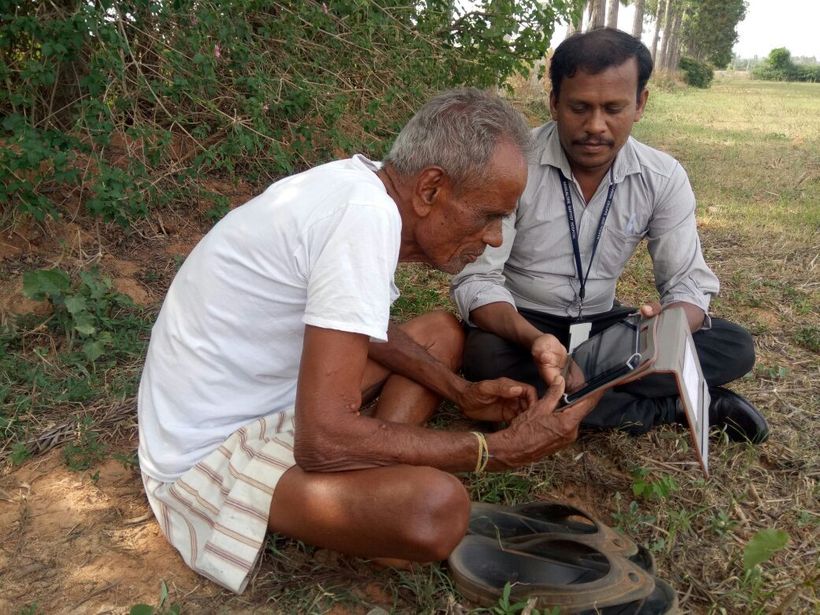
An interdisciplinary team of Baylor University researchers – from nursing and business information systems to art and video game design – and physicians from Bangalore Baptist Hospital in Bengaluru, India, were awarded a 21st Century Knowledge Initiative Grant from the U.S. India Education Foundation (USIEF) to develop a diabetes mobile health app to boost awareness and educate those in India who are most at risk for diabetes. The team is led by Shelby Garner, Ph.D., R.N., assistant professor in Baylor’s Louise Herrington School of Nursing, who has worked in India over the past six years to develop technological health resources. She cited statistics from the World Health Organization that show life expectancy in India is among the lowest in the South East Asian Region and is largely attributed to growing rates of non-communicable diseases, such as diabetes. Contextualized health education is one key to help raise awareness in the country, she said. “There is a need for culturally appropriate health education materials in India,” Garner said. “Our early research showed that technology, such as smartphones and internet accessibility, are widely available in India among health providers, but most technological educational resources were developed in the West and do not effectively translate to the Indian context.” Physicians from Bangalore Baptist Hospital will provide cultural context and help identify important medical content to be included in the app. “Our diabetes app will feature an interactive 3D animated video with gaming features to help educate patients at risk for diabetes,” Garner said. “Answers to questions addressed in the app include: What is diabetes? What happens if I have diabetes? How do I prevent and treat diabetes? What do I do now?” The app also serves as a data collection tool to help researchers determine if the video is improving participants’ knowledge on diabetes. Community health workers employed by Bangalore Baptist Hospital will use the app as they visit with people in rural villages and urban slums during door-to-door health education visits, Garner said. The research team will compare the app’s effectiveness with standard health educational resources previously used. Garner said the USIEF grant was awarded, in large part, due to the success of an earlier project that led to the development of a hypertension app. “Earlier this year, we tested the hypertension app among 346 people in one of the largest slums in Bengaluru, India, and in several rural villages surrounding Bengaluru,” she said. “The app was significantly effective in improving knowledge among participants. We used these results to justify the need to design more resources and applied for funding from the U.S. India Education Foundation.” From previous experience developing and employing the hypertension app, Garner said she knew this new project would require input from a variety of perspectives. “I’ve realized some of the ‘big picture’ challenges in health education, and it will take a team of experts to make this happen,” she said. Team members are: • Shelby Garner, Ph.D., R.N., assistant professor in Baylor’s Louise Herrington School of Nursing • Dr. Carol Elizabeth George, community health physician, Bangalore Baptist Hospital • Dr. Gift Norman, community health physician, Bangalore Baptist Hospital • Dr. Kingsly Victor, internal medicine physician, Bangalore Baptist Hospital • Hope Koch, Ph.D., associate professor of business information systems, Baylor’s Hankamer School of Business • Phil Young, Ph.D., assistant clinical professor of business information systems, Baylor’s Hankamer School of Business • Julia Hitchcock, M.F.A., associate professor of art, Baylor’s College of Arts & Sciences • Matthew Fendt, Ph.D., lecturer in computer science, Baylor’s School of Engineering and Computer Science The grant also will fund exchange teams of researchers and faculty from India to come to the U.S. and for Baylor team members to go to India to collaborate on the research for the next two years. The first team from India is due in late October. “We are really excited about the work we will do together with our Indian partners over the next two years,” Garner said. ABOUT BAYLOR UNIVERSITY Baylor University is a private Christian University and a nationally ranked research institution. The University provides a vibrant campus community for more than 17,000 students by blending interdisciplinary research with an international reputation for educational excellence and a faculty commitment to teaching and scholarship. Chartered in 1845 by the Republic of Texas through the efforts of Baptist pioneers, Baylor is the oldest continually operating University in Texas. Located in Waco, Baylor welcomes students from all 50 states and more than 80 countries to study a broad range of degrees among its 12 nationally recognized academic divisions. ABOUT LOUISE HERRINGTON SCHOOL OF NURSING The Baylor University Louise Herrington School of Nursing (LHSON) located in Dallas was established in 1909 as a diploma program within Baylor Hospital in Dallas, which is now Baylor University Medical Center, and in 1950 became one of the six degree-granting schools of Baylor University. The first Baccalaureate degrees were granted in 1950 establishing the school among the earliest baccalaureate nursing programs in the United States. In 1999, the School was renamed the Baylor University Louise Herrington School of Nursing after Louise Herrington Ornelas, a 1992 Baylor Alumna Honoris Causa, who made an endowment gift to the school. Accredited by the Commission on Collegiate Nursing, LHSON offers Bachelor of Science in Nursing (B.S.N.) degrees through a traditional program and FastBacc (one-year accelerated program). LHSON also offers an online Master of Science in Nursing (M.S.N.) Leadership and Innovation program, as well as Doctor of Nursing Practice (D.N.P.) programs to include Family Nurse Practitioner (F.N.P.), Nurse-Midwife (C.N.M.) and Neonatal Nurse Practitioner (N.N.P.). LHSON was featured in U.S. News & World Reportfor the 2018Best Graduate Schools ranking the D.N.P.program in the top 50 U.S.nursing schools at No. 46. The Baylor M.S.N.program is ranked at No. 56and the Nurse Midwifery Program ranked No. 10. Baylor’s M.S.N. in Nursing Leadership andInnovation Online Program ranked No. 39 in the 2018U.S. News Best Online Graduate Programs. For more information, www.baylor.edu/nursing.

Cedar Crest named Top College by U.S. News & World Report
For the eighth year in a row, Cedar Crest College has been named among the top colleges in the nation by U.S. News and World Report’s Best College Rankings, 2019. Among colleges in the northern region, Cedar Crest is ranked the sixth Best Regional College, the third Best Value School and the second Best College for Veterans. The college has been named a Top Regional College and Best Value College every year since 2012, and was named a Best College for Veterans in 2015, 2016 and 2018. “At Cedar Crest College, we are dedicated to preparing our students for a lifetime of continued success,” said Cedar Crest President Elizabeth Meade. “The fact that we consistently rank among the best colleges in the nation shows that we are committed to providing the very best education to our students.” In addition to the U.S. News & World Report ranking, Cedar Crest was also recognized for its student engagement by the Wall Street Journal this year, and was named a “Best College for Your Money” by MONEY Magazine.


Vielight Featured on CBC's "The Nature of Things" with Dr. David Suzuki
“The Brain’s Way of Healing”, an episode on The Nature of Things – aired on the CBC news network with David Suzuki and Dr. Norman Doidge. The episode featured the Vielight intranasal photobiomodulation technology. This episode featured Dr. Margaret Naeser a Research Professor of Neurology at Boston University who is researching the uses of an LED light helmet to treat PTSD victims. There are 1.7 million cases of traumatic brain injury right now in the United States and we don't have a really good treatments for them. We give them cognitive rehabilitation therapy which is very important but we're doing the photon work and light therapy to give the cells more energy to work with." To view the CBC Television episode please click below Dr. Margaret Naeser, Research Professor of Neurology at Boston University Select Publications PUBLISHED ON 2/10/2017 Saltmarche AE, Naeser MA, Ho KF, Hamblin MR, Lim L. Significant Improvement in Cognition in Mild to Moderately Severe Dementia Cases Treated with Transcranial Plus Intranasal Photobiomodulation: Case Series Report. Photomed Laser Surg. 2017 Aug; 35(8):432-441. PMID: 28186867. PUBLISHED ON 12/1/2016 Naeser MA, Martin PI, Ho MD, Krengel MH, Bogdanova Y, Knight JA, Yee MK, Zafonte R, Frazier J, Hamblin MR, Koo BB. Transcranial, Red/Near-Infrared Light-Emitting Diode Therapy to Improve Cognition in Chronic Traumatic Brain Injury. Photomed Laser Surg. 2016 Dec; 34(12):610-626. PMID: 28001756. PUBLISHED ON 8/17/2015 Naeser MA, Hamblin MR. Traumatic Brain Injury: A Major Medical Problem That Could Be Treated Using Transcranial, Red/Near-Infrared LED Photobiomodulation. Photomed Laser Surg. 2015 Sep; 33(9):443-6. PMID: 26280257. PUBLISHED ON 5/8/2014 Naeser MA, Zafonte R, Krengel MH, Martin PI, Frazier J, Hamblin MR, Knight JA, Meehan WP, Baker EH. Significant improvements in cognitive performance post-transcranial, red/near-infrared light-emitting diode treatments in chronic, mild traumatic brain injury: open-protocol study. J Neurotrauma. 2014 Jun 1; 31(11):1008-17. PMID: 24568233.


In Georgia governor's race, women could cast deciding vote
With the 2018 midterm elections looming less than a month away, Georgia gubernatorial candidates Stacey Abrams and Brian Kemp are neck-and-neck according to the latest Atlanta Journal Constitution/Channel 2 poll. In an election year with record voter registration numbers in the Peach State—and amid allegations of voter suppression—women voters could cast the deciding vote. But for which side? To find the answer, says Dr. Mary-Kate Lizotte, associate professor of political science at Augusta University, look to the issues. “Women, in particular Republican and Independent women, differ from men of the same party on the issues of government spending on childcare, public schools, welfare, social security, and aiding the homeless,” Lizotte said. “Women typically favor increased spending on the issues.” Examining data from 1994 to 2008, Lizotte, an expert on gender differences relating to public opinion, found that women are also more liberal than men of the same party on the issues of gay rights, government-guaranteed standard of living, and on the provision of more government services. “For races where these issues have become salient, it might be the case that women would be more likely to be motivated to turn out to vote and to vote for candidates that have liberal positions on these issues,” she said. That could be excellent news for the Abrams campaign, which has emphasized public education funding. “Women in Georgia who believe in increasing public education funding should be more likely to vote for Abrams,” Lizotte said. “This may also be the case for several House races where the issue of tax reform and tax cuts has become salient.” The confirmation of Justice Brett Kavanaugh to the Supreme Court earlier this month could also sway election results, albeit in less clearly defined ways. Lizotte said the confirmation could either motivate conservative women voters to turn out or, alternatively, dissuade Republican women with Pro-Choice leanings from voting entirely. The expectation is a little more cut-and-dry for liberal women voters. “The Kavanaugh confirmation is just one more reason to expect an increase in voter turnout among liberal women,” she said. “The Women's March in 2017 and 2018 along with the increase in female interest in running for office all indicate that the Trump election and presidency had already galvanized liberal women voters.” Finally, Lizotte said, although white women are divided politically—with college-educated white women swaying Left and those without a college degree favoring the Right—there was no such division among African American women voters. “And as we've seen, African American women turnout at high rates and can influence elections like the Alabama Senate race,” she said. Dr. Lizotte is available to discuss: "Gender gaps" on various issues leading up to the 2018 midterm elections The role of women voters in State and National elections The perception of voters, in terms of public opinion, toward candidates in Georgia's gubernatorial election.

