
Experts Matter. Find Yours.
Connect for media, speaking, professional opportunities & more.

Delaware emerges as a test bed for the future of AI in health care
Delaware is positioning itself as a “living lab” where academia, health systems and government collaborate to shape the future of artificial-intelligence-enabled health care. The latest issue of the Delaware Journal of Public Health, guest edited by University of Delaware computer scientists Weisong Shi and Yixiang Deng, brings together 16 articles from researchers, clinicians, policymakers and industry leaders examining how AI and big data are reshaping health care. The issue, debuting this month, balances Delaware-specific topics with broader perspectives, highlighting three levels of impact: what Delaware can expect in the coming years, what other states can learn from Delaware’s approach and how UD research is advancing AI for health through collaborations. “At UD, we don’t work in isolation. We’re working closely with health care systems so that innovation happens together from the beginning,” says Shi, Alumni Distinguished Professor and Chair of UD’s Department of Computer and Information Sciences. Highlights from the issue include: The nation’s first nursing fellowship in robotics – ChristianaCare, Delaware’s largest health system, created an eight-month fellowship to train bedside nurses to conduct applied robotics research. Nurses who completed the program reported higher job satisfaction, improved well-being and greater professional confidence, suggesting programs like this may help retain the bedside workforce and reduce nationwide staffing shortages. Wheelchairs that navigate hospitals on their own – UD researchers developed a prototype autonomous wheelchair that combines onboard sensors and computing with software that interprets spoken directions from users, a step toward moving beyond systems that only work in controlled environments. To operate effectively in health care settings, the researchers say, wheelchairs must be able to navigate crowded hallways, interact with doors and elevators and recover safely when sensors or navigation systems fail. Smarter insulin dosing for type 1 diabetes – Researchers are developing computer models to predict blood sugar (glucose) trends and guide insulin delivery, but must address issues such as noisy data, reliable real-time prediction and the computational limits of wearable devices. A review by UD researchers and colleagues emphasizes the importance of interdisciplinary collaboration, standardized datasets, advances in computational infrastructure and clinical validation to turn these models into practical tools that improve patient care. To interview Shi about AI in health care and the new DJPH issue, click his profile or email MediaRelations@udel.edu. ABOUT WEISONG SHI Weisong Shi is an Alumni Distinguished Professor and Chair of the Department of Computer and Information Sciences at the University of Delaware. He leads the Connected and Autonomous Research Laboratory. He is an internationally renowned expert in edge computing, autonomous driving and connected health. His pioneering paper, “Edge Computing: Vision and Challenges,” has been cited over 10,000 times.


Hospitals Pursue Excellence as ChristianaCare Earns Seven Beacon Awards
Seven ChristianaCare nursing units have earned the AACN Beacon Award for Excellence — one of the nation’s highest honors for delivering top-quality care. This recognition comes at a time when hospitals nationwide are working to stabilize their nursing workforce, strengthen leadership and deliver consistent, high‑quality care amid ongoing burnout and staffing pressures. Interviews are available with Danielle Weber, DNP, MSM, RN BC, NEA BC, chief nurse executive at ChristianaCare, who can discuss how ChristianaCare is driving quality and setting national standards during challenging times.



Six University of Delaware online graduate degree programs are ranked among the best in the nation by U.S. News & World Report in its 2026 U.S. News Best Online Programs, released Jan. 27, 2026. Both UD’s online master’s in education and online MBA ranked among the top 10% of their respective programs, at No. 25 and 26, respectively. Announced on Jan. 6, the online MBA program recently rose nine spots to No. 32 in the Poets&Quants 2026 Online MBA rankings. UD’s online master’s in nursing program ranked No. 35 out of 209 programs, rising 99 places over the past year. New for UD, the online master’s in educational/instructional media design program was recognized by peers at No. 11 in this education specialty ranking. UD’s online master’s in computer information technology program and online master’s in engineering ranked No. 64 in their respective areas. “These latest rankings recognize the expertise and dedication of our faculty and staff in delivering UD’s outstanding online graduate programs,” Interim Provost Bill Farquhar said. “We are committed to continually enhancing these programs and all the transformative opportunities that enable our students to meet their educational and career goals throughout their lives.” U.S. News selects several factors, known as ranking indicators, to assess each program in the categories outlined above. A program's score for each ranking indicator is calculated using data that the program reported to U.S. News in a statistical survey and from data collected in a separate peer assessment survey. This year’s edition evaluates more than 1,850 online bachelor’s and master’s degree programs using metrics specific to online learning. The rankings include only degree-granting programs offered primarily online by institutions with accreditation from recognized commissions. While the overall rankings methodology remains largely unchanged, U.S. News reported increased participation in this year’s data collection cycle, with more programs submitting statistical data and completing peer assessment surveys. According to U.S. News, this broader participation may reflect continued growth in online education nationwide. The University of Delaware offers over 35 online credit and non-degree professional programs. An online program from UD offers the same quality and rigor as an on-campus program and provides the flexibility to accommodate your busy schedule. UD is accredited by the Middle States Commission on Higher Education, and its online and on-campus degree programs have rigorous curricula delivered by experts, offer affordable program options, and provide students access to student support services, career fairs, recruiting opportunities and graduation ceremonies to celebrate student success. “UD's high-level rankings are in large part due to the positive outcomes that our students experience as a result of taking one of our online degrees or programs,” said Associate Provost for Online Learning and Innovation George Irvine. “Students tell us how much they enjoy learning from our accessible faculty and doing so in engaging and interactive online courses.” For more information about UD’s online degree programs, visit online.udel.edu. A complete listing of UD’s high-profile rankings is available on UD’s Institutional Research and Effectiveness Rankings webpage. Please note that the programs and specialties used in rankings may differ slightly from the names of UD’s degree programs.

Playing "Ketchup": Kraft Heinz, Food Industry Work to Meet Evolving Consumer Trends
In September, the Kraft Heinz Company revealed its intention to split into two smaller entities—one focused on in-demand products, like shelf-stable meals, spreads and sauces, and the other on slower-growth businesses, such as the Oscar Mayer, Kraft Singles and Lunchables brands. The move is among the latest in a series of breakups and spinoffs announced by major "Big Food" conglomerates, including Kellogg's, Keurig Dr Pepper Inc. and Unilever, and experts speculate more divvying and downsizing are bound to follow. Beth Vallen, PhD, a professor in the Villanova School of Business who studies consumer behavior and food marketing, contends these demergers and restructurings are the direct result of a recent yet significant shift in shoppers' spending habits. "It is certainly a possibility that we are moving away from 'Big Food,'" says Dr. Vallen. "The companies are likely to be more agile as smaller entities, and the more targeted businesses will allow them to focus on their different market segments as we face increasingly complex consumer and macro trends in the food industry." Among the more noteworthy factors the professor cites are changes in how shoppers evaluate products and how often they make purchases, particularly amid rising costs, economic pressures and increased competition in the marketplace. When it comes to groceries, a LendingTree survey from earlier this year found that nearly nine in 10 Americans are reassessing what items they cart to the checkout lane. "Inflation and uncertainty have driven consumers to look for more value when they shop," says Dr. Vallen. "This might result in behaviors like switching to lower-cost alternatives, and along these lines, consumers are seeking out retailers with high-quality store brand offerings that might replace their typical, branded items. "Consumers are also shopping less frequently. This could be due to reliance on technology, like online grocery purchases, which requires more planning, as well as a desire to make groceries stretch between purchases to save money." Another development affecting the industry is a broader drive across the population toward health-conscious options and low-calorie meals, heightened to a degree by the rise of GLP-1 drugs like Ozempic. A recent KFF Health Tracking Poll evidences that these medications, which have been shown to promote weight loss, are taken by roughly one in eight American adults; and households with users are expected to account for more than a third of food and beverage sales by 2030. According to Rebecca Shenkman, MPH, RDN, LDN, the director of the MacDonald Center for Nutrition Education and Research at Villanova's M. Louise Fitzpatrick College of Nursing, the impact of these drugs' usage on consumers' eating habits should not be underestimated. "GLP-1 receptor agonists reduce appetite and food intake through multiple mechanisms, and evidence suggests both a reduction in snacking frequency and a shift toward healthier choices among users," shares Shenkman. "They report fewer cravings for sweet, salty and fatty snacks, particularly during the first 12 to 24 weeks of treatment. In addition, consumer surveys and clinical trials indicate increased intake of fruits, vegetables and water, and decreased consumption of processed foods and sugary beverages. "With millions of users and average daily reductions of 700 to 900 calories, demand for calorie-dense snacks could decline significantly." Among the brands and businesses at greatest risk, in Dr. Vallen and Shenkman's respective estimations, are "packaged and processed foods" as well as "sugary beverages and high-fat treats." In turn, with shoppers increasingly moving away from these "unhealthy" options and expressing an openness to dispensing with long-term staples, companies in the sector will need to emphasize adaptability in the coming years, making a conscious effort to understand customers' distinct preferences and needs. "Altogether, there are numerous trends that are seemingly pulling consumers in different directions—between health, taste, value and convenience," concludes Dr. Vallen. "Looking ahead, it will be important for firms to understand how these trends impact different consumers—and in different categories. Health likely means something different to Gen X and Gen Z and may vary further based on whether we are talking about a family dinner or a late-night treat. Taking efforts to understand consumer motivations will be crucial for companies to appropriately respond to current trends."



Multi-university AI research may revolutionize wildfire evacuation
As wildfires grow wilder, the University of Florida and two other universities are developing large language models to make evacuations safer and more efficient. Armed with a nearly $1.2 million National Science Foundation grant, UF, Johns Hopkins University and the University of Utah are creating these AI-based models to simulate human behavior during evacuations – information that will help emergency managers shape more effective evacuation plans. “Strengthening wildfire resilience requires accurate modeling and a deep understanding of collective human behavior during evacuations,” said UF project lead Xilei Zhao, Ph.D., an associate professor with the Engineering School of Sustainable Infrastructure and Environment. “There is a critical need for simulation models that can realistically capture how civilians, incident commanders and public safety officials make protective decisions during wildfires.” Xilei Zhao focuses on developing and applying data and computational science methods to tackle problems in transportation and resilience. View her profile here Existing simulation models face limitations, particularly with reliable predictions under various wildfire scenarios. New AI models can simulate how diverse groups of people behave and interact during the hurried scramble to seek safety. Zhao’s team is developing a convergent AI framework for wildfire evacuation simulations powered by psychological theory-informed large language models. The project will produce simulation methods to promote teaching, training and learning, and support wildfire resilience by allowing public safety officials to use open-access tools. “This research seeks to be a transformative step toward improving the behavioral realism, prediction accuracy and decision-support capability of wildfire evacuation simulation models,” Zhao said. Zhao partnered with John Hopkins professor Susu Xu, Ph.D., and University of Utah professors Thomas Cova, Ph.D., and Frank Drews, Ph.D. The preliminary results of the study were recently presented at the 63rd Annual Meeting of the Association for Computational Linguistics. “In that paper, we started to train the model on the survey data we collected to see how we can accurately predict people's evacuation decisions with LLMs,” Zhao said. Research objectives include extending the Protective Action Decision Model for civilians and public safety officials, developing psychological theory-informed large language model agents for protective modeling and generating a realistic synthetic population as input for the simulation platform. The team also plans to develop learning-based simulations and predict human behavior under scenarios such as fire spread, warning and infrastructure damage. This research comes at a critical time, as the number of wildfires has significantly increased globally. About 43% of the 200 most damaging fires occurred in the last decade leading up to 2023, according to a recent study in Science. The intensity, size and volume of wildfires are threatening more urban areas. “If you go into the urban area, many people do not have cars, or they need additional mobility support,” Zhao said. “For example, the LA fires impacted nursing homes with a lot of elderly people, many of whom are immobile or lack the ability to drive. That's a big problem. This would be very relevant to them.” The large language models will provide important context for evacuation planning as well as real-time decision making. “We envision this tool being used during planning,” Zhao said, “so emergency managers can test different kinds of scenarios to determine how to draw the evacuation zones, where to issue the orders first and how to design the communications messaging.” This is important research and critical as wildfires become more common across North America. If you're a reporter looking to connect and learn more - then let us help. Xilei Zhao is available to speak with media - simply click on her icon now to arrange an interview today.


Nursing researcher receives over $500K in prestigious grants
For the first time in nearly 15 years, a faculty member from Augusta University’s College of Nursing has been awarded a grant from the National Institutes of Health. Blake McGee, PhD, has secured an R03 award of $176,331 from the Eunice Kennedy Shriver National Institute of Child Health and Human Development to study Medicaid’s expanded role in late postpartum maternal health. But he hasn’t stopped there as McGee is also part of the fifth cohort of Betty Irene Moore Fellows, a prestigious program for nurse leaders and innovators that has awarded CON half a million dollars to support his research project and leadership development. McGee, the prelicensure department chair and an associate professor, is collaborating with colleagues from other Georgia universities on both studies, which are occurring simultaneously. “I began my career as an ER nurse and have always wanted to ask bigger questions about the challenges facing patients and how we might best address them as a society,” said McGee, who was recently selected for publication in Blood Advances, the American Society of Hematology’s journal. “As nursing scientists, we are uniquely poised to ask questions about healthcare policy, specifically from the vantage point of the impact that policy choices have on patients and their health outcomes.” This century, the United States has seen rising maternal mortality rates with alarming racial disparities. Over half of these deaths occur in the postpartum period, with 23% occurring more than six weeks after delivery. Medicaid expansion covers pregnant women in households below 138% of the Federal poverty level through postpartum day 60, which has been associated with decreased mortality and reduced racial disparity in maternal death. At the time of grant submission, pregnancy Medicaid eligibility traditionally lapsed 60 days after delivery, leaving postpartum people vulnerable to disruptions in care. McGee’s work aims to identify changes in maternal health care use and health outcomes 60 days to 1 year after delivery that were associated with state Medicaid expansions (2007–19). The team will examine whether the effects of expansion vary by maternal race or ethnicity and will explore whether patient-reported health care access and quality mediate the relationships between expansion and outcomes. “My hope is that after the study we’ll have a better understanding of how health and health care use change for women in this crucial late postpartum period and how they may differ for people of different backgrounds,” said McGee. “Due to the sample design, findings will reliably inform optimal policy for postpartum coverage duration.” He expects this study to provide preliminary data for a future R01-funded study that directly examines the impact of extending the duration of postpartum Medicaid under the American Rescue Plan. As part of the Betty Irene Moore Fellowship, McGee is one of 15 fellows across the nation in a curriculum co-delivered by the UC Davis School of Nursing and Graduate School of Management. A project coordinator from AU’s School of Public Health will also assist with the fellowship project. McGee hopes to involve graduate research assistants or recent alumni as research associates on the team. Specifically, McGee will be studying the Georgia Pathways to Coverage Program, making him one of the only academic researchers in the nation funded to do so. “As a researcher, it is always a privilege to engage in topics that directly impact the current state of health care, and I’m honored to tackle projects that are so relevant to today’s health policy headlines,” he said. Georgia stands out among other states that are exploring an extension of Medicaid to low-income, working-age adults who demonstrate a monthly commitment of 80 hours to an employment-related activity. By studying the effects of this program, McGee predicts the findings will be highly relevant to anticipating the impact of recent Medicaid changes at the federal level and may indicate differences between Pathways participants and those who might qualify but remain uninsured. This focus could provide data that helps the state target enrollment efforts. The state’s own logic model predicts that the program will reduce hospitalizations, and McGee is eager to determine the program’s success. “Our findings should be helpful to the state to better understand those enrolling, what their experience with increased access to care has been and how their health has improved after receiving coverage,” McGee said.



For many older adults in Sussex County, Delaware, navigating the health care system can feel overwhelming and difficulty accessing care can create gaps in care that ultimately lead to poor health. To help older adults more easily meet their health needs and be successful in navigating the system, ChristianaCare has brought a variety of services to Sussex County that are specially designed for this population. These include ChristianaCare’s expanding My65+ primary care program, the Swank Center for Memory Care and ChristianaCare HomeHealth—all services that work collaboratively with seniors to help them achieve their best health based on their individual needs. Download Photos. ChristianaCare My65+ ChristianaCare My65+ provides specialized primary care services for people 65 and older. ChristianaCare’s My65+ services include medication management, annual Medicare visits, chronic disease management, coordination with specialists and additional consultation time with health care providers. These services are tailored to meet the specific health needs of seniors. “I can’t express enough how wonderful the My65+ program at ChristianaCare has been for me,” said Linda Martin of Rehoboth, a patient of the My65+ Program. “When they opened the practice in Rehoboth, it made getting the care I need much more convenient. I truly appreciate how the professionals at ChristianaCare take the time to understand my health and offer support for my mother’s care. They have a memory specialist on-site who provides expert care for my mother. It feels like I’m part of a caring community.” ChristianaCare My65+ is available at locations in Rehoboth Beach and at a new primary care practice in Milford, which began accepting My65+ patients in May. “ChristianaCare recognizes the importance of addressing the unique health care needs of our senior community. Our focus is on delivering care that prevents diseases, manages chronic conditions and improves overall well-being, especially for older adults,” said Priya Dixit-Patel, M.D., physician executive for Core and Advanced Primary Care at ChristianaCare. Swank Center for Memory Care Recognizing the significant impact that memory-related conditions can have on individuals and their families, ChristianaCare’s Swank Center for Memory Care serves as a source of hope and support for those dealing with these challenges. A dedicated team of geriatricians, nurses, social workers and other professionals collaborates with patients and their families to offer support, education and guidance throughout the diagnosis and treatment process. “ChristianaCare has consistently been at the forefront of providing excellent patient care, and the Swank Center for Memory Care is another opportunity for us to enhance support for people 65 and older,” said Steven Huege, M.D., MSEd, The Swank Foundation Endowed Chair in Memory Care and Geriatrics at ChristianaCare. “By designing care that meets the specific needs of older adults, we can create a better experience and achieve improved outcomes for everyone involved. This initiative is an important part of our overarching vision to provide every older adult with the best care possible.” The Swank Center was selected by the Centers for Medicare & Medicaid Services (CMS) to participate in the new Guiding an Improved Dementia Experience (GUIDE) Model, aimed at enhancing care coordination and access to services for those living with dementia and their caregivers. Key support services will include comprehensive assessments, care coordination, respite care, a 24/7 support line and education. With locations in Wilmington, Smyrna and Rehoboth, the Swank Center for Memory Care serves patients throughout Delaware and the surrounding region. ChristianaCare HomeHealth ChristianaCare HomeHealth provides a variety of nursing care for all ages in managing chronic conditions, adapting to new diagnoses, and improving daily living activities. It is the leading provider of in-home nursing care and assistance in Delaware. “ChristianaCare HomeHealth designs a plan of care that is personalized for those we serve,” said Donna Antenucci, MHA, BSN, RN, interim president, ChristianaCare HomeHealth. “Treating older adults in their own home is a privilege and brings comfort physically and emotionally to those served and their family. “It is truly rewarding for us as providers of home health services to enhance people’s quality of life and improve their overall well-being. We are truly honored to be a part of their journey to wellness and healing while respecting the dignity of those we serve.” These services are available throughout the entire state and provide comprehensive care through skilled nursing, home health aides, rehabilitative services, and medical social workers. Specially trained professionals offer home care, including physical and speech therapy, to help individuals live independently and safely. ChristianaCare HomeHealth began as a Visiting Nurse Association (VNA) in 1922 and now has more than 350 caregivers who serve patients throughout the state. Currently, there is an active daily census of about 1,500 patients. The service admits approximately 10,000 patients each year across the state. Meeting the Needs of Sussex County’s Rapidly Growing Population Sussex County has been designated as a “Medically Underserved Area” by the federal government, with projections showing that the population will increase from 237,000 in 2022 to over 361,000 by 2050, further intensifying the demand for primary care services. The providers at ChristianaCare’s new Milford location will play a crucial role in addressing the growing health care needs of Sussex County. “My65+ and Swank Center for Memory Care Services are unique programs in Sussex County that are greatly needed because of the growing senior population,” said Anthony Paul Buonanno, M.D., MBA, primary care physician at My65+ at Rehoboth Beach. “The health care infrastructure has not been able to keep up with the demand, and it is essential to provide health care services close to home for Delawareans. I am proud to be part of a program that is innovative, necessary and useful to my community.” While ChristianaCare primary care is a relative newcomer to Sussex County, ChristianaCare already has a large primary care network in northern Delaware, southeastern Pennsylvania, southern New Jersey and Maryland.


New autism and disability training at Aston University aims to close gaps in healthcare
Aston University is leading a national shift in healthcare education with the rollout of Tier 1 of the Oliver McGowan Mandatory Training (OMMT) — a pioneering initiative developed by NHS England to improve support for individuals with autism and learning disabilities. Oliver McGowan was an 18-year-old with autism and learning disabilities who died in 2016 after a bad reaction to medication for epileptic seizures, which both he and his parents had requested should not be given after a previous bad reaction. Oliver's death was ruled 'avoidable' and revealed serious gaps in training for medical professionals caring for those with autism and learning difficulties. Oliver's mother Paula set up a foundation to campaign for appropriate training, and in 2022, an UK act of parliament mandated learning disability and autism training for all healthcare staff registered with the Care Quality Commission (CQC). This is now being introduced. The evaluation of the project at Aston University is being led by Dr Amreen Bashir, senior lecturer in biomedical science, in close collaboration with Dr Mary Drozd, senior teaching fellow in nursing and Dr Jayne Murphy, associate professorial teaching fellow in nursing. Aston is one of the first universities in the UK to implement this training across undergraduate healthcare programmes, including Nursing, Biomedical Science, Pharmacy, Optometry, and Physician Associate Studies. “Our students not only gained new knowledge, but they were vocal about the importance of this training staying in the curriculum permanently,” said Dr. Bashir. Student feedback highlights the transformative impact of the training: “I will use the training to ensure the patient care I provide is accommodating to people with special needs and will offer reasonable adjustments when needed. I understand autism and learning difficulties are not like other disabilities which are commonly physically noticed and that they may me hidden.” “The most useful aspect of the Oliver McGowan training is its focus on real-life experiences shared by individuals with autism and learning disabilities. These personal insights help to contextualise the challenges they face, making the training relatable and impactful.” “It opened my eyes as to how even within people who are practising and have already been working in clinical settings lack the understanding on how to care and approach those with autism and/or learning disabilities. It shouldn’t have got to a stage where what happened with Oliver happened and I am glad I have had this training so that I know what I can do as a healthcare professional in these situations. My previous job as a support worker also helped as I worked with service users who had autism and learning disabilities as well as physical disabilities and so this training assisted the knowledge I had already gained.” Measuring the impact A total of 176 students completed the pre-intervention survey and 94 students completed the survey post-OMMT. Participants were drawn from Nursing, Biomedical Science, Physician Associate Practice, Optometry, and Pharmacy at Aston University. How the training works Tier 1 of the OMMT consists of two parts: a 90-minute e-learning session completed independently, followed by a one-hour live interactive webinar co-facilitated by trained professionals and experts by experience. This format allows for reflective discussion and a deeper understanding of autism and learning disabilities through real-world perspectives. Post-training surveys measured changes in knowledge, attitudes, and perceptions. Early results Students showed significantly improved understanding of autism and learning disabilities, as well as greater sensitivity toward tailoring communication to individual needs. The training also identified critical areas for further attention, such as the role of ethnicity in healthcare access and the impact of silent conditions like constipation, which can go undetected and lead to preventable harm. The findings will be presented at the upcoming 'Horizons in STEM' higher education conference, which is being hosted at Aston University, with a manuscript currently in preparation for peer-reviewed publication. By embedding OMMT into its core curricula, Aston University is setting a benchmark for inclusive healthcare education across the UK. To follow this research or explore collaboration on the OMMT initiative, contact: Dr Amreen Bashir – a.bashir6@aston.ac.uk Dr Mary Drozd – m.drozd@aston.ac.uk Dr Jayne Murphy – j.murphy5@aston.ac.uk


Augusta University named NIH Specialized Center of Research Excellence on Sex Differences
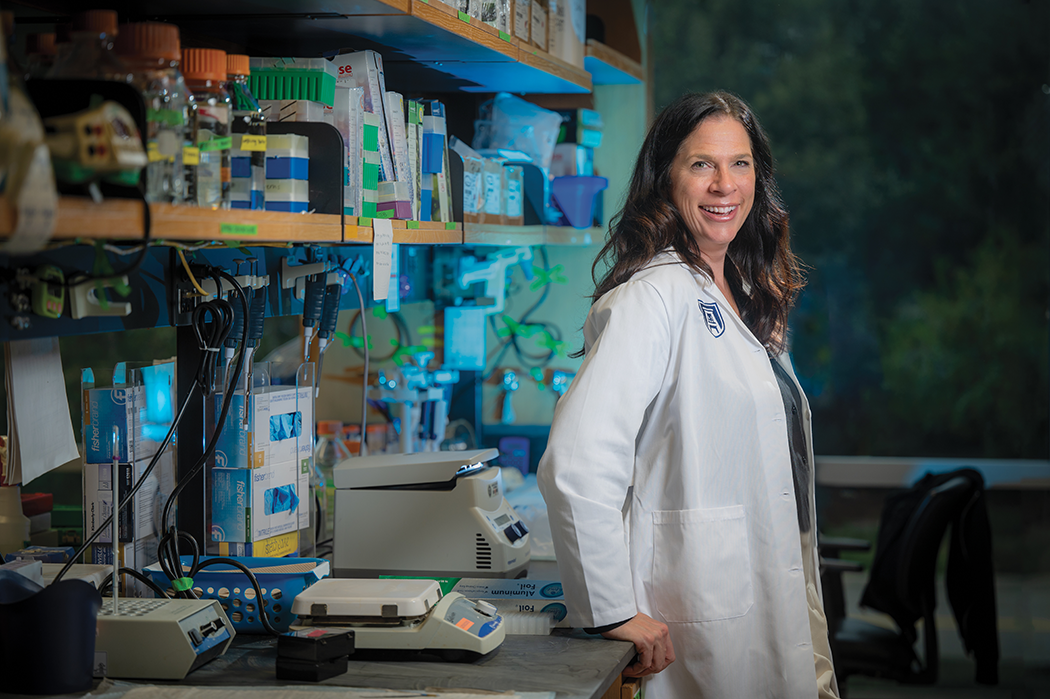
Jennifer C. Sullivan, PhD, dean of The Graduate School at Augusta University, has dedicated her research to better understand why blood pressure increases in hypertension and raising awareness to the dangers of not paying attention to heart health, particularly among women. Throughout her career, Sullivan has been continuously funded by the National Institutes of Health (NIH) and the American Heart Association since becoming a tenure-track faculty member in 2008, and now she has a chance to take her research further after securing a five-year, $7.5 million grant to have Augusta University designated as a Specialized Center of Research Excellence on Sex Differences (SCORE) by the NIH’s Office of Research on Women’s Health. It’s a distinction that places AU among 10 other leaders in research for the field, including Brigham and Women’s Hospital, Cedars-Sinai Medical Center, Emory University, Johns Hopkins University, Massachusetts General Hospital and Harvard Medical School, the Mayo Clinic, the Medical University of South Carolina, the University of Colorado and Yale University. The University of California, Los Angeles has two SCORE programs. “I’m so proud and excited for this opportunity because this has been what I have focused my research program on for my entire career, and to be able to advance it with a program like this, where we can actually build a unique program focused on an area that can make a difference, is just so much fun,” Sullivan said. “Just the fact that Augusta will be included on this list, attached to an organization of the caliber of NIH, will provide opportunities that we’ve never had before, especially for our students and younger researchers.” Sullivan’s SCORE project, “Improving awareness of women with hypertension: ROAR (Rural, Obese, At Risk),” focuses primarily on the fact that, while young women are considered “protected” from hypertension and the associated cardiovascular risk relative to age-matched men, the elimination of hypertension is projected to have a larger impact on cardiovascular disease (CVD) mortality in women. “The group of people with the highest risk of death from hypertension is in the rural South of the U.S., specifically Black women are particularly vulnerable to developing hypertension and CVD,” Sullivan said. According to Sullivan’s research and information available from the American Heart Association (AHA), approximately 19 million deaths were attributed to CVD globally in 2020, an increase of about 20% from 2010. Both Sullivan and the AHA state that cardiovascular disease remains the leading cause of death for both men and women in the United States, and that hypertension is a major modifiable risk factor for CVD. Sullivan said, “It has been suggested that eliminating hypertension would reduce CVD mortality by over 30% in men and 38% in women, but a critical barrier to limiting premature death from CVD is lack of awareness surrounding the risks of CVD. Our overall goal in this new funded project is to transform academic and community understanding of sex as a biological variable in the consideration of hypertension.” The three research projects include Sullivan’s lead project on high fat diets, a project on systemic lupus erythematosus (SLE) disproportionately affects young women led by Erin Taylor, PhD, at the University of Mississippi Medical Center, and another project looking at the role of inflammation and how immune cells are activated in SLE led by Michael Ryan, PhD, at the University of South Carlina’s School of Medicine. But there is more to SCORE than just conducting research. Each SCORE team is also responsible for a career enhancement core and a leadership administrative core. “What really sets these grants apart are the emphasis on the career enhancement and leadership administrative cores. The Career Enhancement Core is designed to be a bit open ended for each SCORE, but in talking to the NIH, what they were most excited about in our project is the community outreach piece we designed. “Our grant includes people across the entire campus, including Augusta University’s Medical College of Georgia, the College of Allied Health Sciences, the College of Education and Human Development and multiple campus partners including some of our sororities on campus and the Center for Writing Excellence,” Sullivan said. “More specifically, the COEHD is able to extend our outreach efforts to our local schools to begin educating children on the importance of screening, and our sororities are obviously connected with other chapters across the southeast which helps us spread our message, as well.” Sullivan notes that, through this portion of the project alone, there will be numerous opportunities to include students from Augusta University’s CAHS, College of Nursing, Department of Kinesiology, the Biomedical Sciences PhD program and the proposed School of Public Health. Marlo Vernon, PhD, associate professor at MCG and researcher for the Georgia Cancer Center, and Amanda Behr, chair of the Medical Illustration Program in CAHS, are also involved in various stages of the project. “The other thing the Career Enhancement Core will do is provide pilot grants to three research projects each year for early-stage investigators. We’ll also be able to fund sabbaticals for graduate students or postdocs to go someplace else and learn cutting edge techniques from other experts, so there is a lot built in that will help us support up-and-coming researchers,” Sullivan said. “We’re now part of this consortium, and they have a once-a-year, in-person meeting at the NIH offices, so we’ll go to that for the first time this year, and what’s neat about it is they’re really promoting young investigators. Each grant can bring up to eight people, the our hope is that we will have the investigators funded by the pilot projects attend next year, giving those folks the opportunity to present and talk to program officers with the NIH and develop a pipeline of investigators committed to studying women’s health and sex as a biological variable.” Sullivan is also looking to designate some of her summer graduate and undergraduate research positions to the project beginning next summer. “The Graduate School already has a summer program to support undergraduates that we will be able to piggyback off of. We have set aside five slots in that program for this that will go to students studying the sex as a biological variable, and the applications for that program, STAR, is already open,” Sullivan said. “We’re also planning a symposium in collaboration with the Physiology Department in April 2024. This is an annual event sponsored by the department, and this year they selected sex differences as the topic, so we are hoping to help increase exposure and attendance.” Looking to know more about the amazing research happening at Augusta? To connect with Jennifer Sullivan, simply click on her icon ow to arrange an interview today.


Google's New AI Overviews Isn’t Just Another Search Update
Google's recent rollout of AI Overviews (previously called “Search Generative Experience”) at its annual developer conference is being hailed as the biggest transformation in search since the company was founded. This isn’t a side project for Google — it fundamentally alters how content gets discovered, consumed, and valued online. If you're in marketing, PR, content strategy, or run a business that depends on online visibility, this requires a fundamental shift in your thinking. What Is AI Overviews? Instead of showing users a familiar list of blue links and snippets, Google now uses artificial intelligence to generate a summary answer at the very top of many search results pages. This AI-generated box pulls together content from across the web and tries to answer the user’s question instantly—without requiring them to click through to individual websites. Here’s what that looks like: You type in a question like “What are the best strategies for handling a media crisis?” Instead of just links, you see a big AI-generated paragraph with summarized strategies, possibly quoting or linking to 3-5 sources—some of which might not even be visible unless you scroll or expand the summary. Welcome to the new digital gatekeeper. Elizabeth Reid, VP of Search at Google states "Our new Gemini model customized for Google Search brings together Gemini’s advanced capabilities — including multi-step reasoning, planning and multimodality — with our best-in-class Search systems. Let's breakdown this technobabble. Think of Gemini as the brain behind Google’s search engine that’s now: Even More Focused on User intent For years, SEO strategies were built around guessing and gaming the right keywords: “What exact phrase are people typing into Google?” That approach led to over-optimized content — pages stuffed with phrases like “best expert speaker Boston cleantech” — written more for algorithms than actual humans. But with Google Gemini and other AI models now interpreting search queries like a smart research assistant, the game has changed entirely. Google is no longer just matching phrases — it’s interpreting what the user wants to do and why they’re asking. Here’s What That Looks Like: Let’s say someone searches: “How do I find a reputable expert on fusion energy who can speak at our cleantech summit?” In the old system, pages that mentioned “renewable energy,” “expert,” and “speaker” might rank — regardless of whether they actually helped the user solve their problem. Now Google more intuitively understands: • The user wants to evaluate credibility • The user is planning an event • The user needs someone available to speak • The context is likely professional or academic If your page simply has the right keywords but doesn’t send the right signals — you’re invisible. Able to plan ahead Google and AI search platforms now go beyond just grabbing facts. They string together pieces of information to answer more complex, multi-step queries. In traditional search, users ask one simple question at a time. But with multi-step queries, users are increasingly expecting one search to handle a series of related questions or tasks all at once — and now Google can actually follow along and reason through those steps. So imagine you’re planning a conference. A traditional search might look like: "Best conference venues in Boston” But a multi-step query might be: “Find a conference venue in Boston with breakout rooms, check availability in October, and suggest nearby hotels with group rates.” This used to require three or four different searches, and you’d piece it together yourself. Now Google can handle that entire chain of related tasks, plan the steps behind the scenes, and return a highly curated answer — often pulling from multiple sources of structured and unstructured data. Even Better at understanding context Google now gets the difference between ‘a speaker at a conference’ and ‘a Bluetooth speaker’ — because it understands what you mean, not just what you type.” In the past, Google would match keywords literally. If your page had the word “speaker,” it might rank for anything from event keynotes to audio gear. That’s why so many search results felt off or required extra digging. Now Google reads between the lines. It understands that “conference speaker” likely refers to a person who gives talks, possibly with credentials, experience, and a bio. And that “Bluetooth speaker” is a product someone might want to compare or buy. Why this matters for marketers: If you’re relying on vague or generic content — or just “keyword-stuffing” — your pages will fall flat. Google is no longer fooled by superficial matches. It wants depth, clarity, and specificity. Reads More Than Just Text Google now processes images, videos, charts, infographics, and even audio — and uses that multimedia information to answer search queries more completely. This now means that your content isn’t just being read like a document — it’s being watched, listened to, and interpreted like a human would. For example: • A chart showing rising enrollment in nursing programs might get picked up as supporting evidence for a story about healthcare education trends. • A YouTube video of your CEO speaking at a conference might be indexed as proof of thought leadership. • An infographic explaining how your service works could surface in an AI-generated summary — even if the keyword isn’t mentioned directly in text. Ignoring multimedia formats? Then, your competitors’ visual storytelling could be outperforming your plain content. Because you're not giving Google the kind of layered, helpful content that Gemini is now designed to highlight. Why This Matters There's a big risk here. Marketers who ignore these developments are in danger of becoming invisible in search. Your old SEO tricks won’t work. Your content won’t appear in AI summaries. Your organization won’t be discovered by journalists, customers, or partners who now rely on smarter search results to make decisions faster. If you’re in communications, PR, media relations, or digital marketing, here’s the key message. You are no longer just fighting for links. You need to fight to be included in the Google AI summary itself at the top of search results - that's the new #1 goal. Why? Journalists can now find their answers before ever clicking on your beautifully written news page. Prospective students, donors, and customers will often just see the AI’s version of your content. Your brand’s visibility now hinges on being seen as “AI-quotable.” If your organization isn’t optimized for this new AI-driven landscape, you risk becoming invisible at the very moment people are searching for what you offer. How You Can Take Action (and Why Your Role Is More Important Than Ever) This isn’t just an IT or SEO problem. It’s a communications strategy opportunity—and you are central to the solution. What You Can Do Now to Prepare for AI Overviews 1. Get Familiar with How AI “Reads” Your Content AI Overviews pull content from websites that are structured clearly, written credibly, and explain things in simple language. Action Items: Review your existing content: Is it jargon-heavy? Outdated? Lacking expert quotes or explanations? Then, it's time to clean house. 2. Collaborate with your SEO and Web Teams Communicators and content creators now need to work hand-in-hand with technical teams. Action Items: Check your pages to see if you are using proper schema markup. Are you creating topic pages that explain complex ideas in simple, scannable formats? 3. Showcase Human Expertise AI values content backed by real people—especially experts with credentials. Action Items: Make sure your expert profiles are up to date. Make sure you continue to enhance them with posts, links to media coverage, short videos, images and infographics that highlight the voices behind your brand and make you stand out in search. 4. Don’t Just Publish—Package AI favors content that it can easily digest and display such as summary paragraphs, FAQs, and bold headers that provide structure for search engines. This also makes your content more scannable and engaging to humans. Action Items: Repurpose your best content into AI-friendly formats: think structured lists, how-tos, and definitions. 5. Monitor Your Presence in AI Overviews Regularly search key topics related to your organization and see what shows up. Action Items: Is your content featured? If not, whose is—and identify what they doing differently. A New Role for Communications: From Media Pitches to Machine-Readable Influence This isn’t the end of communications as we know it—it’s an evolution. Your role now includes helping your organization communicate clearly to machines as well as to people. Think of it as “PR for the algorithm.” You’re not just managing narratives for the public—you’re shaping what AI systems say about you and your brand. That means: • Ensuring your best ideas and experts are front and center online. • Making complex information simple and quotable. • Collaborating cross-functionally like never before. Final Thought: AI Search Rewards the Prepared Google’s new AI Overviews are here. They’re not a beta test. This is the future of search, and it’s already rolling out. If your institution, company, or nonprofit wants to be discovered, trusted, and quoted, you can no longer afford to ignore how AI interprets your online presence. Communications and media professionals are now at the front lines of discoverability. And the best way to lead is to act now, work collaboratively, and elevate your role in this new era of search. Want to see how leading organizations are getting ahead in the age of AI search? Discover how ExpertFile is helping corporations, universities, healthcare institutions and industry associations transform their knowledge into AI-optimized assets — boosting visibility, credibility, and media reach. Get your free download of our app at www.expertfile.com

