Experts Matter. Find Yours.
Connect for media, speaking, professional opportunities & more.

Oprah Hosts Primetime Special About Weight Loss Drugs on ABC | Media Advisory
Oprah Winfrey, a revered media mogul and advocate for health and wellness, is set to host a groundbreaking primetime special on ABC, focusing on the burgeoning field of weight loss drugs. The new special follows Winfrey’s exit from the board of weightwatchers, where she served for nearly a decade after acquiring a 10% stake in the company. This special promises to shed light on the science behind popular weight loss medications Ozempic, Mounjaro and Wegogy. As obesity rates continue to climb globally, the discussion around weight loss solutions becomes increasingly pertinent, touching on public health, self-image, and the pharmaceutical industry's role in shaping health standards. Key topics of interest include: Science and Effectiveness of Weight Loss Drugs: Exploring how these medications work and their success rates. Personal Stories of Transformation: Individuals' journeys with weight loss drugs, including challenges and triumphs. Ethical and Societal Implications: The debate over body image, health standards, and drug dependency. Regulatory Perspective and Safety: How these drugs are approved and monitored for public use. Impact on the Healthcare System: The potential effects on healthcare costs and accessibility. Cautions and Concerns: Are there serious side-effects and what are the risks related to taking these drugs? Future of Obesity Treatment: Innovations and next steps in treating obesity with pharmaceuticals. For journalists seeking research or insights for their coverage on this topic, here is a select list of experts. Rebecca Puhl, Ph.D. Professor of Human Development and Family Studies · University of Connecticut Professor Paul Gately Carnegie Professor of Exercise and Obesity and Co-Director of the Applied Centre for Obesity Research · Leeds Beckett University Rebecca Pearl Assistant Professor · University of Florida Jan D. Hirsch Founding Dean, School of Pharmacy and Pharmaceutical Sciences · UC Irvine Amy Gorin, Ph.D. Professor, Department of Psychological Sciences · University of Connecticut James Lenhard, Jr., M.D., FACE, FACEP Medical Director · ChristianaCare To search our full list of experts visit www.expertfile.com. Photo by Total Shape


New Aston University spin-out company will develop novel ways to treat non-healing wounds
EVolution Therapeutics (EVo) has been founded on the work of Professor Andrew Devitt into the causes of inflammatory disease A failure to control inflammation in the body, usually a natural defence mechanism, can cause chronic inflammation, such as non-healing wounds Non-healing wounds cost the NHS £5.6bn annually, so there is a vital need for new treatments. Aston University’s Professor Andrew Devitt, Dr Ivana Milic and Dr James Gavin have launched a new spin-out company to develop revolutionary treatments to treat chronic inflammation in patients. One of the most common inflammatory conditions is non-healing wounds, such as diabetic foot ulcers, which cost the NHS £5.6bn annually, the same cost as managing obesity. Such wounds are generally just dressed, but clinicians say there is a vital need for active wound treatments, rather than passive management. The spin-out, Evolution Therapeutics (EVo), will aim to create these vital active treatments. Inflammation in the human body helps to fight infection and repair damage following injury and occurs when the immune system floods the area with immune cells. Normally, this inflammation subsides as the damage heals, with the immune system signalling to the immune cells to leave. However, in some cases, the usual healing mechanism is not triggered and the inflammatory response is not turned off, leading to chronic inflammation and so-called inflammatory diseases. EVo is based on Professor Devitt’s work on dying cells in the body, known as apoptotic cells, and how they contribute to health. Dying cells release small, membrane-enclosed fragments called extracellular vesicles (EVs), which alert the immune system to the death of cells, and then trigger the body’s natural repair mechanism and remove the dead cells. It is estimated that 1m cells die every second. Professor Devitt and his team have identified the molecules within the EVs which control the healing process and are engineering new EVs loaded with novel healing enzymes, to drive the body’s repair responses to actively heal wounds. Much of the research has been funded by the Biotechnology and Biological Sciences Research Council (BBSRC) with additional support from the Dunhill Medical Trust. Professor Devitt, Dr Milic and Dr Gavin received Innovation-to-Commercialisation of University Research (ICURe) follow-on funding of £284,000 to develop the vesicle-based therapy with EVo. Most recently, in December 2023, Professor Devitt and Dr Milic were awarded £585,000 from the BBSRC Super Follow-on-Fund to develop engineered cells as a source of membrane vesicles carrying inflammation controlling cargo. The team, together with Professor Paul Topham, also received funding from the National Engineering Biology Programme (£237,000) to support polymer delivery systems for vesicles. EVo is one of the 12 projects being supported by SPARK The Midlands, a network which aims to bridge the gap between medical research discoveries of novel therapeutics, medical devices and diagnostics, and real-world clinical use. SPARK The Midlands is hosted at Aston University, supported by the West Midlands Health Tech Innovation Accelerator (WMHTIA), and was launched at an event on 31 January 2024. Professor Devitt, EVo chief technical officer, said: “Inflammation is the major driver of almost all disease with a huge contribution to those unwelcome consequences of ageing. We are now at a most exciting time in our science where we can harness all the learning from our research to develop targeted and active therapies for these chronic inflammatory conditions.” Dr Gavin, EVo CEO, said: “The chronic inflammation that results in non-healing wounds are a huge health burden to individuals affecting quality of life as we age but also to the economy. Our approach at EVo is to target the burden of non-healing wounds directly to provide completely novel approaches to wound care treatment. By developing a therapy which actively accelerates wound healing, we hope to drastically improve quality of life for patients, whilst reducing the high cost attached to long term treatment for healthcare systems worldwide.”



The annual Healthy Georgia Report has been released by Augusta University’s Institute of Public and Preventive Health and it gives a snapshot of how Georgians stack up against not only neighboring states, but the country when it comes to a variety of health topics. This year’s report has added information on adult dental health, poor mental health, skin cancer and overdose deaths. Information on HIV risk behaviors, breast cancer screenings and colon cancer screenings have also returned. The report has been delivered to lawmakers, community leaders and researchers in Georgia to provide them with tangible figures on how Georgia is faring in numerous topics. The goal is to stimulate conversations about public health needs and, in turn, promote action, such as policy changes, greater community engagement and the appraisal of funds. Biplab Datta, PhD, assistant professor in the IPPH and the Department of Health Management, Economics and Policy, has collaborated with other IPPH faculty and staff to update the report. Datta has seen the impact this can have with state leaders. “They have a good appetite for data driven policy changes. I think this report actually helps them in that direction,” said Datta. “We tried to present data in a way that policy makers may find helpful in deciding on appropriate policy choices.” Overdose deaths is one of the new categories this year and is a hot topic nationwide. The report shows Georgia has the sixth lowest rate of overdose deaths in the country. Datta said that’s good, but the number is trending upwards and now should be the time to take steps to prevent it from getting worse. “We cannot be satisfied. We are doing a good job but need to be on our toes to prevent it from further ascending,” Datta said. Another category that Georgia is trending in a good direction is cigarette smoking. But the opposite is true for the obesity rate in the Peach State. The data shows Georgia has the 14th highest rate of obesity in all of the U.S. and the number is on the rise. The data also shows it’s related to household income and education. Adults who are below the federal poverty line and without a college degree are significantly more likely to be obese. Also, those in the 18-to-49 age group have a high rate of obesity compared to the national and regional average. “That is problematic because if someone is developing some cardiometabolic conditions in this age group, they will be at high risk for adverse cardiovascular events at an older age. So we need to focus on food habits, physical exercise, and other health promoting behaviors to prevent and control obesity,” Datta said. Another interesting topic is those in Georgia who have health insurance coverage. While coverage in adults is second lowest in the nation, there is a slight uptick in the number of people who have coverage from the past few years. The number is much better for children with health insurance. He points out that many state programs like PeachCare for Kids may account for the differences. Datta said one topic that definitely needs to be investigated more is cancer rates. He said we observe a low prevalence rate, despite the common perception and other data sources suggest a relatively higher incidence rate of cancer in Georgia. He believes we may be seeing lower survival rates that are not included in the survey. “I think we need more investigation into this particular issue,” said Datta. “Why are we seeing so low numbers of cancer prevalence when we know that cancer incidence rates are very high in Georgia?” The Healthy Georgia Report is the only report of its kind in the state Looking to know more or connect with Biplab Dhatta? Then let us help. Biplab is available to speak with media regarding this important topic. Simply click on his icon now to arrange an interview today.



As Popularity of Weight Loss Medicine Soars, Professionals Caution Against “Magic Pill” Mindset
A growing weight-loss fad has been dominating headlines this summer. No, it isn't a new type of trendy diet, exercise regimen or social media influencer-touted superfood. It's two medications—Ozempic and Wegovy—that have skyrocketed in popularity as more Americans turn to these once-weekly injections to aid in their weight loss efforts. But, while acknowledging the drugs' effectiveness, their intended patient populations and appropriate usage has become far more nuanced and situational, and the intended outcome of long-term weight loss and health is dependent on more than just taking either of these medications once a week. "While these medications can be helpful for some people who struggle with weight loss, it's important to remember that they are not a magic solution," said Rebecca Shenkman, MPH, RDN, LDN, director of the MacDonald Center for Nutrition Education and Research at Villanova University's M. Louise Fitzpatrick College of Nursing. First, it's important to understand the components and histories of both Ozempic and Wegovy. They are prescription medications of the same drug, semaglutide, which belong "to a class of drugs known as glucagon-like peptide-1 (GLP-1) receptor agonists, originally developed to treat type 2 diabetes," per Shenkman. It was discovered by researchers that significant weight loss was a side effect of semaglutide. Ozempic is the 2017 FDA-approved drug used to help treat diabetes. Currently, it is not FDA approved for weight loss and typically not covered by health insurance when used for that purpose, per Shenkman, but is often prescribed off label for "weight management in certain individuals who do not have diabetes, but struggle with obesity or [are] overweight." Wegovy was approved by the FDA in 2021 as an anti-obesity drug used for individuals living with obesity or individuals with excess weight, but not classified as living with obesity, who also have other associated health problems. "When used correctly, the drugs can have many benefits," Shenkman said. "[Semaglutide] is shown to improve diabetes and body weight in addition to seeing improvements in cardiovascular health and risk factors." However, "correct use" is what concerns Shenkman and other health and nutrition professionals. "Anti-obesity drugs are a valuable tool for people who have not experienced adequate benefit from self-directed or professionally directed lifestyle treatment," she said. "However, what we are seeing more and more of now is that people are requesting anti-obesity medications without meeting eligibility criteria for drug use, [such as] body mass index and weight criteria, [or] having the foundational knowledge and application of healthy lifestyle behaviors prior to medication use." To Shenkman's first point, there are several factors, especially in American society, driving those who may not meet the criteria for these medicines or even truly need them to request and ultimately receive the drugs. The media's portrayal of ideal body image is an enormous influence, which can lead to "body dissatisfaction and a desire for quick weight loss solutions," said Shenkman. Advertisements for these drugs often promote those ideas, and even downplay side effects, making them more appealing. Intrinsically tied to body image is the struggle many individuals have with psychological issues related to food, such as emotional or binge eating. "They feel that their self-worth is tied to their weight, and they will do almost anything to lose weight, whether it be five or 50 pounds." Shenkman said. "These individuals might believe that medication will help them control their eating habits more effectively." Identification of such issues prior to prescription approval is something that providers need to be aware of and screen for, Shenkman said. "It is so important for providers to complete a comprehensive pre-treatment assessment of their patients who start on weight loss medications. Unsupervised or improper use can lead to malnutrition, unhealthy weight loss or even a worsening of an undiagnosed or undertreated eating disorder or mental health condition." But even users who meet all pre-treatment criteria may be turning to the drugs in haste, or believe that they alone will solve their problems, and do so quickly. "Americans are known for having that 'quick-fix mentality' where people often seek quick solutions to their problems, including weight loss," Shenkman said. "Weight loss medications might promise faster results compared to lifestyle changes, which can take time and dedication." Compounding this "quick-fix mentality" is the frustration many feel when they fail to see results after multiple unsuccessful attempts at weight management. "The abundance of information on diets, exercise routines and weight loss programs can be overwhelming… Some may turn to medications as they seem more straightforward and require less effort to understand," explained Shenkman. But, as health care providers know, they are far from straightforward. All drugs, including Ozempic and Wegovy, come with the potential for side effects, which can vary with the individual. Headlines this summer focused on reports of users experiencing gastroparesis, described by Shenkman as the "the slowing down or 'paralysis' of the digestive system and gastric (or stomach) emptying." Though most often reported to cause nausea and vomiting, complications of gastroparesis can be quite serious. "If someone continues the medication and experiences chronic gastroparesis, complications to be aware of include malnutrition, dehydration, acid reflux, blood sugar control and even bowel obstruction," Shenkman said. The American Society of Anesthesiology also recently issued guidance on the use of such drugs prior to surgery, given potential life-threatening complications. "When prescribing anti-obesity medication, it is the responsibility of healthcare providers to inform patients about potential side effects and risks associated with the medication," Shenkman said. "It is also the right of the patient/consumer to ask questions and understand what they are putting in their body. A thorough discussion about benefits and possible adverse effects can help patients make informed decisions about their treatment." Many users may also not fully understand that these drugs are usually taken long-term, even after reaching a desired weight. Stopping without the knowledge of how to keep the weight off may lead to its return. Considering the pros and cons of the drugs, Shenkman's advice is simple. "Weight loss medications should always be used as part of a comprehensive weight management plan, which includes a balanced diet, regular physical activity and lifestyle changes. Relying solely on medications without addressing other aspects of weight management is not likely to lead to long-term success no matter how long you stay on a medication."


Back to School: Experts Available to talk ChatGPT, Food Insecurity and Education Leadership
With the school year starting very soon, the University of Delaware media team have rounded up some education stories, experts and research to consider for feature/publication. Experts: Gary Henry is dean of the University of Delaware’s College of Education and Human Development and professor in the School of Education and the Joseph R. Biden, Jr. School of Public Policy & Administration. He specializes in education policy, educational evaluation, educator labor markets, and quantitative research methods. Gary can lend context and steps to take to reverse/adapt to this new educational landscape. Allison Karpyn is an associate professor who can speak to topics related to hunger, obesity, school food, supermarket access, food insecurity, healthy corner stores and strategies to develop and maintain farmer’s markets in low-income areas. She has spoken extensively about food in schools and can offer context to those subjects. Joshua Wilson is an associate professor and has been featured in WaPo for his AI/ChatGPT knowledge in the past. His research broadly focuses on ways to improve the teaching and learning of writing and specifically focuses on ways that automated writing evaluation systems can facilitate those improvements. Stories: UD professor partners with Sesame Workshop to create Stories with Clever Hedgehog Among the casualties of the Ukraine war are 2 million-plus children. In an effort to restore some sense of normalcy to their education years, University of Delaware professor Roberta Golinkoff—a nationally recognized expert in childhood literacy—has partnered with Sesame Workshop and others to develop Stories with Clever Hedgehog, a website with free interactive e-books, games and other resources. Books are available in both Ukrainian and English, prompting a global experience for readers of any background. There are photos and video ready for this coverage. Golinkoff and Sesame Workshop leadership are open for interviews. Research: Study finds teachers’ anxiety in mathematics and science was associated with the mathematics and science anxiety of their low-SES students To reach out to specific experts, please click on their "View Profile" button.




New Policy on BMI Use Will Change How Physicians Approach Diagnoses and Care
The Body Mass Index – or BMI – table was created in the mid-1800s, and for the last several decades has been viewed as the choice tool to diagnose obesity. However, the American Medical Association (AMA) recently issued a policy clarifying the role of BMI after taking a comprehensive look at both its benefits and limitations as a diagnostic tool. In short, the new policy urges physicians to use BMI only in conjunction with other measures of risk and recognizes the historical shortcomings of the oft-used formula. Lisa Diewald, MS, RDN, LDN, is the program manager of the MacDonald Center for Nutrition Education and Research with Villanova’s M. Louise Fitzpatrick College of Nursing. She applauds the AMA for embracing a more holistic approach to weight and health in individuals. “This is a huge step forward and I think it will ultimately lead to better health care and an improved practitioner-patient relationship,” Diewald said. To understand why, one must first understand the history of BMI’s use. The formula that spits out the number we have all come to understand as our BMI considers a person’s height and weight. It was developed in the mid-19th century by a Belgian sociologist to measure the socially ideal person. The modern term and application came about in the 1972 and has been a routine measurement ever since because it is easy, fast, costs nothing and in some cases, said Diewald, does correlate with body fat. But in recent years, large scale studies have exposed some of the limitations of the measure, building to the point where they needed to be weighed against the overt benefits. For starters, BMI does not measure body fat – or adiposity – directly. Adiposity, per Diewald, is more closely associated with health risk than BMI. “For this reason, health risk for some individuals with normal BMI but high body fat has been underestimated, and some with high BMI but normal body fat levels have been overestimated,” she said. Nor does it “differentiate between muscle, bone and body fat, or distribution of fat on the body,” Diewald said. “We know that all these factors can influence health and chronic disease risk.” Other comorbidities or chronic conditions that wouldn’t show up on a BMI chart alongside a number in the “normal” range can also impact health. Conversely, there are health conditions that might be incorrectly assumed just because a BMI is high. “Not every person with a high BMI experiences these chronic conditions, so developing a more holistic approach can lead to better assessment, treatment and outcomes,” Diewald said. Another shortfall she pointed out was its failure to factor in gender, race, body composition, ethnicity or physical activity level. Think back to the origins of the chart, intended to be a social standard created in Europe nearly two hundred years ago. “BMI tables were originally designed in the 1800’s using a population of white men,” Diewald said. “Understandably, at one point in time it was all we had to evaluate weight status, but it may not be accurate to use this standard alone with all groups of people.” These societal, gender and racial/ethnic factors led the AMA to explicitly cite “historical harm, use for racist exclusion and because BMI is based primarily on data collected from previous generations of non-Hispanic white populations” in the new policy on its clinical use. Additionally, the policy addressed the differences in body composition across genders, races and ages that were not being considered. There is also an ignored mental component in its use to diagnose obesity, which can lead to avoidance of doctor visits and, in turn, further physical issues. “Obesity is a multifactorial, complex condition and addressing it with individuals needs to be done with empathy and sensitivity, beginning with how it is measured,” Diewald said. “There are numerous factors influencing weight well beyond simply food intake, physical activity level and BMI, so it is important for practitioners to recognize that and communicate this to patients. “It is extremely difficult for people with higher weight to be told that they have a high BMI and simply need to eat less and move more. When BMI is used as the sole indicator of weight status, this can be psychologically damaging. We know that many who have been told to lose weight simply based on a high BMI may avoid going to the doctors for routine medical visits and skip necessary preventive care.” It will not be easy, she said, to move away from a method used for so long that has been ingrained as a part of a routine medical visit, but Diewald thinks utilization of the tool in conjunction with other assessments is the best way put this new policy to practice. She advocates for measures such as “Using BMI as only one of several indicators of chronic disease risk, asking permission to discuss weight and health risk, [and] using shared decision-making between practitioners and patient to determine course of treatment.” Education is also paramount to proper assessment of weight-related health risks. “Education cannot stop with physicians, however,” she said. “I think this provides an excellent launching pad for enhanced collaboration among health professionals such as dietitians, nurses, nurse practitioners, physician’s assistants and others involved in providing care, nutrition counseling and lifestyle modification support to patients… Doing this can better fine tune recommendations for treatment, leading to improved outcomes.”

Expert comment on new NHS childhood obesity clinics
Dr Duane Mellor, Senior Teaching Fellow, Centre for Health & Society Aston Medical School and Associate Dean Public Engagement is available for comment on new NHS childhood obesity clinics "It would be about supporting the whole person living with obesity alongside their family. It is important that higher body weight is not a choice, but the result of biology and our modern environment. Families and young people need support to make healthier lifestyle choices easier. We need to focus on kind and effective ways to improve health, weight change is just a product when health behaviours change and should not be seen as the only or main aim." For more details contact Nicola Jones Press and Communications Manager 07825 342091 or n.jones6@aston.ac.uk


Comprehensive Sleep Wellness Center Opens on Newark Campus
More than 70 million Americans suffer from sleep-related problems. To address this growing need, ChristianaCare has opened a new comprehensive sleep wellness center in the Medical Arts Pavilion II on the ChristianaCare Newark Campus. The ChristianaCare Sleep Wellness Center, accredited by the American Academy of Sleep Medicine, is an outpatient program that provides expert diagnosis and treatment of sleep disorders. The nearly 5,000 square foot, seven-bed facility builds on the success of ChristianaCare’s previous sleep diagnostic center, now incorporating clinical care and diagnostic testing at the same site. The center is staffed by board-certified sleep medicine specialists who provide in-lab and at-home sleep testing, as well as a behavioral health specialist who offers cognitive behavioral therapy for insomnia. The center offers onsite and virtual appointments. “At the ChristianaCare Sleep Wellness Center, we offer the full range of sleep care services in one place, with the expertise to help people with all kinds of sleep disorders,” said Shilpa Kauta, M.D., medical director of the ChristianaCare Sleep Wellness Center. “Sleep disorders affect members of every race, socioeconomic class and age group, but despite the high prevalence of sleep disorders, many people remain undiagnosed and untreated,” she said. National surveys show that more than 60 percent of adults have never been asked about the quality of their sleep by a physician. “It’s important for people to know that if they have problems related to sleeping, they should talk to their doctor about it, or call us at the Sleep Wellness Center. Sleep disorders can affect overall health—and they are often very treatable.” The Sleep Wellness Center provides expert, multidisciplinary diagnosis and care for every kind of sleep problem, including: Obstructive sleep apnea. Restless leg syndrome. Narcolepsy. Parasomnias, such as sleepwalking. As part of the ChristianaCare team, the expert staff at the Sleep Wellness Center coordinates with disease-based programs at ChristianaCare to integrate sleep services into cardiac care, weight loss surgery and renal transplant care. They also partner with surgeons to manage hypoglossal nerve stimulation therapy, a major advancement in obstructive sleep apnea treatment. Patients at the Sleep Wellness Center undergo a personal sleep history, medical background and physical examination. If appropriate, a polysomnography (sleep study) may be ordered to monitor and record brain waves, heart rate, blood oxygen level, breathing and eye movements. Poor Sleep Health is a National Problem According to the National Institutes of Health, of the 70 million Americans suffering from sleep-related problems, more than 50% are likely to have a chronic disorder, such as insomnia, obstructive sleep apnea, restless leg syndrome and narcolepsy. People who suffer from sleep disorders are also more likely to have chronic diseases like hypertension, diabetes, depression, obesity and even cancer. The impact on American life and economy is enormous as sleep deprivation and untreated sleep disorders are estimated to cost over $100 billion annually in lost productivity, medical expenses, sick leave, property and environmental damage. “With information collected through testing, our sleep experts can determine the source of a sleep problem and begin a treatment plan to help patients improve their quality of life,” Kauta said. The address and phone number of the new center: ChristianaCare Sleep Wellness Center 4735 Ogletown Stanton Rd. Suite 2210 Newark, DE 19713 302-623-0610

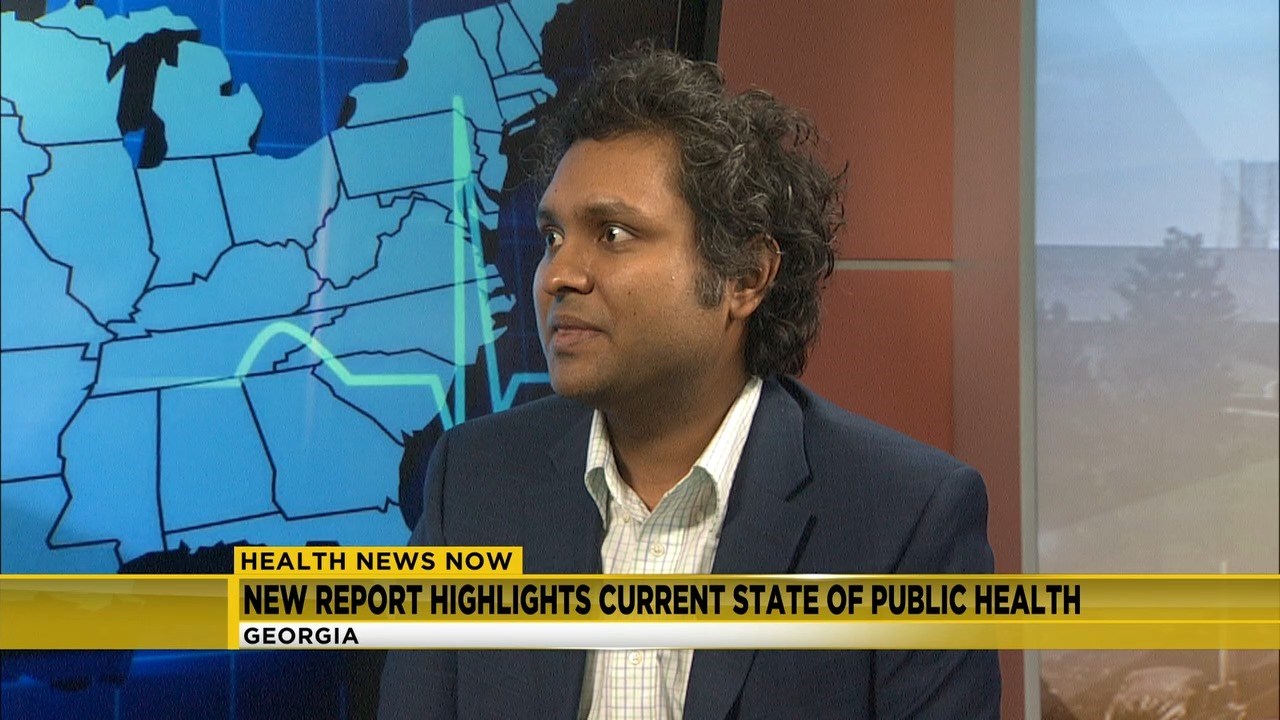
Augusta University’s second annual Healthy Georgia Report has been released, offering a snapshot of health in the Peach State as compared to not only neighboring states, but also the entire country. While Georgia’s population is doing well in some key health factors, researchers also found areas that could benefit from more awareness and public policy action. Biplab Datta, PhD, assistant professor in the Institute of Public and Preventive Health and the Medical College of Georgia’s Department of Population Health Sciences, collaborated with other IPPH faculty and staff to update the report and add new categories this year. The goal of the report is to connect with lawmakers, community leaders and researchers, stimulate conversations about public health needs and promote action, such as greater community engagement, research for informing effective policies and appraisal of required funds. “We need to make lawmakers aware of the public health situation in the state of Georgia,” said Datta. “We hope this report will help identify areas that need policy attention. It can also play an important role in bridging the gap between researchers and policymakers.” Using 2021 data from the Behavioral Risk Factor Surveillance system, the National Survey of Children’s Health, the American Community Survey and the Center for Disease Control and Prevention’s COVID Data Tracker website, the report was compiled on numerous health topics. Some categories studied include high cholesterol, hypertension, obesity, arthritis, asthma, cancer, cardiovascular diseases, alcohol consumption, diabetes and more. It also broke down each category by age, sex, race, income level and other socioeconomic indicators to get a full representation of the data. New to the study this year is an in-depth look at health insurance coverage, COVID-19 vaccinations, breastfeeding, child maltreatment, and unmet healthcare need of children. Georgia ranks 49th in the nation when it comes to health insurance coverage. That was a surprise to Datta. “I didn’t expect the numbers to be that bad, but I think it also indicates the scope of work that we need to undertake to improve insurance coverage in Georgia,” he said. Another surprise was the low rate of flu vaccination in Georgia. “We know there is a difference between whites and Blacks in the U.S. But when we look at and compare Black people in Georgia with Blacks in the rest of the southeastern states, we see the flu vaccination rate was significantly lower among Blacks in Georgia. This is an issue that warrants further research to understand the underlying causes of such disparity,” said Datta. As it was a year ago, hypertension remains a concern. There are several issues involved when talking about hypertension but there are also straightforward ways to improve the condition Datta said. “I think one of the core components of hypertension control is just changing some behavioral stuff. If we just reduced the sodium content in our daily diet, if we do regular physical exercise for a certain amount of time that will significantly improve our hypertension management. Community-level initiatives to make people aware of these things can make a real difference,” said Datta. Residents in Georgia are doing better in several areas such as obesity, cancer rates, asthma prevalence and depressive disorders. Datta said it’s important to recognize these improvements so we can learn from them. “We need to figure out where we are doing well and use that experience in areas where we are not doing so well. It will help us move toward the right direction.” He added it’s important to always be looking for ways to evolve the study, and that includes adding new categories when enough data is available. “We didn’t cover sexually transmitted diseases in this year’s report, which we would like to add when data will become available. We’d also like to add teenage pregnancy, maternal health issues, gun violence and opioid use,” he said. Looking to learn about health in the Peach State? Then let us help. Biplab Datta is available to speak with media regarding this important topic. Simply click on his icon now to arrange an interview today.

Deprivation in childhood linked to impulsive behaviour in adulthood – research
Researchers found a link between childhood deprivation, impulsive behaviour and addictions later in life Behaviours include overeating, taking drugs, smoking cigarettes and gambling A second study found adults living in deprived areas displayed similar impulsive traits Children who have experienced deprivation are more likely to make more impulsive choices than those who don’t and can lead to addictions in later life - research has shown. ‘Trait impulsivity’, the preference for immediate gratification, has been linked to spending more on food, especially unhealthy, highly calorific food. Studies have shown that children who experience poverty and food insecurity tend to have a higher body-mass index as adults than those who do not. Researchers from the School of Psychology at Aston University found a link between deprivation in childhood and impulsive behaviour – leading to addictions later in life. The findings, which are a culmination of six years of research, also found a further link between impulsivity, obesity and the cost of living crisis. Professor Richard Tunney, head of the School of Psychology at Aston University, published a study in Scientific Reports earlier this year where he showed that children who experience deprivation make more impulsive choices than children who don’t. The research team studied 146 children, with an average age of eight, living in some of the most deprived areas of England and compared them with children living in some of the most affluent neighbourhoods. Children were given a choice between taking home a small amount of money (for example, £1) or getting £10 a week, or even more a year later. How long a person is willing to wait for the larger amount of money can be used to calculate a ‘discount rate’ that shows how much the waiting time reduces the value of the money. An impulsive person might prefer £1 now because the value of £10 in six months is ‘discounted’ to less than £1 right now. This means that, for them, the £10, is discounted by £9 over the six-month wait. A less impulsive person might be willing to wait six months for £10, but not wait for a whole year for £15. This means that, for them, the value of the £15 is discounted by £5 over the additional six-month wait. This discount rate is a measure of how impulsive someone is. Commenting on the findings, Professor Tunney said: “The results showed that children living in the most deprived areas had significantly higher discount rates than children living in the least deprived areas, regardless of age or intelligence, indicating that deprivation was the causal factor in the children’s choice. “This preference for immediate outcomes is a stable personality trait that remains constant throughout a person’s life.” However, in the research team’s most recent study published by the Royal Society, they investigated impulsivity in over 1,000 older adults aged between 50 and 90. The study found that older adults living in the most deprived areas showed the same preference for smaller-sooner financial outcomes as the children in the first study. It also found that a person’s job predicted the choices they made. Adults working in technical or routine occupations, such as mechanics or cleaners, chose to receive smaller amounts of money than wait for larger amounts compared with people in professional occupations, such as engineers or scientists. Professor Tunney added: “These findings are concerning because impulsivity doesn’t just predict obesity. These findings tell us a lot about why people living in poorer areas tend to be unhealthier than people living in wealthy areas. “People who experience deprivation as children are more likely to choose to do things that, although they might be pleasurable in the short term, are unhealthy in the long run. This includes overeating, taking drugs, smoking cigarettes and gambling. “We know too, that impulsivity can help to explain why some people go on to become addicts, while other people can avoid some of the more harmful effects of drugs and alcohol. “Deprivation is one of many factors that can lead to impulsive behaviour throughout a person’s lifetime. Genetics also plays a role in impulsivity. Policymakers can’t do anything about a person’s genes but they can influence the nation’s long-term mental and physical health by minimising child poverty. Failing to do so will have long-term implications for the children living through today’s cost of living crisis.” For more information about the School of Psychology at Aston University, please visit our website.