
Experts Matter. Find Yours.
Connect for media, speaking, professional opportunities & more.

Record Water Temperatures Testing Resilient Coral Reefs
Coral reefs are some of the most diverse and beautiful ecosystems on the planet. Roughly 25% of the ocean’s fish and over half a billion people depend on these underwater habitats, according to the National Oceanic and Atmospheric Administration (NOAA). But, like most other ecosystems, coral reefs are being threatened by the impacts of global climate change. This summer, record water temperatures stemming from a strong El Niño weather pattern are causing coral bleaching and death events in reefs throughout the world. Lisa Rodrigues, PhD, professor of environmental science, is an expert in coral reef ecosystems and ocean environments. She has been following the reports of coral bleaching when they began surfacing in July. “Coral bleaching often coincides with El Niño years,” she said. “Since water takes much longer to heat than air, July is very early in the year for water temperature to be so high and that is one of the main causes for concern.” Coral bleaching is a stress reaction emanating from high water temperatures, among other causes. When stressed, corals expel the microscopic algae inside of their tissues. The absence of these algae reveals corals’ white skeletons. “In a healthy coral system there is a symbiotic relationship between the coral host (an animal) and the endosymbiotic algae (a plant),” Dr. Rodrigues said. “Corals prefer to live in a fairly narrow range of temperature, which is typically when the symbiotic relationship can be successful. During bleaching, the symbiotic relationship is broken down and the two partners no longer live together.” If corals’ energy stores are low, or if the relationship is compromised for an extended period, corals can die. “This can have long-lasting and negative impacts on ecosystems, as a healthy structure provides a habitat for fish and other organisms,” she said. “For humans that live near the coast, loss of reefs means lost coastal protection, lost economic revenue from fishing and tourism and a lost piece of their natural history.” Reports of coral bleaching and death have stretched across the Americas, and the NOAA is issuing bleaching warnings in southeast Asia. Water temperatures off the coast of Florida this summer have been measured at over 100 degrees in some areas, and temperatures could continue to rise into September. Despite dismal conditions, especially in the Gulf and Caribbean waters, there is still hope for these reefs. “Death doesn’t always happen following bleaching and we also know that recovery from bleaching can occur,” Dr. Rodrigues said. “We have learned a lot from past bleaching events. Over the longer term, following a bleaching event, corals and coral reefs can recover, but the process is slow and dependent on the stressor(s) that caused the event in the first place.” Dr. Rodrigues notes there is a species of coral in Hawai’i that is able to sustain itself during bleaching events and can even reproduce, proving these underwater marvels won’t go down without a fight. “It’s unknown how many species are able to do this, but there is evidence that corals have a wide array of susceptibility and resilience to bleaching associated with high temperatures.”


Five Tips to Choose Sustainable Fashion
Getty Images Fast Fashion is the most popular trend in retail fashion today. Fast Fashion isn’t a specific style but rather clothing produced quickly and cheaply to respond instantly to consumer demand. Low prices and popular online retailers allow people to purchase clothing more often but at a devastating cost to the environment. According to EarthDay.org, the fashion industry is one of the largest global polluters, creating 4% of all greenhouse gas emissions, 40 million tons of landfill waste and 35% of microplastics in the ocean. According to fashion expert Jay Yoo, Ph.D., associate professor of apparel merchandising in the Robbins College of Health and Human Sciences at Baylor University, consumers are learning more about the environmental impacts of fashion and searching for better options. Fashion expert Jay Yoo, Ph.D., associate professor of apparel merchandising in the Robbins College of Health and Human Sciences at Baylor University Fashion expert Jay Yoo, Ph.D. Yoo’s research shows that purchasing apparel products that help reduce negative impacts on the environment has emerged as a lifestyle. “Fashion-conscious consumers are ready and willing to forgo fast fashion for more sustainable options produced in an ecologically and socially responsible way,” said Yoo. Yoo recommends five ways you can use your purchasing power to support sustainable fashion. Choose natural fibers - organic cotton, linen or hemp. Avoid clothing that requires dry cleaning. Donate to and shop at resale stores. Purchase from retailers that are committed to sustainability. Encourage your friends to join you in supporting sustainable fashion. Although fashion is often understood to center on apparel choices, fashion impacts nearly every aspect of human lives, Yoo said, including health, social responsibility and environmental issues involving consumptive behaviors. His additional research interests include appearance-related behaviors and their implications for individual and social well-being from consumer perspectives, from body-tanning behaviors, body image and quality of life among cancer patients, retail therapy and mental health, and irrational shopping and extreme body modification.



Florida Tech Shark Biologist Stars in National Geographic Program on Shark Attacks
Toby Daly-Engel, the distinguished shark biologist and director of Florida Tech’s Shark Conservation Lab, is a featured expert on “When Sharks Attack…and Why,” an eight-episode program debuting this week as part of National Geographic’s SharkFest 2023. The series debuts July 6 at 9 p.m. Eastern on National Geographic with new episodes airing nightly through July 12. It is also now streaming on Disney+, Hulu and the National Geographic website. The series will air on Nat Geo Wild starting July 26 at 8 p.m. Eastern. As its name suggests, “When Sharks Attack…and Why” investigates shark encounters in America and around the world. “Many attacks are appearing in new and surprising places,” the network notes. Episodes explore incidents in New York, California, Hawaii, Indonesia, Australia and elsewhere. At Florida Tech, Daly-Engel conducts research using a combination of genomics, field ecology and modeling to study shark mating systems and habitat use, and the impacts of climate change on shark populations. On the program, she is our expert guide to anatomical and physiological aspects of sharks, many of which are unique to this species. We first meet Daly-Engel in Episode 1, New York Nightmare. Filmed in her lab, she talks viewers through key parts of a shark’s body using a small dogfish shark. She tells viewers that while a shark’s sense of smell is often touted, these apex predators also have powerful hearing, far better than humans. (In a later episode, she notes a shark’s vision in murky waters is about 10 times stronger than human vision in those conditions.) “I really enjoyed delving into the science behind shark-human interactions,” Daly-Engel said, “and busting the myths that make people afraid of the water.” Daly-Engel is no stranger to SharkFest. Last year she was featured in another SharkFest series, “Shark Attack File,” and she has been on SharkFest and Discovery’s Shark Week programing multiple times, including 2021 when she appeared on three programs across both networks. Looking to know more about shark encounters and attacks? Then let us help with your coverage and questions. Toby Daly-Engel is an assistant professor in the Department of Ocean Engineering and Marine Sciences department at Florida Tech. He's available to speak with media about this topic - simply click on his icon now to arrange an interview today.


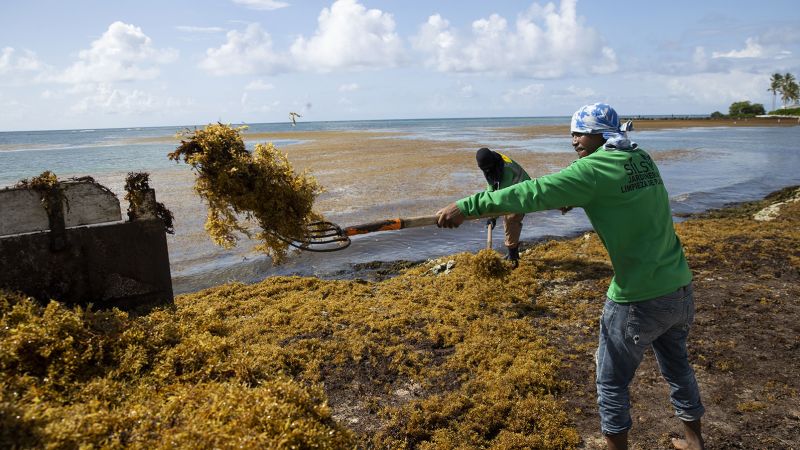
Solving sargassum: Florida Tech researchers exploring ways to make seaweed useful
Sargassum, a type of large brown seaweed, has been in the news lately, with a massive blob that’s visible from space and threatening ocean life. University research funded by the U.S. Environmental Protection Agency could address the issue, while also helping solve another problem in our water. Toufiq Reza, an assistant professor of chemical engineering in the Department of Biomedical and Chemical Engineering and Sciences, along with research students Cadianne Chambers, Swarna Saha, Savannah Grimes and Josh Calhoun, were part of the research paper, “Physical and morphological alteration of Sargassum‐derived ultraporous superactivated hydrochar with remarkable cationic dye adsorption.” The paper was published in the May edition of Springer Nature’s Biomass Conversion and Biorefinery journal. The paper is part of a three-year, nearly $400,000 EPA grant to examine different uses of sargassum. It explains that the team can produce biochar from sargassum that can filter water. Though the team has tested model dye in this paper, they plan to extend their research for other applications including harmful algal bloom remediation and nutrient recovery in the future. While sargassum has been around for centuries (Christopher Columbus is credited with the first written account after he encountered it in 1492), and you’ve probably seen bits of brownish seaweed on the beach – it sometimes smells like rotten eggs – the quantities in the ocean and washing up on shores are a more recent phenomenon. There are multiple reasons behind the increased amount of sargassum, including global warming that intensifies sargassum production and nutrient runoff making its way to ocean water and overfertilizing the seaweed growth. More sargassum is expected to show up on Florida shores in the future, inspiring the team to explore more positive uses of the abundant seaweed. “In the next couple of years, we’ll be seeing much more sargassum coming into our way. It’s not a common practice to utilize sargassum,” Reza said. “We go to a beach and then we see a little bit of sargassum just dried out. That doesn’t bother us that much, but when it started to come as a foot-tall sargassum wave, that’s where it gets more alarming.” Sargassum in the lab is labor intensive. Because it contains salt from the ocean, it is washed with tap water first, then put in a freezer for preservation. Next, it goes through hydrothermal carbonization, a thermochemical process that uses heat and pressure to convert biomass and organic waste (such as the sargassum being used) into solid hydrochar. Lastly, the solid char goes through pyrolysis, where it is heated in a high-temperature, oxygen-free chamber into a biochar that is used to filter water. For Swarna Saha, a first-year doctoral student, her goal as a researcher is to identify an environmental problem and come up with a sustainable solution. Having grown up in Bangladesh around textile factories that generate dyes that pollute the surface water, she was inspired to work on solutions that improved water quality with biochar. “I came in the project when we were experimenting on dye adsorption and saw how a tiny amount of biochar changes the color of the water,” she said. “For me, seeing the results made me the happiest. When we saw that our biochar is effective, that is the biggest achievement for me. That made me happy.” Cadianne Chambers, a second-year doctoral researcher, was motivated by her home country of Jamaica and its massive issues with sargassum. Chambers has heard accounts of fishermen unable to go out to sea because of the sargassum buildup. A popular destination for summer vacation, Jamaica is facing serious environmental and economic problems with waves of sargassum. “A team in Jamaica saw that article and they reached out to us, and they’re trying to cultivate sargassum. They want us to teach them how to make export-quality hydrochar and biochar, which could help solve their environmental problem and generate revenues,” Chambers said. “So, everything is just connecting nicely and I’m hoping to continue our collaboration with them. If it’s something that I can go home and put my PhD research to work and help the community, that would be really satisfying.” Looking to know more about sargassum and the ground-breaking research taking place at Florida Tech? Then let us help with your coverage and questions. Toufiq Reza is an assistant professor in the biomedical and chemical engineering and sciences department at Florida Tech. He's available to speak with media about this topic - simply click on his icon now to arrange an interview today.


Interested in the true pursuit of greatness? Take a look at what Florida Tech has to offer
If you are up for the challenge and want to begin your own relentless pursuit of greatness, let us help. The Florida Tech campus is located in the heart of Florida’s Space Coast. That means proximity to key agencies and operations, such as NASA-Kennedy Space Center, SpaceX, Embraer, L3Harris Corporation, Northrop Grumman and more. Oh, and did we mention there are miles and miles of Atlantic Ocean beaches just moments away? Learn more about all Florida Tech has to offer. Get in touch today! Simply contact: Adam Lowenstein Director of Media Communications (321) 674-8964 adam@fit.edu

#Expert Research: New National Science Foundation and NASA-Funded Research Investigates Martian Soil
Studies have shown crops can grow in simulated Martian regolith. But that faux material, which is similar to soil, lacks the toxic perchlorates that makes plant growth in real Red Planet regolith virtually impossible. New research involving Florida Tech is examining how to make the soil on Mars useful for farming. Andrew Palmer, co-investigator and ocean engineering and marine sciences associate professor, along with Anca Delgado, principal investigator and faculty member at Arizona State University’s Biodesign Swette Center for Environmental Biotechnology, and researchers from the University of Arizona and Arizona State University, are participating in the study, “EFRI ELiS: Bioweathering Dynamics and Ecophysiology of Microbially Catalyzed Soil Genesis of Martian Regolith.” This National Science Foundation and NASA-funded project will use microorganisms from bacteria to remove perchlorates from Martian soil simulants and produce soil organic matter containing organic carbon and inorganic nutrients. Martian regolith contains high concentrations of toxic perchlorate salts that will impede plant cultivation in soil, jeopardizing food security and potentially causing health problems for humans, including cancer. Researchers will look at different bacterial populations and how well they are able to process and break down the perchlorates, as well as what kind of materials they produce when they do. They’ll also look at different temperatures and moisture conditions, as well as in the presence or absence of oxygen. Students in the Palmer Lab will receive the simulants after this process, try to replicate it, and then test how well the perchlorate-free regolith is able to grow plants. A challenge the researchers face is how they remove the toxic salts, as well as if they can remove all of them. Palmer cautioned that the possibility that removing the perchlorates does not necessarily mean the regolith is ready for farming. “You can’t make the cure worse than the disease, so we have to be ending up with regolith on the other side that’s better than when we started,” Palmer said. “We can’t trade perchlorates for some other toxic accumulating compound. Just because we’re removing the perchlorates doesn’t necessarily mean that we’re going to make the regolith better for plants. We might just make it not toxic anymore. How much does it improve is really what we’re trying to figure out.” Even without perchlorates, there are significant challenges to growing crops in Martian soil. While researchers have grown plants in simulated regolith, the regolith is not good for plant growth, as in addition to a lot of salts, it has a high pH and is very fine, which means it can ‘cement’ when wet, suffocating plant roots. Being able to grow in the soil instead of using hydroponics could also provide a more efficient, cost-effective solution. “There is always the option of hydroponic growth of food crops, but with a significant distance to Mars and the lack of readily available water, we need a different kind of plan,” said ASU’s Delgado. “If there is a possibility to grow plants directly in the soil, there are benefits in terms of water utilization and resources to get supplies to Mars.” Some of the microbial solutions the team is proposing could also help with studies of soils on Earth. “The best soils for agriculture on earth, they were taken up decades ago, and so now we’re trying to farm on new land that’s not really meant for agriculture, if you think about it,” Palmer said. “So, as we think about ways to convert it into better soil, I think this research helps teach us how to do that, but it also inspires.” The research will also allow Florida Tech students to get hands-on space agriculture experience. “We’re going to be training the grad students and the undergraduates who are going to be the researchers who take on those new challenges, so I think one of our most important products are going to be the students we train,” Palmer said. “We’ll deliver Mars soil, but we also deliver, I think, a future group of researchers.” If you're a reporter looking to know more about this topic - then let us help with your coverage. Dr. Andrew Palmer is an associate professor of biological sciences at Florida Tech and a go-to expert in the field of Martian farming. Andrew is available to speak with media regarding this and related topics. Simply click on his icon now to arrange an interview today.


Oceans expert Dr Bakker to attend COP26
A number of climate experts from the University of East Anglia will be attending the COP26 climate conference in Glasgow. Their areas of expertise range from the impact of climate change on biodiversity, climate geoengineering and carbon removal, to the impact of climate change on sovereign credit ratings, carbon uptake by the oceans, and gender and climate change. Dr Dorothee Bakker will attend the first week of COP26 as part of the Integrated Carbon Observation System European Infrastructure Consortium (ICOS ERIC). Her areas of research and expertise cover processes affecting the air-sea transfer of natural long-lived greenhouse gases (carbon dioxide, methane, nitrous oxide) and the marine carbon cycle in a changing climate. Dr Bakker chairs the SOCAT global group - SOCAT is a Global Ocean Observing System, with more than 100 contributors. Her brief: The ocean takes up a quarter of anthropogenic CO2 emissions. This uptake varies over time (between years and decades) for reasons that we do not fully understand. It is unclear how ocean CO2 uptake will respond when we move towards net zero. Measurements of (surface) ocean CO2 and their synthesis are therefore key for determining ocean CO2 uptake, now and in the future. However, funding for these measurements and their synthesis is precarious. Dr Bakker is currently investigating carbon cycling in UK shelf seas and the Southern and Arctic Oceans. She is a co-author of this year’s Global Carbon Budget paper (for SOCAT synthesis of ocean CO2 measurements).


UCI scientists study the effects of an oil spill on Orange County's coastline
Joana Tavares and Melissa Brock, a Ph.D student in ecology and evolutionary biology, are spearheading the newly formed Southern California Oil Spill Project at UCI. They are analyzing the composition and health of the phytoplankton and bacterial communities in the ocean and inland waterways, using samples collected before, during, and ultimately after the oil spill situation has played out. Also, the cleanup of the oil spill off the coast of Huntington Beach earlier this month is essentially complete, but responsibility for the spill has yet to be assigned. In the coming months, and possibly years, it will be the legal system that determines liability — and damages. Michael Robinson-Dorn, a clinical professor of law, co-associate dean for experiential education at the law school and director of UCI’s Environmental Law Clinic, joins the UCI Podcast to discuss how this spill compares to past ones, why simply shutting down offshore drilling is more challenging than it may seem and how society’s values will shape the future of oil drilling in California. For more information or to contact the researchers, email Brian Bell at bpbell@uci.edu.

UCI experts can discuss California's Climate Crisis
For the past half century, UC Irvine has been home to some of the world’s leading experts on the environment, energy, oceans and atmosphere in the Golden State. To share their stories, UCI today is launching a web special report, “California’s Climate Crisis.” Through its three main sections – The Problem, Human Impacts and Solutions – the site offers dozens of feature articles, videos, podcast recordings and photographs, with plans for ongoing updates and new stories. The materials outline the UCI researchers’ understanding of the climate issues facing California and the extent to which they are working to counteract the dilemma. The site includes an experts' page. Contact Tom Vasich at 949-285-6455 or tmvasich@uci.edu for more information.

If you thought today’s walk-up and drive-thru clinics to get vaccinated for COVID-19 were a lot of work, imagine how vaccines were safely transported across the Atlantic, without deep freezers or jets? Recently, UMW Professor of History and American Studies Allyson Poska was asked by 'With Good Reason' Radio - and the Centers for Disease Control and Prevention - to lend her expert opinion on the history of vaccines and the challenges the world has had trying to keep the public healthy and inoculated. Over two centuries ago, as the Spanish Empire embarked on the first-ever vaccination campaign against smallpox, "getting shots into arms" had an entirely different meaning. And government authorities back then faced as many challenges with promoting vaccinations as they do today. The First Vaccine Allyson Poska (University of Mary Washington) There’s been a lot of coverage about the challenges of distributing the Covid-19 vaccine. How do we get it to distant areas? How do we use a whole vial before it expires? What about the special refrigerators needed to keep it cold enough? But these problems seem minor compared to the very first vaccine distribution in the early 1800s. Historian Allyson Poska shares the story of 29 orphan boys who crossed the Atlantic Ocean as live incubators for the smallpox vaccine and what lessons we can learn from this early campaign. July 21 - With Good Reason This is a fascinating topic, and if you are a journalist looking to cover this topic, then let us help. Dr. Allyson Poska is available to speak with media regarding this subject - simply click on her icon now to arrange an interview today.
