
Experts Matter. Find Yours.
Connect for media, speaking, professional opportunities & more.

There’s no question about it – our planet has a problem with plastic. Though simple, cheap, convenient and often necessary, the reality is single use and non-reusable plastics like straws, plastic bags, wrapping and most containers are causing problems. There’s no hiding or ignoring the evidence – plastic is everywhere from landfills, to our rivers and streams and even occupying its own land mass in the ocean. Recently Canada proposed a ban on single use plastics to come in to effect in 2021. The country joined the likes of France, Germany, Italy, the U.K. and the European Union who are all implementing similar policies. The United States, however – has not. Here are some facts from the Center for Biological Diversity. Americans use 100 billion plastic bags a year, which require 12 million barrels of oil to manufacture. The average American family takes home almost 1,500 plastic shopping bags a year. According to Waste Management, only 1 percent of plastic bags are returned for recycling. That means that the average family only recycles 15 bags a year; the rest ends up in landfills as litter. Up to 80 percent of ocean plastic pollution enters the ocean from land. 100,000 marine animals are killed by plastic bags annually. One in three leatherback sea turtles have been found with plastic in their stomachs. Plastic bags are used for an average of 12 minutes. It takes 500 (or more) years for a plastic bag to degrade in a landfill. Unfortunately, the bags don't break down completely but instead photo-degrade, becoming microplastics that absorb toxins and continue to pollute the environment There is no doubt plastic is a serious problem in America – but will the country join in? What will it take from an industry point of view? Will costs outweigh the benefit? Is this a matter of regulation and do Americans have the appetite to make this a political issue? There are a lot of questions and that’s where our experts can help. Dr. Beril Toktay is Professor of Operations Management, Brady Family Chairholder and ADVANCE Professor at Georgia Tech’s Scheller College of Business. She’s the founding Faculty Director of the Ray C. Anderson Center for Sustainable Business. She’s an expert in the areas of sustainable operations and supply chain management, with a special focus on the circular economy. Beril is available to speak about this issue with media – simply click on her icon to arrange an interview.


Expert perspective on a trade war with China and how it could impact a Trump presidency
Trade negotiations between the United States and China have continued to deteriorate over the last few weeks. In efforts to pressure the Chinese to make reforms to trade-related issues such as forced technology transfer and intellectual property rights, the United States has raised tariffs on nearly all Chinese exports. While there is a consensus among experts that these trade issues harm U.S. producers and must be dealt with, there is not universal agreement that a trade war is the best way to make it happen. Who will feel the effects? It is apparent that both consumers and producers in the U.S. will feel the effects of the trade war. Producers will not be able to absorb the increased costs from the raising tariffs and will need to pass them along to consumers. Consumers will begin to see the prices increase on a host of retail goods, such as clothing and apparel, toys, and home goods. Partners replaced? In addition, as the Chinese retaliate with increased tariffs on U.S. exports, such as agricultural goods, producers from other countries with lower tariffs are stepping in to take the place of the U.S. exporters. For example, Brazilian soybean producers are more than happy to sell their product to China at a lower cost. Once lost, it may be difficult for U.S. farmers to regain these important Chinese markets. A political price to pay? It appears that the effects of the trade war may hit the Trump administrations base, in agricultural and manufacturing regions, disproportionately. However, the administration may see the trade war as beneficial to Trump’s 2020 reelection campaign, as Trump is being perceived as being tough with the Chinese and holding them accountable to unfair trade practices. That appears to resonate with his base. However, it remains to be seen how long his base will continue to support this approach as both producers and consumers continue to feel the economic pinch of the growing trade war with China. There’s a lot to know about the short and long-term impacts of a trade war with China and that’s where or experts can help. Matt has taught business and marketing courses at Saint Mary’s University of Minnesota since 2008. Prior to Saint Mary’s, he worked in both the banking and the non-profit sectors, most recently with a non-governmental organization (NGO) with operations in more than a dozen countries. Matt is an expert in political and economic development and is available to speak with media. Simply click on his icon to arrange an interview.

Transparency from charities about how funds are used builds trust and increases giving
BLOOMINGTON, Ind. -- Charitable and humanitarian organizations are increasingly tapping into a $30 billion crowdfunding market, not only to raise funds but to build donors' trust by being more transparent, according to research from Indiana University's Kelley School of Business. Certified charities like the American Red Cross regularly use crowdfunding after hurricanes and wildfires. But other, often local, organizations that are quickly created after emergencies can compensate for their lack of government certification by posting frequent updates about how funds are being used. Authors of the paper are Jorge Mejia, assistant professor of operations and decision technologies; Alfonso Pedraza-Martinez, associate professor of operations and decision technologies and Grainger Faculty Fellow; and Gloria Urrea, a visiting scholar of operations and decision technologies. Mejia, the paper's lead author, noted its timeliness in light of several recent fraud cases involving charitable giving, such as the college admissions scandal and questions about the charitable status of politicians' private foundations and religious organizations. "Our paper tackles some of these challenges head on by providing a way to increase the transparency of these organizations online," he said. The paper's findings also have implications for donors, who need to pay attention to how charities are using donations, as shown through regular operational updates and other communication and certification. "Our results indicate that individuals and humanitarian organizations willing to start crowdfunding campaigns benefit from transparency," the researchers said. "As updates have a positive effect on donations, organizations can increase funding by keeping donors informed on a regular basis about the campaign's progress." The process of receiving approval from the Internal Revenue Service as a certified 501(c)(3) tax-exempt organization can take months, long after the immediate needs of a disaster have passed. In the meantime, local organizations accept donations to help with recovery efforts immediately using crowdfunding. "Donations increased both when campaigns provided frequent updates about the work of the charity and when campaigns were certified," the Kelley professors said. "Strikingly, we found that the size of the positive effect derived from operational transparency -- from communications work -- is much greater than the size of the effect of conventional transparency, from being a certified tax-exempt charity. "But not all updates are the same. Operational transparency increases the financial benefits of updates," they added. "Campaign organizers should focus their efforts on posting work-related updates to describe how the campaign is achieving its objective." Researchers collected data from a large online platform for charity crowdfunding and analyzed nearly 108,000 emergency campaigns over a seven-year period. Just over half of the campaigns posted at least one campaign update, and just 9 percent of the campaigns were certified. Each work-related word in updates increased donations on average by $65 per month, while being a certified campaign raised funds on average by $22 a month. The research article, "Operational Transparency on Crowdfunding Platforms: Effect on Donations for Emergency Response," appears online in the journal Production and Operations Management.


Goizueta information systems and operations management professor Benn Konsynski on the 30th birthday of WWW: "... Many of us were on the internet before WWW -- researchers, academic, military, libraries, etc. The operating protocols on top of the basic Internet protocols were useful, but often specialized. The world of commerce and social interchange needed a simple standard to offer creative outlet beyond specific applications and closed systems. "Sir Tim Berners-Lee brought that with common protocols for describing content (HTML), moving/referencing content (HTTP) and browser technologies for viewing and manipulating content. Over the next few years, commerce and social exchange exploded after these protocols took root. By 1995 the internet world opened to business and the general market with expectations and promise."


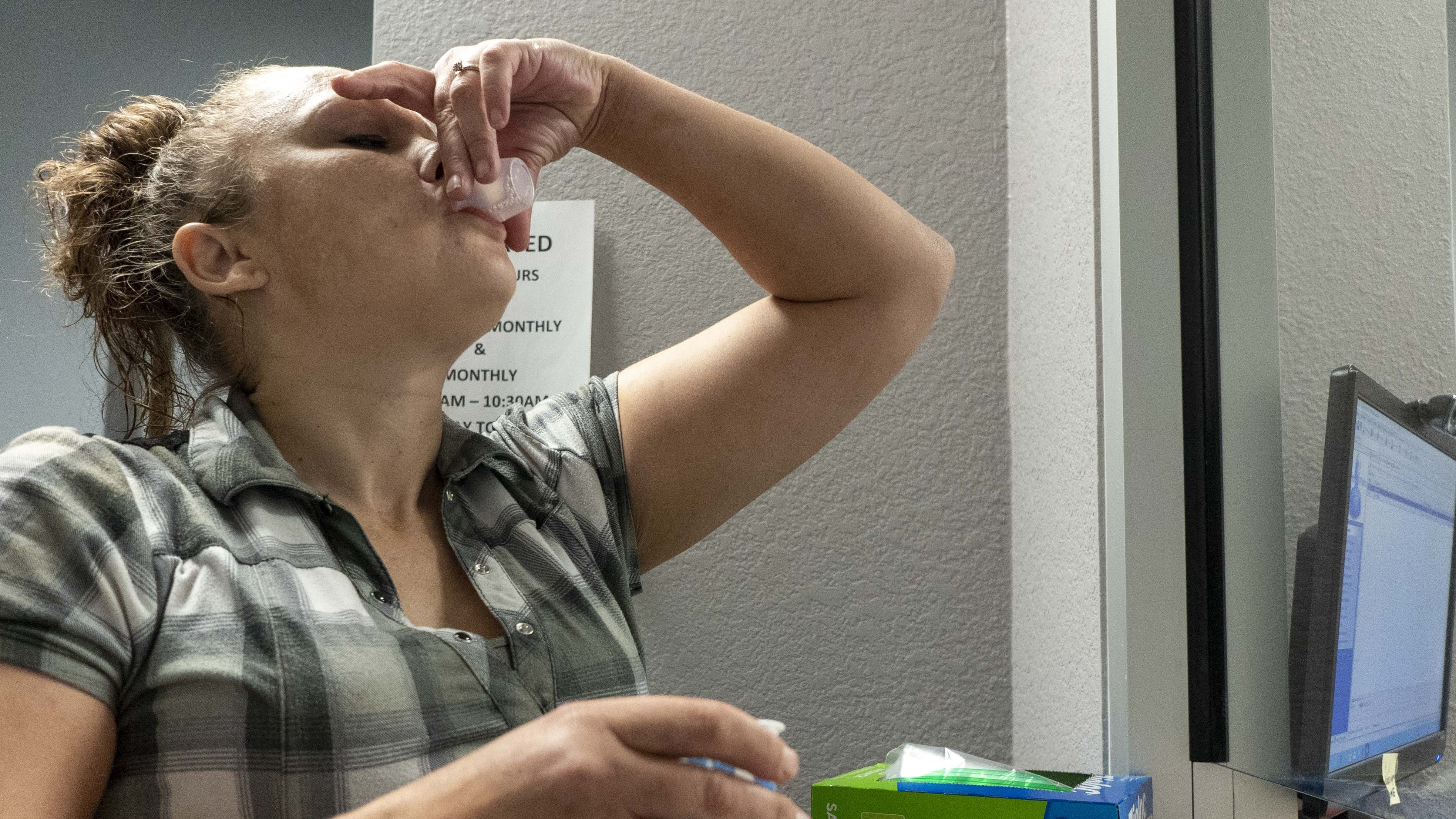
Opioid addiction is gripping America. It’s destroying lives, tearing apart families and devouring resources in policing and healthcare. As medical, mental health and addictions professionals look for solutions, often times accessible and public Opioid Treatment Programs, often known as a Methadone Clinic will open in communities. These clinics bring relief, treatment and support – but they also bring crowds, increased traffic and concern from local residents and the community. These concerns usually find their way to the media, where the attention can quickly turn negative. The solution to avoiding this scrutiny and making sure residents, business owners and community leaders are fully informed about the process, operation and security measures at these clinics are key to their success and integration. Questions such as: How was the site selected? How do you plan to control traffic flow and overcrowding? How will you manage parking and wait times? What are your measures to prevent diversion? Who can I speak to if I have questions or concerns about operations? CARF can speak to best practices, expectations, and requirements for when an opioid treatment program opens. Debbi Witham, Managing Director of Public Policy and is an expert in opioid treatment programs. Debbi is available to speak with media regarding this issue – simply click on her icon to arrange an interview.

The hidden treasure of digital piracy? It can boost bottom line for manufacturers, retailers
HBO's popular television series "Game of Thrones" returns in April, but millions of fans continue to illegally download the program, giving it the dubious distinction of being the most pirated program. Many may wonder why the TV network hasn't taken a more aggressive approach to combating illegal streaming services and downloaders. Perhaps it is because the benefits to the company outweigh the consequences. Research analysis by faculty in Indiana University's Kelley School of Business and two other schools found that a moderate level of piracy can have a positive impact on the bottom line for both the manufacturer and the retailer -- and not at the expense of consumers. "When information goods are sold to consumers via a retailer, in certain situations, a moderate level of piracy seems to have a surprisingly positive impact on the profits of the manufacturer and the retailer while, at the same time, enhancing consumer welfare," wrote Antino Kim, assistant professor of operations and decision technologies at Kelley, and his co-authors. "Such a win-win-win situation is not only good for the supply chain but is also beneficial for the overall economy." While not condoning piracy, Kim and his colleagues were surprised to find that it can actually reduce, or completely eliminate at times, the adverse effect of double marginalization, an economic concept where both manufacturers and retailers in the same supply chain add to the price of a product, passing these markups along to consumers. The professors found that, because piracy can affect the pricing power of both the manufacturer and the retailer, it injects "shadow" competition into an otherwise monopolistic market. "From the manufacturer's point of view, the retailer getting squeezed is a good thing," Kim said. "It can't mark up the product as before, and the issue of double marginalization diminishes. Vice versa, if the manufacturer gets squeezed, the retailer is better off. "What we found is, by both of them being squeezed together -- both at the upstream and the downstream levels -- they are able to get closer to the optimal retail price that a single, vertically integrated entity would charge." In the example of "Game of Thrones," HBO is the upstream "manufacturer" in the supply chain, and cable and satellite TV operators are the downstream "retailers." Kim and his co-authors -- Atanu Lahiri, associate professor of information systems at the University of Texas-Dallas, and Debabrata Dey, professor of information systems at the University of Washington -- presented their findings in the article, "The 'Invisible Hand' of Piracy: An Economic Analysis of the Information-Goods Supply Chain," published in the latest issue of MIS Quarterly. They suggest that businesses, government and consumers rethink the value of anti-piracy enforcement, which can be quite costly, and consider taking a moderate approach. Australia, for instance, due to prohibitive costs, scrapped its three-strikes scheme to track down illegal downloaders and send them warning notices. Though the Australian Parliament passed a new anti-piracy law last year, its effectiveness remains unclear until after it is reviewed in two years. As with other studies, Kim and his colleagues found that when enforcement is low and piracy is rampant, both manufacturers and retailers suffer. But they caution against becoming overzealous in prosecuting illegal downloaders or in lobbying for more enforcement. "Our results do not imply that the legal channel should, all of a sudden, start actively encouraging piracy," they said. "The implication is simply that, situated in a real-world context, our manufacturer and retailer should recognize that a certain level of piracy or its threat might actually be beneficial and should, therefore, exercise some moderation in their anti-piracy efforts. "This could manifest itself in them tolerating piracy to a certain level, perhaps by turning a blind eye to it," they add. "Such a strategy would indeed be consistent with how others have described HBO's attitude toward piracy of its products."

Overhaul of FDA's approval process for medical devices overdue, but balanced approached needed
The Food and Drug Administration has announced plans to overhaul its system for approving a certain category of medical devices, which critics have said fails to protect consumers from risky implants and medical instruments. George Ball, assistant professor of operations and decision technologies and the ArcelorMittal Supply Chain Faculty Fellow, at the Indiana University Kelley School of Business, studies the medical device industry, in particular medical device recalls. There are two primary approval pathways for medical devices. “510(k)” clearances are reserved for products that demonstrate substantial equivalence to a previously approved device. Clinical trials are normally not required and this method is much faster and cheaper than the other pathway, a “Pre-Market Approval (PMA).” PMA new product submissions are reserved for those products that are new or substantially modified from previously approved devices. Clinical trials in humans and laboratory study data are normally required to demonstrate safety and efficacy. In comparison to 510(k) clearances, PMA approval pathways are time-consuming and expensive. “The FDA’s announcement regarding an overhaul of the 510(k) approval process seems to be warranted, as medical device product approvals are currently on two ends of an extreme spectrum,” Ball said. “New PMA products can require years and millions of dollars to successfully obtain approval by the FDA. Conversely, 510(k) clearances are significantly faster and cheaper, as the manufacturer has to simply demonstrate equivalence with similar, already approved products. “As 510(k) products represent the bulk of new product approvals, they also represent the bulk of medical device recalls, unsurprisingly,” Ball said. “In the last decade, 510(k) products were recalled at a ratio of 17-to-1, compared to PMA products.” “However, the method of approval currently practiced for 510(k) products has many benefits for manufacturers as well,” he said. “Demonstrating equivalence with prior approved similar devices makes the development time exponentially faster compared to PMA product approval times. “A middle-ground here seems logical and advisable. For example, the FDA approves products using a two-pronged approach: safety and efficacy. While efficacy may be easily established by demonstrating similarity to prior products, evidence of safety for 510(k) products may require additional verifications and tests. Doing so may help ensure that new 510(k) products, which are often much more technologically advanced than the ones they are compared against for approval purposes, are also safe for patients.” Ball can be reached at 812-856-0625 or gpball@indiana.edu

Kelley School expert explains changing market conditions leading up to GM announcement
General Motors on Nov. 26 announced plans to close five manufacturing sites and consolidate production in North America and eliminate an estimated 14,000 white collar and blue-collar jobs. Rodney Parker, associate professor of operations management at Indiana University’s Kelley School of Business, said the announcement reflects several new realities for GM. “First, it reflects the ongoing shift of consumers preferences from cars to SUVS and pickups. The announcement to discontinue several cars models and focus more on trucks mirrors Ford’s announcement in April 2018 to drop all car models other than the Mustang and Focus to concentrate on trucks. SUVs and pickups are more profitable and they are what consumers want. “Consequently, GM has numerous plants which are under-utilized but still incur substantial fixed costs, resulting in losses. The plant closures are necessary for the whole company to remain profitable and competitive with rivals which are making similar moves. “Second, despite 2017 being a very good year for GM (record operating profit, sold over 10 million vehicles), sales in China can be credited for much of that success. The recent growth in the Chinese vehicle market has benefitted GM greatly and compensates for slower growth in the US domestic market. But the sales in China will necessarily be serviced by plants in China or nearby, rather than plants in the US. Also, the shift in production to more SUVs and pickups in the US plants caters to domestic tastes, not those in China. “Third, the substantial savings accrued from these closures will be necessary for future investments in autonomous vehicles (AVs) and electric vehicles (EVs) and hybrids. In 2016, GM wisely bought Cruise Automation, an AV startup in San Francisco, and has leapfrogged a number of auto rivals in this critical area. However, further development in AVs will require considerable investment by GM in order to keep pace with Google’s Waymo unit, with the possibility of launching their own ride-sharing service in the future. “Predictions for the automobile industry frequently suggest a shift from exclusively selling vehicles to also ‘selling miles,’ where the manufacturers are providing transportation services, through a combination of per usage fee or subscription. The economic argument for the usage of AVs in ride-sharing services is compelling and GM wants a part of this. At least part of the current plant closures are being done with an eye to the future and the big down payment GM needs to make in AVs.” Parker, who also is the Fettig/Whirlpool Faculty Fellow at Kelley, can be reached at 812-855-3329 or rodp@indiana.edu.

Pressure to lower drug prices may lead to recalls, particularly of generics
The pressure being placed on drug companies to reduce prices as a result of President Donald Trump’s recent proposals, likely will intensify with the Democrats’ taking control of the House of Representatives in the mid-term elections. Research by George Ball, assistant professor of operations and decision technologies at the Indiana University Kelley School of Business, highlights why consumers should be concerned beyond the high prices of their prescriptions. Ball is the lead author of a recent paper in the Journal of Operations Management which found that extreme price competition in the generic pharmaceutical market -- designed to make medications more affordable -- may be putting more patients at serious health risk. This was evidenced by a higher number of product recalls caused by manufacturing-related problems. "Extreme price competition in the generic pharmaceutical market has some unexpected risks that regulators and lawmakers may not have foreseen when pushing for cheaper drugs," Ball said. “There's a downside to cheaper drugs: You can't guarantee that they're going to be of the exact same quality," Ball said. "This research demonstrates that regulators and insurers may want to temper their intense public pressure placed upon pharmaceutical companies to bring prices down. Such pressure may come at a cost: poorly manufactured drugs." Ball can point to examples of recent generic drug recalls that occurred because of manufacturing problems. He is available at 812-856-0625 and gpball@indiana.edu. Copies of the paper are available.

The next threat to election meddling? Brain Hacking
Almost 15 percent of Americans have reported changing their opinion on political or social issues because of a social media post, according to a recent Pew Research Center survey. “What if, immediately before spreading polarizing social media posts, our adversaries flashed subliminal images known to induce a type of anxiety called state anxiety? Evidence suggests people would perceive those posts in a more emotional way. Those images could, in turn, influence their voting behavior,” said Dr. Jay Heslen, an expert in intelligence and cybersecurity policy and assistant professor of political science with a joint appointment in the Katherine Reese Pamplin College of Arts, Humanities, and Social Sciences and the School of Computer and Cyber Sciences at Augusta University. “Successfully manipulating the cognition of a few thousand people in order to influence their perception of events could be enough to change the result of an election.” Heslen’s current research project focuses on whether exposure to certain visuals or sounds, including subliminal prompts, can induce a negative emotional arousal on people. He’s interested in learning whether that emotional state, called state anxiety, can then influence behavior in a specific, predefined way – a concept he calls neurocognitive hacking. Although research using subliminal prompts is not new and has had mixed results, Heslen’s approach is novel. He uses a specific kind of visuals previously shown to trigger people’s unconscious discriminatory behaviors toward outsiders. “Neurocognitive hacking could potentially be used as a weapon in cyberwarfare,” said Heslen, who worked as an intelligence officer with the Defense Intelligence Agency and the United States Air Force for more than 20 years, specializing in combatting terrorism, counterintelligence and strategic cyber intelligence. “We need to study these capabilities not only for our own understanding but to create sound policies and countermeasures to defend ourselves against others who may use them on us.” With 68 percent of Americans on Facebook and 73 percent on YouTube, according to another Pew Research Center survey, neurocognitive hacking could be a national security problem, Heslen said. “As we advance our understanding of the brain and its processes, including how to manipulate it, we will need to provide neurocognitive cybersecurity to people who use information and communication technologies,” Heslen said. “This will be especially true as we spend more time in virtual worlds.” Heslen is available to discuss: · How neurocognitive hacking can influence people’s behavior · Why neurocognitive hacking is a powerful weapon of cyberwar · What kinds of policies should the government create to protect itself and its citizens from neurocognitive hacking Heslen is a Lieutenant Colonel in the United States Air Force Reserve and has served in military operations on four continents to include humanitarian relief operations in Mozambique and South Africa as well as an operational tour in Afghanistan. In his capacity as a reservist, he is currently assigned to the National Intelligence University pursuing an advanced degree in strategic intelligence. Contact us to schedule an interview with Dr. Heslen or learn more about his expertise.

