
Experts Matter. Find Yours.
Connect for media, speaking, professional opportunities & more.
/cloudfront-us-east-1.images.arcpublishing.com/gray/EQ34NHJNIVCAVDO6SOO4FDJHRE.jpg)
As America continues down the long road of adapting, adjusting, and advancing safety efforts in order to overtake COVID 19 – vaccinations have now been approved for children five and older. It’s welcome news for health care experts and epidemiologists – but there’s no doubt this most recent development has parents concerned about the safety and potential consequences children could face if they roll up their sleeves to get immunized. Since this next step was announced, it’s gotten the attention of media and parents from across the country. Augusta University experts have been front and center to help with the messaging. The vaccine rollout for kids ages 5 to 11 starts now. Right now, local hospitals and pediatric offices are working to get doses to the river region. For the past nine months, we’ve seen different rollouts for different age groups come through Augusta University Health’s mass vaccination site. AU Health says it’s still up in the air right now whether this will be the main site you’ll bring your kids to get vaccinated. But what we do know is that 1,200 doses are on the way. “Every single individual has been paramount in this response,” said Dr. Joshua Wyche, AU vaccine coordinator. AU Health officials say they aren’t even close to accomplishing their mission to get everyone vaccinated. “We’re very fortunate to have caregivers that care so much about their community that want to make this impact and continue to push through during this pandemic,” Wyche said. November 03 - WRDW/WAGT Augusta An update from the CDC: kids can start rolling up their sleeves to get their COVID-19 vaccine. This means nearly 30 million American children ages five to 11 are now eligible for the vaccine. That's a little under 1 million in Georgia and 450,000 in South Carolina. But some parents still have concerns about the vaccine's safety. “For the vast majority of people and for parents as they’re looking for how they can protect they’re children best from COVID-19, having access to the vaccine now gives them another tool to protect their child,” says Augusta University Strategic Planning & Pharmacy VP Dr. Joshua Wyche. November 03 – Fox News Child vaccinations are an important topic – and it is essential that accurate details and information are shared with media and parents across the country, and that’s where Augusta’s experts can help. Dr. Joshua Wyche is accomplished pharmacist with an extensive background in business management. He is an expert in strategic planning and pharmacy services. Dr. Wyche is available to speak with media regarding this important topic – simply click on his icon now to arrange an interview today.


Emory Experts - Post-Financial Crisis: How Well do Mutual Fund Stocks Fare?
Following the global financial crisis in 2008, the assets of passively managed mutual funds have ballooned, while the market share of actively managed funds has fallen dramatically. Addressing this topic, a new research has been coauthored by Jeffrey “Jeff” Busse, professor of finance, and Goizueta alumni Kiseo Chung 17PhD, assistant professor of finance, Texas Tech University and Badrinath Kottimukkalur 17PhD, assistant professor of finance, George Washington University. In their paper, the researchers explain the shift in assets from actively managed funds to passive funds, “Impediments to Active Stock Selection and the Growth in Passive Fund Management. In 1999, Busse and his coauthors explain, the net assets of passive funds were “less than an eighth the assets of active funds.” But by the end of 2019, “the market share of passive equity funds increased to more than 50 percent,” Busse, Chung, and Kottimukkalur note. Passive funds track indices such as the S&P 500, Dow Jones Industrial Average, NASDAQ Composite, and Wilshire 5000—all indices that have been difficult to beat over the last decade. According to the Wall Street Journal, from 2008 to 2018, more than 80 percent of actively managed funds in the U.S. underperformed the S&P Composite 1500. This is in large part, the trio notes in their paper, because the so-called “FAANG” stocks—Facebook, Apple, Amazon, Netflix, and Google—comprise such a large part of these indices. In fact, the top 10 stocks in the S&P 500 currently make up around 30 percent of its market cap. “The market caps of these companies are huge, and they’ve done exceptionally well since the financial crisis,” Busse explains. Hence, active fund managers and their teams of analysts have found it much more challenging to discover undervalued and overlooked stocks with positive alphas ─ the stocks that outperform an index. “As such, a general move toward passively managed funds is not so surprising,” the paper reveals. Finding Diamonds and Avoiding Duds Making it even more difficult to find diamonds in the rough is a lack of volatility in the stock market. Except for some isolated periods, including the month or so around the start of the pandemic in March 2020, the market hasn’t experienced much volatility since 2008. Without wide swings in prices, fund managers have less opportunity to buy low and sell high. Over the same time period, aggregate stock liquidity has also been high, which means less chance for fund managers to pick up winners at bargain prices. “When there’s money in the market—when there’s liquidity—it means there aren’t a lot of disagreements on prices,” explains Busse. “Liquidity is inversely related to mispricing,” the researchers explain in their paper. This combination of circumstances—the rise of the FAANG stocks, the lack of market volatility, and higher liquidity—is making it much more difficult for actively managed funds to find stocks that will help their funds beat the indices, and therefore, outperform the passive funds. As a result, justifying their management fees gets more complicated. According to Thomson Reuters Lipper, the average expense ratio (management fees divided by total investment in a fund) for actively managed funds is 1.4 percent compared to 0.6 percent for the average passive fund—nearly three times as much. While active fund managers have realized that these higher costs are no longer paying off and have moved to reduce them, actively managed funds continue to lose market share. Market Share Gain of Passively Managed Funds While the authors weren’t surprised by the growth of passively managed funds, they were surprised by how much they grew. From 1999 to 2019, the authors note, the number of actively managed funds grew by 11 percent, while the number of passively managed funds increased by 244 percent. “There haven’t been any papers that try to explain why passive funds have gained so much market share,” says Busse. He and his coauthors believe their research illustrates that it’s in large part because the market, post-financial crisis, is challenging for stock pickers. “As such, it has been difficult for actively-managed funds to recoup the costs associated with active management, and compared to earlier periods, passively managed funds are better positioned to gain market share,” they explain. “As the payoffs to active management decrease, it becomes more difficult to justify the costs of active management, and, thus, we expect funds to decrease these costs given their negative performance implications.” Busse doesn’t believe the current fund management environment will continue indefinitely. When the pandemic knocked the S&P 500 down 30 percent in March 2020, managers did gain opportunities to find positive alpha stocks—which they bought. “It’s just, on average, over the last 10 years, there haven’t been enough of those opportunities,” explains Busse. “It’s a matter of hanging in there and, in some sense, keeping your investors from fleeing to passive funds until the environment is a little bit better.” Jeffrey Busse is the Goizueta Foundation Term Professor of Finance where his research focuses on investments, with an emphasis on mutual funds. Jeff is available to speak with the media regarding this important topic – simply click on his icon now to arrange an interview today.



CAA Insurance Company is proud to announce the expansion of Canada’s first and only pay-as-you-go auto insurance payment program, CAA MyPace™, in Ontario. The program allows motorists to monitor how much they are driving and to pay for auto insurance based on that mileage. After three years where thousands of Ontario drivers have benefitted from CAA MyPace, CAA Insurance is now providing greater savings by expanding access to those who drive less than 12-thousand kilometres annually. Previously it was designed for those who drive less than 9-thousand kilometres. “Since the launch of the program back in 2018, CAA MyPace has been generating a great deal of interest in the market, and consumers are asking for it by name,” said Matthew Turack, president, CAA Insurance Company. “As many Ontarians continue to drive less than they did two years ago, we are excited to make this program available to even more Ontario drivers.” The uniqueness of CAA MyPace in the Ontario auto insurance market has resulted in considerable interest by drivers. The number of new CAA MyPace policies during the pandemic period of January - September 2021, increased by 418 per cent compared to the same pre-pandemic period of January - September 2019. The growth directly results from customers who made the switch to CAA MyPace and are seeing significant savings. On average, CAA’s pay-as-you-go policyholders save 50 per cent on their auto insurance costs compared to a traditional policy. An August 2021 survey of over 2,100 Ontarians, conducted by CAA Insurance, indicated that 64 per cent of respondents would consider a pay-as-you-go product now or at their time of renewal. “Expanding our lifestyle products and programs gives CAA Insurance the ability to be responsive to the needs of our customers and to ensure that we are there for them in every stage of life,” says Turack. New customers can enrol in the expanded CAA MyPace program starting November 15, 2021. Existing CAA MyPace customers will be automatically transitioned into the expanded program, with no additional costs at renewal, effective January 15, 2022.



ChristianaCare Named a “Most Wired” Health Care Technology Leader for 6th Consecutive Year
ChristianaCare Recognized as one of the Nation’s Best in Both Ambulatory and Hospital Care (WILMINGTON, Del. – Oct. 29, 2021) For the sixth consecutive year, ChristianaCare has earned the “Most Wired” designation from the College of Healthcare Information Management Executives (CHIME), which assesses how effectively health care organizations apply core and advanced technologies to improve health and care in their communities. ChristianaCare was recognized with a Performance Excellence Award for Most Wired’s acute and ambulatory categories. That level is reserved only for organizations that are considered leaders in health care technology who “actively push the industry forward.” The recognition affirms that not only has ChristianaCare implemented advanced technologies, but it leverages those technologies in innovative ways. And it also has encouraged deep adoption of these technologies across the entire health system. “Throughout the COVID-19 pandemic, patients and providers have experienced the power of virtual care and the ability for data and technology to improve the health care experience,” said ChristianaCare President and CEO Janice E. Nevin, M.D., MPH. “At ChristianaCare, we believe now is the moment to transform our health care system to a new model of care that doesn’t stop between appointments—it’s continuous, data-driven and technology-enabled. We’re proud to be recognized as a leader in health care innovation, as we work to achieve better health at lower costs.” “We are driving digital into the core of our existing operations and simultaneously creating new digital product offerings,” said Randy Gaboriault, MS, MBA, chief digital and information officer at ChristianaCare. “The concept of the visit as the primary point of interaction between patient and doctor is obsolete. Our unique care foundation is continuous, digital and in the home, driving care with data and producing engagement actions between the visits. Our goal is for the care team, supported by artificial intelligence within the workflow, to determine the next best action for each patient.” The recognition is the latest accolade that highlights ChristianaCare’s success in creating exceptional experiences for its patients and consumers through personalized, proactive communication, which enables people to use the channels that they prefer in order to easily access care. This success was recently illustrated through ChristianaCare’s integration of clinical data with its new customer relationship management (CRM) system, which enabled ChristianaCare to scale and automate outreach to patients due for important preventive health checks. Through this effort and the new capabilities, ChristianaCare initiated patient and consumer outreach to address two common gaps in care – annual wellness checkups and breast cancer screenings. Continuous and automatic, the outreach within weeks resolved 11% of the gaps in annual wellness checkups, and 8% of the gaps in breast cancer screenings. “Success here stems from our commitment to continuously look for opportunities to innovate, from which we can more quickly and effectively partner with each individual on their path toward optimal health, even as we explore new ways to push the boundaries of how technology can further improve the health of our community,” said Lynne McCone, vice president of IT Application Services at ChristianaCare. The 2021 Digital Health Most Wired program assessed the adoption, integration and impact of technologies in health care organizations at all stages of development, from early development to industry-leading. Each participating organization received a customized benchmarking report, an overall score and scores for individual levels in eight segments: infrastructure; security; business/disaster recovery; administrative/supply chain; analytics/data management; interoperability/population health; patient engagement; and clinical quality/safety. Participants can use the report and scores to identify strengths and opportunities for improvement. Participants also received certification based on their overall performance. “Digital transformation in healthcare has accelerated to an unprecedented level since 2020, and the next few years will bring a wave of innovation that empowers healthcare consumers and will astound the industry,” said CHIME President and CEO Russell P. Branzell. “The Digital Health Most Wired program recognizes the outstanding digital leaders who have paved the way for this imminent revolution in healthcare. Their trailblazing commitment to rapid transformation has set an example for the entire industry in how to pursue a leadership vision with determination, brilliant planning and courage to overcome all challenges.” About ChristianaCare Headquartered in Wilmington, Delaware, ChristianaCare is one of the country’s most dynamic health care organizations, centered on improving health outcomes, making high-quality care more accessible and lowering health care costs. ChristianaCare includes an extensive network of primary care and outpatient services, home health care, urgent care centers, three hospitals (1,299 beds), a freestanding emergency department, a Level I trauma center and a Level III neonatal intensive care unit, a comprehensive stroke center and regional centers of excellence in heart and vascular care, cancer care and women’s health. It also includes the pioneering Gene Editing Institute. ChristianaCare is nationally recognized as a great place to work, rated by Forbes as the 5th best health system to work for in the United States and by IDG Computerworld as one of the nation’s Best Places to Work in IT. ChristianaCare is rated by HealthGrades as one of America’s 50 Best Hospitals and continually ranked among the nation’s best by Newsweek and other national quality ratings. ChristianaCare is a nonprofit teaching health system with more than 260 residents and fellows. With its groundbreaking Center for Virtual Health and a focus on population health and value-based care, ChristianaCare is shaping the future of health care.



MEDIA RELEASE: Ten things Ontarians need to know prior to booking travel abroad
CAA South Central Ontario (CAA SCO) has compiled a list of ten things that Ontarians should be aware of if they are considering travelling abroad. “Now that the Canadian government is no longer advising against non-essential travel due to COVID-19, those who are considering booking a trip should make sure they understand the scope of what travel looks like at the moment,” said Kaitlynn Furse, director, corporate communications, CAA Club Group. “The checklist for planning a trip has changed and we want to help people navigate this new environment.” Through consultation with its top travel agents, CAA SCO has identified ten key considerations that potential travellers may not be aware of. Anyone who is considering travel in the current environment should make sure they have looked into the following and remember that travel requirements and regulations are continually changing. 1. Confirm the COVID-19 situation at destination prior to booking. Understand the risk level associated with travel to a particular destination by checking the Government of Canada Travel Advice and Advisories website. While the Global Affairs Canada Level 3 Travel Advisory to avoid all non-essential travel has been lifted, individual travel advisories do remain on a country-by-country basis. It is important that Canadians understand the ongoing uncertainty associated with international travel, whether that be related to the continued community transmission of COVID-19, or state of health care systems in destinations hit hard by the pandemic. 2. Understand the type, timing, cost and accessibility of required COVID testing. Every country has different requirements when it comes to the COVID tests that are needed prior to travel, and every country has different testing capacities once you are there. There are also requirements in order to return to Canada. Make sure you understand the difference between molecular PCR and rapid antigen tests, in what time period tests must be taken, the associated costs and locations where these tests are available. 3. Confirm change and cancellation flexibility with your travel service provider. Many airlines and hotels have been providing more flexibility when it comes to refunds and changes to bookings. Make sure you understand any key dates related to cancellation and changes and whether you are entitled to a refund or a future travel voucher or credit at the time of booking. 4. Buy travel insurance and understand what is covered. Make sure you have $5 million in coverage for emergency medical situations and that illness related to COVID-19 is included. Understand your entitlements for things like denied boarding in the event of a positive test and coverage related to isolation expenses. 5. Prepare required travel documentation and the format it must be presented in, for both Canada and your destination. Canadians returning home should have all required documentation loaded onto the ArriveCAN App or website. Each destination has varying requirements, so make sure you fully understand what information you need to have ready and in what format. Make sure you also take into consideration connections and any requirements in the connecting destination due to lay over or delays. 6. Take note of local public health rules prior to departure. Many destinations have measures in place such as curfews and quarantine requirements. You should also understand what the regulations are if you happen to test positive for COVID-19 in the country you are visiting. 7. Be aware of changes between booking and departure. Make sure you reconfirm all the details that were researched prior to booking, to ensure they are still accurate prior to departure. What was true when a trip was booked may not be the case by the time you are ready to travel. 8. Double check all research with the appropriate embassy or consulate. Travel at this time is complex and many factors can change quickly, so ensuring you have the most up to date and accurate information is essential. 9. Plan for extra time. From disembarkment and customs to retrieving luggage and exiting the airport, most things on the travel journey are taking longer than during pre-COVID travel times. Also note the check-in and baggage drop off deadline for your flight as it may require you to arrive earlier than anticipated. 10. Stay connected. Fully unplugging while travelling is likely a thing of the past. It is important to have access to trusted, up-to-date information while travelling so you can monitor changing conditions and requirements and adapt accordingly. Bookmark the Global Affairs Canada website prior to departure and check it regularly while abroad. It is also a good idea to sign up for Registration of Canadians Abroad and stay in touch with a family or friend that has knowledge of your travel plans.


Supply Chain Disruption Continues Due to the Pandemic
During the pandemic, the global supply chain began experiencing major disruptions. Kathleen Iacocca, PhD, an associate professor of management and operations in the Villanova School of Business, says that this issue is currently more severe than at the beginning of COVID's spread. Per the professor, the supply chain relies on effective forecasting, inventory control and logistics of supply and demand. At the start of the pandemic, the supply and demand scale became off-balance due to panic purchasing. Today, one reason it's much worse is that the supply went down. "You can try and push supply back up, which is what President Biden is doing with having ports operating 24/7. [But] Costco or Target can make as many phone calls as they want to Hasbro asking for Barbies, and if they don't have them, they can't just wave a wand and get them," says Dr. Iacocca. One option, if there's an imbalance, is to push demand down. "As a retailer, you can raise prices. That will help bring the supply and demand into a balance until the logistics part can catch up," says Dr. Iacocca. "But that can lead to dangerous issues. The people that can afford things are going to continue buying product, and it will exaggerate the differences in socioeconomic status." Dr. Iacocca predicts, with the upcoming holiday season, supply will simply not be able to meet demand. "In a normal world, retailers can forecast and build up inventory. In the future, demand will continue to go up while the supply doesn't get any larger and will just increase the gap between the two." In the meantime, small businesses can expect challenges. "If there's a short supply of lumber, Home Depot can afford it more than Mom and Pop's Lumberyard. Raising prices are a risk for those that can't necessarily afford things, but also the small businesses," says Dr. Iacocca. Ultimately, Dr. Iacocca predicts that supply could catch up with demand by March (at the earliest), depending on two things: "First, that the labor force doesn't remain as is. If you're playing the game of catchup, you’re working overtime. Second, you’re counting on factories not shutting down again because of COVID. March is the assumption that you have the means—and you just need the time and a period where demand does not continue to go up."



Could Vitamin-A bring back your sense of smell after Covid?
Researchers at the University of East Anglia and James Paget University Hospital are launching a new project to see whether Vitamin A could help people regain their sense of smell after viral infections including Covid-19. Smell loss is a common symptom of Covid-19, but even before Covid, many viruses had been causing smell loss and distortion and while most people naturally regain their sense of smell within a couple of weeks, many have been left with on-going smell disorders. Previous research from Germany has shown the potential benefit of Vitamin-A, and the UEA team will explore how this treatment works to help repair tissues in the nose damaged by viruses. They hope that the study, which has been funded by the National Institute for Health Research (NIHR), could one-day help improve the lives of millions around the world who suffer from smell loss, by returning their fifth sense. Smell loss expert Prof Carl Philpott from UEA’s Norwich Medical School and James Paget University Hospitals NHS Trust, said: “The huge rise in smell loss caused by Covid-19 has created an unprecedented worldwide demand for treatment. “Even before the Covid-19 pandemic hit, smell loss was thought to affect an estimated five per cent of people, with viruses accounting for 1 in 10 of those. “And around one in ten people who experience smell loss as a result of Covid-19 report that their sense of smell has not returned to normal four weeks after falling ill. “It’s a big problem, and our previous research has shown the impact of smell loss – including depression, anxiety and isolation, as well as risk of danger from hazards such as gas and spoiled food, and changes in weight due to reduced appetite. “A key problem for patients and their clinicians is the lack of proven effective treatments. “A recent study from Germany showed that people treated with vitamin A nasal drops improved twice as much as those in the untreated group. “We want to find out whether there is an increase in the size and activity of damaged smell pathways in patients’ brains when they are treated with vitamin A nasal drops. “This would show recovery of the damage caused by common viral infections, including Covid-19, in the nose.” The research team will work with patients who have lost their sense of smell due to a viral infection. They will either receive a 12-week course of nasal vitamin A drops or inactive equivalent drops, and have their brains scanned before and after the treatment. The scans will be compared to those of a control group who have not been treated with vitamin A drops. Prof Philpott said: “The patients will be smelling distinctive odours - roses and rotten eggs - while special MRI brain scans are taken. “We will look for changes in the size of the olfactory bulb - an area above the nose where the smell nerves join together and connect to the brain. “We will also look at activity in areas of the brain linked to recognising smells,” he added. Duncan Boak, Founder and Chair of Fifth Sense, said: “At Fifth Sense we have engaged with thousands of people who have experienced changes in their ability to smell or taste as a result of the Covid 19 virus. They join an already large community of people with a smell disorder that pre-dates the pandemic. “The question we are most often asked is about available treatments to support recovery. Not being able to smell is not only physically distressing but can affect the enjoyment of social occasions and present hazards and risks that might never have been previously considered such as not being able to detect gas leaks or spoiled food. “Research into potentially successful interventions is vital to help people feeling the impact of smell disorders that affects the quality and enjoyment of their life.” To take part in this trial, patients need to be referred to The Smell and Taste Clinic at the James Paget University Hospital by their GP. Recruitment is expected to begin in December 2021. To find out more visit https://rhinology-group.uea.ac.uk/apollo-trial or contact apollo.trial@uea.ac.uk. The NIHR is the largest funder of research in the country, and is the research partner of the NHS and social care. To find out more about other NIHR research happening near you, visit www.bepartofresearch.uk.


Japan House: Fifty Years Ago Today
Joshua W. Walker, Ph.D., President and CEO, Japan Society This September we're celebrating the 50th anniversary of Japan House, Japan Society's landmarked headquarters building. Let's jump in our time machine and go back to 1971, when Japan Society was only 64 years old. At that time, U.S.-Japan relations were deeply embroiled in trade frictions while the ending of the U.S. embargo of China had just begun to impact East Asia. 1971 snapshots In the United States: Richard M. Nixon is President; Apollo 14 lands on the moon; massive protests are held throughout America against the Vietnam War; Walt Disney World opens in Orlando, Florida; Joe Frazier defeats Muhammad Ali in 15 rounds at Madison Square Garden; the first Starbucks opens in Pike Place Market, Seattle. In Japan: Eisaku Sato is Prime Minister; the U.S. and Japan sign an accord to return Okinawa to Japan; NHK TV implements colorization of all programs; Kamen Rider TV series begins broadcasting; the 48th reigning Sumo champion Yokozuna Taihō announces his retirement; McDonald's opens its first store in Ginza, Tokyo; Nissin creates the first "cup noodle." Japan House Meanwhile in New York City, Japan Society had occupied eight different locations since its founding in 1907, and by the mid-1960s, a dedicated building had become necessary to house the Society's rapidly expanding initiatives. Japan Society President John D. Rockefeller 3rd made a very generous pledge by donating the land for the building site and Japanese modernist architect Junzo Yoshimura was confirmed to design the building. On September 16, 1969, John D. Rockefeller 3rd and Japanese Foreign Minister Kiichi Aichi broke ground at a formal ceremony. Construction proceeded on schedule and staff moved in during the spring of 1971, with Executive Director Douglas Overton noting, "Each day we have found some new and delightful feature which has come off the drawing board as an unexpectedly brilliant success. Japan House will be a national important building worthy of its high purposes." Opening Week—five star-studded days of celebratory events—began on September 13, 1971 with Their Imperial Highnesses Prince and Princess Hitachi at the ceremonies. The Prince brought Japan's best wishes to the Society "for a new chapter, both rich in content and wide in scope." The Gallery opened its first exhibition, Rimpa: Masterworks of the Japanese Decorative School and the Tokyo String Quartet performed in the new auditorium. Junzo Yoshimura wrote about Japan House, "People the world over used to build their houses with local and traditional materials. Today, however, contemporary buildings all over the world use the same basic materials—concrete, steel and glass—yet different characters and nationalities can still be perceived among them. In designing Japan House I have tried to express in contemporary architecture the spirit of Japan." With the formal opening of the Society's headquarters a new era had begun. Their Imperial Highnesses Prince and Princess Hitachi and Japan Society chairman John D. Rockefeller 3rd view the first Japan Society Gallery exhibition Rimpa: Masterworks of the Japanese Decorative School. Photo © Thomas Haar. The next 50 years Fifty years later, we are at another inflection point. The novel coronavirus pandemic has taught us just how interconnected we are as a global community while placing new importance on our homes and transforming the nature of work. This unprecedented global crisis has also illuminated the strengths and weaknesses of our organization, providing new opportunities for envisioning the future. Just as the opening of Japan House shaped the Society's last 50 years, today we are reimagining how we use our space, from the physical to the digital, forging broader connections or kizuna for U.S.-Japan and for the world. We embrace our mission for the years to come, reaching out far beyond our building, to our city, country, and world as we seek to connect American and Japanese people, cultures, and societies through a global lens. Like a hike up Mt. Fuji, Japan Society’s nearly 115-year-long journey itself defines us far more than our current destination. Beginning in 1907, the first iteration of Japan Society focused on business relations between the U.S. and Japan. For its 1952 post-Occupation reconstitution under the leadership of John D. Rockefeller 3rd, the Society dedicated itself to arts, culture, and education, with an emphasis on supporting Japanese students in New York as well as spreading the word about Japan through significant cultural milestones such as partnerships with The Metropolitan Museum of Art and Lincoln Center, with traveling exhibitions and outreach on both sides of the Pacific. With the opening of Japan House in 1971, politics was reintroduced into the mix, the business and policy communities energized, and Japanese popular culture landed large—nearly 50,000 people came to the Grand Sumo Tournament at Madison Square Garden co-sponsored by Japan Society and the Asia Society in 1985! Today at Japan House we present Japan and U.S.-Japan as a way to engage with history and tradition, on the one hand, and innovation and the future on the other. As in 1971, the time to act is now and our opportunities are as great as the challenges of 2021. It's up to us to work together on new, critical connections to take us through the next 50 years. I'll be there with you. Joshua Walker (@drjwalk) is president and CEO of Japan Society. Follow Japan Society on Twitter, Instagram, Facebook, and LinkedIn. The views expressed in this article are the writer's own.


ChristianaCare recognized by American Medical Association with 2021 Joy in Medicine distinction
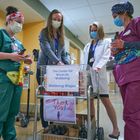
ChristianaCare one of only 44 nationwide to receive the distinction; one of only five to receive the highest level – Gold Recognition (WILMINGTON, Del. – Oct. 7, 2021) ChristianaCare has been named a recipient of the American Medical Association’s Joy in MedicineTM Health System Recognition Program. The distinction recognizes health systems that demonstrate a commitment to preserving the wellbeing of health care team members by engaging in proven efforts to combat work-related stress and burnout. The American Medical Association awarded ChristianaCare a “Gold Recognition” – the highest level within the program. Only 44 health systems nationwide received the Joy in Medicine distinction, with only four other health systems along with ChristianaCare achieving the Gold Recognition. “When caregivers feel supported and fulfilled in their work, the quality of both their experience and their patient’s experience improves,” said Heather Farley, M.D., MHCDS, chief wellness officer and head of ChristianaCare’s Center for WorkLife Wellbeing. “That’s why, when the COVID-19 pandemic struck, we deepened our investment of resources to support our caregivers. While there’s still a long way to go, we are grateful to receive this recognition as it affirms our commitment to helping our caregivers foster meaning, connection and joy in work and in life.” ChristianaCare received the “Gold Recognition” for achieving six criteria: An organization-wide commitment to improving physician wellbeing. An assessment of the costs of physician burnout. Evidence-based interventions to reduce and eliminate burnout. Leadership commitment to address areas for improvement. Interventions to improve teamwork. Structured programs that actively engage doctors to cultivate community at work. These criteria align with ChristianaCare’s commitment to support its caregivers in alignment with the organization’s core values of love and excellence. ChristianaCare has implemented structured ways of working that encourages leaders to create environments where their workers feel safe asking questions and feel empowered to identify and solve problems. ChristianaCare also uses numerous surveys and assessments to track progress in improving the wellbeing and experience of caregivers. ChristianaCare’s Unique Center for WorkLife Wellbeing ChristianaCare established the Center for WorkLife Wellbeing in 2016 to develop support systems to enable clinicians to reconnect with the joy and meaning in medicine. “We recognized the growing problem of stress and burnout in health care, and we made a decision to tackle it head-on,” said Janice E. Nevin, M.D., MPH, ChristianaCare president and CEO. “The work of our psychologists, researchers, clinicians and peer supporters in the Center for WorkLife Wellbeing is built on the understanding that when we care for ourselves, we are better able to care for others, resulting in decreased medical errors and a better experience of care for everyone involved.” The Center soon expanded its mission to support all of ChristianaCare’s caregivers, including those who don’t work in clinical roles. The Center also has received national recognition for its expertise and leadership in the field of workplace wellbeing. Throughout the pandemic, the Center for WorkLife Wellbeing has proactively shared a variety of resources to support caregivers as they work to provide safe, effective care and reduce the spread of COVID-19. This includes: The Care for the Caregiver program, which provides confidential individual peer support and group support to caregivers when they experience stress related to patient care or the workplace. Peer supporters and organizational leaders receive training so they can provide psychological first aid to caregivers whom they recognize are struggling as well as connect them to helpful resources if needed. Emotional support through mindfulness resources and regular rounds where the Center’s experts can check on staff wellbeing. OASIS Rooms, which are quiet sanctuaries inside the hospital where caregivers can go to take a break, de-stress, meditate or enjoy a chair massage. 24/7 mental health services and programs to help caregivers maintain healthy habits including proper exercise, sleep and nutrition. Fitness centers that are free for all caregivers to use and provide easy access to exercise and fitness programs. “I always use the analogy, you can’t take the canary out of the coal mine and teach it to be more resilient and then put it back in the same coal mine and expect it to survive,” Dr. Farley said. “You actually have to change the coal mine – the environment surrounding our caregivers and clinicians. That’s what we’re doing in the Center for WorkLife Wellbeing.” Solutions to a National Problem A national study examining the experiences of physicians and other health care workers who worked in health systems during the COVID-19 pandemic found that 38% self-reported experiencing anxiety or depression, while 43% suffered from work overload and 49% had burnout. “The COVID-19 pandemic has placed extraordinary stress on physicians and other health care professionals,” said American Medical Association President Gerald E. Harmon, M.D. “While it is always important for health systems to focus on the wellbeing of care teams, the imperative is greater than ever as acute stress from combatting the COVID-19 pandemic has contributed to higher rates of work overload, anxiety and depression. The health systems we recognize today are true leaders in promoting an organizational response that makes a difference in the lives of the health care workforce.” Launched in 2019, the Joy in Medicine Health System Recognition Program is a component of the American Medical Association’s practice transformation efforts, an ambitious initiative to advance evidence-based solutions to address the physician burnout crisis. Candidates for the program were evaluated according to their documented efforts to reduce work-related burnout through system-level drivers. Scoring criteria were based on demonstrated competencies in commitment, assessment, leadership, efficiency of practice environment, teamwork and support. About ChristianaCare Headquartered in Wilmington, Delaware, ChristianaCare is one of the country’s most dynamic health care organizations, centered on improving health outcomes, making high-quality care more accessible and lowering health care costs. ChristianaCare includes an extensive network of primary care and outpatient services, home health care, urgent care centers, three hospitals (1,299 beds), a freestanding emergency department, a Level I trauma center and a Level III neonatal intensive care unit, a comprehensive stroke center and regional centers of excellence in heart and vascular care, cancer care and women’s health. It also includes the pioneering Gene Editing Institute. ChristianaCare is nationally recognized as a great place to work, rated by Forbes as the 5th best health system to work for in the United States and by IDG Computerworld as one of the nation’s Best Places to Work in IT. ChristianaCare is rated by HealthGrades as one of America’s 50 Best Hospitals and continually ranked among the nation’s best by Newsweek and other national quality ratings. ChristianaCare is a nonprofit teaching health system with more than 260 residents and fellows. With its groundbreaking Center for Virtual Health and a focus on population health and value-based care, ChristianaCare is shaping the future of health care. #####

Misinformation expert on YouTube ban on false information on vaccines
Lisa Fazio, associate professor of psychology and human development, is available for commentary on YouTube's ban on vaccine misinformation. Lisa is an expert in misinformation and false news, studying how people learn, interpret and remember information. She can speak to YouTube's history as a vector for misinformation and other points related to the topic, including: The importance of finding trusted sources and how it's even harder than normal to tell what is a reliable source, especially as so many personal accounts are floating around Misinformation and mixed messages sent from politicians and government officials on vaccine implications The dangers of so many "experts" talking publicly about vaccines, particularly around the periphery of their expertise and the damage that has been done, particularly during the pandemic

