
Experts Matter. Find Yours.
Connect for media, speaking, professional opportunities & more.
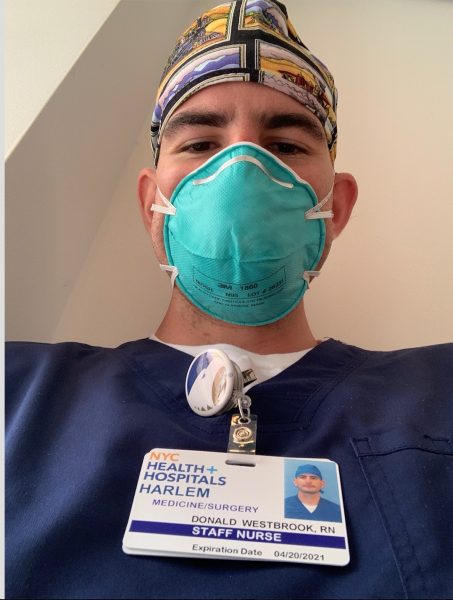
Diary of a COVID-19 crisis nurse in NYC: A Georgia Southern student’s first job
On May 1, Tucker Westbrook could finally sleep in. He’d been on duty as a COVID-19 crisis nurse at Harlem Hospital Center in New York City for 11 consecutive days, with a routine that began before the sun came up and ended long after the city had gone dark. Most mornings, he’d wake at 5:45 am., center himself with prayer and meditation, eat breakfast, and hop on a bus in time to clock in for his shift at the largest public hospital in Central Harlem by 7 a.m. Each day as he entered the halls of the facility’s surgical floor, which was transformed into a COVID-19 holding unit for the larger part of his three-week work rotation, he was unsure of what he’d encounter. Just weeks earlier, Westbrook, a May 2019 Georgia Southern University nursing graduate from Butler, Georgia, accepted a short-term contract to assist with the Coronavirus pandemic in the epicenter of the U.S. outbreak. This was Westbrook’s first professional job, following what was supposed to be a yearlong mission trip in Southeast Asia, but was cut short due to the pandemic, and nothing could fully prepare him for the impact of his initial experience. “The first day, I thought, ‘I’m not prepared for this,’” he admitted. “Those first few days I was on pins and needles and thought, ‘how am I going to mess up?’” The stakes were high. By the time he arrived in New York City, thousands had already been hospitalized, and many had died. Seasoned nurses and doctors were depleted and morale was low across the city, he explained on the phone as he looked out over a desolate Times Square from his hotel window. “They asked me, ‘why did you come here?’” Westbrook recalled. “And I said that I wanted to be, hopefully, a light in this dark place right now. The patients, the doctors, the nurses, the nursing assistants, the janitorial assistants — my goal is to learn everyone’s names and greet them with a smile behind my mask.” A friend encouraged Westbrook to look for a temporary nursing job upon his return from abroad. When he applied for highly competitive positions with a crisis staffing agency, he requested placement in an area hard hit by the pandemic. “Just like Southeast Asia, I wanted to go where there was the biggest need, and I had enough gifts to meet that need,” Westbrook said. This was Westbrook’s first trip to New York, and he stepped into a scene where images of makeshift morgues and ventilator shortages splashed across the media came to life in front of him. “It has been surreal to see,” he said. Assigned to provide cluster care to potential COVID-19-positive patients for minimal exposure, Westbrook also focused on simple acts of kindness to help ease increased anxiety among the patients. “That might be things as small as giving a wet rag to wipe their face,” Westbrook said. “It may be filling their jars with ice cold water in the morning. Whatever might help them feel more comfortable.” Westbrook’s patients were diverse: a teenage gunshot victim who sobbed at the prospect of being infected with the virus; an adult male who discussed intimate thoughts about death with his family over the phone; and a woman who was depressed until Westbrook sat with her so she didn’t feel alone. Experiencing humanity in its most delicate form was life-defining. “I was learning more about nursing care but also continuing to serve (my patients) beyond simply giving them medicine,” Westbrook said. “I was able to advocate for them with the doctor, especially without their families there. I’m learning how to go above and beyond, and what our job responsibilities are. I want to keep growing and learning to continue to give care to my patients.” The hospital staff also offered enormous support and guidance to Westbrook, who almost two weeks into the job felt exponentially more confident in his abilities. “If you had told me about any of this I wouldn’t believe it,” he said. “It has been incredible. I did not think I could do that at all, and here I am on the other side. This was such a lofty and high goal to complete this and do well. I’m thankful to even be here and have this opportunity.” Westbrook credits his father for encouraging him to study nursing, and Georgia Southern faculty for their expert instruction, which he put to use in New York, as well as their sage advice. “I wasn’t sure I was going to get my license,” he said. “My desire to become a doctor or a missionary became more and more compelling, but my professors assured me that it would be worthwhile to pursue my license, and they were right.” Following a quarantine in his family’s home, Westbrook will begin pre-medicine classes at Georgia Southern this summer. If you are a journalist looking to know more about Tucker’s story or the nursing program at Georgia Southern University – let us help with your coverage. Barry Joyner is the dean of Georgia Southern University’s Waters College of Health Professions - simply click on his icon to arrange an interview today.


Scarcity reduces consumers' concerns about prices, research shows
BLOOMINGTON, Ind. -- During the current pandemic, panicked overbuying of products such as toilet paper, cleaning products and similar items often has led to limited options for consumers and empty store shelves. What's often left are generic or lower-priced branded products. According to new research from the Indiana University Kelley School of Business, it may not be because consumers during this crisis are viewing higher-priced products as having better quality. A paper published in the Journal of Consumer Research finds that scarcity actually decreases consumers' tendency to use price to judge a product's quality. "Scarcity is aversive and triggers the desire to compensate for the shortage, and to seek abundance," said paper co-author Ashok Lalwani, associate professor of marketing at Kelley. "People who face scarcity are less likely to view less vs. more expensive options as belonging to different categories, and thus are open to differences at either or both ends of the price continuum." This is the first paper to directly show the impact of scarcity on price-quality judgments. The findings are applicable amid times of economic crisis, natural disasters and social disturbances. "We suggest that people may not only differ in terms of how they categorize purchases, but also in terms of the extent to which they categorize, and scarcity reduces the tendency," Lalwani said. While consumers frequently judge the quality of a product based on its price, they change their thinking during times of scarcity and are less likely to categorize objects and less likely to use the price of a product to infer its quality, Lalwani and his co-authors found. The business implications for managers at high-end stores or those who want to increase sales of high-priced items are numerous. Lalwani suggested that one way such managers can activate the belief that higher prices indicate higher quality is by varying context or environmental factors. This could include encouraging consumers -- such as through contests or sweepstakes -- to categorize assorted items by price to facilitate the use of price-tiers as a basis for judging a product's quality. "The same objective could also be attained by reducing consumers' desire for abundance," Lalwani said. "For example, inside the store, managers could have portraits, displays or ads highlighting the harmful effects of gluttony or hoarding behavior. Doing so may increase customers' price-quality inferences and shift them from purchasing lower-priced to higher-priced goods. "Our findings also suggest that when stronger price-quality inferences are desired, retailers are advised to avoid utilizing scarcity messages, such as 'sale ends this week' or 'while supplies last,' especially for product categories in which the proportion of high-priced items is high, as priming scarcity among consumers may decrease their price-quality inferences." Other authors of the paper, "The Impact of Resource Scarcity on Price-Quality Judgments," were Hanyong Park, assistant professor of marketing at the Eli Brand College of Business at Michigan State, and David Silvera, retired associate professor of marketing at the University of Texas at San Antonio.


CAA Insurance Company is introducing a $100 Auto Insurance Relief Benefit for all active auto policies in effect before May 1, 2020. No action is required by insureds or their brokers in order to receive the benefit. “CAA Insurance continues to explore ways to help consumers save money on their insurance premiums during this difficult time,” says Matthew Turack, president of CAA Insurance Company. “We know that driving distances have reduced, and that Ontarians are looking to reduce their auto insurance costs accordingly. This benefit, coupled with our previously announced 10 per cent rate reduction on home and auto insurance, will provide significant savings for those looking to manage their expenses.” CAA Insurance agents and brokers are available to assist customers to find additional ways to adjust coverage and payment plans to reflect reduced driving behaviour such as: CAA MyPace, Canada’s first pay-as-you-go auto insurance program, so you only pay for the kilometres you are using Reducing annual mileage amounts on policies Insurance adjustments for multiple cars that aren’t being driven CAA Insurance Company is the only insurer to date, to provide both a rate reduction and offer a relief benefit for policyholders. The measures were informed by a recent survey conducted by CAA South Central Ontario (CAA SCO) to help understand member’s feelings and perceptions related to auto insurance due to COVID-19. The results of the survey, which was conducted in mid-April among 3,860 members in Ontario, showed that: Auto insurance is the area (43 per cent) where members are most likely looking to reduce costs because of COVID-19, exceeding groceries, telecommunications and mortgages / rent payment. Most members expect their yearly kilometres driven in 2020 to be lower than previous years. Prior to the pandemic, 45 per cent of respondents said they drove approximately 10,000 km or less annually, that number has increased to 78 per cent. The most preferred action to lower auto insurance premium is reviewing their policy with an agent/broker to ensure coverage and costs meet individual needs. Bundling auto insurance with home insurance ranked second. The $100 relief is in addition to an initiative announced by CAA Insurance Company in April that provides policyholders a 10 per cent rate reduction on home and/or auto insurance policies for the entire term policy. Ontario drivers are encouraged to check with their agent or broker and make sure they explore all available options, as every company is taking a different approach during the COVID-19 pandemic. For more information and Frequently Asked Questions click here.



As Canadians continue to stay home during this pandemic, many cars are sitting idle for long stretches of time. Maintaining your car is important whether it’s parked for a long time or in regular use. “Dead batteries, rusty brakes and flat tires can be worrisome leaving a car parked for weeks on end,” says Kaitlynn Furse, director, corporate communications, CAA South Central Ontario (CAA SCO). ”Car owners should put measures in place to avoid unexpected mechanical issues, much like a snowbird would, if cars are sitting idle in the driveway for long periods of time.” CAA SCO car maintenance checklist: Gas up. If your vehicle is going to be idle for more than 30 days, fill the tank up to the brim. This will help prevent moisture from building up in the fuel tank. Add a fuel stabilizer to the tank when full (stabilizers have a shelf life of three months and may help keep the fuel lines and engine from corroding). Protect the battery. It will eventually lose its charge if it isn’t driven at least once every few weeks. A trickle charger or battery tender with an automatic shut-off feature will keep the battery in good condition when the vehicle isn’t being driven. Inflate the tires. You can get flat spots on your tires from the vehicle sitting in one position. If your car is going to be parked and not moving add extra 10 PSI to the tire pressure when it is sitting idle. When you are ready to drive it remove that extra 10 PSI. Clean it well. Protect your paint job by removing acidic bird droppings, corrosive salt or dirt off the paint and take it a step further, polish or wax the exterior. Another item to consider is to check your tires to minimize the likelihood of wheel separation. A wheel separation is the unintended release of any active wheel from a moving vehicle. These incidents occur most commonly during the months of May through August after motorists switch from winter to all season tires. “Wheel separation can be very dangerous, causing, property damage, injuries and even fatalities,” says Furse. “If you are changing your tires at home, please make sure you go the extra step to make sure they are installed properly.” If you are unsure about any part of the installation of a wheel on your vehicle, be sure to take the vehicle to a qualified shop for its seasonal tire change. CAA has compiled a list of Approved Auto Repair Service facilities that have been vetted for quality service standards. Please check with your local facility as business hours for AARS locations may vary during the pandemic.


As the race for the White House continues, speculations are growing on who former Vice President Joe Biden will have as his running mate. As of late, the direction Biden is being shown is to choose a woman of color. After a devastating start to the Democratic primary, Biden’s campaign was revived when black voters in South Carolina and throughout the south overwhelmingly sided with him. Now that he is the presumptive Democratic nominee, black voters and leaders are pressing for him to pick a black woman as his running mate. Biden launched a committee last week to begin vetting possible candidates for the vice presidency, a process he has said will likely last through July. He has already committed to picking a woman. But black voters and leaders say he needs to go further and pick a black woman. They argue that Biden’s success – and that of the Democratic Party as a whole – depends on black people turning out to vote in November. They want a tangible return for their loyalty to the democratic party. Political analysts like Augusta University Political Science Professor Dr. Gregg Murray say Sen. Kamala Harris from California and former Georgia governor candidate Stacey Abrams are the two standout choices that fit this bill. Although Harris and Abrams each bring positives to Biden’s campaign, Murray says they both have some baggage. “Harris is respected in the senate and including Abrams on the ticket could help the Democrats penetrate the traditionally GOP voting south,” said Murray. “However, Harris has an unfavorable record among critics of criminal justice reform and Abram’s lost in Georgia’s governor’s race raises questions on her electability beyond her home territory. I’m sure Biden’s team will consider all the facts before making their final decision.” As campaigns need to revamp and reconsider strategy in an election run in the wake of a pandemic, getting the ticket in order might come sooner than later. And if you are a reporter covering this topic, then let our expert help. Murray, professor of political science at Augusta University, is available to talk about the upcoming election. Murray’s research focuses on political behavior and psychology with specific interests in voter mobilization and turnout. He is also executive director of the Association for Politics and the Life Sciences. He has been featured on CNN and is a go-to for national media covering campaigns. Click on his name to request an interview.

Covering Remdesivir – Contact an expert from Cedarville first
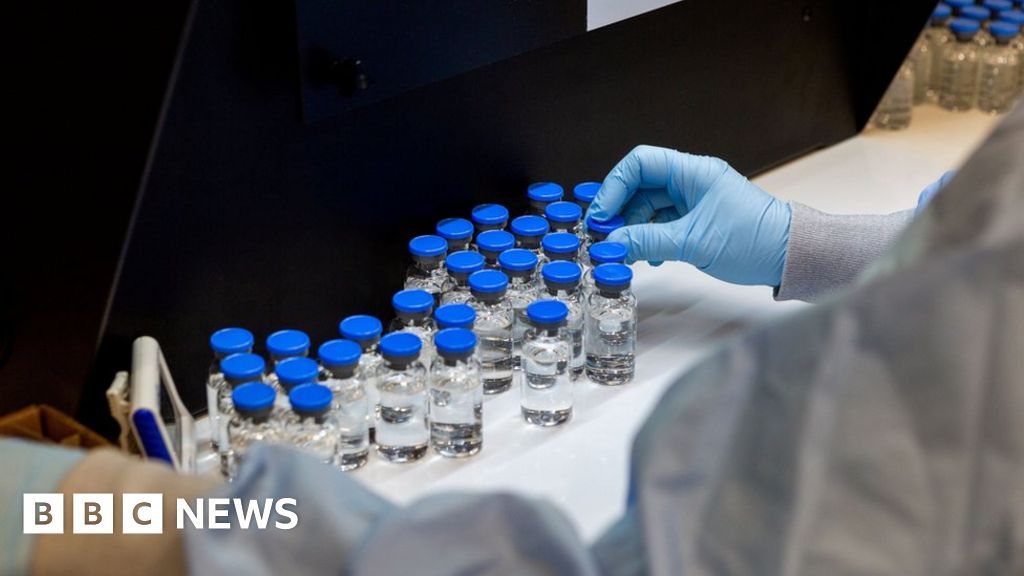
There has been a lot of talk about treatment, vaccinations and drugs that are being used during the CVOID-19 pandemic. The latest is Remdesivir – and it is getting a lot of attention. The US's Food and Drug Administration (FDA) has authorised emergency use of the Ebola drug remdesivir for treating the coronavirus. The authorisation means the anti-viral drug can now be used on people who are hospitalised with severe Covid-19. A recent clinical trial showed the drug helped shorten the recovery time for people who were seriously ill. However, it did not significantly improve survival rates. Experts have warned the drug - which was originally developed to treat Ebola, and is produced by Gilead pharmaceutical company in California - should not be seen as a "magic bullet" for coronavirus. What do we know about remdesivir? The drug did not cure Ebola, and Gilead says on its website: "Remdesivir is an experimental medicine that does not have established safety or efficacy for the treatment of any condition." Gilead also warns of possible serious side-effects. However, President Trump has been a vocal supporter of remdesivir as a potential treatment for the coronavirus. In its clinical trial, whose full results are yet to be released, the US National Institute of Allergy and Infectious Diseases (NIAID) found that remdesivir cut the duration of symptoms from 15 days down to 11. The trials involved 1,063 people at hospitals around the world - including the US, France, Italy, the UK, China and South Korea. Some patients were given the drug and others were given a placebo (dummy) treatment. Dr Anthony Fauci who runs NIAID, said that remdesivir had "a clear-cut, significant, positive effect in diminishing the time to recovery". However, although remdesivir may aid recovery - and possibly stop people having to be treated in intensive care - the trials did not give any clear indication whether it can prevent deaths from coronavirus. May 02 - BBC There are still a lot of questions to be asked: When could it be ready for mass distribution? How is it administered? Who can get it? And how much will it cost? If you are a journalist covering this emerging issue – then let our experts help. Dr. Zach Jenkins is an infectious disease expert at Cedarville University. He is available to speak with media about this topic – simply click on his icon to arrange an interview.


Voice teachers and singers are facing an avalanche of questions while planning how to return to “normal operations” as restrictions ease from the COVID-19 pandemic. Singers generally expel more breath and saliva than normal talkers, so are their social distancing requirements different than most? If public health officials require six feet of separation at all times, how does a choir practice and perform? If voice lessons have to be done remotely, how can tone and pitch be properly evaluated via an internet connection? These are just some of the dilemmas facing voice teachers and music professors. “We are highly concerned in the arts related to how we deal with teaching when we return to campuses, classrooms and studios, particularly with singing,” said Allen Henderson, executive director of National Association of Teachers of Singing (NATS) and professor of voice at Georgia Southern University. “Singers are what we might call super-emitters — in terms of what is expelled in a breath. What kind of precautions do we need to take?” To help start answering such questions, Henderson and NATS organized a webinar called “A Conversation: What Do Science and Data Say About the Near-Term Future of Singing?” It is scheduled for Tuesday, May 5, at 5 p.m. He said within 24 hours of the webinar’s announcement, more than 2,000 people had signed up. “I was able to secure one of the major researchers on aerosolization of viruses,” Henderson said. “I suspect there will be a lot of higher education arts administrators in attendance and the information shared will be used widely in formulating responses to the unique problems of teaching music when reopening occurs.” Henderson noted that when the country shut down, the process was fairly quick and uniform. As organizations such as universities make plans to return to ‘normal’ operations, leaders will likely have to develop their own plans unique to their settings. “It will be complicated, and it’s about what protocols institutions and individuals have in place in regard to testing and contact tracing so that there’s a sense that we are creating as safe an environment as possible,” Henderson said. “Our job is to arm our colleagues with the best possible science-based information we can.” To learn more about the upcoming webinar, simply visit the story attached:

Forecasting demand of any product for industry, manufacturing and even retail is already a difficult task. And now, amid a global pandemic that has seen some industries grind to a halt while others ramp up to keep up - means that measuring expectations about demand is key to corporate survival during these trying times. We have not experienced a global pandemic like the coronavirus in last 100 years. The sheer increase in demand for everyday necessities like toilet paper, sanitary wipes and bottled water is putting undo stress on a lean global supply chain. It is testing the agility of many retailers and consumer packaged goods (CPG) companies as they attempt to ramp up manufacturing facilities and logistical operations while struggling to keep up with consumer demand. Business executives are looking to data, analytics, and technology for answers on how to predict and plan for the surge and, ultimately, the decline in consumer demand. It is significantly easier to shut down facilities than it is to quickly boost production and capacity. The biggest unknown is whether there will be a delayed economic recovery or a prolonged contraction. Regardless of the outcome, retailers and their CPG suppliers will need to think ahead and be prepared to act quickly. March 25 – RIS News There are so many angles and aspects of our daily life that need to be covered during the COVID-19 outbreak – and if you are a journalist looking at how business and industry are adapting during this crisis, the let our experts help. Dr. Karen Sedatole is the Goizueta Advisory Board Term Professor of Accounting. She has conducted extensive research on forecasting and capacity management that can shed light on the challenges of responding to the current uncertain environment. Karen is available to speak with media – simply click on her icon to arrange an interview today.



Does gender matter when it comes to COVID-19?
As America begins to adapt and adjust to the COVID-19 pandemic, details are emerging about who is more susceptible to the virus and why. The latest is gender. In fact, as some are observing, it seems men are more likely to fall victim to COVID-19 than women. A report published by the New England Journal of Medicine showed men not only made up 60% of the first 393 COVID-19 patients admitted in two New York City hospitals, but they were the highest group placed on ventilators. Another study of people hospitalized in the United States for COVID-19 in March similarly found that “males may be disproportionately affected by COVID-19 compared with females.” “The higher risk of COVID-19 among men we are seeing in New York City may be consistent in other US regions, including the southwestern Georgia area that has been disproportionately affected by COVID-19,” says Dr. Justin Moore, an assistant professor in the Department of Population Health Sciences in the Medical College of Georgia at Augusta University. “Researchers are still looking into why men, specifically African American men, are seemingly more susceptible to the virus. However, we know this may be due to underlying health issues, including hypertension, obesity and diabetes.” It’s a startling detail and one that needs to be communicated. If you are a journalist covering COVID-19 and how men may be more vulnerable than women during this crisis – then let our experts help. Dr. Justin Moore is an expert in spatial epidemiology and an associate professor at the Institute of Public and Preventive Health at Augusta University. He is available to speak with media regarding this topic – simply click on his icon to arrange an interview.

Scapegoating During Pandemics Has Always "Plagued" Humanity
Though it was widely known that the first known cases of coronavirus could be traced back to Wuhan in China, many Americans were shocked and saddened to hear President Donald Trump repeatedly calling the illness the "Chinese virus" during a news conference in March. Though President Trump has insisted it's "not racist at all," Asian-Americans have reported incidents of slurs and physical abuse over the perception that China caused COVID-19. Rev. Joseph Ryan, OSA, PhD, teaches a course on the history of disease, with a focus on the bubonic plague, and notes that this type of xenophobic hysteria is not new when it comes to pandemics. “A theme that we can see with these epidemics is hysteria and the scapegoating of people who are liminal and have no defenders,” says Fr. Ryan. “We also see nativism and xenophobia evident in people's response to epidemic illness. Pandemics test the humanity of human populations and sometimes we are inhumane in the face of the fear of death from such diseases.” Here are a few examples from history of how humanity shifts blame during times of great pandemic-related stress: 1348: The Bubonic Plague A third of Europe's population was eliminated by this epidemic, which spread along trade routes. The event caused different expressions of hysteria among Europeans, including the persecution of the Jewish community. 1832: Cholera Like the bubonic plague, cholera traveled along trade routes. In the United States, Irish immigrants were scapegoated. 1918: Spanish Influenza It gained its name because the first journalists to talk about the disease were from Spain. Influenza came from Kansas and spread through the transport of American soldiers to Europe to fight in the First World War. Later, it traveled to British colonies in India and Africa via the transport of British troops, and the result was the rise of independence movements in these countries. 1980s: HIV/AIDS The HIV/AIDS crisis caused hysteria surrounding gay men. 2014: Ebola Another event that sparked hysteria was the recent outbreak of Ebola in West Africa. The governors of New York and New Jersey threatened to close their airports, though there was little chance of the virus breaking out in the United States. (To the best of Fr. Ryan's knowledge, only two Americans developed the disease.)
