
Experts Matter. Find Yours.
Connect for media, speaking, professional opportunities & more.

Good COP or bad COP? | The Aston Angle
Four Aston University experts reflect on COP26 and what it means for transport, community and global action on decarbonisation, support for small businesses and China’s coal consumption. COP26 was the 26th United Nations Climate Change conference held in Glasgow from 31 October to 13 November 2021. The participating 197 countries agreed a new deal, known as the Glasgow Climate Pact, aimed at staving off dangerous climate change. But will it be enough? Dr Lucy Rackcliff explains why replacing petrol and diesel vehicles with electric ones alone is not radical enough. The overwhelming message coming from COP26 transport day seemed to be that moving to zero emission-vehicles would solve the well-documented issues created by petrol and diesel fuelled vehicles. As noted at the conference itself, transport is responsible for 10% of global emissions, and emissions from transport continue to increase. The WHO estimates that transport-related air pollution affects the health of tens of thousands of people every year in the WHO European Region alone. However, on-street pollution is not the only effect we should seek to address. Transport is responsible (directly or indirectly) for a wider range of environmental issues, and a wider range of health impacts. Moving to electric vehicles will not address impacts such as loss of land for other activities, use of finite resources in the manufacturing process, the need to dispose of obsolete materials such as used tyres, and the health effects of sedentary lifestyles, facilitated by car-use. In urban areas in particular, re-thinking policy to focus on walking, cycling and public transport-use could free up land for other activities. Car parks could become actual parks, in turn encouraging more active lifestyles, creating space for people and plants, and leading to a range of wider societal benefits. Assuming that replacing petrol and diesel vehicles with electric ones will solve all our problems is a strategy which lacks ambition, and thus denies us the benefits that more radical thinking could deliver. Dr Lucy Rackcliff, Senior Teaching Fellow, Engineering Systems & Supply Chain Management, Aston Logistics and Systems Institute, College of Engineering and Physical Sciences. "Assuming that replacing petrol and diesel vehicles with electric ones will solve all our problems is a strategy which lacks ambition." Professor Patricia Thornley reflects on the role that Aston University and EBRI can play in empowering community action and informing global action with research. COP26 energy day was a fabulous experience. I have never before seen so many people in one place with one ambition: to support and accelerate decarbonisation of the UK’s energy systems. We ran a “fishbowl”, which allows people with different perspectives on a topic (experts and non-experts) to participate in dialogue around a common interest. Our researchers, local government representatives, industrialists and students shared their thoughts on what our future energy mix should look like, how it should be delivered and who needs to act. Without doubt the consensus was that many different technologies have a role to play and there is an urgent need to accelerate implementation. There were reflections on the importance of governance at different levels and an interesting discussion around the relative merits of centralized solutions and devolved actions. The reality is that of course we need both and that made me think about what Aston University and EBRI can do. Of course we should implement centrally with initiatives like the impressively low carbon Students’ Union building, but we also need to raise awareness among our students. Our film showing with the Students’ Union a week later helped with that I hope, and many more of our courses are incorporating sustainability elements which is fantastic. But what we haven’t quite achieved yet is an empowered, proactive voice that would lead to wider community action. There are pockets of excellence but a lot still to be done. My second week at COP26 was very different with police presence outside a building where I had three meetings with industrialists on the controversial topics of forestry and land-use. It was sad to be working with key players to improve sustainability and increase carbon reductions through UK bioenergy while listening to drumbeats outside from objecting protestors. There is a real lack of understanding around forest management and global land use and we need to work harder to improve that. It is a huge challenge, but one that EBRI will work hard to address. Professor Patricia Thornley, Director of EBRI, Energy and Bioproducts Research Institute (EBRI), College of Engineering and Physical Sciences. "There is a real lack of understanding around forest management and global land use and we need to work harder to improve that." Professor Presanta Dey explores whether Government pledges on climate change will translate to practical support for small businesses Following the COP26 climate change summit, the UK Government led the way in making a series of pledges and policy commitments to combat climate change. The question is: how will this translate to practical support for SMEs? Large corporations often take centre stage at COP, which is welcomed, but if we are to see real change, everyone needs to be involved. COP26 provided a refreshing voice for UK small businesses which featured panel discussions on the ‘SME Climate Hub’, highlighting net zero opportunities and challenges for SMEs. The momentum of COP26 has already inspired over 2,000 UK small businesses to sign up to the UN's Race to Zero campaign, which is designed to accelerate the adoption of credible net-zero targets. A long journey ahead still awaits us, however campaigns like these will hopefully start a ripple effect inspiring the remaining six million UK SMEs to take climate action. Small businesses have been crying out for more assistance from the government in the form of ‘green’ grants and financial support to enable them to make the necessary long-term changes. The timely announcement of HSBC’s £500m Green SME Fund at COP26 marks a promising first step towards making it easier for SMEs to fund their green ambitions. In summary, COP26 provided some comfort to UK SMEs seeking a higher level of commitment from government, financial services and businesses. This moment must act as a catalyst for policy makers to continue removing the barriers that are holding small businesses back. Professor Presanta Dey, Professor of Operations & Information Management, College of Business and Social Sciences. Professor Jun Du explains what China’s deal means for the rest of the world following its own energy crisis earlier this year… Despite the many disappointments expressed around the COP26 outcomes, important progess has been made for the world economy moving towards carbon neutrality. Among the noticeable achievements China and the US, which together emit 43% of the total CO2 in the air, have agreed to boost climate co-operation despite many disagreements. This includes China’s pledge to more actively control and cut methane emissions during the next decade - even when the country did not sign up to the global methane pledge made in Glasgow. Reaching net zero will be an unprecedented challenge for all countries. China will need to do the heaviest lifting among all. The country’s energy crisis earlier this year has shown just how hard it will be to reach net zero. The exceptionally early and cold winter this year will demand even more coal, so China’s willingness and resolve for climate commitments are good news to all. While lots of attention was turned to the absence of China’s president, Xi Jinping, from the COP26 climate summit, what is less appreciated is the fact that China is serious about decarbonisation. Few countries invest as much as China in that area, nor grow as fast in finding alternative energy to coal and in green industries like electric cars. China has set specific plans in its 14th national five-year plan for economic and social development to reach peak carbon emissions by 2030 and carbon neutrality by 2060. COP26 could be an additional driver for “an era of accountability” for China. Professor Jun Du, Professor of Economics, Finance and Entrepreneurship, Centre Director, Centre for Business Prosperity, Aston Business School levy.



Expert available to discuss Holmes trial verdict
Elizabeth Holmes, founder of the failed blood testing start-up Theranos, was found guilty Monday of four of 11 charges of fraud, after a closely watched trial that lasted nearly four months. A jury determined that she deliberately misled investors. Todd Haugh, associate professor of business law and ethics and the Arthur M. Weimer Faculty Fellow in Business Law at the Indiana University Kelley School of Business, is available to comment on the verdict and future sentencing. Haugh’s research focuses white collar and corporate crime, business and behavioral ethics, and federal sentencing policy, exploring the decision-making processes of the players most central to the commission and adjudication of economic crime and unethical business conduct. He can discuss: • The size of the potential sentencing and the calculation the judge will make in determining it (the statutory maximum is high -- 20 years; the sentencing guideline will be very high -- maybe life imprisonment; but the actual sentence will be much, much lower); • The impact the acquitted conduct will have on the sentence (none -- the law allows the judge to consider all conduct, even counts she was acquitted of) • The impact of Holmes going to trial versus pleading guilty (significant because she loses cooperation credit, for example); • The larger business ethics and compliance implications of the case, which Haugh believes are significant, given the high profile nature of Theranos and Holmes, the culture of Silicon Valley, and the rarity of a criminal trial in a case like this); Haugh can be reached at thaugh@indiana.edu and 812-855-6539


Inflation's on the rise - can it be reigned in for 2022?
It seems the cost of everything is going up. For most Americans, filling up your car and filling up your grocery cart are now noticeably more expensive. Costs of goods are going up and that's taking a toll on the cost of living for a lot of people across the country. But what's causing the prices of goods and services to creep upwards - and what will it take to tame the upward trend that has inflation at its highest rate in more than 30 years? Recently, Andrew Butters and Kyle J. Anderson from Indiana University’s Kelley School of Business sat down with Indiana NewsDesk to help explain what's going on. Inflation might be the one the leading news stories of 2022 - and if you are a reporter looking for answers - then let us help with your coverage. Andrew Butters is an Assistant Professor of Business Economics and Public Policy at Indiana University’s Kelley School of Business. He is also an expert in the areas of industrial organization, productivity, market integration, demand and business cycles. Kyle J. Anderson is a Clinical Assistant Professor of Business Economics. He is an is an economist researching business and pricing in online environments. Both Kyle and Andrew are available to speak with media regarding this important topic – simply click on either expert's icon now to arrange an interview today.

Christmas is here! And with the hustle and bustle of shopping and scouring the internet for that perfect gift or deal, odds are there are people lurking in the dark corners hoping to stuff their stockings with scams if you’re not too careful. At Thanksgiving, when the official start to the shopping season began – the experts from Indiana University’s Kelley School of Business were front and center answering media calls and doing interviews about this very topic Scott Shackelford, a professor at Indiana University specializing in cyber security, said there are some red flags to be on the lookout for while shopping online. “There’s some easy ones to spot right off the bat, including if on the URL,” said Schackelford. “If you see it just as HTTP and not HTTPS. That S stands for secure, which means your information is encrypted when you use that site.” Shackelford also said to be on the lookout for funny wordplay involved on the website. Maniscalo says most of these fake websites originate from outside the country. “English is not their native tongue, so they will a lot of times have misspellings, or say things in kind of an awkward way, not how we would say it, or how we would print it out there,” said Maniscalo. There is also the problem of what Shackelford calls Grinch Bots. These are automated bots that monitor major retail sites to see what items are the hottest and buy them out as soon as they are restocked. “There’s actually been bills that have been proposed in Congress to deal with example of that phenomenon. But of course, they’re not enacted yet, so it’s still up to consumers,” said Shackelford. November 25 – Fox News It’s going to be a busy holiday shopping season – and if you’re a journalist looking to cover this important top, then let us help. Scott Shackelford is an Assistant Professor of Business Law and Ethics at Indiana University’s Kelley School of Business. He’s an expert in the field of cybersecurity law and policy. Scott is available to speak with media about this subject – simply click on his icon now to arrange an interview today.

Citizen Science project set to explore the microbiome of kitchen chopping boards
Researchers in the College of Health and Life Sciences at Aston University have been awarded funds to explore the microbiome of the kitchen chopping board with the help of ‘citizen scientists’. The grant is from UK Research and Innovation (UKRI) and the Food Standards Agency (FSA) as part of a larger project to investigate food standard challenges. The new citizen science project plans to recruit participants from underrepresented communities in the West Midlands to investigate levels of foodborne bacteria in the home and produce educational materials for their communities. Citizen science projects put the public at the heart of the research process. Rather than being the subjects of the research, citizens are actively involved in collecting and analysing data, and even deciding what questions they want to ask and co-developing the approaches with researchers citizen science also gives participants the opportunity to directly contribute to scientific research and influence policy. The research team in the School of Biosciences will recruit citizen scientists through its students, who will act as ambassadors in their own households and communities. The team will create methods for sampling bacteria from chopping boards and gather their observations with their team of citizen scientists and ambassadors. This will enable the researchers to identify the bacteria present and determine their antimicrobial resistance (AMR) profiles, providing opportunities for ambassadors and citizens to perform lab research. The researchers, alongside their ambassadors and citizens, will then co-design and disseminate educational materials on food hygiene tailored to their target communities and based on the findings of the study. Dr Alan Goddard, senior lecturer in the School of Biosciences and project lead, said: "Many foodborne infections begin in the home, often through poor hygiene where chopping boards provide an opportunity for raw foods to cross-contaminate. “This is why this project is an exciting opportunity to work with our students and communities to investigate a microbiological problem that causes significant disease every year. By working with the public, we get privileged access to authentic environments and can ensure our solutions are appropriate." At present, around 40 per cent of outbreaks of foodborne infections in Europe occur at home, with approximately 2.4 million cases of food poisoning occurring in the UK annually, leading to 180 deaths. A common source of such infections is poor food hygiene, with chopping boards, where raw foods may cross-contaminate, playing a key role in the infection chain. Misunderstandings, or poor food hygiene, may therefore contribute a significant disease burden. Professor Anthony Hilton, executive dean of the College of Health and Life Sciences said: “This exciting project brings together the expertise of University researchers with the natural inquisitiveness of members of the public to co-develop and undertake a research project which has the potential for real impact in reducing the burden of foodborne disease in the home.” The FSA and UKRI have awarded a total of £200,000 to fund six projects in order to bring the public and researchers together to investigate food standards challenges. All six projects include exploring the bacteria on home grown produce, parents testing the safety of baby formula, and people with food hypersensitivities analysing the allergens in food bought online. The citizen science projects are all linked to the FSA’s Areas of Research Interest themes, covering issues such as antimicrobial resistance (AMR), food hypersensitivity and food safety and hygiene in the home. The funding was delivered in collaboration with the Biotechnology and Biological Sciences Research Council (BBSRC) and the Economic and Social research Council (ESRC), both part of UKRI. It is part of a wider effort to coordinate activities and develop a joined-up approach to tackle the challenges of maintaining safe food in the UK. Professor Robin May, Chief Scientific Advisor for the FSA said: "I’m delighted that the FSA is supporting these exciting citizen science projects across the country. In addition to delivering invaluable data, these projects will allow the communities we serve to help build the evidence on which policy decisions are made. We are committed to using science and evidence to tackle the latest food-related issues and citizen science is a fantastic way of doing this." The citizen science project investigating the microbiome of the kitchen chopping at Aston University will start in January 2022, concluding in July 2022.

CAA Insurance Company is proud to announce the expansion of Canada’s first and only pay-as-you-go auto insurance payment program, CAA MyPace™, in Ontario. The program allows motorists to monitor how much they are driving and to pay for auto insurance based on that mileage. After three years where thousands of Ontario drivers have benefitted from CAA MyPace, CAA Insurance is now providing greater savings by expanding access to those who drive less than 12-thousand kilometres annually. Previously it was designed for those who drive less than 9-thousand kilometres. “Since the launch of the program back in 2018, CAA MyPace has been generating a great deal of interest in the market, and consumers are asking for it by name,” said Matthew Turack, president, CAA Insurance Company. “As many Ontarians continue to drive less than they did two years ago, we are excited to make this program available to even more Ontario drivers.” The uniqueness of CAA MyPace in the Ontario auto insurance market has resulted in considerable interest by drivers. The number of new CAA MyPace policies during the pandemic period of January - September 2021, increased by 418 per cent compared to the same pre-pandemic period of January - September 2019. The growth directly results from customers who made the switch to CAA MyPace and are seeing significant savings. On average, CAA’s pay-as-you-go policyholders save 50 per cent on their auto insurance costs compared to a traditional policy. An August 2021 survey of over 2,100 Ontarians, conducted by CAA Insurance, indicated that 64 per cent of respondents would consider a pay-as-you-go product now or at their time of renewal. “Expanding our lifestyle products and programs gives CAA Insurance the ability to be responsive to the needs of our customers and to ensure that we are there for them in every stage of life,” says Turack. New customers can enrol in the expanded CAA MyPace program starting November 15, 2021. Existing CAA MyPace customers will be automatically transitioned into the expanded program, with no additional costs at renewal, effective January 15, 2022.



Prof Rachel Warren on the impacts of climate change at COP26
A number of climate experts from the University of East Anglia will be available for interview during the COP26 climate conference in Glasgow. Their areas of expertise range from the impact of climate change on biodiversity, climate geoengineering and carbon removal, to the impact of climate change on sovereign credit ratings, carbon uptake by the oceans, and gender and climate change. Among them is Prof Rachel Warren, Professor of Global Change and Environmental Biology, from UEA's School of Environmental Sciences and Tyndall Centre for Climate Change Research. Her research areas and expertise cover the impacts of climate change on biodiversity. She is an IPCC author and available for interview on topics including climate change policy and modelling, climate change mitigation and adaptation, the impact of climate on ecosystems and species, and sustainability in the context of the Paris Agreement goals to limit global warming to well below 2oC.


Environmental governance expert Prof Heike Schroeder to attend COP26
A number of climate experts from the University of East Anglia will be attending the COP26 climate conference in Glasgow. Their areas of expertise range from the impact of climate change on biodiversity, climate geoengineering and carbon removal, to the impact of climate change on sovereign credit ratings, carbon uptake by the oceans, and gender and climate change. Prof Heike Schroeder, from UEA's School of International Development, will attend COP in its second week, from November 7, as principle investigator for the INDIS project on Indigenous visions of sustainable development & climate resilience. Prof Schroeder's research and expertise covers global environmental politics, forest governance and REDD+, the international climate negotiations, urban climate governance, indigenous peoples/knowledge and sustainable development. The team will be showing how Indigenous knowledge might contribute towards national and international targets for climate mitigation, adaptation, and sustainable development. The value of Indigenous knowledge is often ignored by policy-makers, and Indigenous Peoples themselves have few opportunities to articulate and share their knowledge in a way that can impact policy making circles and strengthen sustainable futures. The project’s Indigenous partners from three countries (Uganda, Papua New Guinea, and Bolivia) will be presenting their own visions for just and environmentally sensitive futures. Where: Exhibit slot in the green zone on Mon, 8 Nov 1:00-2:30pm. The project will also have a slot in the IASS Pavilion in the Blue Zone in Week 2 covering findings and outputs.
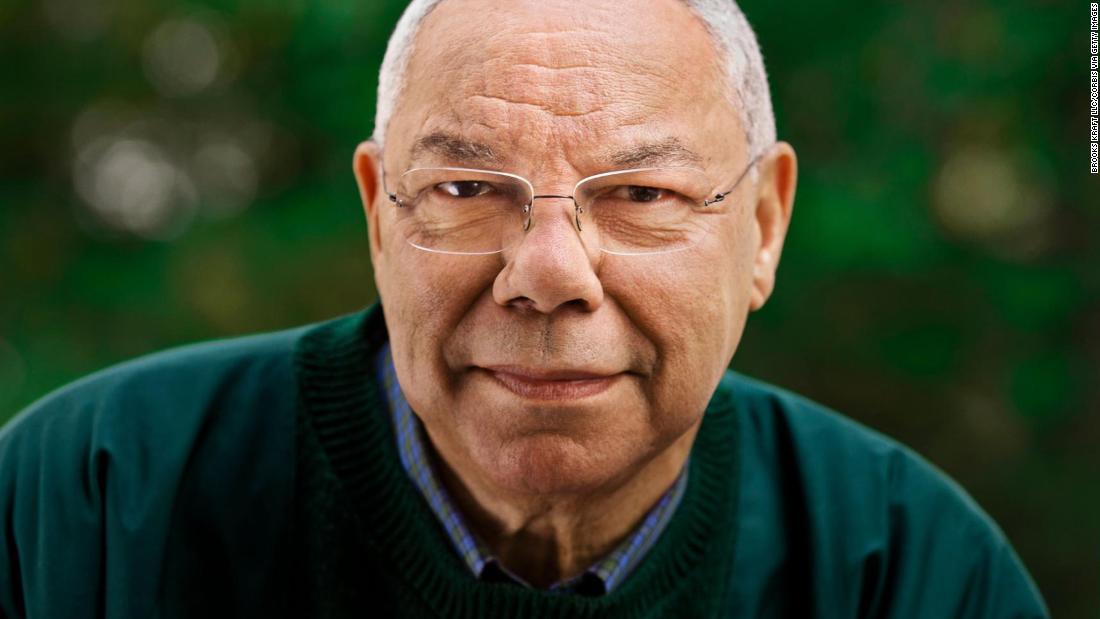
Covering the death of Colin Powell? UMW's foreign policy expert can help
Colin Powell, the first Black US secretary of state whose leadership in several Republican administrations helped shape American foreign policy in the last years of the 20th century and the early years of the 21st, has died from complications from Covid-19, his family said on Facebook. He was 84. "General Colin L. Powell, former U.S. Secretary of State and Chairman of the Joint Chiefs of Staff, passed away this morning due to complications from Covid 19," the Powell family wrote on Facebook, noting he was fully vaccinated. A source familiar with the matter said Powell had multiple myeloma, a cancer of plasma cells that suppresses the body's immune response. Even if fully vaccinated against Covid-19, those who are immunocompromised are at greater risk from the virus. "We have lost a remarkable and loving husband, father, grandfather and a great American," the family said. October 18 - CNN If you are covering the life and legacy of Colin Powell - then let our experts help with your questions and coverage. University of Mary Washington Political Science and International Affairs Professor Jason Davidson is an expert in American foreign and security policy, and international security. He is also the author of the commissioned study, "The Costs of War to United States Allies Since 9/11," which focuses extensively on the human and monetary sacrifices made by America's allies in these conflicts. Davidson, and the document, made waves this spring, landing in the likes of Forbes, The Guardian and The Daily Mail. If you’re looking to arrange an interview with Dr. Davidson, simply click on his icon.



Japan House: Fifty Years Ago Today
Joshua W. Walker, Ph.D., President and CEO, Japan Society This September we're celebrating the 50th anniversary of Japan House, Japan Society's landmarked headquarters building. Let's jump in our time machine and go back to 1971, when Japan Society was only 64 years old. At that time, U.S.-Japan relations were deeply embroiled in trade frictions while the ending of the U.S. embargo of China had just begun to impact East Asia. 1971 snapshots In the United States: Richard M. Nixon is President; Apollo 14 lands on the moon; massive protests are held throughout America against the Vietnam War; Walt Disney World opens in Orlando, Florida; Joe Frazier defeats Muhammad Ali in 15 rounds at Madison Square Garden; the first Starbucks opens in Pike Place Market, Seattle. In Japan: Eisaku Sato is Prime Minister; the U.S. and Japan sign an accord to return Okinawa to Japan; NHK TV implements colorization of all programs; Kamen Rider TV series begins broadcasting; the 48th reigning Sumo champion Yokozuna Taihō announces his retirement; McDonald's opens its first store in Ginza, Tokyo; Nissin creates the first "cup noodle." Japan House Meanwhile in New York City, Japan Society had occupied eight different locations since its founding in 1907, and by the mid-1960s, a dedicated building had become necessary to house the Society's rapidly expanding initiatives. Japan Society President John D. Rockefeller 3rd made a very generous pledge by donating the land for the building site and Japanese modernist architect Junzo Yoshimura was confirmed to design the building. On September 16, 1969, John D. Rockefeller 3rd and Japanese Foreign Minister Kiichi Aichi broke ground at a formal ceremony. Construction proceeded on schedule and staff moved in during the spring of 1971, with Executive Director Douglas Overton noting, "Each day we have found some new and delightful feature which has come off the drawing board as an unexpectedly brilliant success. Japan House will be a national important building worthy of its high purposes." Opening Week—five star-studded days of celebratory events—began on September 13, 1971 with Their Imperial Highnesses Prince and Princess Hitachi at the ceremonies. The Prince brought Japan's best wishes to the Society "for a new chapter, both rich in content and wide in scope." The Gallery opened its first exhibition, Rimpa: Masterworks of the Japanese Decorative School and the Tokyo String Quartet performed in the new auditorium. Junzo Yoshimura wrote about Japan House, "People the world over used to build their houses with local and traditional materials. Today, however, contemporary buildings all over the world use the same basic materials—concrete, steel and glass—yet different characters and nationalities can still be perceived among them. In designing Japan House I have tried to express in contemporary architecture the spirit of Japan." With the formal opening of the Society's headquarters a new era had begun. Their Imperial Highnesses Prince and Princess Hitachi and Japan Society chairman John D. Rockefeller 3rd view the first Japan Society Gallery exhibition Rimpa: Masterworks of the Japanese Decorative School. Photo © Thomas Haar. The next 50 years Fifty years later, we are at another inflection point. The novel coronavirus pandemic has taught us just how interconnected we are as a global community while placing new importance on our homes and transforming the nature of work. This unprecedented global crisis has also illuminated the strengths and weaknesses of our organization, providing new opportunities for envisioning the future. Just as the opening of Japan House shaped the Society's last 50 years, today we are reimagining how we use our space, from the physical to the digital, forging broader connections or kizuna for U.S.-Japan and for the world. We embrace our mission for the years to come, reaching out far beyond our building, to our city, country, and world as we seek to connect American and Japanese people, cultures, and societies through a global lens. Like a hike up Mt. Fuji, Japan Society’s nearly 115-year-long journey itself defines us far more than our current destination. Beginning in 1907, the first iteration of Japan Society focused on business relations between the U.S. and Japan. For its 1952 post-Occupation reconstitution under the leadership of John D. Rockefeller 3rd, the Society dedicated itself to arts, culture, and education, with an emphasis on supporting Japanese students in New York as well as spreading the word about Japan through significant cultural milestones such as partnerships with The Metropolitan Museum of Art and Lincoln Center, with traveling exhibitions and outreach on both sides of the Pacific. With the opening of Japan House in 1971, politics was reintroduced into the mix, the business and policy communities energized, and Japanese popular culture landed large—nearly 50,000 people came to the Grand Sumo Tournament at Madison Square Garden co-sponsored by Japan Society and the Asia Society in 1985! Today at Japan House we present Japan and U.S.-Japan as a way to engage with history and tradition, on the one hand, and innovation and the future on the other. As in 1971, the time to act is now and our opportunities are as great as the challenges of 2021. It's up to us to work together on new, critical connections to take us through the next 50 years. I'll be there with you. Joshua Walker (@drjwalk) is president and CEO of Japan Society. Follow Japan Society on Twitter, Instagram, Facebook, and LinkedIn. The views expressed in this article are the writer's own.

