
Experts Matter. Find Yours.
Connect for media, speaking, professional opportunities & more.

Economic benefits of hosting a sporting mega event are overestimated, new research finds
Experts from Aston University and New York University (NYU) studied how industrial firms in Beijing fared in the run-up to the 2008 Olympics Dr Johan Rewilak and Ted Hayduk (NYU) looked at whether industrial firms in Beijing disproportionately increased their investment ahead of the Games compared to similar Chinese firms The results are interesting for academics, policy makers, businesses and entrepreneurs. Economic experts from Aston University and New York University (NYU) have found that host cities do not receive any disproportionate economic benefits from hosting a sporting mega event. Dr Johan Rewilak from Aston Business School and Ted Hayduk (NYU) studied how industrial firms in Beijing fared in the run-up to the 2008 Summer Olympics. Most studies of this kind focus on the service sector, but this is one of the first examining industrial firms. They looked at whether industrial firms in Beijing disproportionately increased their investment ahead of the Games compared to similar Chinese firms, and explored how those firms compared when it came to profitability. The study found that hosting the 2008 Olympic Games did not provide disproportionate benefits in terms of capital investment or earnings relative to other comparable cities in China. Dr Johan Rewilak, lecturer in economics at Aston Business School, said: “One criticism of having cities host the Olympics is that it funnels public funds into a specific region or area of a country. However, our findings do not support that hypothesis. “Specifically, manufacturing firms in the host city did not receive greater economic benefits compared with firms in similar cities across China, and we found evidence that complements previous arguments that SMEs typically have limited to no disproportional positive impact on the local economy. Ted Hayduk, clinical assistant professor at New York University, said: “In terms of capital investment, we found that the host region had no differential effect for both the Summer and the Winter Games. Given that we found no significant result in 2008, it is somewhat unsurprising to find an insignificant result for the 2022 Winter Games. “This is because the budget for Beijing 2022 is only 10% of what was spent in 2008, and/or alternatively, as the necessary infrastructure has already been built, it has yet to depreciate sufficiently to warrant investment in its replacement.” You can find out more about the study HERE. You can also listen to Dr Rewilak on Aston University’s podcast series, EURO 2020: The Business and Science of Football. He joined journalist Steve Dyson, Dr Danny Fitzpatrick and Dr Robert Thomas to discuss the benefits of holding EURO 2020 across the continent, and whether it was likely to bring an economic spike in a world still living through Coronavirus.


Aston University to officially launch Cyber Security Innovation Centre at Birmingham Tech Week
It will take place at Conference Aston on 13 October, during Birmingham Tech Week 2021 Line up of speakers includes experts from Security Exports Department for International Trade, DCMS and the IoD The event will be of relevance to companies, alumni, academic staff interested in cybersecurity. The Cyber Security Innovation (CSI) Centre at Aston University will host its inaugural event during Birmingham Tech Week 2021. The CSI Centre, established in 2020, brings together stakeholders from industry, government and leading cyber security research institutions with the aim to deliver industry-aligned research outcomes. CSI members include globally-recognised academics undertaking research projects that address real-world cyber security challenges through innovative solutions. Cyber (In)Security, Requires a Robust Approach Through Continuous Innovation, will see a broad range of contributors taking part across the face-to-face event on 13 October. They include speakers from the UK Defence and Security Exports Department for International Trade, the Institute of the Directors (IoD), Cyber Senior Policy Lead, DCMS, Opel/Vauxhall and Professor Vladlena Benson, Director of CSI Centre. Professor Vladlena Benson, director of the CSI at Aston Business School, said: “I am delighted to officially launch the CSI Centre at Conference Aston during Birmingham Tech Week 2021 and am looking forward to welcoming everyone to our first face-to-face event. “This is a wonderful opportunity to meet face-to-face with industry-leading experts, academics and start-ups. With most of the UK confined to working from home for over a year, there is no better opportunity to meet and build relationships with the people who can help business owners grow, innovate and make their companies more resilient. “Statistics shows that UK small businesses are successfully hacked every 19 seconds2 and new certification standards coming into play for consumer IoT devices and cyber-physical access control systems. It is time to find a robust approach maximising the effectiveness of cybersecurity investment now. “The bad guys are winning the cyber security war - the good guys need to do better. Although organisations are investing more and more in cyber security, the average number of days to detect a breach is increasing year on year, not reducing. So, we need to do something different.” To attend the event on 13 October 2021, you can sign up HERE.


Aston University to host event for new incoming students aimed at ‘building better democracy’
University experts have developed a unique online system which combines evidence and values to create effective decision-making The Deliberative Practice Network (DPN) has been used for creative teaching over the past three years and is now being looked at as a tool for online democracy The event will create a unique learning experience for new students and others using in-depth deliberation to consider a topical social issue. Aston University will host an event at the end of Welcome Week 2021 aimed at creating a unique learning experience for new students and others using in-depth deliberation to consider a topical social issue. Experts from the University have developed a unique online system called the Deliberative Practice Network (DPN) which combines evidence and values to create effective decision-making. Their system has been used for creative teaching over the past three years and is now being looked at as a tool for online democracy. As part of this pilot project, a ‘deliberative event’ will be held in the Wright Lecture Theatre on Saturday 25 September, at the end of Induction Week, open to everyone interested in 'building better democracy'. At the start of the day the newsworthy issue of ‘mandatory vaccination against Covid’ will be presented; complemented by talks: ‘Vaccination 101’, ‘Available Data’ and ‘Vaccine passport and live music events’. Voting and commenting on a controversial proposal will be encouraged via the DPN, and results will be instantly available. Speakers will then put the case for and against the proposal and delegates will be encouraged to debate in groups, and online. David Seedhouse, professor of Deliberative Practice at Aston Pharmacy School, said: “The event is open to all who wish to explore inclusive democracy, informed debate, and online decision-making. It will interest delegates from a wide range of backgrounds. “It can be difficult for citizens to have a say about decisions which affect us so we want to provide an example of a more inclusive form of democracy, based on detailed consideration over time, rather than a one-off show of hands.” Dr Patrycja Rozbicka, senior lecturer in politics and international relations at the School of Sciences and Humanities at Aston University, said: “This event will be an opportunity for new students to get engaged with what we do at Aston University and to have a bit of fun, before classes kick in. “Over a week there will be more information and discussion, culminating in a second vote on the original proposal." Dr Killian Mullan, lecturer in sociology and policy at Aston University, said: “This event is a fantastic opportunity for students to engage in critical, open, and informed debate on a crucial topic affecting society, helping students develop skills in evaluating competing arguments.” You can sign up to attend the free event HERE.

U.S. historian and immigration expert on Afghan refugees in the U.S.
Paul Kramer, associate professor of history, is available for commentary on the arrival of Afghan refugees in the U.S. Paul is an expert in the history of immigration and related policies in the U.S. and can discuss: Historical parallels: The U.S. has a long history of opening up its refugee admissions to its allies in context of geopolitical conflict, especially during the Cold War, and a history of tension and ambivalence about refugee admissions, sometimes fearing refugees are spies for U.S. opponents, largely due to discrimination based on race and religion The rationale: The move is partly out of a sense of moral obligation, and partly out of strategic interest (if the U.S. doesn't admit refugees who helped the county abroad, it undermines U.S. foreign policy) Pros and cons: The upside is that many vulnerable people can escape immediate harm (theoretically), and the downside is that many of these vulnerable people who are not seen as U.S. allies can get shut out for foreign policy reasons


Anti-mask ordinances amount to disability discrimination
University of Rochester health policy expert Mical Raz says anti-mask ordinances amount to disability discrimination for individuals with compromised immune systems—that includes people who have cancer and autoimmune disease, as well as those who have received organ transplants. As Dr. Raz explained in a recent Washington Post essay, immunocompromised individuals—even those who are vaccinated—may now find themselves inadequately protected in workplaces where mask requirements are legally banned and there are no vaccine requirements. Dr. Raz also co-authored a piece in the JAMA Health Forum discussing the implications of some states banning attempts to mandate masking. As she points out, vaccines have been less effective in individuals with different categories of immunosuppression. Dr. Raz concludes that allowing mask requirements is an important form of disability accommodation.



Baylor Expert: 9/11 Reshaped Every Aspect of American Life – Not Necessarily for the Better
English professor, culture expert says terror attacks damaged America, but it’s not too late to recover sense of purpose and generosity The Sept. 11, 2001, terrorist attacks on the World Trade Center and the Pentagon continue – 20 years later – to have profound effects on everything from America’s political, religious and cultural polarization to American entertainment choices, said Baylor University faith and culture expert Greg Garrett, Ph.D., professor of English. “It shouldn’t surprise anyone that an event that shook our sense of security and our identity would be reflected in every aspect of American life,” Garrett said. “But what does surprise and alarm me is the degree to which 9/11 continues to shape our attitudes about race, religion, immigration and the Other, whether that Other is in Afghanistan or just across town. The United States initiated a perpetual war against terror in response to the 9/11 attacks, and the fear that took root in the American psyche has proven difficult to shake.” Garrett, author of more than two dozen books, is internationally recognized as an expert on faith, culture, race and story, and he argues that the reaction to 9/11 can be measured just as much through literature and culture as through accounts of executive orders and covert military operations. Country music, procedurals and reality TV after 9/11 “Initially, Americans supported the War on Terror across political, religious and cultural lines,” Garrett said. “Country musicians like Toby Keith leaned into militant songs about American greatness and righteous revenge. The top-selling act the Chicks (then the Dixie Chicks) was drummed out of country music for their public stand against going to war. The TV show 24 reflected the growing darkness of America’s extra-legal approach to that war—the willingness to use torture, rendition and the opening of a dark site in Guantanamo Bay to house suspected terrorists—and it actually shaped opinion and policy as it grew in popularity and influence.” Two other types of television shows became extremely popular as a result of 9/11, Garrett said. Procedurals (shows such as CSI, Law and Order and House, M.D.) gained a new popularity because they offered viewers something the ongoing War on Terror never could or will: closure. “A serious problem was introduced in every episode, grappled with and solved by the end of an hour,” he said. Another type of show that leapt in popularity in the months and years following the attacks – reality shows – offered “train-wreck escapism,” Garrett said. “The contestants on Survivor and The Bachelor, and the wayward souls on Jersey Shore and Keeping Up with the Kardashians, presented exaggerated versions of our present moment that allowed viewers to forget about the dark actuality of the times,” he said. Springsteen, Harry Potter and critiquing ‘moral failures of the War on Terror’ Not all popular culture offered reinforcement or escapism, Garrett said, adding that some of the most powerful pop culture from 2001 onward critiqued the “moral failures of the War on Terror and critiqued the American people for so readily accepting them.” “Punk rock, always a prime medium for protest, was one of the earliest forms of dissent,” Garrett said. Green Day’s 2004 album American Idiot reached the top of the charts in the United States and 18 other countries, ultimately selling 16 million albums. But mainstream acts like Bruce Springsteen also asked complicating questions about the attacks and their aftermath. “After primarily offering empathy and comfort in The Rising (2002), Springsteen realized that America had betrayed many of its most important ideals, as revealed by songs like ‘Your Own Worst Enemy’ on the No. 1 2007 album Magic,” Garrett said. “Later novels in J. K. Rowling’s Harry Potter series, the most popular fictional narrative of all time, introduce questions of torture and terror, and powerful TV dramas like Battlestar Galactica and the British import Doctor Who also criticize the choices made by the American government and its allies.” Zombies and the Apocalypse Perhaps the most significant byproduct of 9/11 in our culture is the resurgence in apocalyptic stories such as 28 Days Later, Sean of the Dead, The Walking Dead, Game of Thrones, World War Z and The Road, Garrett said. Stories about the Zombie Apocalypse – whether in games, books, comics, TV or movies – asked serious questions about what it means to be human, and about what moral compromises a person might be willing to take to stay alive, Garrett explained. They also reflected the new 24/7 sense of encroaching menace that “seeped into our culture and lit up our phones at all hours of the day and night.” “You could fight all day every day against this menace, these creatures who look like humans but seek your destruction. And then the next morning, you still have to rise and confront it again,” Garrett said. ‘Not too late’ “People 20 years ago said that 9/11 changed everything, and so it did.” Garrett said. “But 20 years later it is not too late to recognize that the fears those attacks brought to the surface don’t have to be the way we continue to live. In my faith tradition, Jesus constantly admonishes his followers not to be so afraid. We make bad and selfish decisions out of fear. We abridge hospitality, compassion and liberty when we believe we are endangered. That’s not the America I grew up in, and it’s not the America in which I hope to die. That America, the light of the world, the city on a hill, Lady Liberty lifting her torch to welcome all, is the America that our founders dreamed, and that we can dream once again.” ABOUT GREG GARRETT, PH.D Greg Garrett, Ph.D., is a professor of English at Baylor University and Theologian-in-Residence at the American Cathedral of the Holy Trinity in Paris. An award-winning professor, Garrett has written about 9/11 and its aftermath in a number of books, including One Fine Potion: The Literary Magic of Harry Potter (Baylor University Press), Living with the Living Dead: The Wisdom of the Zombie Apocalypse, and A Long, Long Way: Hollywood’s Unfinished Journey from Racism to Reconciliation (both Oxford University Press). ABOUT BAYLOR UNIVERSITY Baylor University is a private Christian University and a nationally ranked research institution. The University provides a vibrant campus community for more than 19,000 students by blending interdisciplinary research with an international reputation for educational excellence and a faculty commitment to teaching and scholarship. Chartered in 1845 by the Republic of Texas through the efforts of Baptist pioneers, Baylor is the oldest continually operating University in Texas. Located in Waco, Baylor welcomes students from all 50 states and more than 90 countries to study a broad range of degrees among its 12 nationally recognized academic divisions. ABOUT THE COLLEGE OF ARTS & SCIENCES AT BAYLOR UNIVERSITY The College of Arts & Sciences is Baylor University’s largest academic division, consisting of 25 academic departments and eight academic centers and institutes. The more than 5,000 courses taught in the College span topics from art and theatre to religion, philosophy, sociology and the natural sciences. Faculty conduct research around the world, and research on the undergraduate and graduate level is prevalent throughout all disciplines. Visit baylor.edu/artsandsciences.



UCI scholars discuss how 9/11 changed America
In recognition of the 20th anniversary of the Sept. 11, 2001, terrorist attacks in the U.S., we asked UCI scholars a single question: How did 9/11 change America? They responded according to their expertise – which ranges from collective trauma, media, air travel, foreign relations, false narratives, political divisiveness, and the war on terror. Contact Tom Vasich at 949-285-6455, tmvasich@uci.edu, to arrange interviews. Roxane Cohen Silver, Distinguished Professor of psychological science, public health and medicine E. Alison Holman, professor of nursing Topic: Media and collective trauma Quote: “The Sept. 11 terrorist attacks – which hijacked our television screens that Tuesday morning as people who sought to do us harm hijacked four airplanes – captured people’s attention throughout the days and weeks that followed. It also ushered in 24/7 media attention to what has become known as a “collective trauma,” transmitting the horrible events of that day throughout the country and, indeed, throughout the world in a matter of seconds. …The 9/11 attacks were tragic for American residents, but they also taught us that the media can broadcast distress alongside the news it’s covering.” Jan K. Brueckner, Distinguished Professor of economics Topic: Air travel Quote: “In response to the revenue shock of 9/11 and to new competition from low-cost carriers, the major airlines behaved conservatively in adding back capacity as traffic returned, so that the carriers eventually offered fewer seats to an ultimately larger number of passengers, leading to fuller flights and today’s less comfortable flying experience. Even though 9/11 is long past, the airline industry continues to operate in a climate of fear of terrorism from the air.” Erin Lockwood, assistant professor of political science Topic: U.S. foreign policy Quote: “The attacks – and the U.S. response – set in motion decades of war, anti-Arab and anti-Islamic bias and violence, and a willingness to sacrifice military and civilian lives and civil liberties for the perception of security. As we mark the withdrawal of U.S. forces from Afghanistan this month, it’s all too apparent that many of those trends continue to reverberate today.” David Kaye, clinical professor of law Topic: National security Quote: “Despite my hopes for something better that might emerge, the attacks reinforced a cult of national security that the United States transformed into the torture of terrorism suspects, drone warfare, the invasion of Iraq, Guantanamo Bay’s indefinite detentions, anti-Muslim discrimination at home and the emergence of the contemporary surveillance state. … The predominance of national security as an ideology and apologia remains among the most significant legacies of that day, a feature of American political life that continues to constrain creativity and a return to normalcy in American law and policy.” Matthew Beckmann, associate professor of political science Topic: War on terror Quote: “To understand the legacy of 9/11 is to define the legacy of George W. Bush. For after the deadliest terrorist attacks on U.S. soil in our nation’s history, American citizens and lawmakers gave President Bush broad support and broader authority to wage the “war on terror” as he saw fit. … Twenty years after the attacks, having seen those lofty aspirations dashed in Afghanistan and Iraq, disregarded in Guantanamo Bay and black site prisons, and discounted even by our staunchest allies, the biggest legacy of Sept. 11 for the United States is that the “shining city on a hill” has less luster and a shorter reach.” David Theo Goldberg, professor of comparative literature Topic: Rise of false narratives Quote: “The events of 9/11 lent themselves to make-believe. The smoke hadn’t yet cleared when conspiracies began to abound, from “weapons of mass destruction” to “the deep state.” That the Trump administration adopted this as its own playbook while insisting on “draining the swamp” required cooking the rules. … Fabrication had become the rule book of the game. Invention and inventedness, disruption and innovation fueled the movement. The “truth” was, well, oh so yesterday.”

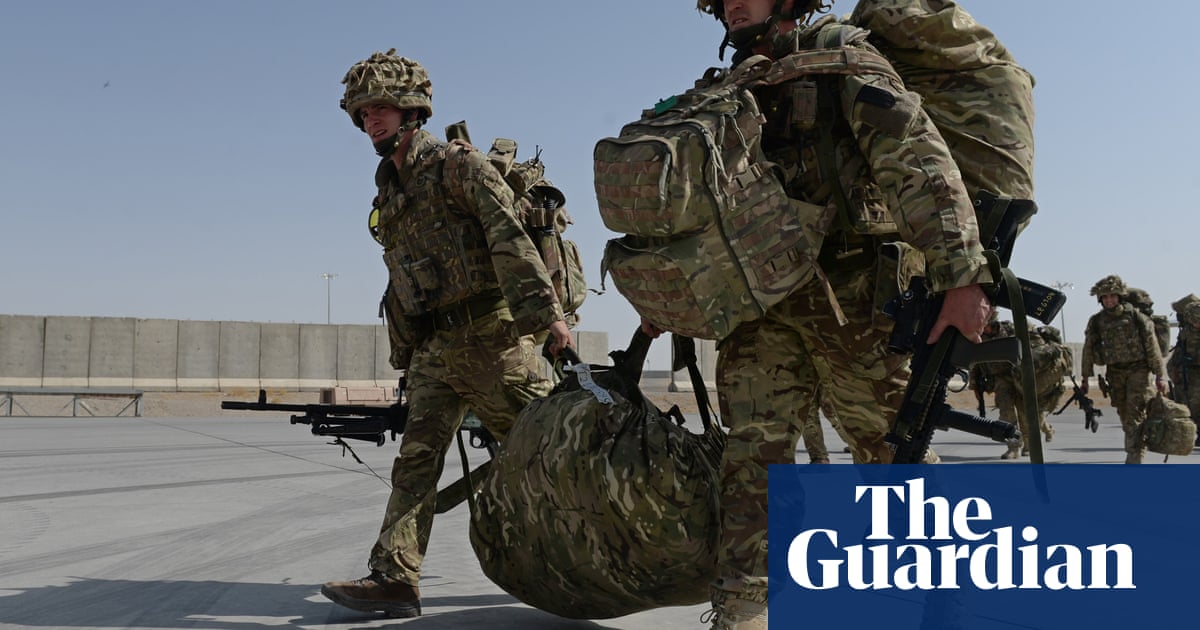
This Saturday marks the 20th anniversary of the September 11 terrorist attack. It was a day that forever changed how the United States viewed terrorism and its approach to foreign policy. The Middle East, especially Iraq and Afghanistan, has seen upheaval in the wake of 9/11. Over the last two decades, America’s approach to how it deals with enemies and how it collaborates with allies has also been drastically altered. University of Mary Washington Political Science and International Affairs Professor Jason Davidson is an expert in American foreign and security policy, and international security. He is also the author of the commissioned study, "The Costs of War to United States Allies Since 9/11," which focuses extensively on the human and monetary sacrifices made by America's allies in these conflicts. Davidson, and the document, made waves this spring, landing in the likes of Forbes, The Guardian and The Daily Mail. If you’re looking to arrange an interview with Dr. Davidson, simply click on his icon.



The Olympics have come and gone. As the world watched top athletes from across the globe compete, one key takeaway was not a new world record or a perfect 10 on the floor – but that Black female athletes faced unfair scrutiny and an obvious double standard when it came to issues of stress and mental health, policies and protocol, uniforms and hair, and more. UMW Assistant Professor of Communication Emily Deering Crosby's previous research has focused on how the media has portrayed Black female Olympians like Lolo Jones and Gabby Douglas. Here's what she had to say: There were numerous instances this summer of world class women athletes being sexualized, penalized, mocked and dismissed for a variety of issues from uniforms to motherhood to naturally occurring testosterone levels to mental health to archaic policy. This was particularly salient for Black women athletes, which is worth highlighting, since racism and sexism often function in tandem ways that many people misunderstand as “normal” or “insignificant” since it can be pervasive. My work aims to root out, point out and amplify why these practices are wrong, why they keep women from being appropriately valued, and how sports culture can be better and thus enhance communication scholarship and everyday practices by media, fans and athletes themselves. The silver lining in the most recent Games is how digital culture, particularly social media, gives athletes themselves a voice. Further, fans and athletes alike are becoming more knowledgeable of these problematic policies and are bravely and creatively calling them out. Thus, athletes such as Simone Biles, Naomi Osaka, Sha’Carri Richardson, Allyson Felix, Norway’s women’s beach handball team, etc. are key case studies to understand these communication and structural phenomena more deeply and ultimately bring more critical awareness and justice to women’s sports.” If you’re a journalist looking to know more about this important topic – then let our experts help with your questions and coverage. Assistant Professor of Communication Emily Deering Crosby is a rhetorical critic of popular culture with research concentrations in feminist criticism – and she’s a go-to expert on this topic for national media. Dr. Crosby is available, simply click on her icon now to arrange an interview today.

UCI experts can discuss unfolding crisis in Afghanistan
UCI faculty members Dr. Heidi Hardt, associate professor of political science, and Dr. Mark LeVine, professor of modern middle eastern history, are available to speak about the crisis in Afghanistan. Dr. Heidi Hardt Dr. Hardt can talk about NATO's contribution to Afghanistan, implications for NATO's legitimacy, security concerns for Afghan women and provide broader context on military interventions and operations. She can address more specific questions related to the two decades long allied operation. About Dr. Hardt: Dr. Hardt has expertise in transatlantic security, national security and European security and defense, including NATO, the EU and OSCE. Issue areas include transatlantic security cooperation, collective defense, crisis management, military operations (e.g. Afghanistan), coalition warfare, strategy, learning, adaptation, organizational change, gender and diplomacy. She's the author of two books: NATO's Lessons in Crisis: Institutional Memory in International Organizations (Oxford UP, 2018) and Time to React: The Efficiency of International Organizations in Crisis Response (Oxford UP, 2014). She's the recipient of a 2021-2022 Council on Foreign Relations International Affairs Fellowship and will soon be working as a foreign policy fellow for the Office of Congresswoman Katie Porter. Contact: hhardt@uci.edu Dr. Mark LeVine Dr. Levine was in Kabul in 2019. His point of view on Afghanistan includes: • “Why did the US abandon the embassy when the agreement with the Taliban specifically allowed to diplomatic staff to remain in Afghanistan and there was no imminent threat by the Taliban to the embassy and in fact the US was coordinating with them. They could have certainly kept the lights on and not looked like cowards running, which set the tone for everything else.” • “It seems pretty clear that there was an internal military coup. The Taliban did not just waltz into Kabul without coordination with senior military people who are already handing over parts of the country to them in the days before. Some kind of deal had been worked out behind the scenes and without the knowledge of the president, which is why he felt he had no choice but to flee.” About Dr. LeVine: Dr. LeVine completed his Ph.D at NYU’s Dept. of Middle Eastern Studies in 1999, after which he held postdoctoral positions at Cornell University's Society for the Humanities and the European University Institute's Robert Schuman Centre for Advanced Studies, in Florence, Italy before coming to UCI. His research and teaching focus on the following issues: histories, theologies and political and cultural economies of the Middle East and Islam in the modern and contemporary periods; Palestine/Israel; cultural production, revolution and resistance in the Middle East and Africa; modern and contemporary Iraq, Egypt, Tunisia and Morocco; art and conflict in West Africa (especially Ghana and Nigeria, but also Senegal, Mali and Kenya); comparative studies of imperialism and colonialism, urban planning and architecture (history and theory); critical theory and globalization studies with a comparative focus on popular cultures and religion in Europe and the Muslim world; peace and conflict studies; and comparative nationalisms. Contact: mlevine@uci.edu