
Experts Matter. Find Yours.
Connect for media, speaking, professional opportunities & more.

A Snapshot of the Local Economy: Simon Medcalfe on Growth, Risk, and What Comes Next
At Augusta University’s annual Economic Forecast Breakfast hosted by the James M. Hull College of Business, Simon Medcalfe, PhD, offered a grounded, data-driven look at how the local economy is performing — and what lies ahead. Speaking to business leaders, students and community stakeholders, Medcalfe emphasized the importance of distinguishing real economic growth from inflation-driven gains, noting that while the Augusta region continues to grow, it does so at a measured pace compared to national averages. His presentation framed the local economy as stable and resilient, but not immune to broader forces shaping the U.S. outlook. A key theme of Medcalfe’s remarks was the role of research, innovation and education in sustaining long-term economic health. He pointed to strong gains in research and development across Georgia and highlighted how university-based research directly contributes to regional economic output. According to Medcalfe, investment in knowledge creation remains one of the most reliable drivers of growth, reinforcing the value of higher education institutions as economic anchors. Simon Medcalfe, PhD, is an economist with an emphasis on sports economics, social determinants of health, and the local economy. View his profile At the same time, Medcalfe cautioned against complacency. While regional fundamentals remain solid, he stressed that uncertainty at the national level continues to pose risks. “However, uncertainty abounds in national macroeconomic policy that could negatively impact growth next year,” Medcalfe said, underscoring how unresolved fiscal decisions and policy shifts can ripple down to local economies. Still, his overall outlook balanced realism with optimism. Medcalfe concluded that the Augusta region — and Georgia more broadly — is positioned to weather uncertainty thanks to diversification, investment in early education, and continued research activity. “Overall, Augusta and Georgia are positioned well for economic growth in 2026 with a strong commitment to early childhood education, a diversified labor market and strong research and development,” he said. View the full article 'Annual Economic Forecast Breakfast offers snapshot of the local economy' here: For journalists covering regional economics, workforce development, higher education, or policy-driven growth trends, Simon Medcalfe, PhD, offers clear-eyed analysis rooted in data — and an ability to translate complex economic signals into insight that matters locally. Simon is available to speak with media - simply click on his icon now to arrange an interview today.


From Libraries to Heart Health: Marlo Vernon Takes Cardiovascular Care Into Rural Georgia
Marlo Vernon, PhD, associate professor in the Department of Health Management, Economics, and Policy at Augusta University’s School of Public Health, is leading a creative public health initiative designed to improve cardiovascular monitoring in rural Georgia. Through the university’s Rural Obese At-Risk initiative, Vernon and her team are placing blood pressure monitors in local libraries, allowing residents to check them out just like books. The effort addresses a critical access gap in rural communities where preventive health tools are often limited or difficult to obtain. Vernon’s work focuses on the realities facing communities in the South’s so-called Stroke Belt, where overlapping health conditions significantly elevate cardiovascular risk. View her profile “There are significant chronic disease risk factors in this so-called Stroke Belt. We’ve got high obesity rates. We have family history. We have high rates of diabetes and kidney disease and they all kind of feed into each other to really create this cardiovascular health need in our communities. And women, in general, are just at a higher risk for this,” said Marlo Vernon, PhD. Beyond equipment access, Vernon’s research also examines how people understand and manage their health when traditional care options are limited. The library-based model helps normalize blood pressure monitoring while reducing barriers such as travel distance, cost, and limited clinic availability. It also creates opportunities to study how community-based solutions can improve awareness, engagement, and long-term cardiovascular outcomes. For journalists covering rural health, women’s health, chronic disease prevention, or innovative public-health strategies, Vernon offers grounded, real-world insight into how trusted community spaces can play a vital role in addressing persistent health disparities. A full article on this topic is available below. To arrange an interview with Dr. Vernon simply click on her iconnow to set up a time to talk today.


UC Irvine’s Daniele Piomelli provides expert view on federal reclassification of cannabis
As the White House moves to reclassify cannabis under federal law from a schedule I to a schedule III, questions remain about how the change could affect medical use, public health, research, and regulation. UC Irvine’s Daniele Piomelli, PhD, an internationally recognized cannabis researcher, is available to comment on the implications of the policy shift. Piomelli is a distinguished professor of anatomy and neurobiology at the University of California, Irvine, the Louise Turner Arnold Chair in the neurosciences, and director of the UCI Center for the Study of Cannabis. Piomelli has more than 30 years of experience studying cannabis, THC and the endocannabinoid system, with research spanning basic neuroscience, pharmacology and translational science. He is editor in chief of Cannabis and Cannabinoid Research and has testified before the U.S. Senate on cannabis-related research and policy. He can provide perspective on: • What federal reclassification may change for medical cannabis and scientific research • Differences between THC, CBD and other cannabinoids • Potential public health benefits and risks of cannabis legalization • Cannabis exposure and the developing brain, including adolescence • Regulatory and research challenges tied to cannabis policy Piomelli is available for interviews or background conversations. Email: piomelli@hs.uci.edu


J.S. Held Releases the Lending Climate in America Survey Results
Global consulting firm J.S. Held reveals the “Lending Climate in America” survey results from Phoenix Management, a part of J.S. Held. The fourth quarter survey results highlight the persisting lender views on policy decisions and their national/global impacts. The “Lending Climate in America” survey is administered quarterly to lenders from various commercial banks, finance companies, and factors across the country. We collect, tabulate, and analyze the results to create a complete evaluation of national attitudes and trends. Phoenix’s Q4 2025 “Lending Climate in America” survey asked lenders which factors could have the strongest potential to impact the economy in the upcoming six months. Forty-six percent of lenders think political uncertainty will have the strongest impact on the economy, while 41% of lenders believe geopolitical risk (war) has the strongest potential to impact the economy. Lenders continue to believe that the possibility of a U.S. recession and upcoming FOMC interest rate decisions will impact the economy. Lenders revealed what actions their customers may take in the next six months. Almost two-thirds of the surveyed lenders believe their customers will raise additional capital, while 30%+ of the surveyed lenders believe their customers will introduce new products and make acquisitions. Forty-three percent of respondents identified the retail trade industry as the most likely to experience volatility in the next six months, followed by the healthcare (social assistance) industry at 38% of respondents. Additionally, Phoenix’s “Lending Climate in America” survey asked lenders if their respective institutions plan to tighten, maintain, or relax their loan structures for various sized loans. For larger loan structures (greater than $25M), the plan to maintain loan structures remained relatively constant from Q3 to Q4, increasing by 9%. As loan sizes decrease, lenders plan to maintain their loan structures. Loans in the range of $15-25M and $5-15M saw very similar structure changes from Q3 to Q4. Loans under $5M had no change in structure. Lender optimism in the U.S. economy decreased for the near term, moving from 2.58 in Q3 2025 to 2.38. In this current quarter, there is heavy expectation of a B level performance (49%), with a majority of the remainder (41%) sitting at a C level. Lender expectations for the U.S. economy’s performance in the longer term also decreased from 2.71 to 2.46. Of the lenders surveyed, 54% believe the U.S. economy will perform at a B level during the next twelve months, virtually no change from the prior quarter. Performance expectations at the D level increased by 5%, matching the increase at a C level. To see the full results of Phoenix’s “Lending Climate in America” Survey, please visit: “Lenders are signaling heightened caution as political uncertainty and geopolitical risks dominate near-term economic concerns,” says Michael Jacoby, Senior Managing Director and Strategic Advisory Practice Lead at J.S. Held. “Confidence in the U.S. economy continues to erode, with short-term grades slipping from a weighted average of 2.58 in Q3 to 2.38 in Q4, and long-term expectations following the same downward trend. While most lenders plan to maintain current loan structures, a notable 21% anticipate tightening terms, even as 77% expect further Fed rate cuts in the coming months. Industry volatility is projected to rise sharply in healthcare, consumer products, and finance, underscoring a challenging environment for borrowers and investors alike.” To learn more about how our experts can add value to your stories in development, simply connect with Michael through his icon below.



A year in the spotlight: University of Delaware’s most notable media mentions of 2025
In 2025, the University of Delaware had many exceptional media mentions. Here are some of the most notable. Science coverage dominated Where will the next big hurricane hit? Ask the sharks. (The Washington Post) – Aaron Carlisle, a marine ecologist, was featured for his revolutionary work using sharks to predict major weather events. Scientists could soon lose a key tool for studying Antarctica's melting ice sheets as climate risks grow (NBC News) – Carlos Moffat, an associate professor and oceanographer, spoke about the national budget and how it's impacting climate research. These Katrina Survivors Feel Overlooked. Now, They’re Using TikTok to Tell Their Stories (Rolling Stone) – Jennifer Trivedi, a disaster researcher, spoke about why Hurricane Katrina was such a major story. Malala Yousafzai, Migration and Sustainability (Forbes) – Saleem Ali, a professor of energy and environment, contributed regularly to Forbes on environmental topics. Scientists went hunting for freshwater deep beneath the Atlantic Ocean. What they found could have global implications (CNN) – Holly Michael, a professor of Earth sciences and civil and environmental engineering, spoke about the history of freshwater. Engineering Professor Answers Electric Car Questions (WIRED) – Willett Kempton, a professor of engineering, joined WIRED to answer the internet's most interesting questions about electric cars. Plastic shopping bag policies are actually working, a new study suggests (CNN) – Kimberly Oremus, associate professor of marine science and policy, was featured in several major outlets on the effectiveness of plastic bag bans. Insects are dying: here are 25 easy and effective ways you can help protect them (The Guardian) – Douglas Tallamy, an entomologist, was featured in dozens of outlets for his expertise. Political news coverage was front and center U.S. Chamber of Commerce sues Trump administration over $100,000 H-1B visa fees (NPR) – Daniel Kinderman, a political science professor, was interviewed for his expertise on a lawsuit involving changes in work visas. The government shutdown is over, but expect more fights and higher insurance prices to come (Delaware Public Media) – David Redlawsk, a political psychologist, discussed the recent government shutdown and what an end to it signals. Wrestling Over Charlie Kirk’s Legacy and the Divide in America (The New York Times) – Dannagal Young, a communications professor, commented on how media reacted to the death of Charlie Kirk. Consequences for colleges whose students carry mountains of debt? Republicans say yes (NPR) – Dominique Baker, associate professor of education, was quoted in multiple national outlets for her education expertise. General expertise came in clutch Why the U.S. struggles with passenger service despite having the most rail lines (NPR) – Allan Zarembski, a professor of railroad engineering, was featured in dozens of national publications for his expertise. From folklore to your front porch: The history of the jack-o'-lantern (NPR) – Cindy Ott, an associate professor of history, detailed the history of this autumn staple in multiple outlets. Nexstar Media Group buying Tegna in deal worth $6.2 billion (AP) – Danilo Yanich, professor of public policy, noted the ways the media giant duplicates work across networks. Warren Buffett hired Todd Combs to take over Berkshire's portfolio one day. Here's what close watchers say about his surprise exit. (Business Insider) – Lawrence Cunningham, director of UD's Weinberg Center, was featured throughout the year for his business and economic expertise. Enlighten Me: How to make your holidays truly happy (Delaware Public Media) – Amit Kumar, a professor of marketing, discussed strategies for finding happiness during the holidays throughout the winter season. Students and their stories shined throughout the year Networking: Is it what you know or who you know? (The Chronicle of Higher Education) – UD's career-development office, which assists students on their job journeys, was featured. U of Delaware Creates Yearlong Co-Ops for Business Students (Inside Higher Ed) – A new partnership with the state of Delaware connects business students to local employers, with the goal of reducing brain drain in the region was featured. Wilmington’s 'STEM Queen' earns national Obama–Chesky honor (The News Journal/Delaware Online) – Jacqueline Means, a management information systems major, was featured for earning a national recognition. Vita Nova Restaurant Gives Culinary Students Hands-on Training (Delaware Today) – The student-staffed restaurant, Vita Nova, was featured. Delaware professor transforms writing class by teaching students to use AI as the technology reshapes the workforce (WHYY) – Matt Kinservik, a professor of English, was featured for teaching students to use AI responsibly, exploring its capabilities and fact-checking tools. Pop culture experts weighed in 'Stranger Things' expert at UD chats about Netflix show's appeal (The News Journal/Delaware Online) – Siobhan Carroll, an associate English professor, sat down with a reporter to discuss the latest season and how the horror genre is often a mirror of our real world. “Horrendous And Insulting”: Backlash Erupts Over “Misrepresentation” In 2026 Wuthering Heights (Bored Panda) – Thomas Leitch, an English professor, said that “literal adaptations of classic novels are exceedingly rare, maybe impossible.” Major changes at UD highlighted University of Delaware appoints interim president to the permanent post (The Philadelphia Inquirer) – News of UD's new president, Laura A. Carlson, was covered throughout the region. Retiree learning center gets boost with $1M gift for downstate OLLI classes (Spotlight Delaware) – a large donation to the southern Delaware chapter of the Osher Lifelong Learning Institute, was featured. To speak with any of these experts in 2026 on these stories or others, please reach out to MediaRelations@udel.edu. Happy holidays and cheers for a bright and healthy new year!




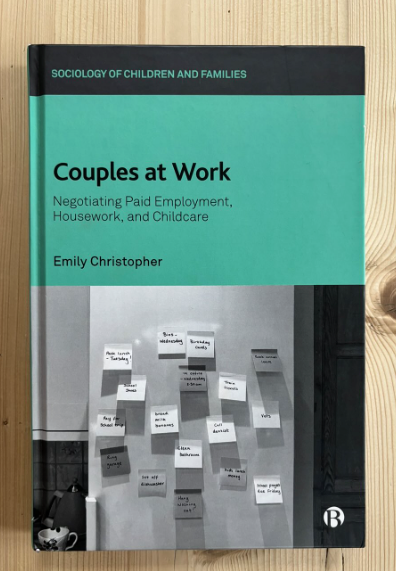
New book from Aston University academic shows that Christmas tasks mostly fall on women
New book by Dr Emily Christopher shows differences in how household tasks are divided by men and women Book highlights that women tend to buy the Christmas presents and send cards Men often see women as being more thoughtful or having better knowledge of what people would like. A new book from Aston University’s Dr Emily Christopher reveals that when it comes to sending Christmas cards and buying Christmas presents, women are still mostly doing the work as they are perceived to have better knowledge of what people would like. Dr Emily Christopher, a lecturer in sociology and policy at Aston School of Law and Social Sciences, has recently published her book Couples at Work: Negotiating Paid Employment, Housework and Childcare, which look at how household tasks are divided by men and women and the reasons behind these divisions. The data for the book has been collated over an eight-year period with couples being interviewed twice to provide a robust set of results. It looks at how different sex parent couples combined paid work, housework and childcare. The research revealed how gender norms continue to shape how certain daily household jobs are divided. Women were more likely than men to clean the house, especially bathrooms, wash clothes and put clothes away. Men still tend to do tasks like mowing the lawn and DIY but now are also more likely to do the cooking and the grocery shopping. The research shows that the key to understanding how household tasks are divided lies in the meaning they hold for partners. With the festive season upon us, the book reveals that woman are largely responsible for the Christmas present buying and sending cards with 100% of those taking part in the research saying that women mostly carried out these tasks. This also included buying for the male partner's relatives. In instances where men had a 'helping' role in these tasks, this included being involved in the discussion or consulting on choice of presents, especially for children, with only a small minority buying presents for their own family. The data revealed that where women didn't choose and buy presents for their partners family, they were still involved in reminding their partners that this needed to be done or advising on choice of gifts, showing that women were still taking on the mental load of planning for the festive season. The book reveals that when men were questioned about why they didn't get involved in present buying, they drew on gender norms. Women were often described, by the men, as being more thoughtful or having better knowledge of what people would like. Men often described how family members wouldn’t receive presents at all if it relied on them. Although much of the gift giving and organising represented love and affection for the women, which many found enjoyable, many still saw it as work and expressed that they would like their partners' to be more involved. Dr Christopher said: “This book takes an in-depth look at the way in which everyday roles around the household are divided between men and women. “The research shows that over a period of eight years fathers increased their role in childcare tasks but this did not always extend to housework. “The pandemic was an opportunity to change how couples share housework but women were still more likely to carry out tasks like cleaning, washing clothes and putting clothes away and overwhelmingly remained responsible for the mental orchestration of family work.”


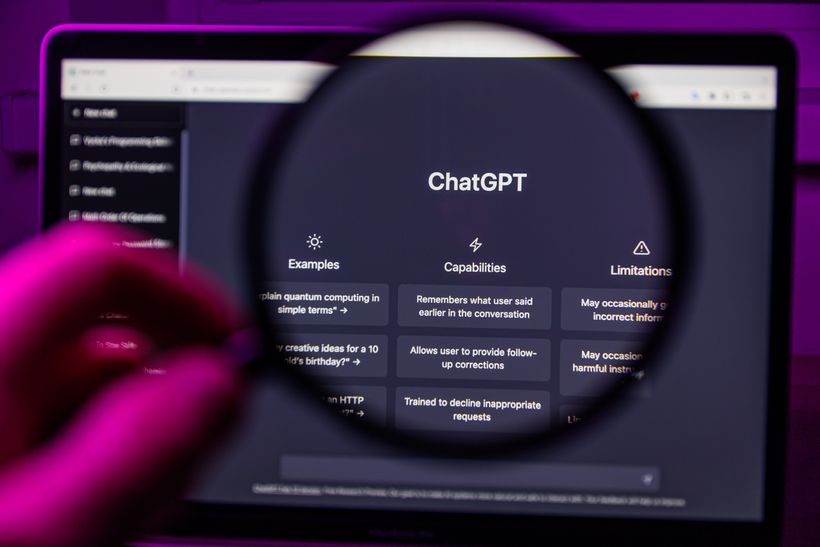
With OpenAI’s latest release, GPT-5.2, AI has crossed an important threshold in performance on professional knowledge-work benchmarks. Peter Evans, Co-Founder & CEO of ExpertFile, outlines how these technologies will fundamentally improve research communications and shares tips and prompts for PR pros. OpenAI has just launched GPT-5.2, describing it as its most capable AI model yet for professional knowledge work — with significantly improved accuracy on tasks like creating spreadsheets, building presentations, interpreting images, and handling complex multistep workflows. And based on our internal testing, we're really impressed. For communications professionals in higher education, non-profits, and R&D-focused industries, this isn’t just another tech upgrade — it’s a meaningful step forward in addressing the “research translation gap” that can slow storytelling and media outreach. According to OpenAI, GPT-5.2 represents measurable gains on benchmarks designed to mirror real work tasks. In many evaluations, it matches or exceeds the performance of human professionals. Also, before you hit reply with “Actually, the best model is…” — yes, we know. ChatGPT-5.2 isn’t the only game in town, and it’s definitely not the only tool we use. Our ExpertFile platform uses AI throughout, and I personally bounce between Claude 4.5, Gemini, Perplexity, NotebookLM, and more specialized models depending on the job to be done. LLM performance right now is a full-contact horserace — today’s winner can be tomorrow’s “remember when,” so we’re not trying to boil the ocean with endless comparisons. We’re spotlighting GPT-5.2 because it marks a meaningful step forward in the exact areas research comms teams care about: reliability, long-document work, multi-step tasks, and interpreting visuals and data. Most importantly, we want this info in your hands because a surprising number of comms pros we meet still carry real fear about AI — and long term, that’s not a good thing. Used responsibly, these tools can help you translate research faster, find stronger story angles, and ship more high-quality work without burning out. When "Too Much" AI Power Might Be Exactly What You Need AI expert Allie K. Miller's candid but positive review of an early testing version of ChatGPT 5.2 highlights what she sees as drawbacks for casual users: "outputs that are too long, too structured, and too exhaustive." She goes on to say that in her tests, she observed that ChatGPT-5,2 "stays with a line of thought longer and pushes into edge cases instead of skating on the surface." Fair enough. All good points that Allie Miller makes (see above). However, for communications professionals, these so-called "downsides" for casual users are precisely the capabilities we need. When you're assessing complex research and developing strategic messaging for a variety of important audiences, you want an AI that fits Miller's observation that GPT-5.2 feels like "AI as a serious analyst" rather than "a friendly companion." That's not a critique of our world—it's a job description for comms pros working in sectors like higher education and healthcare. Deep research tools that refuse to take shortcuts are exactly what research communicators need. So let's talk more specifically about how comms pros can think about these new capabilities: 1. AI is Your New Speed-Reading Superpower for Research That means you can upload an entire NIH grant, a full clinical trial protocol, or a complex environmental impact study and ask the model to highlight where key insights — like an unexpected finding — are discussed. It can do this in a fraction of the time it would take a human reader. This isn’t about being lazy. It’s about using AI to assemble a lot of tedious information you need to craft compelling stories while teams still parse dense text manually. 2. The Chart Whisperer You’ve Been Waiting For We’ve all been there — squinting at a graph of scientific data that looks like abstract art, waiting for the lead researcher to clarify what those error bars actually mean. Recent improvements in how GPT-5.2 handles scientific figures and charts show stronger performance on multimodal reasoning tasks, indicating better ability to interpret and describe visual information like graphs and diagrams. With these capabilities, you can unlock the data behind visuals and turn them into narrative elements that resonate with audiences. 3. A Connection Machine That Finds Stories Where Others See Statistics Great science communication isn’t about dumbing things down — it’s about building bridges between technical ideas and the broader public. GPT-5.2 shows notable improvements in abstract reasoning compared with earlier versions, based on internal evaluations on academic reasoning benchmarks. For example, teams working on novel materials science or emerging health technologies can use this reasoning capability to highlight connections between technical results and real-world impact — something that previously required hours of interpretive work. These gains help the AI spot patterns and relationships that can form the basis of compelling storytelling. 4. Accuracy That Gives You More Peace of Mind...When Coupled With Human Oversight Let’s address the elephant in the room: AI hallucinations. You’ve probably heard the horror stories — press releases that cited a study that didn’t exist, or a “quote” that was never said by an expert. GPT-5.2 has meaningfully reduced error rates compared with its predecessor, by a substantial margin, according to OpenAI Even with all these improvements, human review with your experts and careful editing remain essential, especially for anything that will be published or shared externally. 5. The Speed Factor: When “Urgent” Actually Means Urgent With the speed of media today, being second often means being irrelevant. GPT-5.2’s performance on workflow-oriented evaluations suggests it can synthesize information far more quickly than manual review, freeing up a lot more time for strategic work. While deeper reasoning and longer contexts — the kinds of tasks that matter most in research translation — require more processing time and costs continue to improve. Savvy communications teams will adopt a tiered approach: using faster models of AI for simple tasks such as social posts and routine responses, and using reasoning-optimized settings for deep research. Your Action Plan: The GPT-5.2 Playbook for Comms Pros Here’s a tactical checklist to help your team capitalize on these advances. #1 Select the Right AI Model for the Job: Lowers time and costs • Use fast, general configurations for routine content • Use reasoning-optimized configurations for complex synthesis and deep document understanding • Use higher-accuracy configurations for high-stakes projects #2 Find Hidden Ideas Beyond the Abstract: Deeper Reasoning Models do the Heavy Work • Upload complete PDFs — not just the 2-page summary you were given • Use deeper reasoning configurations to let the model work through the material Try these prompts in ChatGPT5.2 “What exactly did the researchers say about this unexpected discovery that would be of interest to my <target audience>? Provide quotes and page references where possible.” “Identify and explain the research methodology used in this study, with references to specific sections.” “Identify where the authors discuss limitations of the study.” “Explain how this research may lead to further studies or real-world benefits, in terms relatable to a general audience.” #3 Unlock Your Story Leverage improvements in pattern recognition and reasoning. Try these prompts: “Using abstract reasoning, find three unexpected analogies that explain this complex concept to a general audience.” “What questions could the researchers answer in an interview that would help us develop richer story angles?” #4 Change the Way You Write Captions Take advantage of the way ChatGPT-5.2 translates processes and reasons about images, charts, diagrams, and other visuals far more effectively. Try these prompts: Clinical Trial Graphs: “Analyze this uploaded trial results graph upload image. Identify key trends, and comparisons to controls, then draft a 150-word donor summary with plain-language explanations and suggested captions suitable for donor communications.” Medical Diagrams: “Interpret these uploaded images. Extract diagnostic insights, highlight innovations, and generate a patient-friendly explainer: bullet points plus one visual caption.” A Word of Caution: Keep Experts in the Loop to Verify Information Even with improved reliability, outputs should be treated as drafts. If your team does not yet have formal AI use policies, it's time to get started, because governance will be critical as AI use scales in 2026 and beyond. A trust-but-verify policy with experts treats AI as a co-pilot — helpful for heavy lifting — while humans remain accountable for approval and publication. The Importance of Humans (aka The Good News) Remember: the future of research communication isn’t about AI taking over — it’s about AI empowering us to do the strategic, human work that machines cannot. That includes: • Building relationships across your institution • Engaging researchers in storytelling • Discovering narrative opportunities • Turning discoveries into compelling narratives that influence audiences With improvements in speed, reasoning, and reliability, the question isn’t whether AI can help — it’s what research stories you’ll uncover next to shape public understanding and impact. FAQ How is AI changing expectations for accuracy in research and institutional communications? AI is shifting expectations from “fast output” to defensible accuracy. Better reasoning means fewer errors in research summaries, policy briefs, and expert content—especially when you’re working from long PDFs, complex methods, or dense results. The new baseline is: clear claims, traceable sources, and human review before publishing. ⸻ Why does deeper AI reasoning matter for communications teams working with experts and research content? Comms teams translate multi-disciplinary research into messaging that must withstand scrutiny. Deeper reasoning helps AI connect findings to real-world relevance, flag uncertainty, and maintain nuance instead of flattening meaning. The result is work that’s easier to defend with media, leadership, donors, and the public—when paired with expert verification. ⸻ When should communications professionals use advanced AI instead of lightweight AI tools? Use lightweight tools for brainstorming, social drafts, headlines, and quick rewrites. Use advanced, reasoning-optimized AI for high-stakes deliverables: executive briefings, research positioning, policy-sensitive messaging, media statements, and anything where a mistake could create reputational, compliance, or scientific credibility risk. Treat advanced AI as your “analyst,” not your autopilot. ⸻ How can media relations teams use AI to find stronger story angles beyond the abstract? AI can scan full papers, grants, protocols, and appendices to surface where the real story lives: unexpected findings, practical implications, limitations, and unanswered questions that prompt great interviews. Ask it to map angles by audience (public, policy, donors, clinicians) and to point to the exact sections that support each angle. ⸻ How should higher-ed comms teams use AI without breaking embargoes or media timing? AI can speed prep work—backgrounders, Q&A, lay summaries, caption drafts—before embargo lifts. The rule is simple: treat embargoed material like any sensitive document. Use approved tools, restrict sharing, and avoid pasting embargoed text into unapproved systems. Use AI to build assets early, then finalize post-approval at release time. ⸻ What’s the best way to keep faculty “in the loop” while still moving fast with AI? Use AI to produce review-friendly drafts that reduce load on researchers: short summaries, suggested quotes clearly marked as drafts, and a checklist of claims needing verification (numbers, methods, limitations). Then route to the expert with specific questions, not a wall of text. This keeps approvals faster while protecting scientific accuracy and trust. ⸻ How should teams handle charts, figures, and visual data in research communications? AI can turn “chart confusion” into narrative—if you prompt for precision. Ask it to identify trends, group comparisons, and what the figure does not show (limitations, missing context). Then verify with the researcher, especially anything involving significance, controls, effect size, or causality. Use the output to write captions that are accurate and accessible. ⸻ Do we need an AI Use policy in comms and media relations—and what should it include? Yes—because adoption scales faster than risk awareness. A practical policy should define: approved tools, what data is restricted, required human review steps, standards for citing sources/page references, rules for drafting quotes, and escalation paths for sensitive topics (health, legal, crisis). Clear guardrails reduce fear and prevent preventable reputational mistakes. If you’re using AI to move faster on research translation, the next bottleneck is usually the same one for many PR and Comm Pros: making your experts more discoverable in Generative Search, your website, and other media. ExpertFile helps media relations and digital teams organize their expert content by topics, keep detailed profiles current, and respond faster to source requests—so you can boost your AI citations and land more coverage with less work. For more information visit us at www.expertfile.com



Australia’s Under-16 Social Media Ban Isn’t a Finish Line - It’s a Reality Check
Australia’s move to restrict social media accounts for kids under 16 has become a global lightning rod - and it’s forcing the right conversation: what do we do when a technology is too powerful for a developing brain? But here’s what I think journalists should focus on next: “A ban is a speed bump, not a seatbelt. It might slow kids down - but it won’t teach them how to drive their attention.” That’s the part that gets lost in the headlines. Because even if you can reduce access, you still have to deal with the why behind the behavior: boredom, social pressure, loneliness, stress, sleep debt. “The headlines make it sound like the problem is solved. But the real question is: what happens in the living room on day three?” Offline.now’s early data shows something important: most people genuinely want to change their screen habits, but many feel overwhelmed and don’t know where to start. That’s why we begin with a quick self-assessment and map people into four Types - Overwhelmed, Ready, Stuck, Unconcerned - so the advice matches the person. “We keep treating social media like a self-control test. It’s not. It’s a confidence problem - people don’t know where to start, so they start with shame.” What I’d tell policymakers considering similar bans 1. Pair friction with skills. “If the only plan is ‘block the app,’ you’re betting against the internet. Workarounds aren’t a bug - they’re the default.” 2. Don’t outsource responsibility entirely to families. “If policy turns parents into full-time bouncers and kids into part-time hackers, we’ve built a system that’s guaranteed to fail.” 3. Ask what gets protected, not just what gets restricted. “The real target isn’t ‘screen time.’ It’s the moments screens replace.” What parents need to know that headlines aren't telling them This is a process, not a switch. The best “first phone / first social” plans are adjustable. Modeling beats monitoring. The rules collapse if adults don’t follow them too. Have a handoff plan. If a child’s mood, sleep, school performance, or withdrawal is deteriorating, it may be bigger than habits. Why this is a late December / January story “The holidays are the perfect storm: more free time, more family friction, more devices, less sleep. January is when the bill comes due.” Journalist angles Bans vs. behavior change: what policy can’t solve The workarounds economy: age gates, bypass culture, privacy tension The four Types: why one-size fits all screen-time advice fails families New Year resets for families: simple, shame-free agreements that stick Available for interviews Eli Singer - CEO of Offline.now; author of Offline.now: A Practical Guide to Healthy Digital Balance. I speak about practical behavior change, non-judgmental family agreements, and confidence-based starting points - and I can direct people to licensed professionals via the Offline.now Directory when needs go beyond coaching.



As interest in cryptocurrencies move from the fringes to mainstream conversation and public policy debate, Derek Mohr, clinical associate professor of finance at the Simon Business School at the University of Rochester, offers a clear-eyed voice on the subject. Mohr specializes in financial innovation and digital assets, and he’s been in demand with reporters looking to understand the economics behind everything from “Bitcoin-powered” home heaters to gas stations offering discounts for crypto purchases. His message? Not everything that markets itself as a breakthrough actually adds up. For instance, some companies have pitched devices that promise to heat a home using excess energy generated from bitcoin mining. Mohr recently told CNBC the idea might sound clever, but that its practicality collapses under basic financial and engineering realities. “The bitcoin heat devices I have seen appear to be simple space heaters that use your own electricity to heat the room . . . which is not an efficient way to heat a house,” Mohr said. “Yes, bitcoin mining generates a lot of heat, but the only way to get that to your house is to use your own electricity.” Bitcoin mining, he explained, has become so specialized that home computers have virtually zero chance of earning a mining reward. Industrial mining farms operate on custom-built chips far more powerful than any consumer device. In other words, consumers who think they’re heating their homes and earning crypto are, in reality, just paying for electricity and getting no real mining benefit. A pragmatic voice in a volatile space Mohr’s research and commentary help explain not just what is happening in the crypto world, but why it matters for consumers, businesses, and regulators. Whether evaluating the economics of mining or the viability of crypto payments, he brings a steady, analytical perspective to a domain dominated by hype and fast-moving news cycles. For journalists covering cryptocurrency, fintech, and the future of financial transactions, Mohr is available for interviews on digital payments, bitcoin mining economics, crypto regulation, and emerging trends in financial technologies. Top contact him, reach out to University of Rochester media relations liaison David Andreatta at david.andreatta@rochester.edu.


Why Are Canadian Banks Not Protecting Seniors? The $40 Billion Dollar Question
After an 89-year-old Victoria man lost $1.7 million to phone scammers despite bank red flags, retirement expert and authour, Susan Pimento, exposes a critical protection gap: while U.S. banks like Bank of America offer "Trusted Contacts" (designated people banks call to verify suspicious transactions) for all accounts, Canadian banks restrict this safeguard to investment accounts only—leaving everyday banking vulnerable where most fraud occurs. In Canada, senior fraud is vastly underreported (RCMP estimates only 5-10% surface), and banks are treating this as a cost issue rather than a moral crisis. Susan Pimento is available for interviews to discuss practical solutions, industry insights from her decades of work within financial institutions, and why Canadian banks are failing to implement a simple fix that could save seniors' life savings. Connect with her directly through ExpertFile to schedule TV, radio, podcast, or print interviews. As I was polishing this post for Canadian Financial Literacy Month, another senior fraud story flashed across my screen. This one stopped me cold. According to this CBC story, an 89-year-old man in Victoria, B.C., was tricked into handing over nearly $1.7 million of his life savings in a months-long phone scam. The caller claimed to be from the fraud department at CIBC and said he was helping with a national money-laundering case. (Spoiler: he wasn't.) Despite red flags and staff awareness, the bank still allowed large in-person withdrawals. He was told to buy gold bars — yes, actual gold bars — with drafts of up to $395,000, which couriers then collected like some twisted Uber Eats retirement fraud. Every week in Canada, we see another heartbreaking headline: a senior sends thousands, sometimes millions, to a scammer pretending to be their grandchild, the CRA, or — the ultimate irony — their bank. These scams targeting seniors don't require fancy hacking. They rely on fear, isolation, and misplaced trust. Once the money's gone, it's gone—no refund policy. And here's the kicker: what we're reading about is just the tip of the iceberg. For seniors, fraud now ranks as the top crime, and most fraud goes unreported—especially in this demographic. In a previous post, I showed how the data suggests the real figures could be 10 to 20 times higher than what's officially reported. The RCMP estimates that only 5-10% of fraud victims come forward. Many victims never speak out due to embarrassment, fear, or confusion. Translation? For every story that makes the news, countless others suffer in silence. How The Banking Industry Can Actually Fight Fraud I've worked within financial institutions for decades. Let's just say I understand how the process works. Banks have billion-dollar tech stacks, layers of compliance, and advanced fraud detection systems that can flag a suspicious $47 transaction in milliseconds. But the solution for this type of fraud isn't a multimillion-dollar algorithm or a new "AI-powered fraud prevention dashboard." Instead, it's a human-based approach called a Trusted Contact. What's a "Trusted Contact," Anyway? It's not an app, a chatbot, or some new gadget that requires a firmware update every Thursday. It's a person. Someone you trust — a family member, attorney, accountant, or another third-party who you believe would respect your privacy and know how to handle the responsibility of communicating with your bank in your best interests if something suspicious occurs. They don't access your money or view your accounts. They can't see that you spent $47 at the LCBO last Tuesday (Your secret is safe). They're simply your human safety net — a fraud wing person, if you will. The Origins of the Trusted Contact The concept began in the U.S. in 2018, when FINRA mandated investment firms to request a Trusted Contact Person. Canada followed in 2022, when the Canadian Securities Administrators introduced similar guidance for investment accounts. What things can be discussed with a trusted contact? As its name implies, a Trusted Contact is a designated person who is inherently trusted by the individual (and has no authority to transact business on a client’s account), so there is little to no danger that any reasonable disclosure would violate a client’s trust or give rise to any material issue.” What Canadian Banks Are Doing...And Not Doing Here's the good news. If you invest through Wealthsimple, RBC Direct Investing, TD Direct, or BMO InvestorLine, you can already designate a Trusted Contact. But here's where it gets ridiculous: RBC Direct might have that security feature — but your regular RBC chequing account? Not so much. That protection vanishes the moment Mom or Dad logs into their everyday banking. And that's where most fraud actually occurs. It's like installing a state-of-the-art security system on your front door but leaving the back door wide open with a welcome mat that says "Scammers Enter Here!" Fraud in Canada for Banks is Still a Budget Item: Not a Moral Crisis Here's the uncomfortable truth: For banks, fraud is considered a "cost of doing business." And since most of those losses are borne by customers, not the bank, there isn't much urgency to innovate. The Big Five earned over $40 billion in total last year. They have the means to care. They're not particularly motivated to actually do so. The Big Opportunity for Banks: Add a Little Humanity to the System Banks like to boast about their AI, blockchain, and next-gen fraud analytics. But most scams don't occur because of breached firewalls — they happen because of breached hearts. A Trusted Contact provides an additional simple, low-tech layer: human verification. Picture this: The bank spots an unusual transaction — a large new payee, an international wire transfer, or a sudden gold-bar purchase (it happens). Instead of sending another automated text alert, the system could ask: "This looks unusual. Would you like us to confirm with your Trusted Contact before proceeding?" or “Just a heads-up: scammers often use urgent or unusual requests. Prefer we run this by your Trusted Contact before we proceed?” That's it. One additional step. One extra set of eyes. One brief conversation could save someone's life savings. This isn't about limiting independence — it's about safeguarding autonomy. Ensuring your decisions are genuinely yours, not the scammer's. Banks could even call it "Senior Protection Mode." I'd sign up tomorrow. Heck, I'd pay extra for it. (Shhh, don't tell them that.) Here's the Proof Trusted Contacts Work: Bank of America Did It In 2022, Bank of America became the first major bank to extend Trusted Contacts beyond investment accounts to everyday banking clients. Customers can now add a trusted person the bank can call if something seems wrong, if they can't reach you, or if staff suspect undue influence. That person can't access your money — they're just the human speed bump before disaster: one simple form, one phone number, and much heartbreak avoided. If Bank of America can do it, why can't ours? Canadian banks already have the tech — and indeed the profits — to make it happen. What's Holding Canada's Banks Back? Cue the usual excuses: "Our legacy systems can't handle that." Sure — some of your code still thinks "Y2K" is an active threat. But if you can build an app that tracks my latte points and sends me notifications about my "spending insights," you can add one field for a Trusted Contact. "Privacy laws make it risky." Nope. FINRA and the CSA already provide safe-harbour protections. With consent, banks can legally contact a Trusted Person. Just add a checkbox. You love checkboxes. You make us check dozens of them every time we update our password. "Customers haven't asked for it." They're asking now. Loudly. With megaphones. And pointing at stories like the Victoria gentleman who lost $1.7 million in gold bars. The business case has historically been weak because most fraud losses affect customers, not the bank's balance sheet. But here's the catch: every fraud story damages trust. And in banking, trust is supposed to be the core of the business. For Canadian Banks There's a Competitive Advantage in Caring Rolling out a Trusted Contact feature isn't just good ethics; it's good business. Imagine the marketing campaign: "We don't just protect your password — we protect your peace of mind." Seniors would love this. So would their kids. That's multi-generational loyalty money can't buy. If EQ Bank or any challenger brand wanted a PR home run, this would be it. It's Time to Take Action on Fraud To the Banks: Stop waiting for regulators to force your hand. Lead. Be the first to offer Trusted Contacts for all customers — not just investors. You have the framework, the talent, and the budget. You absolutely do not need another consultant to tell you this is the right thing to do. To Policymakers: The Financial Consumer Agency of Canada should update its Code of Conduct to include a mandatory Trusted Contact option for all customers, safe-harbour rules allowing banks to pause suspicious transactions, and annual public reporting on outcomes. Because sunshine is the best disinfectant, even in banking. To Consumers: Don't wait for policy — be the policy. Ask your bank today if you can add a Trusted Contact. If they say no, ask why not — and post it. Loudly. Talk to your family. Choose your Trusted Person now. Write your MP or MPP and ask why U.S. banks protect seniors better than ours. Remember the $3 ATM Fee Rebellion? Canadians once revolted over paying $3 to access their own money at ATM's. We later got no-fee accounts, digital challengers, and a whole new generation of more innovative banking. If we can rally over an ATM fee, surely we can rally to protect our parents and grandparents from losing their life savings. Fraud isn't an inevitable part of aging — it's a solvable problem. And Trusted Contacts are one of the simplest, most human solutions we have. Don't Forget Two-Factor Authentication for the Soul Adding a Trusted Contact won't stop all fraud — let's be clear about that. But it will go a long way toward slowing it down, adding a common-sense pause, and potentially saving even one senior from losing any part of their hard-earned money. It's unfortunately too late for that gentleman and his family in BC, but it's not too late for countless others. This won't crash legacy systems or drain bank profits. It just adds a little humanity back into banking — right where it belongs. Because the best kind of security isn't just two-factor authentication. It's two people who care. And if we don't care about protecting our elders, who exactly do we care about? Sue Don’t Retire…Re-Wire! Want to become an expert on serving the senior demographic? Just message me to be notified about the next opportunity to become a "Certified Equity Advocate" — mastering solution-based advising that transforms how you work with Canada's fastest-growing client segment.

