
Experts Matter. Find Yours.
Connect for media, speaking, professional opportunities & more.

With debating done – what left in the last week of the 2020 presidential election campaign?
The road to the White House and the long and winding road of the 2020 presidential election campaign is finally coming to an end. With three debates schedules – one raucous, one canceled and the final one well moderated and with bad behavior reigned in by muted microphones, all that is left is getting out the vote and the final push to sway undecideds. This year, and the election race that took place during it, was like no other – and though voters and the American people can now see the light at the end of the tunnel, there’s still a lot to watch for as November 3rd approaches. And that’s where our experts can help if you are covering. The University of Mary Washington has one of the foremost political experts in the country who can help with your stories. Dr. Stephen Farnsworth is a sought-after political commentator on presidential politics. He has been widely featured in national media, including The Washington Post, Reuters, The Chicago Tribune, and MSNBC. Stephen is available to speak with media any time regarding the election – simply click on his icon to arrange an interview today.



As the persistent turmoil of protests grips America on an almost daily basis, people are becoming more aware of issues, getting engaged and taking sides. Be it around the dinner table debating, marching in the streets or even arguing on a national news panel – topics like Black Lives Matter, masks during COVID, the upcoming election or a host of other hot-topic issues are all part of the American conversation these days. It’s easy and even healthy for people to debate the issues – but for a business to pick a side on a controversial topic, it’s a much different picture. One recent example was Nike’s support of NFL quarterback Colin Kaepernick. However, Nike also had the resources to bolster their support. They had a multi-million-dollar ad budget, a public relations machine generating hours of earned media – and the company was, for the most part playing to its core audience. Though there was push-back, Nike was rewarded with increased sales and its stock surged. For almost a decade now, Chick-fil-A has also boldly taken a stance with its opinion on gay marriage. The restaurant chain has faced mountains of negative press and protests, but the fast-food giant’s bottom lined never suffered. It still sees sales over 10 billion a year. For Nike and Chik-Fil-A and their deep pockets to wade into the fray with an opinion – it’s one thing, but for a small business to share how it feels, there’s a matter of weighing risk versus reward no matter how important the topic might be. “It may well be that it’s harder for entrepreneurs to create a viable business model for their venture in a more polarized context, says Giacomo Negro, a Professor of Organization & Management at Emory University’s Goizueta Business School. “If your business is more hybrid—if you’re supportive of a cause without being overtly affiliated with it—then it could be harder to engage other customers or clients who are uncomfortable doing business with a firm that is even vaguely linked to a specific social group or movement. Similarly, the core supporters of the cause can look at the same organization as not authentically engaged with them.” His findings certainly suggest that existing in a “gray zone,” where you take neither one side or the other, is a hard place for organizations to thrive in times of social change. “If protest activates the cultural boundary surrounding a group’s identity, then increasing protest participation will threaten the viability of precisely those organizations trying to engage inside and outside audiences,” Negro said. “At the same time, bridging inside and outside audiences also conveys a confusing identity and a more limited commitment to pursuing goals relevant to either audience.” With a global pandemic impacting all aspects of national and local economies – small businesses are under pressure to sustain and survive like never before. And if you are a journalist looking to cover the state of small businesses in America and whether or not small business has a role to play in protests and politics in America – then let our experts help with your coverage. Giacomo Negro is a Professor of Organization & Management at Emory University’s Goizueta Business School and is an expert in the area of economic sociology. His resent research study research study, “Which Side Are You On? The Divergent Effects of Protest Participation on Organizations Affiliated with Identity Groups’ focuses on this very subject. Professor Negro is available to speak with media about this topic – simply click on his icon to arrange an interview today.



Continuing to Learn and Explore American History
In the United States, students take several American history courses throughout their K-12 experience. So, why should students bother to continue taking American history courses in college? For Southern Utah University's Dr. Mark Miller, the answer is simple. “When I teach a history course, I am always looking for ways to point out how an issue or event in the past is relevant to something going on in today's world,” said Dr. Miller. “With this year's presidential election going on there have been plenty of examples to tie into regarding past politics and past political crises we have lived through as Americans.” Dr. Miller has conducted some exciting research that will be published in 2021. His upcoming articles includes: “Polygamy under the Red Cliffs: Women’s Voices and Historical Memory at Centennial Park” in Utah Historical Quarterly, “A River Again: Fossil Creek, Desert Fishes, and Dam Removal in the American Southwest” in Pacific Historical Review, and “‘One Territory, Many Peoples:” Racial and Ethnic Groups and the Development of Arizona Territory” in The Smoke Signal. “I think my work on plural marriage and environmental history shows that history is never dead,” said Dr. Miller. “It reveals that in current debates history is quite important. What happened in the past still informs the present. Since both of these topics are quite controversial today, I think historians provide a valuable service by exposing the history behind debates over allowing polygamy in modern America or whether we should make trade offs in development and water use to preserve unique species. Knowledge of people who practice plural marriage and their religious history as well as the history of preservation efforts toward endangered species is vital to all participants in the debates.” Dr. Mark Miller is a professor of history and the department chair of History, Sociology, & Anthropology at Southern Utah University. His research and teaching specialties include United States History, American West, Borderlands, Indigenous Culture and History, World Civilization, and Latin America. He has published articles and books on modern American Indian History, most recently Forgotten Tribes (2006) and Claiming Tribal Identity (2013). He has published articles on race and ethnicity, on indigenous identity and politics in several journals. Dr. Miller is familiar with the media and available for an interview. Simply visit his profile.


Tonight’s face-to-face U.S. presidential debate between Democratic nominee Joe Biden and U.S. President Donald Trump has had all the lead up and electricity of a prize fight. This election, like this year – will be like no other. With traditional campaign festivities for the most part curbed due to COVID-19, this U.S. presidential debate, along with the next two, will serve as the only opportunity for the two candidates to be together in the same place to duke it out live before millions of viewers watching around the globe. There is a lot at stake, and if you are a reporter covering the U.S. presidential debates, Florida Atlantic University’s renowned political science expert, Kevin Wagner, Ph.D., is here to answer all of your questions and is available for interviews. Wagner's research and teaching interests include presidential and judicial politics, political behavior, and legislative behavior. He is also a research fellow of the FAU Business and Economics Polling Initiative (BEPI). Wagner is readily available to speak with media about the debates and the ongoing election – simply click on his icon to arrange an interview today.


Expert comment: Joe Biden formally nominated at US Democratic Convention
Dr Trevor McCrisken, expert in US politics at the University of Warwick (UK), comments: The Democratic Party brought out its heavy hitters to formally nominate its presidential candidate Joe Biden last night, with two former US Presidents, Jimmy Carter and Bill Clinton. The Virtual Convention may not have all the excitement and hoopla of the usual pre-election showcase, but the Party is doing its best to unite progressives and moderates in the party behind the Biden-Harris ticket. What's more they're reaching out to disgruntled Republicans with endorsements for Biden from key figures including none other than former Secretary of State Colin Powell, who has served in three Republican presidencies.

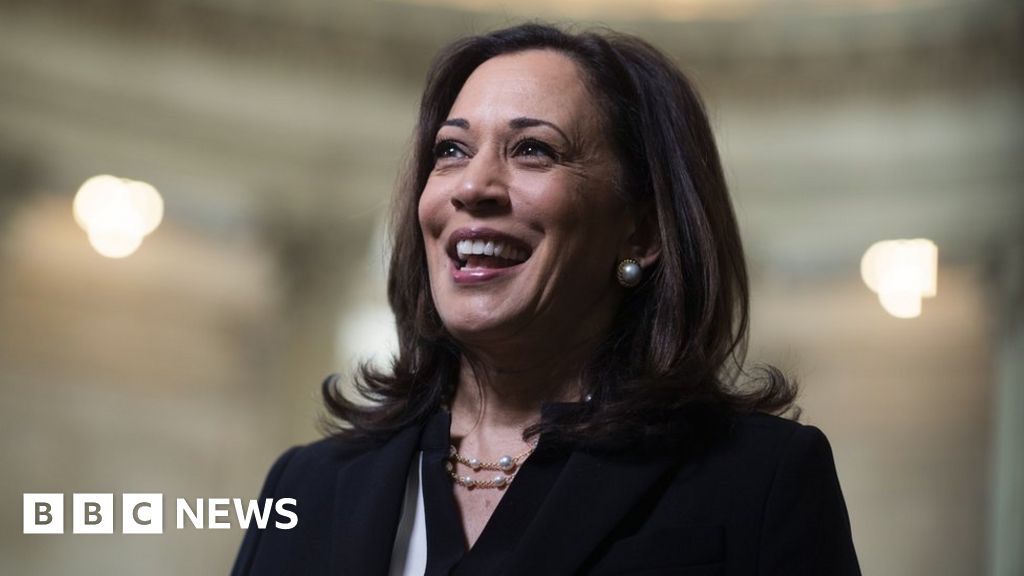
It's on - Are Biden and Harris a dream ticket for voters?
For some it is a dream come true. For Donald Trump – there appears to be a nightmare on the horizon. When Joe Biden chose Senator Kamala Harris as his running mate, it seemed like the ultimate trump card was played on the president himself. The announcement dominated newscasts across the globe. Harris is a strong candidate with a political resume that few can rival. Her young age off-sets that of Biden and the fact that she is a woman of color – and the chance for America to make history once again – makes the path to the White House seem unstoppable. However – no campaign is perfect, nor easy in America these days. And voters should expect lots of political punches and mudslinging in the party conventions and debates, all the way up to Election Day. What can Americans expect as the campaigns kick off? Will Harris’s past policies and record as Attorney General dull her shine? She clashed last summer with Biden over issues of race – has all been forgiven and forgotten? And is America finally ready to elect a woman of color into the highest halls of government? It is going to be a long and winding road until the November election – and if you are a journalist covering this topic, the University of Mary Washington has one of the foremost political experts in the country who can help with your stories. Dr. Stephen Farnsworth is a sought-after political commentator on presidential politics. He has been widely featured in national media, including The Washington Post, Reuters, The Chicago Tribune, and MSNBC.
A record number of female candidates are running in 2020
It’s been a full century since the 19th Amendment was passed in the United States, giving women the right to vote. This year, women are not only casting their ballots - they're appearing on them in record numbers. A record number of women are running for Congress this year, boosted in part by a surge of Republican women seeking office in a party struggling to regain lost ground with female voters. The influx adds to the advances female candidates — mostly Democrats — made in the 2018 midterm election that helped reshape the makeup of Congress. It also has echoes in the presidential race, based on voting patterns from two years ago and Democrat Joe Biden’s lead in polls over President Donald Trump among female voters. Biden has vowed to pick a woman as running mate. As of July 1, 574 women had filed to run in primaries for U.S. House seats, topping the record 476 from two years ago, according to data compiled by the center. Another 58 women filed to run for the Senate, compared with 53 in 2018. In all, that’s a 20% increase in women making congressional bids. July 13 – Providence Journal It is an impressive number and one every American should be proud of. But there are a few questions that still need to be asked. With close to 220 GOP women vying for a seat in Congress – has the party that traditionally does not have the support of women voters finally changed its course? Are female candidates motivated by the need to change when it comes to key issues like health care, the environment, and the economy? If you are a journalist looking to cover the increased number of females running for elected office this November – then let our experts help. Dr. Rosalyn Cooperman, associate professor of political science at the University of Mary Washington and member of Gender Watch 2018, is an expert on women in politics. She is available to speak with media regarding this topic – simply click on her icon to arrange an interview.


What does Kamala Harris' candidacy for vice president mean for women of color in America?
It wasn’t necessarily a surprise to insiders, but Joe Biden’s announcement that Sen. Kamala Harris will be his running mate in the 2020 presidential election took America by storm. News outlets, pundits and posters to social media all took to different mediums to discuss the historical significance of a female woman of color being on the ballot and what this means for America. Harris has obviously broken through the glass ceiling that still existed for those seeking the office of the vice president in Washington, but she is refreshingly just one of several strong females from minority communities who are starting to make a difference and have an impact on the makeup of modern American politics. In many recent elections, black women voters have voted overwhelmingly for Democrats, and had the highest turnout rate among all racial, ethnic and gender groups between 2008 and 2012, according to The New York Times. Women of color are an emerging force in politics, but is America ready to elect a woman of color to vice presidency? It will be an interesting campaign. With Biden and Harris in fact facing President Donald Trump and amid a global pandemic, this will be one of the most hotly followed and unconventional quests for the White House in history. If you are a journalist covering this topic – then let an expert from Augusta University help with your story. Dr. Mary-Kate Lizotte is an expert in political behavior and the implications of gender differences in public opinion, including society’s views of female candidates of color. She is available to talk about the upcoming election and all aspects surrounding each campaign. Click on her name to schedule an interview.


Canadian's Digital Behavioral Shifts in Relation to the The Coronavirus Pandemic
This article is part of a series of insights that reveal a Canadian perspective on the impact of the COVID-19 pandemic on consumer behavior and significant audience shifts across digital platforms. Things are moving fast. Following our last update regarding digital media consumption during the Coronavirus pandemic, this article will highlight some of the major category changes reflected as of the week March 16 - 22, 2020. Key Insights from Our Analysis Digital consumption continues to grow: the visits and minutes curve is not flattening Key content categories such as news, social media, and government are being driven by higher engagement: metrics include visits and duration More engagement with news sites: sites categorized as local, business/finance, and general news are main drivers Categories that focus on entertaining, kids, food, financial advice, and children’s education are also seeing growth: growth comes from increases in aggregate unique visitors, visits and minutes Automotive manufacturers, real estate, sports and travel entities have seen decreases: however, they are poised for major increases and a bounce back. Mobile platforms are driving growth: some differences between desktop and mobile engagement Canadian's total digital consumption continues to grow When we analyzed Canadian total digital media consumption to compare the percentage change between the week of March 16, 2020 and the first weeks of January 2020, February 2020, and March 2020, we found that overall digital engagement is not flattening. Even comparing the beginning of March against mid-March, we can see visitation, visits, and engagement continuing to grow. Looking at the total digital consumption trend over time, we can see growth in total minutes spent online while total visits have remained relatively flat. Media Consumption Growth by Category There are several content categories that we are seeing major growth in each of the time periods: These digital categories of news/information, social media, entertainment, government and games are showing continuous growth. The need for ongoing news and information updates, government information, flocking to social media to bring community together and message, and the need to be entertained with visitation and engagement on Entertainment and Games Entities. News and Information Category Insights To look at the news/information category a bit closer – it is amazing to see the category growth over the past few weeks of Canadians going to news entities to get updates. The hockey stick growth from the start of March 2020 is very evident. The news and information growth is being driven by local news, general news, and business/finance news. That being said – technology, politics, and weather are also seeing growth. Through these time periods, we are also seeing some other categories that are showing significant growth. Many of the categories are a result of many Canadians being home bound and isolated, and with families with kids having the kids at home. Platform Variance for Media Consumption One of the areas that we have been asked most about is whether we find any variances between desktop and mobile platforms. When reviewing the data, there is greater engagement with mobile platforms in the week of March 16 compared to other weeks. Amidst the global COVID-19 pandemic, we are seeing a significant increase in digital consumption amongst Canadian consumers. The data trends show Canadians are flocking online with significant growth in news entities, instant messaging, social media, government resources, entertainment, music destinations, video, and financial websites. What this means for marketers and advertisers is a significant opportunity to reach Canadians who are highly engaged and are looking for relevant and timely content. It comes down to delivering the right message, at the right time, in front of the right audience, in brand safe environments.



Insights and Analysis of Canadian Digital Media Consumption During the Coronavirus Pandemic
In the midst of the COVID-19 crisis, millions of Canadians are staying home and turning to their computers, smartphones, and tablets as a core source of news, information, education, and entertainment. This article is part of a series of insights that reveal a Canadian perspective on the impact of the COVID-19 pandemic on consumer behavior and significant audience shifts across digital platforms. This week we will highlight some of the major category changes reflected as of the week March 23 - 29, 2020. Key Insights from Our Analysis: Digital consumption continues to grow, although at a slower pace Canadians are still consuming news at a record pace, but growth is slowing Sports and Real Estate declines are slowing Retail overall is stable but key categories like Toys, Apparel, and Books are increasing in consumption Canadian usage in Dating, Pets, Food, and Family & Youth Education on the rise Canada's Total Digital Population An analysis of Canadian Total Digital Media consumption looking at the percent change from week of March 23, 2020 to March 29, 2020 from the previous week of March 16, 2020 to March 22, 2020 showed continued increase of Unique Visitors (UVs), Visits, and Minutes, but does reveal that some increases are at a slower rate than previous weeks. Unique Visitors grew by +1%, Visits by +2%, and Minutes by +5%. At a top line that is still substantial growth, but throughout this release we will give insights into what is driving these increases, and in some cases highlight categories that are starting to show recovery. Analysis from the News and Information Category This category has been a huge focus over the past few releases given the amazing growth of Unique Visitors, Visits, and Minutes as COVID-19 became more prevalent in Canada. Canadians flocked to News/Information websites in record numbers driven by General News, Local News, Weather, and Politics. With that being said, during our latest week of data (week of March 23, 2020 to March 29, 2020) we have seen a lower percentage increase for the category. There is still growth, but the growth is at a slower rate. The category is still a huge area of focus and visitation and engagement are near record high levels. Analysis from the Retail Category The Retail category has also been a particular focus as bricks and mortar shopping has significantly changed, and in some places closed where they are deemed non-essential. Overall, the Retail category has seen a pretty flat line of growth in Unique Visitors, Visits, and Minutes. That being said, we have seen some sub-categories show growth that is greatly over-indexing. This growth in the Retail category is being driven by these subcategories: Toys, Books, Apparel, Sports/Outdoor, Department Stores/Malls. Toys is leading the charge with a 27% week-over-week growth in Unique Visitors. Analysis from Sports and Real Estate Categories The Sports and Real Estate categories have been two of several categories hit by major decreases in visitation and engagement during the COVID-19 pandemic in Canada. With live sports on hold for most of the major sports leagues in North America – there has been a decline across the board. That being said, during the week of March 23, 2020 to March 29, 2020 for the first time since our COVID-19 analysis began we have seen a decrease in the rate of decline in Visitation, and an in fact an increase in week-over-week Minutes. In terms of the Real Estate category, we have seen small week-over-week decreases with -3% in Unique Visitors, -7% in Visits, and -6% in Minutes – compared to the double-digit declines in the past few weeks. Insights from Other Categories of Interest There were a few other categories that hit our radar this week when looking at the data. These categories have seen week-over-week increases – that show Canadians are increasing Visitation and Engagement with this content. Many of these categories reflect the reality that people are isolated at home – with either kids (whom they must entertain and educate) or without kids or a partner – and they are looking to meet new people (Dating). The Pets category showed big increases, and Lifestyle – Food showed increases in activity. Canadians are apparently focused on love, kids, pets, and their tummies!