
Experts Matter. Find Yours.
Connect for media, speaking, professional opportunities & more.
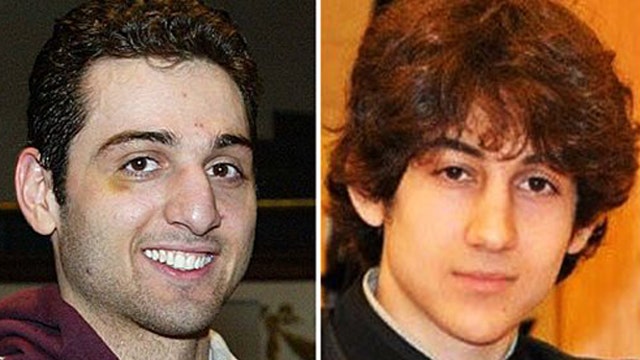
It was a news story that shook America and shattered the lives of many in Boston. Tamerlan Tsarnaev and Dzhokhar Tsarnaev set off two bombs at the Boston Marathon finish line. The ensuing manhunt and standoff had America on edge for days. Augusta University’s Dr. Craig Albert was front and center on national news during that time, helping journalists and audiences understand the motivation behind these horrible acts. His interview with Fox's Megyn Kelly is available below: Dr. Craig Albert is director of the Master of Arts in Intelligence and Security Studies at Augusta University. He is a leading expert on war, terrorism and American politics, and he testified before U.S. Congress regarding the threat from Chechnya following the deadly bombing. With this story now back in the headlines after a federal appeals court overturned the death sentence for Dzhokhar Tsarnaev, Albert is available to speak with media – simply click on his name to arrange an interview today.


This presidential election will undoubtedly be the most contentious, controversial, and probably extraordinary in American history. If you thought 2016 was a spectacle, now Joe Biden and Donald Trump are facing off during a global pandemic, which will inevitably force the traditional styles of campaigning like whistle stops and rallies to pivot toward digital town halls and online chats. Despite polling, both parties know they cannot take anything for granted. And there are a lot of factors at play: Has anyone done an almost exclusively online campaign before? What will a lack of massive rallies mean for Donald Trump? What can Joe Biden learn from the Clinton campaign? What are the key states at play and why do they matter so much? Can either candidate bridge the divide between a very divisive America? The next 99 days will be a long and drawn out marathon of drama, policies, and political punches. And if you are covering, let Dr. Stephen Farnsworth be your go-to for everything you need to know during this election. Dr. Stephen Farnsworth is a sought-after political commentator on presidential politics. He has been widely featured in national media, including The Washington Post, Reuters, The Chicago Tribune, and MSNBC. He is author or co-author of six books on presidential communication. Dr. Farnsworth is available to speak with media and help with your coverage – simply click on his icon to arrange an interview today.



Clarifying the electoral college before this November’s election – let our experts explain
With a divisive and hyper-charged election on the horizon in America, the Supreme Court may have done the country a favor and avoided a constitutional crisis before it happened. The court delivered a unanimous opinion on faithless electors and how those who represent states are to cast their votes in the electoral college. The Supreme Court ruled unanimously Monday that a state may require presidential electors to support the winner of its popular vote and may punish or replace those who don’t, settling a disputed issue in advance of this fall’s election. Justice Elena Kagan wrote for the court as it considered for the first time the issue of “faithless electors” and whether the Constitution sees members of the electoral college — whose votes ultimately elect the president — as representatives of the intent of their state’s voters or as independent thinkers. The Washington state law at issue “reflects a tradition more than two centuries old,” Kagan wrote. “In that practice, electors are not free agents; they are to vote for the candidate whom the State’s voters have chosen.” In layman’s terms, it simply means representatives to the electoral college are not casting a vote of conscience, but a vote that follows the will and intentions of the popular vote of each specific state. Popular votes and the electoral college have been hotly debated topics during this century’s elections, and if you are a journalist covering this Supreme Court decision or have questions about the upcoming elections – then let our experts help. Dr. Craig Albert is an expert in American politics and he is available to speak with media – simply click on his name to arrange an interview today.
Is Asia a powder keg ready to blow?
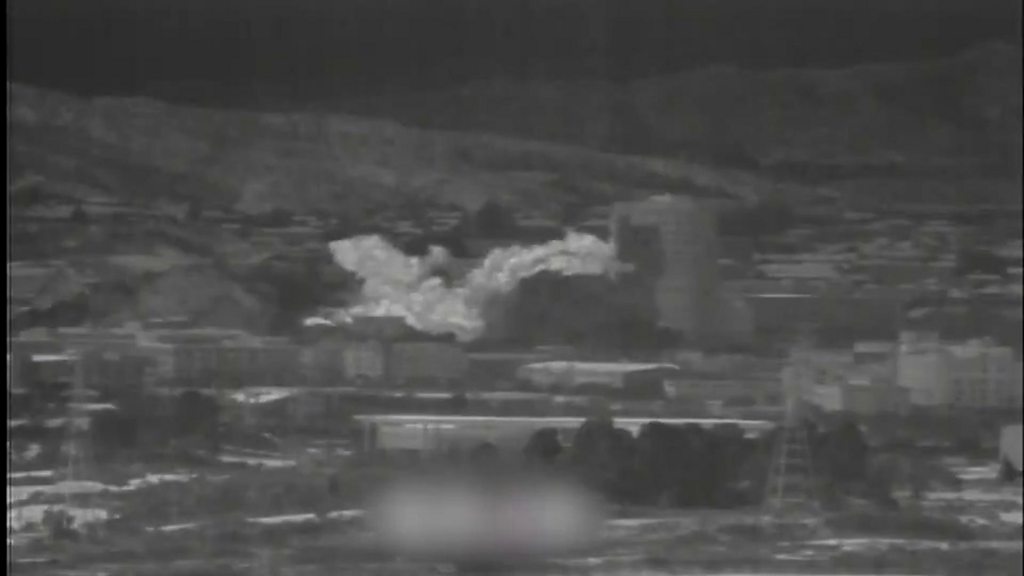
This week has seen rising tensions across Asia with key players facing off on what looks to be a dramatic rise in tensions with the potential for action. First off … Korea, where early Tuesday the first salvo was thrown: North Korea has blown up a joint liaison office with the South near the North's border town of Kaesong. The move comes just hours after the North renewed threats of military action at the Korean border. The site was opened in 2018 to help the Koreas - officially in a state of war - to communicate. It had been empty since January due to Covid-19 restrictions. In a statement, South Korea warned it would "respond strongly" if the North "continues to worsen the situation". The destruction of the office, it said, "abandons the hopes of everyone who wanted the development of inter-Korean relations and peace settlement in the Korean Peninsula". "The government makes it clear that all responsibility of this situation lies in the North." June 16 - BBC And this incident occurred which saw gun fire traded between China and India for the first time in almost a half century: Three members of India’s armed forces have been killed in a “violent face-off” with Chinese soldiers on their disputed Himalayan border, the Indian army has said in a statement. The deaths are the first loss of life in the border area in at least 45 years, and come amid a renewed dispute between the two countries in recent weeks. Indian and Chinese soldiers, who often do not carry weapons in the area to avoid escalating conflicts, have brawled, detained each other and deployed forces and equipment in the western Himalayas in recent weeks. “During the de-escalation process under way in the Galwan Valley, a violent face-off took place yesterday [Monday] night with casualties on both sides,” the Indian army said in a statement on Tuesday afternoon Delhi-time. “The loss of lives on the Indian side includes an officer and two soldiers.” It said “senior military officials of the two sides are currently meeting at the venue to defuse the situation”. It was unclear whether shots had been fired or if the men were killed in hand-to-hand combat. Several Indian media reports cited defence sources claiming the fighting involved stones and clubs. The Chinese also military suffered casualties, according to a tweet by the editor-in-chief of China’s state-run Global Times newspaper. “Based on what I know, Chinese side also suffered casualties in the Galwan Valley physical clash,” Hu Xijin wrote. He did not give further details. June 16 - The Guardian The world seems on edge, and if you are a journalist covering these topics and you need the perspective and input of an expert who can help with your story – then let us help. Dr. Glen Duerr's research interests include comparative politics and international relations theory. Glen is an expert on this subject and is available to speak to media regarding this topic– simply click on his icon to arrange an interview.


Protests and politics – let our expert explain how one influences the other
The protests that have been occurring across most of America have seen politically charged language, action, and reaction. Calls for change have been made, and promises have followed by those seeking to attain office or remain in office once the dust has settled and America goes to the polls in the fall. In a recent essay, former President Barack Obama touched on how those protesting can translate emotions into action. “Throughout American history, it’s often only been in response to protests and civil disobedience that the political system has even paid attention to marginalized communities,” said Obama. ”Eventually, aspirations have to be translated into specific laws and institutional practices — and in a democracy, that only happens when we elect government officials who are responsive to our demands.” Social movement expert and Augusta University Sociology Professor Dr. Todd Powell-Williams says protest movements have a significant impact on politics. His research shows societal change not only happens as a result of the crowd but also because the protests get people politically activated. “From the Boston Tea Party to the protests of the Civil Rights Movement, protests have had some degree of success in changing the course of history,” said Powell-Williams. “The recent protests against racial injustice are no different and I’m sure it will influence the outcomes of upcoming elections.” If you are a journalist looking to cover this topic, then let our expert help with your questions and coverage today. Dr. Todd Powell-Williams is an expert in social movements, social control, religion, police science and symbolic interactionism. He is available to speak with media regarding this topic — simply click on his name to arrange an interview. Also, check out the Augusta University Expert Center to view a complete list of our experts.


What will the extradition of Meng Wanzhou mean for relations between Canada, China, and the U.S.?
There is the rule of law, and there’s politics – but what happens when you are a country like Canada stuck in the middle of an ugly legal battle between China and America? This Monday, in Vancouver – a hearing is underway that will see one of the world’s titans victorious and the other, probably quite angry. Legal arguments at the B.C. Supreme Court in the extradition case of Huawei executive Meng Wanzhou may stretch into next year. Crown lawyer Robert Frater told the court Wednesday that lawyers for both sides will propose a new schedule later this month that would bring the hearings to a close in early 2021 at the latest, instead of this fall. The Unites States wants Canada to extradite Meng over allegations she misrepresented the company’s relationship with Skycom Tech Co., putting HSBC at risk of violating U.S. sanction against Iran, a charge both she and Huawei deny. Associate Chief Justice Heather Holmes dismissed the first phase of arguments last week by Meng’s lawyers who claimed the case should be thrown out because the U.S. allegations against her wouldn’t be a crime in Canada. Global News - June 03 It has been a long and drawn out process and will likely stretch into this year, and odds are patience is wearing thin. Can any of the countries expect retaliation and what would that look like? Is the United State right seeking extradition of this official? Will a change at the Whitehouse see this effort dropped? And what are the underlying issues at play that may be attributing to this drama? If you are a journalist covering this topic – then let our experts help. Dr. Glen Duerr's research interests include comparative politics and international relations theory. Glen is an expert on this subject and is available to speak to media regarding this topic– simply click on his icon to arrange an interview.

UMW Professor Wrote the Book on Trump’s Relationship With Twitter
The Twitter Presidency of Donald Trump – that’s chapter five of a book by Stephen J. Farnsworth. As the freshly fueled fire between Twitter and Trump burns hotter, Farnsworth, a professor of political science at the University of Mary Washington, is perfectly poised to fan the flames. In fact, he wrote the book on it. Presidential Communication and Character, White House News Management From Clinton and Cable to Twitter and Trump, traces the means used by our commanders in chief to herald their policies, and specifically targets the Trump administration, which Farnsworth calls “the first true Twitter presidency.” Dr. Stephen Farnsworth is a sought-after political commentator on subjects ranging from presidential politics to the local Virginia congressional races. He has been widely featured in national media, including The Washington Post, Reuters, The Chicago Tribune and MSNBC. He is author or co-author of six books on presidential communication. Dr. Farnsworth is available to speak with media and help with your coverage – simply click on his icon to arrange an interview today.

Are China and America set to face off in a warmed-up version of the cold war?
Tensions and temperatures are rising between the United Stated and China. The straws on the camel’s back have been adding up in recent years, and the recent rhetoric about the origins of COVID-19 and the reaction to China’s further pursuit of the ‘One-China’ policy may be seeing both countries crossing the political Rubicon and headed toward a stand-off. The first shot fired may be China sending two air raft carriers to the Yellow Sea. This will be the first time China's new aircraft carriers deploy together for the first time and the move has sparked fears in Taiwan of a possible invasion of its Pratas islands - which could then be used as a staging point for an attack on the mainland. It comes after Beijing threatened to "reunify" Taiwan in response to Donald Trump saying he could "cut off the whole relationship" with China. Tensions have been growing between the US and China over the origins of Covid-19. The US said on Friday it is set to ban trade with 33 Chinese companies. But China's foreign minister Wang Yi said yesterday this would risk "a new Cold War" as he rejected Washington's "lies" over its handling of coronavirus while saying Beijing was open to an international effort to find its source. Wang said the United States had been infected by a "political virus" compelling figures there to continually attack China. He said: “It has come to our attention that some political forces in the US are taking China-US relations hostage and pushing our two countries to the brink of a new Cold War." May 25 – The Sun It is a concerning development given the current state of global affairs. And there are a lot of questions to be asked: What will it take to de-escalate the issue? What would a 21st Century cold war look like? And at what cost will this come to both countries who are dealing with serious economic pressures at home? If you are a journalist covering this topic – then let our experts help. Dr. Glen Duerr's research interests include comparative politics and international relations theory. Glen is an expert on this subject and is available to speak to media regarding this topic– simply click on his icon to arrange an interview.

As the race for the White House continues, speculations are growing on who former Vice President Joe Biden will have as his running mate. As of late, the direction Biden is being shown is to choose a woman of color. After a devastating start to the Democratic primary, Biden’s campaign was revived when black voters in South Carolina and throughout the south overwhelmingly sided with him. Now that he is the presumptive Democratic nominee, black voters and leaders are pressing for him to pick a black woman as his running mate. Biden launched a committee last week to begin vetting possible candidates for the vice presidency, a process he has said will likely last through July. He has already committed to picking a woman. But black voters and leaders say he needs to go further and pick a black woman. They argue that Biden’s success – and that of the Democratic Party as a whole – depends on black people turning out to vote in November. They want a tangible return for their loyalty to the democratic party. Political analysts like Augusta University Political Science Professor Dr. Gregg Murray say Sen. Kamala Harris from California and former Georgia governor candidate Stacey Abrams are the two standout choices that fit this bill. Although Harris and Abrams each bring positives to Biden’s campaign, Murray says they both have some baggage. “Harris is respected in the senate and including Abrams on the ticket could help the Democrats penetrate the traditionally GOP voting south,” said Murray. “However, Harris has an unfavorable record among critics of criminal justice reform and Abram’s lost in Georgia’s governor’s race raises questions on her electability beyond her home territory. I’m sure Biden’s team will consider all the facts before making their final decision.” As campaigns need to revamp and reconsider strategy in an election run in the wake of a pandemic, getting the ticket in order might come sooner than later. And if you are a reporter covering this topic, then let our expert help. Murray, professor of political science at Augusta University, is available to talk about the upcoming election. Murray’s research focuses on political behavior and psychology with specific interests in voter mobilization and turnout. He is also executive director of the Association for Politics and the Life Sciences. He has been featured on CNN and is a go-to for national media covering campaigns. Click on his name to request an interview.
As the world watches – Many wonder who is next in line in to the throne in North Korea?
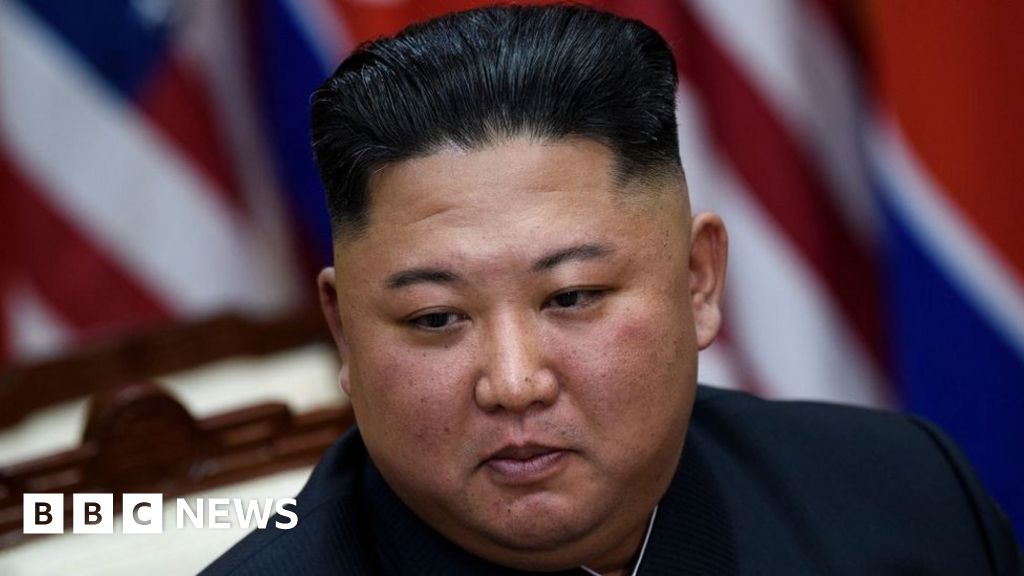
It’s the rumor that won’t go away. The mysterious leader of North Korea, Kim Jong-un is dealing with serious health issues. Some are even speculating death may be close or has even potentially occurred. The news of a nuclear armed rogue nation that could soon be leaderless has the west watching and worried. If you’re a journalist covering, there are many questions to be asked. What is the succession plan for North Korea’s leadership? Will the traditionally patriarchal country allow Kim Yo-jong, Kim Jong-un's younger sister to ascend to power? Are there more distant relatives who could make a claim to the role? Is there a chance North Korea could accept a change in power structure or even adopt a non-dictatorial style of government? And, is now the opportunity for change in North Korea? If you are covering, we’re here to help. Dr. Glen Duerr's research interests include comparative politics and international relations theory. Glen is an expert on this subject and is available to speak to media regarding this topic– simply click on his icon to arrange an interview.