
Experts Matter. Find Yours.
Connect for media, speaking, professional opportunities & more.

Why are the wolves of Wall Street so worried about Elizabeth Warren?
Elizabeth Warren started her campaign for the presidency far from being the front-runner. She trailed the likes of Joe Biden and Bernie Sanders dramatically, often in third place or worse and usually in single digits. But her resolve stood, she provided plans and policy planks. And … she found a target and took aim at the wealthy. All of her ideas that include costly policies about health care and education come with billion- and even trillion-dollar price tags. Usually these concepts are laughed off the debate stage – but Warren carefully and strategically costed them out. And those covering the costs of her ideas are the banks along with the rich and wealthy. Her ideas caught fire with supporters and now Warren is seen as a legitimate contender for the White House. It has some nervous and many taking notice. It’s a role that Ms. Warren unabashedly embraces, as an increasing number of voters, as well as a few veterans of the finance industry, see her as the policymaker who can address the growing wealth gap in the United States and take on the corruption and excess in the business world. Ms. Warren has made battling corporate greed and corruption a central theme of her fiercely populist campaign, mixing anti-elitist oratory with policy plans calling for sweeping new regulations. On Friday morning she released an ambitious proposal to pay for her “Medicare for all” program, with provisions directly affecting Wall Street: aggressive new taxes on billionaires, an additional tax on financial transactions like stock trades and annual investment gains taxes for the wealthiest households. Just hours later she told an audience in Iowa: “Our democracy has been hijacked by the rich and the powerful.” Interviews with more than two dozen hedge-fund managers, private-equity and bank officials, analysts and lobbyists made clear that Ms. Warren has stirred more alarm than any other Democratic candidate. (Senator Bernie Sanders, who describes himself as a socialist, is also feared, but is considered less likely to capture the nomination.) November 04 – New York Times Are you a journalist covering the race for the Whitehouse? Then let our experts help. Dr. Stephen Farnsworth is professor of political science and international affairs at the University of Mary Washington. A published author and a media ‘go-to’ on U.S. politics, he is available to speak with media regarding this topic. Simply click on his icon to arrange an interview.



Minority of Twitter users responsible for vast majority of political tweets
Associate Professor of Law David Levine recently lent his expertise to a Washington Post article looking at who is posting tweets about U.S. politics on the popular social media platform. The Oct. 24 article by reporter Marie Baca examined a recent report by the Pew Research Center that found that 10 percent of U.S. adult Twitter users generated 97 percent of tweets mentioning national politics. Those who were most prolific accounted for just 6 percent of all U.S. adult Twitter users, but authored 73 percent of all political tweets, the report found. "It can be quite dangerous if you’re not taking a step back and saying, ‘What do I know about the sources of this information and who or what is behind it?’” — David Levine, associate professor of law Levine, who is the founder of the "Hearsay Culture" radio show about modern technology issues, noted that Twitter users who find themselves in an echo chamber populated by others who mirror their views could take less time to determine the origin or assess the truthfulness of information they receive in that chamber. “It can be quite dangerous if you’re not taking a step back and saying, ‘What do I know about the sources of this information and who or what is behind it?’” he said. “It’s very easy psychologically, especially if you’re coming into it with a particular perspective, to go along with it.” If Professor Levine can assist with your reporting about social media and online extremism, please reach out to Owen Covington, director of the Elon University News Bureau, at ocovington@elon.edu or (336) 278-7413. Professor Levine is available for phone, email and broadcast interviews.


Is Donald Trump playing nuclear chicken with Turkey?
As Elvis Presley used to sing “Wise men say, only fools rush in…” and it seems America’s hasty retreat from northern Syria and its seemingly unprepared rhetoric with Turkey may have landed America in a bit of a pickle. Unbeknownst to most, the United States has an arsenal of nuclear weapons in Turkey, and senior officials are now scrambling with what they can or may have to do. “And over the weekend, State and Energy Department officials were quietly reviewing plans for evacuating roughly 50 tactical nuclear weapons that the United States had long stored, under American control, at Incirlik Air Base in Turkey, about 250 miles from the Syrian border, according to two American officials. Those weapons, one senior official said, were now essentially Erdogan’s hostages. To fly them out of Incirlik would be to mark the de facto end of the Turkish-American alliance. To keep them there, though, is to perpetuate a nuclear vulnerability that should have been eliminated years ago. “I think this is a first — a country with U.S. nuclear weapons stationed in it literally firing artillery at US forces,” Jeffrey Lewis of the James Martin Center for Non-proliferation Studies wrote last week.” October 14 - New York Times It’s quite the conundrum, and if you are a journalist covering this escalating issue – let our experts help. Dr. Glen Duerr's research interests include comparative politics and international relations theory. Glen is available to speak to media regarding this topic– simply click on his icon to arrange an interview.


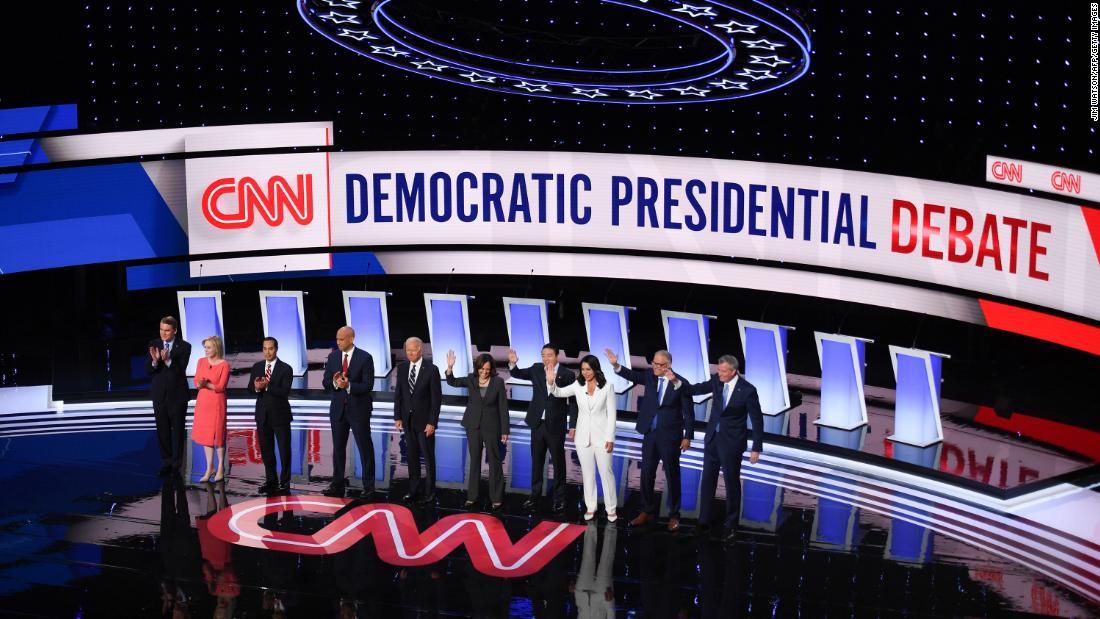
The Democratic field has narrowed substantially from the summer, but from the initial offering of more than two dozen candidates, each vying to be the one to face off with Donald Trump next November – there’s still a lot of winnowing to be done. And with 12 candidates taking the stage in Westville, Ohio the expectations will be high for everyone. How many candidates need to accept reality and abandon the race? Is a field this large hindering DNC chances at victory in 2020? What will it take to strive up the polls and survive for another day on the hustings? And of the prominent candidates – who is on the bubble and who needs to land a knockout punch to emerge as the true frontrunner? There will be a lot of speculation, coverage and punditry leading up to this debate – and that’s where our experts can help. Dr. Stephen Farnsworth is professor of political science and international affairs at the University of Mary Washington. A published author and a media ‘go-to’ on U.S. politics, he is available to speak with media regarding this topic. Simply click on his icon to arrange an interview. Dr. Rosalyn Cooperman, associate professor of political science at the University of Mary Washington and member of Gender Watch 2018, is an expert on women in politics. She is available to speak with media regarding this topic – simply click on her icon to arrange an interview. Both experts are available to speak with media regarding the upcoming debate - simply click on either icon to arrange an interview.

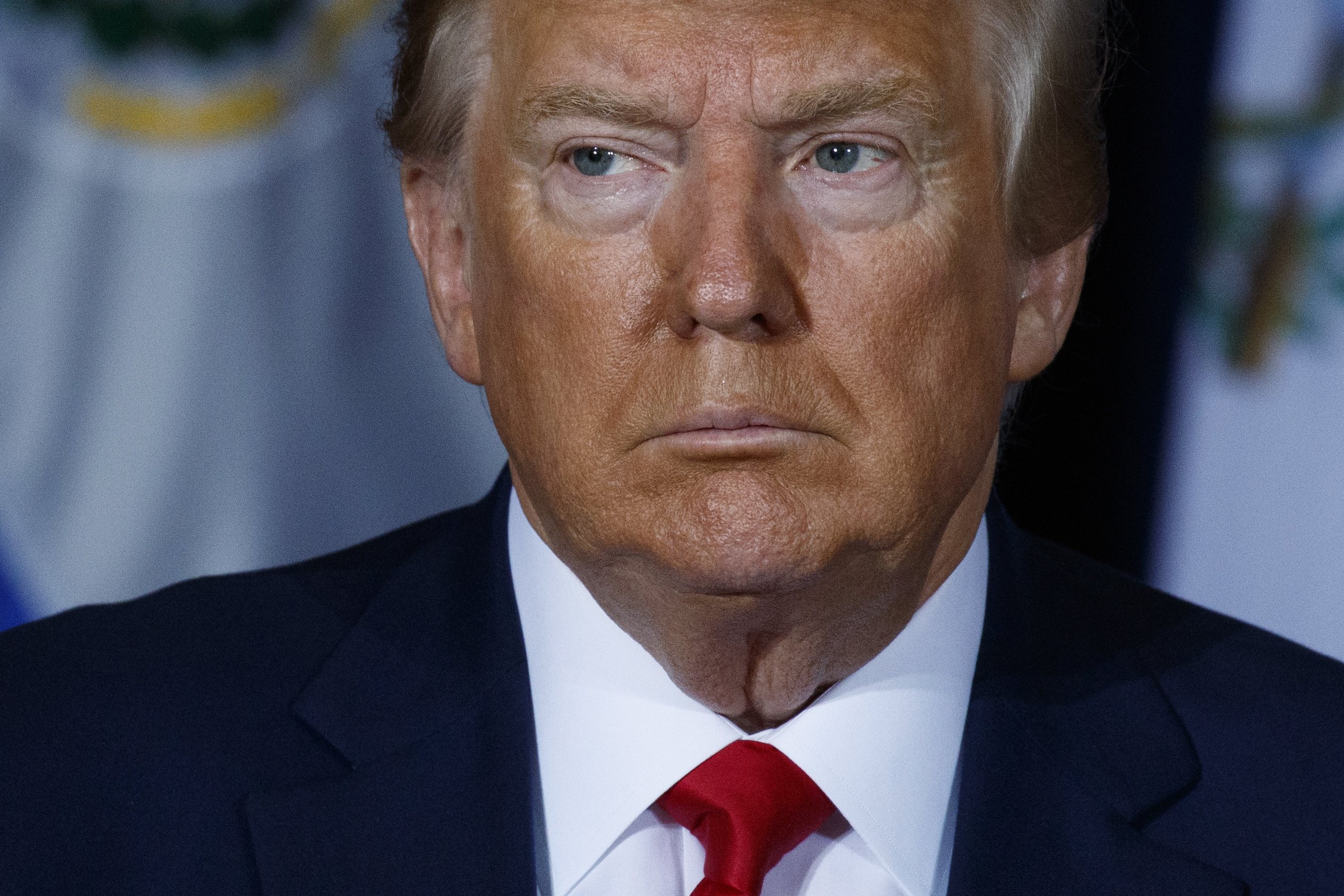
Until now, it seemed no scandal could stick to President Donald Trump. But after a whistleblower came forward after an awkward conversation between President Trump and Ukrainian President Volodymyr Zelenskiy – it seems Trump may have finally crossed the line. His request for an investigation by a foreign power into a political, opponent may have been illegal. Trump repeatedly Ukrainian President Volodymyr Zelenskiy to work with Attorney General William Barr and Rudy Giuliani, Trump’s personal lawyer. At one point in the conversation, Trump said, “I would like for you to do us a favor.” The president’s words set the parameters for the debate to come — just the fourth impeachment investigation of an American president in the nation’s history. The initial response highlighted the deep divide between the two parties: Democrats said the call amounted to a “shakedown” of a foreign leader, while Trump — backed by the vast majority of Republicans — dismissed it as a “nothing call.”… Pelosi announced the impeachment probe on Tuesday after months of resistance to a process she has warned would be divisive for the country and risky for her party. But after viewing the transcript on Wednesday, Pelosi declared: Congress must act.” September 25 – Associated Press This will only be the fourth time in history an impeachment investigation has taken place - and odds are it will dominate the Washington scene for months. But there are a lot of questions to be asked: How long will this take? What does it take to actually succeed? If Trump is impeached by Congress – will the Senate follow? Could he actually be removed from office? And, is this a risk for Democrats who could feed into the Trump narrative of another failed attempt at a witch hunt? There are a lot of questions and that’s where our experts can help. Dr. Stephen Farnsworth is professor of political science and international affairs at the University of Mary Washington. A published author and a media ‘go-to’ on U.S. politics, he is available to speak with media regarding this topic. Simply click on his icon to arrange an interview.

Is war with Iran inevitable – let our expert explain what’s next
Last weekend, the powder keg that is the Middle East may have been ignited. As drones launched an attack on Saudi oil refineries – the world was shocked and now sits on edge. With a sizeable share of the world’s oil production now off-line, fingers are being pointed at who could have attacked the Saudi Kingdom and what punishment no doubt awaits. All eyes immediately shifted to Iran, and media speculation and the sources that feed it seem to be following that lead. “On Monday, a US official told CNN that the US had assessed that the attack originated from inside Iran. The official spoke on condition of anonymity because they were not authorized to speak to the press. One regional diplomat told CNN on Monday that while the US has told its allies it has intelligence showing the launch "likely" came from staging grounds in Iran, it has not yet shared the information. "It is one thing to tell us, it is another thing to show us," the diplomat said. Shortly after the attack, US Secretary of State Mike Pompeo accused Iran of carrying it out, tweeting Saturday that "Iran has now launched an unprecedented attack on the world's energy supply." September 17 - CNN There are still a lot of questions to be asked. Why would Iran attack Saudi Arabia in the first place? Is there a diplomatic solution to this? And if war is inevitable, what other countries will be taking sides and with what country? If you are a reporter covering this escalating path towards conflict – let our experts help. Dr. Glen Duerr's research interests include nationalism and secessionism, comparative politics, and international relations theory. Glen is available to speak to media regarding this topic– simply click on his icon to arrange an interview.

Could the Lone Star State go Blue in 2020? Let our expert explain if a Texas sized upset is in store
If there is one thing we have all learned from the last presidential election – it’s that nothing can be taken for granted and surprises are now to be expected in the land of U.S. politics. It’s why when the tea-leaves showed Texas potentially leaning toward the DNC in 2020, it was surprising but not entirely unexpected. “There’s a lot of apathy and smugness and laziness here on the Republican side that’s got to be reversed or there will be a shock to the system at some point,” said George Seay, a Dallas businessman and top GOP fundraiser in Texas. Demographics are slowly but surely changing the state as an influx of voters from California and other left-leaning states move to Texas. GOP support is eroding in the suburbs surrounding Houston, Dallas, Austin and San Antonio, four of the nation’s largest and fastest growing metro areas. That’s particularly worrisome to Republicans leery of Trump’s popularity with suburban voters. A Democrat has not won statewide in Texas since 1994, the longest such streak in the nation. But Trump won Texas by only 9 points in 2016, the worst showing for a Republican presidential candidate in 20 years. Jimmy Carter in 1976 was the last Democratic presidential nominee to win the state. September 06, The Hill But are all the ingredients there for a Democratic takeover of the Lone Star State? Is Trump polling that low? What factors are also at play that could sway voters left? And are there any key DNC candidates that could push the vote left? There are a lot of questions to be answered and if you are a journalist who is covering the long road to next November – then let our experts help. Dr. Stephen Farnsworth is professor of political science and international affairs at the University of Mary Washington. A published author and a media ‘go-to’ on U.S. politics, he is available to speak with media regarding this topic. Simply click on his icon to arrange an interview.
18 Years since 9/11 – Let an expert from Cedarville help with your coverage
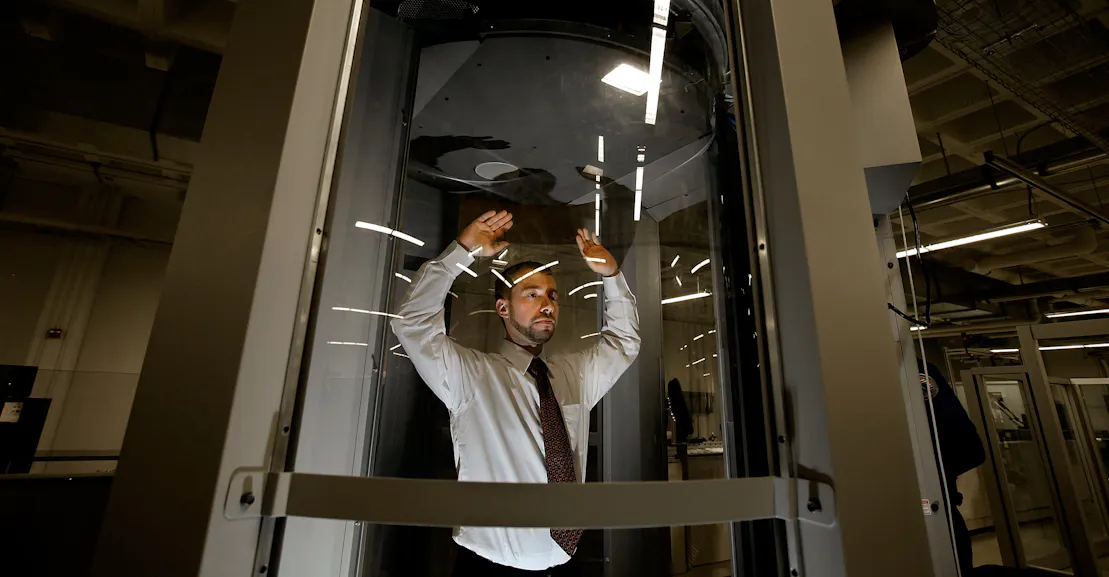
It’s been 18 years since the attacks of 9/11 and that moment still occupies how this country approaches security, the military and foreign affairs. Terrorism and attacks both home and abroad are still top of mind and Secretaries of Homeland Security Michael Chertoff, Janet Napolitano, and Jeh Johnson were recently called to testify in Washington about the state of America’s readiness against terror attacks in the near two decades since September 11, 2001. The changes to policy, legislation and how America approaches security have drastically altered how society functions either in plain sight (at airports) or behind the scenes (phone monitoring and cellular digital gathering). The ripple effects of 9/11 are still being felt and being debated by lawmakers at every level in Washington. “Americans are still dealing with the aftermath of the post-9/11 world in other ways. The Trump administration is currently negotiating with the Taliban to end the 18-year war in Afghanistan, or at least to end the U.S. and NATO military presence there. A growing number of Democrats have called for the dismantling of Immigration and Customs Enforcement, just one of many agencies housed within the colossal and dysfunctional Department of Homeland Security, which was created in 2003. Congress is also set to decide whether to permanently reauthorize the National Security Agency’s moribund call-records program that began shortly after the September 11 attacks.” September 06 – New Republic Are you a journalist covering domestic and international terrorism? Do you have questions about how ready, vulnerable or susceptible America is to another attack? What laws are needed and which policies need to be sun-setted now that so much time has passed. Then that’s where our experts can help. Dr. Glen Duerr's research interests include nationalism and secessionism, comparative politics, and international relations theory. Glen is available to speak to media regarding the state of America’s homeland security – simply click on his icon to arrange an interview.

Why is it so hard to pass laws to regulate guns in America? Let our experts explain
So far this year in the United States, there have been eight mass shootings taking the lives of more than 60 people. It’s tragic, but the concept of taking action to remedy this problem is still seen more as political than proactive. In fact, the possibility of being caught up in gun violence is now a part of the everyday lives of a majority of Americans. “Today, 59% of Americans say random acts of violence, like mass shootings, pose the biggest safety threat to them, according to a Reuters/Ipsos poll conducted this month after 31 people were killed in back-to-back rampages in El Paso, Texas, and Dayton, Ohio. The poll also found that 78% of Americans believe another such attack will likely unfold in the next three months. So far this year, there have been more than 250 mass shootings, according to the Gun Violence Archive, a widely cited non-profit that counts incidents in which at least four people other than the shooter were injured or killed.” TIME, Aug. 13, 2019 It is almost baffling why there are bottlenecks and roadblocks to finding a solution – and there are lots of questions that need to be asked. Why don’t national lawmakers pass laws regarding gun violence/mass shooting? How has public opinion changed on gun control in the last 30 years? How does gun violence in the U.S. compare to other countries? What is the current state of gun control laws in the U.S.? If you need answers, that’s where our experts can help. Dr. Gregg R. Murray, professor of political science at Augusta University, is available to talk about why lawmakers are having such a tough time tackling gun violence in America. Murray’s research focuses on political behavior and psychology with specific interests in voter mobilization and turnout. He is also executive director of the Association for Politics and the Life Sciences.


Is this fall’s Virginia election the canary in the coal mine for gun control?
There will be a lot of eyes on Virginia as voters go to the polls to elect its state government this November. Virginia is just one of four states going to the polls this year and it seems like gun-control (or various forms of it) might be a key issue. In fact, Republican Tim Hugo has flip-flopped and is now favoring a Republican drafted “red flag” gun bill that would remove guns from some people considered a risk to themselves or others. Stephen J. Farnsworth, a political science professor at the University of Mary Washington in Fredericksburg, said suburban Republicans like Hugo and Miyares are walking a fine line on volatile issues like gun control as Democrats make inroads in those communities. Those Republicans in moderate areas feel pressure to side with their party in larger political battles, such as the one that occurred in Richmond last month, when the GOP leaders abruptly ended the special session. But they also can’t appear to be out of sync with their changing districts on guns and other divisive topics, Farnsworth said. “Delegate Hugo has to do something to appeal to suburban constituents who are moving away from a Republican Party that is represented by President Trump,” Farnsworth said, noting that the delegate won his 2017 election by just 106 votes. “By offering a response on a gun control measure, Hugo is trying to demonstrate to his voters that he is not simply another Republican willing to shut down debate on the issue before the election,” he said. August 17 – Washington Post Could this be a sign of things to come for 2020? Are politicians actually considering gun control on both sides of the aisle? Or is this just another bait and switch by a politician looking to play both sides during a campaign? If you are a reporter covering this topic – let our experts help. Dr. Stephen Farnsworth is professor of political science and international affairs at the University of Mary Washington. A published author and a media ‘go-to’ on U.S. politics, he is available to speak with media regarding this topic. Simply click on his icon to arrange an interview.