
Experts Matter. Find Yours.
Connect for media, speaking, professional opportunities & more.

Baldwin 2020? It could be happening
On Monday, Alec Baldwin took to the stage not in New York – but Des Moines, Iowa as the keynote speaker at the Iowa Democratic Party's fall fundraiser. Known for his visceral Donald Trump imitations that have been one-part in the resurgence of Saturday Night Live, the Golden Globe and Emmy award winning actor took a serious tone in front of an audience of 3,000 party loyalists. On Monday he was calling for unity and pledging that he’s ready to fight to help the Democrats win. It’s also a known fact that the Iowa Democratic Party fall fundraiser has also been the starting point for campaigns. Is Alec Baldwin considering a run for the Oval Office in 2020? Does he have what it takes to win the Democratic primary? Could he beat Trump? And, is a battle of big screen celebrities what America needs in a leader? These are all interesting questions – and that’s where the experts from Cedarville University can help. Dr. Mark Caleb Smith is Professor of Political Science and the Director of the Center for Political Studies at Cedarville University. He is an expert in the areas of American politics and particularly presidential politics. Dr. Smith is a media-regular and was interviewed often during the last presidential election. He is available to speak to this latest development in politics. To book an interview – simply click on Dr. Smith’s icon to arrange a time. Source:


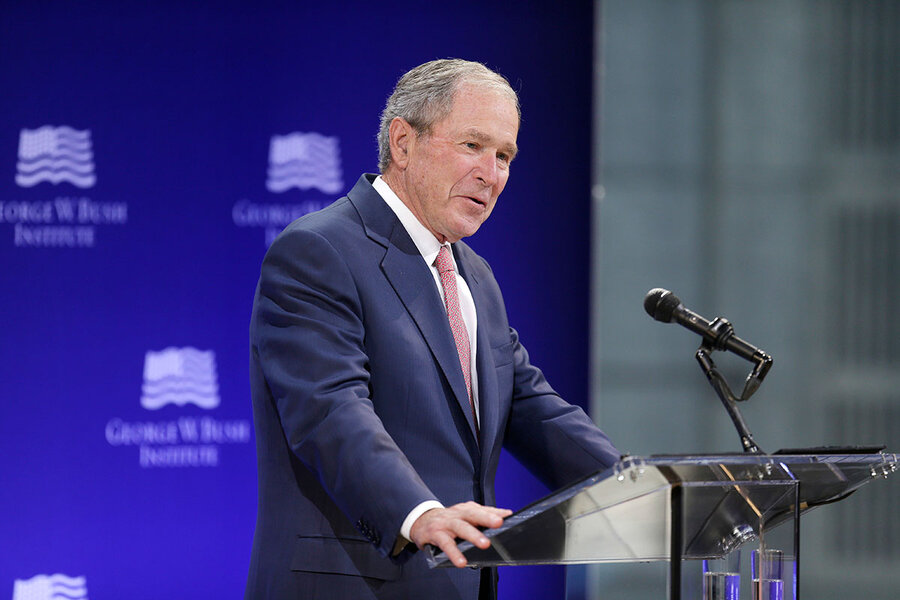
Presidential Rhetoric Expert Shares Thoughts on Bush's Speech
Presidential rhetoric expert Martin J. Medhurst, Ph.D., Distinguished Professor of Rhetoric and Communication and professor of political science in Baylor’s College of Arts & Sciences, is quoted in this article about speeches given last week by two former U.S. presidents and a former presidential candidate that warned of the dangers to the nation and the world if divisive politics continues to cleave the American electorate into thoughtlessly hostile warring camps. “They ... talk about American ideals, they ... talk about the story of America, the American creed and the need to reinvigorate democracy and continue to be the exemplar to the world of democratic values,” Medhurst said. Source:


These days, it doesn’t take much to turn a civil conversation into a full-blown catastrophe. Just mention the words “climate change” and feathers can start to ruffle. But it doesn’t have to be that way, says Dan Peppe, Ph.D., climate change expert and associate professor of geosciences at Baylor University. His research focuses on understanding how plant and animal communities have responded to changes in climate throughout Earth’s history. “Climate change is a fundamentally important issue to our society and is vital for us to have open and honest discussions about it and its potential impacts,” Peppe said. He said the best place to start such a dialogue is with scientific observation. Have a discussion about increases in temperature, he said. Understand what scientists are saying about those temperature changes and their effects. The trick to keeping this cordial? Keep politics out. “All of this conversation is a scientific one based on observation, and as such, shouldn't be a political one,” he said. “Once that baseline is established, we can then begin a conversation of the many possible ways to address those risks.” Peppe said there is often more than one solution to issues of climate change, but people need to listen to each other. “Hopefully there can be a respectful and civil conversation around those potential solutions,” he said. As part of Earth Science Week, Peppe is taking part in the Earth Science Symposium at The Mayborn Museum in Waco, Texas, where he will moderate a panel discussion on climate change. Panelists will discuss the science of climate change, the risks associated with it, and some of the potential solutions. “We hope that this will be a really productive discussion, and one in which the audience can participate,” Peppe said. Source:


Will Sept. 25 be Kurdish Independence Day?
On Sept. 25, a lot of the world’s important eyes will be watching the results of a referendum few have heard about. The Kurdistan Region of Iraq (KRI) is finally holding a referendum on its independence. It’s a referendum many object to – including those in Baghdad and in the United States. There are concerns that this path to independence will not be a smooth one and could further destabilize this already tumultuous region. Efforts and negotiations are ongoing in hopes that this historic vote can be delayed or even postponed. The stakes in this are high. In this region, relationships between the Kurds and Turkey are not good. Separating from Iraq could also see consequences. The threat of violence is very real and who will be there to support an independent KRI is also in question. There are many pieces at play. This involves a century of history, territory and tribalism all in an area that cannot afford another conflict. So, will the referendum take place even though Iraq's Supreme Court on Monday ordered the suspension of the referendum? If it does, what will be the outcome? Can America not support a group of people using democracy to determine its own fate? Are the costs of preventing this referendum worth it in the long run? How will the referendum affect politics in the Middle East and globally? Missouri State University’s Dr. David Romano, an expert in Middle Eastern politics, particularly the Kurdish region, is available to provide his insights on this complex and developing issue. He has been contributing to international discussion on this topic in his weekly column on Rudaw. Romano spent six months last year in Iraqi Kurdistan, behind the lines near Mosul. He believes the time is right for Kurdish independence. It’s also relevant to American interests due to the oil market and the international political landscape. Click on his icon to arrange an interview. Source:

Another Big Short or Better Off? 10 Years Later – Is there Another Financial Crisis Looming?
It was 10 years ago Wednesday that the world changed for just about everyone. It was on that afternoon when BNP Paribas announced it was ceasing activity in three hedge funds that specialized in U.S. mortgage debt. BNP Paribas was the first major bank to acknowledge the risk of exposure to the sub-prime mortgage market, and many look back at those days as the start of the worst financial crisis in American history since the stock market crashed in 1929. For a decade, America has been in a state of recovery. It took trillions of dollars in stimulus and bail outs. The real estate market almost collapsed on itself and millions were left unemployed. Some are still incapable of finding work and income that matched what they made back then. On the outside, America seems to be in complete recovery. Housing prices have bounced back, the DOW is soaring and unemployment rests at just 5.1 percent. However, some are skeptical. Americans are borrowing again at record rates. Credit is once again being offered abundantly and as people spend again – risk is climbing. Add in China’s shaky economy and there’s also talk of a double-bubble bursting. Understanding finance and economics is no easy task. It takes global understanding, a keen eye on micro and macroeconomics and sometimes a crystal ball. But on Wednesday, many people will remember exactly what they were doing when America’s economy tanked. So where are we now? Have we learned our lesson or are we doomed to repeat ourselves? Have the reforms on Wall Street worked or can the actions of a few big banks still derail one of the strongest financial engines in the world? None of these are easy questions to answer or explain. But experts from Missouri State University can help. Dr. David Mitchell is a Professor of Economics and Director of the Bureau of Economic Research at Missouri State. He is also an expert at economic forecasting and understanding market trends and direction. Dr. Mitchell can speak to the anniversary of the financial crisis and what may lie ahead for America’s economy. Click on his icon to arrange an interview. Source:

North Korea Rejects South Korea's Call For Talks: How High Will Tensions Escalate?
North Korea has been in the news a lot lately. Saber rattling, political posturing and missile testing by the hermit state have led to escalating tensions between the United States, South Korea and even neighbouring China. Earlier this month, Pyongyang claimed it successfully tested an ICBM, for the first time, of the type that experts believe could reach Alaska. But as the situation looked to boil over, tensions may have had a chance at simmering. Tongilgak - a North Korean building in the Panmunjom compound in the demilitarized zone between the two countries, which has been used for previous negotiations, was suggested by the South Koreans as a destination for talks between North and South Korea aiming to stop 'all hostile activities that raise military tension.' By early Friday morning, all intelligence indicated – that offer was rejected. The two countries that have been bitter enemies since 1950 remain opposed and unwilling to compromise. There’s a lot at stake – safety, the threat of global war and between the two countries, some families are still divided and incapable of meeting after more than half a century. So, is there a chance the two sides can find a diplomatic solution? Is this rejection just another tactic by North Korean leader Kim Jong Un to leverage more from the west in order to speak? Does North Korea have the ability to launch a missile that may reach American soil? There’s a lot more to this new alignment than a simple agreement and that’s where Missouri State University experts can help. Dr. Dennis Hickey is a global studies expert specializing in Asian politics and American foreign policy. He is a go-to source when media agencies require clear perspective and answers regarding this complex situation and region. Dr. Hickey is available for interviews. Click on his icon to contact him. Source:

A Party Divided - Will Infighting Lead to a Government Shutdown in Washington Friday?
President Donald Trump will celebrate 100 days in office Saturday. But one day shy of that milestone, he may see Washington and the rest of America’s government grind to a halt. But with Republicans controlling Congress, the Senate and the Presidency – a standoff of this nature seems almost impossible. There is almost guaranteed to be negative consequences publicly and financially – and to follow it through just doesn’t make any political sense. So why? Is it President Trump’s demand for a funded wall that he promised to be built along the Mexican border? Are there left-over aspects to the Affordable Care Act that have some members of the GOP divided? Other issues that have the GOP at a boiling point? Or, is there a way out so each side can make a point but save face in the end? Politics is seldom simple and almost always confusing. That’s where the experts from Augusta University can help. Dr. William Hatcher is the director of the Master of Public Administration program and an associate professor of political science. He is an expert in politics, policy and the relationships between different levels of government. Dr. Craig Albert is an assistant professor of political science and an expert in American politics and political philosophy. Both are excellent speakers, have experience with all forms of national and local news organizations and are available to speak to media regarding this latest development in Washington. Click on Dr. Hatcher or Dr. Albert's icon to arrange an interview. Source:


As tension mounts between North Korea and America, it seems like China has become an unlikely ally of U.S. President Donald Trump. On Wednesday, President Trump spoke with Chinese President Xi Jinping about the issue. President Xi said China is willing to help the U.S. end North Korea’s nuke program. Trump has referenced the trade advantages China holds over North Korea and how working together, they may be able to rein in the rogue nation and its leader, President Kim Jong Un, who has threatened to use the country’s nuclear arsenal against any American advances. But is this new friendship or even partnership a reality? What will it mean in the long and short term? Will there be political and economic costs or even benefits with better U.S.-China relations? Or will America have to give something to get something? There’s a lot more to this new alignment than a simple agreement and that’s where Missouri State University experts can help. Dr. Dennis Hickey is a global studies expert specializing in Asian politics and American foreign policy. He is a go-to source when media agencies require clear perspective and answers regarding the complexity of Chinese politics and government. Dr. Hickey is available to speak regarding this increasingly escalating and important international issue. Click on his icon to arrange an interview. Source:

Expect more terrorist attacks in Russia, political expert says
A deadly subway explosion in St. Petersburg, Russia, Monday morning has been declared a terrorist attack, and we can expect more of these kinds of incidents and threats, according to Augusta University political scientist Dr. Craig Albert. As a leading scholar in American politics and foreign affairs, Albert’s research focuses on Islamic extremism, Chechnya and the rise of ISIS. “As more Russians return from Syria fighting for ISIS, and as the Caucasus region remains in strife, especially Chechnya and Dagestan, we can expect more and larger terrorist attacks inside Russia's major cities,” Albert said. Albert teaches courses on war and terrorism, American politics and political philosophy; he also directs the Model United Nations Program. Albert is a political contributor to The Augusta Chronicle and he’s appeared on national media broadcasts, including a live interview with Megyn Kelly for Fox News Channel on the Boston Marathon bombing. He has also testified before the U.S. Congress on Islamic Extremism. Albert is available for Skype, email and phone interviews. Source:

To Fight or Fill - Will Democrats Fight or Fold as the Vetting of Neil Gorsuch Begins?
On Monday, the official vetting and nomination process to fill the vacant seat on the Supreme Court left vacant by the sudden passing of Justice Antonin Scalia began. Earlier this year, President Trump nominated conservative judge Neil Gorsuch to fill this seat – since then it has been met with much attention and controversy. Democrats in Washington have promised a detailed vetting and for President Trump’s nominee to expect strong opposition. But will it matter? Republicans control the Senate. They already have the votes in-hand to ensure as speedy and smooth a process as possible. Gorsuch is also viewed by many legal and political experts as a reasonable replacement for the late Scalia. The make-up of the Court won’t be drastically changed at all. Politically, this could offer a great opportunity for Democrats to grandstand and oppose Gorsuch’s past rulings and potential influence on the country as he will be a sitting judge for decades to come. They’ll be heard, but they won’t win. Or, is this not the hill for Democrats to die on? Like all things in Washington – politics will be at play. So, what will it mean, how will it play out and what can Americans expect if Gorsuch is finally appointed to America’s highest court? That’s where the experts at Augusta University can help. Dr. Martha Ginn is a political expert on the judicial process, constitutional law and the U.S. Supreme Court. She is an associate professor of Political Science at Augusta University and has spoken with media many times regarding the Supreme Court. She is available to speak to this very important issue. Click her icon above to arrange an interview. Source: