Experts Matter. Find Yours.
Connect for media, speaking, professional opportunities & more.

New National UMass Amherst Poll Finds President Trump’s Job Approval Gap Slides 6 Points Since April
Topline results and crosstabs for the poll can be found at www.umass.edu/poll Public approval of Donald Trump’s presidency has dropped by 6 percentage points since April and his approval rating is now 20 points underwater, 38-58, according to a new national University of Massachusetts Amherst Poll of 1,000 respondents conducted July 25-30. “Six months into his second term as president, Donald Trump looks to be on the ropes with the American public,” says Tatishe Nteta, provost professor of political science at UMass Amherst and director of the poll. “Trump’s approval ratings, already historically low for a newly elected president, continue to sink with close to 6-in-10 Americans (58%) expressing disapproval of the job that Trump is doing in office. While Trump remains a popular figure among Republicans and conservatives, Trump’s time in office is viewed more negatively across genders, generations, classes and races, with majorities of each of these groups disapproving of Trump’s performance. With over three years left in the Trump administration, there is still time for him to right the ship and fulfil the promises that catapulted him to the presidency, but the president is not off to the start he or his supporters envisioned.” In the previous UMass Poll, conducted as Trump approached the three-month anniversary of his return to the White House, Trump held a 44-51 approval rating, buoyed by a positive overall approval on his handling of immigration. The new poll, however, has found a significant shift in views on this issue. “Immigration has been central Trump’s political campaigns and his strongest issue in his first few months in office, but the percentage of people who say he is handling it well has dropped substantially from 50% four months ago to just 41% today, a 9-point drop,” explains Raymond La Raja, professor of political science at UMass Amherst and co-director of the poll. “Trump came into the presidency promising change, and he’s made significant alterations in many areas of federal policy,” says Jesse Rhodes, professor of political science at UMass Amherst and co-director of the poll. “He came into office believing that he had limited time to make the changes he promised his most ardent supporters, and moved with unparalleled speed to enact these changes, including sometimes by legally questionable means. Now, it seems, he’s reaping the consequences as a large majority of Americans don’t like these changes. Clear majorities say that Trump has handled his key issues – immigration (54%), inflation (63%), jobs (55%) and tariffs (63%) – not very well or not well at all. With so many Americans grading his handling of public policy poorly, it’s no wonder they disapprove of his presidency.” Rhodes also notes that the president is seeing an erosion in support from one of his most reliable groups of supporters: men. “Trump has cultivated a ‘masculine’ reputation and sought to build support among American men but, strikingly, we find that support for Trump has deteriorated most substantially among members of this group,” says Rhodes. “In April, Trump enjoyed approval from 48% of men, compared with 39% of women. Now, only 39% of men express approval of Trump, compared with 35% of women. “In addition to losing support among men, Trump has seen approval for his presidency crumble among political independents, a critical swing constituency,” Rhodes adds. “While 31% of independents approved of his presidency in April, that number is now down 10 percentage points to 21%. This is really bad news for Trump, and for Republicans who depend on support from independents in close elections.” “Polarization has changed the interpretation of presidential approval ratings,” says Alexander Theodoridis, associate professor of political science at UMass Amherst and co-director of the poll. “Partisans just aren’t willing to evaluate presidents from the other side positively and are reluctant to say negative things about presidents from their own party. So, approval numbers fluctuate within a narrower range. Gone are the days when George H. W. Bush and George W. Bush both achieved approval numbers over 90%. This is certainly true for Trump, who is likely the most polarizing figure in modern American politics. Even in this polarized environment, though, Trump’s approval ratings are low by any standard – he is very close to the practical floor. Especially noteworthy is that nearly half of Americans say they strongly disapprove of Trump and the percentage of Americans who say they strongly approve of Trump has decreased substantially. Even among Republican respondents, only half strongly approve of the president. The GOP should be concerned about these numbers heading into the odd-year elections in 2025 and, especially, the midterm elections in 2026. It is very difficult for a party to win when its leader is this unpopular.” Americans’ views on Epstein and Trump Of all issues surveyed in the latest University of Massachusetts Amherst Poll, one appears to be the greatest drag on Trump’s presidency: Jeffrey Epstein and Trump’s handling of the evidence gathered in the federal investigation of the accused sex-trafficker and his long-time friend. “The Epstein scandal remains a serious vulnerability – indeed, quite possibly, the most serious vulnerability – for Trump right now,” Rhodes says. “Fully 70% of Americans believe he has handled this issue ‘not too well’ or ‘not well at all,’ and nearly two-thirds (63%) believe his administration is hiding information about Epstein. The Epstein scandal is also likely undermining public confidence in Trump more broadly. Indeed, we find that nearly two-thirds of Americans believe that Trump is corrupt and nearly 70% believe he is dishonest. Critically, these numbers mean that many Republicans and conservatives are disappointed with Trump’s handling of the Epstein situation. Republican frustration with Trump’s handling of the Epstein case could erode enthusiasm for his presidency and for Republicans in 2026.” “If Trump and those around him have been wishing the Jeffrey Epstein story would disappear, their wishes have not been granted,” Theodoridis says. “Most Americans (77%) tell us they have heard a lot or some about the Epstein case. In addition to believing that the Trump administration is hiding important Epstein case information, the vast majority of respondents say that a special prosecutor should be appointed to investigate the Trump DOJ’s handling of the Epstein case (59%), that Donald Trump was good friends with Epstein (67%), and that a list of Epstein’s clients exists (70%). Even substantial numbers of Trump voters believe these things. And, when it comes to an Epstein ‘cover-up,’ it seems the buck stops with Trump himself. While a lot of Americans blame Attorney General Pam Bondi (59%), FBI Director Kash Patel (49%), and House Speaker Mike Johnson (47%) for hiding information about the Epstein case, a whopping 81% blame President Trump.” “The controversy over the handling of the Epstein files by the Trump administration has – interestingly – brought Americans together,” Nteta adds. “While on most issues, we see clear and persistent generational, class and racial divisions; on Epstein, Americans across these divides speak with one voice. This controversy has even resulted in agreement across partisan lines as majorities of Democrats and Republicans support a special prosecutor and believe a list of clients exists, and disapproval of Trump’s handling of the whole matter is surprisingly seen among members of Trump’s base, as 43% of Republicans and conservatives indicate that Trump has not handled this issue well.” “Where Trump faces his poorest rating in our poll is on perceived corruption and dishonesty,” adds La Raja. “A clear plurality (49%) sees Trump as ‘very dishonest,’ with an additional 20% saying that he is ‘somewhat dishonest.’ And 45% see him as ‘very corrupt,’ with an additional 20% as ‘somewhat corrupt.’ Only about one-third reject those labels entirely. Trump also gets low ratings on transparency – a majority (52%) say Trump is not at all transparent, his weakest score after dishonesty. Only 23% believe that he’s very transparent. For a candidate who brands himself as a truth-teller and disruptor, this appears to be a credibility gap.” “Strength is Trump’s strongest attribute,” La Raja explains. “Fifty-eight percent see him as very or somewhat strong, indicating appeal among his base and possibly swing voters who value ‘toughness.’ However, views on his competence are split evenly, with 52% saying he’s competent to some degree, while 48% say not at all.” Voter Regret? “Since President Trump took office, a number of reports of regretful Trump voters have been covered in the nation’s leading media outlets,” Nteta says. “From voters upset with Trump’s immigration policies to supporters who take issue with the president’s unwillingness to release the files associated with the Epstein case, there seemed to be a wellspring of regret among Trump’s once loyal base. Our results suggest that while there are, in fact, areas where the president is weak, most notably on his handling of the economy and the Epstein controversy. When asked directly, close to 9-in-10 (86%) would vote for Trump again if given the opportunity to revisit their 2024 presidential vote choice. These results indicate that the number of regretful voters covered in the mainstream press may be overblown, as the overwhelming majority of Trump voters remain in the president’s camp.” “Only 1% of Trump voters say they regret their vote and would choose differently, 2% say they ‘might’ choose differently and 3% say they wish they hadn’t voted at all,” Theodoridis says. “When we simply ask voters how they would vote if they could go back and recast their ballot, 6% of Trump voters tell us they would vote for Harris, while only 2% of Harris voters say they would switch to Trump. There is clearly more erosion in support among Trump voters than among Harris voters and, in what is likely small consolation to Harris and her campaign team, significantly more 2024 non-voters who say they wish they had voted indicate they would now cast a vote for the former vice president. In a relatively close election, shifts of these magnitudes might have been decisive, but there are no ‘take-backs’ in electoral politics, so these numbers are best used to inform choices going forward.” “Our results are not wholly positive for President Trump, and there exist areas of concern for his team moving forward,” Nteta warns. “Since April, the number of Trump voters expressing strong confidence in their vote for Trump has declined by 5 percentage points. Additionally, we find small increases in the number of Trump supporters who have mixed feelings about their vote and who indicate that they would ‘rather not have voted.’ Finally, 14% of Trump voters indicate that they would not vote for Trump if given the chance to revisit, while only 8% of Harris voters express a similar sentiment. Time will tell whether the growing number of disaffected Trump voters are the canaries in the coal mine, indicating a larger problem among the Trump coalition and the MAGA movement more generally.” “We do find a meaningful percentage – 31% – of Trump voters unwilling to say they feel very confident they made the right choice,” Theodoridis adds. “Nineteen percent of Trump voters tell us they are still confident but have concerns, and 6% tell us they have mixed feelings about their vote. Given what we know about the psychological predispositions against admitting to having been wrong, these numbers suggest some softening in support for Trump among the very voters who returned him to the White House last November. This should certainly be alarming for Republican politicians. However, for Democrats or journalists looking for a mass mea culpa from Trump voters, our numbers are, perhaps, sobering.” Methodology This University of Massachusetts Amherst Poll of 1,000 respondents nationally was conducted by YouGov July 25-30. YouGov interviewed 1,057 total respondents who were then matched down to a sample of 1,000 to produce the final dataset. The frame was constructed by stratified sampling from the full 2023 American Community Survey (ACS) one-year sample with selection within strata by weighted sampling with replacements (using the person weights on the public use file). The matched cases were weighted to the sampling frame using propensity scores. The matched cases and the frame were combined, and a logistic regression was estimated for inclusion in the frame. The propensity score function included age, gender, race/ethnicity, years of education, region, and home ownership. The propensity scores were grouped into deciles of the estimated propensity score in the frame and post-stratified according to these deciles. The weights were then post-stratified on 2020 and 2024 presidential vote choice as ranked on gender, age (4-categories), race (4-categories) and education (4-categories), to produce the final weight. The demographic marginals and their interlockings were based on the sample frame. The marginal distribution of 2020 presidential vote choice and its demographic interlockings were based on a politically representative “modeled frame” of US adults, using the 2019 American Community Survey (ACS) public use microdata file, public voter file records, the 2020 Current Population Survey (CPS) Voting and Registration supplements, the 2020 National Election Pool (NEP) exit poll, and the 2020 CES surveys, including demographics and 2020 presidential vote. The marginal distribution of 2024 vote choice was based on official ballot counts compiled by the University of Florida Election Labs and CNN. Demographic interlockings for 2024 vote choice were based on CNN’s 2024 Exit Polls. The margin of error of this poll is 3.5%. Topline results and crosstabs for the poll can be found at www.umass.edu/poll






President’s Discussion of Conspiracy Theories Have “No Parallel in American Politics”
Peter Baker, the chief White House correspondent for The New York Times, interviewed Dr. Meena Bose about conspiracy theories that appear to be consuming the Trump administration. “The president’s repeated discussion of multiple conspiracy theories, most recently about the 2016 election, has no parallel in American politics,” said Dr. Bose. “Presidential allegations that have no factual basis undermine public confidence in the political system and present dangerous challenges to constitutional principles and the rule of law, particularly if they are not subject to checks by other institutions.” Dr. Bose is Hofstra University professor of political science, executive dean of the Public Policy and Public Service program, and director of the Kalikow Center for the Study of the American Presidency.



Inflation: It’s Not Just for Prices Anymore
Lately, headlines are full of talk about inflation — a response to the economy and the looming tariffs. I’ve experienced many inflationary periods, but it feels different in retirement. When I was earning a paycheque, inflation was just an annoyance, something I needed to pay attention to and maybe buy a cheaper cut of steak. Now, as someone on a “fixed income,” it feels like a real threat. Recently, Ben McCabe, CEO of Bloom Financial, appeared on Breakfast Television and delivered a truth bomb: “We’re approaching a perfect storm. Longer life expectancy, fewer defined benefit pensions, and rising inflation.” Well, that storm has arrived — and it’s inflating more than just prices. It’s also expanding our waistlines, prescription lists, and emotional baggage. Inflation, at its core, means “the condition of being inflated.” And it turns out that definition applies to more than the grocery bill. So, grab a cup of green tea (or a celery stick if you’re feeling virtuous). Let’s explore the three sneaky forms of inflation threatening your retirement — and what you can do about them. This blog will appeal to individuals who have retired or aspire to retire in the future. Let’s light this candle! 1. Financial Inflation: The Usual Suspect Let’s start with the obvious: inflation means your money won’t stretch as far as it used to. In 2022, Canada’s Consumer Price Index increased by 6.8% — the highest rise in 40 years. Although it slowed down a bit in 2023, essentials such as food, rent, and fuel continue to grow. Your retirement income might be fixed, but prices definitely aren’t. Retirement Risks from Financial Inflation: • Longer lives mean longer bills. A 65-year-old woman today has a 50% chance of living past 90 years old. That’s over 25 years of expenses. • Vanishing pensions. Defined benefit pensions are disappearing faster than good manners on Twitter. • Healthcare creep. Public healthcare doesn’t cover everything, especially if you want care that wasn’t designed in 1978. As Ben McCabe aptly put it: “We need to stay healthy so our health span matches our lifespan,” huh?— “otherwise, inflation will affect us through the cost of medications, home care, and long-term care facilities.” What You Can Do: • Review your income sources. Prioritize indexed income sources, such as CPP, OAS, and annuities with COLA (Cost of Living Adjustment) riders. • Use home equity sensibly. If you’re house-rich but cash-poor, consider a reverse mortgage or other equity release products. • Adjust your spending habits. Host themed nights, like “Tuna Tuesdays” — a nostalgic, fun, and budget-friendly option. How to Support Others: • Discuss money matters with kindness. Many retirees feel ashamed of their finances. Show compassion, listen more, talk less. • Bring food, not judgment. A regular Saturday brunch with Sadie can make a significant difference, not just financially. • Foster social connections. Financial stress can cause isolation. Encourage hosting potlucks, card nights, or joining a community group. 2. Physical Inflation: The Expanding Middle Retirement brings more free time… and more room. Waistlines, cholesterol, and prescriptions all seem to rise in tandem. Signs you’re experiencing physical inflation: • Pants that used to be snug are now aspirational • Your Fitbit died months ago — and so did your motivation • Your pharmacy knows you by name... and birthday The bad news? Poor physical health is expensive. Chronic illness can deplete savings faster than a grandchild with your credit card. What You Can Do: • Keep moving. Walk, garden, spin — whatever gets you vertical and vibrant. • Lift weights. Muscle mass starts declining at 40. Resistance training isn’t just for 20-somethings. Strong is the new sexy, pass it on! • Meal plan smart. Grocery inflation peaked at 8.9% — eat better, waste less, save more. Consider shopping daily and buying only the amount of food needed for that day. Your health span should align with your lifespan. Stay strong, stay mobile, and yes, stretching counts — but not if you’re reaching for the TV remote. Inflammation — The Silent Saboteur If inflation is bad, inflammation is worse. Chronic inflammation contributes to: • Heart disease and stroke • Type 2 diabetes • Alzheimer’s disease and brain fog • Arthritis, osteoporosis, and varicose veins • Mood disorders such as anxiety and depression • Certain Cancers Even CNN and Al Jazeera recently reported that Donald Trump was diagnosed with chronic venous insufficiency (CVI) — a common, often overlooked condition among those over 55. Small veins, big problem. (Insert your own “tiny vein, tiny…” joke — I’m staying classy.) Inflammation is the unwelcome guest that never departs. If inflammation had a personality, it would be the dinner guest who drinks all your wine, insults your cat, and brings up politics at dessert. Whether it's fueling joint pain, causing swelling in your ankles, or messing with your metabolism, chronic inflammation is one of the biggest saboteurs of aging gracefully. It often hides in plain sight, presenting itself as: • Low-grade fatigue • Weight gain (especially belly fat) • Mood swings or brain fog • Increased pain and stiffness • Slow healing. What You Can Do: • Eat anti-inflammatory foods, such as leafy greens, whole grains, and healthy fats. Cut out the sugar. • Move each day. Yes, again. It’s that important. • Lower stress to improve sleep. Stress and poor sleep fuel inflammation. • Maintain social and emotional bonds. Loneliness and inflammation are frequently connected — break the link. De-Inflation — The Great Slowdown • So, we’ve discussed inflation... but what about its quieter, sneakier cousin: deflation? • No, not the economic kind. We’re talking about the physical “poof” that occurs when we reach our late 70s and 80s — when the padding diminishes, posture declines, and everything else… well, just seems a little less buoyant. • Suddenly, you’re shrinking. Your weight drops — but not in a sexy, "I’ve been intermittent fasting" kind of way. More like "my pants are falling down and my doctor says I’m 2 inches shorter" sort of vibe. Welcome to the gravitational pull of aging. Signs of De-Inflation: • Pants fit strangely, but not in a bragging way • You’re hunched over as if you’re forever bowing to the Queen • Your arms and legs have that crepey, crinkly look — like tissue paper with a gym membership • And let’s not forget the wrinkles on your face — a stunning topographical map of your life Let’s be honest: gravity always wins. Biology always wins. And yes, our skin thins — insert your own joke about being “thin-skinned” here. But we are not entirely powerless. Here’s How to Push Back (Gently — you don’t want to break a hip): • Check your posture monthly. Have a friend take a quick side photo. Are you upright and confident — or resembling a question mark? • Stretch regularly. Yoga, fascia stretching, and massage can help combat the hunch. • Move intentionally. Gentle strength training and balance exercises can maintain muscle and stability. • Moisturize and hydrate. For your skin, your joints, and your soul. • Celebrate your lines. They’re not “flaws” — they’re proof you’ve felt joy, sorrow, surprise, and a few good martinis. They’re not signs of aging; they’re signs you’ve been living. Remember: frowning only causes more wrinkles. So, smile — or better yet, laugh. Loudly. Often. Preferably at inappropriate moments. Oh — and take my advice on this: never (and I mean never) open your eyes during downward-facing dog. Some things just can’t be unseen. 3. Emotional Inflation: When Grudges Accumulate Like Interest Here’s the sneaky one. Emotional inflation appears as: • Bitterness over who got what in Mom’s will • Inflated egos and “right-titis” (a chronic need to be right) • Replaying 1983 arguments in your head like they’re Oscar contenders. • Giving not-so-nice nicknames to your former coworkers (and using them… publicly) • Keeping a mental spreadsheet of injustices — now colour-coded for quick reference (who says seniors are not tech-savvy?) Here’s the thing: emotional inflation isn’t just about what others have done. It’s also about how we interpret our role in those stories. Ready for a bold idea that can free you from decades of emotional baggage? What if we stopped keeping score and instead focused on how we want to show up in our relationships? What if you chose, intentionally, to be a generous sister, a supportive friend, a gracious parent, or a collaborative co-worker — not because they "deserve it," but because that's who you want to be? It’s not easy. It may require deep breathing and the occasional muttering in the car. However, for those willing, this mental reframe can be a total game-changer. What to do: • Let go. You can’t carry joy and a grudge at the same time — and joy is lighter. Lighten the emotional load. You don’t need to wait for someone to say sorry to feel free. • Choose your character. Think of it as casting yourself in the movie of your life. Be the wise one, the peacemaker, the person who breaks the cycle, not the one still angry about a forgotten birthday in 1996. • Write your own story. Present yourself as the person you want to be, even if others haven’t read the same script. You can’t control other people, but you can control how much space they occupy in your mind (especially if they’re not even paying for snacks). • Reframe your perspective. Instead of keeping score, focus on who you want to be: a generous sibling, a gracious friend, or a person at peace. Let go of the scorekeeping. It rarely results in a tie, and even if you win… You still feel empty. • Define your role. Be the big-hearted sibling, the calm presence, the one who lets go, not the person who stores bitterness in Tupperware containers. • Invest in joy. Dance classes, martinis, laughter — choose your remedy. • Talk it out. Therapy is more affordable than wine-fuelled Facebook rants and far more effective. Take the high road. There’s less traffic and better scenery. You can’t always avoid emotional hurt, but you can avoid living in a constant state of emotional inflation. And trust me, nothing deflates retirement faster than a bloated list of resentments. And if you’re feeling weighed down by the bloat of what life has thrown at you, remember: you can’t control inflation, but you can choose your response. Choose grace over grudges. Choose strength over stagnation. Choose the version of yourself that makes you proud. Because guess what? You’re still becoming who you are. Trust me — it’s better than a juice cleanse and more affordable than therapy. Some people age like fine wine; others age like vinegar. Emotional inflation is the burden you carry that doesn't show on the scale, but it weighs everything down. You can’t rewrite someone else’s story, but you can decide how to present yourself in your own. Taking the high road is less crowded and provides better perspectives. Inflation May Be Inevitable — But Misery? That’s Optional. Inflation has seeped into our lives like glitter at a craft table — impossible to contain and popping up in the most unexpected spots. It’s not just your budget that’s swollen (thanks to blueberries and Botox), but also your belly, your prescription drawer, and — if you’re not careful — your resentment list. But here’s the good news: While you can’t control how high prices go, how slow your metabolism becomes, or how long Uncle Jerry holds a grudge… You can control your response. So, here’s your call to calm, intentional, fabulous action: 1. Reclaim your power — in your spending, your body, and your mindset. 2. Choose curiosity instead of crankiness. Move more instead of staying still. Salad rather than salt (well… sometimes). 3. Be the kind of person who ages like disco — a little dramatic, slightly sparkly, and always ready to dance. And if you absolutely must inflate something… make it your sense of humour. Because in the grand game of Retirement Inflation Nation, laughter is your best hedge — and it’s fully indexed to joy. Oh — and if you're wondering whether I practice what I preach: I'm a certified fitness instructor and teach 5 jam-packed fitness classes a week at Canada’s largest gym. Movement isn’t just medicine — it’s music, community, and yes, a fabulous way to earn the right to your next martini. So, take it from someone still riding the rhythm of life — gravity is real, but so is joy. And we’re still dancing under the stars. (Here’s proof from the Coldplay concert — yes, I was the one yelling “Fix You” with both hands in the air and not a single regret.) Keep inflating the things that matter: your laugh lines, your playlist, and your purpose. With love, lunges, and a little glitter, Sue Don’t Retire... Rewire!


Poll finds bipartisan agreement on a key issue: Regulating AI
This article is republished from The Conversation under a Creative Commons license. Read the original article here. In the run-up to the vote in the U.S. Senate on President Donald Trump’s spending and tax bill, Republicans scrambled to revise the bill to win support of wavering GOP senators. A provision included in the original bill was a 10-year moratorium on any state law that sought to regulate artificial intelligence. The provision denied access to US$500 million in federal funding for broadband internet and AI infrastructure projects for any state that passed any such law. The inclusion of the AI regulation moratorium was widely viewed as a win for AI firms that had expressed fears that states passing regulations on AI would hamper the development of the technology. However, many federal and state officials from both parties, including state attorneys general, state legislators and 17 Republican governors, publicly opposed the measure. In the last hours before the passage of the bill, the Senate struck down the provision by a resounding 99-1 vote. In an era defined by partisan divides on issues such as immigration, health care, social welfare, gender equality, race relations and gun control, why are so many Republican and Democratic political leaders on the same page on the issue of AI regulation? Whatever motivated lawmakers to permit AI regulation, our recent poll shows that they are aligned with the majority of Americans who view AI with trepidation, skepticism and fear, and who want the emerging technology regulated. Bipartisan sentiments We are political scientists who use polls to study partisan polarization in the United States, as well as the areas of agreement that bridge the divide that has come to define U.S. politics. In April 2025, we fielded a nationally representative poll that sought to capture what Americans think about AI, including what they think AI will mean for the economy and society going forward. The public is generally pessimistic. We found that 65% of Americans said they believe AI will increase the spread of false information. Fifty-six percent of Americans worry AI will threaten the future of humanity. Fewer than 3 in 10 Americans told us AI will make them more productive (29%), make people less lonely (21%) or improve the economy (22%). While Americans tend to be deeply divided along partisan lines on most issues, the apprehension regarding AI’s impact on the future appears to be relatively consistent across Republicans and Democrats. For example, only 19% of Republicans and 22% of Democrats said they believe that artificial intelligence will make people less lonely. Respondents across the parties are in lockstep when it comes to their views on whether AI will make them personally more productive, with only 29% − both Republicans and Democrats − agreeing. And 60% of Democrats and 53% Republicans said they believe AI will threaten the future of humanity. On the question of whether artificial intelligence should be strictly regulated by the government, we found that close to 6 in 10 Americans (58%) agree with this sentiment. Given the partisan differences in support for governmental regulation of business, we expected to find evidence of a partisan divide on this question. However, our data finds that Democrats and Republicans are of one mind on AI regulation, with majorities of both Democrats (66%) and Republicans (54%) supporting strict AI regulation. When we take into account demographic and political characteristics such as race, educational attainment, gender identity, income, ideology and age, we again find that partisan identity has no significant impact on opinion regarding the regulation of AI. State of anxiety In the years ahead, the debate over AI and the government’s role in regulating it is likely to intensify, on both the state and federal levels. As each day seems to bring new advances in AI’s capability and reach, the future is shaping up to be one in which human beings coexist – and hopefully flourish – alongside AI. This new reality has made the American public, both Democrats and Republicans, justifiably nervous, and our polling captures this widespread trepidation. Lawmakers and technology leaders alike could address this anxiety by better communicating the pitfalls and potential of AI, and take seriously the concerns of the public. After all, the public is not alone in its trepidation. Many experts in the field also have substantial worries about the future of AI. One of the fundamental political questions moving forward, then, will be to what degree regulators put guardrails on this emerging and transformative technology in order to protect Americans from AI’s negative consequences. Adam Eichen is a doctoral candidate in political science at UMass Amherst. Alexander Theodoridis is associate professor of political science and co-director of the UMass Amherst Poll at UMass Amherst. Sara M. Kirshbaum is a postdoctoral fellow and lecturer of political science at UMass Amherst. Tatishe Nteta is provost professor of political science and director of the UMass Amherst Poll at UMass Amherst.

Election Watch 2025: Farnsworth Breaks Down Virginia’s Political Landscape
With early voting setting new records and national politics reshaping local elections, Professor Stephen Farnsworth is helping journalists and voters make sense of the noise. As director of the Center for Leadership and Media Studies at the University of Mary Washington, Farnsworth continues to be a go-to expert across major outlets. In just the past few weeks, he’s been featured in: • NBC Washington • WAMU • Yahoo News • Richmond Times-Dispatch • DC News Now • Virginia Mercury Farnsworth has weighed in on everything from Kamala Harris’ rising prospects to the effects of Trump’s policies on rural Virginia. Whether he’s speaking to the League of Women Voters or breaking down the numbers for DC news outlets, Farnsworth brings clarity to the chaos. For journalists covering Virginia politics and U.S. elections, Farnsworth is a key source of insight. Click on the icon below to connect with: Stephen Farnsworth, Professor of Political Science and International Affairs; Director, Center for Leadership and Media Studies Expertise: Virginia politics, media and messaging, U.S. elections, disinformation.



From Johnny Carson to Campaign Debates – Farnsworth Brings Politics to the Public
Professor Stephen Farnsworth isn’t just analyzing politics, he’s shaping the conversation. Whether moderating congressional debates or exploring the political power of humor, he brings sharp insight and historical context to national audiences. As a professor of political science and director of the Center for Leadership and Media Studies at the University of Mary Washington, Farnsworth recently moderated two high-profile congressional debates in Virginia’s 7th and 10th districts — both aired on C-SPAN (2024 7th District Debate; 2022 10th District Forum). He’s also delivered public lectures for UMW’s Great Lives series, using figures like Johnny Carson and Charlie Chaplin to trace the role of humor in shaping American political identity. Watch the full talks: Johnny Carson and Political Humor, and Charlie Chaplin. These public-facing programs reflect his broader mission: helping voters, students, and media audiences understand how politics works — and why it matters. Click the icon below to connect with: Stephen Farnsworth, Professor of Political Science and International Affairs; Director, Center for Leadership and Media Studies. Expertise: Political communication, presidential humor, Virginia elections, public engagement.

What is Immigration and Customs Enforcement (ICE)?
Immigration and Customs Enforcement (ICE), one of the most controversial federal agencies in the United States, plays a central role in enforcing immigration laws and maintaining national security. Created in the aftermath of 9/11 as part of the Department of Homeland Security (DHS), ICE was established to consolidate and streamline immigration enforcement. Over the past two decades, it has become a lightning rod for political and ethical debate—raising urgent questions about border control, civil liberties, and immigration reform. As the national conversation around immigration intensifies, understanding the origins, structure, and impact of ICE remains critically important. Key story angles include: The Origins of ICE Post-9/11: Tracing the agency’s creation in 2003 under DHS and its intended role in counterterrorism and immigration enforcement. How ICE Operates Today: Breaking down ICE’s structure, including Enforcement and Removal Operations (ERO) and Homeland Security Investigations (HSI). Controversies and Public Backlash: Investigating high-profile incidents, including family separations, detention center conditions, and deportation raids that have sparked widespread protest. The Politics of Immigration Enforcement: Exploring how ICE has become a partisan issue, with calls for its reform, defunding, or abolishment emerging from activists and lawmakers. The Human Impact of ICE Actions: Highlighting stories of immigrants, asylum seekers, and communities affected by ICE policies and practices. Future of Immigration Enforcement: Examining policy proposals for reforming ICE, improving transparency, and addressing legal and ethical concerns in a changing demographic landscape. As immigration remains one of the most urgent and divisive issues in American politics, ICE stands at the heart of the debate—making its history, purpose, and evolving role a vital topic for journalists and the public to understand. Connect with our experts about the origins and role of ICE : Check out our experts here : www.expertfile.com

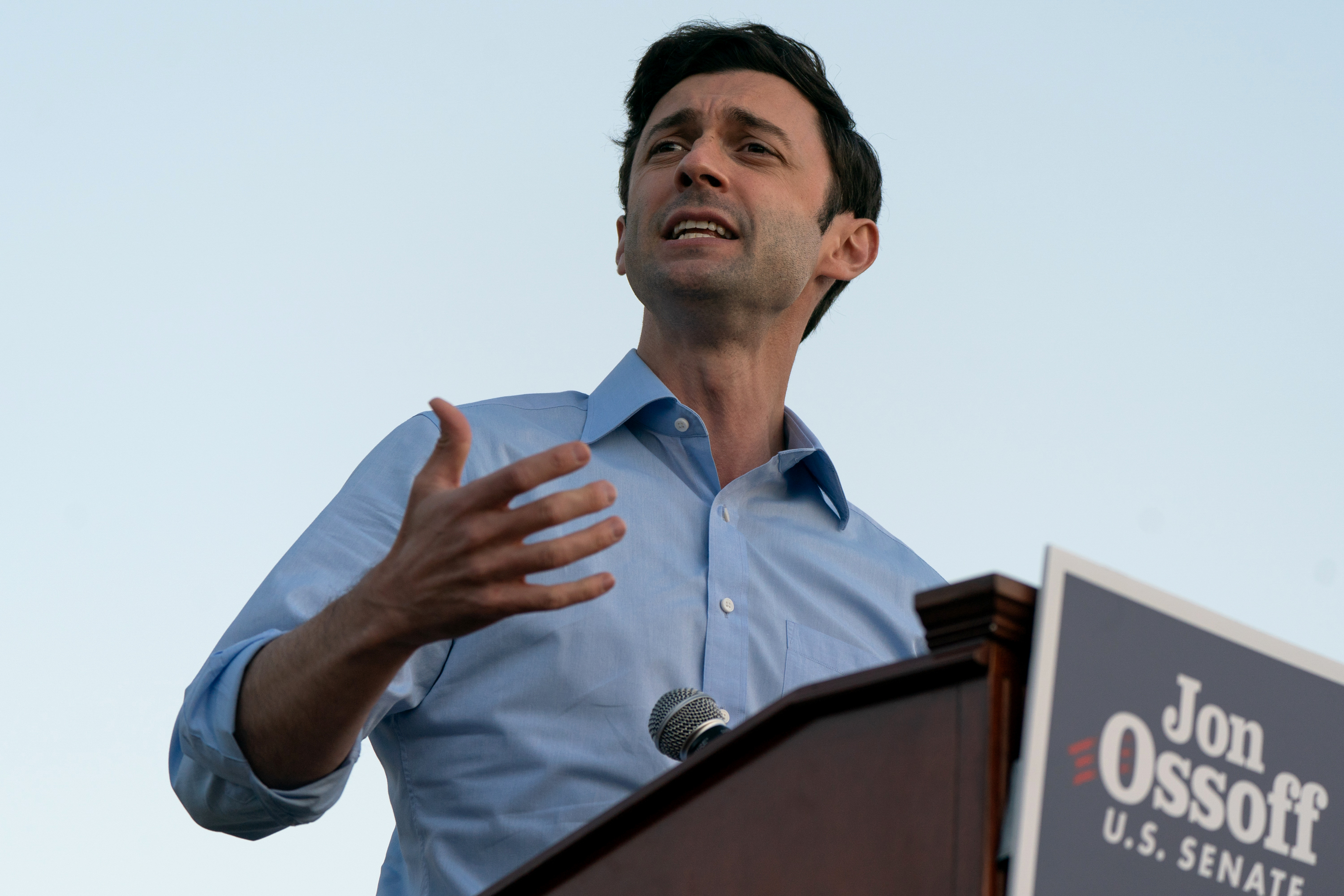
Experts in the Media: With Kemp bowing out of mid-terms is Georgia staying blue?
Control of the Senate is key for most administrations, and with a razor-thin edge favoring the Republicans, any pickup to keep control of the Senate after the mid-term elections is a priority. However, with a heavy favorite in Gov. Brian Kemp stepping away from the chance to run for the GOP, many are speculating the once traditionally Republican stronghold could stay blue under the Democrats with the re-election of Sen. Jon Ossoff. It's a topic that has political watchers and media trying to cover and figure out as parties get ready to get back on the campaign trail for next year. It's also why journalists and news outlets like Newsweek are connecting with experts like William Hatcher, PhD, for expert opinion and perspective. An award-winning scholar, Hatcher is the chair of the Department of Social Sciences and a professor of political science. His research focuses on the connection between public administration and the development of local communities. Kemp's decision not to challenge Ossoff in the state's 2026 Senate race could be a boon to Democrats' chances of holding the seat in the battleground state, according to recent polls... Kemp's announcement follows months of speculation about whether he would challenge Ossoff, a Democrat first elected in 2020. Polls suggest Kemp would have been the strongest candidate against Ossoff and that other potential Republicans trail the incumbent senator in a hypothetical matchup. "Given that Kemp was perhaps the strongest candidate to face Ossoff, his decision to not run will make it difficult to find another candidate that would be as competitive. However, the election is over a year away, and in politics, a lot can happen in that amount of time," William Hatcher, chair and professor of social sciences at Augusta University, told Newsweek on Tuesday. A poll from the Atlanta Journal-Constitution found that Kemp led Ossoff by 3.3 points (49% to 45.7%), Ossoff led three other prospective challengers. That poll surveyed 1,426 respondents from April 24 to April 27, 2025, and had a margin of error of plus or minus 2.9 percentage points. Hatcher said the state Republicans face a "limited" bench to challenge Ossoff, but whoever prevails will eventually have to defend Trump's "unpopular economic policies that will most likely adversely affect states like Georgia, particularly his recent commentary on leveling tariffs on the film industry – a industry that has a significant presence in Georgia." May 06 - Newsweek The race is obviously already on for the mid-term elections in November of 2026, and if you're a journalist looking to cover Georgia politics, let us help. William Hatcher, PhD, is available to speak with media - simply click on his icon now to arrange an interview today.


Historical Significance of the Papal Name
In the wake of the historic election of Pope Leo XIV, the first American to ascend to the papacy, scholars and observers alike are reflecting on the global, historical and theological implications of his early statements and symbolic choices. His decision to take the name Leo – a name not used for over a century – immediately evokes comparisons to both Leo XIII and Leo I (Leo the Great), popes known for their firm leadership and dynamic engagement with the world. Baylor University’s Elisabeth Rain Kincaid, J.D., Ph.D., director of the Institute for Faith and Learning and an expert on early modern theology and Catholic Social Thought, said choosing the name Leo is significant, especially in today’s world. Through his choice of name, rhetorical style and theological references, the new pope is signaling a clear vision for a Church that is simultaneously grounded in tradition and open to global dialogue, Kincaid said. Kincaid is currently at work on a monograph – “Business Ethics for a Flourishing Life: Catholic Social Thought in the Modern Workplace” – in which she argues for the continued importance of Leo XIII’s thought for modern life. If you're covering the news about Pope Leo XIV and are looking to know why Cardinal Robert Prevost chose that name - we can help. Elisabeth Rain Kincaid is an author, speaker, teacher, and theologian. She has published broadly in peer-reviewed journals and popular publications. She is a frequent speaker at conferences, churches, and professional events on topics including business ethics, virtue and character, Christian engagement with law and politics, and work and vocation. She is currently the Director for the Institute for Faith and Learning at Baylor University. In her teaching, she draws upon her years of experience as a white-collar criminal defense attorney and a private equity professional, along with her ministry experience. Elisabeth is available to speak with media about this topic - simply contact Shelby Cefaratti-Bertin, M.A., Assistant Director of Media and Public Relations at Baylor University, Shelby_Cefaratti@baylor.edu or 254-327-8012 to arrange an interview today.

An Expert Guide to the Papacy and Pope Francis
The death of Pope Francis marks a pivotal moment for the Catholic Church, ending a papacy that redefined the Church's relationship with the modern world. As the College of Cardinals prepares to gather in conclave, Catholics across the globe are closely watching to see whether the next pontiff will build upon Francis' legacy or chart a new course. The following experts are available to provide insight into a range of related topics, including Pope Francis' enduring impact and what lies ahead for the world's 1.4 billion Catholics: Massimo Faggioli, PhD Professor, Theology and Religious Studies Dr. Massimo Faggioli is a world-renowned expert on the history and administrative inner workings of the Catholic Church, with specific expertise in the papacy, Vatican II, the Roman Curia, liturgical reform, new Catholic movements and Catholicism and global politics. As quoted on NPR: "Historically, we see in different conclaves a certain swinging of the pendulum. What the conclave and the next pope cannot do is to ignore and deny the changing features of global Catholicism, which is much less European, much less white, less North American and more Global South..." Kevin Hughes, PhD Chair, Theology and Religious Studies Dr. Kevin Hughes is a leading historical theologian, offering insights into the life, legacy and impact of Pope Francis. He can also speak to the significance of the Pope in Catholicism and the influence of his teachings on the global Catholic Church. As quoted on Scripps News: "[Pope Francis' selection] was really the Church extending beyond the limits of its European imagination. His Latin American identity was really crucial to embracing a new moment within the Church and opening the door in so many ways, and I think he bore witness to that throughout his papacy." Jaisy Joseph, PhD Assistant Professor, Systematic and Constructive Theology Dr. Jaisy Joseph is a trained ecclesiologist, able to address a wide range of topics relating to the papacy, conclave process and Catholic Church. Previously, she has commented on the Church's presence in Asia and the Global South, offering expert commentary on its growth, challenges and shifting influence. As quoted by ABC News Digital: "[The election of someone from the Global South would be] a move in that direction of how to be a global church. That move from a Eurocentric church to a truly global church—I think that's what Francis really inaugurated." Patrick Brennan, JD Professor of Law; John F. Scarpa Chair in Catholic Legal Studies Professor Patrick Brennan is an expert on the conclave process and the main rules that govern it. He can also speak to topics such as the contemporary and historical importance of secrecy in the conclave, what the cardinals may be looking for in the next Pope and the factors that cause similarities and differences from one conclave to the next. As quoted on Fox 29's Good Day Philadelphia: "The purpose of the general congregation is for the cardinals, who don't know each other in some cases, to get to know each other better as they learn about the current state of the Church and together decide on the needs of the Church and priorities for the new pontificate." Brett Grainger, ThD Associate Professor, Study of Spirituality and American Religious History Dr. Brett Grainger is a go-to source for discussions of the changing face and role of modern spirituality in America. He serves as an expert on contemporary religious trends and can also speak to the broader public reaction to Pope Francis' passing, especially outside of the Catholic faith. As quoted by Courthouse News Service: "People are disaffiliating from a tradition—that doesn't necessarily mean in fact that they don't believe in God anymore...What's more important is 'Is this giving me life? Is this making my life more meaningful? Is this giving me the kind of energy and purpose that I'm looking for?' That's where religion is going." Michael Moreland, JD, PhD Professor of Law and Religion; Director, Eleanor H. McCullen Center for Law, Religion and Public Policy Dr. Michael Moreland is a renowned scholar of constitutional law, religious freedom, public policy and ethics. He can provide expert commentary on items related to the Catholic right and the state of religious politics in the United States. As featured on NBC News Digital: Michael Moreland said the mass appeal of "Conclave" captured how, even in a secular modern age, there is still pervasive intrigue around "the ancient rituals of the Catholic Church." "The significance of the theological and spiritual aspects of Catholicism and this process of electing a pope was kind of reduced into partisan politics," he said. Ilia Delio, OSF, PhD Josephine C. Connelly Endowed Chair in Christian Theology Sister Ilia Delio addresses topics in her work such as theology and evolution, technology and human becoming and understandings of Catholicity in a world of complexity. She can provide expert insight into Laudato si', Pope Francis' position on the environment, the relationship between science and religion and integral ecology. As featured in the National Catholic Reporter: "We are clearly an Earth in crisis," with a reversal necessary to secure a sustainable future, said Ilia Delio... Delio posed a series of questions: about the relationship between religion and science; what Laudato si', and Christianity more broadly, can offer ecological movements; and whether the concept of kinship or creation as family might better reflect humanity's place within nature than "care for creation." To speak with any of these faculty experts, please contact mediaexperts@villanova.edu.