
Experts Matter. Find Yours.
Connect for media, speaking, professional opportunities & more.
Expert Insight: NFL Fandom: The Last Cultural Unifier?
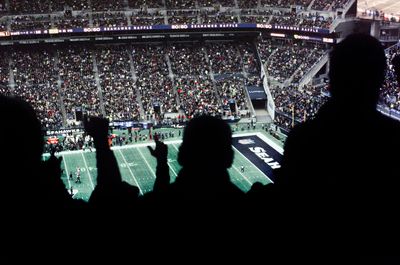
In 2024, few cultural touchstones unify America. One of the remaining cultural unifiers is the NFL. It is almost guaranteed that the Super Bowl will be the most watched television program each year. Add Taylor Swift (another rare cultural unifier) attending to watch her boyfriend and an appealing halftime musical guest, and you can have over 120 million people watching the same program at the same time. Nothing else comes close. There is little doubt that the NFL is the undisputed champion of American sports. But how do the various NFL fandoms compare? Which team has the top fandom, and which struggles (struggle is relative here, as the lowest-ranked NFL fandom is still impressive)? This is an interesting question in a couple of ways. First, it reveals something important about the level of connection in different cities. Cities with stronger fan bases tend to have more of a shared identity. Boston residents share more love across their teams (Celtics, Red Sox, Bruins, Patriots) than folks from Tampa Bay. “Sports” cities are fundamentally different. It's also an interesting marketing analysis. Fandoms are people who share passion and love for what are essentially brands. Examining fandom can reveal something critical about how brands that inspire fandom are built. Comparing fan bases can also inflame passions. Sports fans are (often) the ultimate fans as they closely identify with their teams and feel each victory as a personal triumph and each loss as a defeat. Because fans’ identities are tied to their teams, ranking fan bases can feel like an attack. Saying Browns fans aren’t as good of fans as Ravens fans feels like an attack on Cleveland. The deeper perspective motivating this analysis is that fandom is about cultural passion, so what people are fans of largely dictates the tone and content of our societies. A society that loves baseball, country music, and trucks feels very different from one that favors soccer, opera, and Vespas. The fandom rankings are a snapshot in time of how fandom works in the NFL. And remember, the NFL is not just the top sports league in America but also the closest thing we have in 2024 to a shared societal passion. Analyzing Fandoms I have been ranking NFL and other fan bases for more than a decade. These fandom analyses are an example of brand equity analytics, and they use two types of data. The goal is to understand the relationship between market characteristics and fandom outcomes at the league level. We can then evaluate each team based on how it performs relative to league norms. The fandom or market outcome measures include things like data on prices, attendance, and social media following. These are measures of fan engagement. Prices provide a signal of how much market power a team has created. Attendance shows the enthusiasm of fans in the market to pay for tickets and take the time to travel and attend. Social media following reveals how many fans the team has in and out of their home market. Each metric has advantages and limitations. Social media following provides an indication of national fandom, but it also captures casual fans who would never pay for a ticket. The second aspect of the analysis focuses on market potential. NFL markets vary from New York, with a population of 20 million, to Green Bay, with a few hundred thousand. Income levels in San Francisco are far higher than in Jacksonville or Cleveland. I use a range of demographics, but income and population are the major factors. Again, the metrics are good but not perfect. For example, using MSA populations isn’t perfect because teams have different footprints. The Packers are more of a Wisconsin team than a Green Bay team. The teams in New York and LA share a market. Should they each get half of the metro area population? One factor that I do not control for is competition. In the southeast, NFL teams may compete with SEC teams. I have debated this issue (with myself) and have decided to neglect it. This year's analysis includes a significant change from last year. The significant change is that I am not controlling for team performance. Controlling for team performance is helpful because it isolates core or unchanging fandom. This approach has appeal, as we can argue that teams with more passionate fandoms will be more resilient against losing seasons. The downside of controlling for performance is that we get less of a measurement of the fandom's overall value. If a team like Kansas City is on an extended winning streak, then the Chiefs brand is very valuable at the moment. Controlling for winning makes the analysis more about the core, near-permanent passion of a fandom, while not controlling makes the results more relevant to current brand power. The analysis involves three steps. The first step creates measures of each team’s relative fandom outcomes and market potential. The second step develops a statistical model of the relationship between market potential and fandom outcomes. The third step compares each team's fandom outcomes with the statistical model's predictions. The third step is a comparison of actual results versus predicted – the key point is that the prediction is based on leaguewide data. As these analyses are always imperfect, the best way to consider the fandom rankings is as tiers. I like the idea of quadrants. Some brief comments on the members of each quadrant (Elite, Solid, Role Players, Benchwarmers). I will be discussing each fandom on social media. TikTok: @fanalyticspodcast Instagram: @fanalyticsmikelewis YouTube: @fanalyticsmike A bonus figure follow the Quad overviews. The Results Quadrant 1: The Elite The Dallas Cowboys lead the top group of teams, followed by the Packers, Eagles, Chiefs, 49ers, Raiders, Patriots, and Steelers. Sounds a lot like what the man on the street would list as the top NFL brands. The Cowboys and Packers leading the way is no surprise. The Cowboys are second in social following and the leaders in attendance. The Packers are an astonishing fandom story as the team is located in the definitive small market. The Eagles leading the Steelers is going to be troubling in Western Pennsylvania, but the Eagles have more pricing power and more social following. The 49ers are a solid NFL fandom with few weaknesses. The Patriots are in a new era, and it will be fascinating to see if they maintain their top-tier position as Brady and Belichick become memories. The Chiefs' presence in the top group is a change from past years and is due to the shift away from controlling for performance. The Chiefs have a great fandom, but the team’s success currently pumps them up. The Chiefs are in a brand-building phase as the team continues building its dynasty. The question for the Chiefs is where they end up long-term. I don't fully understand the Raiders' ranking. The Raiders are midrange in attendance and social following but do well because are reported to have the highest prices in the league. I suspect this is more an idiosyncrasy of the Las Vegas market than a reflection of significant passionate fandom. Quadrant 2: Solid Performers The Quadrant 2 teams are the Broncos, Giants, Panthers, Seahawks, Saints, Ravens, Texans, and Browns. These are the solid performers of NFL fandoms (brands). These are teams with above expected fandom outcomes for their relative market potentials. The Quadrant 2 clubs are all passionate fanbases (maybe one exception) despite very different histories. For example, the AFC North rival Ravens and Browns differ in both relative history and frequency of winning. Cleveland fandom involves significant character, while the Ravens are a “blue-collar” brand that has been a consistent winner. There are a lot of great stories in Quad 2. The Saints were once the Aints but are now a core part of New Orleans. The Broncos and Giants are great fandoms who are probably angry to be left out of Quad 1. The Panthers' position is unexpected and may be due to some inflated social media numbers. This is the challenge when an analysis is based only on data. When data gets a little weird, like an inflated social media follower count dating back to Cam Newton's days, the results can also get a little weird. This is a teachable moment—do not analyze and interpret data without knowing the context (the data-generating processes). Quadrant 3: Role Players Quadrant 3 fandoms are teams whose fandom outcomes are slightly below average league performance (for similar markets). The Quadrant 3 teams include (in order) the Bills, Falcons, Buccaneers, Jets, Vikings, Bears, Dolphins, and Bengals. There are some interesting teams in Quad 3. The Bills have a great and notorious fandom. Jumping through flaming tables in subzero weather should get you into the top half of the rankings? The big-market Jets and the small-market Bengals have two of the most fascinating QBs in the league. Both clubs could be poised to get to Quad 2 with a Super Bowl or two. Da’Bears may be one of the most disappointing results. A team with an SNL skit devoted to their fandom in a market like Chicago shouldn’t be in Quad 3. Other quick comments: The Falcons need to win a title. Florida is tough for professional teams. The Vikings should play outside. Quadrant 4: Hopium These are the NFL's weakest fandoms, with the key phrase being “the NFL’s.” The Quad 4 teams, in order, are the Lions, Rams, Jaguars, Colts, Titans, Commanders, Chargers, and Cardinals. It’s a lot of teams who have not won regularly and have many moves and name changes. The Lions are poised for a move upward and maybe a sleeping giant of a fandom. They have the most watchable coach in the league and the most surprising celebrity fan. An interesting side story in Quad 4 is the battle for Los Angeles between the Rams (formerly of Saint Louis) and the Chargers (previously San Diego). They play in the same market, but the Rams have won more. But will Herbert lead the Chargers past the Rams? Quad 4 illustrates an important lesson: consistency. The Rams moved from St. Louis and then back to LA. The Chargers went from San Diego to LA. The Colts left Baltimore in the middle of the night. The Titans were the Oilers and moved from Houston to Nashville. The Cardinals were the other NFL team Saint Louis lost. The Commanders should have stopped with their previous name. The Fandom Outcomes / Market Potential Matrix The following figure is a bit of bonus material that may provide some insight into the inner workings of the analysis. The figure below shows the performance of each team on the Fandom Outcome and the Market Potential Indexes. The upper left region features teams with less lucrative markets but above-average fandoms, like the Packers, Steelers, and Chiefs. The lower right region is the teams with below-average fandom outcomes despite high potential markets, like the Commanders, Chargers, and Rams. This pictorial representation is also interesting as it shows teams with similar positions. These similarities can be somewhat surprising. For example, the Lions and Dolphins have very similar profiles despite the differences between Detroit and Miami. Mike Lewis is an expert in the areas of analytics and marketing. This approach makes Professor Lewis a unique expert on fandom as his work addresses the complete process from success on the field to success at the box office and the campaign trail. Michael is available to speak with media - simply click on his icon now to arrange an interview today. Interested in following Future Fandom! Subscribe for free to receive new posts.



Can the Olympics Help Americans Forget Politics (at Least for 16 Days)?
Americans are divided on a multitude of different issues, but could the Olympic Games unite the country – at least for the duration of an Olympiad? A Baylor University sports marketing and branding expert says yes, the Olympics can help bring people together even when it’s hard for them to agree about anything else. In his latest Forbes Sports Money column, Baylor University sports marketing and branding expert Kirk Wakefield, Ph.D., executive director of the Curb Center for Sales Strategy in Sports and Entertainment (S3E) program at Baylor’s Hankamer School of Business, analyzed a July 8 national population poll that asked Americans questions about politics but also included the Steen Happiness Index (SHI). The 20-item happiness index provides a series of statements for participants to read and choose the one from each group that describes their state at that moment. Happiness items focus on three types of happy lives: the pleasant life (experiencing and savoring pleasures), the engaged life (losing the self in engaging activities) and the meaningful life (participating in meaningful activities). Are people happier when watching the Olympics? “Happy people follow the Olympics and people who follow the Olympics are happy people,” Wakefield wrote. The higher people scored on the happiness index, the more likely they are to: Watch at least some of the Olympics (49.75%) Root for the U.S. to win (31.8%) Follow the results of the Olympics (28.1%) Read stories about athletes in the Olympics (19.6%) Will talk with others about the Olympics events (18.7%) “Controlling for age, gender, income, education, race and marital status, Americans who follow the Olympics in one, two, or three of these ways are somewhat more happy people (+4% on the SHI). But those who follow the Olympics in four or all five of these ways are significantly happier people (+10% on the SHI),” Wakefield wrote. Who is happiest when the Olympics are on? The happiest? Those would be the Americans who love to talk about the Olympics with others while also cheering for U.S. athletes to win. In fact, they are about 14% happier than those who don’t follow the Olympics, according to the SHI. “Perhaps best of all, people of all political leaning and presidential preferences are equally likely to follow the Olympics. No matter the party, people can party together in unity following the Olympics,” Wakefield wrote. “Maybe we can’t forget politics. But we can give it a break to watch the Olympics.” ABOUT KIRK WAKEFIELD, PH.D. Kirk Wakefield, Ph.D., is The Edwin W. Streetman Professor of Retail Marketing at Baylor University, where he is the Executive Director of the Curb Center for Sales Strategy in Sports and Entertainment (S3E) program in the Hankamer School of Business. The author of Team Sports Marketing and founder of Wakefield Research Partners, Wakefield has conducted fan research on partnerships, pricing, promotions, sportscape, service, and anything else that explains why fans do what they do in nearly every venue in sports, including the NBA, NFL, MLB, MLS, NHL and NASCAR. His scholarly works appear in a breadth of journals: Journal of Marketing, Journal of Consumer Research, Journal of the Academy of Marketing Science, Journal of Service Research, Journal of Retailing, Journal of Advertising, Journal of Advertising Research and Journal of Sport Management, among others. Wakefield is a regular contributor to Sports Money on Forbes.com. ABOUT THE CURB CENTER FOR SALES STRATEGY IN SPORTS AND ENTERTAINMENT (S3E) The Center for Sales Strategy in Sports and Entertainment (S3E) at Baylor University is the only program in the U.S. focused on generating revenue for sports. S3E graduates have career opportunities in sales, digital marketing or business analytics for major league teams, university athletics, corporations and agencies. Baylor is the only university combining learning with practice in partnership with the Athletics Department to prepare graduates for careers in the business of sports. The S3E program is unique in vision, values, mission and culture to transform the business of sports and entertainment. Consistent with the Christian mission and purpose of Baylor University, we prepare passionate servant leaders to positively influence lives in places people go to play or watch others play.


It Has to Matter Who Wins: Futurecasting the MLB All-Star Game
Globe Life Field in Arlington, home of the 2023 World Series champion Texas Rangers, will play host to the 94th edition of the Major League Baseball All-Star Game on July 16, marking the second time in franchise history the Rangers will host the Midsummer Classic. MLB’s All-Star game – which matches up the best players from the American League and National League as selected by fans, managers and players – is considered one of best all-star contests among professional sports, said Kirk Wakefield, Ph.D., executive director of the Curb Center for Sales Strategy in Sports and Entertainment (S3E) program at Baylor University’s Hankamer School of Business. However, the game faces continued headwinds, Wakefield said, ranging from lagging viewership to fan voting to a game that is more an exhibition than a meaningful game. Wakefield Weighs In: Five Thoughts on MLB's All-Star Game Is the MLB All-Star game the best All-Star contest of all major leagues? Wakefield: Yes, it’s the only one where players seem to try their best. The NBA and NFL – who have practically given up – have declining viewership since 2011. Unfortunately, MLB All-Star game is on the same downhill skid. (According to Statista, viewership has declined from 22 million in 1993 to seven million in 2023.) The reason why is it doesn’t really matter who wins. If the players don’t care who wins, neither will fans. Further, fans aren’t particularly a fan of only one league so that it really matters if one league has bragging rights. That was less the case years ago before interleague play. How could viewership improve in any of the All-Star games? Wakefield: It has to matter who wins. MLB tried this with home field advantage for the World Series. They gave that up. The current approach in baseball is truly an exhibition because every player gets to play, so it’s like three players at every position playing three innings. That’s not how a manager would play it if trying to win. And it’s not like it used to be when the starters (who were more likely to be the best at their positions) played longer. One suggestion I’ve heard is to make the payoff big enough for the winners so that the players gave it their best. Get a sponsor to put up the money so the winners each make seven figures and could be the players and managers will play more like a team trying to win. Does Monday’s prelude, the hugely popular Homerun Derby, enhance Tuesday’s game? Wakefield: The Homerun Derby is popular because fans do follow individual players. It matters more who wins. That said, the HR derby’s viewership has still lagged. Bottom line: Fans are loyal to teams more than to leagues or individual players. Fan voting… Need we say more? Wakefield: Major market teams with huge fan bases will dominate, but what about the Kansas City Royals, who at one point in the season were on pace for the biggest year-over-year improvement in wins and losses? Given the way fan voting has become essentially a promotion game to get more fans to vote more often, it’s hardly representative of anything other than largest markets with the best promoters. The good news is that the MLB All-Star game will be quite the occasion in Arlington, Texas, with a bevy of game-related activities and events July 13-16. Wakefield: Arlington is an optimal location central to the U.S. with plenty of space to blow out the occasion. It’s like the Texas State Fair came to baseball, where all the rides and attractions are baseball-happy. ABOUT KIRK WAKEFIELD, PH.D. Kirk Wakefield, Ph.D., is The Edwin W. Streetman Professor of Retail Marketing at Baylor University, where he is the Executive Director of the Curb Center for Sales Strategy in Sports and Entertainment (S3E) program in the Hankamer School of Business at Baylor University. The author of Team Sports Marketing and founder of Wakefield Research Partners, Wakefield has conducted fan research on partnerships, pricing, promotions, sportscape, service, and anything else that explains why fans do what they do in nearly every venue in sports, including the NBA, NFL, MLB, MLS, NHL and NASCAR. His scholarly works appear in a breadth of journals: Journal of Marketing, Journal of Consumer Research, Journal of the Academy of Marketing Science, Journal of Service Research, Journal of Retailing, Journal of Advertising, Journal of Advertising Research and Journal of Sport Management, among others. Wakefield is a regular contributor to Sports Money on Forbes.com. ABOUT THE CURB CENTER FOR SALES STRATEGY IN SPORTS AND ENTERTAINMENT (S3E) The Center for Sales Strategy in Sports and Entertainment (S3E) at Baylor University is the only program in the U.S. focused on generating revenue for sports. S3E graduates have career opportunities in sales, digital marketing or business analytics for major league teams, university athletics, corporations and agencies. Baylor is the only university combining learning with practice in partnership with the Athletics Department to prepare graduates for careers in the business of sports. The S3E program is unique in vision, values, mission and culture to transform the business of sports and entertainment. Consistent with the Christian mission and purpose of Baylor University, we prepare passionate servant leaders to positively influence lives in places people go to play or watch others play.

Is Florida becoming more affordable for renters?
Between high interest rates, an influx of newcomers eager for housing and inflation taking a toll on the cost of almost everything - it's been an expensive year for anyone living in Florida. But it appears the tide might be finally turning on high costs and the price to rent a place in the Sunshine State might be going down. It's a trend that has media looking for answers and experts like Florida Atlantic's Ken Johnson getting calls to provide his insight, opinion and expertise on the topic. Florida Atlantic University recently released a new study showing that the state’s rental markets might be stabilizing. In the release, FAU officials announced that rents in areas like Palm Bay and Jacksonville have recently gone below their long-term pricing trends. Meanwhile, the data indicates that other major cities in the state — such as Cape Coral, Orlando and Deltona — saw only slight increases in rent prices, with price increases gradually slowing down. As such, it could be a sign that many renters statewide could soon see lower prices. “While these measures are small, they are a positive sign of where the rental market could be heading in the future,” said Dr. Ken Johnson, a real estate economist with FAU’s College of Business. “These Florida cities are renting at a discount compared to their historical averages, and others appear to be heading in that direction, suggesting that rental markets around the state are stabilizing.” June 06 - Click Orlando.com Florida may be an interesting case study on what lies ahead. Will these rental trends in Florida start to appear nationally? Who will best benefit from lower rents and what will it mean for the economy? Will lower rents attract more people to Florida and could that reverse this trend? There's a lot to know and understand about the rental market. And if you're a journalist covering the topic or looking to know more - then let us help. Ken H. Johnson, Ph.D., an economist and associate dean in FAU’s College of Business, is available to speak to the media. Simply click on his icon to arrange an interview and time.


Artificial Intelligence (AI) has emerged as a pivotal force driving innovation and reshaping our societal landscape. Its transformative potential spans across sectors, touching upon crucial global challenges such as ethics, privacy, and the future of employment. As AI continues to permeate various aspects of our lives, its intersection with pressing issues like climate change takes center stage. The upcoming launch of the Corporate Climate Responsibility Monitor by the NewClimate Institute in collaboration with Carbon Market Watch presents an invaluable opportunity to explore the symbiotic relationship between AI and corporate climate responsibility. Why This Matters to the Public: The Corporate Climate Responsibility Monitor 2024 serves as a beacon of insight into the nexus between corporate actions and environmental sustainability. Here are key sub-topics that offer intriguing story angles for a broad audience: Corporate Accountability in Climate Mitigation: Delve into how corporations are leveraging AI technologies to enhance their climate mitigation strategies. Highlight case studies of companies pioneering innovative approaches to reduce carbon emissions and promote sustainable practices. Transparency and Reporting Standards: Investigate the role of AI-driven data analytics in facilitating transparent reporting on corporate carbon footprints and environmental impact. Explore how enhanced transparency fosters accountability and drives corporate responsibility. Emerging Trends in Carbon Markets: Explore the evolving landscape of carbon markets and the role of AI in optimizing carbon trading mechanisms. Examine how AI-powered algorithms are revolutionizing carbon pricing strategies and incentivizing emission reductions. Collaborative Initiatives for Climate Action: Showcase collaborative efforts between corporations, NGOs, and government bodies in tackling climate change. Highlight partnerships forged to develop AI-driven solutions for environmental monitoring, renewable energy adoption, and sustainable supply chain management. The Economics of Climate Responsibility: Analyze the economic implications of corporate climate responsibility initiatives. Investigate how AI technologies are reshaping business models, driving cost savings through energy efficiency measures, and unlocking new revenue streams in the transition to a low-carbon economy. Impacts on Global Sustainability Goals: Assess the contribution of corporate climate responsibility efforts to achieving international sustainability targets such as the Paris Agreement and the United Nations Sustainable Development Goals (SDGs). Highlight success stories and challenges faced in aligning corporate strategies with broader environmental objectives. Connect with an Expert about Corporate Climate Responsibility For journalists with questions or looking to cover the the Corporate Climate Responsibility Monitor here is a select list of experts. To search our full list of experts visit www.expertfile.com Pamela Grothe Assistant Professor · University of Mary Washington Michael Vandenbergh Professor of Law · Vanderbilt University Sara Harris Professor of Teaching, Department of Earth, Ocean and Atmospheric Sciences · University of British Columbia Tom Rand Managing Director at MaRS Cleantech Fund I, L.P. · MaRS Cleantech Michael Rawlins Extension Associate Professor and Associate Director, Climate System Research Center · University of Massachusetts Amherst Photo Credit: Markus Spiske


Reddit Shares Expected to Commence Trading on NYSE | Media Advisory
In a move emblematic of the digital age's intersection with traditional finance, Reddit, the vast online community platform, is poised to debut its shares on the New York Stock Exchange (NYSE). This event marks a significant milestone for the company, celebrated for its user-generated content and vibrant forums that span every conceivable interest. For investors, tech enthusiasts, and users alike, Reddit's transition from a private to a public entity opens up discussions on the valuation of online communities, the future of digital platforms, and the implications for the broader stock market. Key sub-topics include: Initial Public Offering (IPO) Details: Insights into Reddit's valuation, share pricing, and the IPO process. Impact on the Tech Industry: What Reddit's public listing means for the tech sector and other social media platforms. User Community Reaction: How Reddit's dedicated user base perceives the move to go public and potential changes to the platform. Market Performance and Investor Sentiment: Analysis of investor interest, market trends, and the potential for Reddit's stock. Corporate Governance and Strategy: The shift in Reddit's management approach post-IPO and strategic plans for growth. The Role of Digital Platforms in Modern Investing: How Reddit and similar platforms influence investor decisions and market dynamics. For journalists seeking research or insights for their coverage on this topic, here is a select list of experts. Scott Stratten President & CEO · UnMarketing Samantha Bradshaw Doctor of Philosophy Candidate · Oxford Internet Institute David Meerman Scott Marketing Strategist, Keynote Speaker, Bestselling Author Sean Thoennes, Ph.D. Associate Faculty - Media Psychology · Fielding Graduate University To search our full list of experts visit www.expertfile.com Photo by Brett Jordan

A 'super' economic boost for the big game, courtesy of Taylor Swift
Could NFL executives have imagined a better scenario for this year’s Super Bowl? Only in their wildest dreams, according to UD sports marketing experts who study the big game every year. The league has a built-in audience draw and revenue generator named Taylor Swift, who will be in attendance Sunday to root on boyfriend Travis Kelce and his Kansas City Chiefs. The world’s biggest pop star can easily fill any blank space – and then some – caused by a lack of bad blood between the Chiefs and San Francisco 49ers or advertisements that don’t exude enough style. And the NFL didn’t have to spend a dime or lift a finger to make it happen. Timothy DeSchriver and John Allgood, who teach and study sports marketing at the University of Delaware’s Alfred Lerner College of Business and Economics, see a number of ways that Swift can move the needle economically for a league that seemingly needs no extra publicity. The female audience is already growing for the NFL, but Allgood said that Swift delivers “a fresher audience” as witnessed by record viewership for the Chiefs-Ravens AFC Championship Game. “There are people tuning in just to see her in a suite for five seconds,” Allgood said. Gamblers wagering on Taylor Swift “prop bets” will keep tuning in even if it’s a blowout, DeSchriver noted. DeSchriver pointed to new advertiser interest from makers of beauty products, potentially to reach the new audience. The NFL will get its cut from products as well, Allgood said, thanks to an NFL licensing deal with a clothing designer after Swift wore one of her puffer coats and the continued rise in sales of Kelce jerseys. DeSchriver and Allgood, who can also discuss ticket pricing in the playoffs, and are available for interviews. To set one up, visit DeSchriver's profile and click on the "contact" button.


Holiday Season is Almost Here and Goizueta Business School has Holiday Experts Ready to Help
The holidays are the difference between operating in the red and operating in the black for many retail businesses. The Goizueta Business School has experts who can provide insight and expertise on a wide range of stories. Economics of the Holiday Season - Economist Tom Smith can discuss seasonal hiring, retail expectations, and the importance of the holiday season to retailers. Black Friday - Doug Bowman can discuss retail expectations and the importance of the holiday season to retailers. He expects this year shoppers will go to fewer stores and not travel long distances, delivery capacity will be an issue, and work from home/school purchases will be hot. AI Changing How We Shop - David Schweidel can discuss how new AI tools are changing how we shop and how brands are using AI to reach prospective customers. Product Reviews See Huge Increases: How Reviews Impact Holiday Shopping - What do reviews mean for the shopping experience and do reviews impact purchase? Reshma Shah can discuss the impact reviews have on the point of purchase. Product Returns - Marat Ibragimov can discuss the retail strategy and impact of holiday gift returns, comparing online returns to brick and mortar. Food and Travel Pricing - Saloni Firasta Vastani can discuss the cost of this year’s holiday dinners. What’s gone up and what’s gone down? She can also discuss the cost of travel this holiday season and what consumers can do to get a better deal. Avoiding Holiday Overspend - Rohan Ganduri can discuss how holiday shopping can expose consumers to credit products like store credit cards that offer various incentives to take up the credit card, often resulting in overspending. Ganduri can discuss his latest research paper on how taking up store credit cards can impact consumers’ future credit outcomes. Social Media & Advertising - David Schweidel can discuss how micro influencers work, how using product placement can cut through the advertising clutter, and the power of product reviews. The Constantly Changing Online Retail Experience - Styling videos, personal shoppers, messaging, and even Augmented Reality (AR) are being used to generate purchases. Doug Bowman can discuss how stores are reimagining the shopping experience to attract customers in person and online. Influencers Influencing Our Purchases - How are creators impacting the economy and are influencers impacting our purchasing decisions? Marina Cooley looks at the creator economy and how TikTok and Instagram are impacting our holiday wish lists and what it takes for a product to go from unknown to trending. She can also discuss how this holiday season will help normalize in-app TikTok shopping (something Instagram has struggled to execute on). How to Attract Customers to the Store this Holiday: Merging Online and In-person Experiences May be the Answer - Shopping looks different and it is up to retailers to stand out not just in the brick and mortar world but also online. The success of a business can balance on the customer experience. Reshma Shah can discuss the policies brick and mortar retailers need to have in place to successfully merge online shopping and the in-person shopping experience. To book your expert interview, call Kim Speece at (404) 849-6579 or email her at kim@leffassociates.com or simply click on the icon available. To find an expert on a specific topic, click the “Search” feature at https://goizueta.emory.edu/faculty/profiles. To check out other recent research, visit https://www.emorybusiness.com/faculty-research/.






Why shoppers are paying more for a fake Amazon discount
By Halle Burton According to new research by Jinhong Xie, a Warrington College of Business professor at the University of Florida, more than a quarter of Amazon vacuum cleaners sold have increased their prices while pretending to offer discounts. Xie’s pricing phenomenon research is joined with Sungsik Park at the University of South Carolina and Man Xie at Arizona State University, publishing their analysis in the Marketing Science journal. A product’s price increase is paired with a previously unadvertised listing price, which encourages Amazon shoppers to receive a deceitful false discount. This faux discount drove higher sales despite the price increase, and shoppers end up paying 23% more on average. “When you see this list-price comparison, you naturally assume you are getting a discount. It’s not just that you didn’t get a discount. You actually paid a higher price than before the seller displayed the discount claim,” said Xie. Regulations currently prohibit deceptive pricing by requiring truthful price comparisons from the sellers, but a list price can still be misleading under these circumstances. Shoppers are misled by the timing of price comparisons where retailers advertise a price discount that actually only gives the impression of a deal. “Current regulations are all about the value of the list price, and they don’t say anything about misleading consumers by manipulating the timing of the list price’s introduction,” Xie said. Xie and her colleagues followed more than 1,700 vacuums on Amazon from 2016 to 2017 gathering observational data on their prices. “We found that by increasing the price by 23% on average, the seller achieves a 15% advantage in their sales rank among all products in the home and kitchen category,” Xie said. Xie encourages consumers to be aware, not make assumptions about discount claims and utilize multiple websites to compare prices. “We think that consumer organizations and regulators should evaluate this new marketing practice to determine whether and how to manage it.”


#Expert Insight: Price Image Formation: When is HILO low?
When consumers choose where to shop, they often consider a store’s price image —does the store have a reputation for having lower or higher prices than its competitors? A store’s reputation for lower prices doesn’t happen by chance. Choosing a pricing strategy is one of the biggest pricing decisions a retailer makes. In “When is HILO Low? Price Image Formation Based on Frequency versus Depth Pricing Strategies,” a recently published paper in the Journal of Consumer Research, co-authors Ryan Hamilton, associate professor of marketing, Ramnath Chellappa, associate dean and Goizueta term professor of information systems and operations management, and Daniel Sheehan, associate professor of marketing and supply chain at the University of Kentucky’s Gatton College of Business and Economics, explore a gap in existing pricing strategy research. “Our research doesn’t threaten the validity of the previous research,” said Hamilton, “but what it does do is point to the limited generalizability of the previous research.” This is because previous pricing strategy research used the same research paradigm: It emphasized consumers’ perspectives as they compared prices simultaneously across multiple stores. Hamilton, Chellappa, and Sheehan wondered what would happen if they studied consumers as they compared prices of products within a store, instead of across stores. When they did so, the authors found that “many of the prominent findings of previous research are reversed,” they wrote. “We propose that when stores’ prices are evaluated one at a time, or in isolation, consumers will rely on the most salient contextual clues available—within-category price information—when forming a price image.” For example, rather than research the price of peanut butter across multiple grocery stores, shoppers often evaluate the price of peanut butter by comparing the prices of the brands on the shelf in front of them. To illustrate their point, the authors explore two basic pricing strategies: a frequency pricing strategy and a depth pricing strategy. Every Day Low Pricing (EDLP) is a frequency strategy where stores offer small price advantages over their competitors on many items. Walmart employs an EDLP strategy. A common depth strategy is a high-low (HILO) pricing strategy. HILO offers infrequent, but deep, price advantages over competitors. Macy’s utilizes this strategy. “The conventional wisdom is that EDLP equals low price,” explained Hamilton. But he and his co-authors argue that in a non-theoretical environment, the effectiveness of EDLP strategies is less clear. The trio hypothesized that the context in which consumers encounter prices has important implications. Specifically, that the frequency advantage of EDLP identified in earlier research was limited to those scenarios where customers were able to simultaneously compare prices across multiple stores. In contrast, they argue that a depth advantage, one resulting from HILO pricing, will be more likely when consumers evaluate store prices separately. “Without simultaneous comparisons across stores, consumers shift from using across-store prices as reference points to using within-category reference prices. As a result of this shift, deep price advantages are easier to evaluate than frequent price advantages and therefore more influential on customers’ formation of price image,” they write. “Because our theoretical account is based on within-category external reference prices, we predict that a depth store is likely to be evaluated as having a lower price image than a frequency store even when consumers are exposed to the prices of just one store,” they write. The authors tested their hypothesis using six separate experiments. All but one of the experiments studied national brands commonly found in grocery stores. (The other experiment used televisions.) In the experiments where participants saw store prices simultaneously, the experiment replicated the frequency advantage noted in previous research. But when participants did not have simultaneous price information across stores, the previous findings didn’t hold “What we found is that if you distance those prices comparisons even a little bit -showing a price on one webpage and then seeing a price on another webpage - that’s enough to completely reverse the findings,” explained Hamilton. In an isolated setting, “a couple of really low prices” will better communicate a store’s low-price image, said Hamilton. “That’s the big story.” While excited about the findings of their research, Hamilton is quick to point out the limits of their hypothesis, such as when pricing information isn’t readily available or when the consumer isn’t familiar with the brands of the product they wish to buy. “People want a simple answer that works everywhere, but it’s more nuanced than that,” said Hamilton. “This [hypothesis] is going to work better under certain set of circumstances than others because people process price information differently.” The insights aren’t only useful for retailers. While using a store’s price image to shop can be efficient from a consumer standpoint, assuming that the prices are low solely because the store has a reputation for low prices isn’t always the case. A retailer’s price image has vulnerabilities. Not everything at Costco is cheaper than it is at Whole Foods. Southwest Airlines may not always be cheaper than Delta Air Lines. “If you’re shopping for things you really care about,” advised Hamilton, “it might be worth doing more across-store price comparisons.” Chellappa is excited about how the paper addresses gaps in traditional economic models of pricing. “While much research in economics and information systems focuses on the availability of information for price comparison, the cognitive aspect of ‘how’ consumers compare and process such information is only explicated by studies such as ours. Looking at pricing through a behavioral lens, capturing consumers’ real shopping behavior reveals great insights that will be useful for firms,” he said. Interested in learning more about consumer behavior and Price Image Formation Based on Frequency versus Depth Pricing Strategies? Then let us help with your coverage and questions. Ryan Hamilton and Ramnath Chellappa are both available to speak regarding this important topic - simply click on either expert's icon now to arrange an interview today.

