
Experts Matter. Find Yours.
Connect for media, speaking, professional opportunities & more.

Will tourism bounce back as the Sunshine State gets ready for a post-COVID return?
The COVID-19 pandemic wreaked havoc on the globe, leaving few industries untouched in its wake. Florida’s tourism industry was hit particularly hard, with resorts shuttered and millions of visitors to the Sunshine State canceling their vacation plans. In fact, it’s estimated Walt Disney World lost more than $7 billion in 2020, all because of COVID. But with Florida back open and visitors returning, what's next for hospitality and tourism? And how will organizations handle staffing, pricing, inflation and other issues? If you are a journalist looking to cover the tourism sector in Florida, let us help. Peter Ricci is a clinical associate professor and director of the Hospitality and Tourism Management program in FAU’s College of Business. He is a hospitality industry veteran with more than 20 years of managerial experience in segments including food service, lodging, incentive travel and destination marketing. Peter is available to speak with the media. Simply click on his icon to arrange an interview.


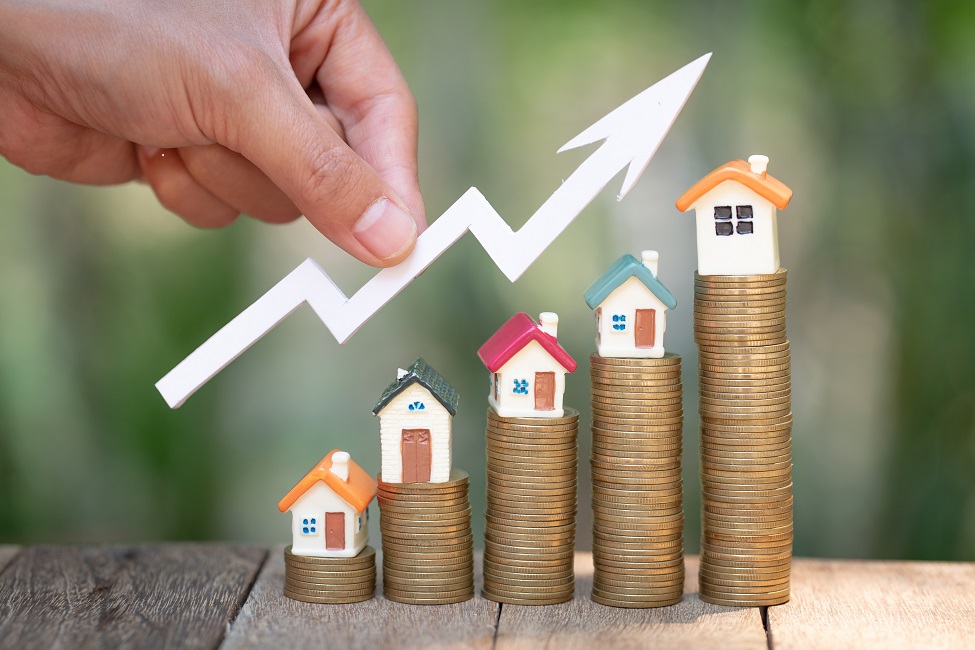
Ask an #Expert - Is there any way to temper America's boiling housing market?
U.S. HOUSING PRICES STILL RISING ALONG WITH MORTGAGE RATES When mortgage rates rise, home prices tend to level off or decline because fewer people can afford to buy. Experts are counting on that adage to help cool the nation’s torrid housing market. But the latest analysis of the most overvalued markets shows prices still are climbing despite the increasing mortgage rates, which last week reached their highest level in more than three years. In all 100 markets surveyed by researchers at Florida Atlantic University and Florida International University, buyers continue to pay higher premiums – that’s the difference between where home prices should be based on historical trends and where they are now. Two months ago, Los Angeles, Provo, Utah and other metro areas in the Western part of the country developed “pricing crowns,” an indication that those housing markets could be slowing. But home values have since reaccelerated, prompting concern that a looming downturn in some areas could be worse than expected. “Eventually mortgage rates will slow down home prices, but it hasn’t happened so far,” said Ken H. Johnson, Ph.D., an economist in FAU’s College of Business. “We should not see rapid upticks in prices as mortgage rates rise. It’s that kind of exuberance that led to past housing downturns.” Boise, Idaho is the nation’s most overvalued housing market, as it has been since the researchers first released their rankings last summer. At the end of February, Boise buyers were paying an average price of $513,849, even though historical trends indicate the average price should be $291,389. That 76.34 percent premium is well ahead of No. 2 Austin, Texas (64.80 percent). The full rankings with interactive graphics can be found here. Charlotte, North Carolina entered the top 10 overvalued markets for the first time with a premium of 50.14 percent. February’s average home price in Charlotte was $353,106, although a history of past sales suggests that price should be $235,188. “Charlotte’s significant and rapidly growing premium is similar to other Southern metros that are all experiencing fast price appreciation,” said Eli Beracha, Ph.D., of FIU’s Hollo School of Real Estate. “The drivers of this appear to be large population increases in these areas combined with a significant shortage in housing inventory.” Each month, Johnson and Beracha rank the most overvalued housing markets of America’s 100 largest metros, similar to the popular S&P CoreLogic Case-Shiller home price index. Johnson and Beracha incorporate average or expected price changes and provide an estimate of how much a market’s housing stock is over- or undervalued, relative to its historic pricing. The data covers single-family homes, townhomes, condominiums and co-ops. Six Florida metros, led by Lakeland, all rank among the nation’s 25 most overvalued markets with premiums of more than 40 percent. The Miami metro, with a premium of nearly 25 percent, remains the least overvalued market in the Sunshine State. As the U.S. housing market cools, metros with strong population gains and shortages of homes for sale will fare best, although those markets will continue to struggle with affordability, the researchers predict. Metros with flat or falling populations and more available homes for sale could face price declines, making those areas more attainable for young families and first-time buyers. Johnson said consumers could be taking big risks if they jump into the U.S. housing market now. “We are near the peak of the current housing cycle, and you never want to buy near the top of the market,” he said. “Consumers need to pause if their main motivation is to buy because they fear prices will rise even higher. Prices are high now, but they always moderate back toward a long-term pricing trend. Perhaps staying where you are now and letting this irrational market settle would be one of the best decisions you could make.” Ken Johnson is the associate dean and professor in the College of Business at Florida Atlantic University. Ken is available to speak to media about this topic – simply click on his icon to arrange an interview and time.

Inflation's on the rise - can it be reigned in for 2022?
It seems the cost of everything is going up. For most Americans, filling up your car and filling up your grocery cart are now noticeably more expensive. Costs of goods are going up and that's taking a toll on the cost of living for a lot of people across the country. But what's causing the prices of goods and services to creep upwards - and what will it take to tame the upward trend that has inflation at its highest rate in more than 30 years? Recently, Andrew Butters and Kyle J. Anderson from Indiana University’s Kelley School of Business sat down with Indiana NewsDesk to help explain what's going on. Inflation might be the one the leading news stories of 2022 - and if you are a reporter looking for answers - then let us help with your coverage. Andrew Butters is an Assistant Professor of Business Economics and Public Policy at Indiana University’s Kelley School of Business. He is also an expert in the areas of industrial organization, productivity, market integration, demand and business cycles. Kyle J. Anderson is a Clinical Assistant Professor of Business Economics. He is an is an economist researching business and pricing in online environments. Both Kyle and Andrew are available to speak with media regarding this important topic – simply click on either expert's icon now to arrange an interview today.


Climate Change-Related Natural Disasters Impact Short-Lived Assets and Interest Rates
For decades, scientists across the globe have warned about the effects of climate change. Given that these changes—global warming, rising sea levels—happen over time and that their disastrous results may not be obvious for decades, studying the effects of climate change on financial markets has posed a problem. According to Christoph Herpfer, assistant professor of finance, Goizueta Business School, most of the existing literature that deals with the effect of climate change on financial markets considers “indefinitely lived assets,” such as owning stock or owning a home—assets that “don’t have an expiration date,” explained Herpfer. To evaluate the effect of climate change in the long run on these assets then requires discount models—ways to value something today based on what it could be worth decades from now. Herpfer, a banking and corporate finance specialist, studies short-lived assets that, on average, expire after 4.5 years. Herpfer wondered if there could be “an alternative channel in which climate change already impacts companies today,” he explained. One that didn’t have to deal with all the “challenges associated with long run discount rates,” he added. In “The rising tide lifts some interest rates: climate change, natural disasters, and loan pricing,” Herpfer and his colleagues—Ricardo Correa, deputy associate director, Board of Governors of the Federal Reserve System, Ai He, assistant professor of finance, University of South Carolina, and Ugur Lel, associate professor, Nalley Distinguished Chair in Finance, University of Georgia, Terry College of Business—consider this question by studying corporate borrowing costs. In 2020, the paper received the best paper award at the Boca Corporate Finance and Governance Conference. The foursome had a novel idea: In recent years, there has been scientific consensus that climate change fuels natural disasters. So Herpfer and his fellow authors wondered if financial institutions took climate change-amplified natural disasters into account when pricing short-term loans. Their answer was, unequivocally, “yes.” Their work and research is captured in a recent article in Emory Business - it's attached and well worth the read. If you're a journalist looking to know more - then let us help. Christoph Herpfer is an assistant professor of finance at Goizueta Business School. He is also a financial economist working at the intersection of banking, law, and accounting. Christoph is available to speak with media about this research - simply click on his icon now to arrange an interview today.


As the pandemic enters its second year, household expenses remain top of mind for consumers, as does the cost of auto insurance. It’s one of the reasons why CAA Insurance has seen a dramatic increase over the past ten months in the number of drivers who have signed up for Canada’s only pay-as-you-go auto insurance payment program, CAA MyPace™. New CAA Insurance data reveals, that the number of new CAA MyPace policies between April and December 2020 increased by almost 300 per cent compared to the same period in 2019. “While the growth is remarkable, it reinforces what consumers are telling us, that a one-size-fits-all solution to auto insurance isn’t working for them, especially during these challenging times where many vehicles are not being used as much,” says Matthew Turack, president of CAA Insurance. “CAA MyPace is a one-of-a-kind payment program that lets customers take control of their car insurance costs by giving them the freedom to pay for the distance they drive.” On average, people who switch to CAA MyPace are saving 50 per cent on their auto insurance costs, compared to a traditional policy. The pay-as-you-go program was launched in 2018, and benefits motorists who drive less than 9,000 kilometres per year. In 2020, CAA Insurance provided over $60 million in relief to support policyholders in managing their expenses during the pandemic. The Financial Services Regulatory Authority of Ontario (FSRA) identified CAA Insurance as the leading insurer, providing the highest percentage of rate relief to its policyholders. Nearly one year ago, CAA Insurance led the insurance industry by providing a 10 per cent rate reduction for a 12-month term to all active CAA Auto and Property Insurance policyholders. CAA Insurance will continue to apply this rate reduction in 2021 for its active policyholders. No action is necessary by policyholders to receive this reduction.


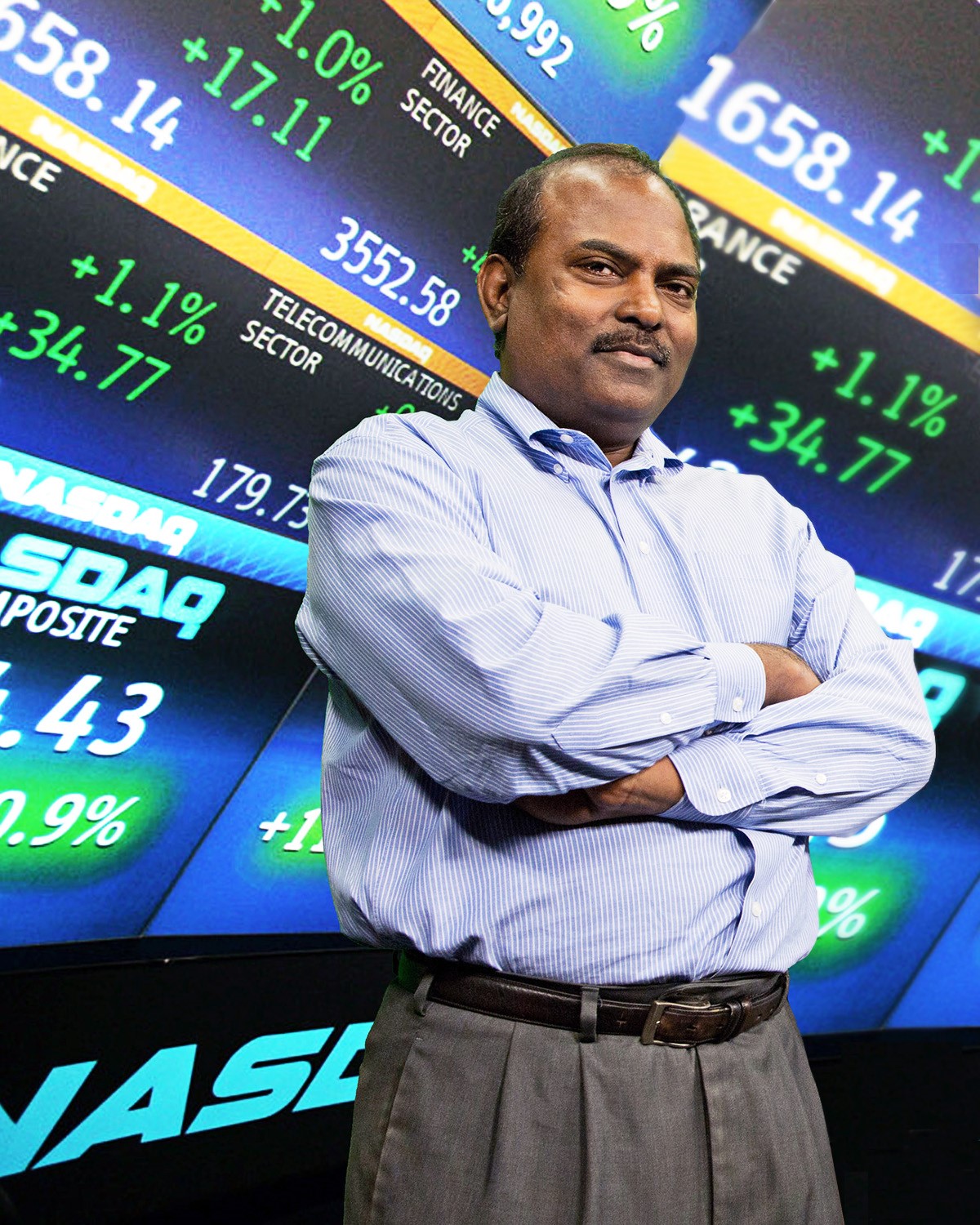
Heads up CFOs: The capital asset pricing model still rules
Firms invest in various things: bonds, stocks or other assets—new stores, new premises or even other firms. And they do so to earn maximum value from available cash that would otherwise be idle. For example, for the last five years Walmart generated an annual cash flow of more than $25 billion from its operations. The retailer has the option to channel this cash into opening new stores, ultimately growing its business and profits. Alternatively, Walmart can pay the cash out to its shareholders in the form of dividends, or through share repurchases. So far, it’s been productive. However, this win-win scenario is contingent on successfully navigating a number of complexities. Primary among these is that to invest optimally, you first need to determine the correct hurdle rate for that investment. Hurdle rates are the minimum rates of return that firms seek on their investments. The hurdle rate is the appropriate compensation commensurate with the investments’ risk. Therefore, the higher the risk, the higher the hurdle rate needs to be. For instance, a hurdle rate of 10% means that for every $100 invested, you would expect to earn an average of $10 average per year. But it’s tricky. You have to calculate the right hurdle rate that would add the most value for your shareholders—the optimal rate of return for you and your business. Too high and there’s risk of missing out on a good investment. If your right hurdle rate is 10%, but you mistakenly opt for 15%, you’re likely to ignore any investment that is projected to earn you less than 15%, but more than 10% is likely to be missed. As a result, you’ll end up leaving money on the table. Too low a hurdle rate and you’re in danger of burning money. Again, supposing your hurdle rate should be 10%, but you set it at 5%, you’re likely to end up investing in things with a suboptimal return. In the end, you’re wasting your cash on low value investments when you could be paying it directly to your shareholders in dividends and giving them the chance to earn 10% return on their own. For the last 50 years, the financial world has built models to calculate hurdle rates and rates of return. But which one works best? Shedding critical new light on this is a recently published paper by Narasimhan Jegadeesh, Dean’s Distinguished Chair of Finance at Goizueta, entitled “Empirical tests of asset pricing models with individual assets.” Jegadeesh and his co-authors developed new statistical methods to differentiate among a raft of new models that have been developed in recent years and to compare their efficacy to that of the Capital Asset Pricing Model (CAPM), a model introduced in the 1960s. What they found is that none of the newer models work any better than the CAPM in determining the appropriate hurdle rate or rate of return of an asset. That paper is attached and is required reading for CFOs and anyone interested in the Capital Asset Pricing Model. If you are looking to know more, or if you are a journalist interested in covering this important aspect of business and investing – then let our experts help. Narasimhan Jegadeesh is Dean’s Distinguished Chair of Finance at Goizueta. He is a renowned expert in this field and has been published extensively in the Journal of Finance, the Journal of Financial Economics, the Review of Financial Studies and other leading academic finance journals. His research has been discussed in several publications including Businessweek, The Economist, Forbes, Kiplinger's Personal Investments, Money, New York Times, and Smart Money.


Airing commercials after political ads actually helps sell nonpolitical products
About $7 billion reportedly will be spent this fall on television and digital commercials from political campaigns and political action committees, filling the airwaves with political ads many viewers dislike. Companies running ads immediately afterward have been concerned about the potential of a negative spillover effect on how they and their products and services are perceived. But new research from the Indiana University Kelley School of Business finds that the opposite is true. Contrary to mainstream thought, political ads instead yield positive spillover effects for nonpolitical advertisers. And this happens regardless of whether the political ad is an attack ad or not, who the ad supports, and whether it's sponsored by a candidate, political party or PAC. Political advertising accounts for nearly 10 percent of all U.S. television ad revenue. The findings are in the article "Impact of Political Television Advertisements on Viewers' Response to Subsequent Advertisements" -- accepted for publication in Marketing Science -- by Beth Fossen, assistant professor of marketing; Girish Mallapragada, associate professor of marketing and Weimer Faculty Fellow; and doctoral candidate Anwesha De, all from the Kelley School of Business. "Our investigations provide insights into the previously unexplored ad-to-ad spillover effects and, more broadly, provides insights into how political messages influence consumers," Fossen said. "Nonpolitical ads that follow political ads benefit through a reduction in audience decline and an increase in positive post-ad chatter." Using data for 849 national prime-time ads during the 2016 U.S. general election, the researchers found that ads airing after a political commercial saw an 89 percent reduction in audience decline and a 3 percent increase in post-ad chatter online. Their findings remained consistent when examining the effect by TV network and political party affiliation. "It seems reasonable to assume that Fox News viewers are more likely to be positively stimulated by pro-Republican ads than viewers of other channels," researchers wrote. "However, evidence from our data suggests that the positive spillover from pro-Republican ads is not higher and is nearly lower on Fox News viewership decline than when pro-Republican ads air on other channels." They found a similar trend when it came to advertising on MSNBC, whose viewers frequently identify with the Democratic Party and progressive causes. Mallapragada said the findings show that television networks and stations can leverage the positive spillover effects on subsequent ads by implementing differential pricing and systematic ad sequencing. Prevailing belief in the business industry has suggested that political ads on television hurt the effectiveness of subsequent ads. To illustrate this concern, during the 2020 Super Bowl, game broadcaster Fox isolated political ads from other paying advertisers in their own ad breaks, a decision that cost the network millions in ad revenue, because it ran nonpaid show promos alongside the political ads instead of commercials from paying advertisers. "The insights from this research enable advertisers to advocate for the inclusion of ad positioning in ad buys and, specifically, negotiate that their ads follow political ads," he said. "Our results may also encourage advertisers outside of the television context to experiment with advertising next to political content, an experimentation that may be especially beneficial for online advertisers given that they commonly blacklist political topics to avoid having their ads appear near political content." Editors: Contact George Vlahakis at vlahakis@iu.edu for a copy of the paper.

Baylor Sports Marketing Expert Discusses NBA, NCAA Coronavirus Decisions
On Wednesday, the NBA took the unprecedented step to suspend its season following the revelation that one of its players tested positive for coronavirus. In addition, the NCAA announced that the March Madness basketball tournaments will be played, but without fans present. Baylor University’s Dr. Kirk Wakefield is a nationally recognized expert on sports marketing, sports psychology and fan/consumer response. He has conducted research on the sports retail market – including the NBA and all major national organizations – for more than 20 years. In this brief Q&A, he shares his thoughts about these two decisions. Q: This was an unprecedented action by the NBA to suspend the season due to coronavirus. What does this mean for the teams? A: We’ve had work stoppage before with labor lockouts. Fans were angry then, but the majority won’t be now. Most won’t blame the league or the teams. We might see even more passion for the teams as fans are anxious for play to resume. Q: Based on your understanding of the decision-making process, does this seem to be an action that was done thoughtfully? A: It was carefully considered. No one wants to be the one who could have prevented a catastrophe and didn’t take prudent steps. Just like after lockout years, the leagues will recover. Q: The NCAA tournament will be played – but without fans. What does this mean for college sports teams and the NCAA? A: Obviously, viewership will increase – which is good for sponsors with heavy broadcast and digital assets. Sponsors and venues/teams who are reliant on gate revenue will be hit the hardest. ABOUT KIRK WAKEFIELD, PH.D. Kirk Wakefield, Ph.D., is the Edwin W. Streetman Professor of Retail Marketing and executive director of Sports Sponsorship & Sales at Baylor Unviersity's Hankamer School of Business. His research on retailing covers more than two decades and focuses primarily on sports psychology, team sports marketing, entertainment marketing, and fan and consumer response to pricing and promotional tools. He has conducted fan research in almost every venue in sports including the NBA, NFL, MLB, MLS, NHL and NASCAR. ABOUT BAYLOR UNIVERSITY Baylor University is a private Christian University and a nationally ranked research institution. The University provides a vibrant campus community for more than 18,000 students by blending interdisciplinary research with an international reputation for educational excellence and a faculty commitment to teaching and scholarship. Chartered in 1845 by the Republic of Texas through the efforts of Baptist pioneers, Baylor is the oldest continually operating University in Texas. Located in Waco, Baylor welcomes students from all 50 states and more than 90 countries to study a broad range of degrees among its 12 nationally recognized academic divisions. ABOUT HANKAMER SCHOOL OF BUSINESS AT BAYLOR UNIVERSITY At Baylor University’s Hankamer School of Business, integrity stands shoulder-to-shoulder with analytic and strategic strengths. The School’s top-ranked programs combine rigorous classroom learning, hands-on experience in the real world, a solid foundation in Christian values and a global outlook. Making up approximately 25 percent of the University’s total enrollment, undergraduate students choose from 16 major areas of study. Graduate students choose from full-time, executive or online MBA or other specialized master’s programs, and Ph.D. programs in Information Systems, Entrepreneurship or Health Services Research. The Business School also has campuses located in Austin and Dallas, Texas. Visit www.baylor.edu/business and follow on Twitter at twitter.com/Baylor_Business.


Couples Who Tailgate Together Stay Together, Says New Baylor Research
Marketing researcher and husband team up to study tailgating’s impact on relationships For millions of football fans across the United States, fall is the time to break out the grills, load vehicles with coolers and food and games, and gather with friends for the time-honored tradition of tailgating. It’s a tradition that Baylor University’s Meredith David, Ph.D., assistant professor of marketing, and her husband, Luke Lorick, have been enjoying since their undergraduate years at the University of South Carolina. The couple partnered on a recent research project to better understand tailgating’s impact on relationships and well-being. David is known nationally for her studies of phone snubbing – “phubbing” – and smartphone addiction. Lorick owns and operates Tailgating Challenge, a website devoted to testing and reviewing tailgating equipment, and he launched National Tailgating Day, which is celebrated annually on the first Saturday of September. “I noticed how at tailgates people actually interact with each other and are not glued to their phones like we see in restaurants and many other settings,” David said. “This led us to combine our expertise to study the impact of tailgating together on well-being.” The researchers surveyed 143 tailgating adults (44 percent were female) who answered questions about their partners and their respect toward that person. The results show that individuals who tailgate with their significant other report higher levels of respect and relationship satisfaction, David said. The results of the study will be presented later this month at the Atlantic Marketing Association Conference. “Tailgating fosters the human-to-human, face-to-face interactions and connections that we as humans need but yet find hard to come by as a result of cellphones and ‘phubbing’ tendencies,” David said. With over 70 million people tailgating annually, spending on average $150 on each occasion, David said this research offers important guidance for marketers, particularly in terms of positioning strategies in marketing communications for tailgating-related products and events. “For example, in advertisements, marketers should focus on portraying couples, or even friends, tailgating together as this may resonate more and help build bonds with the products they sell and the markets they are reaching out to,” David said. David said she and her husband knew that tailgating strengthened their relationship, but they wanted to dig in to see if it was – or could be – helpful to others. “We have lived and experienced these effects ourselves, so we wanted to determine if this impacted others the same way,” she said. “We found that tailgating helps strengthen relationships, in part, by helping people escape the hustle and bustle of everyday life. They disconnect from their TVs, laptops and cellphones and make real connections with loved ones and friends.” ABOUT MEREDITH DAVID, PH.D. Meredith David, Ph.D., serves as assistant professor of marketing in Baylor University’s Hankamer School of Business. Her research focuses on marketing strategies with an emphasis on consumer behavior and well-being. Recently, her research has explored how new media technologies, including smartphones, impact personal and workplace relationships. She has also published research related to customized pricing tactics, interpersonal attachment styles and the pursuit of health goals. Her research appears in numerous professional and academic journals and she has been interviewed and quoted for her research in national and international news outlets, including ABC News, Fox News, Oprah.com, Redbook, Consumer Reports and Health magazine. ABOUT BAYLOR UNIVERSITY Baylor University is a private Christian University and a nationally ranked research institution. The University provides a vibrant campus community for more than 17,000 students by blending interdisciplinary research with an international reputation for educational excellence and a faculty commitment to teaching and scholarship. Chartered in 1845 by the Republic of Texas through the efforts of Baptist pioneers, Baylor is the oldest continually operating University in Texas. Located in Waco, Baylor welcomes students from all 50 states and more than 90 countries to study a broad range of degrees among its 12 nationally recognized academic divisions. ABOUT HANKAMER SCHOOL OF BUSINESS AT BAYLOR UNIVERSITY At Baylor University’s Hankamer School of Business, integrity stands shoulder-to-shoulder with analytic and strategic strengths. The School’s top-ranked programs combine rigorous classroom learning, hands-on experience in the real world, a solid foundation in Christian values and a global outlook. Making up approximately 25 percent of the University’s total enrollment, undergraduate students choose from 16 major areas of study. Graduate students choose from full-time, executive or online MBA or other specialized master’s programs, and Ph.D. programs in Information Systems, Entrepreneurship or Health Services Research. The Business School also has campuses located in Austin and Dallas, Texas. Visit www.baylor.edu/business and follow on Twitter at twitter.com/Baylor_Business.


Buying local? Higher price means higher quality in consumers' minds
BLOOMINGTON, Ind. -- Why are we willing to pay much more for a six pack of craft beer, a locally produced bottle of wine or a regional brand item, often choosing them over national brands? It's because when people prefer to "buy local," they more frequently base their decisions on price as a perception of quality, according to research from the Indiana University Kelley School of Business and three other universities. The study, published in the Journal of Marketing, suggests that marketers can use this understanding of local identity versus global identity to shape consumers' price perceptions and behavior. "Consumers tend to use price to judge a product's quality when their local identity is most important to them," said Ashok Lalwani, associate professor of marketing at Kelley. "When promoting high-priced or branded products, marketers can situationally activate consumers' local identity. To accomplish this objective, businesses can encourage consumers to 'think local' or employ local cultural symbols in advertising and other promotional material. The researchers also suggested that the opposite was true for low-price products. "Discount stores, such as dollar stores, should discourage consumers from using the price of a product to infer its quality," Lalwani said. "They would be better served by temporarily making consumers' global identity more prominent. Cues in advertisements that focus on a product's global appeal would help achieve that goal." Many companies find it difficult to set and increase prices in the digital marketplace because of the pricing transparency of the internet, consumers' deal-seeking attitudes and global product availability. For their study, Lalwani and his colleagues conducted in-depth interviews, two field studies and seven experiments, and reviewed secondary data. In their interviews with 15 senior-level managers from Fortune 500 companies, they found that while the executives considered local or global communities in their pricing decisions, none knew when such strategies were effective or why. For example, an executive at a snack food maker told them, "It is important to have a reasonably high price since it communicated 'premium-ness' and then reinforce it with advertising and packaging. But we don't know for sure why such consumers prefer premium brands." A pet products manager said, "In dog sweaters, it is difficult to judge quality, so I am sure that my pet parents use price, in addition to other factors, to choose." Through the field studies, experiments and secondary data, the researchers found that when consumers choose to identify more with others around them, they perceive greater variance among brands, which increases their reliance on price as a cue to judge quality. Past research has found that consumers from more globalized countries and communities, such as the United States and its larger cities, often have a stronger global mindset because they interact with many types of people and cultures and hear news from abroad. In contrast, those living in smaller population areas or from isolated or insular nations often have a stronger local identity because they have less access to other cultures. This paper provides useful guidelines for firms to adapt strategies for different regions and address whether companies should be more locally or globally oriented. "For products to be marketed to the places where people tend to have a more local identity (such as rural areas), local flavors and ingredients can be used in the products. As these consumers are more likely to make price-quality associations, marketers may not need to allocate much ad budget to convince consumers about price-quality associations," Lalwani and his co-authors wrote. The opposite is true as well, according to the authors, indicating that in more metropolitan areas, consumers most often don't have an established connection between price and quality. For marketers, this means that putting additional effort into differentiating their brand will help consumers associate a higher price with higher quality. Lalwani is in the process of reviewing results of a large-scale national survey of the U.S. that measures which states tend to have more of a local identity versus a global one, for a follow-up study. His co-authors on the paper, "How Does Consumers' Local or Global Identity Influence Price-Perceived Quality Associations? The Role of Perceived Quality Variance," are Zhiyong Yang of the University of North Carolina, Sijie Sun of the University of Hawaii at Hilo and Narayan Janakiraman of the University of Texas at Arlington.