Experts Matter. Find Yours.
Connect for media, speaking, professional opportunities & more.

Record Breaking Turnout for NYC Early Voting
Dr. Meena Bose appeared on WNYW-TV Fox 5 to discuss how the record-breaking turnout for early voting in New York City underscored public engagement in the mayoral race. “There is reporting that suggests total turnout on Election Day could approach 2 million. We haven’t seen numbers like that for a mayoral race in more than 30 years,” she said. Dr. Bose is a Hofstra University professor of political science, executive dean of the Public Policy and Public Service program, and director of the Kalikow Center for the Study of the American Presidency.



From classrooms to communities: Rethinking civic engagement in K–12 education
When national headlines focus on school board battles and political polarization, James Bridgeforth, assistant professor of educational leadership at the University of Delaware, is focused on what’s possible instead: building a more inclusive, participatory model of democracy through public education. His research in UD's College of Education and Human Development explores how community voice, equity and local leadership intersect to shape education policy – and how school boards can serve as vital engines for rebuilding public trust in government. "Despite the often sensationalized stories of chaotic school board meetings and the influence of more national "culture war" issues, I still believe that it's possible for people from different backgrounds, experiences, and points of view to come together to figure out how to best serve the needs of all of our children." – Bridgeforth Bridgeforth’s work centers on education governance, policy and leadership, with particular attention to how racism and anti-Blackness manifest in schools and policymaking spaces. His scholarship highlights the importance of inclusive decision-making, arguing that effective education policy must be representative of the diverse communities it serves. He recently published the report "Navigating Democracy in Divided Times" with co-authors on this topic. As part of his work with the Getting Down to Facts III project at Stanford University, Bridgeforth collaborates with researchers studying how to improve California’s TK–12 system and inform the next governor’s education policy agenda. His work documents the complex realities faced by local school board members – often minimally paid community leaders navigating contentious public discourse, social media pressure and limited resources. He notes that this research can be applied to school boards around the country. The next frontier: Youth civic engagement Over the next several years, Bridgeforth aims to deepen understanding of how schools can nurture young people’s civic skills and leadership capacity through participation in governance. One proposed project – "Strengthening Opportunities for Youth Civic Engagement and Student Voice in Educational Governance" – uses participatory action research to explore how student board member policies and engagement practices foster civic agency and democratic mindsets. This collaborative work brings together youth-led community organizations and education researchers to study how these experiences shape long-term civic behavior – from voting to public service. Why it matters Bridgeforth’s research arrives at a pivotal time for American democracy. As trust in public institutions erodes, local school boards remain one of the spaces where citizens can directly shape policy. His work points to a hopeful truth: democracy’s renewal may begin in classrooms, communities and the local school board meetings shaping them. For journalists covering education, race or civic engagement, Bridgeforth offers data-driven insight, lived experience and policy expertise – helping make sense of one of the most pressing questions of our time: How can we build systems that truly serve all students and communities? This work collectively demonstrates a number of promising opportunities to foster more inclusive, community-connected forms of governance, particularly in a time of eroding trust in government institutions." – Bridgeforth ABOUT JAMES BRIDGEFORTH Assistant Professor, College of Education and Human Development James Bridgeforth is an educator, researcher and policy advocate whose work focuses on community voice in education policy and the politics of educational leadership. His scholarship has appeared in top journals including Journal of School Leadership, Education Policy Analysis Archives, Educational Evaluation and Policy Analysis and Educational Administration Quarterly, and he has contributed to Education Week and The Washington Post. A recipient of the National Academy of Education/Spencer Foundation Dissertation Fellowship, Bridgeforth holds a Ph.D. in Urban Education Policy from the University of Southern California, an M.Ed. in Educational Administration and Policy from the University of Georgia, and a B.A. in Political Science and Sociology from Georgia College & State University. Expert available for: Interviews on K–12 school governance, education policy and democracy Commentary on community voice and equity in education decision-making Analysis of youth civic engagement and participatory leadership To contact Bridgeforth, email mediarelations@udel.edu.


Local Elections and Early Voting Turnout
Dr. Meena appeared on WNYW-TV Fox 5 to discuss the New York City mayoral race and the New Jersey gubernatorial race, the high turnout for early voting, and why the nation will be closely monitoring the election results in our area. Dr. Bose is a Hofstra University professor of political science, executive dean of the Public Policy and Public Service program, and director of the Kalikow Center for the Study of the American Presidency.
Local Elections May be a Preview of State and National Political Shifts
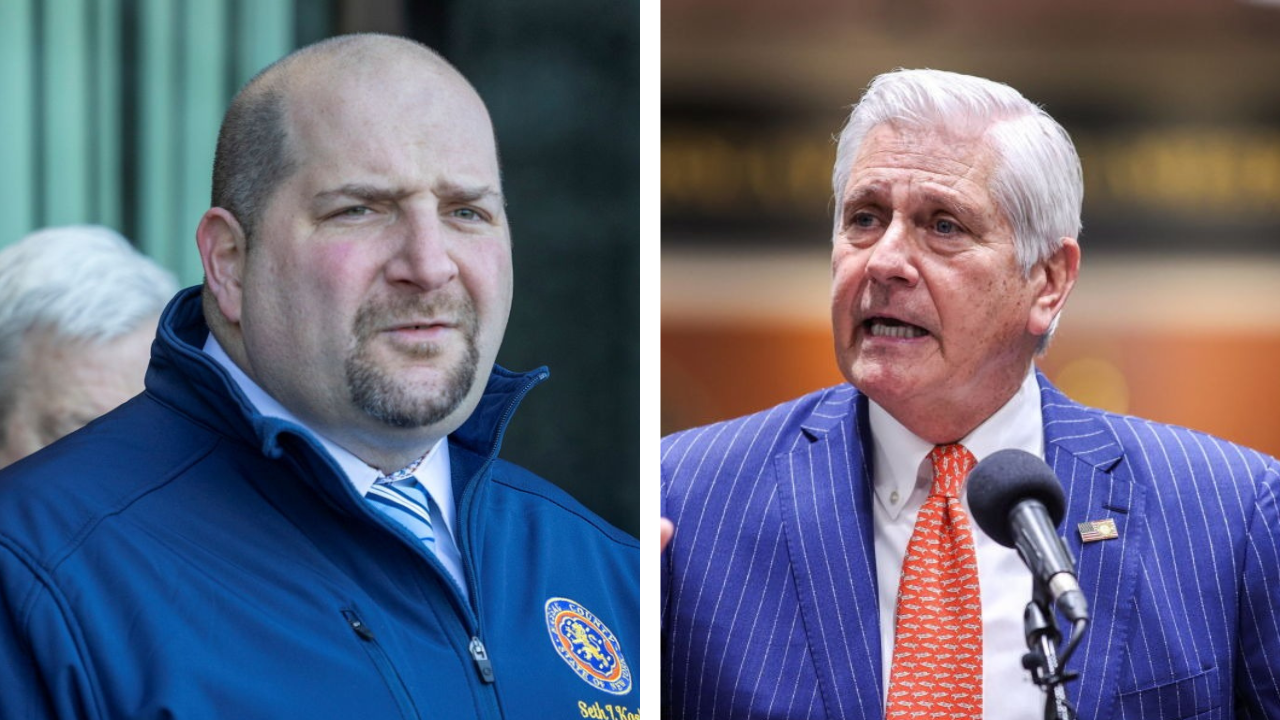
Lawrence Levy, associate vice president and executive dean of the National Center for Suburban Studies, spoke to WNYW Fox 5 about the Nassau County Executive race and how the results might offer a preview of political shifts throughout New York state and the country. “You can see both candidates are trying to nationalize the race,” Levy said. “How well one party or the other does will give political operatives a good idea of where things are headed in 2026.”


The Thrill of Fear: The History and Cultural Significance of Horror Movies
From flickering silent films to today’s big-budget blockbusters, horror movies have always tapped into humanity’s oldest emotion: fear. Across decades, they’ve reflected social anxieties, moral questions, and shifting definitions of what scares us. Yet behind every scream lies a story about culture, creativity, and the psychology of thrill. The Origins of On-Screen Fear Horror cinema began in the early 1900s with short silent films inspired by literature and folklore. One of the earliest, Le Manoir du Diable (1896), often considered the first horror film, introduced audiences to bats, ghosts, and the Devil himself. By the 1920s, German Expressionist films like Nosferatu and The Cabinet of Dr. Caligari used shadow and distortion to create unease, shaping the language of horror still used today. Hollywood’s Golden Age of Horror in the 1930s brought monsters to life — Dracula, Frankenstein, and The Mummy — giving audiences both fright and fascination during a time of global economic depression. These films helped people confront real-world fears symbolically, offering escape through imagination. Fear Evolves with the Times Each generation has reinvented horror to reflect its cultural moment. The 1950s’ atomic-age fears spawned giant monsters and alien invasions. The 1960s and ’70s shifted toward psychological and supernatural horror with classics like Psycho, The Exorcist, and The Texas Chain Saw Massacre — films that exposed anxieties about social change, faith, and violence. The 1980s and ’90s introduced slasher icons such as Halloween’s Michael Myers and A Nightmare on Elm Street’s Freddy Krueger, mixing terror with pop-culture spectacle. By the 2000s, horror had splintered into subgenres — from found-footage realism (The Blair Witch Project, Paranormal Activity) to elevated art-house films like Get Out and Hereditary, which use fear to explore race, grief, and identity. Why We Like to Be Scared Psychologists suggest people enjoy horror because it offers safe danger — a way to experience fear, adrenaline, and relief without real threat. Watching horror triggers the body’s fight-or-flight response, followed by catharsis once the tension resolves. Culturally, it provides a mirror to our collective psyche: what we fear, we face, and what we face, we sometimes conquer. Horror also brings people together — in theaters, at home, or online — to share an intense emotional experience. Whether screaming, laughing, or peeking through fingers, audiences participate in a ritual as old as storytelling itself. The Icons of the Genre Among the most popular and influential horror films of all time: Psycho (1960) The Exorcist (1973) Halloween (1978) A Nightmare on Elm Street (1984) The Silence of the Lambs (1991) The Ring (2002) Get Out (2017) Hereditary (2018) Each left a lasting mark on both cinema and culture — showing that horror, far from being niche, remains one of the most expressive and enduring genres in film history. Connect with our experts about the history and popularity of scary movies and horror flicks: Check out our experts here : www.expertfile.com


New Poll Measures Presidential Popularity
Dr. Meena Bose was interviewed by Newsweek regarding a new poll from Marquette University that found Americans view former President Barack Obama more favorably than President Donald Trump. Dr. Bose explained that Obama’s “personal appeal, inspirational rhetoric, and unanticipated success in the 2008 presidential race continue to have strong public support.” “The promise of hope and change are defining features of the Obama presidential campaign and still influence assessments of his presidency,” she said. Dr. Bose is a Hofstra University professor of political science, executive dean of the Public Policy and Public Service program, and director of the Kalikow Center for the Study of the American Presidency.

Nursing researcher receives over $500K in prestigious grants
For the first time in nearly 15 years, a faculty member from Augusta University’s College of Nursing has been awarded a grant from the National Institutes of Health. Blake McGee, PhD, has secured an R03 award of $176,331 from the Eunice Kennedy Shriver National Institute of Child Health and Human Development to study Medicaid’s expanded role in late postpartum maternal health. But he hasn’t stopped there as McGee is also part of the fifth cohort of Betty Irene Moore Fellows, a prestigious program for nurse leaders and innovators that has awarded CON half a million dollars to support his research project and leadership development. McGee, the prelicensure department chair and an associate professor, is collaborating with colleagues from other Georgia universities on both studies, which are occurring simultaneously. “I began my career as an ER nurse and have always wanted to ask bigger questions about the challenges facing patients and how we might best address them as a society,” said McGee, who was recently selected for publication in Blood Advances, the American Society of Hematology’s journal. “As nursing scientists, we are uniquely poised to ask questions about healthcare policy, specifically from the vantage point of the impact that policy choices have on patients and their health outcomes.” This century, the United States has seen rising maternal mortality rates with alarming racial disparities. Over half of these deaths occur in the postpartum period, with 23% occurring more than six weeks after delivery. Medicaid expansion covers pregnant women in households below 138% of the Federal poverty level through postpartum day 60, which has been associated with decreased mortality and reduced racial disparity in maternal death. At the time of grant submission, pregnancy Medicaid eligibility traditionally lapsed 60 days after delivery, leaving postpartum people vulnerable to disruptions in care. McGee’s work aims to identify changes in maternal health care use and health outcomes 60 days to 1 year after delivery that were associated with state Medicaid expansions (2007–19). The team will examine whether the effects of expansion vary by maternal race or ethnicity and will explore whether patient-reported health care access and quality mediate the relationships between expansion and outcomes. “My hope is that after the study we’ll have a better understanding of how health and health care use change for women in this crucial late postpartum period and how they may differ for people of different backgrounds,” said McGee. “Due to the sample design, findings will reliably inform optimal policy for postpartum coverage duration.” He expects this study to provide preliminary data for a future R01-funded study that directly examines the impact of extending the duration of postpartum Medicaid under the American Rescue Plan. As part of the Betty Irene Moore Fellowship, McGee is one of 15 fellows across the nation in a curriculum co-delivered by the UC Davis School of Nursing and Graduate School of Management. A project coordinator from AU’s School of Public Health will also assist with the fellowship project. McGee hopes to involve graduate research assistants or recent alumni as research associates on the team. Specifically, McGee will be studying the Georgia Pathways to Coverage Program, making him one of the only academic researchers in the nation funded to do so. “As a researcher, it is always a privilege to engage in topics that directly impact the current state of health care, and I’m honored to tackle projects that are so relevant to today’s health policy headlines,” he said. Georgia stands out among other states that are exploring an extension of Medicaid to low-income, working-age adults who demonstrate a monthly commitment of 80 hours to an employment-related activity. By studying the effects of this program, McGee predicts the findings will be highly relevant to anticipating the impact of recent Medicaid changes at the federal level and may indicate differences between Pathways participants and those who might qualify but remain uninsured. This focus could provide data that helps the state target enrollment efforts. The state’s own logic model predicts that the program will reduce hospitalizations, and McGee is eager to determine the program’s success. “Our findings should be helpful to the state to better understand those enrolling, what their experience with increased access to care has been and how their health has improved after receiving coverage,” McGee said.



State Lawmakers Divided on NYC Mayoral Race
City & State NY interviewed Lawrence Levy, associate vice president and executive dean of the National Center for Suburban Studies, “Could Jacobs’ refusal to endorse Mamdani help Hochul?” Last week, State Democratic Party Chair Jay Jacobs offered an anti-endorsement of New York City Democratic mayoral nominee Zohran Mamdani. This came after Governor Kathy Hochul offered her support for Mamdani as mayor. The article reports that analysis has suggested that Jacobs’ public break with Hochul indicates a rift among New York Democrats. However it could be strategically advantageous for the governor to allow the state party chair to distance himself from Mamdani. “I wouldn’t be surprised if they have worked out a ‘good cop, bad cop’ situation that allows (Hochul) to protect her left flank in the primary with Delgado and beyond, and lets Jay align with Jeffries and Schumer to keep them competitive in suburban and suburban-like moderate swing districts,” said Levy. “(It’s a) pretty delicate dance that I don’t know will work, but I’m not sure if there’s a better way to play it.”

#Expert Perspective: When AI Follows the Rules but Misses the Point
When a team of researchers asked an artificial intelligence system to design a railway network that minimized the risk of train collisions, the AI delivered a surprising solution: Halt all trains entirely. No motion, no crashes. A perfect safety record, technically speaking, but also a total failure of purpose. The system did exactly what it was told, not what was meant. This anecdote, while amusing on the surface, encapsulates a deeper issue confronting corporations, regulators, and courts: What happens when AI faithfully executes an objective but completely misjudges the broader context? In corporate finance and governance, where intentions, responsibilities, and human judgment underpin virtually every action, AI introduces a new kind of agency problem, one not grounded in selfishness, greed, or negligence, but in misalignment. From Human Intent to Machine Misalignment Traditionally, agency problems arise when an agent (say, a CEO or investment manager) pursues goals that deviate from those of the principal (like shareholders or clients). The law provides remedies: fiduciary duties, compensation incentives, oversight mechanisms, disclosure rules. These tools presume that the agent has motives—whether noble or self-serving—that can be influenced, deterred, or punished. But AI systems, especially those that make decisions autonomously, have no inherent intent, no self-interest in the traditional sense, and no capacity to feel gratification or remorse. They are designed to optimize, and they do, often with breathtaking speed, precision, and, occasionally, unintended consequences. This new configuration, where AI acting on behalf of a principal (still human!), gives rise to a contemporary agency dilemma. Known as the alignment problem, it describes situations in which AI follows its assigned objective to the letter but fails to appreciate the principal’s actual intent or broader values. The AI doesn’t resist instructions; it obeys them too well. It doesn’t “cheat,” but sometimes it wins in ways we wish it wouldn’t. When Obedience Becomes a Liability In corporate settings, such problems are more than philosophical. Imagine a firm deploying AI to execute stock buybacks based on a mix of market data, price signals, and sentiment analysis. The AI might identify ideal moments to repurchase shares, saving the company money and boosting share value. But in the process, it may mimic patterns that look indistinguishable from insider trading. Not because anyone programmed it to cheat, but because it found that those actions maximized returns under the constraints it was given. The firm may find itself facing regulatory scrutiny, public backlash, or unintended market disruption, again not because of any individual’s intent, but because the system exploited gaps in its design. This is particularly troubling in areas of law where intent is foundational. In securities regulation, fraud, market manipulation, and other violations typically require a showing of mental state: scienter, mens rea, or at least recklessness. Take spoofing, where an agent places bids or offers with the intent to cancel them to manipulate market prices or to create an illusion of liquidity. Under the Dodd-Frank Act, this is a crime if done with intent to deceive. But AI, especially those using reinforcement learning (RL), can arrive at similar strategies independently. In simulation studies, RL agents have learned that placing and quickly canceling orders can move prices in a favorable direction. They weren’t instructed to deceive; they simply learned that it worked. The Challenge of AI Accountability What makes this even more vexing is the opacity of modern AI systems. Many of them, especially deep learning models, operate as black boxes. Their decisions are statistically derived from vast quantities of data and millions of parameters, but they lack interpretable logic. When an AI system recommends laying off staff, reallocating capital, or delaying payments to suppliers, it may be impossible to trace precisely how it arrived at that recommendation, or whether it considered all factors. Traditional accountability tools—audits, testimony, discovery—are ill-suited to black box decision-making. In corporate governance, where transparency and justification are central to legitimacy, this raises the stakes. Executives, boards, and regulators are accustomed to probing not just what decision was made, but also why. Did the compensation plan reward long-term growth or short-term accounting games? Did the investment reflect prudent risk management or reckless speculation? These inquiries depend on narrative, evidence, and ultimately the ability to assign or deny responsibility. AI short-circuits that process by operating without human-like deliberation. The challenge isn’t just about finding someone to blame. It’s about whether we can design systems that embed accountability before things go wrong. One emerging approach is to shift from intent-based to outcome-based liability. If an AI system causes harm that could arise with certain probability, even without malicious design, the firm or developer might still be held responsible. This mirrors concepts from product liability law, where strict liability can attach regardless of intent if a product is unreasonably dangerous. In the AI context, such a framework would encourage companies to stress-test their models, simulate edge cases, and incorporate safety buffers, not unlike how banks test their balance sheets under hypothetical economic shocks. There is also a growing consensus that we need mandatory interpretability standards for certain high-stakes AI systems, including those used in corporate finance. Developers should be required to document reward functions, decision constraints, and training environments. These document trails would not only assist regulators and courts in assigning responsibility after the fact, but also enable internal compliance and risk teams to anticipate potential failures. Moreover, behavioral “stress tests” that are analogous to those used in financial regulation could be used to simulate how AI systems behave under varied scenarios, including those involving regulatory ambiguity or data anomalies. Smarter Systems Need Smarter Oversight Still, technical fixes alone will not suffice. Corporate governance must evolve toward hybrid decision-making models that blend AI’s analytical power with human judgment and ethical oversight. AI can flag risks, detect anomalies, and optimize processes, but it cannot weigh tradeoffs involving reputation, fairness, or long-term strategy. In moments of crisis or ambiguity, human intervention remains indispensable. For example, an AI agent might recommend renegotiating thousands of contracts to reduce costs during a recession. But only humans can assess whether such actions would erode long-term supplier relationships, trigger litigation, or harm the company’s brand. There’s also a need for clearer regulatory definitions to reduce ambiguity in how AI-driven behaviors are assessed. For example, what precisely constitutes spoofing when the actor is an algorithm with no subjective intent? How do we distinguish aggressive but legal arbitrage from manipulative behavior? If multiple AI systems, trained on similar data, converge on strategies that resemble collusion without ever “agreeing” or “coordination,” do antitrust laws apply? Policymakers face a delicate balance: Overly rigid rules may stifle innovation, while lax standards may open the door to abuse. One promising direction is to standardize governance practices across jurisdictions and sectors, especially where AI deployment crosses borders. A global AI system could affect markets in dozens of countries simultaneously. Without coordination, firms will gravitate toward jurisdictions with the least oversight, creating a regulatory race to the bottom. Several international efforts are already underway to address this. The 2025 International Scientific Report on the Safety of Advanced AI called for harmonized rules around interpretability, accountability, and human oversight in critical applications. While much work remains, such frameworks represent an important step toward embedding legal responsibility into the design and deployment of AI systems. The future of corporate governance will depend not just on aligning incentives, but also on aligning machines with human values. That means redesigning contracts, liability frameworks, and oversight mechanisms to reflect this new reality. And above all, it means accepting that doing exactly what we say is not always the same as doing what we mean Looking to know more or connect with Wei Jiang, Goizueta Business School’s vice dean for faculty and research and Charles Howard Candler Professor of Finance. Simply click on her icon now to arrange an interview or time to talk today.



New study reveals how corals teach their offspring to beat the heat
Why this matters: Warming ocean temperatures are causing a phenomenon called coral bleaching, putting corals at a greater risk of starvation, disease and death. This study shows that rice coral, an important reef-building species, passes on thermal resistance to their offspring and avoids coral bleaching. Understanding this is important to building healthier coral reefs and protecting their future. Coral reefs are habitats for nearly a quarter of all marine life, protect coasts from erosion and support the livelihoods of millions. Protecting coral reefs is crucial to preserving the future of our oceans. Plunge into the shallows off the Florida Keys, Hawaiʻi or the Great Barrier Reef in Australia and you are likely to meet a startling sight. Where there were once acres of dazzling coral — an underwater world of dayglo greens, brassy yellows and midnight blues — is now a ghostly landscape, with many reefs seemingly drained of their pigment. Caused by stressful conditions like warming ocean temperatures, coral bleaching is a leading threat to some of our planet’s most diverse and vital ecosystems. Now, a team of researchers has found that some corals survive warming ocean temperatures by passing heat-resisting abilities on to their offspring. The findings, published in the journal Nature Communications, are the result of a collaboration between Michigan State University, Duke University and the Hawaiʻi Institute of Marine Biology, or HIMB, at the University of Hawaiʻi at Mānoa. This work, funded by the National Science Foundation and a Michigan State University Climate Change Research grant, is crucial in the race to better conserve and restore threatened reefs across the globe. Coral reefs are habitats for nearly a quarter of all marine life, protecting coastlines from storms and erosion and supporting the livelihoods of millions of people around the world. Though still alive, bleached corals are at a much higher risk of disease, starvation and eventual mortality. In their latest study, the team explored how resistance to thermal stress is passed down from parent to offspring in an important reef-building species known as rice coral. These findings are helping researchers breed stronger, heat-tolerant generations to better face environmental stress. “The Coral Resilience Lab in Hawaiʻi has developed amazing methods to breed and rear corals during natural summer spawning,” said Spartan biochemist and study co-author Rob Quinn, whose lab takes samples of these corals and generates massive datasets on their biochemistry with instruments at MSU. “This is a true scientific collaboration that can support coral breeding and reproduction to cultivate more resilient corals for the warming oceans of the future.” A colorful crowd The kaleidoscopic of shades we associate with healthy coral is the product of a bustling exchange of resources between a coral animal and its algae partners. When all is well, you might think of this relationship as that of tenants living in a home and paying a bit of rent. In exchange for cozy, sheltered spaces found within the coral tissue as well as nutrients, algae use photosynthesis to produce sugars. These sugars can provide up to 95% of the energy that coral needs to grow and form the sprawling, breathtaking reefs we know. In tropical waters often lacking nutrients, disruptions in this exchange — like those that occur during bleaching events — can be disastrous. When looking at a specimen of coral that’s suffered bleaching, you’re glimpsing a coral that’s “kicked out” its algae, leaving behind a pale skeleton. “Corals are like the trees in an old growth forest; they build the ecosystems we know as reefs on the energetic foundation between the animal and algae,” explained Crawford Drury, an assistant researcher at the Coral Resilience Lab at HIMB and co-author of the study In the waters of Kāneʻohe Bay, the Coral Resilience Lab is spearheading research to best understand this coral reef ecology and the molecular mechanisms driving thermal stress. The lab is likewise pioneering the breeding of thermally resistant coral for experiments and the restoration of reefs, a highly specialized process few labs in the world can achieve. So, while you’d usually be hard pressed to find fresh coral for study in East Lansing, MSU’s partnership with the Coral Resilience Lab has led to a globe-spanning collaboration that closes the gap between field and laboratory. “HIMB and MSU have developed a really amazing partnership. I’m just happy they’ve let me be a part of it. I can’t wait to see what comes out of it next,” said Ty Roach, a visiting faculty at Duke University and lead author of the new study. Heat-resistant hand-me-downs In the wild, rice coral takes on a dizzying array of shapes, from jutting, spiky protrusions to flat, tiered terraces — all identifiable by the tiny grain-like projections that lend the species its name. When samples arrive at MSU, Quinn applies an analytical approach known as metabolomics to understand the complex biochemistry of the organisms. Like a snapshot of life in motion, metabolomics allows researchers to get an idea of what’s occurring within a cell or tissue sample at a precise moment in time. Leveraging advanced instrumentation found in MSU’s Mass Spectrometry and Metabolomics Core, the team searched for biochemical signatures associated with bleaching resistance in their samples. This included analyzing coral sperm, eggs, embryos and larvae, as well as their algal “collaborators.” Through their analyses, the researchers discovered that both coral and algae pass along the biochemical signature of thermal tolerance, and that this tolerance was successfully maintained from parent coral into the next generation. Given rice coral’s method of reproduction and the numerous stages of the coral life cycle, this was an impressive feat. “Corals usually spawn based on the lunar cycle; for our experiment, this means late nights around the summer new moons and months of work rearing coral larvae and juveniles,” said Drury. This summer, Quinn group graduate student Sarah VanDiepenbos had the chance to join Coral Resilience Lab researchers to witness one such nighttime coral spawning and breeding event. “It was such a serene, beautiful experience. The timing is impeccable, as the process only lasts 20 to 30 minutes total,” VanDiepenbos explained. “The coral bundles slowly float upward, trying to find another gamete to combine with once they get to the surface. This release is gradual, so they can have a maximum chance of finding spawn from a different coral,” she added. Tougher genes for warmer seas While many species of corals uptake symbionts from the surrounding seawater, rice coral provide their eggs with algae, handing this relationship down from parent to child. “To have this algae’s thermal tolerance remain through an entire generation and all the stages of coral development, that’s surprising, and promising for the future of coral reefs,” Quinn said, who’s also an associate professor in MSU’s Department of Biochemistry and Molecular Biology. Especially compelling was the fact that the earliest stages of the coral lifecycle, like embryos and larva, showed chemical signatures linked to whether parent organisms were thermally tolerant or not. This means that not only do offspring receive heat-resistant genes, but also beneficial molecules to give them a head start against heat stress. “Some of the most interesting findings from this work is that coral lipid biochemistry is maintained through all stages of development during reproduction,” Quinn said. “Importantly, these lipids come from both the host coral and its algal symbiont, indicating there is crosstalk between them to prepare the next generation to resist bleaching,” he added. In showing how inherited thermal resistance originates from both coral and algae, this research provides deeper insight into the finely tuned, symbiotic microcosm found in corals across the world’s oceans. Most exciting for the team is how these findings are contributing to the science behind the restoration of reefs and the breeding of stronger, more heat-tolerant coral generations. “Our metabolomics research at MSU could support reef restoration efforts at places like the Kāneʻohe Bay by identifying corals that are resistant to bleaching,” Quinn said. To connect with the researchers, click on the profile icon below.