
Experts Matter. Find Yours.
Connect for media, speaking, professional opportunities & more.

Lawrence Levy, associate vice president and executive dean of the National Center for Suburban Studies, was interviewed by Spectrum News and National Public Radio about President Biden dropping his bid for reelection and how that might impact down-ballot elections this fall. Lawrence Levy is available to speak with media - simply click on his icon now to arrange an interview today.


Examining Biden's Decision to Forgo a 2024 Presidential Run in Historical Perspective
Presidential historian Meena Bose talked to Reuters, The New York Times, Voice of America, WCBS-AM radio, and News 12 Long Island about President Joe Biden’s historic withdrawal from the 2024 race and next steps for the Democrats as the DNC approaches. Dr. Bose is a professor of political science, executive dean of the Public Policy and Public Service program, and executive director of the Kalikow Center for the Study of the American Presidency. She is available to speak with media - simply click on her icon now to arrange an interview today.


Hofstra Experts Weigh In on the 2024 Presidential Election
Hofstra University boasts a team of distinguished media-ready experts, ready to talk about the newest developments in the 2024 presidential race. They include presidential scholar Meena Bose, constitutional law professor James Sample, media expert and former NBC executive Mark Lukasiewicz, and Lawrence Levy, an expert in suburban studies and suburban voting trends More details on their expertise and recent media appearances are provided below, along with information on how to connect with them for interviews and commentary. Dr Meena Bose Executive Director of the Kalikow Center for the Study of the American Presidency & Professor of Political Science Dr. Meena Bose brings her extensive experience and frequent media presence to discussions on the historic nature of the 2024 presidential race. Recent topics she has been interviewed about include next steps for the Democrats now that President Biden has withdrawn from the 2024 presidential race, former President Donald Trump’s selection of J.D. Vance as his running mate, how the assassination attempt on Trump may have impacted the race, and the Supreme Court’s presidential immunity rulings View Profile & Connect Recent Media Dr. Meena Bose has recently been called on by media to discuss: CNN's Biden-Trump debate; how President Biden may recover from his poor debate performance; and the Supreme Court’s presidential immunity ruling. She has appeared on WABC-TV, WNYW Fox 5, Fox radio stations across the country, and Reuters TV. She is frequently interviewed by Newsday and Newsweek, and her expertise has also been prominently featured in The Washington Post and The New York Times. She is the author of the forthcoming book: Pragmatic Vision: Obama and the Enactment of the Affordable Care Act. James Sample Professor, Maurice A. Deane School of Law James Sample, a constitutional law professor, is a sought-after legal and political commentator on legal challenges facing former President Donald Trump, Supreme Court ethics, the broader implications of presidential immunity, and the guilty verdict delivered in the Senator Robert Menendez trial. He most recently was interviewed about President Biden leaving the race and throwing his support behind VP Kamala Harris. View Profile & Connect Recent Media James Sample is a regular commentator for Reuters, CNN, CBS, WNYW Fox 5, and WCBS on topics like the Supreme Court’s ruling on presidential immunity; ethics questions facing Supreme Court Justices Alito and Thomas; former President Donald Trump’s legal challenges, including the election interference case and the “Hush Money” trial. In addition to his broadcast media interviews, Professor Sample has been interviewed by The New York Times, The Washington Post, The Economist, U.S. News & World Report, the Los Angeles Times, National Public Radio, Salon, USA Today, and The National Law Journal, as well as in leading blogs and regional outlets throughout the country. Mark Lukasiewicz Dean of the Lawrence Herbert School of Communication Mark Lukasiewicz offers his expertise on media coverage of the presidential race, drawing on his vast experience in planning and supervising election coverage. Before joining Hofstra, Dean Lukasiewicz was senior vice president of specials at NBC News, planning and supervising coverage of major breaking news events, including presidential elections and debates from 2004 to 2016. View Profile & Connect Recent Media A former NBC executive, Dean Lukasiewicz is available to speak about media coverage of the 2024 presidential race. Recent examples include the June 27th debate and expectations for President Biden’s interview on July 5 with George Stephanopoulos. Before joining Hofstra, Dean Lukasiewicz was senior vice president of specials at NBC News, planning and supervising coverage of major breaking news events, including presidential elections and debates from 2004 to 2016. He has been interviewed in recent weeks by the Wall Street Journal, Newsday, Tribune News Service, Scripps Morning News, and the AP. Lawrence Levy Associate Vice President and Executive Dean of the National Center for Surburban Studies (NCSS) In his leadership role at NCSS, Dean Levy has worked with Hofstra's academic and local communities to shape an innovative, interdisciplinary agenda for interdisciplinary suburban study. He has commented on a variety of political issues – most recently President Biden dropping his reelection bid and what that means for down-ballot elections. View Profile & Connect Recent Media Prior to joining Hofstra, Dean Levy spent 35 years as a reporter, editorial writer, columnist and PBS host, winning many of journalism's top awards (including Pulitzer finalist) for in-depth works on suburban politics, education, taxation, housing and other key issues. As a journalist, he was known for blending national trends and local perspectives and has covered seven presidential campaigns and 15 national conventions. Visit our Expert Center for a full directory of Hofstra experts insights.


Global Technology Outage Raises Concerns About Ease of Future Cybersecurity Attacks
The world came to a standstill after a technology outage reported Thursday evening grounded airplanes, disconnected hospitals and shut down banks across the globe. A faulty software update was to blame, not cybercriminals, but Florida Tech assistant professor TJ O’Connor said the outage’s cascading effect points to larger concerns about our society’s reliance on the internet. The outage, which affected users’ ability to access Microsoft 365 applications, was traced back to a defect found in a software update from cybersecurity company CrowdStrike. CrowdStrike quickly released a statement confirming that the outage was “not a security incident or cyberattack.” The outage was nonetheless damaging, kicking institutions offline. Issues remained more than a day later. “Once those services go down, there’s this massive cascading effect,” O’Conner said. “If bank processing doesn’t work, then aviation doesn’t work. If aviation doesn’t work, shipping doesn’t work.” Ultimately, O’Connor explained, the biggest concern isn’t the glitch in the system; it’s the number of systems that broke because CrowdStrike wasn’t working. “I think what we’ll see a lot of people learn from this CrowdStrike incident is…that if they want to take the internet down in the future, all they have to do is hit one target,” O’Connor said. “It makes the threat landscape a lot smaller to attack for an adversary.” Over the course of several hours, a blue Microsoft error screen taunted companies worldwide. Airlines including Delta, American and Frontier grounded all flights. Several television news outlets, including the United Kingdom’s Sky News, were unable to hold live broadcasts. Some of the biggest concerns lie in the hospital industry, where planning, evaluation and continuous monitoring are essential, O’Connor noted. “[Hospitals] are constantly processing so much data, and for them to go out for a couple of hours means that decisions aren’t being made on an automated basis,” O’Connor said. “We’ve kicked over so much of our decision making to automated systems that we can’t let those networks fail.” According to the United Kingdom’s National Health Service (NHS), the outage disrupted its appointment and patient record system. Mass General Brigham in Boston, Massachusetts was also one of several U.S. hospitals that cancelled non-urgent surgeries, procedures, and medical visits because of the disruption. 911 outages were also reported in several states, including Phoenix, Arizona, whose computerized dispatch center was affected, the police department posted on social media. In Portland, Oregon, Mayor Ted Wheeler issued a citywide state of emergency due to the outage’s impact on city servers, computers and emergency communications. Although CrowdStrike confirmed the incident was not malicious, O’Connor said it raises questions about overall reliance on the internet to make decisions, as well as ineffectiveness in securing it. “We continually have these wake-up moments where something happens, it’s large scale, it’s a news blip, and then we forget about it… but our adversaries don’t,” O’Connor said. “Unfortunately, the attack infrastructure and the ability to attack is getting easier and easier.” O’Connor also expects future network attacks to get worse, calling the unstable global environment a “national-level issue to address.” While large-scale attacks and outages are mostly out the individuals’ control, O’Connor said, people can take action to protect themselves from personal cybersecurity attacks by using multi-factor authentication as much as possible. Looking to know more? Dr. TJ O’Connor’s research is focused on cybersecurity education, wireless protocols, software-defined radio and machine learning. If you're looking to connect with Dr. O'Connor - simply click on his icon now to arrange an interview today.


Understanding the red flags: Signs of intimate partner violence explained by an expert
Intimate partner violence is a serious and widespread issue that affects millions of individuals every year. Angela Hattery, professor of women and gender studies at the University of Delaware and co-director of its Center for the Study & Prevention of Gender-Based Violence, can talk about ways to spot warning signs in an effort to prevent further harm and provide support to those in need. "When we think about the warning signs, especially for progressing to lethal violence, the absolute top early warning sign is strangulation,” Hattery recently said to The 19th, a nonprofit newsroom focused on women and LGBTQ+ people. In an article on the recent passing of O.J. Simpson, she noted that "the Simpson trial was a missed opportunity" and "While the nation debated Simpson’s guilt or innocence, it overlooked the signs of intimate partner violence that his wife had reported before her murder." Hattery's expertise has appeared in a number of outlets including The Conversation and New York Public Radio, an NPR affiliate. She can be reached by clicking her "View Profile" button.


Over the next three years, the Pennsylvania Game Commission, the University of Delaware and other partners will release about 100 northern bobwhite quail per year on Letterkenny Army Depot in southern Pennsylvania. The birds have been considered eradicated for at least 20 years in the area. Chris Williams, a professor of wildlife ecology and the director of the Waterfowl and Upland Gamebird Center, is the lead investigator on the project. “When we think about the greater concerns about wildlife biodiversity and conservation and changing environments, to see extinctions occur in such a short time frame is scary,” Williams said. “And it’s really exciting when we can take chances to try to find a way to bring them back and make sure it’s a long term success.” The researchers hope to help the state’s quail population rebound and evaluate what can be learned from how they acclimate and apply it to similar projects. Two University of Delaware graduate students will work with the researchers to study the quail reintroduction and how songbirds at the site react to it. Each bird has been equipped with a radio transmitter so the researchers can track their movement and survival on the landscape. More than 70 bobwhite quail have been released at the site in recent weeks, including the release of 50 bobwhite quail during a March 19 event. Jeffrey Buler, a professor of wildlife ecology and the co-principal investigator on the project, said other bird species are also an important focus of this project. To arrange an interview with Buler or Williams on this topic, click their “View Profile” buttons.


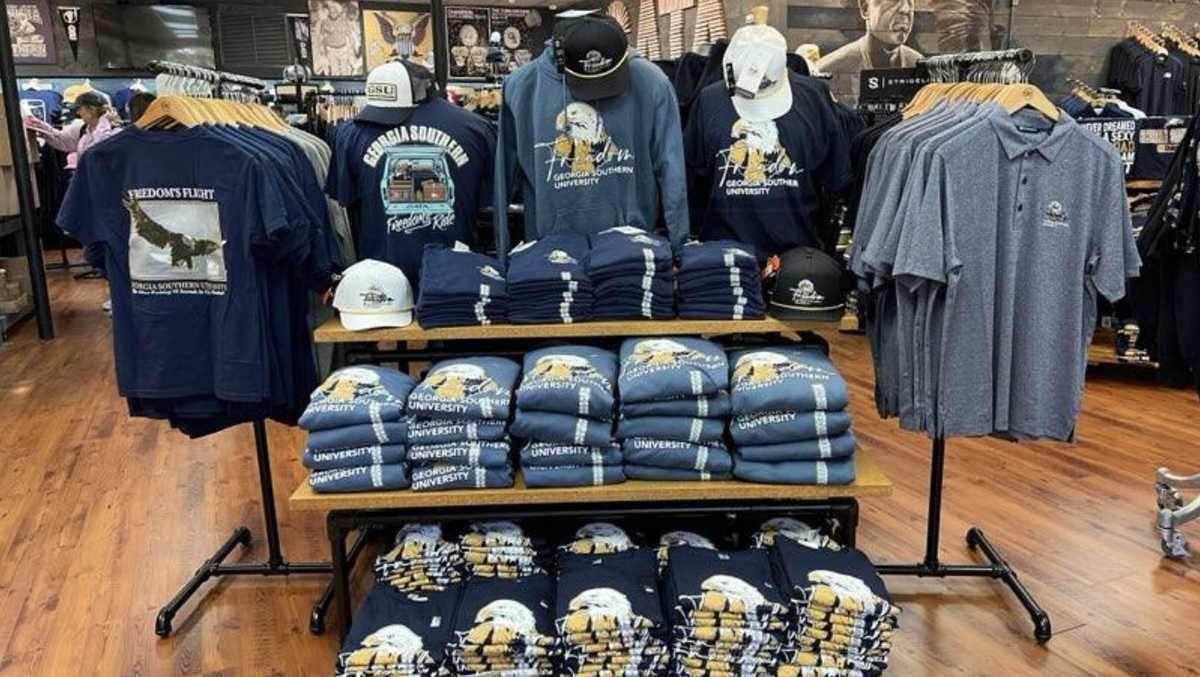
It's been called the most exciting 30 seconds in college football - and recently Freedom, Georgia Southern University’s live bald eagle mascot that flies before each home game was flying high with some serious media attention on TV, radio and print. Unable to survive on his own because of an injury to his beak as a newborn, Freedom came to Georgia Southern in 2004 and now lives at the University’s Center for Wildlife Education in Statesboro alongside other eagles, raptors, reptiles and waterfowl. He will celebrate his 20th birthday this December. The school recently launched a new line of merchandise - and the news soon went viral putting Freedom and his handler, Wildlife Center Executive Director Steve Hein in the spotlight. The coverage was tremendous and if you're looking to know more about Freedom - let us help. Simply click on Wildlife Center Executive Director Steve Hein's icon now or Contact Georgia Southern's Director of Communications Jennifer Wise at jwise@georgiasouthern.edu to arrange an interview today.


It's a fabulous fall - and our expert can explain why all those colors come out this time of year
Autumn has arrived. And as we all take time to welcome this wonderous palette that nature delivers year after year, those who are curious about all those colors are looking for answers. Why there are so many different shades, tints, and tones? What causes the colors to change? And where's the best place to find one of nature's finest displays of leaves? It's a topic that comes up every year, and recently Connecticut Public Radio connected with UConn's Bob Fahey to get some of the answers about autumn in New England. I ventured into a forest in northeastern Connecticut with two UConn tree experts. We met up at Horsebarn Hill, one of the best viewpoints in the state, surveying a rolling river valley showing off with fall colors. We see oaks just starting to turn red. Nearby hickories provide a dash of yellow – and, of course, the maples are already stealing the show, even on a cloudy day. Here’s what I found out: Our trees are diverse One reason the foliage is so good is simply due to the number of species we have. “We have a very diverse hardwood forest in this part of New England,” said Bob Fahey, an associate professor and forest ecologist at UConn. “We have both species that are more southern species and also some of the more northern species.” “In comparison to say, the Mid-Atlantic or other places that have lots of deciduous species, we have maples, which are just the best,” he said. “We also have a number of species that have nice yellow foliage,” he said. “Birches and beech. If you go a little bit farther south from here, mostly what you have is oaks. And oaks can have good fall foliage colors, but there are a lot of times they don't and they don't last for as long.” We have lots and lots of trees The diversity of species provides a diversity of color, said Tom Worthley, an associate extension professor and a forester at UConn. He asked me to remember the last time I flew over Connecticut. What did you see, he asked. Lots of trees, right? “Most of the ground is covered by a tree canopy,” Worthley said, noting that some estimates put that tree canopy cover at around 75% of the land area of the whole state. “Back where we were standing a few minutes ago, we had some cherry trees,” Worthley said, his eyes scanning the trees enveloping us. “There's a few remnant ash, there's some walnut around the edges here. And let's see, some hickory.” A walnut tree towers over us – and there are even some white pines. It’s that varied bioscape that sets New England forests apart. “Even in my two-acre forest behind my house, I have 22 different species of tree, which is more than some regions of the northern part of the U.S.,” Fahey said. Travel to the west, and what you’re likely to see are lots of evergreens and aspen trees. “Not that there aren't others, there are plenty of others, but not in the same abundance and not in the same kind of mix that we have around here,” Worthley said. Climate plays a role Across New England are rolling hills with microclimates that can contribute to vibrant fall colors. “You’ll see ... highly different color in different parts of the landscape, which has to do with temperature differences,” Fahey said. Combine that with Connecticut’s mix of southern and northern species and the colors here might not be as exciting and bright as what you would see in Vermont and New Hampshire, Fahey said. But our foliage season can sometimes last a little bit longer. One reason? Oaks. “We have so much more of that oak component,” Fahey said. “The oaks will hold their leaves until the end of October.” Moisture, temperature and the amount of daylight all contribute to how long it takes for a tree to shed its leaves. And, for each species, the calculation is different. “A tree makes an economic decision,” Worthley said. “It decides, ‘Well, it's costing more in energy to keep these leaves going than what they're producing for me and so it's time to shut them off.’” Why do leaves fall anyway? It’s when leaves are green that the most important work is happening, pulling carbon out of the atmosphere and giving us oxygen. And for that green color, we can thank the pigment chlorophyll. “The color that's in the leaves – is always there from the time the leaf is grown,” Worthley said. “As the growing season fades, the chlorophyll disappears,” he said. Then the other colors in the leaf can begin to show off. Pigments like anthocyanins (reds and purples) and carotenoids (yellows and oranges) peek out, tiny threads in an autumnal blanket transforming New England’s green forests into a richly colored landscape. The colors are out - but only for a limited time. If you're a journalist looking to know more about this topic before all the leaves fall, then let us help. Dr. Fahey is an Associate Professor in the Department of Natural Resources and the Environment and Center for Environmental Sciences and Engineering at the University of Connecticut. He is also the George F. Cloutier Professor in Forestry, director of the UConn Forest, and associate director of the UConn Eversource Energy Center. Simply click on his icon now to arrange a time to talk today.


Choreographing Love: Pulling Back the Curtain on Staged Intimacy
Picture this... You're watching your favorite romantic comedy. It's reached the best part; the leads go in for that famous relationship-affirming kiss and bam, happy ending. Everything on screen feels so natural and easy. Well, not quite. The intimate moments we see depicted in movies, on television and in theatre are carefully discussed and staged before and during production, with intimacy professionals leading the way. To unpack all the romantic details, we turned to Bess Rowen, PhD, an assistant professor in the Department of Theatre at Villanova University and trained intimacy choreographer. On set, intimacy choreographers (theatre) and intimacy coordinators (film and television) make sure that the intimate contact viewers see is agreed upon beforehand with actors and the director. "In other words, we don't want to surprise an actor," says Dr. Rowen. The cast and crew work hard to make the romantic moments feel real and spontaneous within the predetermined and agreed-upon guidelines. While intimacy coordination is a relatively new field, it has really grown in the last several years. "In 2020, SAG-AFTRA (the largest professional union for screen actors and radio actors) laid out guidelines for the use of intimacy coordinators for all union productions," says Dr. Rowen. And there are many organizations that train and produce qualified intimacy professionals, ensuring that they are engaging with new practices as the field continues to grow and evolve. And, akin to real-world encounters, consent is the backbone of intimacy on stage and screen. "Instead of feeling forced, possibly by a power imbalance in the room to simply agree to the director's vision, intimacy coordinators empower actors to identify their boundaries," Dr. Rowen says. "Actors can feel pressured to seem 'easy to work with,' thus creating situations where their consent may get lost. To keep everyone accountable, intimacy coordinators will introduce self-care cues, boundary practice and other consent-based practices to create a space that foregrounds an actor's boundaries for any and all physical contact." As an intimacy choreographer, Dr. Rowen understands the importance of the role. "This job is essential because it adds an advocate to set. An actor might hesitate to tell a director they're uncomfortable doing something, but if I'm there and can directly ask an actor about something, then the individual can end up feeling a lot more in control of the situation," she says. "That consent-based, trauma-informed practice leads, in my experience both as a professional and as an audience member, to more fully integrated scenes of intimacy." An actor's comfort translates to the viewer, creating a more enjoyable experience for everyone. This type of oversight is exciting. "For years we have trained actors to expect the unexpected and be ready for anything, so it takes a minute for them to realize that this training is the opposite of that," says Dr. Rowen. "There aren't surprises or jump-scares in this work. It's about transparency. And once that's made clear, you tend to see people relax in their bodies. It's really powerful."

UConn Expert, 10 Years after Sandy Hook, on the Lies that 'Plague the U.S.'
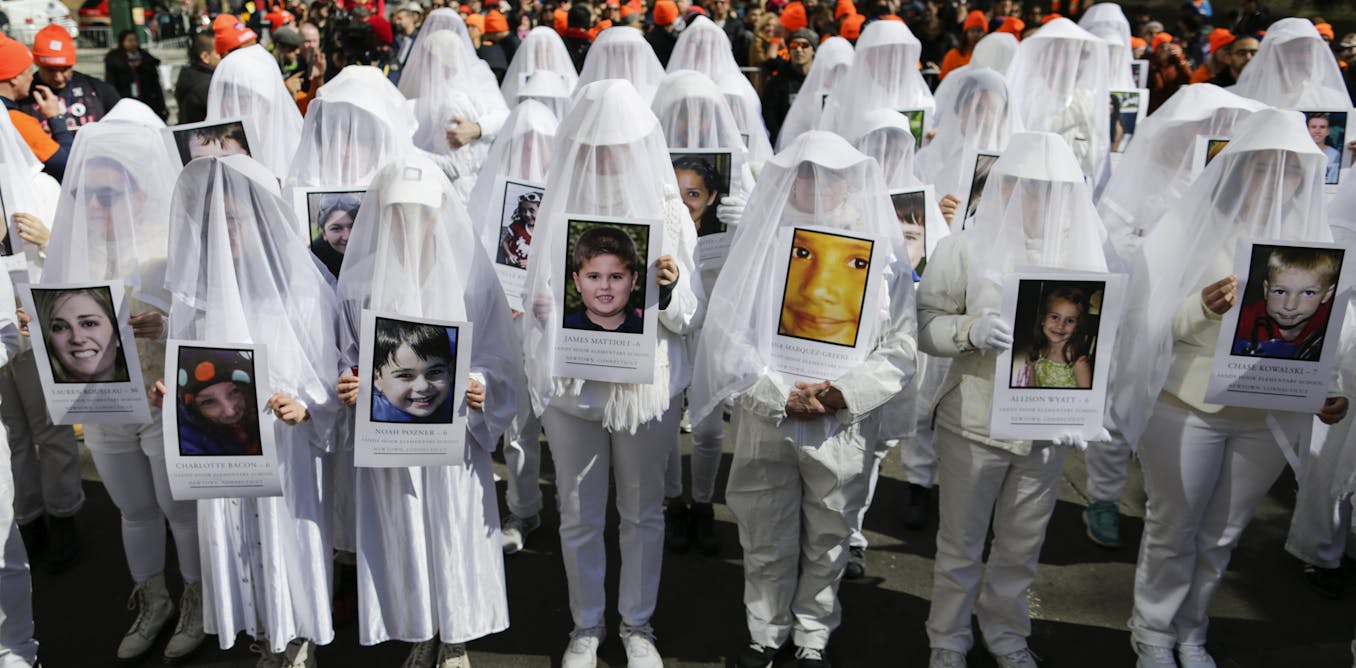
UConn professor and journalist Amanda J. Crawford considers the misinformation that spread like wildfire after tragic school shooting at Sandy Hook Elementary School to be "the first major conspiracy theory of the modern social media age." Ten years after 26 young students and school staff were killed in the massacre, the impact of that day in 2012 continues to reverberate in America today. On this solemn anniversary, Crawford writes about the aftermath of Sandy Hook misinformation in a new essay for The Conversation: Conspiracy theories are powerful forces in the U.S. They have damaged public health amid a global pandemic, shaken faith in the democratic process and helped spark a violent assault on the U.S. Capitol in January 2021. These conspiracy theories are part of a dangerous misinformation crisis that has been building for years in the U.S. While American politics has long had a paranoid streak, and belief in conspiracy theories is nothing new, outlandish conspiracy theories born on social media now regularly achieve mainstream acceptance and are echoed by people in power. Recently, one of the most popular American conspiracy theorists faced consequences in court for his part in spreading viral lies. Right-wing radio host Alex Jones and his company, Infowars, were ordered by juries in Connecticut and Texas to pay nearly $1.5 billion in damages to relatives of victims killed in a mass shooting at Sandy Hook Elementary School a decade ago. Jones had falsely claimed that the shooting was a hoax. As a journalism professor at the University of Connecticut, I have studied the misinformation that surrounded the mass shooting in Newtown, Connecticut, on Dec. 14, 2012 – including Jones’ role in spreading it to his audience of millions. I consider it the first major conspiracy theory of the modern social media age, and I believe we can trace our current predicament to the tragedy’s aftermath. Ten years ago, the Sandy Hook shooting demonstrated how fringe ideas could quickly become mainstream on social media and win support from various establishment figures – even when the conspiracy theory targeted grieving families of young students and school staff killed during the massacre. Those who claimed the tragedy was a hoax showed up in Newtown and harassed people connected to the shooting. This provided an early example of how misinformation spread on social media could cause real-world harm. Amanda J. Crawford is a veteran political reporter, literary journalist, and expert in journalism ethics, misinformation, conspiracy theories, and the First Amendment. Click on her icon now to arrange an interview with her today.
