
Experts Matter. Find Yours.
Connect for media, speaking, professional opportunities & more.

#ExpertPerspective: Did the Covid-19 Pandemic Change Perspectives on Inequality?
Did the COVID-19 pandemic have a silver lining? According to Professor Andrea Dittmann and an interdisciplinary team of researchers, the answer is, “Yes.” In 2020, when it became clear that the COVID-19 pandemic would upend daily life, Andrea Dittmann decided the research she’d been doing could wait. Typically, Dittmann, Assistant Professor of Organization & Management, studies the sources of—and solutions to—inequality in the workplace. “The pandemic is a very distressing thing, but from a research standpoint it’s fascinating to study,” Dittmann said. “The pandemic laid bare all of the inequalities that I’ve been studying for years.” Dittmann, along with colleagues Ellen Reinhart and Hazel Rose Markus from the Department of Psychology, Stanford University; Rebecca Carey, Department of Psychology, Princeton University; Nicole Stephens, Management and Organizations, Northwestern’s Kellogg School of Management; and Hannah Birnbaum, Organizational Behavior Area, Olin Business School at Washington University in St. Louis, decided to study how experiencing personal harm as a result of the Covid-19 pandemic influenced people’s attitudes and behaviors towards equality. In their paper, “Personal Harm from the Covid-19 pandemic predicts advocacy for equality,” published in the January 2023 issue of Journal of Experimental Social Psychology, the researchers write that experiencing greater personal harm in the early stages of the pandemic was “associated with increased advocacy for equality one year later.” These findings are noteworthy. For decades, psychologists have studied Americans’ tendency to rationalize existing inequality as a consequence of individual or “internal” attributes (e.g. differences in work ethic) rather than as a product of larger structural, external, and uncontrollable factors such as bad luck, discrimination, or differences in educational opportunities. “Americans tend to explain people’s life outcomes as free from the constraints of history, other people, and social systems. Instead, life outcomes are seen as a product of individuals’ personal preferences, choices, or enduring characteristics,” they write. Lessons from Firsthand Experience While previous studies have shown that increasing a person’s exposure to inequality—for instance, working in an under-served school or participating in a poverty simulation—can increase people’s endorsement of external attributions for inequality, the COVID-19 pandemic presented the researchers with a real life opportunity to test their hypothesis: that an individual’s firsthand experience of personal harm due to an external force beyond his or her control “will be associated with an increase in their advocacy for equality over time,” they write. Firsthand exposure to inequality confronts people with information contrary to the dominant narrative; it demonstrates how forces beyond individuals’ control can shape people’s opportunities. To conduct their study, the authors recruited a balanced sample (in terms of gender and educational level) of approximately 1500 U.S. citizens between the ages of 18-70. Over the course of a year, they surveyed the participants three times—in May 2020, October 2020 and May 2021. Participants were asked whether they had experienced personal harm as a result of the pandemic (such as disruptions to sleep, poor mental health, financial difficulties, contracting the disease, or having a friend/family member die from the disease) and whether or not experiencing such harm was associated with greater endorsement of external attributions for inequality. Increased Advocacy: A Silver Lining To measure attitudinal and behavioral advocacy for equality, the study included questions about whether there should be universal healthcare, whether the government should provide stimulus checks to help people meet basic needs, and whether or not participants had done anything to combat inequality as a result of the personal harm they had experienced. Had they contacted a public official to express support for reducing social or economic inequality? Had they posted or shared content online that related to reducing social or economic inequality? Even when we ran the most conservative statistical tests, we were still seeing this meaningful relationship between experiencing personal harm and changing your attitude towards inequality and being more willing to stand up and do something about inequality. It speaks to the importance of having direct experience with something that has a disproportionate effect on your life. Dittmann doesn’t know if these attitudinal shifts will be permanent, but she believes the results of the study suggest that research interventions, like asking people to think about people they know who are affected by “large, external shocks” such as climate change or a natural disaster, “could be a way, experimentally, to get more people to see the link, to make these external attributions,” she explained. “While it’s of course awful that so many people experienced this harm due to the pandemic, if there is one good thing that came of it, people were able to shift their attitudes towards inequality. And very importantly, as someone who has done a lot of social psychological research, you don’t expect these effects to persist this long over time. They tend to be more transient. But this study suggests that these could be relatively long term effects.” Looking to know more? Then let us help with your media coverage or research. Andrea is an Assistant Professor of Organization & Management at Emory University's Goizueta Business School. She studies diversity and inequality, particularly employees' social class backgrounds, aiming to promote equity and inclusion at work. Andrea is available to speak with media - simply click on her icon now to arrange an interview today.


New research suggests model organisms may have evolved too far
A research team from Aston University and the Universities of Birmingham and Nottingham suggest model organisms evolved over 100 years may no longer be fit for purpose They found the bacterial strain Escherichia coli K-12 has been repeatedly cultured and mutated, resulting in many genetic changes The study has just been published in Microbial Genomics A research team from Aston University has found that the model organism used in laboratories for the past 100 years has evolved so extensively that it may no longer be fit for purpose. According to a new study, published in Microbial Genomics, the bacterial strain Escherichia coli K-12 has been repeatedly cultured and mutated, resulting in an organism that carries many genetic changes compared to the original isolated bacteria. The research team, from Aston University, and the Universities of Birmingham and Nottingham, made their discovery after re-examining the early preserved samples and looking at the base sequence of their DNA. They found a large number of differences at the DNA sequence level, and the differences are bigger when they examined currently used stocks that derived from the original samples. The work underscores the dangers of using one strain as a sole model. It also confirms that bacterial sequences evolve over short time scales and provides a fascinating insight into the first baby steps of molecular microbiology. Lead author Dr Doug Browning, of the School of Biosciences at Aston University, said: “The past 10 years have seen a massive amount of bacterial genome sequencing and the picture that is emerging is that bacterial genomes change very fast. This was unimaginable 100 years ago, and, of course, this is why folk back then were quick to adopt the K-12 strain as the model for everything.” The strain of bacteria in the study was originally isolated in 1922 from the faeces of a recuperating diptheria patient at Stanford University, in California. The strain was preserved and over time it, and many derivatives, were distributed to research laboratories around the world for use by researchers looking to understand the workings of living cells at the molecular level. While the number of genetic variations which have appeared in the intervening decades may sound alarm bells in some research areas, for others it may represent new research opportunities. Co-author Steve Busby, of the Institute of Microbiology and Infection at the University of Birmingham, said: “Actually the diversity that all this generates can add a new dimension to our understanding. It’s often true that things are seldom as they seem, and particularly so if you only study one strain.”


AI-Generated Content is a Game Changer for Marketers, but at What Cost?
Goizueta’s David Schweidel pitted man against the machine to create SEO web content only to find that providing an editor with bot-generated content trounces the human copywriter every time. Good news for companies looking to boost productivity and save cash, he says. But could there be other hidden costs? In December 2022, The New York Times ran a piece looking back on the year’s biggest consumer tech updates. The review was mixed. Ownership shifts in the world of social media garnered special mentions, but hardware innovations had been largely “meh,’ mused the Times. There was one breakthrough area that warranted attention, however: AI-powered language-processing tech capable of generating natural-looking text, the same technology that powers familiar chatbots. And one such technology could well be poised to “invade our lives in 2023.” Earlier in December, AI research lab OpenAI, released the latest update to its Generative Pre-Trained Transformer technology, an open source artificial intelligence. It’s latest iteration, ChatGPT, immediately went viral. Here was an AI assistant that sounded intelligent. Not only could it answer any question thrown its way without supervised training, but when prompted, it could also write blog posts, as well as find and fix bugs in programming code. ChatGPT could draft business proposals and even tell jokes. All of this at a speed that beggared belief. Since its first release in 2020, OpenAI’s GPT technology has powered through a slew of updates that have seen its capabilities leap forward “by light years” in less than 24 months, says Goizueta Professor of Marketing, David Schweidel. For businesses looking to harness this rapidly-evolving technology, the potential is clearly enormous. But aren’t there also risks that industry and consumers alike will need to navigate? Schweidel is clear that the academic community and initiatives such as the Emory AI Humanity Initiative have a critical role in asking hard questions—and in determining the limitations and dangers, as well as the opportunities, inherent in tech innovation—because, as he puts it, “these things are going to happen whether we like it or not.” Man Versus Machine To that end, Schweidel and colleagues from Vienna University of Economics and Business and the Modul University of Vienna have put together a study looking at how well natural language generation technologies perform in one specific area of marketing: drafting bespoke content for website search engine optimization, better known as SEO. What they find is that content crafted by the machine, after light human editing, systematically outperforms its human counterparts—and by a staggering margin. Digging through the results, Schweidel and his colleagues can actually pinpoint an almost 80 percent success rate for appearing on the first page of search engine results with AI-generated content. This compares with just 22 perfect of content created by human SEO experts. In other words, the AI content passed to a human is roughly four times more effective than a skilled copywriter working alone. Reaching these findings meant running two real-time, real-world experiments, says Schweidel. First, he and his colleagues had to program the machine, in this case GPT 2, an earlier incarnation of GPT. GPT relies on natural language generation (NGL), a software process that converts manually uploaded input into authentic-sounding text or content—comparable in some ways to the human process of translating ideas into speech or writing. To prepare GPT-2 for SEO-specific content creation, Schweidel et al. started with the pre-trained GPT-2, and then let the machine do the heavy lifting: searching the internet for appropriate results based on the desired keyword, scraping the text of the websites, and updating GPT-2 to “learn” what SEO looks like, says Schweidel. We partnered with an IT firm and a university to run our field experiments. This meant creating SEO content for their websites using GPT-2 and actual human SEO experts, and then doing A/B testing to see which content was more successful in terms of landing in the top 10 search engine results on Google. So this was an opportunity to put the AI bot to the test in a real-world setting to see how it would perform against people. The results point to one clear winner. Not only did content from GPT-2 outperform its human rivals in SEO capabilities, it did so at scale. The AI-generated content scored a daily median result of seven or more hits in the first page of Google search results. The human-written copy didn’t make it onto the first result page at all. On its best day, GPT showed up for 15 of its 19 pages of search terms inside the top 10 search engine results page, compared with just two of the nine pages created by the human copywriters—a success rate of just under 80 percent compared to 22 percent. Savings at Scale The machine-generated content, after being edited by a human, trounces the human in SEO. But that’s not all, says Schweidel. The GPT bot was also able to produce content in a fraction of the time taken by the writers, reducing production time and associated labor costs by more than 90 percent, he says. “In our experiments, the copywriters took around four hours to write a page, while the GPT bot and human editor took 30 minutes. Now assuming the average copywriter makes an annual $45K on the basis of 1,567 hours of work, we calculate that the company we partnered with would stand to save more than $100,000 over a five-year period just by using the AI bot in conjunction with a human editor, rather than relying on SEO experts to craft content. That’s a 91 percent drop in the average cost of creating SEO content. It’s an orders of magnitude difference in productivity and costs.” But there are caveats. First off, there’s the quality of the machine-generated content to consider. For all its mind-boggling capabilities, even the newly released ChatGPT tends to read somewhat sterile, says Schweidel. That’s a problem both in terms of Google guidelines and brand coherence. Human editors are still needed in order to attenuate copy that can sound a little “mechanical.” “Google is pretty clear in its guidelines: Content generated by machines alone is a definite no-no. You also need to factor in the uncanny valley effect whereby something not quite human can come off as weird. Having an editor come in to smooth out AI content is critical to brand voice as well as the human touch.” Asking the Big Questions Then there are the moral and metaphysical dimensions of machine learning and creativity that beg an important question: Just because we can, does that mean we should? Here, Schweidel has grave reservations about the future of ChatGPT and its ilk. The potential of this kind of technology is extraordinarily exciting when you think about the challenges we face from productivity to pandemics, from sustainable growth to climate change. But let’s be very clear about the risks, too. AI is already capable of creating content—audio, visual and written—that looks and feels authentic. In a world that is hugely polarized, you have to ask yourself: How can that be weaponized? At the end of the day, says Schweidel, the large language models powering these generative AIs are essentially “stochastic parrots:” trained mimics whose output can be hard to predict. In the wrong hands, he warns, the potential for misinformation—and worse—could well be “terrifying.” “Shiny new tech is neither inherently good nor bad. It’s human nature to push the boundaries. But we need to ensure that the guardrails are in place to regulate innovation at this kind of pace, and that’s not easy. Governments typically lag far behind OpenAI and companies like them, even academics have a hard time keeping up. The real challenge ahead of us will be about innovating the guardrails in tandem with the tech—innovating our responsible practices and processes. Without effective safeguards in place, we’re on a path to potential destruction.” Covering AI or interesting in knowing more about this fascinating topic - then let our experts help with your coverage and stories. David Schweidel is the Rebecca Cheney McGreevy Endowed Chair and Professor of Marketing at Emory University's Goizueta Business School. Simply click on David's icon now to arrange an interview today.

Researchers find mechanical stimulation could be used to help improve balance control The findings provide new information on whole-body vibration applications Paves the way for research on the interaction between the central nervous system and peripheral muscles. Mechanical vibrations could help improve our muscles and our balance control, according to research at Aston University. Researchers in the College of Engineering and Physical Sciences have examined the effect of stimulation on muscle spindles which ‘speak’ to the central nervous system to help keep us upright and walk straight. Their results provide new perspectives on whole-body vibration applications, paving the way for future research on the interaction between the central nervous system and the peripheral muscles. The research could in future be applied to improve balance in older people and help reduce falls, this could be applied through either wearable devices or with a daily session of stimulation. Hip fractures alone account for 1.8 million hospital bed days and £1.1 billion in hospital costs every year, excluding the high cost of social care. Another potential benefit of the research is that this type of stimulation could be applied to athletes to decrease their muscle reaction times. The goal of the study was to find out if mechanical vibrations can improve the way our bodies process and react to small body oscillations. Seventeen young male and female adult volunteers aged between 20 and 28 years old stood individually on platforms, similar to vibrating plates found in gyms, which caused leg muscle contractions. Calf muscles were targeted as the muscles whose action contribute the most to maintaining a stable upright posture. The researchers stimulated their calves with a frequency of 30Hz and recorded four one-minute trials of undisturbed balance to take a baseline measure and compared the readings to measurements taken after the stimulation. After conducting the experiment, they found that their balance seemed to have improved. The research, Sensorimotor recalibration of postural control strategies occurs after whole body vibration, was led by Dr Antonio Fratini, senior lecturer in mechanical, biomedical & design engineering, and PhD student Isotta Rigoni, and has been published in Scientific Reports – Nature. Dr Fratini said: “We’re excited by our results as they could have a beneficial effect on the health and quality of life of a large number of people. “Our results indicate that whole body vibration challenges balance at first, triggering a bigger effort to control the upright stance and shifting muscle modulation toward supraspinal control, resulting in a recalibration of muscle recruitment. The neuromuscular system seems to recover from such disruption and regain control over a longer time interval.” “Indeed, while muscle recruitment and cortical effort appear unaltered over the long term, the balance seems not only restored but also improved, besides the still clearly affected calf muscles.” For more information about our research or studying in the College of Engineering and Physical Sciences please visit our website.


Birmingham City Council Cabinet Member Cllr Majid Mahmood met with sustainability experts from across Aston University Cllr Mahmood is responsible for the city’s sustainable waste strategy Knowledge exchange projects between the city council and Aston University were discussed. Birmingham City Council’s Cabinet Member for Environment visited Aston University on 30 November to meet with academics working on sustainability challenges. Cllr Majid Mahmood is responsible for developing a financially and environmentally sustainable waste strategy for the city and engaging in citywide and national policy development to tackle the causes and consequences of climate change, among other accountabilities. Cllr Mahmood’s visit included seeing the chemical engineering and applied chemistry labs run by Dr Jiawei Wang and Dr Matthew Derry who are investigating methods for generating energy from waste and creating new, more sustainable materials. He also met with Professor Patricia Thornley, director of the Energy Bioproducts Research Institute (EBRI) along with other colleagues including Dr Katie Chong, who showcased EBRI’s world-leading research into bioenergy and bioproducts and heard from Dr Luciano Batista on the work he is leading at the Centre for Circular Economy and Advanced Sustainability which provides practical answers to tackle world-critical sustainability challenges. During the visit, Cllr Mahmood was able to share some of the challenges and opportunities facing Birmingham City Council, particularly around sustainability, the environment and waste management. He discussed with academics how Aston University’s research could feed into Birmingham City Council’s future waste and energy management plans and how the lived experience of the city should shape the direction of research. A number of knowledge exchange opportunities were also discussed, including using the city council’s experience to develop undergraduate student projects and academics being invited to visit Birmingham’s waste management depots. Cllr Majid Mahmood said: “It has been brilliant to visit Aston University today and to learn about the innovative ways that different academics are tackling the sustainability challenges facing the world. “As the largest metropolitan local authority in the UK, Birmingham is uniquely placed to develop sector leading waste and energy management processes. Working closely with universities like Aston University will help us to achieve this. “I look forward to developing our working relationship and combining our practical experience and research excellence to drive innovation in the sector.”


Aston University to help power Indonesia with affordable energy made from rice straw
Project to convert unwanted rice straw into cheap energy on a commercial scale Most rice straw in Indonesia is burned causing pollution and health problems Project will almost double affordable energy captured from waste. Scientists at the Energy and Bioproducts Institute at Aston University are to start a project to convert Indonesia’s unwanted rice straw into low-cost energy on a commercial scale. Each year the country produces 100 million tonnes of the rice waste, of which 60% is burned in open fields, causing air pollution and has even been linked to lung cancer. The amount burned is equivalent to approximately 85 Terawatts of electricity, which is enough to power Indonesia’s households 10 times over. A consortium which includes Aston University aims to develop processes to capture more affordable energy from rice straw than ever before - and demonstrate that it can be done on a commercial scale. Part of the process involves a biomass conversion technology called pyrolysis. This involves heating organic waste materials to high temperatures of around 500 °C to break them down, producing vapour and solid products. Some of the vapour may be condensed into a liquid product called pyrolysis oil or pyrolysis bio-oil. Both the pyrolysis vapour and liquid bio-oil can be converted to electricity. Current methods convert just 35% of the thermal energy of rice straw to affordable electricity. However, a newly patented combustion engine designed by consortium member, UK-based Carnot Limited, could see that doubled to 70%. Energy extracted this way could help low and middle-income countries create their own locally generated energy, contribute to net zero by 2050, create new jobs and improve the health of locals. The project will help develop a business model which could support companies and local authorities to produce local, cheap energy in Indonesia, and other countries with biomass capacity. Three academic experts from different disciplines at Aston University are involved in this initial project, which focuses on Indonesia’s Lombok Island. Dr Jude Onwudili, Dr Muhammad Imran and Dr Mirjam Roeder are based at Aston University’s Energy and Bioproducts Research Institute (EBRI). Dr Jude Onwudili who is leading the team said: “This project has huge potential - commercialisation of this combined technology will have significant economic benefits for the people of Indonesia through direct and indirect job creation, including the feedstock supply chain and electricity distribution and sales. “About one million Indonesian homes lack access to energy and Indonesia's 6,000 inhabited islands make sustainable infrastructure development challenging in areas such as Lombok Island. “The new techniques being explored could reduce environmental pollution, contribute to net zero and most importantly, provide access to affordable energy from sustainable local agricultural waste. “Aston University is a global leader in bioenergy and energy systems, and I am delighted we received funding to explore this area.” Over a power plant’s life, the project team have calculated that biomass produces cheaper electricity (approx. $4.3$/kWh) compared to solar (approx. $6.6/kWh), geothermal (approx. $6.9/kWh), coal (approx.$7.1/kWh), wind (approx. $8/kWh) and subsidised gas (approx.$8.4ckWh). The project will start in April 2023 with a total of £1.5 million funding for the four partners from Innovate UK. Alongside Carnot Limited, the Aston University scientists will be working with two other UK-based businesses to deliver the project, PyroGenesys and Straw Innovations. PyroGenesys specialises in PyroChemy technology which will convert 70% of the rice straw into vapour or bio-oil for electricity production, with the remainder converted into nutrient-rich biochar, which can be sold back for use as fertiliser on the rice farms. Straw Innovations will contribute their rice straw harvesting and collection expertise, with their many years of similar operations in Asia.


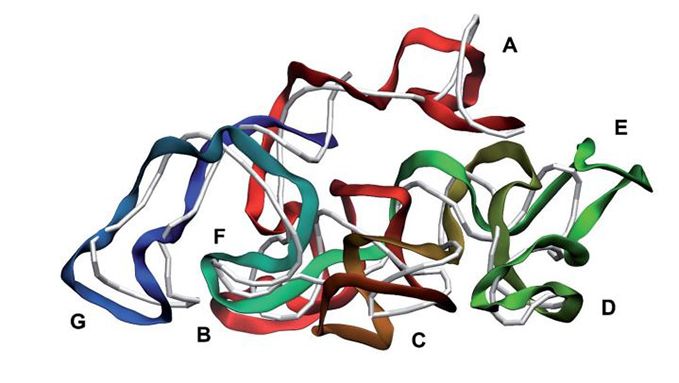
First ever computer reconstruction of a virus, including its complete native genome Will open way for investigating biological processes which can’t currently be fully examined because the genome is missing Could lead the way to research into an alternative to antibiotics. An Aston University researcher has created the first ever computer reconstruction of a virus, including its complete native genome. Although other researchers have created similar reconstructions, this is the first to replicate the exact chemical and 3D structure of a ‘live’ virus. The breakthrough could lead the way to research into an alternative to antibiotics, reducing the threat of anti-bacterial resistance. The research Reconstruction and validation of entire virus model with complete genome from mixed resolution cryo-EM density by Dr Dmitry Nerukh, from the Department of Mathematics in the College of Engineering and Physical Sciences at Aston University is published in the journal Faraday Discussions. The research was conducted using existing data of virus structures measured via cryo-Electron Microscopy (cryo-EM), and computational modelling which took almost three years despite using supercomputers in the UK and Japan. The breakthrough will open the way for biologists to investigate biological processes which can’t currently be fully examined because the genome is missing in the virus model. This includes finding out how a bacteriophage, which is a type of virus that infects bacteria, kills a specific disease-causing bacterium. At the moment it is not known how this happens, but this new method of creating more accurate models will open up further research into using bacteriophage to kill specific life-threatening bacteria. This could lead to more targeted treatment of illnesses which are currently treated by antibiotics, and therefore help to tackle the increasing threat to humans of antibiotic resistance. Dr Nerukh said: “Up till now no one else had been able to build a native genome model of an entire virus at such detailed (atomistic) level. “The ability to study the genome within a virus more clearly is incredibly important. Without the genome it has been impossible to know exactly how a bacteriophage infects a bacterium. “This development will now allow help virologists answer questions which previously they couldn’t answer. “This could lead to targeted treatments to kill bacteria which are dangerous to humans, and to reduce the global problem of antibiotic-resistant bacteria which are over time becoming more and more serious.” The team’s approach to the modelling has many other potential applications. One of these is creating computational reconstructions to assist cryo-Electron Microscopy – a technique used to examine life-forms cooled to an extreme temperature.
Aston University bioenergy researchers to improve measurement of industrial carbon dioxide
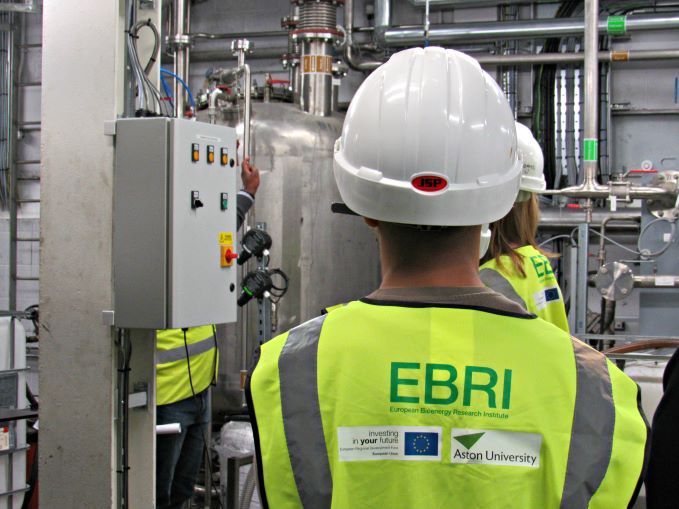
Researchers at Aston University are to take the UK a step nearer to net zero emissions by developing a better system of measuring industrial carbon dioxide. The government is giving the University £100,000 to improve measurement of CO2 streams from sites such as at power plants and factories. The Energy and Bioproducts Research Institute (EBRI) at Aston University is to develop a comprehensive guide based on industry and academic expertise. Industrial decarbonisation will play a major role in achieving the UK’s 2050 ambitious net zero emissions target, however current measurement guidelines need to be improved. The six-month project will be a collaboration between EBRI researchers and the company Progressive Energy and the Energy Institute. Progressive Energy will work alongside potential end-users and the Energy Institute will help to ensure the final guidelines are clear. The work is being led by Dr Paula Blanco Sanchez, who has more than 15 years of experience in bioenergy. She said: “This funding will help Aston University to address a major gap in the decarbonisation pathway. It will contribute to the UK’s net zero target and is another example of how the University is using its expertise to tackle real world problems. “Our experts in EBRI will provide research, industrial experience and knowledge in areas such as gas measurement, metric and analytics, life cycle and techno-economic assessments, and thermal conversion processes.” The funding has been awarded by the Industrial Decarbonisation Research and Innovation Centre (IDRIC) to achieve the net zero ambition set out in the UK Industrial Decarbonisation Strategy (2021). Bryony Livesey, challenge director, Industrial Decarbonisation Challenge, UKRI, said: “The announcement of this funding continues to build upon IDRIC’s whole system approach to decarbonising industry, enabling the UK to remain at the forefront of a global low-carbon future. These successful Wave 2 projects will build evidence on a range of areas from economics and emissions to skilled jobs and wider net zero policy, supporting UK’s green growth and net zero ambitions.” It’s hoped the Aston University project will lead to future collaborations and funding to support UK industry to decarbonise their businesses. In May, June and September the EBRI plant will be opening its doors to professionals who want to enhance their careers with a short hands-on course in Practical Process Engineering. For more information visit https://www.aston.ac.uk/study/courses/practical-process-engineering

Aston University to celebrate 100 years of pharmacy education and research
Aston Pharmacy School to celebrate 100 year anniversary during 2023 The history of teaching pharmacy at Aston University dates back to the 1890s In 2016 the Pharmacy School was awarded a Regius Professorship by HM Queen Elizabeth II. Aston University is gearing up to celebrate 100 years of pharmacy education and research this year. In 1923 the Birmingham Municipal Technical School started to offer full time pharmacy courses to applicants from the general public. The roots of pharmacy education at Aston University date back to the 1890s and more significantly to 1919 when it first started teaching the subject as part of the Chemistry department at the Birmingham Municipal Technical School - as part of a funded package of training and education for returning servicemen after the First World War. In 1923 the pharmacy training provision expanded, taking on six specialist pharmacy staff within the pharmacy section of the Department of Chemistry. That year the Technical School began to offer full time pharmacy courses open to applications from the general public. In 1926 Harry Berry was appointed as head of a separate Department of Pharmacy - following an inspection by the University of London and a positive report. This distinct identity was further cemented a year later in 1927, when Neville Chamberlain, who was the then Minister for Health, opened the new teaching facilities in the School of Pharmacy in the Birmingham Central Technical College. Since then, the University has graduated thousands of pharmacy students with more than 2700 graduates in the last 20 years. Aston University’s Pharmacy School is now recognised as one of the outstanding pharmacy schools in the UK and has been at the forefront of scientific advances over the last 100 years. Its researchers developed the $2 billion blockbuster drug Temozolomide, the leading treatment for brain tumours and it created the UK's first Masters programme for hospital pharmacists. In 2016, Aston Pharmacy School was awarded a Regius Professorship by HM Queen Elizabeth II to mark her 90th birthday. It was the first time a pharmacy school had been given the award, a rare and prestigious honour bestowed by the Sovereign to recognise exceptionally high-quality research. The first holder of the title of Regius Professor of Pharmacy at Aston University was Keith Wilson, a pharmacy academic who helped to shape current and future pharmacy education both within the UK and internationally. Dr Joe Bush, head of Aston Pharmacy School, at Aston University said: "100 years of pharmacy education is a major milestone. We are immensely proud of all our achievements, from producing exceptional graduates who make a significant contribution to the professional workforce in a variety of near-patient settings, to our research discoveries and developments which have positively impacted patient healthcare and the high quality of this research having been recognised via the award of the first ever Regius Chair for Pharmacy. “It is an honour to be a part of Aston Pharmacy School, whose humble beginnings have grown to produce world class research and exceptional graduates. I look forward to celebrating with the rest of the school over the course of the year.” Celebrations of the centenary anniversary will include a celebratory lunch for staff, former staff, students and alumni to recognise the significant contributions that the school has made in research discoveries and teaching. The school will host an exhibition about the last 100 years of pharmacy at Aston University, with a range of historical artefacts on display in the entrance to the University’s main building and there will be a social media campaign to highlight key facts about the last 100 years of pharmacy at Aston University. Did you study pharmacy at Aston University? We would love to hear from you with any stories, memories from your student days. And we would love to hear about where your pharmacy career has taken you. Please get in touch with our alumni team here.

What began in 2016 as a partnership between Georgia Southern University and the Third Infantry Division at Fort Stewart has become a nationally recognized educational and research program with $5.68 million in federal funding to improve soldier health and performance to ensure force readiness. Now called the Soldier Performance and Readiness (SPAR) program, this Georgia Southern project aligns with the U.S. Army’s Holistic Health and Fitness (H2F) initiative and represents a multifaceted partnership with the Army to provide onsite training that decreases musculoskeletal injuries; deliver an online certificate program in tactical fitness for college credit; collaborate with the Army’s Research Institute for Environmental Medicine (USARIEM); and develop programs to enhance and assess cognitive performance in tactical situations. The initial partnership program to prevent musculoskeletal injuries was delivered at first to small cohorts to implement new practices in the physical training of their squads and platoons in a train-the-trainer model. Results were so encouraging, the program expanded at Fort Stewart and to training brigades at Fort Benning last year with the assistance of $1.5 million in Department of Defense funding. Studies show significant preparedness and financial benefits from reducing musculoskeletal injuries to soldiers during drilling and training exercises. In April 2020, officials determined that 58,000 soldiers (the equivalent of 13 Brigade Combat Teams) had injuries that classified them as non-deployable. In 2019, more than half of soldiers experienced a new injury, resulting in 10 million limited-duty days. Musculoskeletal injuries account for nearly 25% of all military injuries and approximately $557 million in acute patient care. Most of these injuries were associated with fitness training-related activities Georgia Southern’s online Tactical Athlete Certificate program was first offered in 2020 and is available exclusively to soldiers on active duty, in the National Guard or reserve. Through a series of three courses, the program teaches foundational exercise and biomechanical concepts, strength and conditioning principles, and rehabilitation. The coursework parallels the Army’s Master Fitness Trainer curriculum, with additional rehabilitation principles, and teaches soldiers how to develop evidence-based and well-rounded physical training programs while minimizing risk of musculoskeletal injury. Certificate completion provides soldiers with nine college credits with Georgia Southern, potential promotion opportunities in the Army, and preparation for the National Strength and Conditioning Association’s TSAC-F exam. “By sharing knowledge, expertise and experience between our faculty and doctoral students with soldiers, drill instructors, and brigade combat fitness teams to create aligned programs that improve tactical performance and force readiness, the SPAR program has become a national model of public-impact research,” said Christopher Curtis, Ph.D., Georgia Southern’s vice provost for research. “We are excited about the future of this partnership. We relish the significant support and encouragement we receive from the Army commands at Fort Stewart, Fort Benning, USARIEM, and the Training and Doctrine command (TRADOC), and we are grateful to Congressman Carter and his fellow members of the Georgia Congressional delegation who have advocated for the value of the partnership on our behalf.” The progress and continued success of this program would not have been possible without several years of support from the Georgia Congressional Delegation and especially the leadership and support of Congressman Buddy Carter, who represents Fort Stewart and the Armstrong Campus of Georgia Southern in Savannah. “Providing for our nation’s defense is the number one responsibility of the federal government. Innovation and research, which is what these dollars will fund at Georgia Southern, will improve working conditions for our brave servicemen and women by providing them with top-of-the-line training and resources,” said Rep. Buddy Carter (R-GA). “I am a proud supporter of Georgia’s military community and am happy that the federal government is investing in these necessary programs.” SPAR programming allocated in the FY23 federal budget will enable Georgia Southern to: Develop protocols and expand delivery of the onsite musculoskeletal injury prevention training and the Tactical Athlete Certificate to commands at Fort Gordon in Augusta and to the Georgia National Guard. Develop and deploy similar online certificate programs for soldiers in Cognitive Performance and Nutrition to further support the Army’s H2F program. Host a national conference on “Charting Future Readiness Needs” in partnership with the U.S. Army Training and Doctrine Command and U.S. Army Forces Command that will bring together other research universities who also work in partnership with the Army. Work with the Army commands to develop specific academic degree programs to meet the specific H2F professional workforce needs at the brigade level. Army officials estimate approximately 3,000 personnel will need graduate degrees or advanced certifications in the next six years. Develop a Tactical Performance Research Lab in Savannah to support the fundamental research and innovation activities of Georgia Southern’s Tactical Performance Group that supports the Army’s H2F program as well as translational research to apply the knowledge and practices broadly to law enforcement and other first responders. Looking to know more - then let us help. Christopher Curtis is available to speak to media - for more information simply click on his icon here or reach out to Georgia Southern Director of Communications Jennifer Wise at jwise@georgiasouthern.edu to arrange an interview today.

