
Experts Matter. Find Yours.
Connect for media, speaking, professional opportunities & more.

Lecturer Carol Jordan, left, and student Anna Bryan assist with a vitamin D assay as part of a study on racial disparities and cardiovascular health. Researchers in the Waters College of Health Professions (WCHP) at Georgia Southern University are studying why Black adults in America are 30% more likely to die from cardiovascular disease (CVD) than white adults through a study on racial disparities and cardiovascular health. Faculty and graduate students in the University’s Biodynamics and Human Performance Center and Medical Laboratory Sciences program have teamed up to examine the biological basis for these racial differences to aid in the development of effective prevention and treatment strategies. “More than half of this racial disparity may be attributed to substantially greater rates of high blood pressure and vascular dysfunction in Black adults,” said Greg Grosicki, Ph.D., principal investigator on the study and assistant professor in WCHP). The team is examining the difference in skin pigmentation, which can influence cardio preventive vitamin D levels. Through the use of an enzyme-linked immunosorbent assay (ELISA), a biochemical test to measure antibodies, antigens, proteins and glycoproteins in biological samples, the team is able to measure vitamin D levels in plasma samples. By pairing vitamin D values with measures of skin pigmentation and the team’s comprehensive assessments of cardiovascular health, they are able to determine whether low vitamin D levels may be contributing to higher blood pressure and vascular dysfunction in Black adults, which will help inform future interventions and therapeutic strategies seeking to alleviate racial disparities in CVD. The ELISAs were purchased using a Graduate Student Organization grant awarded to Josiah Frederic, a graduate student studying sports medicine. The research team consists of both faculty and students from the Department of Health Sciences and Kinesiology as well as the Department of Diagnostic and Therapeutic Sciences. Team members include the following: Brett Cross, graduate sports medicine student Joe Vondrasek, graduate sports medicine student Josiah Frederic, graduate sports medicine student Zoe Lincoln, undergraduate health science student Peter Gaither, graduate sports medicine student Wesley Blumenburg, graduate sports medicine student Andrew Flatt, Ph.D., assistant professor Greg Grosicki, Ph.D., principal investigator and assistant professor Amy Frazier, lecturer Carol Jordan, clinical coordinator and senior lecturer Anna Bryan, undergraduate medical laboratory sciences student If you're a reporter looking to know more about this important research - then let us help. Greg Grosicki, Ph.D., is available to speak with media - simply reach out to Georgia Southern Director of Communications Jennifer Wise at jwise@georgiasouthern.edu to arrange an interview today.


For two years during the COVID-19 pandemic, U.S. public schools have been able to provide free meals for all students, including to-go meals in the summer. But on June 30, 2022, the federal waivers that expanded the school lunch program will expire. In a recent Q&A published by The Conversation, Marlene Schwartz, a professor of Human Development and Family Sciences at the University of Connecticut and the director of the Rudd Center for Food Policy & Health, discusses how these changes will affect children and families and how food pantries can help: What are the effects of making school meals free for all students? The findings are pretty clear that when students have universal free meals, participation in school meals programs goes up, so more children eat them. And research shows that the meals that are provided through the school meal program are of higher nutritional quality than the meals that children bring from home or get from other places. Some studies have found that when you provide universal free meals, you have improvements in academic performance, particularly for students who are at higher risk. There is also evidence in some studies that universal free school meals help improve family food insecurity rates. When a family knows that their child can get breakfast and lunch every day at school, it really allows them to save their food budget to purchase other foods for the house. And that helps them be more food-secure. What is the role of food banks and pantries in shaping the diet and health of vulnerable children and families? Within the charitable food system, there’s been a real shift in thinking that has been a change from giving away as many pounds of food as possible to really looking at the nutritional quality of those pounds. That’s thanks in part to Feeding America, which is a national network of food banks, and Partnership for a Healthier America, which is part of Michelle Obama’s Let’s Move initiative. Both of them are working with food banks around the country to really help them track the nutritional quality of their food and set goals for themselves in terms of maximizing the most nutritious foods they are able to distribute. Dr. Schwartz is an expert on school wellness and nutrition programs and food insecurity. She's available to speak with media - simply click on her icon now to arrange a time today.


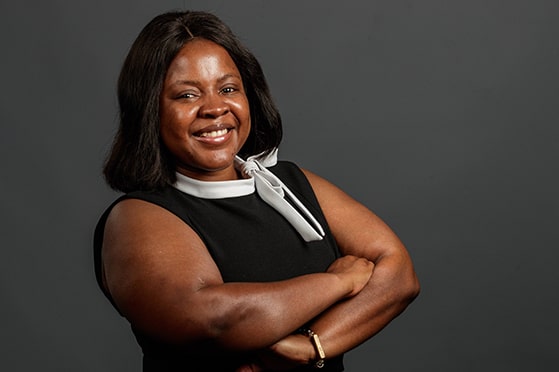
‘Rising star’ graduate: Sylvia Ofori’s journey from Ghana to Georgia Southern to Harvard
On her first flight from Ghana to the United States, Sylvia Ofori arrived in Atlanta, Georgia, at 1 a.m. By 4 o’clock the next afternoon, Ofori was in her first American classroom in Georgia Southern University’s Jiann-Ping Hsu College of Public Health on the Statesboro Campus. Jet-lagged and attempting to absorb a foreign campus and classroom procedures, Ofori was out of sorts when her professor, Isaac Chun-Hai Fung, Ph.D., encouraged her to apply for a student research position following class introductions. Within days, she’d interviewed and earned the spot, supported by funding from the Centers for Disease Control and Prevention. In their first meeting, Fung challenged Ofori to publish 10 papers by the end of her public health doctoral program. “I wasn’t familiar with publications, but he threw that challenge at me from the beginning,” Ofori remembered. “Wow. His plan was for me to start working on dissertation-related projects immediately.” Ofori’s first project was a scoping review on the use of digital technology to improve and monitor handwashing in children. Following a presentation of her review at the University’s 2019 Research Symposium, her work was published in an academic journal, and many more followed as co-author with Fung and another mentor, Kamalich Muniz-Rodriguez, DrPH. By the end of her doctoral training, Sylvia had published 11 papers with Fung, and three more manuscripts will be submitted. On May 13, Ofori earned a DrPH in public health with a concentration in epidemiology as she crossed the stage in one of two Savannah commencement ceremonies. In June, she’ll begin as a Postdoctoral Fellow in the Department of Epidemiology at Harvard University to continue global public health research she began at Georgia Southern. There's a full article detailing Sylvia's amazing story - and her success to date. It's attached here: If you're a reporter looking to know more about Sylvia's story, or how Georgia Southern has students from around 100 countries across the world currently studying on both the Statesboro Campus and the Armstrong Campus in Savannah. Simply reach out to Georgia Southern Director of Communications Jennifer Wise at jwise@georgiasouthern.edu to arrange an interview today.

Georgia Southern launches Asian Studies Digital collection
Georgia Southern University Libraries and Nalanda Roy, Ph.D., recently launched a digital collection, “An Integral History: Asian Studies Digital Archive.” The archive provides a curated collection of multidisciplinary resources in support of the Asian American and Pacific Islander community in the United States. Contributions are curated from Digital Commons, the University’s open-access institutional repository, and highlight Georgia Southern’s scholarly and cultural assets related to the Asian Studies minor. The collection represents faculty and student research, books, videos, community resources and campus events. “The Asian Studies Digital Archive is an important addition to Georgia Southern’s collections because developing an understanding of other cultures will create a cultural awareness,” said Roy, an associate professor of international studies and Asian politics and coordinator of the University’s Asian Studies program. “It will also teach us to have more meaningful interactions with others around us, and celebrate our differences and similarities.” Each May, Asian American and Pacific Islander Heritage Month is observed to recognize the Asian Americans and Pacific Islanders who have contributed to American history, society and culture. The Asian Studies Digital Archive will carry that legacy forward, and continue to grow, as faculty are encouraged to participate in the initiative. “As the coordinator of the Asian Studies program at Georgia Southern University, creating the Digital Archive has been a dream project,” said Roy, who is a Certified Diversity Executive and a former Inclusive Excellence Faculty Fellow at Georgia Southern. “I am very happy to work with the Georgia Southern Libraries to create a resource that will be helpful to both the Georgia Southern and local communities.” For more information on the Asian Studies Digital Archive, visit: Facts about Asian American and Pacific Islander Heritage Month *U.S. Census Bureau 1978 — Congress passed a resolution creating Asian/Pacific American Heritage Week. 1992 — The observance expanded to a month (May), timed to coincide with two important milestones in Asian/Pacific American history: arrival of the first Japanese immigrants in the United States (May 7, 1843) and completion of the transcontinental railroad on May 10, 1869 (the majority of workers who laid the tracks were Chinese immigrants). 2020 — Total Asian population in the U.S. is roughly 6% or 20 million. 5.1 million — The estimated number of the Asian population of Chinese, except Taiwanese, descent in the U.S. in 2020. The Chinese (except Taiwanese) population was the largest Asian group in the U.S. 690,000 — The estimated number of total Native Hawaiian and Other Pacific Islander population in the U.S. 607,010 — Native Hawaiian residents make the largest NHPI group in the U.S If you're a reporter looking to know more about "An Integral History: Asian Studies Digital Archive" - then let us help with your coverage and stories. Nalanda Roy, Ph.D., is available to answer your questions - simply reach out to Georgia Southern Director of Communications Jennifer Wise at jwise@georgiasouthern.edu to arrange an interview today.
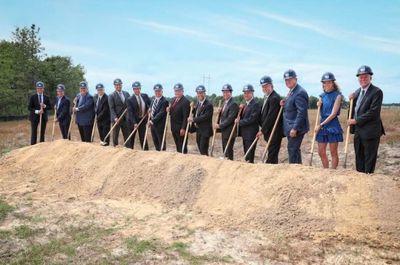
Dignitaries help University officials break ground on Jack and Ruth Ann Hill Convocation Center
State and local dignitaries help break ground on the new Jack and Ruth Ann Hill Convocation Center on Georgia Southern’s south campus in Statesboro. L-R: Georgia Southern Men’s Basketball Coach Brian Burg, Chair of the Georgia Southern Foundation Mike Sanders, University Foundation Board Member Leonard Bevill, University Provost Carl Reiber, Ph.D., Georgia Southern Athletics Director Jared Benko, Regent Everett Kennedy, Majority Leader Jon Burns, USG Chancellor Sonny Purdue, University President Kyle Marrero, Mr. Lance Hill, Congressman Buddy Carter, Chairman Terry England, Congressman Rick Allen, Student athlete Hannah Fuller, Waters College of Health Professions Dean Barry Joyner Ph.D. The opportunity to memorialize the late Sen. Jack Hill and wife Ruth Ann brought an impressive list of state and national leaders to Statesboro on Thursday to help break ground on a new Georgia Southern University Convocation Center that will bear their names. New University System of Georgia (USG) Chancellor Sonny Perdue, state legislators, congressmen and Georgia Southern University President Kyle Marrero – all of whom had worked extensively with Hill over the last several decades – headlined a team of speakers who lauded Hill and his impact on Georgia while helping to kick off a project that will change the face of Statesboro. “I’ve never known a more dedicated public servant than Jack Hill,” said Perdue, who shared an office with Hill and lived with him for a time while they both served in the Georgia Legislature. “It’s an honor to be here today to remember my best political friend in the world.” At 95,000 square feet, the Jack and Ruth Ann Hill Convocation Center will be the largest event venue space between Savannah and Macon and will serve as the signature building on Georgia Southern’s south campus, fronting Veterans Memorial Parkway (US 301 bypass). With an estimated total cost of $64.4 million, the center will be a multi-story complex that provides approximately 7,000 square feet of additional instructional space for the Waters College of Health Professions and provides more than a 50% increase in seating capacity in an arena that will be the new home court for Georgia Southern Eagles NCAA basketball games. The building is named for Jack Hill (‘66), who was the longest-serving Georgia senator when he died in April 2020. He was a senator for 30 years, serving as chairman of several crucial committees, including Appropriations, which has broad jurisdiction over legislation involving budgeting and spending state and federal funds. With Hill’s support, Georgia Southern reached new heights as an institution serving the southeast region and the state of Georgia. Hill was instrumental in helping the University expand its programs and build several new state-of-the-art facilities, including the Engineering and Research Building, which opened for classes in January 2021. His wife of 48 years, Ruth Ann, focused her life on public education and retired as principal of Reidsville Elementary School. She was a triple Eagle, earning degrees from Georgia Southern in 1973, 1990 and 1991. The media release announcing this historic event is attached here: If you're a journalist looking to know ore about this event or Georgia Southern University - simply reach out to Georgia Southern Director of Communications Jennifer Wise at jwise@georgiasouthern.edu to arrange an interview today.

Expert Insight: Properties on Confederate-named U.S. Streets Sell for Less
Houses on streets that are named after Confederate figures or themes sell for 3% less than similar properties in neighboring areas, says a new study led by John W. McIntyre Professor of Finance, Clifton Green. For an average property worth $240,000, the mean discount works out to around $7,000. Not only that, these homes take considerably longer to sell than comparable houses on streets that are named for secessionists. Green and his co-authors reviewed data from home sales across 35 states in the U.S., analyzing nearly 6,000 transactions between 2001 and 2020. Their data set looked at properties located on streets named after Jefferson Davis, Robert E. Lee, and Thomas “Stonewall” Jackson, as well as the more generic options of “Confederate” and “Dixie.” The majority of these streets are located in former Confederate states, though some are also found in California and Massachusetts, as well as a number of Midwestern and Western states that had not been created before the U.S. Civil War. To be certain of their findings, Green et al looked at homes with similar features and characteristics such as lot size, age, building type, and the number of bedrooms and bathrooms. The findings are unequivocal, says Green, although the effect is not equally distributed across states. What is the Confederate Discount? “The discount in prices for homes of Confederate-named streets is geographically variable. In those states that make up the former Confederacy, the effect is more muted at around two percent,” he notes. “And in some states where you find the most Lost Cause memorials, there may even be a fraction of a percentage point boost in sales for properties on streets with secessionist names.” Beyond the South, the “Confederate discount” effect is notably more visible. The debate around changing street names in the U.S. has gathered momentum in recent years, with some 1,400 streets still named after Confederate figures. Much of the discussion, however, has focused on what Green calls the “principled reasons” for name changes–arguments that may or may not stack up favorably against the cost of changing signs. This new study lends more economic clout to the cause of revising street names in the U.S.–albeit that the effect is more pronounced in Democratic-voting areas or areas with a higher share of Black or highly-educated residents. “In these places, sales on streets with Confederate names dipped even further, going for eight percent less on average, and this is particularly noticeable after events that have shone a spotlight on race inequity or white supremacy in the U.S.” Interested in knowing more? Get in touch today. T. Clifton Green is a Professor of Finance at the Goizueta Business School. He is an expert in the areas of market microstructure, with an emphasis on behavioral finance and his research has been featured in the Wall Street Journal, Barrons, Financial Times, and on CNBC.



Battleground Georgia: All eyes on the Peach State with midterms in sight
The US midterm elections are quickly approaching, and with key Senate seats and the governor's mansion up for grabs in Georgia, the Peach State will be low hanging fruit for anyone looking to see where the balance of power rests in the country. With reporters across America covering the latest developments, we asked Augusta University's Mary-Kate Lizotte to answer a few questions that are top of mind for reporters and political junkies alike. The strength of endorsements? Q: What kind of an impact could Mike Pence backing Gov. Brian Kemp have going forward? It could have an influence on the willingness of Republicans who are not former President Trump supporters to contribute to the Kemp campaign and be sure to show up to vote for Kemp. But, it will likely not have much of an influence. Research does not find a huge, lasting impact of endorsements. Ultimately, Trump supporters are unlikely to stay home and not vote for Kemp given that they likely are very against Stacey Abrams becoming governor. For Abrams supporters, she has already begun to use Indiana as a comparison with Georgia to say that Indiana under Pence was more moderate, including Medicaid expansion in comparison with Georgia under Kemp. I doubt this will influence Republican voters who like Pence to vote for Abrams, but it could influence some Independents/moderates to vote for Abrams. It is important to note, however, that most Independents/moderates tend to consistently vote for one party's candidates and thus may not be influenced by this either. A fractured right? Q: Could Pence's support also divide the Republican party somewhat after former President Trump backed David Perdue? Yes, but will likely not have a substantial impact on the election. It is unlikely that Trump supporters and/or Perdue voters will stay home on election day. They will likely vote for Kemp as their most preferred candidate who is running. Goal line stand? Q: Herschel Walker won the Republican primary by a large margin. How does he stack up against Sen. Raphael Warnock in the general election? Polling is currently showing a close race within the margin of error. Warnock has not been running against Walker up until now because Walker had not won the primary, but Walker and conservative groups have been able to run against Warnock because there was no reason to believe that he would not win his primary. In terms of experience, Warnock is the incumbent and thus has more experience. Walker is a complicated and controversial public figure but also is loved among University of Georgia football fans. Warnock has focused on putting out positive campaign advertisements up to this point. But, since there are already attack ads against Warnock, the Warnock campaign or groups supporting the Warnock campaign need to begin airing attack ads against Walker to improve the Warnock standing in the polls. The research indicates that it is best to go negative once you have been attacked. Follow the money? Q: Are we likely to see a record amount of cash flow for candidates in Georgia over the next several months knowing it will be a key swing state? Definitely. People from out of state who will be watching these elections closely will likely contribute. We saw that when Abrams and Kemp ran against one another in 2018 and in the special election that elected Warnock in 2020. If you are a journalist covering this topic, then let our experts help. Dr. Mary-Kate Lizotte is an expert in political and voter behavior. She is available to talk about the upcoming midterm and gubernatorial elections in Georgia. Click on her name to schedule an interview.


Housing bubbles, student debt, stagnant salaries – America need a reset?
There’s an old saying we all know about those who don’t pay attention to history … they’re doomed to repeat it. Over and over and over sometimes. One would think after the 2008 housing crisis that nearly decimated the American and global economy – that we’d all be somewhat wiser. According to some, that may not be the case. America is once again approaching the same cliff it took a decade to climb up from. The measures that were put in place to prevent massive amounts of foreclosures a decade ago are now coming home to roost. “This massive problem of underwater homeowners could not be resolved only by shutting off the spigot of foreclosures. That is why a total of 25 million permanent mortgage modifications and other so-called 'workout plans' were put in place from 2008 until June 2018 according to data provider Hope Now. Modifying mortgages as an alternative to foreclosure just kicked the can down the road. It succeeded in bringing these delinquent homeowners into current status. Yet millions of them are re-defaulting on these modified mortgages. The number of re-defaults is increasing relentlessly around the U.S. Worse yet, many re-defaulters are on their second- or third mortgage modification.” - MarketWatch Mortgages once again are vulnerable as the housing market remains painfully out of sync with the rest of the economy. As well, with millennials facing massive student debt, a shortage of new builds means fewer people can enter the market nor can they afford to. Combine that with salaries flatlining and not keeping pace with the rising price of goods – it’s not a sunny forecast. Are you covering this potential financial crisis? What will America have to do to course correct and ensure we don’t have a repeat of the 2008 meltdown? And how did the country’s leaders allow this to happen? Did no one see this coming? There are a lot of questions and that’s where an expert from New Jersey Institute of Technology can help. Professor Michael Ehrlich's research focuses on financial markets and institutions, with an emphasis on market failures. He has written about the unintended consequences of financial market innovation and is Associate Director of the Leir Center for Financial Bubble Research. To reach Michael, simply click on the button below.


Social media interaction and well-being during a public health crisis
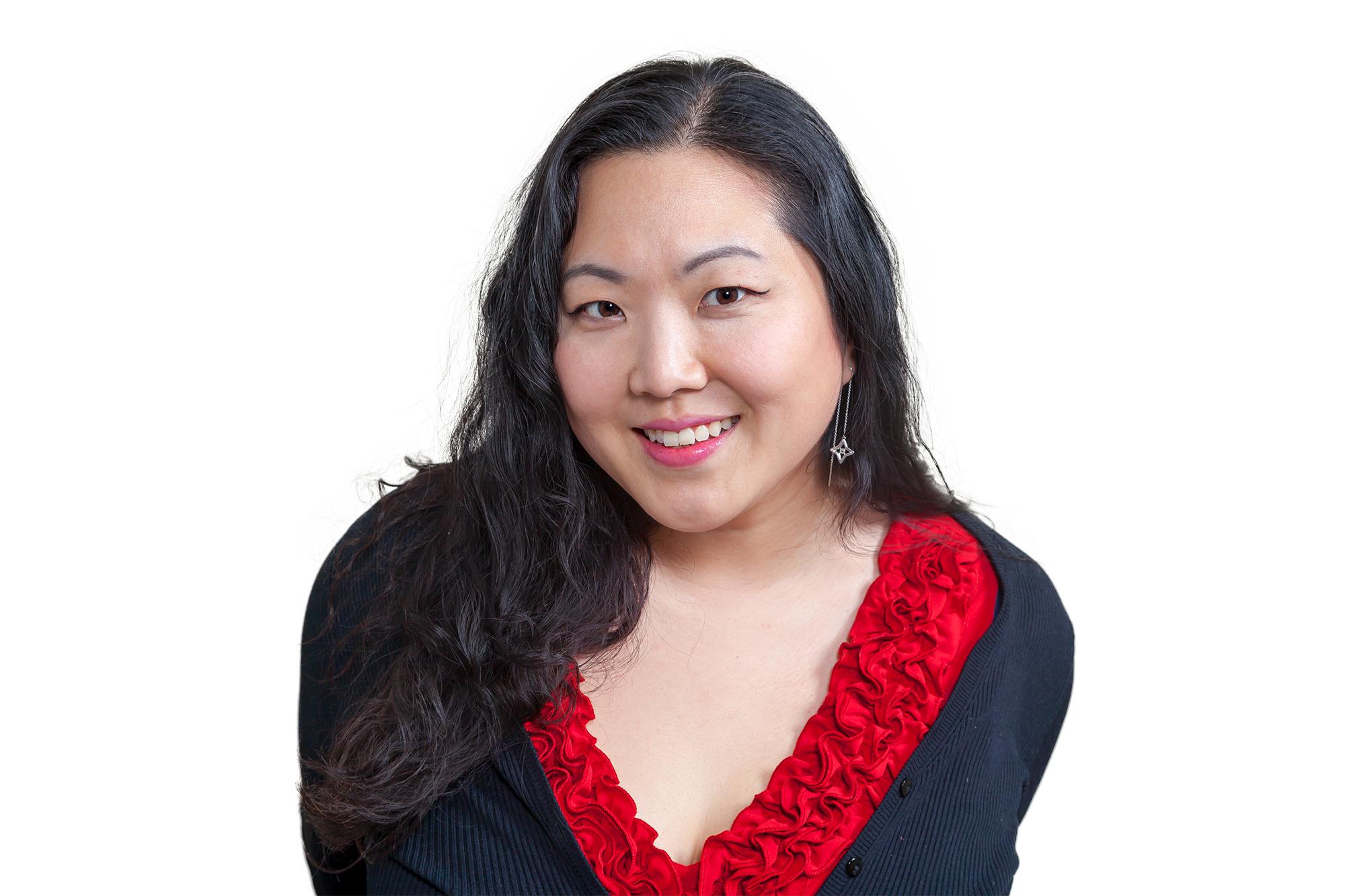
Yvette Wohn, assistant professor at New Jersey Institute of Technology, examines how social media and mobile technologies are used for social support, which includes emotional, informational and financial support — managing both personal and professional relationships. Wohn‘s research area is in human-computer interaction (HCI) and computer-mediated communication. She studies the role of algorithms and social interactions in livestreaming, esports and social media and how they influence well-being. Wohn is conducting research on how physical and social space influences the well-being and productivity of people living or working in enclosed spaces. Some of her experiments look at the effects of simulated nature via digital windows. As Wohn notes, "Seeing nature is important to maintain well-being. In a nutshell, seeing nature on a big screen, even if you know it is fake, can help elevate mood." Wohn is also the principal investigator of two NSF-funded projects examining the role of content moderators on social media, whose role is to keep online spaces positive and factual. Wohn is available to speak with media on topics related to how people use different technologies and social media to connect during these times. To request an interview, click on the button below.


Dual dynamic of social media: connecting and stressing out
If social media platforms connect us, particularly during periods of isolation, they can also distress us and the people who moderate their streams of questionable content. In short, they appeal to our best and worst selves. Understanding that dual dynamic and its nuances across Facebook, Twitter, Reddit, Twitch and Clubhouse is NJIT’s Yvette Wohn, a behavioral scientist who researches how online abuse impacts mental health. Ultimately, Wohn aims to develop tools that combat bullying on the web. Explaining the problem, she says: “Some people simply don’t know what’s socially appropriate. What people don’t realize is that what people say online has a direct consequence offline. What happens online, doesn’t stay online.” Source: Yvette Wohn on Curating Safe Spaces Online To interview Wohn, whose research is backed by the National Science Foundation, simply click on the button below.