
Experts Matter. Find Yours.
Connect for media, speaking, professional opportunities & more.
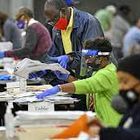
Fourth time a charm? Election audits are getting political in the Peach State
If at first you don’t succeed – try and try again. And Republicans did in Georgia, demanding multiple audits of last November’s presidential election, looking under every ballot box for evidence of election fraud, tampering or other shenanigans that could be used to put the results in doubt. So far, nothing has been found. But that’s not stopping those with an eye on a political future from backing down. In fact, election audits are now a hot topic for those looking to occupy the governor’s mansion in Atlanta. In a bid to bolster former President Donald Trump's lies about widespread fraud in the 2020 election, Trump's Republican allies are now seeking Arizona-style audits in other swing states – including Georgia, where the former President's false claims have set off an intraparty war. A day after Trump said in a statement that Georgia should follow Arizona's lead, former Georgia state Rep. Vernon Jones, a Trump supporter who is challenging incumbent Republican Gov. Brian Kemp in next year's GOP primary, proposed an audit Wednesday. "Georgians still have questions about irregularities found in the 2020 election and they deserve answers," he said in a statement. "We must get to the bottom of all of this and other irregularities to restore trust in our election process. If Mr. Kemp refuses to demand an audit, then I will when I am elected to replace him." Jones' characterization of the election was false: Georgia has already tallied the results to confirm Biden's victory there three times and conducted an audit of absentee ballot signatures. The state found no evidence of fraud, and Kemp and other Republican state officials have backed the findings. May 19 – CNN “This call for yet another ballot review is nothing but political theater," says Dr. Gregg R. Murray, professor of political science at Augusta University. "It’s extremely unlikely it would uncover anything that would overturn the 2020 election or substantial irregularities. It would be a huge waste of taxpayer money.” Despite the findings, this is an issue that won’t likely be going away soon, and if you are covering this topic, then let our expert help with your story. Dr. Gregg R. Murray, is available to talk about the election audit and what it might mean for voters in Georgia and across the country. Murray’s research focuses on political behavior and psychology with specific interests in voter mobilization and turnout. He is also executive director of the Association for Politics and the Life Sciences. Simply click on Murray's icon to arrange an interview today.


#SaveThePandas… and Save the Snakes, Too!
Every third Friday in May, the United States celebrates Endangered Species Day—a day set aside to draw attention to and share the importance of wildlife conservation and restoration efforts for all imperiled species. Aaron Bauer, PhD, a professor of biology at Villanova University, holds the record for identifying and naming the most species of gecko found on the planet. Dr. Bauer reinforces the importance of the “national day,” pointing out that, “it is too easy for most people to forget about endangered species, especially when the state of human affairs is so pressing. Having a day to focus society on this particular problem is a good reminder that we are not alone on Earth.” Dr. Bauer wants to use Endangered Species Day in 2021 to bring attention to species that people might not realize are endangered. He observes that “the tendency is for people to focus on the big charismatic organisms, like tigers, gorillas and whales. However, there are endangered species in every group of animals, plants and even fungi. These do not get enough attention because they lack the mass appeal of pandas and parrots, but raising awareness in general can help by generating support for agencies and projects devoted more broadly to conservation.” So, which animals need our care and attention this Endangered Species Day? “Scientists have become aware that amphibians, like frogs and salamanders, are in decline around the world,” says Bauer. “More than 30 years of research has demonstrated widespread declines, and today more than a third of their 7,000-plus species are threatened or endangered. Many more are too poorly known to even assess their conservation status. Many reptiles are likely in the same situation.” According to Dr. Bauer, some animals are so under-studied, scientists can’t be sure which species are becoming endangered. “We know that many turtles and nearly all crocodilians are endangered, but we don’t know much about the situation for lizards and snakes, which make up the vast majority of the 11,000-plus reptile species (especially because snakes are much maligned in popular culture).” So, how, with only one day of focus, can the average person make a difference for endangered species? Dr. Bauer recommends “starting them young.” He calls activities at zoos and other public outreach organizations “a wise investment of energy as kids that grow up knowing and caring about environmental issues, including endangered species, are likely to continue to care and to pass on their views in adulthood.” “Endangered Species Day is a reminder that a large percentage of the world’s biota is imperiled and, as stewards of the planet, it is our responsibility to try to improve their situation,” said Dr. Bauer. “Especially since we are mostly responsible for their current plight.”


Local neighborhood conditions are important for children’s brain development
Growing up in a disadvantaged neighborhood is related to children’s brain structure and neurocognitive performance, according to a study published May 3, 2021 in the journal JAMA Pediatrics. It is associated with the brain’s cortical structure and volume as well as how children pay attention, their executive function, reading, flexible thinking, and other tasks that support learning. These differences could potentially contribute to other inequities during adolescence as well as later in life for these children, though there is no evidence that such neighborhood-related differences are fixed or immutable. Children’s brains exhibit plasticity, meaning that they can change and grow in response to learning and experience. The study’s findings shine a spotlight on the larger population trend and do not serve as a predictor of any individual child’s outcome. “This points to the importance of investing in policies and programs that help improve local neighborhoods and to support and empower communities to promote children’s neurodevelopment and long-term health and well-being,” said Daniel A. Hackman, assistant professor at the USC Suzanne Dworak-Peck School of Social Work and lead author of the study. Researchers from the USC Suzanne Dworak-Peck School of Social Work and the Keck School of Medicine of USC used data from the Adolescent Brain and Cognitive Development (ABCD) Study, collected from October 2016 – 2018. The ABCD Study is the largest long-term study of brain development and child health ever conducted in the United States. “Disadvantaged neighborhoods may lack quality health services, access to nutritional foods, and well-maintained parks and rec facilities,” said Megan Herting, assistant professor in the department of preventive medicine at the Keck School of Medicine at USC and senior author of the study. “They may also expose residents to more pollutants or social stressors.” In addition to Hackman and Herting, study authors include Dora Cserbik, Jiu-Chiuan Chen, and Rob McConnell of the department of preventive medicine at Keck School of Medicine; Bita Minaravesh of the USC Dornsife Spatial Sciences Institute; and Kiros Berhane of the Department of Biostatistics at Columbia University Mailman School of Public Health. Neighborhood disadvantage and the brain The study participants were 8,598 nine- to eleven-year-old children in 21 sites from the ABCD Study, and includes youth from diverse backgrounds, family income levels and neighborhood environments. Using this ABCD data, the multidisciplinary team of researchers tested whether neighborhood disadvantage is associated with neurocognition and brain structure through the National Institute of Health Toolbox Cognition Battery and magnetic resonance imaging (MRI) scans. Neurocognition refers to specific cognitive functions related to particular neural systems, such as executive function, memory, problem-solving and perception. Executive function is the set of cognitive functions that allows people to select behaviors, make efforts to regulate or control their behavior or thinking in given situations, and to focus on goals despite distractions. Brain structure refers to global and regional measures of the brain’s cortex and subcortex, such as volume and surface area. The researchers found that neighborhood disadvantage was associated with worse neurocognitive performance on nearly all tasks and smaller cortical surface area, as well as cortical volumes and subcortical volumes, across the whole brain. The associations remain after adjusting for family socioeconomic status and largely remain after adjusting for perceptions of neighborhood safety. “Our findings aren't specific to the child's home life, as we accounted for socioeconomic factors at each child's home,” Herting said. “But the research suggests neighborhoods may have different levels of social and educational resources and opportunities that can impact a child's neurodevelopment.” Disadvantaged neighborhoods are those in which people generally have lower levels of income, employment and education. Growing up in these conditions can be stressful for children and adults. However, comparing disadvantaged neighborhoods across the country is challenging to social work researchers, who understand that when looking at national samples they may pick up regional differences for which they must account. Neighborhood similarities and differences The impressive scope and scale of the ABCD study made it possible for these researchers to delve into rich local data that enabled them to understand the similarities and differences of disadvantaged neighborhoods within the context of their cities. Hackman, whose research interests include understanding neighborhoods and the context that children and adolescents grow up in, wanted to be able to look at the research question from both the national perspective as well as the local perspective. “This is the first large, national study of neurodevelopment to determine that the role of neighborhood disadvantage is similar across all regions of the country, and we found that what mattered most were the local differences in neighborhood disadvantage within each city, rather than how cities differ from each other overall” Hackman said. “This highlights the broad relevance of neighborhood disadvantage, and the importance of unique local conditions. His interest was even more piqued when he saw a clear narrative emerge from the data. “The consistency of the data was so compelling,” Hackman said. Though disadvantaged neighborhoods may vary from city to city, the researchers found the associations were largely consistent across 21 metropolitan areas within the U.S. For policymakers, a takeaway is that neighborhoods were related to these important aspects of child development everywhere, and that though each city is different, the unique local conditions are important to address. In addition, the global relationship between neighborhood and overall brain structure and neurocognitive performance suggest that intervention approaches may be most successful if they are comprehensive and focused on improving children’s contexts, rather than narrowly targeted to the development of particular cognitive skills. “This research is important as it not only highlights that neighborhoods matter, but it also suggests that promoting neighborhood equity based on the unique local conditions within cities could be important for the short and longer-term health and overall development of children and adolescents,” Hackman said. According to the study, although the magnitudes of association between disadvantaged neighborhoods and neurocognition and brain structure are statistically small, they are potentially meaningful. One reason is because even small effects may have large consequences as they accumulate over time at a population level. Another reason is because these are comparable to, but smaller, than effect sizes for family socioeconomic status in these models. “There is also considerable evidence of resilience,” Hackman noted, as the authors caution that these associations are not predictive at the individual level. In particular, many youth from disadvantaged neighborhoods outperform their peers from more affluent neighborhoods, and also have larger cortical surface area and subcortical volume as well. In other words, living in a disadvantaged neighborhood is not deterministic and does not automatically predict any pattern of neurocognition and brain structure for any individual. Instead, the association uncovered by these researchers points to more reasons why improvements to neighborhoods can bring positive change. “Future research is needed to determine if our findings are, in fact, attributable to differences in community-based resources or differences in quality of schooling,” Herting said. “However, our findings do add to a growing literature suggesting the importance of neighborhoods and how they may contribute to place-based disparities in health and well-being in America.”


As America tries to come to grips with and find lasting solutions to issues of systemic racism, new research shows staggering hiring trends that negatively impact Black Americans when they enter the workplace and as they near retirement age. Sociologist and UConn expert Dr. Matthew Hughey discussed the findings with the Washington Post: "A new experiment at Texas A&M University helps illustrate the surprising pattern, which has not been widely studied but tends to line up with Labor Department data reviewed by The Washington Post: Black workers are typically less likely to be hired than White workers with the same experience, but the gap closes in middle age. When he saw the chart above, University of Connecticut sociologist Matthew Hughey was struck by the steadiness of the trend for Whites, compared to the volatile swoop of the line representing Black workers. It shows hiring managers tend to accept White applicants at face value while subconsciously scrutinizing Black ones, he said. “Black people have always been more objectified, scrutinized and surveilled than White people,” Hughey said. “Every little thing is nitpicked on a résumé or explained as a possible red flag.” The larger pattern is common in government data, but the chart comes from a new analysis in the Journal of Policy and Management from Texas A&M economist Joanna Lahey, a widely cited authority on discrimination in the labor market. Lahey noticed the counterintuitive pattern of age discrimination against Black workers when she and her collaborator, Douglas Oxley, asked about 150 business and MBA students to evaluate about 40 résumés each. About a quarter of the students had previously screened résumés in the real world, and 11 percent had experience in human resources." May 14, 2021 - Washington Post If you are a journalist looking to cover this subject, let us help. Professor Matthew Hughey is a scholar of racism and racial inequality in identity formation, organizations, media, politics, science, religion, and public advocacy. If you are looking to book an interview, simply click on Dr. Hughey’s icon today.


Scarcity expert on gas shortage and panic buying
Kelly Goldsmith, associate professor of marketing, is available for commentary on the gasoline shortage and panic buying/hoarding. Goldsmith is a former Survivor contestant, which influenced her research into consumer behavior in the wake of scarcity. She is an expert in how people think and act when faced with limited availability of what they need and how they perceive competition when it comes to purchasing items that are in limited supply. She can discuss: The types of consumers that tend to buy up and hoard all available stock, therefore leaving none for others How and why consumers become selfish in a situation where access to desired goods is limited Making a plan when it comes to purchasing what you need and how to keep your cool in the demanding, stressful environment



Do Wholesalers Discriminate Against AI in Procurement Practices?
If we deploy automation without thinking strategically about intelligence, too, isn’t AI likely to backfire on us? Airplane manufacturer, Boeing, made headlines in 2019 for all the wrong reasons. Its 737 Max aircraft was indefinitely grounded after two fatal crashes in the space of just six months had claimed the lives of 346 people. Investigation into the accidents revealed that updates to an automated system – the Maneuvering Characteristics Augmentation System, known as MACS – had failed to integrate one of two intelligent sensors, meaning the system lacked a critical security backstop. As the aircrafts switched into autopilot mode shortly after takeoff, the error sent them both into fatal nosedives within minutes. These tragedies highlight an issue with automation that needs more focused attention says Goizueta’s Ruomeng Cui, assistant professor of information systems and operation management. And it’s this: if we deploy automation without thinking strategically about intelligence too, is AI likely to backfire on us? Cui is an expert in operations strategies in digital retail and platform markets. To better understand the challenges surrounding automation and intelligence in operational processes, she teamed with Shichen Zhang of Tianjin University and Rutgers’ Meng Li to explore how AI brings value in the procurement space. With Deloitte reporting that almost 45% of Chief Procurement Officers globally are now using, piloting, or planning to integrate AI into their operations, these insights should provide interesting food for thought, says Cui. “AI isn’t just about being quicker, it’s also about being smarter. It can deliver automation but can also deliver predictive intelligence; and while these two dimensions might be correlated, one doesn’t necessarily imply the other – as the Boeing example demonstrates,” says Cui. From the tech perspective, there’s a lot of buzz about how AI is helping to drive decision-making, she adds. But there is still plenty that we don’t know about the operational dimensions to using artificial intelligence. “With international procurement, you’re basically talking about big retailers going in and requesting prices for goods or products from wholesale suppliers. And that’s a process that could, in theory, lend itself very well to AI, since it can automate simple (and tedious) tasks over and over again. So there’s a significant potential gain in companies outsourcing this kind of task to the machine.” But although the potential might be clear, Cui and her colleagues believe that simply automating these processes might not in fact yield optimal results; and could in fact work against buyers by encouraging suppliers to quote higher prices than they might in personalized, human transactions. A full article detailing Cui’s research is attached, within it – several theories were explored. Who Comes Out Ahead on Price? Humans or AI Chat Bots? “We speculated about the possibility of wholesalers discriminating against the AI,” says Cui. “Specifically, we wanted to know if the sellers would quote higher prices to AI bots than they would to human buyers, because at the end of the day these bots are just machines; they don’t bring the authenticity or sincerity of human beings.” When Machines are Smart, Discounts Rise “When wholesalers are just asked over and over for their prices, they know that they are dealing with a machine and the intuition is that the machine is not intelligent, that it doesn’t have market expertise, and that it isn’t capable of decision-making. There’s no incentive to build relationships or to engage in any kind of negotiating dynamic here.” The topic is fascinating, and given the increase of AI in the workplace – a timely one. And, if you are a journalist looking to cover this research or speak with Professor Ciu about the subjects of telework and productivity, simply click on her icon now to arrange an interview today.



Maple Report - May 2021 Edition
May 2021 Welcome to our second edition of The Maple Report. This quarterly newsletter is designed to keep Canadian technology executives updated on the latest trends, market research, events and valuable resources from IDC Canada's expert analysts. In this edition, we want to show you how IDC can help Canadian executives like yourself make important technology decisions. We also want to invite you to our upcoming events and give you a sample of some of our thought leadership through our IDC blog. We hope you find these insights practical to help propel your business into a more resilient digital enterprise. Trust IDC to be your research partner in 2021. We welcome your thoughts about this newsletter. Please send them to askIDC@idccanada.com. HOW CAN IDC HELP YOU? IDC PeerScapes – Helping You Find Technology Best Practices An IDC PeerScape minimizes your missteps by identifying peer business practices worthy of emulating or avoiding, increasing the likelihood of positive impacts from a technology initiative. To assist your organization finding technology best practices, IDC publishes dozens of IDC PeerScape reports. Similar to IDC MarketScapes that we explored in the last edition of The Maple Report, IDC PeerScapes sit on the Engage part of our IDC DecisionScape framework , and include reports to help you launch, evaluate and optimize new technology initiatives. The report outlines key challenges your peers encountered when implementing a specific technology initiative, as well as key insights your peers learned along the way. IDC PeerScapes help you to increase the likelihood of a tech initiative’s success by giving you insight into best practices (and practices to avoid) through specific use case examples implemented by your peers who have already led a similar technology initiative. These documents can help your organization recreate successful implementations of technology and help you mitigate risk. To help you understand the value of these reports, we have included here our IDC PeerScape: Practices for Including Cloud Services into Outsourcing Contracts in Canada report. In it, you'll find Best practices from three areas of cloud adoption are discussed in the document: security, cost management, and skills gap. Companies created security checklists to mitigate security risks and retain control of security when working with external vendors. They also filled the skills gap and minimized cost unpredictability by collaborating with their outsourcing service providers. VIRTUAL EVENTS FOR IT EXECUTIVES IDC Fireside Chat | Content Cloud as a Critical Component of Virtual Work May 19, 2021 | 2:00 pm ET Does your organization have a holistic view of your customers when they contact you for assistance? Are your security protocols on your content systems up to snuff with your virtual workforce? Is your content customized for the different employee roles? If any of these content challenges sound familiar to your organization, then you need to attend this webinar to provide a seamless content experience for your customers and your employees. On our next webinar for Canadian technology executives on May 19th at 2pm ET, we'll hear how ATB Financial's Barry Hensch conquered multiple content management challenges to provide seamless experiences in its virtual workplace during a fireside chat with IDC's Megha Kumar. Walk away with a better understanding of what Cloud Content Management entails, why it's important to manage your content effectively and how you can leverage it to prosper in the digital future. Confirmed Speakers: Megha Kumar: Director, Software & Cloud Services, IDC Canada Barry Hensch: SVP & Head of Technology Enablement, ATB Financial Varun Parmar: SVP & Chief Product Officer, Box IDC CIO Panel Series | Accelerate & Simplify Your Canadian Digital Transformation Journey June 16, 2021 | 2:00pm ET Our IDC Canada research indicates that many Canadian organizations are not where they need to be yet to thrive in the digital economy. If you think your organization could benefit from simplifying and accelerating your digital transformation efforts, then you need to attend this upcoming webinar on June 16 at 2pm ET. Join this virtual webinar to understand where Canadian organizations are on their respective digital transformation journeys, what types of projects were accelerated as a result of the pandemic and what impact it had on Canadian industries. Then hear from our all-Canadian CIO panel on how they've stickhandled the impact of the pandemic at their organizations to set themselves up for future success in the digital economy. Learn what you need from your peers to get your organization moving in the right direction. Confirmed Speakers: Tony Olvet: Group VP, Research, IDC Canada Nigel Wallis: Research VP, IoT & Industries, IDC Canada Catherine Chick: SVP, IT, Canada Goose Pamela Pelletier: Canada Country Manager, Dell Technologies IDC THOUGHT LEADERSHIP HIGHLIGHTS DID YOU KNOW? You Can Get Actionable Research, KPIs, Benchmarks & Best Practices with IDC IDC Canada's IT Executive Programs (IEP) make it easy to access the relevant technology research and advice you need to make data-driven decisions as you lead your organization into the digital future. Get in touch today to learn more or visit our IT Executive Portal to learn more. IT EXECUTIVE RESOURCES Set Your Future IT Roadmap with IDC IT leaders need to rethink what is critical and evaluate where the organization stands as they manage complex changes. For strategies on transforming your organization's IT, read the new eBook from IDC: Future IT: Operating System of the Future Enterprise.


Research Reveals Uptick in Hostility toward Black Americans during Tough Economic Times
Goizueta Experts Encourage Business Leaders to Double Down on Diversity, Equity, and Inclusion Efforts. Do recessions stoke racial tension? When there’s an economic downturn, are White Americans more likely to feel distrust or even animosity towards their Black peers? Researchers have long wondered about the broader societal impact of financial recessions, but until recently their effects on race relations have been unclear. In a recent paper, Emily Bianchi, associate professor of organization and management, Erika Hall, assistant professor of organization and management, and Sarah Lee 19PhD, assistant professor of management, Dominican University of California and visiting professor of organizational behavior, Pepperdine University, find that there is indeed a subtle uptick in hostility towards Black Americans during bad economic times. Their paper, Reexamining the Link Between Economic Downturns and Racial Antipathy, examines publicly available data on attitudes, political trends, and behavioral patterns in the U.S. Sarah Lee 19PhD While businesses tend to cut diversity, equity, and inclusion efforts during economic downturns, Bianchi and Hall underscore that these efforts may be even more critical during these times. To study this phenomenon, the researchers analyzed more than 20 years of data from the American National Election Survey (ANES), a biannual survey capturing political affiliations and perceptions of political candidates from 1964 until 2012. They analyzed how White Americans’ attitudes towards Blacks changed depending on the state of the economy and found that in worse economic times, Whites felt more negatively about Blacks. As Bianchi notes: “we were able to analyze the responses of more than 30,000 individuals who identified as White. And we do find that for decades – between the 1960s and the first part of the 21 century – White Americans feel less warmly about Black Americans during times of financial hardship.” Emily Bianchi, associate professor of organization and management In a second study, Bianchi, Hall, and Lee examined data from Project Implicit, a popular website that allows people to test their own implicit bias and also gauges racial attitudes. Again, the authors found that in worse economic times, White Americans held more negative implicit and explicit attitudes about race. In particular, during the Great Recession, they found that White’s attitudes towards Blacks became substantially more negative in states that were hard hit by the economic crisis compared to states in which the economic downturn was less severe. Having established that economic conditions affected fluctuations in attitudes towards race, the authors then examined whether these emotional shifts translated into actual behavioral outcomes. In other words, if Whites felt more negatively towards Blacks during recessions would this mean that Black professionals were less likely to be successful when the economy floundered? They tested this possibility by looking at two domains of public activity: record sales and voting patterns. First, they examined data from the Billboard Top 10 American songs between 1980 and 2014 and recorded the race of each musician who secured a Billboard hit. They found that in bad economic years, Black musicians were 90% less likely to have a top 10 hit, presumably because White consumers (by far the biggest consumer group during this period) were less likely to support them. Next, they examined the results of more than 8000 elections to the U.S. House of Representatives over the same period. They found that in bad economic times, Black politicians were 21% less likely to win elections. Interestingly, the converse also appears to be true. In good times, Black musicians and politicians fared much better in the polls and the charts – pointing to a certain fluidity in attitudes, says Bianchi. “Across these very different domains, studies, and sample sizes, we find the same consistent pattern: when times are tough, White Americans feel more animosity towards Black Americans and are less likely to support Black musicians or politicians. When things pick up, White Americans have more positive attitudes towards Black Americans and are more likely to endorse Black musicians and Black candidates.” The authors attribute these effects to innate human feelings of fear in the face of threat. Economic threats or shocks tend to evoke uncertainty and fear about what is to come. This translates into greater distrust of others, particularly those perceived as different in some way. And it’s an effect, they argue, that should be very much on the radar of businesses and decision-makers. Erika Hall, assistant professor of organization and management The research cites, “Anecdotally, we know that when times are good, organizations will tend to prioritize their efforts in the area of diversity and inclusion. But while this is critically important at all times, our research suggest that these efforts are probably even more important when times are tough.” All of this points to a need to attend to these issues more acutely when there’s a downturn, says Bianchi. And she cautions that this is likely to be counterintuitive to most leaders, who are likely more inclined to sideline diversity efforts when the economy slides. In terms of the current debate around race relations in the US, however, Bianchi stresses that the economic dimension is just one piece of a “very complicated puzzle.” “What we have seen and are seeing in 2020 and 2021 is a confluence of many major factors: a pandemic that has put a lot of people out of work, and that has put everyone on edge, punctuated by some horrific and well documented instances of violence against Black citizens,” Bianchi says. “So many of these things are in the mixing pot, that it’s hard to pinpoint one specific cause behind the current race crisis in the U.S. So many things coming together at once that have put us in this moment.” Only time will tell how this might play out compared to what we saw in the 80s and 90s, which were economic fluctuations rather than a complete drop off a cliff, she says. It will be more difficult to tease apart the effect of the economy versus the effect of the pandemic versus the effect of police violence on America’s race relations – a situation that Bianchi describes as a “cauldron of mess.” That said, she stresses that for business leaders, now is a good time to double down on efforts to drive diversity and inclusion. “I’d suggest leaders be especially mindful that at times of economic stress such as we are currently experiencing, there is a very real danger of heightened racial animosity.” We’ve attached a full article with even more advice and helpful information from our experts – but if you are looking to learn more or cover this topic, we can help. All of our faculty are available to speak with media, simply click on either expert’s icon now – to book an interview today.


Kelley School expert who studies causes and effects of recalls available to discuss Peloton
Peloton Interactive Inc. on May 5 announced that it is recalling its treadmills in a statement from CEO John Foley who also apologized for the company’s initial refusal to comply with federal safety regulators’ prior request for this action. George Ball, assistant professor of operations and decision technologies and Weimer Faculty Fellow at the Indiana University Kelley School of Business, studies the causes and effects of product recalls. Below are comments from Ball. He can be reached at gpball@indiana.edu. “Recall decisions like this are very difficult for managers to make, especially the ones that are high profile and associated with consumer injury. Managers have to balance the firm financial health with consumer safety. Thus, this is a rich area of research. The research that my colleagues and I undertake in this field deal both with the regulator and the firm. My comments will attempt to address both perspectives. “I will start with the regulator. I am currently involved in a research project with two colleagues that is specifically critiquing the Consumer Product Safety Commission for situations very similar to this Peloton recall. There are three main regulators in the US that oversee product quality and in particular recalls: the FDA, NHTSA and the CPSC. “Of those, CPSC is the least proactive and in my view, least successful in properly managing product recalls and their timeliness. This is because there are two main ways in which a firm can push firms to recall; they can force them to, or they can work with the firm management to help encourage them, or nudge them, to recall. The FDA is very good at influencing firms while NHTSA is quite good at mandating recalls. CPSC does neither well. “In particular, the FDA frequently chooses to use their relationships with senior quality executives at firms to nudge them to recall when FDA feels it may be necessary and the firm has not yet acted upon the quality problem. Conversely, NHTSA mandates approximately 20 to 30 percent of auto recalls, such that they choose to force instead of nudge. However, in both cases, while neither industry (medical products and autos) are perfect when it comes to recall timeliness, and both have suffered unfortunate well-known examples of firms dragging their feet in the recall decision, both have a well-developed approach. “CPSC mandates practically no recalls and they do not, from my research, have strong relationships with firm executives that can help them nudge firms to make the quick recall decision. Thus, this Peloton example is one of many in which consumer product firms may take too long to recall. “From the firm perspective. There are several potential red flags that may indicate the firm took too long. The longer a consumer product industry CEO has been in their role, the slower they are to make recall decisions. This is because the longer a CEO is in the role, the less open they are to taking responsibility for such high-profile mistakes. Interestingly, a new CEO, such as one who has been in their role for two to three years, is much more likely to recall a faulty product. “The CEO of Peloton definitely falls into the category of a fairly long-tenured CEO who has his reputation tied closely to the firm’s success. Secondly, the more stock a CEO owns in their firm, the slower they are to make the recall decision, because they are trying to protect their financial welfare. The CEO of Peloton appears to have a significant fortune at stake in Peloton stock, which would be consistent with our research. The more stock a CEO owns, the slower the firm take to recall defective products.”


Starter vape packs to be handed out in hospitals
A new trial from the University of East Anglia will see smokers attending hospital emergency departments given e-cigarette starter packs to help them quit. The initiative comes as a Cochrane Review - the international gold standard for high quality, trusted health information – about vaping is updated today. The review, led by the University of Oxford and involving the UEA team, shows how nicotine electronic cigarettes could increase the number of people who stop smoking compared to nicotine replacement therapy – such as chewing gum and patches – and compared to electronic cigarettes that do not contain nicotine. The new trial will offer stop smoking advice and an e-cigarette ‘starter pack’ to patients attending hospital emergency departments for any reason, to try to encourage and support them to quit smoking – even for those who might not have considered it before. The new trial is funded by the National Institute for Health Research (NIHR) and will be run by the Norwich Clinical Trials Unit at UEA. Prof Caitlin Notley, from UEA’s Norwich Medical School, said; “Many people who smoke want to quit, but find it difficult to succeed in the long term. “Electronic cigarettes mimic the experience of cigarette smoking because they are hand-held and generate a smoke-like vapour when used. They can be an attractive option for helping people switch from smoking, even if they have tried and failed in the past. “We know that they are much less harmful than smoking tobacco, and that they have been shown to help smokers quit. Trial co-lead Dr Ian Pope, also from UEA’s Norwich Medical School and an emergency physician, said: “Emergency Departments in England see over 24 million people each year of whom around a quarter are current smokers. “Attending the Emergency Department offers a valuable opportunity for people to be supported to quit smoking, which will improve their chances of recovery from whatever has brought them to hospital, and also prevent future illness.” The study will run over 30 months across five hospitals in England and Scotland – at the Norfolk and Norwich University Hospital, the Royal London Hospital and Homerton University Hospital in London, Leicester Royal Infirmary and the Royal Infirmary of Edinburgh. Smokers who agree to take part will be randomly assigned to receive either smoking advice during their emergency department wait, an e-cigarette starter pack and referral to local stop smoking services, or just written information about locally available stop smoking services. Both groups of patients will be asked if they are still smoking one, three and six months after they attended hospital. The research team hope to eventually recruit around 1,000 smokers to the trial. Prof Notley said: “We’ll be looking at the number of people who successfully quit smoking across both groups, to see which intervention works best. We’ll also work out how much it would cost to roll the scheme out nationally,” she added. ‘Electronic cigarettes for smoking cessation (Review)’ is published by the Cochrane Library on April 29, 2021.
