
Experts Matter. Find Yours.
Connect for media, speaking, professional opportunities & more.

The Storm After the Storm: Scam Contractors Who Prey on Those Suffering After a Natural Disaster
‘The key is to get a lawyer to look at the contract before you sign it,’ Baylor legal expert says WACO, Texas (Oct. 11, 2018) – Following a natural disaster or strong storm like Hurricane Michael, there is usually a second wave of potential destruction – scam artists looking to line their pockets. “After any major weather-related incident, insurance adjusters and contractors swarm the affected area and, unfortunately, some are looking to take advantage of those in distress,” said Stephen Rispoli, L.L.M, J.D., assistant dean of student affairs and pro bono programs at Baylor Law School. As an attorney, he works with victims of insurance scams. Rispoli said most contractors are legitimate businesspeople helping neighbors rebuild. But there are the unscrupulous ones whose practices inflict financial and emotional pain on people already suffering from storm damage. “The primary result of these scams is financial loss,” Rispoli said. “The homeowners may pay much, much more than they should have to fix the damage, sometimes having to pay multiple contractors for the same work. Sadly, in some cases, homeowners could even lose their homes.” In this Q&A, Rispoli shares some tips to help those reeling from storm damage identify and avoid scammers. Q: Who are the most common victims? A: The most common targets are those in distress following a major storm, the elderly and the disabled. Q: How will scam artists approach a potential victim? A: Usually, contractors will approach homeowners they know have been affected. This happens as simply as the contractor driving through neighborhoods looking for damaged homes. Let’s say, for example, they see a damaged roof with a homeowner standing outside looking at it. They’ll quickly pull over and offer to tarp the roof to prevent damage. The homeowner, already distressed by the storm and the damage to the house, agrees. Once the tarp is on, the contractor then starts asking questions about insurance coverage, which insurance company has insured the house, and helpfully offering his or her opinion on how much it will cost to fix the damage. Unscrupulous contractors will try to take advantage of this situation by pressing the homeowner to sign a contract with them. I have even seen cases where the contractor left all the blanks in the form contract unfilled, including the work to be done and the price, saying things like, “Don’t worry about that, we’ll talk to your insurance company and get it all taken care of, just sign it.” Once the unscrupulous contractor has a signed contract, they can fill in the blanks at their leisure. At this point, they are in total control – they know how much the insurance company will pay, and they can try to squeeze the homeowner for more money by charging too much or with add-ons that may or may not be necessary. Q: What are some of the potential losses victims can suffer? A: Financially, victims could lose money by paying more – sometimes much more – than they should for repairs. Or, in extreme cases, they could even lose their homes. That could happen if the homeowner signs a contract with the contractor that contains a mechanic’s or materialman’s lien provision. Under these provisions, contractors can file a lien with the county for work done on the house to ensure payment. If the homeowner does not pay the contractor the amount owed under the contract, the contractor can seek to foreclose on the house to recover the amount owed. Q: What about dealing with the insurance company? A: It’s important that you cooperate with your insurance company and your adjustor. Call your insurance company as soon as you can. Waiting to file a claim may make the process take longer or complicate matters. You should be responsive to their requests, but don’t be afraid to ask questions if you have them. Be sure to take photographs of any damage or evidence of the storm if it’s safe to do so. After your initial conversation with your insurance company, the company will send an adjustor out and will give you a quote. However, after you’ve had two or three contractors come out and give you estimates, if the adjustor’s quote looks too low, don’t be afraid to ask for another adjustor to come out and give you a quote. You should feel comfortable with the process as you move forward. Q: Is it illegal or unethical for contractors to file liens? A: It is not necessarily unscrupulous for contractors to include a mechanic’s or materialman’s lien provision in the contract. Generally, creditors cannot foreclose on a person’s homestead in Texas. The purpose of a mechanic’s or materialman’s lien provision is to protect the contractor should the homeowner wrongfully refuse to pay for work done on a homestead. On large jobs where several thousands of dollars are at stake, the contractor may rightfully want to make sure that they can be paid for the job. Whether they are appropriate can only be decided on a case-by-case basis. Q: Are there red flags people should look for when presented with a contract? A: Do not sign a contract you are not comfortable with. There are several red flags to look for: pressure to sign a contract, giving you little time to think about it, refusing to let you take the contract to a lawyer, and asking to collect the money directly from the insurance company or pressuring you to give them the check from the insurance company. Q: How do people know if the repair costs presented to them are too high? A: Be sure to get written estimates from several (at least three) contractors. By getting three estimates, you’ll have a better idea of how much the repair should cost. Any estimates that are way lower or way higher than the others are good indications that something is off. If that happens, get another estimate from a different contractor. Do not be afraid to ask contractors to come give you an estimate. It is a normal part of their job, and good contractors will not mind taking the time to do it. Q: How do you know if a contractor is legitimate? A: Do your homework on the contractors. Ask for references and call them, and check with the Better Business Bureau. Be cautious when dealing with contractors who are not from your area, and extra cautious if they are not from Texas or will not provide local references. Q: Contractors often ask for upfront money, don’t they? A: Once the contract is signed and the work begins, be sure to control the money. The contractor will likely ask you to pay some of the contract up front so that they can begin to purchase materials and hire the crew to work on your repair. Try to pay as little as possible. You do not want to give them the bulk of the money up front, because then the incentive to get the job done quickly is diminished. After the job starts, ask the contractor to give you, in writing, progress reports when they ask for more money. Do not pay more than the progress report. Do not give the contractor the final payment until all the work is done. Q: If someone feels they’ve been taken advantage of, are there legal steps they can take? A: The key here is to get a lawyer to look at the contract before you sign it. Once the contract is signed, it will be difficult for a lawyer to undo the damage. If the contractor is trying to foreclose on the home using a mechanic’s or materialman’s lien, a lawyer may be able to save your home. There are several Texas Constitutional and statutory protections for homeowners. If the contractor did not strictly follow the steps necessary to properly attach a lien, a lawyer may be able to keep the foreclosure from happening. ABOUT BAYLOR UNIVERSITY Baylor University is a private Christian University and a nationally ranked research institution. The University provides a vibrant campus community for more than 17,000 students by blending interdisciplinary research with an international reputation for educational excellence and a faculty commitment to teaching and scholarship. Chartered in 1845 by the Republic of Texas through the efforts of Baptist pioneers, Baylor is the oldest continually operating University in Texas. Located in Waco, Baylor welcomes students from all 50 states and more than 80 countries to study a broad range of degrees among its 12 nationally recognized academic divisions. ABOUT BAYLOR LAW SCHOOL Established in 1857, Baylor Law was one of the first law schools in Texas and one of the first west of the Mississippi River. Today, the school has more than 7,400 living alumni. It is accredited by the American Bar Association and is a member of the Association of American Law Schools. Baylor Law has a record of producing outstanding lawyers, many of whom decide upon a career in public service. Baylor Law boasts two governors, members or former members of the U.S. House of Representatives and the U.S. Senate, two former directors of the FBI, U.S. ambassadors, federal judges, justices of the Texas Supreme Court and members of the Texas Legislature among its notable alumni. In its law specialties rankings, U.S. News & World Report ranked Baylor Law’s trial advocacy program as one of the top 5 in the nation. Baylor Law School also is ranked No. 50 in the magazine’s 2019 edition of “America’s Best Graduate Schools.” The National Jurist ranks Baylor Law as one of the “Best School for Practical Training” and No. 4 in the nation in its most recent “Best Law School Facilities” listing. The Business Insider places Baylor Law among the top 50 law schools in the nation. Baylor Law School received the 2015 American Bar Association Pro Bono Publico Award, making it only the third law school in the nation to be honored with the award since the award’s inception in 1984. Learn more at baylor.edu/law.

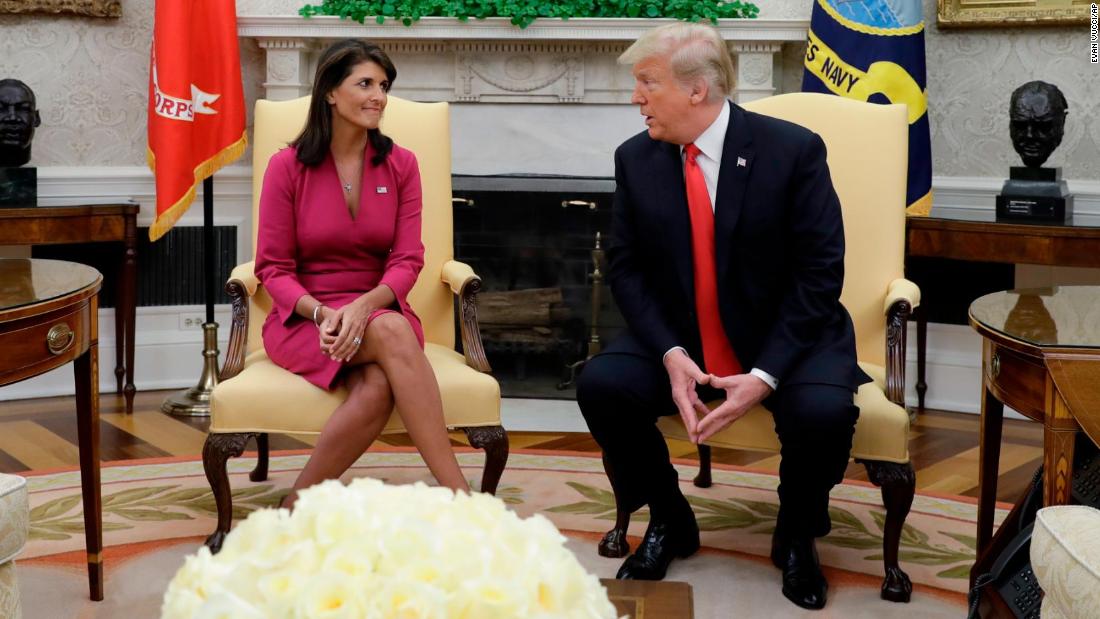
Ivanka to the United Nations? Ask our experts if it is possible!
One of the few shining stars is fading from the Washington skyline – and Nikki Haley’s departure as America’s Ambassador to the United Nations has the beltway speculating on her replacement. President Trump had eyebrows raised and tongues wagging when he trial-ballooned his daughter Ivanka as a suitable replacement. There’s also talk of Dina Powell, the well respected former Deputy National Security Advisor for Strategy to President Donald Trump. But who else is on the list and how key of a role is this as America reshapes its foreign policy. There are a lot of questions and a lot of educated guessing going on right now and that’s where the experts from Cedarville University can help. Dr. Glen Duerr’s expertise and research interests include nationalism and secession, comparative politics and international relations theory. Dr. Duerr is available to speak to media regarding this topic – simply click on his icon to arrange an interview.


With the legalization of cannabis less than two weeks away, CAA South Central Ontario (CAA SCO) is releasing new research showing that 1.9 million Ontario motorists have driven under the influence of cannabis, and over 735,000 have done so in the last three months. The statistically representative study, commissioned by CAA and conducted by Ipsos in July 2018, surveyed 1000 Ontarians over the age of 19 who own, lease or drive a vehicle and have a valid driver’s license. One of the big issues uncovered is the prevalence of ‘poly-users’, people who consume cannabis and alcohol or other mixed substances during the same time period. CAA’s research shows that 205,800 Ontario drivers admit to drinking alcohol and using cannabis before getting behind the wheel in the last 3 months. Those who have driven a car under the influence of cannabis and alcohol, tended to do so in social settings such as gatherings with family and friends and at bars/clubs/pubs. “Road safety needs to be prioritized as a leading issue as cannabis becomes legal in the coming weeks, but it’s clear that the focus can’t solely be on cannabis-impaired driving,” said Elliott Silverstein, manager, government relations, CAA SCO. “We need to take an integrated view of the dangerous behaviours that impact road safety in Ontario and focus public education and enforcement efforts accordingly.” Source:



Cities value cybersecurity but budget prevents investment
Although city governments increasingly rely on software programs to provide services such as 911 calls, service delivery and online bill payment, they may not have the proper cybersecurity policies in place to protect their systems, according to a recent nationwide survey of cities by Augusta University researchers. “We’re concerned first with the human factor of all issues,” said Dr. William Hatcher, director of Augusta University’s Master of Public Administration program and one of the survey’s authors. “Having trained employees is necessary to stop attacks or even make sure organizations are not tricked through phishing type schemes.” Almost 30 percent of surveyed cities have no formal cybersecurity policy, which would include rules on password creation, guidelines for employee training on computer security and procedures for reviewing the list of employees with access to sensitive systems, according to the survey. Of the cities that have a formal policy, the survey found that: - 17 percent don’t require in-depth background checks when employees are granted access to sensitive systems. - 18 percent don’t teach employees to recognize breaches. - 37 percent don’t provide ongoing training to employees on new computer security procedures. - 47 percent don’t review the list of employees who have security access on a regular basis. - 54 percent don’t work with an outside auditor to review their policies on an annual basis. The survey looked into cities nationwide with more than 10,000 people and received responses from 193 local governments. Based on the results of the survey, Hatcher says most cities understand the importance of cybersecurity but are not investing in vulnerable areas due to financial constraints. “Providing effective cybersecurity protection is expensive, and many municipalities have financial issues paying for the service,” Hatcher said. Hatcher ‘s research focuses on the connection between public administration and the development of local communities. Through his research, he tries to understand why public administration scholars and practitioners often have different views about the efficacy of certain administrative practices. His research has appeared in journals such as American Journal of Public Health, Journal of Public Affairs Education, Public Administration Quarterly and The Review of Regional Studies. Contact us to schedule an interview with Dr. Hatcher or learn more about his expertise. Source:


Latest push in fake news is pushing fake experts
During the 2016 presidential election, hundreds of fake sources used social media to spread fake news. Many of these posts were traced back to the Internet Research Agency, a Russian troll farm that used social networks to create divides among Americans and influence the election. This is known as cognitive hacking and is the real scandal of the 2016 election, said Dr. Craig Albert, director of the Master of Arts in Intelligence and Security Studies program and associate professor of political science at Katherine Reese Pamplin College of Arts, Humanities, and Social Sciences at Augusta University. Fake sources using social media to spread fake news are often able to reach a large audience who may never realize the stories are false, Albert said. In some instances, entire organizations and groups have been created under false pretenses and have had millions of social media followers. “When so many people see fake news on their newsfeeds, they become a product of their belief in a fake story,” Albert said. “So, a fake story controls their opinions.” Now, Russia is taking fake news a step farther. The newest trend is creating a false persona to push fake news on U.S. news organizations. “They will have an expert create a story, and they will create credentials and a website to give credibility to this individual,” Albert said. “When media outlets try to ascertain the credibility of a person they typically visit the individual’s website or look at their resume. It appears legitimate, so the source is validated, and news outlets run the story.” In many cases, though, these are false stories by individuals with fake credentials. Albert calls this source hacking. Dr. Albert is an expert on American politics and political philosophy. He has experience with all forms of local and national news organizations and is available to speak to media regarding cognitive and source hacking. Contact us to schedule an interview with Dr. Albert or to learn more about his expertise. Source:

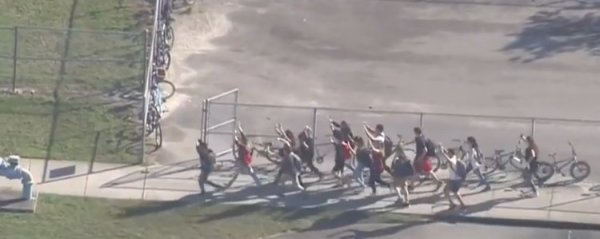
Community is key for those recovering from a mass shooting
The man accused of killing 17 people and injuring 14 more at Marjory Stoneman Douglas High School in February is set to appear in court Wednesday. Meanwhile, survivors of the mass shooting are still grappling with the aftermath of that day. Laura Wilson, co-author and editor of "The Wiley Handbook of the Psychology of Mass Shootings" and an assistant professor of psychology at the University of Mary Washington in Fredericksburg, recently talked about that struggle in an American Psychological Association article. "Simply by definition, mass shootings are more likely to trigger difficulties with beliefs that most of us have, including that we live in a just world and that if we make good decisions, we'll be safe," she is quoted as saying. According to the article: "The National Center for PTSD estimates that 28 percent of people who have witnessed a mass shooting develop post-traumatic stress disorder (PTSD) and about a third develop acute stress disorder. "Research also suggests that mass shooting survivors may be at greater risk for mental health difficulties compared with people who experience other types of trauma, such as natural disasters. A study led by former Northern Illinois University (NIU) graduate student Lynsey Miron, PhD, after the 2008 shootings on NIU's campus, found that although a large percentage of mass shooting survivors were either resilient or displayed only short-term stress reactions, about 12 percent reported persistent PTSD, a number that's higher than the average prevalence of PTSD among trauma survivors as a whole (Behavior Therapy, Vol. 45, No. 6, 2014). "What's critical, psychologists' research suggests, is to ensure that victims feel connected to their communities in the aftermath of mass violence and that they have ongoing support available to them." Dr. Wilson is available to speak with media regarding this subject. Simply click on her icon to arrange an interview. Source:



What to expect from the 73rd General Assembly of the United Nations?
In what is supposed to be a gathering of the world’s leaders to discuss, debate and solve global problems – that spirit of collaboration and thinking might be all but absent this session. It’s expected that President Donald Trump will be pointing both barrels directly at Iran during his speech. His accusations of Iran casing chaos and terror around the world will no doubt please his conservative base leading into November’s elections – but it may be met with resistance and even backlash from leaders from around the world. The tone could even take the unlikely turn that it is Trump and America that are the threat to peace. Times certainly have changed. So, what will come from the upcoming General Assembly? Does the UN have the influence it once enjoyed? And once the meeting is over, does any of it really matter? There are a lot of questions to be answered and that’s where an expert from Cedarville University can help. Dr. Glen Duerr’s expertise and research interests include nationalism and secession, comparative politics and international relations theory. Dr. Duerr is available to speak to media regarding this topic – simply click on his icon to arrange an interview. Source:
3 measures to improve election security
As hacking attempts to undermine our elections have become the new normal, state governments are rushing to secure their voting systems with a $380-million fund from Congress before the midterms. The big question is, where should they invest that money to protect U.S. elections? “Almost every state today is using a different electronic election system,” said Alexander Schwarzmann, former director of the Center for Voting Technology Research at the University of Connecticut and current dean of the School of Computer and Cyber Sciences at Augusta University. “While diversity of systems somewhat increases our election security, states can strengthen it by investing in three areas: They should adopt a voter-verified paper ballot system, increase their technological capability to detect and address security vulnerabilities and implement auditing of election results to build public’s confidence in the outcomes.” Schwarzmann, who provided technological expertise to the State of Connecticut in cybersecurity and integrity of electronic election systems and led state-wide technological audits of voting systems, is available to discuss: • How he helped the State of Connecticut become a leader in voting technology cybersecurity • How state governments can improve confidence in their voting systems by investing in three areas: voter-verified paper ballots, technology to detect and counter security vulnerabilities and statistical and technological election audits Schwarzmann is a nationally-recognized expert in voting technology cybersecurity, and distributed systems. His own research programs have been supported by numerous grants totaling over $8.5 million from the National Science Foundation, including NSF Career Award, Air Force Office of Sponsored Research, State of Connecticut, NSF-NATO, and U.S. Election Assistance Commission and other agencies. He has authored three books and more than 150 research articles and has edited a number of scholarly volumes on computer science research. He served on several editorial boards, including IEEE Transactions on Computers and Information & Computation, two of the most venerable and prestigious journals in computer science. Contact us to schedule an interview with Alexander Schwarzmann or learn more about his expertise. Source:

The State of Georgia wants to replace its 16-year-old voting machines with paper ballots for fear of Russian election hacking, but are paper ballots safe? “Safe from hacking? Perhaps. Safe from voter error? Not so much,” said Scott Thorp, a user-centered design expert and chair of the Department of Art and Design at Augusta University. “User-centered design for paper ballots is crucial for free and fair elections. Good design should never influence how people vote. A design mistake might actually have cost Al Gore the presidency in 2000. Who is to say it couldn’t cost the governorship in Georgia this year?” Thorp, who also worked as a professor and design coordinator at the Savannah College of Art and Design, is available to discuss: • What user-centered design is • How design can influence people’s behavior • How bad design can lead to human error • Why designing paper ballots with users in mind is crucial for free and fair elections Thorp, who is also associate vice president for research at Augusta University, has worked for more than a decade as an exhibiting artist. His research interests include user-centered design, design thinking, and the psychology of creativity. Contact us to schedule an interview with Scott Thorp or learn more about his expertise. Source:

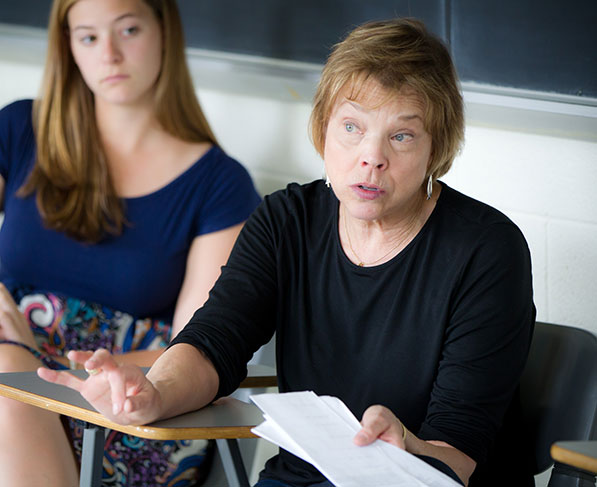
Father-daughter expert: Steve Jobs’ daughter’s new book offers lessons on forgiveness
In her biting new memoir Small Fry, Lisa Brennan-Jobs, daughter of Apple co-founder Steve Jobs, paints a portrait of her father that is far from flattering. Brennan-Jobs’ forgiveness of her father’s flaws and reportedly cruel behavior leaves some perplexed – but not Linda Nielsen, a nationally renowned expert on father-daughter relationships. Nielsen says our reactions to Brennan-Jobs’ memoir may reflect more upon our own family relationships than those of the tech visionary and his oldest daughter. “Forgiving her father is a gift a daughter gives, not just to her father, but to herself. In choosing not to allow her bitterness about his failings as a father to consume her, a daughter is choosing not to deprive herself of whatever pleasure she can still derive from their relationship. She does not deny the past. But she does not dwell in it. Forgiving does not mean forgetting,” Nielsen wrote today for The New York Times. “Ms. Brennan-Jobs’ memoir may provide a comforting message for parents who fear that their mistakes and missteps inevitably will lead to irreparable damage — and for daughters who are grappling with their father’s failures as a parent. Adult children can choose to focus on the dearness or the darkness of their childhood relationships with their parents.” Nielsen is a professor of adolescent and educational psychology at Wake Forest University in Winston-Salem, N.C. She has researched and written about father-daughter relationships since 1970. For nearly 30 years, she has taught the only known college class in the U.S. devoted exclusively to the subject. Her latest book, Father-Daughter Relationships: Contemporary Research and Issues, examines what improves or weakens these relationships and their impact on society. Nielsen is available for interviews Wednesday and leading up to the Sept. 4 release of Small Fry. Source:
