
Experts Matter. Find Yours.
Connect for media, speaking, professional opportunities & more.

These days, it doesn’t take much to turn a civil conversation into a full-blown catastrophe. Just mention the words “climate change” and feathers can start to ruffle. But it doesn’t have to be that way, says Dan Peppe, Ph.D., climate change expert and associate professor of geosciences at Baylor University. His research focuses on understanding how plant and animal communities have responded to changes in climate throughout Earth’s history. “Climate change is a fundamentally important issue to our society and is vital for us to have open and honest discussions about it and its potential impacts,” Peppe said. He said the best place to start such a dialogue is with scientific observation. Have a discussion about increases in temperature, he said. Understand what scientists are saying about those temperature changes and their effects. The trick to keeping this cordial? Keep politics out. “All of this conversation is a scientific one based on observation, and as such, shouldn't be a political one,” he said. “Once that baseline is established, we can then begin a conversation of the many possible ways to address those risks.” Peppe said there is often more than one solution to issues of climate change, but people need to listen to each other. “Hopefully there can be a respectful and civil conversation around those potential solutions,” he said. As part of Earth Science Week, Peppe is taking part in the Earth Science Symposium at The Mayborn Museum in Waco, Texas, where he will moderate a panel discussion on climate change. Panelists will discuss the science of climate change, the risks associated with it, and some of the potential solutions. “We hope that this will be a really productive discussion, and one in which the audience can participate,” Peppe said. Source:

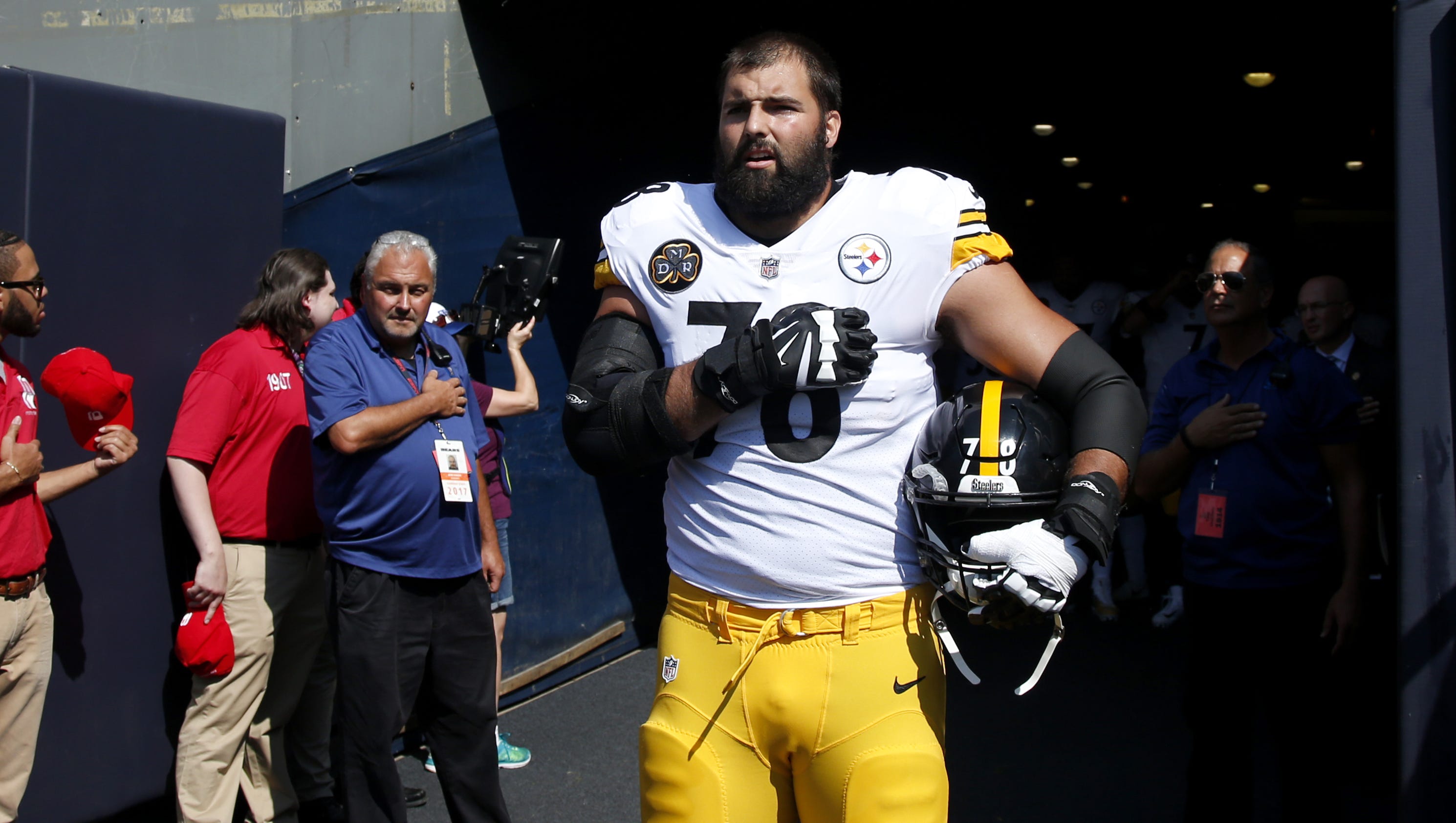
Impact of Protests on NFL Brand? Baylor Sports Sales Expert is Watching How 'Generations' Respond
Kirk Wakefield, Ph.D., is the Edwin W. Streetman Professor of Retail Marketing and director of Baylor University’s Sports Sponsorship & Sales program. He is an oft-quoted expert on marketing and branding of professional sports teams and serves as publisher and editor of The Baylor S3 Report (www.baylors3.com), the industry-leading publication featuring best practices in sports sales and marketing. In response to this weekend’s protests during many of the NFL games, Wakefield said he is closely watching the “generations” of fans, particularly the season ticket holders. He explained that the average NFL season ticket holders are male, in their 40s and have a household income of more than $100,000. “I think the question is if the NFL can truly use this as a unifying rather than divisive tool. The dilemma is that the season ticket holder base is older and more prone to see it as divisive and offensive. But the younger set, tomorrow’s fan base, is likely to side with the players. So, brand equity could erode among current season ticket holders and, at the same time, gain interest and support from millennials – who have not been watching or attending as much.” Wakefield’s research in retailing covering more than two decades focuses primarily upon sports psychology, team sports marketing, entertainment marketing, and fan and consumer response to pricing and promotional tools. He has conducted fan research in almost every venue in sports including the NBA, NFL, MLB, MLS, NHL, and NASCAR. Source:

New iPhone X Announcement Sparks Talk of Smartphone Use and Addiction - Baylor Experts Can Weigh In
James A. Roberts, Ph.D., The Ben H. Williams Professor of Marketing, and Meredith David, Ph.D., assistant professor of marketing, in Baylor University's Hankamer School of Business, actively research the effects of smartphones on consumers. Their findings regarding "phubbing" -- phone snubbing -- and how that practice can damage relationship and lead to depression have garnered national and international attention. Building on their "phubbing" research and the damage it does to relationship, they more recently found that the circle nearly completes itself as the offended parties frequently jump online to find affirmation in the likes and shares and positive comments of social media. “Although the stated purpose of technology like smartphones is to help us connect with others, in this particular instance, it does not,” David said. “Ironically, the very technology that was designed to bring humans closer together has isolated us from these very same people.” Roberts authored the book “Too Much of a Good Thing: Are You Addicted to Your Smartphone?” Source:


Dr. Bryan Brooks, Ph.D., Distinguished Professor, Environmental Science and Biomedical Studies, examines water quality, environmental health & contaminants, and sustainability issues, particularly in rapidly urbanizing areas. He has published water-quality research specifically regarding the Dickinson and Buffalo bayous in the Houston area, as well as the Houston ship channel. He's available to speak on: * Status of surface water contamination * Associated risks to people and ecosystems in the Houston/Galveston area * What information is needed to prioritize interventions and restoration activities * Implications for system recovery and management Source:


This column by The Atlanta Journal-Constitution columnist Matt Kempner quotes business expert Peter Klein, Ph.D., professor of entrepreneurship in Baylor’s Hankamer School of Business and Senior Research Fellow with Baylor's Baugh Center for Entrepreneurship and Free Enterprise. Kempner asked several business and management professors to discuss President Trump’s management style. Klein said Trump's "style and manner is the dramatic departure from predecessors, not so much his policy." And regarding the differences in government versus business? “I understand the wish to make agencies more efficient,” Klein said. “But at the end of the day, government organizations are not like businesses.” ABOUT PETER KLEIN Peter G. Klein is Professor of Entrepreneurship at the Hankamer School of Business, Baylor University, and Senior Research Fellow with Baylor's Baugh Center for Entrepreneurship and Free Enterprise. His research focuses on the links between entrepreneurship, strategy, and organization, with application to innovation, diversification, vertical coordination, health care, and public policy. Source:

Another Big Short or Better Off? 10 Years Later – Is there Another Financial Crisis Looming?
It was 10 years ago Wednesday that the world changed for just about everyone. It was on that afternoon when BNP Paribas announced it was ceasing activity in three hedge funds that specialized in U.S. mortgage debt. BNP Paribas was the first major bank to acknowledge the risk of exposure to the sub-prime mortgage market, and many look back at those days as the start of the worst financial crisis in American history since the stock market crashed in 1929. For a decade, America has been in a state of recovery. It took trillions of dollars in stimulus and bail outs. The real estate market almost collapsed on itself and millions were left unemployed. Some are still incapable of finding work and income that matched what they made back then. On the outside, America seems to be in complete recovery. Housing prices have bounced back, the DOW is soaring and unemployment rests at just 5.1 percent. However, some are skeptical. Americans are borrowing again at record rates. Credit is once again being offered abundantly and as people spend again – risk is climbing. Add in China’s shaky economy and there’s also talk of a double-bubble bursting. Understanding finance and economics is no easy task. It takes global understanding, a keen eye on micro and macroeconomics and sometimes a crystal ball. But on Wednesday, many people will remember exactly what they were doing when America’s economy tanked. So where are we now? Have we learned our lesson or are we doomed to repeat ourselves? Have the reforms on Wall Street worked or can the actions of a few big banks still derail one of the strongest financial engines in the world? None of these are easy questions to answer or explain. But experts from Missouri State University can help. Dr. David Mitchell is a Professor of Economics and Director of the Bureau of Economic Research at Missouri State. He is also an expert at economic forecasting and understanding market trends and direction. Dr. Mitchell can speak to the anniversary of the financial crisis and what may lie ahead for America’s economy. Click on his icon to arrange an interview. Source:


James Kendrick, Ph.D., associate professor in Baylor's Film and Digital Media department, is a nationally known expert on horror films. He is available to speak to media about the contributions and legacy of legendary director George A. Romero, who died on Sunday. Kendrick said: "Although he will forever be remembered as the chief architect the modern zombie film with his groundbreaking, low-budget black-and-white thriller 'Night of the Living Dead,' George A. Romero’s impact on both the horror genre and filmmaking in general reached much farther than the lumbering undead. He was an artist with a genuine social conscience, dark sense of humor, and clear understanding of how the current zeitgeist can make horror both more unsettling and socially relevant, which was key to the genre’s reinvention in the late 1960s and early ’70s. He was also a pioneer of American independent cinema, creating some of his most important films—including 'Night of the Living Dead,' the offbeat vampire film 'Martin,' and the shopping-mall-set 'Dawn of the Dead' — largely on his own terms outside the Hollywood studio system." Kendrick teaches classes on film theory/aesthetics, the history of motion pictures, media and society, the films of Steven Spielberg, violence in the media, and horror film. His primary research interests are post-Classical Hollywood film history, violence in the media, cult and horror films, media censorship and regulation, the films of Steven Spielberg, action films, and cinema and new technologies. Source:


Higher Education - A matter of national security?
With increasingly sophisticated and widespread cyberattacks in the news, what role must higher education play in developing the future cyber workforce? Located at the center of federal cybersecurity assets, the city of Augusta is already growing into a global cyber hub. Now, a new school at Augusta University will prepare the next generation of cyber professionals — right here in Augusta. Augusta University President Brooks Keel announced a new School for Computer and Cyber Sciences that will provide opportunities for students to work with the state cybersecurity professionals. The announcement comes just days after breaking ground on a new state-owned 168,000-square-foot, $60 million cyber innovation and training center at Augusta University's Riverfront Campus. "With hands-on research and internship opportunities not found anywhere else, we have the opportunity to revolutionize cybersecurity education in Georgia and make Augusta a leading hub for cybersecurity innovation," Keel said of the new statewide effort, dedicated to develop the workforce and infrastructure needed to protect our nation from cyberthreats. Augusta University's new school launches July 1, but will move into the Hull McKnight Georgia Cyber Innovation and Training Center upon completion in 2018. "The school will benefit more than 300 current computer science and information technology students, who will have the opportunity to work hand-in-hand with industry, the departments of industry and defense, and state cybersecurity professionals and tech startups," Keel said. How else is Augusta University responding to the need to develop highly skilled, technical workers? How can academia, government and industry partner to develop educational opportunities that are critical to enhancing the nation's cybersecurity? Dr. Brooks Keel is available for interviews on the future of cybersecurity education. Click on his icon to arrange an interview. Source:


People who are phone snubbed – or “phubbed” – by others are, themselves, often turning to their smartphones and social media to find acceptance, according to new research from Baylor University’s Hankamer School of Business. Building on their earlier study that phubbing can damage relationships and lead to depression, researchers Meredith David, Ph.D., assistant professor of marketing, and James A. Roberts, Ph.D., The Ben H. Williams Professor of Marketing, have found that the circle nearly completes itself as the offended parties frequently jump online to find affirmation in the likes and shares and positive comments of social media. Their study, “Phubbed and Alone: Phone Snubbing, Social Exclusion, and Attachment to Social Media,” is published in the Journal of the Association for Consumer Research. The research investigates the relationship between phubbing, social media attachment, depression, anxiety and stress. “When an individual is phubbed, he/she feels socially excluded, which leads to an increased need for attention. Instead of turning to face-to-face interaction to restore a sense of inclusion, study participants turned to social media to regain a sense of belonging,” said David, lead author of the study. “Being phubbed was also found to undermine an individual’s psychological well-being. Phubbed individuals reported higher levels of stress and depression.” “We’re looking online for what we’re not getting offline,” Roberts said. “It’s a vicious cycle.” As part of their research, David and Roberts surveyed more than 330 people across two studies. They found: * Nearly half of those who were phubbed reported spending more than 1.5 hours on their phone each day. In addition, one-quarter of those phubbed reported spending more than 90 minutes per day on social media sites. * More than one-third of phubbed individuals indicated that they turn to social media to interact with new people. * More than half of individuals who said they were phubbed indicated that social media enhances their life and makes their life better. The majority reported that people’s comments on their social media posts makes them feel affirmed and more accepted. “Although the stated purpose of technology like smartphones is to help us connect with others, in this particular instance, it does not,” David said. “Ironically, the very technology that was designed to bring humans closer together has isolated us from these very same people.” Source:

World Oceans Day and #OceanOptimism
Today, people around the globe are celebrating World Oceans Day, and discussing how we can all work together to make them cleaner, healthier and more sustainable. On Monday, a five-day long United Nations conference kicked off in New York. Rising sea levels, marine resources, pollution, sustainable development, and ocean degradation were just some of the key issues being discussed. Can our oceans recover? How bad is it and how did it get to this point? That’s where the experts at Cedar Crest College can help. John A. Cigliano is a Professor of Biology and an expert in marine conservation. Recently, he delivered a lectured titled "#OceanOptimism: Why It Is Not Too Late." Dr. Cigliano says despite the issues currently facing our oceans, he doesn't believe they are doomed. He can draw on success stories from around the world as well as his own research conducted with Cedar Crest College students to illustrate that point, and to outline what we can all do to help. Dr. John Cigliano is available to speak with media regarding World Oceans Day or any topic related to marine conservation, ecology and the ocean. Simply click his icon to arrange an interview. Source:
