
Experts Matter. Find Yours.
Connect for media, speaking, professional opportunities & more.

Researchers to explore how AI can help urban mobility planners They are to investigate AI-driven policy tools’ potential to create greener cities Project to benefit from expertise of five European universities. A European group of researchers led by Aston University is taking the first steps to explore how AI can help urban mobility planners. As city populations grow causing strain on resources, the experts are to investigate AI-driven policy tools’ potential to create greener cities. The team have received £10,000 in funding from the British Academy which they hope will set them on the road to further research. Taking part in the project will be experts from University College London, Ruralis University in Norway, the University of Turin, Italy and Lisbon University Institute, Portugal. Dr Dalila Ribaudo from the Centre for Business Prosperity at Aston Business School and Dr Alina Patelli from the Aston Centre for Artificial Intelligence Research and Application will co-lead a UK-EU consortium consolidation project. The interdisciplinary project will benefit from expertise in applied business and specialist insight into global economics, policymaking and urban transport planning. Dr Patelli said “Policymakers and society could all benefit from our research into innovative ways of managing the strain on urban infrastructures and resources. "The AI-powered policy tools we are developing are meant to support decision managers at all levels of urban governance with reducing emissions, optimising transportation as well as predicting and preventing environmental hazards. Such changes would improve the quality of life for the millions of people living in towns and cities across the UK, Europe and, in the long term, the entire world.” Following the successful bid for the British Academy pump priming grant the team will apply for Horizon Europe funding to continue developing impactful AI-driven policy tools for greener cities.


Hiring More Nurses Generates Revenue for Hospitals
Underfunding is driving an acute shortage of trained nurses in hospitals and care facilities in the United States. It is the worst such shortage in more than four decades. One estimate from the American Hospital Association puts the deficit north of one million. Meanwhile, a recent survey by recruitment specialist AMN Healthcare suggests that 900,000 more nurses will drop out of the workforce by 2027. American nurses are quitting in droves, thanks to low pay and burnout as understaffing increases individual workload. This is bad news for patient outcomes. Nurses are estimated to have eight times more routine contact with patients than physicians. They shoulder the bulk of all responsibility in terms of diagnostic data collection, treatment plans, and clinical reporting. As a result, understaffing is linked to a slew of serious problems, among them increased wait times for patients in care, post-operative infections, readmission rates, and patient mortality—all of which are on the rise across the U.S. Tackling this crisis is challenging because of how nursing services are reimbursed. Most hospitals operate a payment system where services are paid for separately. Physician services are billed as separate line items, making them a revenue generator for the hospitals that employ them. But under Medicare, nursing services are charged as part of a fixed room and board fee, meaning that hospitals charge the same fee regardless of how many nurses are employed in the patient’s care. In this model, nurses end up on the other side of hospitals’ balance sheets: a labor expense rather than a source of income. For beleaguered administrators looking to sustain quality of care while minimizing costs (and maximizing profits), hiring and retaining nursing staff has arguably become something of a zero-sum game in the U.S. The Hidden Costs of Nurse Understaffing But might the balance sheet in fact be skewed in some way? Could there be potential financial losses attached to nurse understaffing that administrators should factor into their hiring and remuneration decisions? Research by Goizueta Professors Diwas KC and Donald Lee, as well as recent Goizueta PhD graduates Hao Ding 24PhD (Auburn University) and Sokol Tushe 23PhD (Muma College of Business), would suggest there are. Their new peer-reviewed publication* finds that increasing a single nurse’s workload by just one patient creates a 17% service slowdown for all other patients under that nurse’s care. Looking at the data another way, having one additional nurse on duty during the busiest shift (typically between 7am and 7pm) speeds up emergency department work and frees up capacity to treat more patients such that hospitals could be looking at a major increase in revenue. The researchers calculate that this productivity gain could equate to a net increase of $470,000 per 10,000 patient visits—and savings to the tune of $160,000 in lost earnings for the same number of patients as wait times are reduced. “A lot of the debate around nursing in the U.S. has focused on the loss of quality in care, which is hugely important,” says Diwas KC. But looking at the crisis through a productivity lens means we’re also able to understand the very real economic value that nurses bring too: the revenue increases that come with capacity gains. Diwas KC, Goizueta Foundation Term Professor of Information Systems & Operations Management “Our findings challenge the predominant thinking around nursing as a cost,” adds Lee. “What we see is that investing in nursing staff more than pays for itself in downstream financial benefits for hospitals. It is effectively a win-win-win for patients, nurses, and healthcare providers.” Nurse Load: the Biggest Impact on Productivity To get to these findings, the researchers analyzed a high-resolution dataset on patient flow through a large U.S. teaching hospital. They looked at the real-time workloads of physicians and nurses working in the emergency department between April 2018 and March 2019, factoring in variables such as patient demographics and severity of complaint or illness. Tracking patients from admission to triage and on to treatment, the researchers were able to tease out the impact that the number of nurses and physicians on duty had on patient throughput. Using a novel machine learning technique developed at Goizueta by Lee, they were able to identify the effect of increasing or reducing the workforce. The contrast between physicians and nursing staff is stark, says Tushe. “When you have fewer nurses on duty, capacity and patient throughput drops by an order of magnitude—far, far more than when reducing the number of doctors. Our results show that for every additional patient the nurse is responsible for, service speed falls by 17%. That compares to just 1.4% if you add one patient to the workload of an attending physician. In other words, nurses’ impact on productivity in the emergency department is more than eight times greater.” Boosting Revenue Through Reduced Wait Times Adding an additional nurse to the workforce, on the other hand, increases capacity appreciably. And as more patients are treated faster, hospitals can expect a concomitant uptick in revenue, says KC. “It’s well documented that cutting down wait time equates to more patients treated and more income. Previous research shows that reducing service time by 15 minutes per 30,000 patient visits translates to $1.4 million in extra revenue for a hospital.” In our study, we calculate that staffing one additional nurse in the 7am to 7pm emergency department shift reduces wait time by 23 minutes, so hospitals could be looking at an increase of $2.33 million per year. Diwas KC This far eclipses the costs associated with hiring one additional nurse, says Lee. “According to 2022 U.S. Bureau of Labor Statistics, the average nursing salary in the U.S. is $83,000. Fringe benefits account for an additional 50% of the base salary. The total cost of adding one nurse during the 7am to 7pm shift is $310,000 (for 2.5 full-time employees). When you do the math, it is clear. The net hospital gain is $2 million for the hospital in our study. Or $470,000 per 10,000 patient visits.” Incontrovertible Benefits to Hiring More Nurses These findings should provide compelling food for thought both to healthcare administrators and U.S. policymakers. For too long, the latter have fixated on the upstream costs, without exploring the downstream benefits of nursing services, say the researchers. Their study, the first to quantify the economic value of nurses in the U.S., asks “better questions,” argues Tushe; exploiting newly available data and analytics to reveal incontrovertible financial benefits that attach to hiring—and compensating—more nurses in American hospitals. We know that a lot of nurses are leaving the profession not just because of cuts and burnout, but also because of lower pay. We would say to administrators struggling to hire talented nurses to review current wage offers, because our analysis suggests that the economic surplus from hiring more nurses could be readily applied to retention pay rises also. Sokol Tushe 23PhD, Muma College of Business The Case for Mandated Ratios For state-level decision makers, Lee has additional words of advice. “In 2004, California mandated minimum nurse-to-patient ratios in hospitals. Since then, six more states have added some form of minimum ratio requirement. The evidence is that this has been beneficial to patient outcomes and nurse job satisfaction. Our research now adds an economic dimension to the list of benefits as well. Ipso facto, policymakers ought to consider wider adoption of minimum nurse-to-patient ratios.” However, decision makers go about tackling the shortage of nurses in the U.S., they should go about it fast and soon, says KC. “This is a healthcare crisis that is only set to become more acute in the near future. As our demographics shift and our population starts again out, demand for quality will increase. So too must the supply of care capacity. But what we are seeing is the nursing staffing situation in the U.S. moving in the opposite direction. All of this is manifesting in the emergency department. That’s where wait times are getting longer, mistakes are being made, and overworked nurses are quitting. It is creating a vicious cycle that needs to be broken.” Diwas Diwas KC is a professor of information systems & operations management and Donald Lee is an associate professor of information systems & operations management. Both experts are available to speak about this important topic - simply click on either icon now to arrange an interview today.




Professor Gina Rippon signs a copy of The Lost Girls of Autism for talk attendee Dr Georgie Agar Professor Gina Rippon’s new book, The Lost Girls of Autism, investigates why autism was thought to be a male condition for so long She gave a public talk at Aston University on 6 May 2025 exploring the central themes of the book Women and girls with autism have long been overlooked as they are better at masking and camouflaging so ‘fail’ standard tests. Autism in women and girls has been overlooked for decades, and Gina Rippon, professor emeritus of cognitive neuroimaging at Aston University Institute of Health and Neurodevelopment (IHN), has given a talk about her new book on the topic at Aston University. The book, The Lost Girls of Autism, was released on 3 April 2025, coinciding with Autism Acceptance Month, with the subtitle ‘How Science Failed Autistic Women and the New Research that’s Changing the Story’. Autism is characterised by a number of now well-known traits, including social awkwardness, extreme obsessions, and unusual movements and coping mechanisms known as ‘stimming’. It was (allegedly) first described in the 1940s separately by Austrian psychiatrists Leo Kanner and Hans Asperger. Originally identified as a rare developmental condition, since the 1980s, there has been an 800% increase in diagnoses, leading to concerns about an ‘autism epidemic’. There is a strong and enduring belief that it is a condition much more prevalent in males. Professor Rippon described her research as “looking at how brains get to be different and what that means for the owners of those brains”. This includes looking at the functions of different areas of the brain using scanners. During research into a number of brain conditions and diseases with obvious differences between the sexes, including how the disease progresses, such as Alzheimer’s in women, or prevalence in one particular sex, such as Parkinson’s in men, Professor Rippon also became interested in autism, also assumed to be largely a condition in males. However, during a research review, she found that many autism studies made no reference to sex differences. Amalgamated data from autism studies found that 80% of participants were male, and 25% of testing centres only tested males with autism. By only looking at males, Professor Rippon explained, the notion that autism is a male disorder became self-fulfilling. This does not just refer to scientific research. Even now, boys are ten times more likely to be referred for assessment for autism and twice as likely to be diagnosed than girls, even when they have exactly the same traits. 80% of autistic females have received multiple wrong diagnoses, including borderline personality disorder, social anxiety or obsessive-compulsive disorder (OCD). But why? The reason is the unchallenged belief that ‘autism is a “boy” thing’ causing a male spotlight problem in all aspects of the autism story. It could also be that females with autism express the condition differently. Professor Rippon said: “This took me back to [my previous book] The Gendered Brain when I was looking at the very clear view of what males should be like and what females should be like. If you look at the autistic population you have this clear idea that males are like this, but females, er, not so much? Females have poor social skills, but not as poor, or obsessive interests, but not as obsessive, so the trouble with females, is that they are not autistic enough.” The gold standard tests for autism are the Autism Diagnostic Observation Schedule (ADOS) and the Autism Diagnostic Interview (ADI) tests. Professor Rippon believes these are heavily biased towards how the condition manifests itself in males, such as social awkwardness or extreme obsessions. For example, parents may well be asked if their son has an unusual interest in weather patterns or train timetables, but they are not asked if their daughter has an unusual interest in Barbie dolls, because dolls are seen as socially acceptable. Research has shown that females with autism are more likely to ‘camouflage’ their symptoms, watching how ‘normal people’ behave, even practising social interactions, so they appear more normal. They are also more likely to ‘mask’ symptoms behind a persona, such as the ‘class clown’ or ‘star athlete’, in an effort to fit in. Autistic females describe this behaviour as a ‘survival strategy’ to avoid being spotted as different. It is also the case that girls are more likely to have sensory processing problems, such as aversion to strong smells, which can be enough to affect their day-to-day lives. This has only recently been added to the diagnostic criteria for autism. If the camouflaging or masking collapses, rates of other conditions such as disordered eating or anorexia, self-harm and gender dysphoria are disproportionately high, and it is these which will become identified as the underlying difficulty, rather than autism itself. Professor Rippon said: “The next stage should be asking why this group of individuals persists in hiding their autism, especially when autism has been defined as a lack of interest in social connection. There’s what I call the ‘born to be mild’ effect, where little girls are trained to socialise more, to behave, not to make a fuss, if you feel uncomfortable, don’t tell anyone else about it. There’s a lovely comment from one late-diagnosed female who rues the fact that she was so well behaved and wishes that she had just burned more cars so that someone would have spotted her carefully camouflaged distress!” The final slide in the presentation covered what Professor Rippon called “an ironic footnote”. While Leo Kanner and Hans Asperger are described as the fathers of autism, writing in the 1940s, it was in fact a Soviet female psychiatrist, Grunya Sukhareva, writing in the 1920s, who first described autism, even clearly examining the differences in the condition between boys and girls. Why her research was ignored for so long is unclear, but the male spotlight problem may well have been avoided. For more information about The Lost Girls of Autism, visit https://www.panmacmillan.com/authors/gina-rippon/the-lost-girls-of-autism/9781035011629.


Fast-striking and unpredictable, tornadoes pose major challenges for emergency planners
At least 20 U.S. states have been hit with tornadoes – some of them deadly – over the past week. Experts from the University of Delaware's Disaster Research Center can speak to the difficulty of drawing up plans in advance of tornadoes, which can develop quickly and unexpectedly, as well as a variety of topics related to storm preparedness, evacuations and recovery. Those experts include: Jennifer Horney: Environmental impacts of disasters and potential public health impacts for chronic and infectious diseases. Horney, who co-authored a paper on the increase in tornado outbreaks, can talk about how impacts on the morbidity and mortality that result from tornadoes. Tricia Wachtendorf: Evacuation decision-making, disaster response and coordination, disaster relief (donations) and logistics, volunteer and emergent efforts, social vulnerability. James Kendra: Disaster response, nursing homes and hospitals, volunteers, response coordination. Jennifer Trivedi: Challenges for people with disabilities during disaster, cultural issues and long-term recovery. Sarah DeYoung: Pets in emergencies, infant feeding in disasters and decision-making in evacuation. A.R. Siders: Expert on sea level rise and managed retreat – the concept of planned community movement away from flood-prone areas. To reach these experts directly, visit their profile and click on the contact button.




#Expert Research: The Use of AI in Financial Reporting
Artificial intelligence (AI) is developing into an amazing tool to help humans across multiple fields, including medicine and research, and much of that work is happening at Emory University’s Goizueta Business School. Financial reporting and auditing are both areas where AI can have a significant impact as companies and audit firms are rapidly adopting the use of such technology. But are financial managers willing to rely on the results of AI-generated information? In the context of audit adjustments, it depends on whether their company uses AI as well. Willing to Rely on AI? Cassandra Estep, assistant professor of accounting at Goizueta Business School, and her co-authors have a forthcoming study looking at financial managers’ perceptions of the use of AI, both within their companies and by their auditors. Research had already been done on how financial auditors react to using AI for evaluating complex financial reporting. That got Estep and her co-authors thinking there’s more to the story. “A big, important part of the financial reporting and auditing process is the managers within the companies being audited. We were interested in thinking about how they react to the use of AI by their auditors,” Estep says. “But then we also started thinking about what companies are investing in AI as well. That joint influence of the use of AI, both within the companies and by the auditors that are auditing the financials of those companies, is where it all started.” The Methodology Estep and her co-authors conducted a survey and experiment with senior-level financial managers with titles like CEO, CFO, or Controller – the people responsible for making financial reporting decisions within companies. The survey included questions to understand how companies are using AI. It also included open-ended questions designed to identify key themes about financial managers’ perceptions of AI use by their companies and their auditors. In the experiment, participants completed a hypothetical case in which they were asked about their willingness to record a downward adjustment to the fair value of a patent proposed by their auditors. The scenarios varied across randomly assigned conditions as to whether the auditor did or not did not use AI in coming up with the proposed valuation and adjustment, and whether their company did or did not use AI in generating their estimated value of the patent. When both the auditor and the company used AI, participants were willing to record a larger adjustment amount, i.e., decrease the value of the patent more. The authors find that these results are driven by increased perceptions of accuracy. It’s not necessarily a comfort thing, but a signal from the company that this is an acceptable way to do things, and it actually caused them to perceive the auditors’ information as more accurate and of higher quality. Cassandra Estep, assistant professor of accounting “Essentially, they viewed the auditors’ recommendation for adjusting the numbers to be more accurate and of higher quality, and so they were more willing to accept the audit adjustment,” Estep says. Making Financial Reporting More Efficient Financial reporting is a critical process in any business. Companies and investors need timely and accurate information to make important decisions. With the added element of AI, financial reporting processes can include more external data. We touched on the idea that these tools can hopefully process a lot more information and data. For example, we’ve seen auditors and managers talk about using outside information. Cassandra Estep “Auditors might be able to use customer reviews and feedback as one of the inputs to deciding how much warranty expense the company should be estimating. And is that amount reasonable? The idea is that if customers are complaining, there could be some problem with the products.” Adding data to analytical processes, when done by humans alone, adds a significant amount of time to the calculations. Research from the European Spreadsheets Risks Interest Group says that more than 90% of all financial spreadsheets contain at least one error. Some forms of AI can process hundreds of thousands of calculations overnight, typically with fewer errors. In short, it can be more efficient. Efficiency was brought up a lot in our survey, the idea that things could be done faster with AI. Cassandra Estep “We also asked the managers about their perspective on the audit side, and they did hope that audit fees would go down, because auditors would be able to do things more quickly and efficiently as well,” Estep says. “But the flip side of that is that using AI could also raise more questions and more issues that have to be investigated. There’s also the potential for more work.” The Fear of Being Replaced The fear of being replaced is a more or less universal worry for anyone whose industry is beginning to adopt the use of AI in some form. While the respondents in Estep’s survey looked forward to more efficient and effective handling of complex financial reporting by AI, they also emphasized the need to keep the human element involved in any decisions made using AI. What we were slightly surprised about was the positive reactions that the managers had in our survey. While some thought the use of AI was inevitable, there’s this idea that it can make things better. Cassandra Estep “But there’s still a little bit of trepidation,” Estep says. “One of the key themes that came up was yes, we need to use these tools. We should take advantage of them to improve the quality and the efficiency with which we do things. But we also need to keep that human element. At the end of the day, humans need to be responsible. Humans need to be making the decisions.” A Positive Outlook The benefits of AI were clear to the survey participants. They recognized it as a positive trend, whether or not it was currently used in their financial reporting. If they weren’t regularly using AI, they expected to be using it soon. I think one of the most interesting things to us about this paper is this idea that AI can be embraced. Companies and auditors are still somewhat in their infancy of figuring out how to use it, but big investments are being made. Cassandra Estep “And then, again, there’s the fact that our experiment also shows a situation where managers were willing to accept the auditors’ proposed adjustments. This arguably goes against their incentives as management to keep the numbers more positive or optimistic,” Estep continues. “The auditors are serving that role of helping managers provide more reliable financial information, and that can be viewed as a positive outcome.” “There’s still some hesitation. We’re still figuring out these tools. We see examples all the time of where AI has messed up, or put together false information. But I think the positive sentiment across our survey participants, and then also the results of our experiment, reinforce the idea that AI can be a good thing and that it can be embraced. Even in a setting like financial reporting and auditing, where there can be fear of job replacement, the focus on the human-technology interaction can hopefully lead to improved situations.” Cassandra Estep, is an assistant professor of accounting at Goizueta Business School, and a co-author of the forthcoming study looking at financial managers’ perceptions of the use of AI. She's available to speak about this important topic - simply click on her icon now to arrange an interview today.


When an invitation to sit on the Georgia Governor’s Council of Economic Advisers arrived in an informal email from a colleague, Michael Toma, Ph.D., welcomed the chance to share his ongoing research on the economic health of southeastern Georgia with Gov. Brian Kemp, the Georgia House of Representatives and Senate leadership and their constituents. However, when he joined a small group of colleagues from around the state in a legislative office near the capitol in Atlanta late last year, the opportunity felt far from casual. “It does seem like it’s an honor because I looked around the table and there were only 10 or so of us from the entire state of Georgia,” said Toma, the Fuller E. Callaway professor of economics in Georgia Southern University’s Parker College of Business. “It’s nice to be invited to join this council informing the executive and legislative branches of government about economic conditions in the state of Georgia. I know the southeastern part of the state, so it’s nice to be recognized and be invited to speak about this region to a state-level audience.” The Governor’s Council of Economic Advisers is a select group of mostly higher education economists from various University System of Georgia institutions, in addition to the chief economist from Georgia Power, who meet annually. Toma, who specializes in macroeconomics and regional economics, is well known for his expertise throughout Savannah and the surrounding region. Since 2000, he has written and distributed The Economic Monitor, a quarterly publication housed within Georgia Southern’s Economics Department and Center for Business Analytics and Economic Research. The economic analysis offers a snapshot of the Savannah Metropolitan Statistical Area economy, including Bryan, Chatham and Effingham counties, and informs business owners across the Coastal Empire. He also regularly speaks to chambers of commerce and business groups in the region. In the governor’s council meeting, which was televised to state legislators, the economists took turns speaking about their respective areas of expertise to Gov. Kemp as part of an educational process and annual update for the executive and legislative branches. “The academics from the different institutions discussed economic conditions in their regions of the state,” Toma said. “I highlighted the activity here in Savannah, the growing manufacturing base and the wages associated with the Hyundai plant being injected into the regional economy, and the build-out of the supply chain for the Hyundai plant. “I discussed manufacturing development in the context of broader economic growth within the region that’s layered on top of our normal growth pattern, and that the economic development initiative is starting to pay the dividends it was anticipated to pay.” Following each individual presentation, the governor held an open forum for all in attendance to speak more fluidly with the group. “He had questions for the panel in general about small business activity,” stated Toma. “So I was able to characterize the ecosystem for small businesses in Chatham County. “He said that was a great report.” Toma holds a Ph.D. in economics from George Mason University. He joined Georgia Southern on the Armstrong Campus in Savannah in 1997. If you're interested in learning more about this topic and want to book time to talk or interview with Michael Toma then let us help - simply click on his icon now or contact Georgia Southern's Director of Communications Jennifer Wise at jwise@georgiasouthern.edu to arrange an interview today.



Georgia Southern’s Shainaz Landge receives Regents’ Scholarship of Teaching and Learning Award
For Shainaz Landge, Ph.D., pushing boundaries in the classroom and the laboratory isn’t just a professional pursuit, it’s a passion. As an associate professor of organic chemistry at Georgia Southern University, Landge has spent more than a decade inspiring students to soar beyond traditional learning by blending research, mentorship and hands-on experiences that extend far beyond textbooks. That commitment to innovation has earned Landge the Regents’ Scholarship of Teaching and Learning Award, an honor from the University System of Georgia (USG) that recognizes faculty who contribute to the scholarship of teaching and learning through research, leadership and instructional excellence. “Receiving the Regents’ Scholarship of Teaching and Learning Award is a true honor,” said Landge. “It reinforces my passion for teaching and research, inspiring me to strive for excellence every day. My goal is to cultivate an engaging, positive learning environment where students are actively involved and genuinely excited about the learning process.” Landge’s work is grounded in synthetic organic, medicinal and supramolecular chemistry. Her research focuses on developing novel synthetic methodologies with applications in medicinal chemistry and materials science, creating compounds with potential therapeutic properties and supramolecular systems with unique functionalities. “This award is a reflection of Dr. Landge’s deep passion for education and research, and her ability to inspire students to think critically and engage meaningfully with the world around them,” said Provost and Executive Vice President for Academic Affairs Carl Reiber, Ph.D. “At Georgia Southern, we are dedicated to fostering an environment of discovery and innovation, and her work continues to elevate that mission, both in and out of the classroom. We are fortunate to have her as part of our academic community.” This isn’t the first time Landge’s dedication to student engagement and scientific inquiry has garnered recognition. Previously, she earned a University Award of Excellence for Student Success in 2021 and the College of Science and Mathematics Award of Excellence in Research in 2023. “This award is a testament to Dr. Landge’s exceptional contributions to the Scholarship of Teaching and Learning,” said Michael Huggins, Ph.D., dean of the College of Science and Mathematics. “Her innovative approach has not only deepened our understanding of effective teaching but has also led to measurable improvements in student outcomes across the College of Science and Mathematics.” In addition to her research and teaching, Landge has served as a Service-Learning Faculty Fellow (2023-2024) and is a current Research Advocate, reinforcing her commitment to bridging the gap between academic learning and real-world problem-solving. For more information about the Regents’ Scholarship of Teaching and Learning Award, visit : If you're interested in connecting with Shainaz Landge and learning more about her work then let us help - simply contact Georgia Southern's Director of Communications Jennifer Wise at jwise@georgiasouthern.edu to arrange an interview today.

UD researchers launch open-source tool to boost global food security and water sustainability
Efficient water usage in agriculture is crucial for sustaining a growing human population. A better understanding of the systems that support agriculture, farmers and farmlands allows for food production to become more efficient and prosperous. That's what makes the Monthly Irrigated and Rainfed Cropped Areas Open Source (MIRCA-OS) dataset so important. MIRCA-OS offers high-resolution data on 23 crop classes — including maize, rice and wheat — and helps researchers, students and farmers examine irrigation, rainfall and croplands and how they interact with global water systems. Co-authored by Endalkachew (Endi) Kebede, a doctoral student in University of Delaware’s Department of Geography and Spatial Sciences, a recent paper focused on MIRCA-OS was published in Nature Scientific Data. Kyle Davis, assistant professor in the Department of Geography and Spatial Sciences and the Department of Plant and Soil Sciences, served as a co-author on the paper and coordinated the study. “We first developed a comprehensive data library of crop-specific irrigated and rainfed harvested areas for all countries,” Kebede said. “This involved two years of gathering data from a wide range of international, national and regional sources. Through this process, we produced a tabulated crop calendar, annual harvested area grids and monthly harvested area grids for all irrigated and rainfed crops.” “The amount of effort that Endi put in to gather, process and harmonize all of this data is truly incredible,” Davis said. “His effort is a very important contribution to the scientific and development communities.” Doctoral student Endalkachew Kebede (left) and Assistant Professor Kyle Davis. (Photo credit: University of Delaware) Cropland accounts for 13% of Earth's total habitable land, and the preservation of cropland is important in feeding the growing global population. “Crop production has been a widespread human activity for a few thousand years, and it has a huge role in global food security,” Kebede said. “But it also has unintended impacts on the environment, such as overutilization of water resources, pollution through rivers or the effects on soil and the environment.” MIRCA-OS can play a crucial role in helping to better understand croplands and agriculture, allowing the global population to be successfully fed while minimizing the agricultural effects on the environment. In addition to the data included on cropland and water resources, MIRCA-OS allows researchers to view social aspects like poverty and unemployment through an agricultural lens, creating a better understanding of the interconnectivity of agriculture and social issues. MIRCA-OS is an updated version of the earlier MIRCA2000 dataset. Kebede said the MIRCA2000 was released nearly two decades ago, so renewing the data gives users more accurate and timely information. Both datasets specialized in examining irrigation and rainfall, but the MIRCA-OS added two new complexities to their data. First, MIRCA-OS is open source, meaning it is publicly available for anyone to use, download, or modify. Kebede said the added accessibility allows the technology to contribute to anyone's work, whether it be a student, a researcher or a farmer. “Anybody can use, update it, or upscale it to the special skill they’re interested in,” Kebede said. “Some might use it for research, some might use it to create policies and some might use it to practice agriculture.” To arrange an interview with Davis, visit his profile and click on the contact button.


When Luis Quiroga-Nuñez, Ph.D was appointed director of Florida Tech’s Ortega Observatory and its primary tenant – a non-functioning, 32-inch telescope – in 2023, he decided it was time to provide astronomy students and others a window to space. The observatory is already a base for research across a spectrum of cosmic exploration through disciplines such as astronomy and astrophysics, heliophysics, planetary science and astrobiology. However, current students have yet to see the stars up close, as the aging telescope, commissioned in 2008, has sat dormant for the last several years. With restoration, the telescope could be a powerful tool to train students to use professional telescopes and make observations – critical skills that will help prepare them for their future careers. It soon became apparent, however, that this was no simple task. The restoration would necessitate reverse engineering on a large scale to even understand how to fix and upgrade the telescope, much less actually repair it. It would also, as Quiroga-Nuñez wisely recognized, be its own powerful educational opportunity, providing unique hands-on learning opportunities for students in the College of Engineering and Science. “We are an institute of technology. We have perfectly capable people, like these young students, ready to join hands-on projects, get crazy and start to be creative.” Luis Quiroga-Nuñez With various issues to tackle and eager to support home-grown expertise, Quiroga-Nuñez and Lee Caraway, Ph.D, an instructor in the department of electrical engineering and computer science, recruited students with varied backgrounds, from astronomy to electrical engineering and computer science. Students could apply what they learned in class and grow their portfolios with a real-world project, the sort of experiential learning that is a hallmark of a Florida Tech education. Some improvements have been made, but the project remains an exciting puzzle for students and faculty alike. Here’s how they are doing it. An Interdisciplinary Project In January 2023, Quiroga-Nuñez partnered with Caraway to rebuild the telescope from the inside out. They say the conversation started over lunch, sketching ideas on a napkin. With various issues to tackle and eager to support home-grown expertise, Caraway and Quiroga-Nuñez recruited students with varied backgrounds, from astronomy to engineering to computer science. “This is about as real-world as you can get without leaving school. We have this giant piece of technology that is not working. Figure out why,” said recent graduate Adrianna Agustin ’24, who helped update the telescope’s communication system. “All of those problem-solving skills will directly translate to wherever we go in the future.” The project’s multidisciplinary nature also boosts collaboration between both sides of the college. “We keep integrating different parts of the university and involving students in a project that we were blinded by,” Quiroga-Nuñez says. “We sit between the scientists and the engineers.” And there’s no shortage of tasks. In addition to the refurbishment, Quiroga-Nuñez and Caraway are also completing routine telescope maintenance, with students taking on adjacent projects around the observatory. With the telescope repair, each student is given their own task, such as redesigning a small clip that supports the dome’s electric current, reviewing the conditions of the finder’s lens or understanding how analog devices control the telescope’s focus. This allocation allows each student to claim their own individual contribution to the greater telescope puzzle. Opening a Time Capsule The telescope’s biggest issues were mechanical and electrical, all exacerbated by age. Its motors were decades old and naturally failing, Caraway said. These motors controlled the telescope’s right ascension and declination – essentially, its ability to move. The chaotic interior also involved multiple individual systems with dozens of wires. And the circuits controlling the motors, which dated back to the 1980s, were also failing due to age. As Caraway noted, his students are sweeping off “dust older than them.” “The technology back then simply did not exist to control the motors, run the diagnostics and make it all happen,” Caraway explained. “They’re not designed to run 30 years.” Additionally, the computer program that controlled the motors was outdated and did not meet to the university’s security requirements. Given all this, the team needed to develop a new communication system for the telescope, starting with the computer software. They decided instead of purchasing an upgraded computer system, they could build and program their own in-house from scratch. Next, once the new computer was up and running, it needed motors to command. Marisa Guerra ’24 worked on a senior design project involving a robotic arm whose motor structure was the same as the telescope’s. She crafted a blueprint for the telescope’s new motors using what she learned for her capstone project. At the same time, Agustin worked on developing a cleaner communication system between the computer to the motors. Her senior design research focused on electric vehicles and their internal circuit systems, and she could replicate something similar within the telescope – but not without digging through the decaying electronics first. “We had to reverse engineer and actually redraw the circuits, which was good practice because a lot of the time, for senior design at least, you don’t really have to design a new circuit. You are just kind of puzzle-piecing it together,” Agustin said. “But with this circuit, all of them were bad.” Using Guerra’s and Agustin’s senior design research, the team reprogrammed the telescope’s circuits. What once took 20 wires to operate now only takes two. They also reduced the weight of the telescope’s motors from 40 pounds to just 2 pounds. Once the communication system was finished, the team was just waiting for mobility. And on a day in Spring 2024, thanks to the refurbished system, they were able to create movement within the telescope for the first time in years. “I didn’t even know if that device could move internally,” Quiroga-Nuñez says. The moment was celebrated, but the team knew this success triggered a new challenge. It was time to tackle high astrometric precision – a crucial element of properly tracking movement in space. “We are pointing to tiny points in the sky. If we do not track that properly, we are going to be lost in the universe,” Quiroga-Nuñez says. The Value of Time Perfecting precise movement is expected to take some time, but that’s not a bad thing, Quiroga-Nuñez says. He believes that a lengthy timeline will offer more value in the long run because it will give even more students a chance to get involved. Besides, its primary purpose will be to teach students how to use a telescope and allow them to make observations and prepare for their future careers. Ultimately, Quiroga-Nuñez predicts that the telescope could pick up its first image from space in about a year if everything stays on track. However, the team still has a lot of ground within the telescope to uncover, with an unpredictable number of potential troubleshooting challenges. For example, while rebuilding the motor, they discovered that the internal mirror that illuminates the telescope’s visuals was in poor condition – it needed cleaning and new aluminum to reflect enough light to see the telescope’s imagery, Agustin explains. So, the team had to remove the mirror and ship it to New York for refurbishment – a process that took several months. Once the mirror is reinstalled, they can return to their quest for better precision. The mirror is just one example of unpredictability in reverse-engineering. Ultimately, dedicating more time to understanding and solving the unforeseen challenges allows more students to participate in the telescope’s journey, Quiroga-Nuñez says. “This is like a big Lego for them,” he says. “They are learning the process, and the students, I think, will have found a very valuable life experience.” If you're interested in connecting with Luis Quiroga-Nuñez, director of Florida Tech’s Ortega Observatory - simply contact Adam Lowenstein, Director of Media Communications at Florida Institute of Technology at adam@fit.edu to arrange an interview today.

NASA Asks Researchers to Help Define Trustworthiness in Autonomous Systems
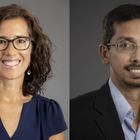
A Florida Tech-led group of researchers was selected to help NASA solve challenges in aviation through its prestigious University Leadership Initiative (ULI) program. Over the next three years, associate professor of computer science and software engineering Siddhartha Bhattacharyya and professor of aviation human factors Meredith Carroll will work to understand the vital role of trust in autonomy. Their project, “Trustworthy Resilient Autonomous Agents for Safe City Transportation in the Evolving New Decade” (TRANSCEND), aims to establish a common framework for engineers and human operators to determine the trustworthiness of machine-learning-enabled autonomous aviation safety systems. Autonomous systems are those that can perform independent tasks without requiring human control. The autonomy of these systems is expected to be enhanced with intelligence gained from machine learning. As a result, intelligence-based software is expected to be increasingly used in airplanes and drones. It may also be utilized in airports and to manage air traffic in the future. Learning-enabled autonomous technology can also act as contingency management when used in safety applications, proactively addressing potential disruptions and unexpected aviation events. TRANSCEND was one of three projects chosen for the latest ULI awards. The others hail from Embry-Riddle Aeronautical University in Daytona Beach – researching continuously updating, self-diagnostic vehicle health management to enhance the safety and reliability of Advanced Air Mobility vehicles – and University of Colorado Boulder – investigating tools for understanding and leveraging the complex communications environment of collaborative, autonomous airspace systems. Florida Tech’s team includes nine faculty members from five universities: Penn State; North Carolina A&T State University; University of Florida; Stanford University; Santa Fe College. It also involves the companies Collins Aerospace in Cedar Rapids, Iowa and ResilienX of Syracuse, New York. Carroll and Bhattacharyya will also involve students throughout the project. Human operators are an essential component of aviation technology – they monitor independent software systems and associated data and intervene when those systems fail. They may include flight crew members, air traffic controllers, maintenance personnel or safety staff monitoring overall system safety. A challenge in implementing independent software is that engineers and operators have different interpretations of what makes a system “trustworthy,” Carroll and Bhattacharyya explained. Engineers who develop autonomous software measure trustworthiness by the system’s ability to perform as designed. Human operators, however, trust and rely on systems to perform as they expect – they want to feel comfortable relying on a system to make an aeronautical decision in flight, such as how to avoid a traffic conflict or a weather event. Sometimes, that reliance won’t align with design specifications. Equally important, operators also need to trust that the software will alert them when it needs a human to take over. This may happen if the algorithm driving the software encounters a scenario it wasn’t trained for. “We are looking at how we can integrate trust from different communities – from human factors, from formal methods, from autonomy, from AI…” Bhattacharyya said. “How do we convey assumptions for trust, from design time to operation, as the intelligent systems are being deployed, so that we can trust them and know when they’re going to fail, especially those that are learning-enabled, meaning they adapt based on machine learning algorithms?” With Bhattacharyya leading the engineering side and Carroll leading the human factors side, the research group will begin bridging the trust gap by integrating theories, principles, methods, measures, visualizations, explainability and practices from different domains – this will build the TRANSCEND framework. Then, they’ll test the framework using a diverse range of tools, flight simulators and intelligent decision-making to demonstrate trustworthiness in practice. This and other data will help them develop a safety case toolkit of guidelines for development processes, recommendations and suggested safety measures for engineers to reference when designing “trustworthy,” learning-enabled autonomous systems. Ultimately, Bhattacharyya and Carroll hope their toolkit will lay the groundwork for a future learning-enabled autonomous systems certification process. “The goal is to combine all our research capabilities and pull together a unified story that outputs unified products to the industry,” Carroll said. “We want products for the industry to utilize when implementing learning-enabled autonomy for more effective safety management systems.” The researchers also plan to use this toolkit to teach future engineers about the nuances of trust in the products they develop. Once developed, they will hold outreach events, such as lectures and camps, for STEM-minded students in the community. If you're interested in connecting with Meredith Carroll or Siddhartha Bhattacharyya - simply click on the expert's profile or contact Adam Lowenstein, Director of Media Communications at Florida Institute of Technology at adam@fit.edu to arrange an interview today.
