Experts Matter. Find Yours.
Connect for media, speaking, professional opportunities & more.

The event is aimed at supporting businesses in applying for the 2025 King’s Award for Enterprise The masterclass will feature presentations from the West Midlands Lieutenancy How to be a winner will be held on Friday 10 May 2024. The Centre for Research in Ethnic Minority Entrepreneurship (CREME) at Aston University is to host a special masterclass to encourage and support companies to apply for a prestigious business award. The King’s Awards for Enterprise are for outstanding achievement by UK businesses in the categories of innovation, international trade, sustainable development and promoting opportunity through social mobility. The event, How to be a winner, will be held on Friday 10 May 2024 from 15:00 to 17:00 BST at Aston University’s headquarters in John Cadbury House in Birmingham. CREME, in collaboration with the West Midlands Lieutenancy, is hosting this masterclass to guide businesses through the application process and share insights from previous award winners. Applications for the 2025 King’s Award for Enterprise open in May 2024. Organisations who receive a King’s Award are presented with the award at their company by one of The King’s representatives, a Lord-Lieutenant, are invited to a Royal reception, able to fly The King’s Awards flag at their main office, use the emblem on their marketing materials and are given a Grant of Appointment (an official certificate) and a commemorative crystal trophy. The awards are valid for 5 years. The masterclass will feature a presentation by the West Midlands Deputy Lieutenants’ John Wood and Tom Westley, who will provide a detailed overview of the application process. Additionally, attendees will have the opportunity to hear firsthand from past winners about their journey to success and the tangible benefits derived from winning a King's Award for Enterprise. Professor Monder Ram OBE DL, director of CREME, said: “The King's Award for Enterprise is without a doubt the most prestigious accolade that any UK company can receive. The boost to your business, particularly internationally, and to company morale is immense. “I encourage West Midlands-based businesses to join us for this insightful event which will be an excellent opportunity to learn from industry experts and gain valuable knowledge on how to position your business for success.” The masterclass is free to attend and interested parties can register their interest here. Eligibility for the categories can be checked here.


The research team asked one group of participants to follow healthy eating accounts and another to follow interior design accounts After just two weeks, participants following healthy eating accounts ate more fruit and vegetables and less junk food Even minor tweaks to social media accounts could result in substantial diet improvements in young adults. Researchers from Aston University have found that people following healthy eating accounts on social media for as little as two weeks ate more fruit and vegetables and less junk food. Previous research has shown that positive social norms about fruit and vegetables increases individuals’ consumption. The research team sought to investigate whether positive representation of healthier food on social media would have the same effect. The research was led by Dr Lily Hawkins, whose PhD study it was, supervised by Dr Jason Thomas and Professor Claire Farrow in the School of Psychology. The researchers recruited 52 volunteers, all social media users, with a mean age of 22, and split them into two groups. Volunteers in the first group, known as the intervention group, were asked to follow healthy eating Instagram accounts in addition to their usual accounts. Volunteers in the second group, known as the control group, were asked to follow interior design accounts. The experiment lasted two weeks, and the volunteers recorded what they ate and drank during the time period. Overall, participants following the healthy eating accounts ate an extra 1.4 portions of fruit and vegetables per day and 0.8 fewer energy dense items, such as high-calorie snacks and sugar-sweetened drinks, per day. This is a substantial improvement compared to previous educational and social media-based interventions attempting to improve diets. Dr Thomas and the team believe affiliation is a key component of the change in eating behaviour. For example, the effect was more pronounced amongst participants who felt affiliated with other Instagram users. The 2018 NHS Health Survey for England study showed that only 28% of the UK population consumed the recommended five portions of fruit and vegetables per day. Low consumption of such food is linked to heart disease, cancer and stroke, so identifying ways to encourage higher consumption is vital. Exposing people to positive social norms, using posters in canteens encouraging vegetable consumption, or in bars to discourage dangerous levels of drinking, have been shown to work. Social media is so prevalent now that the researchers believe it could be an ideal way to spread positive social norms around high fruit and vegetable consumption, particularly amongst younger people. Dr Thomas said: “This is only a pilot intervention study at the moment, but it’s quite an exciting suite of findings, as it suggests that even some minor tweaks to our social media accounts might lead to substantial improvements in diet, at zero cost! Our future work will examine whether such interventions actually do change our perceptions of what others are consuming, and also, whether these interventions produce effects that are sustained over time.” Dr Hawkins, who is now at the University of Exeter, said: “Our previous research has demonstrated that social norms on social media may nudge food consumption, but this pilot demonstrates that this translates to the real world. Of course, we would like to now understand whether this can be replicated in a larger, community sample.” Digital Health DOI: 10.1177/20552076241241262
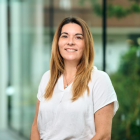

Nurse Leaders Danielle Weber and Michelle Collins Named Fellows in Nursing Innovation
Two ChristianaCare nurse leaders have been named fellows in the 2024-25 cohort of the prestigious Johnson & Johnson Nurse Innovation Fellowship Program. The fellows are Danielle Weber, MSN, MSM, RN-BC, NEA-BC, chief nurse executive, and Michelle Collins, DNP, APRN, CNS, ACNS-BC, NPD-BC, NEA-BC, LSSBB, vice president of Nursing Professional Excellence. These nurse innovators will work collaboratively to address a real-world challenge in ways that can be implemented at ChristianaCare. Weber, who also is chief nursing officer of Wilmington Hospital, leads ChristianaCare’s nursing staff in setting strategic imperatives, advises leadership on best practices in nursing, establishes nursing policies and procedures, oversees nursing education and research and creates a collaborative environment to ensure evidence-based care practices in both the acute care and home health settings. Collins leads ChristianaCare’s systemwide efforts to support nursing practice innovation, governance infrastructure and problem-solving, including a successful initiative in virtual acute care nursing. She also led ChristianaCare to achieve its third Magnet designation, the preeminent designation for excellence from the American Nurses Credentialing Center. With a strong commitment to innovation in nursing, ChristianaCare is at the forefront of virtual acute care nursing. This entails experienced nurses practicing virtually in another location supporting hospital-based nurses by documenting health information, providing patient education, monitoring patient lab work, completing patient admission documentation and helping with discharge planning and care coordination. The fellowship, administered by Penn Nursing and the Wharton School at the University of Pennsylvania, is a one-year, team-based program for chief nursing officers, nurse executives and other senior nurse leaders that aims “to advance health care by powering up nurse-led innovation and leadership within health systems.”




How misinformation spreads online and shapes behavior
With the Internet as a font of information, particularly during a major crisis or conflict, a simple Google search can produce a stream of conjecture, conspiracy and alternative facts. Then there’s the firehose of “news” flooding social media feeds. By headlines alone, it’s near impossible to separate wheat from chaff. Coupled with that user frustration is a vulnerability to bad actors who push agendas under the guise of news. Indeed, on its worst days, the internet is a disinformation machine. Understanding that dynamic and its impact on our moods and behavior is NJIT’s Julie Ancis, a behavioral psychologist who’s a pioneer in the field of cyberpsychology. Her research examines how disinformation spreads and shapes how we act online and in person. As she explains on her blog for Psychology Today: “The speed and flow of information online has enabled information to be transferred on a mass global scale, galvanizing social movements such as the Arab Spring, Occupy Wall Street and #MeToo. In short, the ways in which we consume information and communicate with others both locally and globally have fundamentally changed.” To interview Ancis, click on the button below.


Global audience in Copenhagen, Denmark, will learn of Gene Editing Institute research targeting the NRF2 gene in cancer cells Kelly Banas, Ph.D., principal investigator at ChristianaCare’s Gene Editing Institute, will present her latest research discovery related to targeting the NRF2 gene in cancer cells at the first CRISPR Medicine Conference held in Copenhagen, Denmark, April 22 to 25. The Gene Editing Institute’s research has focused on the NRF2 gene and the strong immune response it causes within cancer cells, allowing them to grow resistant to chemotherapy and leading cancer treatments to fail. By disrupting the NRF2 gene in cancer cells while allowing healthy cells to continue producing it, chemotherapy treatment becomes more effective. Gene Editing Institute principal investigators Kelly Banas, Ph.D., and Natalia Rivera-Torres, Ph.D., in the lab. Banas’ latest research delves into the mechanism of DNA repair following the removal of NRF2, ensuring that surrounding DNA in healthy cells is not affected and that the repair does not produce an unexpected outcome. “I’m extremely honored to be invited to this conference to highlight the work that all of our researchers at the Gene Editing Institute have put into this study,” Banas said. “The work we have done to characterize the impact of CRISPR on the NRF2 gene has changed how we approach new cancer targets. “This has influenced how we design experiments and analyze our data,” she said, “so it’s got a big impact on not just our work, but the work of anyone we collaborate with in the future. This community is full of phenomenal voices, and we’re committed to sharing our work in contexts like this to continue building a foundation of CRISPR research that will uplift treatment for some of the deadliest and most resilient cancers and diseases.” Read about Banas’ earlier research here.


NASA selects University of Delaware’s CubeSat spacecraft for upcoming mission
It’s safe to say that not many students expect to lead a NASA-supported mission during their undergraduate studies. But at least a dozen from the University of Delaware will have done that by the time they collect their diplomas in the next few years. All are part of a team creating Delaware’s first orbital spacecraft, which was selected by NASA for launch in 2026 as part of its CubeSat Launch Initiative. The NASA program, which started in 2011, aims to give students an opportunity to be part of real missions and gain extraordinary experience in what it takes to do space research. CubeSats are small, modular, inexpensive satellites that carry experiments for science investigations and/or technology demonstrations. About 160 CubeSats have been launched in the NASA program over the years, many deployed from the International Space Station (ISS). Delaware’s mission — the Delaware Atmospheric Plasma Probe Experiment (DAPPEr) — will launch its CubeSat spacecraft from the ISS and orbit independently through Earth’s upper atmosphere. The CubeSat will be about the size of a loaf of bread, according to the team’s faculty mentor, Bennett Maruca, associate professor of physics and astronomy. It will gather data about the density and temperature of electrons in Earth’s upper atmosphere, recording changes observed at different latitudes and times of day. This data will inform future research on how the sun affects conditions there. Understanding the sun’s interaction with the Earth’s atmosphere is critical to development of satellite communications networks, global positioning systems (GPS) and national security. But the real objective is educational, Maruca said. The students are the “deliverables.” They’ll emerge from this work with an insider’s view of what it’s like to develop and work on a NASA mission. To arrange an interview with Maruca, contact UD's media relations team at mediarelations@udel.edu.


New research shines a light on how expert mapmakers at Ordnance Survey see the world differently
OS Remote Sensing Services survey team updating OS MasterMap using the latest aerial imagery (Image credit: OS) Aston University psychologists worked with Ordnance Survey to assess how surveyors use 3D aerial images when making maps Humans naturally assume light comes from above, but experienced surveyors can interpret visual cues to assess topography regardless of the light direction It is the first time it has been shown that experience can radically alter natural human assumptions about lighting and could improve surveyor training. Researchers at Aston University have found differences between experienced Ordnance Survey (OS) mapmakers and novices in the way that they interpret aerial images for mapmaking, which could lead to improved training processes for new recruits. OS is well known for its travel and walking maps, but is also responsible for maintaining Great Britain’s national geographic database. Every time a building is demolished or developed, or a new road and path built, the map must be updated. Aerial photographs are taken of the area that has changed, either from a plane or using drones, and expert mapmakers, known as remote sensing surveyors, will examine the images to identify change and accurately redraw the map of the area. Image pairs are presented stereoscopically, one to each eye, allowing the remote sensing surveyors to see in 3D and correctly assess the topography, such as ditches, hills and hedges. Led by Professor Andrew Schofield, a team from Aston University’s College of Health and Life Sciences, together with Dr Isabel Sargent, previously at OS, carried out a study to understand how remote sensing surveyors interpret the shadows and highlights in images. The researchers asked six trained remote sensing surveyors and six novices to assess 10,000 stereoscopic aerial images of hedges and ditches, which had been heavily masked with image distortions. The stereoscopic images the aerial surveyors use for mapmaking are usually taken on sunny days. The human brain is naturally wired to interpret light as coming from above. However, the light does not come from above in the OS aerial images, it depends on the position of the sun. In the UK, north of the equator, light comes slightly from the south, thus appearing to come from below in images viewed by the surveyors. The researchers wanted to see how manipulating the direction of the light would affect the surveyors. Professor Schofield and the team swapped the image pairs between the eyes in half of the trials, so that hedges might look like ditches, and ditches look like hedges. The images were also flipped vertically on half the trials, changing the direction of the light source. Expert surveyors were found to rely on the stereoscopic cues – the difference in images seen by the two eyes – when performing the task. Novices were more likely to rely on lighting cues – highlights and shadows – to judge the shape and relief of an object, and assumed, as is natural, that the lighting came from above. With the manipulated images, this meant that novices frequently made mistakes. Experts were more accurate, even when the images had been turned upside down, and some had learnt to assume that the light source came from the south, or below. This is the first time anyone has shown that the natural assumption that light comes from above, which is common amongst many animal species, can be changed through long term experience. The researchers say that it could be used to develop new visual training techniques for remote sensing surveyors. For example, intensive exposure to repeated, difficult images can improve performance via a process called perceptual learning. Professor Schofield said: “This is a very exciting result. Others have shown that the light-from-above assumption can be altered by a few degrees, but no one has ever found complete reversals following long term experience. Dr Sargent said: “This result will help Ordnance Survey to understand the expertise of their staff and improve surveyor training and procedures.” Remote sensing surveyor Andy Ormerod, who worked on the study, said: “This research proves that experienced remote sensing surveyors can see the world differently. Whereas non-surveyors are used to seeing the world from one perspective, our brains have learned to view the world as seen from aerial imagery.” Journal of Vision DOI:10.1167/jov.24.4.11
Demystifying Relapse: 2-part series on substance use disorder recurrence and treatment
CARF International Senior Managing Director of Behavioral Health Michael Johnson is a contributor of this terrific two-part series on substance use relapse from the National Council for Mental Wellbeing. NATCON and partnering contributors from CARF International, National Association of Addiction Treatment Providers (NAATP), and the Recovery Research Institute are excited to release the Demystifying Relapse series, which includes two issue briefs that explore the complex dynamics of substance use disorder recurrence and the difficulty of reengaging individuals in the recovery process. “I’m grateful to the National Council for Mental Wellbeing for the opportunity to work with them on these two important documents. The U.S. is facing unprecedented challenges in treating persons with substance use disorders, with access to care continuing to be difficult for many. The field, the payers, and the public at large needs to take time to recalibrate how treatment and return to use are viewed in order to have realistic expectations for care, to destigmatize what it means for a person to return to use, and to ensure there is appropriate types of care available to those who need to re-enter the treatment systems,” said Senior Managing Director of Behavioral Health Michael Johnson. “Only when we recognize that persons who return to use need to have care that is individualized to assist them to stabilize, not start over, can we better ensure that treatment systems are more accessible based on the needs of persons served. The treatment for any chronic illness can be difficult as the path to wellness is often not linear. I hope these two papers can start a dialogue on how to reframe the systems to better meet the needs of those who continue with the recurrence of symptoms.” Michael Johnson is the CARF International Senior Managing Director of Behavioral Health. If you are looking to know more or connect with Michael, view his profile below to arrange an interview today.


Video games tackle climate change
The University of Delaware recently hosted a Climate Change Video Game Jam for students that paired the ingenuity of designing a video game with activism and the use of research to address one of the world's biggest problems. The national video game design competition was the brainchild of A.R. Siders, director of the UD's Mangone Climate Change Science and Policy Hub and core faculty in the Disaster Research Center. Participants representing five universities — UD, the University of California - Irvine, Ohio University, the University of Southern California and Irvine Valley College — competed in the event at UD's Esports Arena. Eight games were submitted and ran the gamut in their design, gameplay and visual effects. They ranged from a game focused on sustainable fishing, an ocean pollution clean-up, pirates cleaning oil spills, a mermaid helping her sea creature friends and a professor collecting magical stones to address storms and sea level rise. Four games included original artwork — both hand-drawn pixel art and 3-D models — and original sound effects and music. One had voice acting by the lead developer because the team “wanted to center her voice” in the game both figuratively and literally. The students behind the latter walked away victorious. As a self-proclaimed “climate geek” and long-time gamer, the idea for such an event was a natural way for Siders to marry two of her passions while actively engaging UD’s student body in addressing environmental issues. “The Jam is a great opportunity to bring people together from totally different perspectives who are all excited about the connections across these themes,” Siders said. “Facts and charts don’t move people. They don’t inspire action or instigate change, but video games can change how people think about climate change.” Siders also hopes that the game jam helps put UD on the map as a place that does cross-disciplinary climate work. “We have excellent expertise in game design, climatology, engineering, ocean science, and environmental humanities,” Siders said. “But our real strength is our ability to put those together creatively.” Members of the media who would like to interview Siders about the Climate Change Video Game Jam or other related topics can visit her profile and click "connect" or send an email to mediarelations@udel.edu.


Professor Roslyn Bill discusses her research into brain cell membranes with Dr Matt Derry Serious brain injuries and dementia are affected by the flow of water through a protein called aquaporin-4 in brain cell membranes Aquaporins are responsible for clearing the build-up of waste products in brain cells in a process Professor Bill likens to a ‘dishwasher for your brain’. Professor Roslyn Bill, co-founder of Aston Institute for Membrane Excellence (AIME), joins Dr Matt Derry to discuss her research into brain cell membranes in the latest Aston Originals podcast. Water moves in and out of brain cells through tiny protein channels in the cell membrane called aquaporins. One in particular, aquaporin-4, is the focus of Professor Bill’s research. In 2020, she was lead author on a paper published in prestigious journal Cell on how the channels open and close and how this can be controlled. Uncontrolled water entry into brain cells can occur after head trauma, causing swelling which leads to severe brain injuries of the type suffered by racing driver Michael Schumacher after a skiing accident. Finding drugs to control this water movement could lead to treatments to prevent brain swelling in the first place. This research into brain swelling and the contribution of aquaporins led Professor Bill to research into Alzheimer’s, a common form of dementia, which is also related to the action of aquaporins. Alzheimer’s is caused by a build-up of waste products in brain cells. In a process Professor Bill likened to a ‘dishwasher for your brain’, aquaporins are responsible for clearing this waste as we sleep. Professor Bill was selected for an Advanced Grant by the European Research Council (ERC) in 2023, which is being funded by UK Research and Innovation (UKRI). The funded project will further investigate the process, and whether it might be possible to develop a drug to boost the ‘brain dishwasher’, which could be taken to slow or even prevent cognitive decline due to ageing. Bringing together this biological research with the polymer research of AIME, chemists like Dr Derry will help in the drug development and could also lead to totally different applications. Professor Bill said in the podcast to Dr Derry: “We can take the knowledge that we have of how these proteins work in cells and try and apply them to interesting applications in biotechnology. And this is where the sort of work that you (Dr Derry) do comes in, where you can develop plastic membranes, polymer membranes, and then take learning from the biology and try and make really, really good ways of purifying water, for example.” For more information about AIME, visit the webpage. The website also includes links to the previous AIME podcast and details about open positions.