Experts Matter. Find Yours.
Connect for media, speaking, professional opportunities & more.
U.S. News: AI Can’t Replace Therapists – But It Can Help Them
For a young adult who is lonely or just needs someone to talk to, an artificial intelligence chatbot can feel like a nonjudgmental best friend, offering encouragement before an interview or consolation after a breakup. AI’s advice seems sincere, thoughtful and even empathic – in short, very human. But when a vulnerable person alludes to thoughts of suicide, AI is not the answer. Not by itself, at least. Recent stories have documented the heartbreak of people dying by suicide after seeking help from chatbots rather than fellow humans. In this way, the ethos of the digital world – sometimes characterized as “move fast and break things” – clashes with the health practitioners’ oath to “first, do no harm.” When humans are being harmed, things must change. As a researcher and licensed therapist with a background in computer science, I am interested in the intersection between technology and mental health, and I understand the technological foundations of AI. When I directed a counseling clinic, I sat with people in their most vulnerable moments. These experiences prompt me to consider the rise of therapy chatbots through both a technical and clinical lens. AI, no matter how advanced, lacks the morality, responsibility and duty of care that humans carry. When someone has suicidal thoughts, they need human professionals to help. With years of training before we are licensed, we have specific ethical protocols to follow when a person reveals thoughts of suicide. Read the full article here:


A new national Unity Poll from Vanderbilt University shows overwhelming agreement among Americans on one core belief: colleges should teach students how to think, not what to think. At a time when higher education is under intense political and cultural scrutiny, this finding reveals an unexpected area of unity. Amid debates over free speech, curriculum design, and the purpose of a degree, Americans are signaling a shared expectation for colleges to cultivate critical thinking and reasoning — not ideological conformity. For journalists, observers or anyone keeping a close eye on post-secondary education, this is a rare lens into what the public actually wants from higher education, and a timely point of entry into stories about academic freedom, the value of a college degree, political polarization, and workforce readiness. “Many observers think current debates about the nature of higher education are relatively new but they are not,” said John Geer, co-director of the Vanderbilt Unity Poll and professor of political science. “The country, for example, was debating the purpose, value and direction of higher education in the 1940s when the federal government made major investments in research and teaching during and after World War II.” “People want colleges and professors to teach students how to think, not what to think,” added Vanderbilt Poll Co-Director Josh Clinton, who holds the Abby and Jon Winkelried Chair at Vanderbilt and is a professor of political science. “The public most highly values those parts of higher education that help students think critically, process information and contribute meaningfully to society. The closer you get to subjects and content that has associations with contemporary political divisions, the more you see public support fracture.” John Geer and Josh Clinton, Co-Directors of the Vanderbilt Unity Poll and Professors of Political Science, are among the nation’s leading experts on public opinion, political behavior and democratic attitudes. With decades of research experience and multiple national polls under their leadership, Geer and Clinton bring essential context to these findings. Their perspective helps media interpret not only the data itself, but the broader social forces shaping how Americans view higher education, institutional trust and the role of colleges in preparing the next generation. What the Data Reveals: 1. A Return to Fundamentals: The Public Wants Critical Thinking Above All Ninety percent of Americans say “the ability to think more logically” is extremely or very important for their children to gain from college. Factual knowledge matters too, but the public places higher value on reasoning, analysis and cognitive skill-building. Geer can help illuminate why this shift is resonating so strongly now — and what it suggests about the changing expectations placed on colleges and universities. 2. A Rare Point of Consensus in a Polarized Era The emphasis on teaching students how to think cuts across political, geographic and demographic lines. Geer notes that agreement of this magnitude is increasingly uncommon in today’s contentious climate. This story angle gives journalists a data-driven counterpoint to the typical “campus culture wars” narrative — showing where unity still exists and why. 3. Is College Worth It? Depends How You Ask When asked about long-term value, a majority of Americans say a college degree is worth the time because it opens better job prospects. But when the question focuses on financial cost, support drops significantly. Geer and Clinton can walk reporters through why perceptions differ depending on how “value” is framed — and how these attitudes influence choices about pursuing postsecondary education. 4. Americans Oppose Government Control of College Teaching Most respondents say the federal government should not direct how professors teach. This adds nuance to ongoing debates about curriculum oversight, classroom autonomy and political influence in higher education. Geer and Clinton’s expertise help explain how this preference aligns with longstanding public attitudes about institutional independence. 5. Curriculum Flashpoints Reveal Sharp Divides While many Americans agree on the need for core historical and civic content, support fragments around politically charged topics. Issues such as gender identity, sexual orientation, and certain cultural topics show much lower consensus. Read the full article and report here:




Why TikTok Keeps You Scrolling: Baylor Research Explains the Science Behind Social Media Addiction
Why is it so hard to stop scrolling TikTok? A new study by Baylor University marketing professors and social media researchers James A. Roberts, Ph.D. and Meredith E. David, Ph.D., reveals that the answer lies not only in the app’s content, but in its design. Their research, published in the journal Cyberpsychology, Behavior, and Social Networking, is among the first to compare the technological affordances – the built-in design features that shape user behavior – of three leading short-form video (SFV) platforms: TikTok, Instagram Reels and YouTube Shorts. The findings reveal that TikTok’s combination of ease of use, highly accurate recommendations and surprising content variety creates a powerful recipe for user engagement – and, in many cases, addiction. The power of effortless design In their study, Roberts and David had participants rate each platform on three key technological affordances: perceived effortlessness, recommendation accuracy and serendipity (the element of surprise) and answer questions measuring their levels of social media engagement and addictive use. The results were clear: TikTok scored significantly higher than Instagram Reels or YouTube Shorts across all categories. Users in the study said TikTok required the least effort to use, delivered the most relevant videos and surprised them most often with unexpected but enjoyable content. “It’s the combination of all three that keeps people scrolling,” David said. “But the prerequisite is effortlessness. Without that ease of use, the other two wouldn’t matter as much.” TikTok’s seamless experience – where videos begin playing automatically the moment the app opens – creates a sense of immersion unmatched by competitors. Other platforms require users to click or select a video before viewing begins, a subtle difference that nonetheless makes TikTok feel faster and more intuitive. Engagement becomes addiction The study found that TikTok’s technological affordances indirectly increase addiction by first increasing engagement. The more users engage, the more likely they are to lose track of time – a phenomenon known as time distortion. David said this design is no accident. “TikTok’s algorithm is intentionally created to be addictive,” she said. “Their own materials acknowledge that users can become hooked after less than half an hour on the app.” She noted that even users who recognize these patterns often underestimate how long they spend scrolling. “We all need to be more cognizant of our time on these platforms,” David said. “Check your phone’s screen-time data – you may be surprised.” Implications for users and policy Beyond individual awareness, the researchers point to the broader social impact of overuse – particularly for young people. Excessive time on short-form video apps can erode attention spans, foster expectations for instant gratification and displace face-to-face interaction. “These platforms are designed to hold our attention,” David said. “But the opportunity cost is huge. The more time we spend scrolling, the less time we have for the activities that build real connection and meaning.”



How mitochondria shape brain health from childhood to old age
From the first spark of neural development to the challenges of ageing, Dr Lissette Sánchez Aranguren is uncovering how the cell’s powerhouses — mitochondria — hold the key to a healthy brain across the human lifespan. Her pioneering research at Aston University explores how these microscopic energy generators safeguard the brain’s communication network and how their dysfunction may underlie conditions such as dementia, stroke, and neurodevelopmental disorders. Mapping the brain’s energy defence system Dr Sánchez Aranguren’s work focuses on the partnership between brain cells and the blood vessels that nourish them — a relationship maintained by the blood–brain barrier. When mitochondria fail, that protective interface can weaken, allowing harmful molecules to penetrate and trigger inflammation or cell loss. Her team’s studies show that mitochondrial malfunction disrupts the dialogue between neurons and vascular cells, an imbalance seen both in the developing and ageing brain. To counter this, she and her collaborators have engineered a mitochondria-targeted liposome, a nanoscale “bubble” that delivers restorative molecules directly where they are needed most. By re-balancing cellular energy and communication, this innovation could one day reduce brain injury or slow neurodegenerative decline. From heart cells to the human mind Originally trained in cardiovascular science, Dr Sánchez Aranguren became fascinated by how mitochondria regulate energy and stress in blood-vessel cells — insights that ultimately led her toward neuroscience. View her profile here “Mitochondria do much more than produce energy. They send signals that determine how cells communicate and survive.” That realisation inspired her to trace mitochondrial signalling across the continuum of life — linking early brain development to later-life vulnerability. Her research now bridges traditionally separate fields of developmental biology, vascular physiology, and ageing neuroscience, helping identify shared molecular pathways that influence lifelong brain resilience. Global collaboration for a healthier brain Her work thrives on multidisciplinary and international partnerships. At Aston, she collaborates with scientists from Coventry University, Queen’s University Belfast, and the University of Lincoln, alongside research partners in the Netherlands, Italy, Malaysia, and China. Together they integrate chemistry, biology, and computational modelling to understand mitochondrial function from molecule to organism — and translate discoveries into practical therapies. Towards mitochondria-targeted brain therapies The next frontier is refining these mitochondria-targeted nanocarriers to enhance precision and efficacy in preclinical models, while exploring how mitochondrial signals shape the brain’s vascular and neural architecture from infancy through adulthood. Dr Sánchez Aranguren envisions a future where protecting mitochondrial health becomes central to preventing brain disease, shifting medicine from managing symptoms to preserving the brain’s natural defence and repair systems. “If we can protect the cell’s own energy engines,” she says, “we can give the brain its best chance to stay healthy for life.”


ChristianaCare Launches Organoid Core to Personalize Cancer Treatment
ChristianaCare’s Cawley Center for Translational Cancer Research has unveiled a first-of-its-kind organoid core in a community cancer center program. The new laboratory facility within the Helen F. Graham Cancer Center & Research Institute grows and tests living, patient-derived tumor models, giving doctors and researchers a faster, more precise way to identify the therapies most likely to work for each patient. This innovation could change how cancer is treated in Delaware and serve as a model for community centers nationwide. There are only a handful of organoid core centers, or “tumor-on-a-chip” programs, in the United States, and ChristianaCare’s is the first within a community cancer center setting. What the Organoid Core Does Tumor organoids are tiny, three-dimensional cultures grown from a patient’s tumor tissue. They preserve the genetic and molecular traits of the original tumor, making them far more accurate than traditional cell lines. “These mini-tumors enable researchers to screen drugs faster, identify new biomarkers and discover which treatments are most likely to work for each patient,” said Thomas Schwaab, M.D., Ph.D., Bank of America Endowed Medical Director of ChristianaCare’s Helen F. Graham Cancer Center and Research Institute. “This core is a bridge between the lab and the clinic. By growing living tumor models from cells of individual patients, we can test real-world drug responses and tailor treatments for them in ways that were not possible before.” How It Advances Patient Care The organoid core strengthens the Cawley Center's research capabilities by enabling drug screening and biomarker discovery. It will bank organoids representing the wide variety of tumors seen in the community, giving scientists a realistic system for testing therapies. ChristianaCare treats more than 70 percent of cancer patients in Delaware, giving researchers unique access to treatment-naïve samples. These are tumor tissues that have not yet been exposed to chemotherapy or other therapies. Studying them provides a more accurate picture of how cancer behaves naturally and how it might respond to new treatments. Bringing a new cancer drug to patients is expensive and risky. Estimates show it can cost $1.3 to $2.8 billion, with up to a third spent on preclinical development, and only about one in 10 compounds ever reach human trials. Traditional mouse models often fail to fully mimic human tumors, making early testing less reliable. By using organoid screening, the Cawley Center can test therapies more accurately, reduce costs and failure rates and move promising treatments into clinical trials faster. Combined with existing tissue collection programs, clinical trial infrastructure and community partnerships, these resources create a direct pathway to bring lab discoveries to patients faster. Turning Point in Translational Research “Our goal is to shorten the distance between discovery and treatment,” said Nicholas J. Petrelli, M.D., director of the Cawley Center. “Too many promising drugs fail because early models do not capture the complexity of real tumors. The organoid core helps solve that problem. We can now test therapies in models that reflect the patients we actually serve.” “This is a turning point for translational research in community health,” said Jennifer Sims Mourtada, Ph.D., associate director at the Cawley Center. “Organoid technology lets us study cancer in a way that feels personal. We are not just looking at data points. We are studying living models of a patient’s tumor, which can reveal how that person’s cancer might behave or respond to treatment. This approach brings science closer to the people it is meant to help.” Looking Ahead In the coming months, the organoid core will focus on building a diverse biobank of tumors common in Delaware. Plans include collaborations with academic institutions, shared access for external researchers, and development of immune-tumor co-culture models. By combining advanced technology, strong community partnerships and direct patient access, ChristianaCare and the Cawley Center are showing how translational cancer research can thrive in a community setting, making breakthroughs not only in the lab but also in patients’ lives.


Forensic Meteorology in Insurance: Bridging Weather Science, Claims, and Liability
When severe weather strikes, the insurance industry is not only contending with damage and loss, but also with the question: Did this storm event actually occur, and did it trigger the risk covered under policy terms? J.S. Held's forensic meteorologist Daniel Schreiber authored an article explaining how Certified Consulting Meteorologists substantiate (or refute) storm-event claims by reconstructing what the weather actually did at a loss location. In his article “Forensic Meteorology in Insurance: How Do Certified Consulting Meteorologists Help with Storm Damage Claims & Disputes?” Schreiber illustrates how the overlap of a valid insurance policy, a damaging event, and a verified storm forms the core of many disputed claims. Dan Schreiber is a Certified Consulting Meteorologist with over ten years of experience in military, aviation, and severe weather operations. Mr. Schreiber has provided consulting and expert services for both plaintiff and defense law firms and insurance adjusters, appraisers, umpires, and policyholders throughout North America. He has been consulted and/or retained as an expert in over 850 matters and has testified in both depositions and during trials in state and federal courts. View his profile here Why This Matters In an era of escalating extreme weather events and heightened exposure for insurers, the science of forensic meteorology — the application of certified weather expertise to claims investigation and litigation — is becoming indispensable. Professional meteorology, as it relates to insurance claims handling and the litigation process, is becoming increasingly recognized, and the employment of meteorologists within the insurance industry is growing. Schedule an interview with Daniel Schreiber to learn more about how forensic meteorologists can help with insurance claims and disputes by clicking on his icon below.


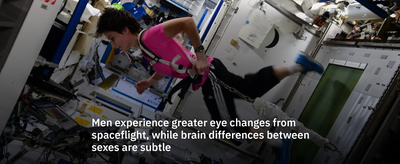
A new study into how spaceflight impacts the human brain and eyes revealed notable sex differences in brain fluid shifts, with female astronauts showing a greater reduction in fluid around the uppermost part of the brain than their male counterparts. Led by Rachael D. Seidler, Ph.D., director of the University of Florida’s Astraeus Space Institute and professor of applied physiology and kinesiology, the study analyzed data from astronauts to determine how factors such as sex, age and body metrics relate to structural brain and eye changes after space travel. The findings, published in August in npj Microgravity, provide key information for protecting astronaut health on long-duration missions to the moon and Mars. This is one of the first studies to look at sex differences in the physiological response to spaceflight. “The data on sex differences in response to spaceflight are scant, given the historically low number of female astronauts.” — Rachael D. Seidler, Ph.D., director of the University of Florida’s Astraeus Space Institute In addition to changes in fluid around the brain, the team also found that a form of eye compression, a hallmark of Spaceflight Associated Neuro-ocular Syndrome known as globe flattening, was the most consistent eye change among crew members. “By far the most prevalent sign of eye changes that we observed was globe flattening, suggesting that this should be the primary monitoring target for ocular health,” Seidler said. “Interestingly, eye changes were more prevalent in males than females.” Globe flattening, when the back of the eyeball becomes slightly indented or pushed inward, might sound minor, but it can have significant effects on vision and raise concerns for long-duration space missions. Surprisingly, there was no strong link between brain structural changes and eye changes, suggesting that the effects on the eyes and brain may arise from distinct mechanisms rather than shared physiological causes. The research underscores UF’s growing leadership in space health science. Through the Astraeus Space Institute, Seidler leads multidisciplinary collaborations that connect neuroscience, physiology and space research to advance human performance and safety in spaceflight. “We used UF's HiPerGator computing cluster for our analyses in this study, enabling us to analyze our data at high speeds,” Seidler said. Read the full study in npj Microgravity.


Record Breaking Turnout for NYC Early Voting
Dr. Meena Bose appeared on WNYW-TV Fox 5 to discuss how the record-breaking turnout for early voting in New York City underscored public engagement in the mayoral race. “There is reporting that suggests total turnout on Election Day could approach 2 million. We haven’t seen numbers like that for a mayoral race in more than 30 years,” she said. Dr. Bose is a Hofstra University professor of political science, executive dean of the Public Policy and Public Service program, and director of the Kalikow Center for the Study of the American Presidency.


Do the math: We’re awake roughly 16 hours a day. We spend 10 of those hours staring at screens – phones, tablets, computers, TV, gaming devices. That’s 63% of our waking life. The first platform dedicated entirely to digital balance launching today reveals something even more startling: It's not that we lack willpower to change our behavior. It's that we lack confidence. New proprietary research from Offline.now shows that 8 in 10 people are ready to change their relationship with technology, but more than half are so overwhelmed with their digital habits, they don’t know where to start. “If you don’t learn how to manage the screens in your life, they will manage you,” says Eli Singer, Founder of Offline.now and author of Offline.now: A Practical Guide to Healthy Digital Balance. “When people tell us they feel overwhelmed, it’s not laziness. It’s a crisis of confidence. And confidence is something that can be built.” Digital Wellness Experts Address the Struggles No One Else Will These insights come from digital wellness experts in the Offline.now Digital Wellness Directory – a growing community of licensed professionals across North America specializing in ADHD, relationships, family dynamics, high-achievers, and sustainable behavior change. They’re not offering generic advice. They’re addressing specific digital struggles that define contemporary life. Psychotherapist Harshi Sritharan, who specializes in modern anxiety and ADHD, explains: “The biggest mistake people make is reaching for their phone or turning on their computer first thing in the morning. It injects your dopamine full of uncertainty. You’ve essentially told your brain the most important thing you have to do today is put out fires. I tell clients to delay that first scroll as long as possible and never hit ‘snooze’. You’re fragmenting your REM sleep and making yourself more exhausted. These aren’t willpower issues; they’re about understanding how blue light disrupts your circadian rhythm, especially for those with ADHD who already struggle with sleep regulation.” According to Sritharan, the breakthrough happens when people understand the dopamine cycles driving their dependence and “reframe how they connect with all their screens, whether it’s their phone, gaming console, or streaming TV.” High Achievers Can’t Unplug. The ‘Always-On’ Trap is Killing Productivity, Not Boosting It “A lot of high performers think they need better time management,” says Executive Function Coach, Craig Selinger. “But what they actually need are boundaries. They’ve built empires by being available 24/7, and their phones have become permission slips to say yes to everything.” The difference between old and new technology matters,” he explains. “Back in the day with TV, there was a clear demarcation of beginning and end, right? The episode ends and you move on. Now it’s like Minecraft or TikTok – there’s no ending. And mobility makes it sticky, because you’re physically carrying the drug with you, versus a TV that stayed in one room.” The breakthrough happens when they realize being unavailable on purpose isn’t a weakness. “Things like turning off notifications during deep work, or setting ‘do not disturb’ windows? Those aren’t luxuries. They’re the competitive advantages they’ve been missing.” Digital Dependency as a Third Party in a Relationship Licensed Marriage and Family Therapist Gaea Woods says digital devices are killing interpersonal relationships, not because tech is evil, but because “we use it unconsciously at the moments when connection matters most. When you’re scrolling at dinner, you’re telling your partner ‘my phone is more interesting and important than you’.” The breakthrough happens when couples set explicit agreements: response times, when devices go off-limits – and even what’s it’s OK with AI companions. “We’ve exited the era of meaningful communication without realizing it, and now we must deliberately rebuild it. Nature isn’t ‘Nice to Have’. It’s the Antidote to Screen Fatigue No One is Talking About After running a tech-free camp for 25 years, Personal Development Coach Mark Diamond says he’s seen what happens when kids get genuine face-to-face time interaction outdoors. “Their brains reset. The beauty and physical activity provide perspective that screens can never replicate. Digital dependency has eroded our ability to develop real human connections across all ages, not just teenagers. Screens should not replace the moments that define our wellbeing.” Why This Matters Now The stakes extend beyond personal frustration. Unchecked screen dependency is linked to rising rates of anxiety, deteriorating sleep quality, relationship breakdown, and what mental health experts call “continuous partial attention”, a state where we’re always connected, but never fully present. The Data Reveals When Change is Possible Beyond the confidence divide, Offline.now’s research uncovers the precise moments when users are most open to shifting their digital habits: Evenings from 6 pm-11:59 pm emerge as the “Go Time” window. 40% of self-assessment responders peak readiness to act. Sunday is “Reset Day, when 43% want to set boundaries for the week ahead. Saturdays offer natural opportunities for self-compassion and rest. Afternoons become the “Overwhelm Window”, with 57% feeling consumed by their screens. Critically, Fridays – despite having the highest overwhelm factor – are the worst time for interventions. Users are depleted and change rarely sticks. The Framework That Powers the Platform At the platform’s core is the Offline.now Matrix, a behavioral framework that maps the confidence and motivation levels of users to reveal their starting point: Overwhelmed, Ready, Stuck, or Unconcerned. Based on Singer’s book, Offline.now: A Practical Guide to Healthy Digital Balance, the approach replaces willpower-based advice with microlearning strategies – each taking 20 minutes or less – that track emotional triggers rather than just screen time totals. It offers 100 real-world alternatives to scrolling, from reorganizing a drawer to visiting a thrift shop, and reframes slip-ups as data, not disasters. “The books shows that lasting change doesn’t require deleting Instagram or TikTok tomorrow,” says Singer. “You need to win one personal victory today, and then another tomorrow. That’s how confidence rebuilds.” Propelled by University of Toronto’s Innovation Ecosystem Offline.now is a University of Toronto-affiliated startup, leveraging one of the world’s most powerful innovation networks. U of T is ranked among the top five university-managed business incubators globally and has helped create more than 1,500 venture-backed companies and secured more than CAD$14 billion in investment over the past decade. How Offline.now Works For individuals and families: Take the free self-assessment quiz using the Offline.now Matrix to map your motivation and confidence levels in under three minutes. Receive instant access to practical strategies, curated resources, and a searchable directory of digital wellness experts organized by specialty, location, and insurance coverage. For digital wellness professionals: Join a growing community of licensed mental health practitioners, certified behaviorial coaches, and registered social workers by creating your profile at Offline.now. The platform provides new client leads, professional development opportunities, and visibility in a rapidly expanding market. About Offline.now Offline.now is the first global platform dedicated entirely to achieving digital balance. Founder and author Eli Singer built one of North America’s first social media agencies before seeing technology shift from community-building to attention-harvesting. As a parent, he experienced firsthand the struggle to maintain digital balance. The platform combines proprietary behavioral research, expert guidance and counselling from licensed professionals, and science-backed strategies to help individuals and families build healthier relationships with their screens. Visit Offline.now at https://offline.now Expert Interview Availability Offline.now can arrange interviews with: Eli Singer, Founder – Vision for digital wellness; behavioral data insights Harshi Sritharan, Psychotherapist – Dopamine cycles, ADHD, anxiety and intentional tech use Craig Selinger, Executive Function Coach – Digital distraction in high achievers, family dynamics, ADHD Mark Diamond, Personal Development Coach – Outdoor wellness, sustainable behavior change, happiness, connection Gaea Woods, Licensed Marriage and Family Therapist – Communication, digital third-party relationships, phubbing Additional Resources Free self-assessment quiz - The Offline.now Matrix: https://offline.now/quiz Expert directory and booking: https://offline.now/experts/ Join the directory: https://offline.now/join/ Order Offline.now: A Practical Guide to Healthy Digital Balance: https://offline.now/book/





Mosquito-borne disease research featured ahead of climate conference
University of Florida medical geographer Sadie Ryan, Ph.D. is among the international scientists whose work is featured in the forthcoming “10 New Insights in Climate Science” report, which will be presented at the United Nations COP30 Climate Conference on Nov. 10. Ryan’s research, which examines how climate change influences the spread of mosquito-borne diseases such as dengue, contributed to a newly generated global map illustrating where shifting temperatures and rainfall patterns are making conditions increasingly suitable for disease transmission. “A lot of my research is about how vector-borne diseases are going to move as the climate changes, and what that means for where and when transmission can happen,” Ryan said. “Climate change isn’t the only driver of dengue’s spread, but we are seeing the bleeding edge of climate shifting those distributions, where it’s warm enough for long enough and wet enough at the right times for outbreaks to take off.” According to Ryan, the map included in the report is based on the most recent generation of climate models and directly illustrates how climate suitability for dengue is changing around the world. Produced annually by Future Earth, the Earth League and the World Climate Research Programme, the report synthesizes the most important developments in climate research at the intersection of climate, health and policy on the world stage.