
Experts Matter. Find Yours.
Connect for media, speaking, professional opportunities & more.

Masoud Davari, Ph.D., associate professor of Electrical and Computer Engineering in the Allen E. Paulson College of Engineering & Computing, was recognized for his achievements in the field of power electronics control and testing with the IEEE Region 3 Outstanding Engineer Award. He was also granted membership into Eta Kappa Nu (HKN), IEEE’s international honor society. IEEE, the Institute of Electrical and Electronics Engineers, is the world’s largest professional organization for electrical engineers, with its membership numbering over 486,000 in more than 190 countries. Davari has been a member of IEEE since 2008 and a senior member of IEEE’s Region 3 since 2019. The organization’s Region 3 encompasses the southeastern United States and has over 24,000 members. The Outstanding Engineer Award, given annually to one member per region, recognizes those who have advanced knowledge and improved humanity through any of the technical subjects covered by the IEEE societies, councils, and affinity groups. Davari was praised for “outstanding, technical, and professional contributions to synthesizing reinforcement learning optimal controls for power electronic converters, creating robust integration of power electronics considering the impact of cyberattacks on modern grids, and advancing IEEE standards for hardware-in-the-loop testing and education through impactful research and service.” This impactful research and service includes eight years of teaching at Georgia Southern. He currently teaches introductory courses on circuit analysis and power systems fundamentals. He has also served as a chapter lead of the IEEE Working Group (WG) P2004 for testing based on hardware-in-the-loop simulations in the IEEE Standards Association (IEEE SA) and that of the IEEE Power and Energy Society Task Force on innovative teaching methods for modern power and energy systems (TR 120). In addition to being an engaged educator, Davari is also a prolific researcher. He was selected as the finalist for the 2024 Curtis W. McGraw Research Award by the Awards Committee of the American Society for Engineering Education (ASEE); has also been awarded a research fellowship by Gulfstream Aerospace Corporation in 2024; was included in Stanford/Elsevier’s Top 2% Scientist Rankings list; and has received $1.17 million in grants from the National Science Foundation Davari’s work ethic and commitment to bridging the gap between industry and research led Rami Haddad, Ph.D., interim dean of the College of Engineering & Computing, to nominate him. “Dr. Davari’s recognition as the IEEE Region 3 Outstanding Engineer and his induction into IEEE-Eta Kappa Nu (HKN) are truly remarkable honors that reflect his outstanding contributions to electrical and computer engineering,” Haddad said. “Being recognized among more than 24,000 IEEE members across the Southeast is a testament to the impact and excellence of his work. We are proud to have Dr. Davari as a valued member of our college, and we celebrate his achievements as a shining example of the innovation and leadership that define our faculty.” This award marks the first time a Georgia Southern faculty member has received it in its 55-year history. It is a career milestone for Davari, who has published research on advanced technology integration into modern power and energy systems in high-impact-factor IEEE Transactions/Journal venues and has extensively researched the era of grid-edge technologies. “I’m deeply honored by this prestigious award,” Davari said. “Not only does it reaffirm my dedication to my research field, but it also fuels my passion for creating a technologically advanced future. Receiving this IEEE award on behalf of my outstanding team is a privilege. Their relentless commitment and hard work since 2015 have truly made this achievement possible.” Davari’s induction into HKN places him among the best in his field. The membership, which is received through invitation only from HKN’s Board of Governors and is based on the candidate’s record of contributions to the field, demonstrated leadership, and community service. “With a legacy that stretches over a century, IEEE-HKN represents the pinnacle of prestige and tradition in our profession, indicating academic achievements and dedication to research, potential leadership, exemplary character, and a positive attitude. Notably, many of our industry’s most influential leaders initiated their journeys through induction into IEEE-HKN as professional members, so receiving this honor is a privilege.” Davari received his award and was inducted into Eta Kappa Nu (HKN) in March at IEEE Region 3’s SoutheastCon 2025 in Charlotte, North Carolina. If you're interested in learning more and want to book time to talk or interview with Masoud Davari then let us help - simply contact Georgia Southern's Director of Communications Jennifer Wise at jwise@georgiasouthern.edu to arrange an interview today.


Sevki Cesmeci, Ph.D., associate professor of mechanical engineering in the Allen E. Paulson College of Engineering and Computing at Georgia Southern University, has been selected to take part in the 2025-2026 Governor’s Teaching Fellows (GTF) Academic Year Program in Georgia. This program is designed to provide Georgia’s higher education faculty with expanded opportunities for developing teaching skills and innovative pedagogies. “I am grateful to have been nominated by Provost Reiber as Georgia Southern University’s sole nominee,” Cesmeci said. “I have been deeply passionate about both research and teaching during my time at Georgia Southern, and I am grateful for the opportunity to contribute meaningfully to both.” GTF chose only 16 faculty members from across Georgia’s higher education institutions. Cesmeci’s innovative teaching strategies and methods were integral to his nomination. His work with leading textbook publisher McGraw Hill was one project that garnered recognition, as he worked with professors across the country to create an online, application-based activity (ABA) for fluid mechanics problems. “ABA is a next-generation learning method based on a storytelling-teaching strategy,” Cesmeci said. “Students are challenged with questions and guided through detailed feedback at each step of the solution.” In addition to research accolades, Cesmeci has been recognized for his teaching excellence at Georgia Southern with the 2022-2023 Georgia Southern University Award of Excellence in Student Success and the 2023-2024 Allen E. Paulson College of Engineering and Computing Faculty Award for Teaching. Through his participation in GTF, Cesmeci plans to integrate artificial intelligence tools into the mechanical engineering curriculum. “Unlike disciplines such as computer science and electrical engineering, mechanical engineering curricula have been slower to adopt contemporary and innovative tools,” Cesmeci said. “I hope to leverage this experience in the GTF program to enhance curriculum development at Georgia Southern, sharing insights and best practices to advance mechanical engineering education.” Hosted at the University of Georgia, GTF brings together faculty from accredited private and public institutions across the state for a series of interactive seminars focused on teaching practices, faculty development and course design. Throughout the program, fellows will work on a course design or instructional improvement project aimed at enhancing student learning. “I look forward to engaging with fellow educators, refining my teaching strategies and bringing new insights back to Georgia Southern students,” Cesmeci said. If you're interested in learning more and want to book time to talk or interview with Sevki Cesmeci then let us help - simply contact Georgia Southern's Director of Communications Jennifer Wise at jwise@georgiasouthern.edu to arrange an interview today.

Companies pay a price for taking a stand on polarizing issues
News that Target’s sluggish first quarter earnings were partly due to consumers protesting the retail giant’s rollback on diversity, equity, and inclusion (DEI) policies, may have some people wondering why any company would take a position on a politically divisive issue. David Primo, a professor of political science and business administration at the University of Rochester, says political polarization across the country has forced the hands of some corporate executives to take a stand. Perhaps not surprisingly, Americans are split on whether they want big business wading into social and political minefields. “It’s pretty straight forward to think that a corporation ought to be taking positions on issues related to its core business operations,” Primo says. “The challenge for an executive, who has a fiduciary responsibility to the company, is knowing where to draw the line.” Primo regularly shares his insights on a variety of topics with business journalists and political reporters. Recently, he spoke to USA Today about consumers boycotting major retailers. Contact him by clicking on his profile.



Have you ever dreamed of being an Olympic athlete? Perhaps you have wondered what it would feel like to stand on that podium in front of the world as your national anthem plays. For most Olympic athletes, the journey begins very early in life. But imagine what it would be like if you started training for this event in your 60s? Read on if you want an edge to discover how to win the Retirement Games and still pass the drug test (let’s face it, peeing is not an issue for many at that age)! Here is your chance to get on the podium at the most crucial game of your life. On Your Marks, Get Set, Ready, Go! Retirement was more like a coffee break five decades ago—brief, predictable, and over before your muffin cooled. In 1975, the average Canadian could expect to live about 73.53 years. Fast forward to 2025; we're clocking in at nearly 83.26 years. Even juicier? The lastest research shows half of today's 20-year-olds in Canada are expected to live past 90. That’s why we need to think of retirement these days, not as a sprint; instead, it’s an ultramarathon with hills, potholes, and the occasional pulled hamstring. Most of us never expected to be training for it in our sixties, but here we are—so pull up your compression socks and move. The starter's pistol is about to fire, whether you're ready or not! Surprise! You're Retired While you may dream of selecting your retirement date like a fine wine, many face the reality of a boxed kind instead. Approximately 6 in 10 Americans retire earlier than they planned. Research from the Transamerica Center for Retirement Studies shows that many individuals experience unexpected early retirement due to personal health issues, employer discretion, or family-related circumstances. https://www.cbsnews.com/news/retirement-age-in-america-62-claiming-social-security-early/ Sometimes, it's a health scare, a loved one’s illness, or a harsh employer downsizing. Nobody whispers the term "ageism," but when companies replace senior employees with younger, more affordable talent (or AI bots), it’s not subtle—it’s math.As Morgan Housel reminds us in his bestseller, The Psychology of Money, "The most important part of every plan is planning for your plan, not going according to plan." Expect the unexpected. Train as if retirement could sneak up on you—because it just might. Get Fit, Stay Sharp: Health is the First Leg of the Race Physical and mental health are the fuel for your retirement. The rest doesn’t matter without them; we’re not just talking about lifting weights. (Though, yes, lift some weights.) Regular physical activity provides numerous benefits for older adults, including a reduced risk of dementia and enhanced cognitive function. Exercise can help maintain brain health, reduce mental decline, and even reverse some age-related brain shrinkage. Additionally, physical activity can improve mood, reduce anxiety, and enhance balance and coordination, leading to a better quality of life. • Strength training enhances bone density, metabolism, and mental health. (Source: Mayo Clinic) • Flexibility and balance? Try yoga or tai chi. Harvard Health says they reduce pain and stiffness. • Mental fitness? Cue up Wordle, Canuckle (the Canadian cousin), or Sudoku. • Dancing? It's beneficial for your brain and your swagger • Listening to music or playing an instrument can reduce stress and boost memory. Gold Medal Tip: Motivation is overrated; action is everything. Don’t be a couch potato. A new study conducted at the University of Pittsburgh School of Medicine shows that older adults who spend more time sedentary — such as sitting or lying down — may be at a higher risk for lower cognition and in areas linked to the development of Alzheimer’s disease, no matter how much they exercise! So make sure you show up, move, and the motivation will catch up. Wealth Training: Stop Hoping, Start Budgeting Here's a shocker: Retirement doesn't mean your expenses magically disappear. According to Steve Willems' podcast “10 Retirement Myths You May Not Want to Believe,” most retirees don’t spend less. Aside from the mortgage, spending remains surprisingly consistent, especially during the Go-Go years (ages 55-75)”. We like what we like: groceries, entertainment, travel, and stylish or comfortable clothes are still on our shopping lists. That’s why many of us in retirement will need to pay more attention to spending and budgeting. Check Obligation Spending Retirement is the perfect time to reevaluate expenses from obligation rather than genuine need or joy. Here's a thoughtful way to frame that idea: Retirement is the season of freedom, so why are you still paying for things that feel like a burden? Now that you’re no longer earning a regular paycheck, every dollar matters more than ever. This means it’s time to take a closer look at obligatory expenses. These might include: • Helping adult children financially (even when it stretches your budget) • Donating to every fundraiser or cause just because someone asked • Hosting large family gatherings that leave you exhausted and over budget • Maintaining memberships, subscriptions, or traditions that no longer bring you joy. (We talk a lot more about this in a previous post What’s your Retirement Plan B While generosity is admirable, it shouldn’t jeopardize your financial security or peace of mind. Retirement should focus on investing in what truly matters to you now, rather than keeping up appearances or adhering to outdated expectations. Here’s a gentle mantra to adopt: “I’ve earned the right to say no with love and confidence.” Freeing yourself from obligation spending doesn’t mean becoming stingy; it means becoming intentional. Give where your heart feels full, not where your guilt feels heavy. After all, you didn’t work all those years to keep writing checks out of habit. Balance Beam- Budget What’s your plan when overtime isn’t an option and the budget doesn’t balance? Start with a good old-fashioned reality check: • Write down ALL expenses. • Tally up your income. • Look for a surplus (yay, trip!) or a shortfall (boo, time to pivot). Look at Canadian Government Pensions • Here's the math. Old Age Security (OAS): Max is about $713/month or $8,556/year. And don’t forget the dreaded government clawback (formally known as the Old Age Security Pension Recovery Tax which starts at ~$90,997. • Canada Pension Plan (CPP): The average monthly payment is $758, while the maximum is $1,364 per month or $16,368 per year. So with these two programs combined, provided you meet requirements, as a senior, you're looking at somewhere between $17,000–$25,000/year before tax. If your lifestyle needs a bit more jazz hands, here’s how to bridge the gap: DIY Income Builders: • Slash debt. Every dollar you don't spend is one you keep. • Downsize and bank the equity. • Buy or build an ADU and rent it. I have written more about ADU's here. • HELOC or Reverse mortgage (borrow strategically). • Withdraw from investments (4% rule). • Monetize your skills: consulting, tutoring, or writing that novel you started in 1993. Gold Medal Tip: Track your joy per dollar. If you’re going to spend, make it worth it. Rewire, Don’t Retire: Finding Purpose The biggest myth of retirement? That doing nothing feels good forever. (Spoiler alert: it doesn’t.) Passion is your GPS. It guides you towards what fills your heart. Whether you write poetry, walk dogs, or paint birds wearing tiny hats, your joy matters. And legacy? That’s just purpose with staying power. There’s science to support the benefits of this lesson. A study in JAMA Psychiatry found that people with a sense of purpose had a lower risk of mortality and disability Purpose-Driven Paths: • Volunteer: Look for a cause that fires you up. • Get a part-time job: Perhaps you can fill in at a local bookstore, garden center or be a barista? • Hobbies: Take up painting, pottery, or poetry. • Go Back to School: Many Universities such as The University of Toronto offer free, non-credit courses through programs as part of their community outreach. Seniors (over 60) enrolled at York University may have all or part of their academic fees waived at the domestic fee rate for York University degree credit courses as part of their mature student program. • Spend real time with people you love, maybe your grandkids or elderly parents. • Reconnect with old friends – not just on Facebook, but in person • Get out of your backyard and see the world Gold Medal Tip: You're never too young (or too old) to chase what lights you up. Start a business, get that degree you always wanted, and write that book. Go. For. It. Support: No One Trains Alone Retirement can be lonely. As we age, friends pass, routines fade, and isolation creeps in. That’s why your squad matters more than ever. Find Your Pod: • Family & Friends: Set expectations. Ask for help. Host Sunday dinners. Stay connected. • Fitness & Social Clubs: Join a walking group or participate in a gym class, followed by regular post-sweat coffee. • Faith Communities: Spirituality and structure in one. Sing in the choir. Serve at events. • Third Places: As sociologist Ray Oldenburg says, these are neutral hangouts like libraries, community centers, or your local café. They’re tied to lower loneliness and better mental health. Think of Cheers: “Where everyone knows your name!” Gold Medal Tip: Your local pickleball court or knitting circle might just be your new training ground. Attitude Training: Stop Acting Your Age Here’s a radical thought: Maybe we feel old because we act old. Want to stay young? Stay curious, try new things. Try line dancing, pickleball, bird watching, improv, or learning to code. Yes, code. What was the worst advice our mothers gave us? “Act your age.” Nonsense! Whoever said, “You’re only as old as you feel” was on to something – but let’s take it up a notch: How about you’re only as old as your playlist! The Power of a Youthful Attitude in Retirement A successful retirement isn’t just about savings accounts and spreadsheets — it’s about mindset. A positive, youthful attitude is one of the most powerful (and overlooked) assets you can carry into retirement. Even if you don’t feel youthful or optimistic, “fake it ‘til you make it” is more than just a catchy phrase—it’s a strategy. The goal isn't to accurately describe your aches, fears, or fatigue but to set yourself up for success! Science backs it up: a positive outlook boosts health, sharpens cognition, and increases longevity. From a practical perspective, optimism makes it easier to try new things, adapt to change, and enjoy the present—all essential in retirement. So, if the voice in your head says, “I’m too old for that,” try responding with, “This is my time.” You begin to build because what you tell yourself matters, as does what you believe. Retirement is your reward. Approach it like the vibrant, capable, unstoppable human you are because attitude, not age, sets the tone. Gold Medal Tip: You’re only as old as the last thing you tried for the first time. Try something ridiculous, I double dare you! Final Stretch The Retirement Games are here, and let me be crystal clear: this isn’t amateur hour. This is your Olympic moment, with medals awarded for stamina, strategy, and a solid sense of humour. Whether you're rounding the first turn at 45 or doing your victory lap at 75, now is the time to train. You’ve built strength, stretched your budget, flexed your purpose muscle, assembled your dream team, and rebooted your mindset. Now it’s time to lace up, lean in, and live life to the fullest. This isn’t about perfection; it’s about preparation. You won’t achieve a podium finish through wishful thinking; you’ll attain it through action, adaptation, and a great deal of repetition. So, put on your metaphorical tracksuit (or actual tracksuit if it's laundry day) and begin training with determination. The gold medal retirement isn’t just possible—it’s within reach. Cue the confetti cannon. You’re not just aging—you’re advancing. And champions, as we know, don’t retire… they rewire, recharge, and rewrite the playbook. On Your Marks, Get Set, THRIVE! Don’t Retire … Re-Wire! Sue


Professor Gina Rippon signs a copy of The Lost Girls of Autism for talk attendee Dr Georgie Agar Professor Gina Rippon’s new book, The Lost Girls of Autism, investigates why autism was thought to be a male condition for so long She gave a public talk at Aston University on 6 May 2025 exploring the central themes of the book Women and girls with autism have long been overlooked as they are better at masking and camouflaging so ‘fail’ standard tests. Autism in women and girls has been overlooked for decades, and Gina Rippon, professor emeritus of cognitive neuroimaging at Aston University Institute of Health and Neurodevelopment (IHN), has given a talk about her new book on the topic at Aston University. The book, The Lost Girls of Autism, was released on 3 April 2025, coinciding with Autism Acceptance Month, with the subtitle ‘How Science Failed Autistic Women and the New Research that’s Changing the Story’. Autism is characterised by a number of now well-known traits, including social awkwardness, extreme obsessions, and unusual movements and coping mechanisms known as ‘stimming’. It was (allegedly) first described in the 1940s separately by Austrian psychiatrists Leo Kanner and Hans Asperger. Originally identified as a rare developmental condition, since the 1980s, there has been an 800% increase in diagnoses, leading to concerns about an ‘autism epidemic’. There is a strong and enduring belief that it is a condition much more prevalent in males. Professor Rippon described her research as “looking at how brains get to be different and what that means for the owners of those brains”. This includes looking at the functions of different areas of the brain using scanners. During research into a number of brain conditions and diseases with obvious differences between the sexes, including how the disease progresses, such as Alzheimer’s in women, or prevalence in one particular sex, such as Parkinson’s in men, Professor Rippon also became interested in autism, also assumed to be largely a condition in males. However, during a research review, she found that many autism studies made no reference to sex differences. Amalgamated data from autism studies found that 80% of participants were male, and 25% of testing centres only tested males with autism. By only looking at males, Professor Rippon explained, the notion that autism is a male disorder became self-fulfilling. This does not just refer to scientific research. Even now, boys are ten times more likely to be referred for assessment for autism and twice as likely to be diagnosed than girls, even when they have exactly the same traits. 80% of autistic females have received multiple wrong diagnoses, including borderline personality disorder, social anxiety or obsessive-compulsive disorder (OCD). But why? The reason is the unchallenged belief that ‘autism is a “boy” thing’ causing a male spotlight problem in all aspects of the autism story. It could also be that females with autism express the condition differently. Professor Rippon said: “This took me back to [my previous book] The Gendered Brain when I was looking at the very clear view of what males should be like and what females should be like. If you look at the autistic population you have this clear idea that males are like this, but females, er, not so much? Females have poor social skills, but not as poor, or obsessive interests, but not as obsessive, so the trouble with females, is that they are not autistic enough.” The gold standard tests for autism are the Autism Diagnostic Observation Schedule (ADOS) and the Autism Diagnostic Interview (ADI) tests. Professor Rippon believes these are heavily biased towards how the condition manifests itself in males, such as social awkwardness or extreme obsessions. For example, parents may well be asked if their son has an unusual interest in weather patterns or train timetables, but they are not asked if their daughter has an unusual interest in Barbie dolls, because dolls are seen as socially acceptable. Research has shown that females with autism are more likely to ‘camouflage’ their symptoms, watching how ‘normal people’ behave, even practising social interactions, so they appear more normal. They are also more likely to ‘mask’ symptoms behind a persona, such as the ‘class clown’ or ‘star athlete’, in an effort to fit in. Autistic females describe this behaviour as a ‘survival strategy’ to avoid being spotted as different. It is also the case that girls are more likely to have sensory processing problems, such as aversion to strong smells, which can be enough to affect their day-to-day lives. This has only recently been added to the diagnostic criteria for autism. If the camouflaging or masking collapses, rates of other conditions such as disordered eating or anorexia, self-harm and gender dysphoria are disproportionately high, and it is these which will become identified as the underlying difficulty, rather than autism itself. Professor Rippon said: “The next stage should be asking why this group of individuals persists in hiding their autism, especially when autism has been defined as a lack of interest in social connection. There’s what I call the ‘born to be mild’ effect, where little girls are trained to socialise more, to behave, not to make a fuss, if you feel uncomfortable, don’t tell anyone else about it. There’s a lovely comment from one late-diagnosed female who rues the fact that she was so well behaved and wishes that she had just burned more cars so that someone would have spotted her carefully camouflaged distress!” The final slide in the presentation covered what Professor Rippon called “an ironic footnote”. While Leo Kanner and Hans Asperger are described as the fathers of autism, writing in the 1940s, it was in fact a Soviet female psychiatrist, Grunya Sukhareva, writing in the 1920s, who first described autism, even clearly examining the differences in the condition between boys and girls. Why her research was ignored for so long is unclear, but the male spotlight problem may well have been avoided. For more information about The Lost Girls of Autism, visit https://www.panmacmillan.com/authors/gina-rippon/the-lost-girls-of-autism/9781035011629.


Georgia Southern’s Shainaz Landge receives Regents’ Scholarship of Teaching and Learning Award
For Shainaz Landge, Ph.D., pushing boundaries in the classroom and the laboratory isn’t just a professional pursuit, it’s a passion. As an associate professor of organic chemistry at Georgia Southern University, Landge has spent more than a decade inspiring students to soar beyond traditional learning by blending research, mentorship and hands-on experiences that extend far beyond textbooks. That commitment to innovation has earned Landge the Regents’ Scholarship of Teaching and Learning Award, an honor from the University System of Georgia (USG) that recognizes faculty who contribute to the scholarship of teaching and learning through research, leadership and instructional excellence. “Receiving the Regents’ Scholarship of Teaching and Learning Award is a true honor,” said Landge. “It reinforces my passion for teaching and research, inspiring me to strive for excellence every day. My goal is to cultivate an engaging, positive learning environment where students are actively involved and genuinely excited about the learning process.” Landge’s work is grounded in synthetic organic, medicinal and supramolecular chemistry. Her research focuses on developing novel synthetic methodologies with applications in medicinal chemistry and materials science, creating compounds with potential therapeutic properties and supramolecular systems with unique functionalities. “This award is a reflection of Dr. Landge’s deep passion for education and research, and her ability to inspire students to think critically and engage meaningfully with the world around them,” said Provost and Executive Vice President for Academic Affairs Carl Reiber, Ph.D. “At Georgia Southern, we are dedicated to fostering an environment of discovery and innovation, and her work continues to elevate that mission, both in and out of the classroom. We are fortunate to have her as part of our academic community.” This isn’t the first time Landge’s dedication to student engagement and scientific inquiry has garnered recognition. Previously, she earned a University Award of Excellence for Student Success in 2021 and the College of Science and Mathematics Award of Excellence in Research in 2023. “This award is a testament to Dr. Landge’s exceptional contributions to the Scholarship of Teaching and Learning,” said Michael Huggins, Ph.D., dean of the College of Science and Mathematics. “Her innovative approach has not only deepened our understanding of effective teaching but has also led to measurable improvements in student outcomes across the College of Science and Mathematics.” In addition to her research and teaching, Landge has served as a Service-Learning Faculty Fellow (2023-2024) and is a current Research Advocate, reinforcing her commitment to bridging the gap between academic learning and real-world problem-solving. For more information about the Regents’ Scholarship of Teaching and Learning Award, visit : If you're interested in connecting with Shainaz Landge and learning more about her work then let us help - simply contact Georgia Southern's Director of Communications Jennifer Wise at jwise@georgiasouthern.edu to arrange an interview today.

When Luis Quiroga-Nuñez, Ph.D was appointed director of Florida Tech’s Ortega Observatory and its primary tenant – a non-functioning, 32-inch telescope – in 2023, he decided it was time to provide astronomy students and others a window to space. The observatory is already a base for research across a spectrum of cosmic exploration through disciplines such as astronomy and astrophysics, heliophysics, planetary science and astrobiology. However, current students have yet to see the stars up close, as the aging telescope, commissioned in 2008, has sat dormant for the last several years. With restoration, the telescope could be a powerful tool to train students to use professional telescopes and make observations – critical skills that will help prepare them for their future careers. It soon became apparent, however, that this was no simple task. The restoration would necessitate reverse engineering on a large scale to even understand how to fix and upgrade the telescope, much less actually repair it. It would also, as Quiroga-Nuñez wisely recognized, be its own powerful educational opportunity, providing unique hands-on learning opportunities for students in the College of Engineering and Science. “We are an institute of technology. We have perfectly capable people, like these young students, ready to join hands-on projects, get crazy and start to be creative.” Luis Quiroga-Nuñez With various issues to tackle and eager to support home-grown expertise, Quiroga-Nuñez and Lee Caraway, Ph.D, an instructor in the department of electrical engineering and computer science, recruited students with varied backgrounds, from astronomy to electrical engineering and computer science. Students could apply what they learned in class and grow their portfolios with a real-world project, the sort of experiential learning that is a hallmark of a Florida Tech education. Some improvements have been made, but the project remains an exciting puzzle for students and faculty alike. Here’s how they are doing it. An Interdisciplinary Project In January 2023, Quiroga-Nuñez partnered with Caraway to rebuild the telescope from the inside out. They say the conversation started over lunch, sketching ideas on a napkin. With various issues to tackle and eager to support home-grown expertise, Caraway and Quiroga-Nuñez recruited students with varied backgrounds, from astronomy to engineering to computer science. “This is about as real-world as you can get without leaving school. We have this giant piece of technology that is not working. Figure out why,” said recent graduate Adrianna Agustin ’24, who helped update the telescope’s communication system. “All of those problem-solving skills will directly translate to wherever we go in the future.” The project’s multidisciplinary nature also boosts collaboration between both sides of the college. “We keep integrating different parts of the university and involving students in a project that we were blinded by,” Quiroga-Nuñez says. “We sit between the scientists and the engineers.” And there’s no shortage of tasks. In addition to the refurbishment, Quiroga-Nuñez and Caraway are also completing routine telescope maintenance, with students taking on adjacent projects around the observatory. With the telescope repair, each student is given their own task, such as redesigning a small clip that supports the dome’s electric current, reviewing the conditions of the finder’s lens or understanding how analog devices control the telescope’s focus. This allocation allows each student to claim their own individual contribution to the greater telescope puzzle. Opening a Time Capsule The telescope’s biggest issues were mechanical and electrical, all exacerbated by age. Its motors were decades old and naturally failing, Caraway said. These motors controlled the telescope’s right ascension and declination – essentially, its ability to move. The chaotic interior also involved multiple individual systems with dozens of wires. And the circuits controlling the motors, which dated back to the 1980s, were also failing due to age. As Caraway noted, his students are sweeping off “dust older than them.” “The technology back then simply did not exist to control the motors, run the diagnostics and make it all happen,” Caraway explained. “They’re not designed to run 30 years.” Additionally, the computer program that controlled the motors was outdated and did not meet to the university’s security requirements. Given all this, the team needed to develop a new communication system for the telescope, starting with the computer software. They decided instead of purchasing an upgraded computer system, they could build and program their own in-house from scratch. Next, once the new computer was up and running, it needed motors to command. Marisa Guerra ’24 worked on a senior design project involving a robotic arm whose motor structure was the same as the telescope’s. She crafted a blueprint for the telescope’s new motors using what she learned for her capstone project. At the same time, Agustin worked on developing a cleaner communication system between the computer to the motors. Her senior design research focused on electric vehicles and their internal circuit systems, and she could replicate something similar within the telescope – but not without digging through the decaying electronics first. “We had to reverse engineer and actually redraw the circuits, which was good practice because a lot of the time, for senior design at least, you don’t really have to design a new circuit. You are just kind of puzzle-piecing it together,” Agustin said. “But with this circuit, all of them were bad.” Using Guerra’s and Agustin’s senior design research, the team reprogrammed the telescope’s circuits. What once took 20 wires to operate now only takes two. They also reduced the weight of the telescope’s motors from 40 pounds to just 2 pounds. Once the communication system was finished, the team was just waiting for mobility. And on a day in Spring 2024, thanks to the refurbished system, they were able to create movement within the telescope for the first time in years. “I didn’t even know if that device could move internally,” Quiroga-Nuñez says. The moment was celebrated, but the team knew this success triggered a new challenge. It was time to tackle high astrometric precision – a crucial element of properly tracking movement in space. “We are pointing to tiny points in the sky. If we do not track that properly, we are going to be lost in the universe,” Quiroga-Nuñez says. The Value of Time Perfecting precise movement is expected to take some time, but that’s not a bad thing, Quiroga-Nuñez says. He believes that a lengthy timeline will offer more value in the long run because it will give even more students a chance to get involved. Besides, its primary purpose will be to teach students how to use a telescope and allow them to make observations and prepare for their future careers. Ultimately, Quiroga-Nuñez predicts that the telescope could pick up its first image from space in about a year if everything stays on track. However, the team still has a lot of ground within the telescope to uncover, with an unpredictable number of potential troubleshooting challenges. For example, while rebuilding the motor, they discovered that the internal mirror that illuminates the telescope’s visuals was in poor condition – it needed cleaning and new aluminum to reflect enough light to see the telescope’s imagery, Agustin explains. So, the team had to remove the mirror and ship it to New York for refurbishment – a process that took several months. Once the mirror is reinstalled, they can return to their quest for better precision. The mirror is just one example of unpredictability in reverse-engineering. Ultimately, dedicating more time to understanding and solving the unforeseen challenges allows more students to participate in the telescope’s journey, Quiroga-Nuñez says. “This is like a big Lego for them,” he says. “They are learning the process, and the students, I think, will have found a very valuable life experience.” If you're interested in connecting with Luis Quiroga-Nuñez, director of Florida Tech’s Ortega Observatory - simply contact Adam Lowenstein, Director of Media Communications at Florida Institute of Technology at adam@fit.edu to arrange an interview today.

NASA Asks Researchers to Help Define Trustworthiness in Autonomous Systems
A Florida Tech-led group of researchers was selected to help NASA solve challenges in aviation through its prestigious University Leadership Initiative (ULI) program. Over the next three years, associate professor of computer science and software engineering Siddhartha Bhattacharyya and professor of aviation human factors Meredith Carroll will work to understand the vital role of trust in autonomy. Their project, “Trustworthy Resilient Autonomous Agents for Safe City Transportation in the Evolving New Decade” (TRANSCEND), aims to establish a common framework for engineers and human operators to determine the trustworthiness of machine-learning-enabled autonomous aviation safety systems. Autonomous systems are those that can perform independent tasks without requiring human control. The autonomy of these systems is expected to be enhanced with intelligence gained from machine learning. As a result, intelligence-based software is expected to be increasingly used in airplanes and drones. It may also be utilized in airports and to manage air traffic in the future. Learning-enabled autonomous technology can also act as contingency management when used in safety applications, proactively addressing potential disruptions and unexpected aviation events. TRANSCEND was one of three projects chosen for the latest ULI awards. The others hail from Embry-Riddle Aeronautical University in Daytona Beach – researching continuously updating, self-diagnostic vehicle health management to enhance the safety and reliability of Advanced Air Mobility vehicles – and University of Colorado Boulder – investigating tools for understanding and leveraging the complex communications environment of collaborative, autonomous airspace systems. Florida Tech’s team includes nine faculty members from five universities: Penn State; North Carolina A&T State University; University of Florida; Stanford University; Santa Fe College. It also involves the companies Collins Aerospace in Cedar Rapids, Iowa and ResilienX of Syracuse, New York. Carroll and Bhattacharyya will also involve students throughout the project. Human operators are an essential component of aviation technology – they monitor independent software systems and associated data and intervene when those systems fail. They may include flight crew members, air traffic controllers, maintenance personnel or safety staff monitoring overall system safety. A challenge in implementing independent software is that engineers and operators have different interpretations of what makes a system “trustworthy,” Carroll and Bhattacharyya explained. Engineers who develop autonomous software measure trustworthiness by the system’s ability to perform as designed. Human operators, however, trust and rely on systems to perform as they expect – they want to feel comfortable relying on a system to make an aeronautical decision in flight, such as how to avoid a traffic conflict or a weather event. Sometimes, that reliance won’t align with design specifications. Equally important, operators also need to trust that the software will alert them when it needs a human to take over. This may happen if the algorithm driving the software encounters a scenario it wasn’t trained for. “We are looking at how we can integrate trust from different communities – from human factors, from formal methods, from autonomy, from AI…” Bhattacharyya said. “How do we convey assumptions for trust, from design time to operation, as the intelligent systems are being deployed, so that we can trust them and know when they’re going to fail, especially those that are learning-enabled, meaning they adapt based on machine learning algorithms?” With Bhattacharyya leading the engineering side and Carroll leading the human factors side, the research group will begin bridging the trust gap by integrating theories, principles, methods, measures, visualizations, explainability and practices from different domains – this will build the TRANSCEND framework. Then, they’ll test the framework using a diverse range of tools, flight simulators and intelligent decision-making to demonstrate trustworthiness in practice. This and other data will help them develop a safety case toolkit of guidelines for development processes, recommendations and suggested safety measures for engineers to reference when designing “trustworthy,” learning-enabled autonomous systems. Ultimately, Bhattacharyya and Carroll hope their toolkit will lay the groundwork for a future learning-enabled autonomous systems certification process. “The goal is to combine all our research capabilities and pull together a unified story that outputs unified products to the industry,” Carroll said. “We want products for the industry to utilize when implementing learning-enabled autonomy for more effective safety management systems.” The researchers also plan to use this toolkit to teach future engineers about the nuances of trust in the products they develop. Once developed, they will hold outreach events, such as lectures and camps, for STEM-minded students in the community. If you're interested in connecting with Meredith Carroll or Siddhartha Bhattacharyya - simply click on the expert's profile or contact Adam Lowenstein, Director of Media Communications at Florida Institute of Technology at adam@fit.edu to arrange an interview today.

Experts in the Media: With Kemp bowing out of mid-terms is Georgia staying blue?
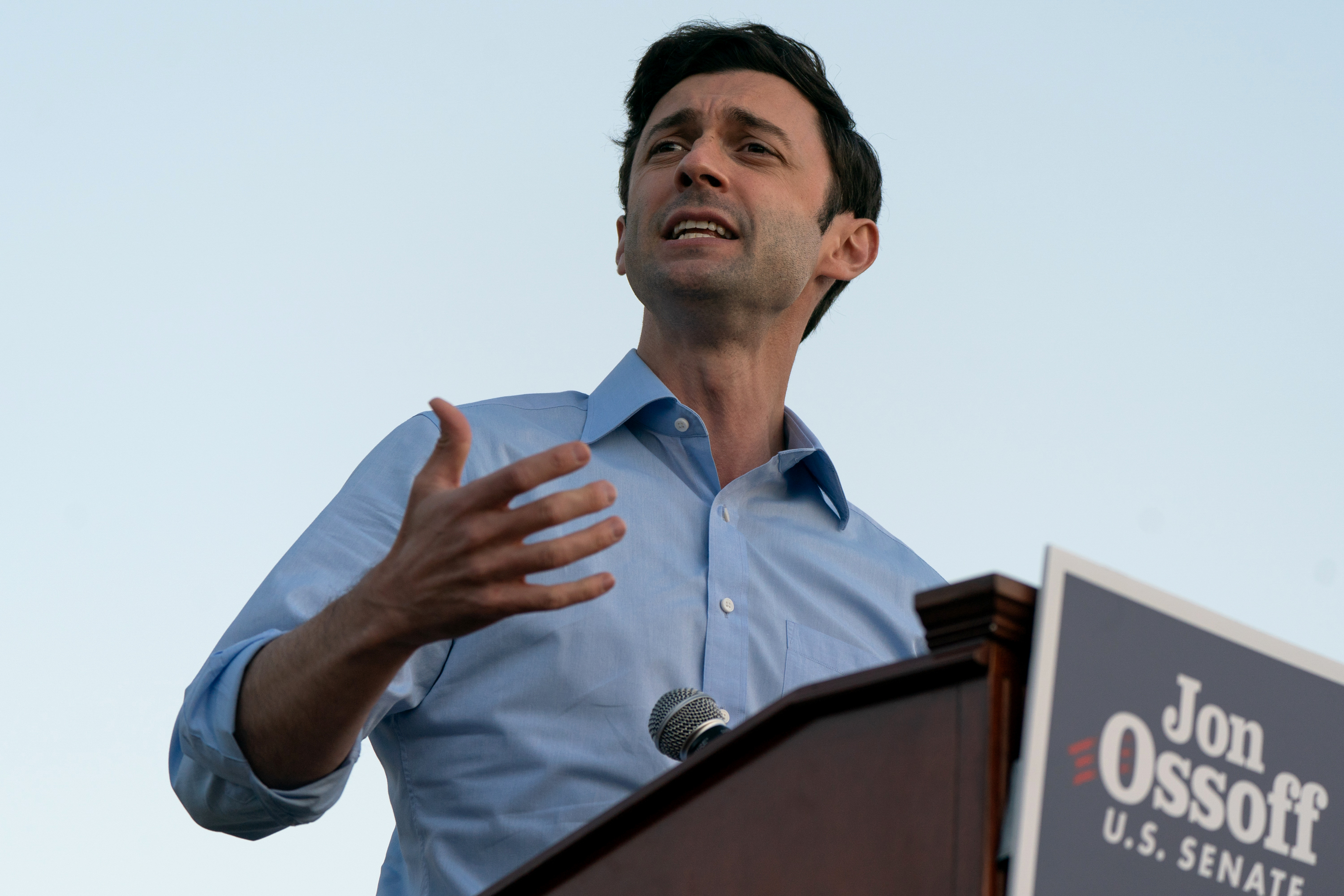
Control of the Senate is key for most administrations, and with a razor-thin edge favoring the Republicans, any pickup to keep control of the Senate after the mid-term elections is a priority. However, with a heavy favorite in Gov. Brian Kemp stepping away from the chance to run for the GOP, many are speculating the once traditionally Republican stronghold could stay blue under the Democrats with the re-election of Sen. Jon Ossoff. It's a topic that has political watchers and media trying to cover and figure out as parties get ready to get back on the campaign trail for next year. It's also why journalists and news outlets like Newsweek are connecting with experts like William Hatcher, PhD, for expert opinion and perspective. An award-winning scholar, Hatcher is the chair of the Department of Social Sciences and a professor of political science. His research focuses on the connection between public administration and the development of local communities. Kemp's decision not to challenge Ossoff in the state's 2026 Senate race could be a boon to Democrats' chances of holding the seat in the battleground state, according to recent polls... Kemp's announcement follows months of speculation about whether he would challenge Ossoff, a Democrat first elected in 2020. Polls suggest Kemp would have been the strongest candidate against Ossoff and that other potential Republicans trail the incumbent senator in a hypothetical matchup. "Given that Kemp was perhaps the strongest candidate to face Ossoff, his decision to not run will make it difficult to find another candidate that would be as competitive. However, the election is over a year away, and in politics, a lot can happen in that amount of time," William Hatcher, chair and professor of social sciences at Augusta University, told Newsweek on Tuesday. A poll from the Atlanta Journal-Constitution found that Kemp led Ossoff by 3.3 points (49% to 45.7%), Ossoff led three other prospective challengers. That poll surveyed 1,426 respondents from April 24 to April 27, 2025, and had a margin of error of plus or minus 2.9 percentage points. Hatcher said the state Republicans face a "limited" bench to challenge Ossoff, but whoever prevails will eventually have to defend Trump's "unpopular economic policies that will most likely adversely affect states like Georgia, particularly his recent commentary on leveling tariffs on the film industry – a industry that has a significant presence in Georgia." May 06 - Newsweek The race is obviously already on for the mid-term elections in November of 2026, and if you're a journalist looking to cover Georgia politics, let us help. William Hatcher, PhD, is available to speak with media - simply click on his icon now to arrange an interview today.


Rural health documentary earns Peabody Award for Georgia Southern professor
Georgia Southern University Professor Matthew Hashiguchi has won a Peabody Award for his documentary, “The Only Doctor,” which focuses on rural health and the services provided by a single doctor in southwest Georgia. The Peabody Awards are prestigious accolades in storytelling across television, radio, streaming and other digital mediums. Categories for winning a Peabody include journalism, social video, interactive documentary, gaming and more. The nearly hour-long feature received the award in the Public Service category, which recognizes projects that address or respond to public health concerns, enhance public engagement or educate the public. For Hashiguchi, the award represents a personal and career accolade. “This award isn’t just a professional achievement, but also represents a moment in my life where I became a father,” said Hashiguchi. “I started filming right before my first daughter was born, and finished right after the second. While this award is an incredible acknowledgment of my work, it means even more to me as a priceless moment from their childhood.” The documentary focuses on Karen Kinsell, M.D., the sole physician serving 3,000 citizens in Clay County, Georgia, near the Georgia-Alabama border. The film spotlights the plight of a community in need of medical assistance and the dedicated doctor fighting to keep her clinic’s doors open. Hashiguchi delves into Kinsell’s sacrifices for her clinic’s operations, revealing her commitment to her patients. “Dr. Kinsell gets calls at home at all hours of the day and night,” Hashiguchi said. “She, at times, has had to pay the bills from her own bank account. But I’d say the biggest sacrifice is that she’s a doctor who does not have breaks.” The final cut of “The Only Doctor” is a bit different from the angle Hashiguchi took when he began work on it several years ago. He initially started the project to better understand the risks associated with maternal health care and childbirth when he and his wife were expecting their first child. Through his work, he learned of a more complex issue of health care access in rural communities. The documentary first premiered on the PBS program Reel South and is now available internationally on Al Jazeera’s documentary series “Witness.” Hashigchi’s work earned him a 2019 Gucci Tribeca Documentary Fund award and a 2021 American Stories Documentary Fund award from Points North Institute. The film’s world premiere took place at the 2023 Hot Docs International Documentary Film Festival in Toronto, Canada, and was awarded Best Documentary Feature at the 2024 South Georgia Film Festival, Best Feature at the 2023 Newburyport Documentary Film Festival and Award of Merit at the 2023 University Film and Video Association Conference. His rise to media prominence wasn’t on his radar early in his academic career. He described himself as a “C student,” and still sees himself as that young boy struggling with math and science courses. With one of the nation’s highest media honors, he can show his students new paths to success as well as the skills it takes to win a Peabody. “I want my students to know how I failed and know that I struggled,” he said. “I tell them that if they want to excel, they really have to put in hard work. That’s very much who I am now as I devote myself to these films.” If you're interested in learning more and want to book time to talk or interview with Matthew Hashiguchi then let us help - simply contact Georgia Southern's Director of Communications Jennifer Wise at jwise@georgiasouthern.edu to arrange an interview today.