
Experts Matter. Find Yours.
Connect for media, speaking, professional opportunities & more.

It is in the news daily the awareness campaigns are everywhere – but for Spanish-speaking Americans, a lot of the information on COVID-19 and vaccination efforts against the disease weren’t reaching home. That was leaving a large swath of the population unprotected against the virus. Pastor Angel Maestre takes to the airwaves for his radio show, 97 Oasis, each week, speaking about faith to his Spanish-speaking audience. When COVID-19 vaccines rolled out, he began including teachings about health and science. “It was my duty as a leader,” Maestre says. Vaccination rates among the Hispanic population were extremely low at the time. In Richmond County, less than 10 percent of this community was vaccinated. Maestre partnered with Dr. Jose Vaszquez, an infectious diseases physician at Augusta University Health. Vazquez began appearing on Maestre’s radio show. He also spoke and answered questions at Maestre’s church, Centro Cristiano Oasis de Bendicion. “The Hispanic community has been one of the toughest communities to get vaccinated,” Vasquez says. “They’re not anti-vaxxers. But, most of the education put out there is in English. A lot of it is not in Spanish. So, they didn’t understand.” According to Vazquez, the top three concerns among the Hispanic community were that the COVID-19 vaccine contained fetal tissue, caused infertility and could result in undocumented immigrants encountering problems with immigration authorities. “They thought if we took their name and number, that ICE or immigration would come and take them, which is not true.” Vazquez eased concerns, and vaccination rates increased quickly. “I’m proud to say because of our outreach programs with some of our partners, specifically going through the churches, that it has actually increased to 30 to 35 percent.” Are you a journalist looking to know more about how COVID-19 is impacting Hispanic communities and what else can be done to ensure every person in America has access to vaccines? That’s where Augusta University can help. Dr. Jose Vazquez, division chief and professor of medicine in the Medical College of Georgia, is an expert in the realm of infectious diseases. He studies and treats infectious diseases, including antibiotic-resistant superbugs and fungal infections. He has been a reliable source for local, statewide and national media regarding the coronavirus outbreak. Dr. Vazquez is available to speak with media regarding this topic – simply click on his icon to arrange an interview.


/cloudfront-us-east-2.images.arcpublishing.com/reuters/WJ3MYTYJN5NGFFYJGDLINZBZ6I.jpg)
Political chess: Has the ‘debt ceiling’ become an annual game of chance in Washington?
Just about every year, no matter who is in charge, Congress ends up in a down-to-the-wire debate about raising America’s debt ceiling. Last year, President Donald Trump needed the debt ceiling increased, with Democrats eventually approving. This year, President Joe Biden is facing down Republicans who are looking to block any increase in the staggering $28.4 trillion that has American books in the red. In a high-stakes standoff over parliamentary maneuvers, Senate Minority Leader Mitch McConnell for months has been saying that Democrats should use a process called "budget reconciliation" to get around the Senate's filibuster rule, which requires 60 of 100 members to agree to pass most legislation. Senate Majority Leader Chuck Schumer, a Democrat, has rejected that approach and Biden on Monday pleaded not to use the filibuster to block action. "Just get out of the way," Biden told Republicans. "If you don't want to help save the country, get out of the way so you don't destroy it." Late last month the U.S. House of Representatives passed and sent to the Senate a bill to suspend the limit on Treasury borrowing through the end of 2022. Schumer was expected to hold a vote on that measure this week. Treasury Secretary Janet Yellen last week warned lawmakers that the United States government was close to exhausting its federal borrowing capabilities by about Oct. 18. Oct.11 – Reuters There’s a lot to understand if you’re a journalist covering the tug of war between Republicans and Democrats. And as the Oct. 18 deadline looms, the public needs to know what the consequences may be for the American people and the economy. Dr. William Hatcher is a professor of political science and interim chair of Augusta University’s Department of Social Sciences. He is an expert in the areas of public administration and social, economic and political institutions. Hatcher is available to speak with media regarding the debt ceiling, what it means if increased and what it means if not raised. To arrange an interview today, simply click on his icon now.


Economic benefits of hosting a sporting mega event are overestimated, new research finds
Experts from Aston University and New York University (NYU) studied how industrial firms in Beijing fared in the run-up to the 2008 Olympics Dr Johan Rewilak and Ted Hayduk (NYU) looked at whether industrial firms in Beijing disproportionately increased their investment ahead of the Games compared to similar Chinese firms The results are interesting for academics, policy makers, businesses and entrepreneurs. Economic experts from Aston University and New York University (NYU) have found that host cities do not receive any disproportionate economic benefits from hosting a sporting mega event. Dr Johan Rewilak from Aston Business School and Ted Hayduk (NYU) studied how industrial firms in Beijing fared in the run-up to the 2008 Summer Olympics. Most studies of this kind focus on the service sector, but this is one of the first examining industrial firms. They looked at whether industrial firms in Beijing disproportionately increased their investment ahead of the Games compared to similar Chinese firms, and explored how those firms compared when it came to profitability. The study found that hosting the 2008 Olympic Games did not provide disproportionate benefits in terms of capital investment or earnings relative to other comparable cities in China. Dr Johan Rewilak, lecturer in economics at Aston Business School, said: “One criticism of having cities host the Olympics is that it funnels public funds into a specific region or area of a country. However, our findings do not support that hypothesis. “Specifically, manufacturing firms in the host city did not receive greater economic benefits compared with firms in similar cities across China, and we found evidence that complements previous arguments that SMEs typically have limited to no disproportional positive impact on the local economy. Ted Hayduk, clinical assistant professor at New York University, said: “In terms of capital investment, we found that the host region had no differential effect for both the Summer and the Winter Games. Given that we found no significant result in 2008, it is somewhat unsurprising to find an insignificant result for the 2022 Winter Games. “This is because the budget for Beijing 2022 is only 10% of what was spent in 2008, and/or alternatively, as the necessary infrastructure has already been built, it has yet to depreciate sufficiently to warrant investment in its replacement.” You can find out more about the study HERE. You can also listen to Dr Rewilak on Aston University’s podcast series, EURO 2020: The Business and Science of Football. He joined journalist Steve Dyson, Dr Danny Fitzpatrick and Dr Robert Thomas to discuss the benefits of holding EURO 2020 across the continent, and whether it was likely to bring an economic spike in a world still living through Coronavirus.


International security scholar's thoughts on Biden, military decision-making in Afghanistan
Baylor University's Peter Campbell, Ph.D., associate professor of political science, penned a column for City Journal, in which he discusses who deserves scrutiny following the U.S. withdrawal from Afghanistan. Getty Images In a column published Sept. 23 in City Journal, international security scholar Peter Campbell, Ph.D., associate professor of political science at Baylor University, explained the civilian-military dynamic in the United States and argued that President Biden -- not the U.S. military -- should shoulder the blame for what Campbell described as the president's "ill-conceived plan for withdrawing U.S. troops." During the withdrawal in August, many dozens of people were killed in a terrorist bombing, including 13 U.S. soldiers. Also, more than 100,000 people were airlifted from the country. Right now, we can only speculate about precisely what advice Biden’s military advisors shared with him, but it’s unlikely that American military leaders would have sanctioned on their own the accelerated withdrawal that the president demanded. My years of studying military history and military doctrine have taught me that fighting withdrawals are among the most difficult military operations to undertake, even for a highly disciplined and well-trained military force. Moreover, the Afghanistan withdrawal was to take place during the active fighting season, when favorable weather tends to increase the tempo of Taliban operations. The Afghan government requested that Biden delay the withdrawal until the winter, when conditions reduce the mobility of forces in the region. Wedded to his timeline, the president refused. In the column, Campbell wrote that America and the international community should not be left to speculate as to what advice the president received prior to his decision. He called for U.S. Congressional committees to investigate. "Americans deserve to know exactly what the military and the intelligence community told the president," he wrote. ABOUT PETER CAMPBELL, Ph.D. Peter Campbell, Ph.D., associate professor of political science at Baylor University, is a scholar on international security, civil-military relations, insurgency and counterinsurgency, the just war tradition, and cyber warfare. He is the author of Military Realism: The Logic and Limits of Force and Innovation in the U.S. Army, published by University of Missouri Press.


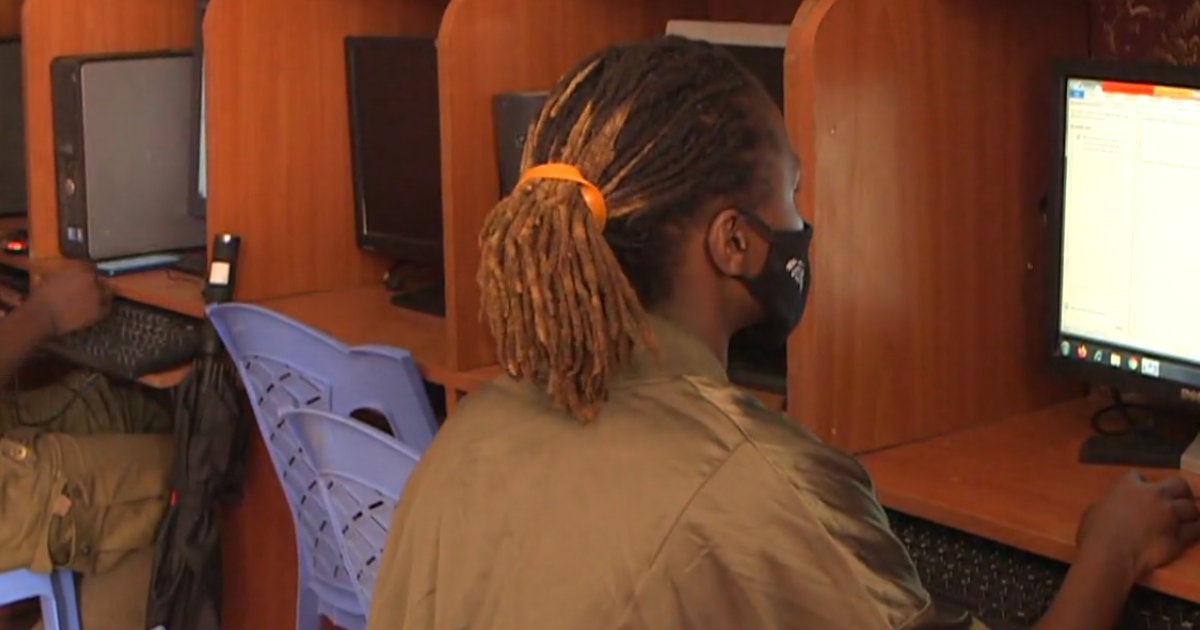
Offshore A’s – UMW’s David Rettinger is the go-to expert for the Varsity Blues trial
The Varsity Blues case captured headlines over two years ago, when news broke that wealthy parents paid upwards of $25 million in bribes to help their children cheat on test scores and secure college admission. As the trial gets underway this week, Professor of Psychological Science David Rettinger, who oversees Academic Integrity Programs at the University of Mary Washington, can provide unique insight into the scandal and the rise of contract cheating at colleges and universities across the country. He was recently interviewed by CBS News about the billion dollar cheating industry that has emerged in Kenya, where Americans are paying African students to do homework, write essays and in some cases, even complete degrees for them. "I think the state of cheating at colleges and universities is serious and getting more serious," David Rettinger ... told CBS News. He said that cheating is problematic because it means people can graduate from degree programs without actually being qualified in their fields. "We trust our doctors have been to medical school," Rettinger said. "Cheating leads us to overall social corruption because it leads us to having a cadre of professionals who can't actually do the work that they claim they can do." You can see the full interview and story here: Dr. David Rettinger is available to speak with media regarding this issue of cheating and academic integrity. Simply click on his icon now to arrange an interview today.


UCI scholars discuss how 9/11 changed America
In recognition of the 20th anniversary of the Sept. 11, 2001, terrorist attacks in the U.S., we asked UCI scholars a single question: How did 9/11 change America? They responded according to their expertise – which ranges from collective trauma, media, air travel, foreign relations, false narratives, political divisiveness, and the war on terror. Contact Tom Vasich at 949-285-6455, tmvasich@uci.edu, to arrange interviews. Roxane Cohen Silver, Distinguished Professor of psychological science, public health and medicine E. Alison Holman, professor of nursing Topic: Media and collective trauma Quote: “The Sept. 11 terrorist attacks – which hijacked our television screens that Tuesday morning as people who sought to do us harm hijacked four airplanes – captured people’s attention throughout the days and weeks that followed. It also ushered in 24/7 media attention to what has become known as a “collective trauma,” transmitting the horrible events of that day throughout the country and, indeed, throughout the world in a matter of seconds. …The 9/11 attacks were tragic for American residents, but they also taught us that the media can broadcast distress alongside the news it’s covering.” Jan K. Brueckner, Distinguished Professor of economics Topic: Air travel Quote: “In response to the revenue shock of 9/11 and to new competition from low-cost carriers, the major airlines behaved conservatively in adding back capacity as traffic returned, so that the carriers eventually offered fewer seats to an ultimately larger number of passengers, leading to fuller flights and today’s less comfortable flying experience. Even though 9/11 is long past, the airline industry continues to operate in a climate of fear of terrorism from the air.” Erin Lockwood, assistant professor of political science Topic: U.S. foreign policy Quote: “The attacks – and the U.S. response – set in motion decades of war, anti-Arab and anti-Islamic bias and violence, and a willingness to sacrifice military and civilian lives and civil liberties for the perception of security. As we mark the withdrawal of U.S. forces from Afghanistan this month, it’s all too apparent that many of those trends continue to reverberate today.” David Kaye, clinical professor of law Topic: National security Quote: “Despite my hopes for something better that might emerge, the attacks reinforced a cult of national security that the United States transformed into the torture of terrorism suspects, drone warfare, the invasion of Iraq, Guantanamo Bay’s indefinite detentions, anti-Muslim discrimination at home and the emergence of the contemporary surveillance state. … The predominance of national security as an ideology and apologia remains among the most significant legacies of that day, a feature of American political life that continues to constrain creativity and a return to normalcy in American law and policy.” Matthew Beckmann, associate professor of political science Topic: War on terror Quote: “To understand the legacy of 9/11 is to define the legacy of George W. Bush. For after the deadliest terrorist attacks on U.S. soil in our nation’s history, American citizens and lawmakers gave President Bush broad support and broader authority to wage the “war on terror” as he saw fit. … Twenty years after the attacks, having seen those lofty aspirations dashed in Afghanistan and Iraq, disregarded in Guantanamo Bay and black site prisons, and discounted even by our staunchest allies, the biggest legacy of Sept. 11 for the United States is that the “shining city on a hill” has less luster and a shorter reach.” David Theo Goldberg, professor of comparative literature Topic: Rise of false narratives Quote: “The events of 9/11 lent themselves to make-believe. The smoke hadn’t yet cleared when conspiracies began to abound, from “weapons of mass destruction” to “the deep state.” That the Trump administration adopted this as its own playbook while insisting on “draining the swamp” required cooking the rules. … Fabrication had become the rule book of the game. Invention and inventedness, disruption and innovation fueled the movement. The “truth” was, well, oh so yesterday.”

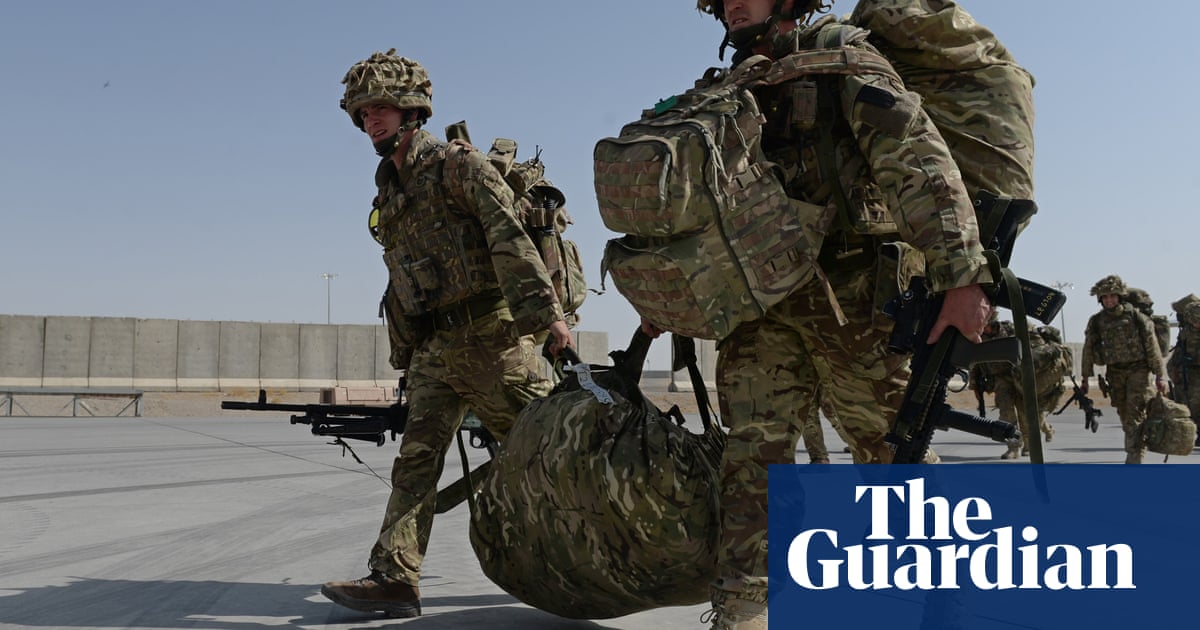
This Saturday marks the 20th anniversary of the September 11 terrorist attack. It was a day that forever changed how the United States viewed terrorism and its approach to foreign policy. The Middle East, especially Iraq and Afghanistan, has seen upheaval in the wake of 9/11. Over the last two decades, America’s approach to how it deals with enemies and how it collaborates with allies has also been drastically altered. University of Mary Washington Political Science and International Affairs Professor Jason Davidson is an expert in American foreign and security policy, and international security. He is also the author of the commissioned study, "The Costs of War to United States Allies Since 9/11," which focuses extensively on the human and monetary sacrifices made by America's allies in these conflicts. Davidson, and the document, made waves this spring, landing in the likes of Forbes, The Guardian and The Daily Mail. If you’re looking to arrange an interview with Dr. Davidson, simply click on his icon.

UCI experts can discuss unfolding crisis in Afghanistan
UCI faculty members Dr. Heidi Hardt, associate professor of political science, and Dr. Mark LeVine, professor of modern middle eastern history, are available to speak about the crisis in Afghanistan. Dr. Heidi Hardt Dr. Hardt can talk about NATO's contribution to Afghanistan, implications for NATO's legitimacy, security concerns for Afghan women and provide broader context on military interventions and operations. She can address more specific questions related to the two decades long allied operation. About Dr. Hardt: Dr. Hardt has expertise in transatlantic security, national security and European security and defense, including NATO, the EU and OSCE. Issue areas include transatlantic security cooperation, collective defense, crisis management, military operations (e.g. Afghanistan), coalition warfare, strategy, learning, adaptation, organizational change, gender and diplomacy. She's the author of two books: NATO's Lessons in Crisis: Institutional Memory in International Organizations (Oxford UP, 2018) and Time to React: The Efficiency of International Organizations in Crisis Response (Oxford UP, 2014). She's the recipient of a 2021-2022 Council on Foreign Relations International Affairs Fellowship and will soon be working as a foreign policy fellow for the Office of Congresswoman Katie Porter. Contact: hhardt@uci.edu Dr. Mark LeVine Dr. Levine was in Kabul in 2019. His point of view on Afghanistan includes: • “Why did the US abandon the embassy when the agreement with the Taliban specifically allowed to diplomatic staff to remain in Afghanistan and there was no imminent threat by the Taliban to the embassy and in fact the US was coordinating with them. They could have certainly kept the lights on and not looked like cowards running, which set the tone for everything else.” • “It seems pretty clear that there was an internal military coup. The Taliban did not just waltz into Kabul without coordination with senior military people who are already handing over parts of the country to them in the days before. Some kind of deal had been worked out behind the scenes and without the knowledge of the president, which is why he felt he had no choice but to flee.” About Dr. LeVine: Dr. LeVine completed his Ph.D at NYU’s Dept. of Middle Eastern Studies in 1999, after which he held postdoctoral positions at Cornell University's Society for the Humanities and the European University Institute's Robert Schuman Centre for Advanced Studies, in Florence, Italy before coming to UCI. His research and teaching focus on the following issues: histories, theologies and political and cultural economies of the Middle East and Islam in the modern and contemporary periods; Palestine/Israel; cultural production, revolution and resistance in the Middle East and Africa; modern and contemporary Iraq, Egypt, Tunisia and Morocco; art and conflict in West Africa (especially Ghana and Nigeria, but also Senegal, Mali and Kenya); comparative studies of imperialism and colonialism, urban planning and architecture (history and theory); critical theory and globalization studies with a comparative focus on popular cultures and religion in Europe and the Muslim world; peace and conflict studies; and comparative nationalisms. Contact: mlevine@uci.edu
/cloudfront-us-east-1.images.arcpublishing.com/gray/VTFRFP3RLBDQNHSADLYVFHUNMI.jpg)
#Experts in the media - Political science professor discusses 2020 Census data
The 2020 Census is out - and media are coming to Georgia Southern University to help breakdown the numbers and explain the details about how it all impacts Georgia. America is becoming more diverse, according to new data from the 2020 Census. Analysts say the biggest jump came, in the multiracial category. It went from nine million in 2010 to 33.8 million in 2020. That’s a 276 % increase. The Latino and Asian communities also saw big jumps. A political science professor at Georgia Southern says this data has a big impact on local communities. “Another thing is the redistricting process in general. The results of the Census are going to have a big impact on the redistricting process this year in state legislatures. For instance, some states are losing representatives, and some states are gaining representatives,” Kimberly Martin, Ph.D., assistant professor of political science and international studies, said. While Georgia and South Carolina are keeping the same number of representatives, Martin says the Census affects funding, and also gives lawmakers an idea of how demographics in their districts have changed over the past decade. August 13 - WTOC If you are a reporter covering this topic - then let our experts help. Contact Georgia Southern Director of Communications Jennifer Wise at jwise@georgiasouthern.edu for an interview with Professor Martin today.


Stepping back in time — Georgia Southern expert helps uncover day-to-day life of the woolly mammoth
It’s been an exciting time for those studying the now extinct animals that used to roam the continent. And recently, Katy Smith, associate professor of geology and curator of paleontology at Georgia Southern University, was asked to lend her expertise to a team of scientists who are piecing together the life and times of the massive wholly mammoth that once roamed the earth. We might not be able to study a walking, breathing woolly mammoth in real life, but what if we could track its movements and get a sense of where it traveled, from its birth to its death? For the first time ever, scientists have done just that. An international team of researchers published a paper this week in the journal Science that reveals the 28-year movement history of a male woolly mammoth. With exciting detail about where it roamed throughout northern Alaska, its seemingly favorite locations—as it returned time and time again—and where it eventually died, this paper offers unparalleled insight into an animal that lived approximately 17,000 years ago. August 12 - GIZMODO A full article is attached and is a captivating read. If you are a reporter looking to learn more or cover this interesting subject – then let our experts help. Contact Georgia Southern Director of Communications Jennifer Wise at jwise@georgiasouthern.edu for an interview with Katy Smith today.