
Experts Matter. Find Yours.
Connect for media, speaking, professional opportunities & more.

As Afghanistan falls – what comes next?
After 20 years of war, trillions spent and thousands of casualties, the Taliban claimed control over most of Afghanistan this weekend with little resistance, just a few weeks after withdrawal of American and allied forces. And questions are already being raised: How could this have happened so quickly? Did no one see this coming? What revenge and havoc will the ruling Taliban seek on those who assisted coalition forces? What will happen to the Afghan refugees who are attempting to flee the country? And sadly, was this all for nothing? There will be a lot of coverage as the future unfolds for the people of Afghanistan and how the Taliban’s control will reshape the country and the region. And if you are a reporter covering this ongoing topic – then let us help. University of Mary Washington Political Science and International Affairs Professor Jason Davidson is an expert in American foreign and security policy, and international security. He is also the author of the Brown and Boston universities commissioned study, "The Costs of War to United States Allies Since 9/11," which focuses extensively on the contribution of America's allies in Afghanistan. If you’re looking to arrange an interview with Dr. Davidson, simply click on his icon now to arrange an interview today.



Three Aston University STEM pioneers shortlisted for Women in Tech Awards
• Three finalists from Aston University shortlisted for prestigious Women in Tech Awards • Two academics are up for the award which will be announced in October • A degree apprentice has also been nominated in the category Three STEM pioneers from Aston University are celebrating after being shortlisted for the prestigious Midlands Women In Tech Awards. Aston University’s Reham Badawy and Lucy Bastin have picked up nominations for the academic category while Jessica Morgan has been put forward for the apprentice category for the awards. The Midlands Women in Tech Awards are an opportunity to highlight and recognise the ongoing contribution of women in the tech sector. The aim of the awards is to raise the visibility of women in the tech space and enable the next generation to ‘see it and therefore aspire to it’. Jessica Morgan is studying a Digital Technology Solutions apprenticeship with Cap Gemini and Aston University, with experience working on projects within the public sector. She is in the final year of her degree apprenticeship and has been balancing work, studying and volunteering, while being on track for a first class honours. Reham Badawy is part of the Undergraduate Teaching Team at Aston University. Her research work has used smart tech to detect and monitor symptoms of Parkinson’s disease. She is a strong advocate for women in STEM and is a UK Ambassador for Women are Boring. Lucy Bastin has a Masters in GIS and a PhD in Urban Ecology. She is a senior lecturer in Computer Science and was recently on secondment to the Joint Research Centre of the European Commission. She developed web-based biodiversity information systems that support accessible and user-friendly reporting by the international community against policy and conservation targets such as the Sustainable Development Goals. Professor Kate Sugden, deputy dean for the College of Engineering and Physical Sciences at Aston University said: “We are delighted to see so many Aston University shortlisted candidates for the Women in Tech Awards. “In our eyes they are all winners and are great examples of our ongoing commitment to making significant contributions to the region and wider society.” Voting closes on August 20 and more details about the finalists can be found here: www.womenintechawards.co.uk The ceremony takes place on 7 October where the winners will be announced.



The pressures and anxieties for students to perform in post-secondary institutions have always been a factor. Add in the impacts of COVID-19 on the last two years of learning, and the increase of instances of cheating has gone through the roof. Recently, David Rettinger, a professor of psychological science and director of academic integrity programs at the University of Mary Washington sat in on the TechTank Podcast to talk about how American colleges and universities are dealing with cheating. Students are heading back to class soon, and if you are a journalist looking to cover this subject, then let us help with your stories. Dr. David Rettinger is available to speak with media regarding this issue of cheating and academic integrity. Simply click on his icon now to arrange an interview today.

Ask the Expert: How to make agriculture more sustainable
MSU’s Bruno Basso outlines key steps the grain industry can take — with public support — to reduce its greenhouse gas emissions by more than 70% over the next decade Michigan State University Foundation Professor Bruno Basso has long been a believer in the power of digital agriculture. For years, he’s worked to show how emerging digital tools and technologies — things like drones, robotics, satellite imagery and computer models of soil and plant growth — can help farmers promote sustainability without sacrificing profits. Now, in addition to belief, he also has concrete numbers. Basso, an ecosystems scientist in the College of Natural Science and the W.K. Kellogg Biological Station, has helped outline how America’s grain industry can shrink its carbon footprint by 71% by 2030. The team — which included researchers at Duke University, the U.S. Department of Energy’s Argonne National Laboratory and Benson Hill, a sustainable food technology company — published its findings online on June 21 in the journal the Proceedings of the National Academy of Sciences. Basso, who recently won a $250,000 award for sustainability innovations, sat down with MSUToday to talk about how farmers can achieve those reductions and how the public can help. The full article is attached and well worth the read. Basso tackles tough questions such as: How big is this problem? How much of our greenhouse gas emissions come from agriculture? Your new paper focuses on grains in particular. How big of an emitter is grain production, especially compared to other ag sectors such as livestock, which tends to get more attention? You talked about getting a 23% reduction by better management of fertilizer. How do we get to a 70% reduction by 2030? What are the obstacles that we need to overcome by 2030? Are you a journalist looking to cover this topic - then let us help. Bruno Basso is available to speak with media, simply click on his icon now to arrange an interview today.


Aston University celebrates launch of first wave of Institutes of Technology
"There remains a significant national skills shortage for engineering and we are pleased to be helping to address this through the provision of courses for young people wanting to progress to higher technical education, adult learners and people who want to develop their engineering skills." Professor Sarah Hainsworth Pro-Vice Chancellor and Executive Dean of the College of Engineering & Physical Sciences Aston University Institutes of Technology (IoTs) are collaborations between further education (FE) providers, universities and employers IoTs focus on the specific technical skills needs required in their local area They provide employers with a skilled workforce and students with a clear route to technical employment Aston University is joining in a nationwide celebration to mark the launch of the first wave of 12 Institutes of Technology on Thursday 8 July. Institutes of Technology (IoTs) are collaborations between further education (FE) providers, universities and employers. They specialise in delivering higher technical education (at Levels 4 and 5 – equivalent to the first and second year of a degree) with a focus on STEM (science, technology, engineering and mathematics) subjects, such as engineering, digital and construction. IoTs focus on the specific technical skills required in their local area. They will provide employers with a skilled workforce and students with a clear route to technical employment. By bridging skills gaps, these new institutions will drive growth and widen opportunity. Gillian Keegan, minister for apprenticeships and skills, said: “Institutes of Technology are the pinnacle of technical education, helping to develop the highly-skilled talent pipeline employers will need for the future. “By bringing together Further Education colleges, universities and businesses, Institutes of Technology are unique partnerships which will help to tackle skills shortages in vital sectors, from marine engineering to healthcare, cyber security to agri-tech. “Institutes of Technology are also playing a vital role in our multi-billion Plan for Jobs, which is helping to level up opportunities and support people to get the skills they need to get good jobs as we recover from the pandemic.” The Greater Birmingham and Solihull IoT has brought together the most innovative education providers within the Greater Birmingham and Solihull Local Enterprise Partnership area with leading industry stakeholders to create a powerhouse for advanced manufacturing and engineering. The consortium is led by Solihull College & University Centre, Aston University and Birmingham City University, working alongside South and City College Birmingham as a core partner and supported by BMET College, University College Birmingham and the University of Birmingham. The partnership will jointly design, develop and widen education and training opportunities aligned to the latest skills needs of leading-edge employers and the local, regional and national economy. The group will target under-represented learners, facilitating clear opportunities for progression from school to high-level occupations. In this new video, partners and employers explain what the IoT means to them: The following passage was included in the recent Government Skills for Jobs white paper, with the GBS Institute of Technology highlighted as an example of good practice: Government Skills for Jobs white paper Building work has started on the GBSIoT Hub at Aston University. It will be completed at the end of 2021 and will be an innovative hub, providing a fabulous resource for students and learners from across the region. Andy Street, mayor of the West Midlands, said: “The Greater Birmingham and Solihull Institute of Technology is all about two things: economic growth and prosperity. The Greater Birmingham and Solihull Institute of Technology is going to give us wonderful new skills in the sectors of the economy that are really growing fast here.” Professor Sarah Hainsworth, pro-vice chancellor and executive dean of the College of Engineering & Physical Sciences at Aston University, said: “We are delighted to be working with our partners on the Greater Birmingham and Solihull IOT for Advanced Manufacturing. It has been really exciting to see the work progressing on delivering the new Hub for students and learners on the campus at Aston University. "There remains a significant national skills shortage for engineering and we are pleased to be helping to address this through the provision of courses for young people wanting to progress to higher technical education, adult learners and people who want to develop their engineering skills. "The Hub will be home to a new cyber physical manufacturing rig which will create a simulated working environment linked to advancing Industry 4.0 technology and state of the art digital facilities and I really look forward to when it becomes the new home for our IoT students.” Find out more about the Greater Birmingham and Solihull Institute of Technology at www.gbsiot.ac.uk

Environmental scientist on heat wave in western U.S.
Jonathan Gilligan, Associate Professor of Earth & Environmental Science and Civil & Environmental Engineering at Vanderbilt University, is available for commentary on the recent heat waves and how climate change plays a role. Professor Gilligan's research focuses on global climate change and environmental policy. He also serves on Vanderbilt's Climate Change Research Network, which focuses on the reduction of carbon emissions from individuals and households. He can speak to how climate change is affecting our temperatures and future related trends we might see.


Crossing Space and Time at Japan Society's 2021 Annual Dinner
On June 22, Japan Society celebrated its 2021 Annual Dinner, raising over $1.3 million to take us into the next year and beyond. It was—literally and virtually—a star-studded evening at the intersection of science, art, culture, business, and the U.S.-Japan alliance. After a special message from Japanese Prime Minister Yoshihide Suga, the program included a conversation between former JAXA astronaut Naoko Yamazaki, the second Japanese woman to fly in space, and Ambassador Caroline Kennedy—marking the 60th anniversary of President Kennedy's Moonshot Address, followed by a performance from Japan's Ryoma Quartet. The keynote Fireside Chat brought together two titans of industry, our very own Chairman Joseph Perella, Chairman Emeritus, Perella Weinberg Partners and private equity pioneer Henry Kravis, Co-Chairman and Co-CEO of KKR—also the recipient of this year's Japan Society Award. Mr. Kravis underscored the value of investing in long-term relationships throughout his talk with Mr. Perella, noting, "You have to be patient. You have to set your mission. You have to have a focus on ESG (environmental, social, and governance). Any company today that is not focusing on their ESG and on diversity of their workforce is not going to have much of a future. Today, it's not all about making money. That's a part of it. But it's also very important to ask, 'What are you doing for society, what are you doing to help your country?'" In her conversation with astronaut Naoko Yamazaki, Ambassador Caroline Kennedy cited her father's famous Moonshot Address at Rice University in 1962: "We choose to go to the Moon in this decade and do the other things, not because they are easy, but because they are hard, because that goal will serve to organize and measure the best of our energies and skills, because that challenge is one that we are willing to accept, one we are unwilling to postpone, and one which we intend to win, and the others, too." Yamazaki, who is working to inspire the next generation in aerospace, among other initiatives, is "thrilled to be able to witness the Artemis Program, which is sending the first woman and the first person of color to the moon, with international cooperation. Japan is in charge of the cargo transfer to the Lunar Gateway, the station [that will orbit the moon], and also Toyota and JAXA are developing a pressurized lunar rover to explore the surface of the moon." For Japan Society, the next 50 years will be our own Moonshot, as we move forward into a new post-pandemic inflection point—a significant reopening full of energy and excitement this fall that embodies the best of American and Japanese spirit. It's time to reach beyond the physical space of our landmarked building, which opened to the public 50 years ago in September 1971, re-imagining our enduring mission of connecting American and Japanese people, cultures, and societies across time and space for the next half century. Sixty years ago, President John F. Kennedy's Moonshot Address inspired a generation of Americans to look to the moon in the spirit of adventure, patriotism, and freedom. Today, under new leadership in the United States and Japan, Japan Society starts a new chapter in building our kizuna, our forward-facing energy and deeply interwoven connections, between New York and Japan – and beyond. How do we continue to inspire the next generation of leaders in U.S.-Japan relations? As we think about the next 50 years at Japan Society, much has changed, yet many of the foundations remain the same from our starting point 114 years ago. There's a lot to look forward to as we celebrate significant milestones in 2021-22 and beyond. As Mr. Kravis said, in order to grow and to survive, "You have to keep innovating, you have to keep moving." Japan Society is a convener for the future. With your support, we, too, will overcome the tough challenges facing this world and the U.S.-Japan alliance, together. See you at Japan House and on the far side of the moon! If you missed out on our 2020-21 season, below are some of the highlights. Stay tuned for more exciting events coming this summer and fall, in person and online! Published on June 22, 2021 on Japan Society’s new Watch & Read page.


Aston University experts explain what it takes to make a champion for EURO 2020 podcast series
"It's the age-old question... you need talent, drive, and luck. I always believed 'attitude' was one of the top attributes to becoming an elite athlete, but I've changed my mind" Professor Gavin Woodhall, Aston University In this episode, journalist Steve Dyson chats to Professor Gavin Woodhall and Dr James Brown about how far our genetic makeup can take us in the journey to becoming an elite athlete, and how attitude makes it all possible. Professor Woodhall looks at the question from a pharmacology and neuroscience angle. He explains the chemistry of the brain, and how neurones are wired to talk to each other. He references the importance of genetic muscle fibres but focuses on how high cognitive brain loads enable feet skills and positioning due to brain synapse connections, "pruned to be more efficient", with proprioceptors unconsciously guiding movement. Dr James Brown looks at the question from a ‘bioscience’ perspective. He explains that there have to be genetic and physical aspects but that these take years to refine, quoting research that ‘it takes 10,000 hours training over ten years to become elite’. He looks at family links and cites interesting monozygotic twin research that disentangles nature/nurture elements. He talks about well-known sports examples in relation to science - Tiger Woods, Robbie Fowler, Usain Bolt, Conor McGregor, Lennox Lewis and various cricketers. He mentions the YIPS (when elite sports stars start losing their edge) and how this can be overcome.

Victory for Kim Leadbeater, relief for Keir Starmer. Peter Byrne/PA Images/Alamy Stock Photo Parveen Akhtar, Lecturer in Political Science, Aston Centre for Europe at Aston University, dissects the close vote. The Batley and Spen by-election was a close contest that went right down to the wire with few commentators risking calling the result before it was announced. At 5:25am it was declared. Kim Leadbeater was the new Labour MP for Batley and Spen, beating her nearest rival, the Conservative candidate Ryan Stephenson, by 323 votes. It was close but a clear victory for Labour. Leadbeater’s acceptance speech was always going to be poignant. This was the seat held by her older sister, Jo Cox, at the time of her murder in 2016. Cox, who won the seat for Labour in 2015, was killed by a terrorist who held extreme right-wing views and targeted Cox because of her work with refugees. But what was striking – if also sobering and shocking in equal measure given the context – was that Leadbeater also had recourse to thank West Yorkshire police for their protection of her during the campaign. “Sadly”, she said, “I have needed them more than ever.” In fact, even before her victory had been declared, she released a statement pointing to the “intimidation and violence of those who had convened in the constituency with the sole aim of sowing division”. Discord, division and dirty tricks A total of 16 candidates put their hats in the ring for the race in Batley and Spen – a number of whom represented far-right political parties. But it was the presence of George Galloway standing as an independent for the Workers Party which seriously threatened to undermine Labour’s chances of retaining the seat it had held since 1997. Galloway was determined to woo traditional Labour supporters, including the significant Muslim constituent in Batley and Spen. Capitalising on escalating tensions in the Middle East, Galloway sought to paint the Labour leader Sir Keir Starmer as anti-Muslim. His intention was to set up the vote as a referendum on Starmer’s leadership, to split the Labour vote and ultimately force Starmer out of office. To this end, he also attempted to attract white working-class voters by building a narrative of the Labour leader as “woke” rather than for the working class. In the run-up to July 1 there were deeply disturbing reports coming out of Batley and Spen detailing the intimidation and abuse of candidates. There were accusations of dog-whistle racism and homophobia, fake leaflets and foul play. The campaign descended into one of the most bitter and divisive by-elections of recent years. Tracy Brabin, who had won the seat after the murder of Cox and whose win in the West Yorkshire mayoral election triggered the by-election, described witnessing her group of canvassers “being egged, pushed and forced to the ground and kicked in the head”. It was by no means the only time such disturbing strategies have been exploited. In fact, similar divisions were present in the 2015 general election in Bradford West, an election in which Galloway was again present, this time fighting to retain his seat. At a hustings at the university, the then conservative candidate, George Grant, captured the “wild west” nature of the campaign by likening it to a 19th-century rotten borough rather than a 21st-century parliamentary democracy. That election too descended into discrediting individuals and delving into their private lives rather than concentrating on the issues faced by people on the ground. Changing nature of campaigns Electioneering is by its very nature divisive, effectively asking the electorate to vote for party or candidate A and not party or candidate B. But dirty tricks or underhand tactics used to discredit opponents are by no means inevitable. And yet, while the notion of a sense of fair play and decency may be engraved in the nation’s idea of itself, the 2019 general election demonstrated how easy it is to resort to electioneering in bad faith in the age of social media. From faking fact checks to manipulating videos, the 2019 election threw up a whole catalogue of ways in which to unduly undermine political opponents. Indeed, divisive and personal campaigns may become more prevalent in an era of online campaigning. Something not unique to the UK, of course. The 2020 US presidential election was also divisive in nature as were the state elections in India’s West Bengal earlier this year. In Batley and Spen, in the end, as the Leadbeater pointed out in her speech, the people voted for hope not hate. Yet the constituency is deeply divided and will take much work to bring together. Leadbeater was the only major candidate on the ballot box who was local to the area. While the others leave, she remains, in her words, “the best person” to get on with the job of reconciliation.
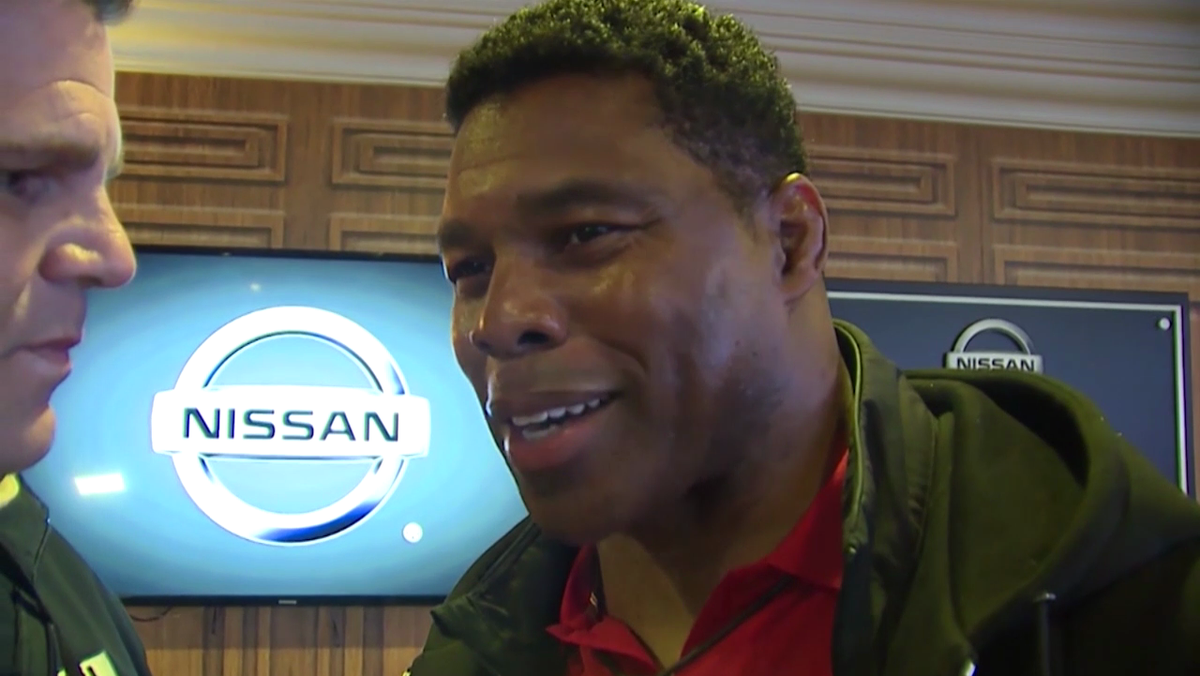
Is Herschel Walker game-ready for the gridiron of Georgia politics?
He once dominated the NFL and is still considered the greatest college running back of all time. But Herschel Walker is now suiting up for a different game and as the original GOAT gets ready to enter the political arena, Joshua Kennedy, Ph.D., an associate professor of political science at Georgia Southern University, is being contacted by media for what he thinks the former superstar needs to do to get across the electoral goal line. In a recent interview with WJCL, Kennedy said, "When it comes to a potential candidate like Herschel Walker who has the celebrity factor in the state of Georgia, who helped bring UGA their national title in 1980, who won the Heisman trophy, is still very well-beloved by the people of Georgia, it could make for an interesting race." At this point, Kennedy believes Warnock would be more likely to win the race. "I think Sen. Warnock has an engaged base and if I were prognosticating at this point, I would say he is a little likelier than not to win," he said. However, Kennedy believes the former president's endorsement of Walker would help the Georgia Bulldog secure a significant number of votes. "The fact that he has the endorsement and support of the former president would carry a lot of weight with Republican voters in the state," he said. In order for someone like Walker to win, Kennedy said he would have to appeal to both the Republican base and independents. "I think that Walker needs to energize the base first and foremost, then focus on finding particular issues that speak to the concerns of Georgians including those non-affiliated voters who could be gettable for a Republican," Kennedy said. He would also need to instill a sense of reliance and competence in Georgians. "Voters want politicians who are oriented towards solving problems," Kennedy said. "He’s going to have demonstrate that he is able to do that, that he has that level of competence, which will be difficult considering he has not been in political office before. That will give Raphael Warnock a bit of that incumbent advantage by virtue of being in office, he can point to things he's worked on that Herschel Walker can’t." Kennedy said if Walker were to win, it would make it difficult for Democrats to maintain control of the senate. June 30 – ABC News If you are a reporter looking to cover this subject – then let our experts help. Contact Georgia Southern Director of Communications Jennifer Wise at jwise@georgiasouthern.edu for an interview with Joshua Kennedy.
