
Experts Matter. Find Yours.
Connect for media, speaking, professional opportunities & more.

At the age of 88, American political giant and two-time former Secretary of Defense Donald Rumsfeld is dead. Donald Rumsfeld, the two-time defense secretary and one-time presidential candidate whose reputation as a skilled bureaucrat and visionary of a modern U.S. military was unraveled by the long and costly Iraq war, died Tuesday. He was 88. In a statement Wednesday, Rumsfeld’s family said he “was surrounded by family in his beloved Taos, New Mexico.” President George W. Bush, under whom Rumsfeld served as Pentagon chief, hailed his “steady service as a wartime secretary of defense — a duty he carried out with strength, skill, and honor.” Regarded by former colleagues as equally smart and combative, patriotic and politically cunning, Rumsfeld had a storied career in government under four presidents and nearly a quarter century in corporate America. June 30 - Associated Press If you're a journalist looking to know more about Rumsfeld's legacy and impact on American foreign policy, then let our expert help. Professor of Political Science and International Affairs Jason Davidson is an expert in American foreign and security policy, and international security. His study, The Costs of War to United States Allies Since 9/11, recently received an onslaught of media attention, landing in Forbes, The Guardian and Daily Mail. If you’re looking to arrange an interview with Dr. Davidson, simply click on his icon now to arrange an interview today.


Covering Cosby? Connect with UMW psychological trauma expert Laura Wilson
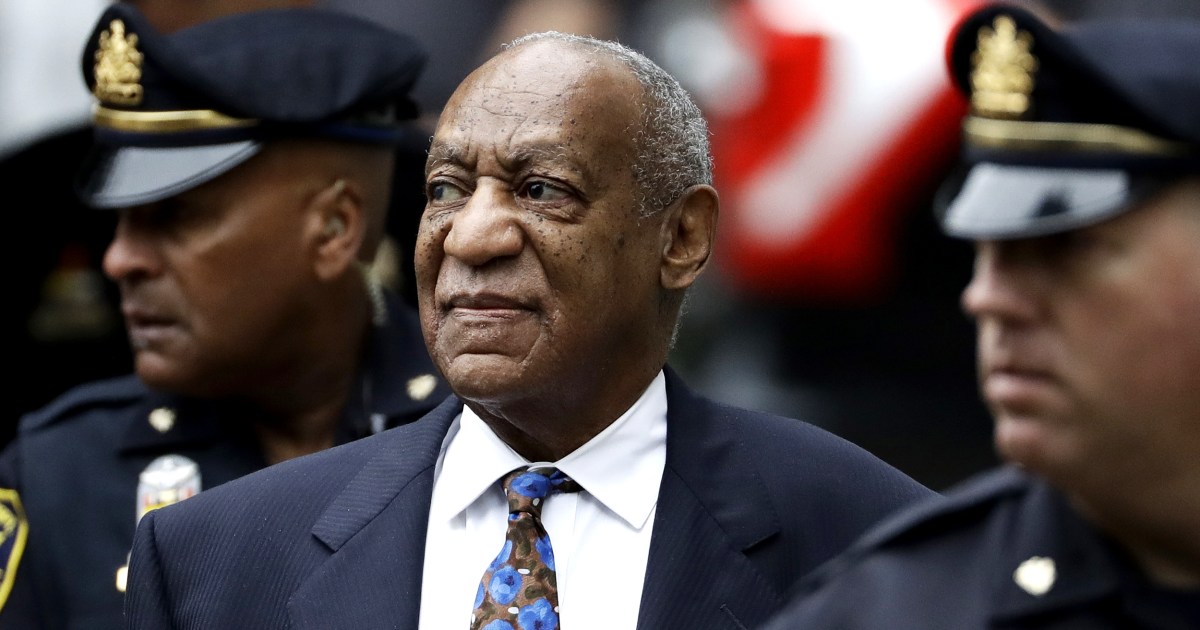
It’s news that has everyone shocked. Bill Cosby is getting out of jail and will be a free man. Pennsylvania's Supreme Court vacated the sexual assault conviction of Bill Cosby on Wednesday and ordered his release from prison after finding that he was denied protection against self-incrimination. The court said that a prosecutor's decision not to charge Cosby, 83, opened the door for him to speak freely in a lawsuit against him — and that testimony was key in his conviction years later by another prosecutor. Cosby was convicted in 2018 of drugging and sexually assaulting a woman in 2004, and was serving a three- to 10-year sentence. He has served two years of the sentence. The state Supreme Court said Cosby cannot be retried on the same charges. June 30 – NBC News This is a story that will be dominating the news cycle for some time – and if you are a reporter covering this story, then let our expert help. University of Mary Washington Associate Professor of Psychological Science Laura C. Wilson has provided sought-after commentary to The Washington Post, NPR, Reuters, Huffington Post, NBC, The Atlantic and more on the psychological trauma experienced by survivors of rape and sexual assault, as well as mass shootings. Dr. Wilson is available to speak with media, simply click on her icon to arrange an interview today.


America in the 1950’s was all about building highways to pump up the post-war economy and make sure everyone could criss-cross a connected America by car. Urban planners didn’t hesitate to bulldoze neighborhoods that were in the way of this progress. However, history shows that most of those communities that were destroyed housed Black and lower income residents. The result left areas with hot pavement, few green spaces and little tree canopy to provide shade. Recently, UMW’s Pamela Grothe joined the host of With Good Reason to talk about how America needs to undo these past mistakes and make better choices. Grothe recently worked with Jeremy Hoffman, chief scientist at the Science Museum of Virginia, who also appears on the episode, and UMW 2021 graduate Allison Grant on research that explores how redlined communities in Richmond, Virginia, designed to keep Black residents in less desirable neighborhoods, show records of being significantly hotter over the last 30 years than white neighborhoods, which has resulted in more heat-related health issues for Black and lower income residents. Aside from jumping in a pool, trees are our best bet to cool summer heat. Pamela Grothe says we have to be intentional about putting trees in the right places. If you’re a journalist looking to learn more about this topic, then our experts are here to help. Dr. Pamela Grothe is an assistant professor in the Department of Earth and Environmental Sciences as the University of Mary Washington, who earned a Ph.D. in the Paleoclimatology Lab at the Earth and Atmospheric Sciences department at Georgia Institute of Technology. She’s an #expert in climate change and is available to speak with media – simply click on her icon to arrange an interview.


EURO 2020: The Business and Science of Football will see academics from across the University’s three colleges speaking on a variety of topics, including economic recoveries, the sustainability of huge sporting events and the psychology of penalties. It is great to use my research experience to provide a different perspective to a general audience with a project like this. Sporting mega events like Euro 2020 are always topical and it's been really interesting to discover the impact they have on the economy


Augusta University experts looking for clues to predict future cyber attacks
The threat of cyber attacks is a reality for every industry. Cybersecurity is top of mind after recent highly skilled and calculated attacks targeting the Colonial Pipeline in May and shutting down the world’s largest meat supplier earlier this month. With America’s energy and food supply chains making vulnerable targets, everyone from executives, lawmakers, security officials and the media are looking for answers. Augusta University’s Dr. Craig Albert and Dr. Lance Hunter explore the questions surrounding cybersecurity in a recently published study in The Cyber Defense Review. This project examines the political, economic and military factors associated with cyber attacks in an effort to understand which countries or groups are most likely to attack. Here’s an abstract of their piece: Factors that Motivate State-Sponsored Cyberattacks The study of the factors involved in the initiation of violent interstate conflicts has been well documented within international relations. However, scholars have yet to analyze the factors associated with the initiation of international state-sponsored cyberattacks due to the lack of available data. This study is a first attempt to address this limitation. This project examines the political, economic, and military factors associated with the initiation of state-sponsored cyberattacks from 2005–2012, using a unique dataset that incorporates author-collected political, economic, and military data, along with cyber data on known state-sponsored cyberattacks extracted from the Council on Foreign Relations (CFR) Cyber Operations Tracker Dataset. With this unique dataset, we seek to better understand those states most likely to cyberattack other states. The Cyber Defense Review, Spring 2021 The study was also referenced in Voice of America in a piece covering President Biden’s trip to the G-7 Summit in Britain. If you are a journalist looking to cover any aspect of cybersecurity and cyber attacks, Augusta University’s experts are world-renowned on the topic. Dr. Craig Albert is director of the Master of Arts in Intelligence and Security Studies at Augusta University. He is a leading expert on war, terrorism and American politics, and he testified before U.S. Congress regarding the threat from Chechnya following the deadly Boston Marathon bombing. Dr. Lance Hunter is an assistant professor of political science with a background in international relations. His research focuses on how terrorist attacks influence politics in democratic countries and how political decisions within countries affect conflicts worldwide. Both experts are available to speak with media about cyber attacks. Simply click on either expert’s icon to arrange an interview today.


A leading London based architectural metalwork company, specialising in the design, fabrication and installation of bespoke metal products has entered into a Knowledge Transfer Partnership (KTP) with Aston University, with the aim of developing antimicrobial coatings as a way to reduce infection in high risk environments. The Aston University research team will work with John Desmond Limited to develop high end metallic products that can be used where there is a high risk of the spread of bacteria. The antimicrobial coating will be developed for use in communal areas on products such as handrails, balustrades, push plates, door handles and faceplates, – all of which are common in high traffic areas such as hospitals, doctors surgeries, dental practices, schools and transportation hubs. A Knowledge Transfer Partnership (KTP) is a three-way partnership between a business, an academic partner and a graduate, called a KTP Associate. The UK-wide programme helps businesses to improve their competitiveness and productivity through the better use of knowledge, technology and skills. Aston University is the leading KTP provider within the Midlands. Microbiologists from Aston University’s College of Health and Life Sciences and materials scientists from its College of Engineering and Physical Science will establish the effectiveness of the antimicrobial coatings against a panel of bacteria under a range of conditions to further optimise the surface performance. The team will support John Desmond Ltd to establish an in-house microbiology laboratory to enable extensive testing of the developed coatings which will be carried out under lab conditions. Information from the lab tests will provide supporting evidence to prospective clients of the antimicrobial coating’s efficacy, expected lifespan and performance under varying conditions. Ian Desmond, owner of John Desmond Ltd, said: “We are very excited to be working with Aston University on this ground-breaking project to develop industrial coatings capable of reducing the spread of infection within public spaces. “We are confident that with the expert knowledge and experience that the Aston University team brings to this collaboration, we will succeed in formulating a potent cost-effective means to protect all of us from the threat of micro-organisms, and their impact on the environment in which we live and work.” The Aston University academic team consists of Dr Tony Worthington, associate professor in clinical microbiology and infectious disease; Professor Anthony Hilton, and executive dean of the College of Health and Life Sciences, and Dr Richard Martin from the Aston Institute of Materials Research in the College of Engineering and Physical Science. Professor Anthony Hilton said: “I’m delighted to be able to work on this exciting project with John Desmond Ltd, bringing together a multi-disciplinary team of scientists and engineers from across Aston University to work with an industry partner. “Knowledge exchange between academia and industry is a core element of Aston University’s strategy and it is exciting to be part of a team developing a product which has the potential to have real impact in preventing and controlling infection.” Dr Richard Martin, Aston Institute of Materials Research, said: “Over the past year, we have all become aware of just how important it is to limit the spread of microorganisms. This project is an exciting opportunity to develop new antimicrobial coatings that will significantly reduce the transmission of microorganisms from touchpoint surfaces such as door handles and handrails." The research team have found that claims for the effectiveness of the anti-microbial properties of products already on the market are not always backed with scientifically rigorous evidence. As a result of this, these products have not been able to penetrate markets such as healthcare, where generic claims are not sufficient for buyers to change suppliers. This KTP will establish a body of testing and efficacy data which will support the application and use of antimicrobial coatings in a range of settings where control of bacteria on environmental surfaces is critical for infection prevention and control. You can visit our website for more information about The College of Health and Life Sciences and The College of Engineering and Physical Science at Aston University.


#Experts in the Media – UMW’s Miriam Liss explains to BBC why 'quirky' people are attractive
What could make a face worthy of launching a thousand ships? For thousands of years, and likely long before Helen of Troy, beauty and what makes us attracted to others has been a mystery. There have been studies, theories and tons of experiments – and like a cure for the common cold, finding an easy answer or remedy for the riddle behind beauty is always illusive. However, University of Mary Washington’s Miriam Liss was recently featured on the BBC and explain how sometimes the small things – make the biggest impressions. Recumbent on her chaise lounge, peacock-feather fan in hand, the model casts her gaze over her shoulder towards the artist. It's the early 19th Century, and Jean Auguste Dominique Ingres is painting La Grande Odalisque, a nude oil-on-canvas of a Turkish chambermaid. The painter has captured her allure, but something is not quite right. When it is shown to the public, the painting is heavily criticised – she has a weirdly long back and her body points in too many different directions. A 2004 analysis by French doctors, including one who specialises in vertebral pain, suggests that not only would it be impossible for her to contort her body in this way, she would have needed five extra lumbar vertebrae for her back to look as long as it does. The Romantic style of art from this period is filled with nude women, back to the observer, with tiny waists and wide hips. An "hourglass" figure was thought to be the height of beauty. Whether Ingres had intended to distort her proportions quite so much is debated – though no model could ever have posed like this. Maybe Ingres was exaggerating her slender back, narrow waist and wider hips to add a little more sexiness and slightly overdid it. Subtle differences in our appearance can make a big difference. Slight changes in dress make women seem more trustworthy, competent or attractive. As psychologist Miriam Liss of the University of Mary Washington in Fredericksburg, Virginia, and her co-authors found, to look honest and competent in a career setting, or even electable as a politician, a woman must dress conservatively and not sexily. May 31 – BBC If you are a journalist looking to cover this topic or speak with an expert, then let us help. Miriam Liss is a professor of psychological science and international known expert in the areas of feminism, body image and objectification. She’s available to speak with media; simply click on her icon now to arrange an interview today.


Republicans are facing a political dilemma: Embrace former President Donald Trump and enjoy full party support, however, expect to lose favor with "never Trumpers" and moderate voters. Or … reject Trump to appeal to voters but face the sling, arrows and potential primary challenges of a vengeful Trump base. It seems like a lose/lose situation for the GOP, and it has been the topic of much conversation and media coverage. In Virginia, the stakes are high politically and The Washington Post recently spoke with UMW’s Stephen Farnsworth about this very situation. Virginia Republicans who oppose or criticize Trump are being shunned or sidelined within the party, said Stephen Farnsworth, a political science professor at the University of Mary Washington, while those who embrace him struggle to win statewide elections or suburban swing districts. The next test in Virginia will come this fall, when GOP gubernatorial nominee Glenn Youngkin, who embraced Trump and won the former president’s endorsement, will compete against the winner of the June 8 Democratic primary. “At the moment, these three former members of Congress are more like voices crying in a Republican wilderness,” Farnsworth said. “Will the party come around to their way of thinking? I think a lot depends on the success or failure of Republican candidates who are all in in their support of former president Trump. If Republicans get swept again in statewide elections, the arguments offered by Riggleman and Comstock and Rigell may make more sense to some of the die-hard activists.” May 22 – Washington Post There’s never a dull day inside or outside of party politics in America. And with mid-terms on the horizon and high expectations for 2024, the moves Republicans make with or without Trump could carry high consequences. And if you are a journalist following these developments within the Republican Party in Virginia or throughout the country, then let us help. Dr. Stephen Farnsworth is a sought-after political commentator on presidential politics. He has been widely featured in national media, including The Washington Post, Reuters, The Chicago Tribune and MSNBC. Dr. Farnsworth is available to speak with media any time. Simply click on his icon to arrange an interview today.


Cybersecurity expert on surge in cyberattacks and White House guidance to businesses
Douglas Schmidt, Cornelius Vanderbilt Professor of Computer Science, is available for commentary on the recent increase in major cyberattacks (such as those on Colonial Pipeline and JBS) and recent White House guidance on companies ramping up cybersecurity efforts. Schmidt is an expert in computer science, cybersecurity and cyber-physical systems and can speak to: The recent increase in major cyberattacks Potential security flaws companies should look for Effects of cyberattacks and what the restoration process looks like after an attack


Stress and pressure go hand-in-hand when it comes to college students across America looking to succeed and make the grade. But with the added anxiety of COVID-19 and students forced out of classrooms and lecture halls – the opportunity to cheat is now easier than ever and numbers are trending upwards. UMW’s Professor of Psychological Science David Rettinger, president emeritus of the International Center for Academic Integrity, was recently interviewed about this alarming trend by NBC News and lent his expert opinion on why more students may be making the choice to cheat and what professors and schools can do to make sure everybody stays on the honest path. If you are a journalist looking to cover this subject, then let us help with your stories. Dr. David Rettinger is available to speak with media regarding this issue of cheating and academic integrity. Simply click on his icon now to arrange an interview today.