
Experts Matter. Find Yours.
Connect for media, speaking, professional opportunities & more.
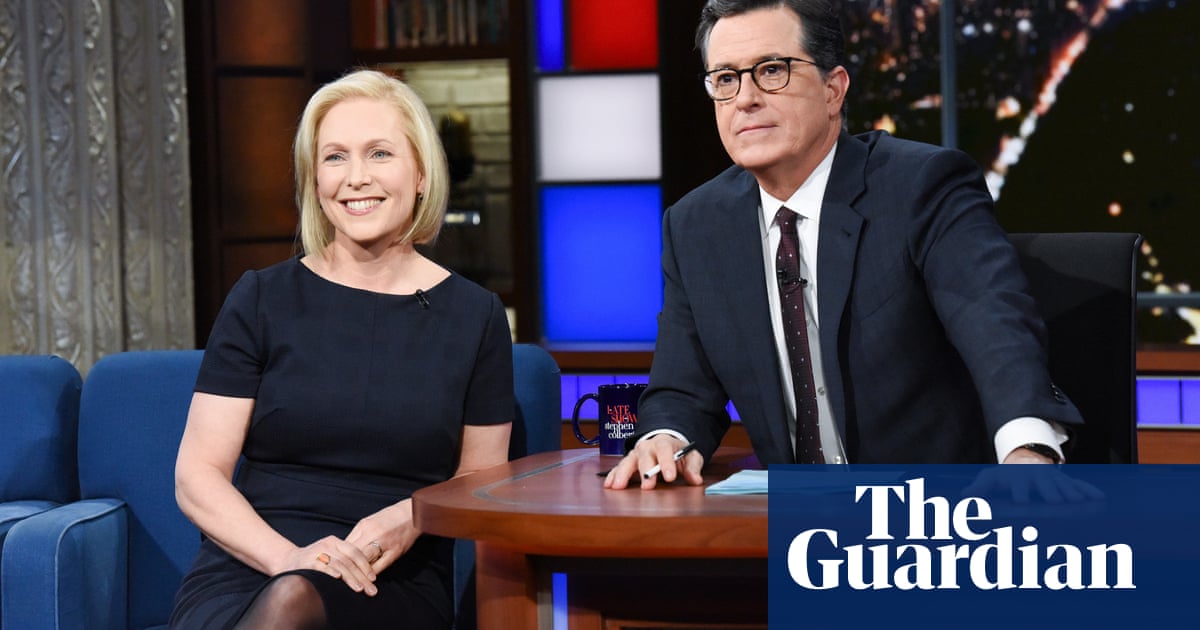
Is Late Night – the Place to Be on TV for Those Running in 2020
It used to be that stopping by a late-night talk show for any political candidate was a just an added bonus of exposure and safe coverage for a campaign. Think of Bill Clinton answering softballs and playing the saxophone on The Arsenio Hall Show a quarter century ago. Now there’s no qualitative proof – but most political scientists will tell you that night helped introduce the then Governor Bill Clinton to a new audience and helped shape his image as that of a cool and relatable candidate. It may have been one of the many factors that saw him win the Whitehouse in 1992. Fast forward to today, and now securing a spot on the sofa beside any of the late-night hosts is a must for any presidential candidate who wants to be taken seriously. What Oprah was once for books and authors, hosts like Stephen Colbert have become for candidates – he’s the perennial gatekeeper for politicians. “Any Democratic candidate who thinks they can ignore Stephen Colbert might as well not run for president,” said Stephen Farnsworth, director of the Center for Leadership and Media Studies at the University of Mary Washington in Fredericksburg, Virginia. “Colbert once joked that the road to the White House runs through his show but it’s no joke; it is exactly so.” - Washington Post, November 2018 In this new era of social media, 24-hour news and even fake news – why is late night suddenly the place to be for politicians? Is it because it is safe? Has comedy suddenly become the only credible and objective place for politicians? Is it because that’s where undecided audiences tune in and can be reached? Or is it because late night is now segmented and postable on YouTube? Is the internet audience after the show just as valuable as the viewers who tune in? There are a lot of questions about what it will take and what we can expect along the long road to the 2020 election – and that’s where the experts from the University of Mary Washington can help. Dr. Stephen Farnsworth is professor of political science and international affairs at the University of Mary Washington. A published author and a media ‘go-to’ on U.S. politics, he is available to speak with media regarding this issue. Simply click on his icon to arrange an interview.



Battling Election Fatigue? Balance It Out with Other Important Things in Life, Baylor Expert Says
It’s happening. Again. Another U.S. presidential campaign. The contentious 2018 midterm elections are barely in the mud-encrusted rear-view mirror, and the next general election is nearly two years away, but telltale campaigning has already begun as presidential hopefuls emerge to take on each other and Donald Trump, who consistently talks and tweets about Election Day 2020. Does this ubiquitous campaigning make you weary? If so, you’re not alone, said expert Patrick Flavin, Ph.D., associate professor of political science in Baylor University’s College of Arts & Sciences. “Election fatigue is real in the United States,” said Flavin, who researches the impact of politics and policies on citizens’ quality of life. “The U.S. holds more elections than just about any other country in the world: primary elections, school board elections, city council elections and more. So, it’s not unreasonable for someone to say, ‘I’m tired of voting because it seems like I’m voting all the time.’” But it’s not just the number of elections that takes a toll. The presidential election cycles are longer now than in years past. Much of that is due to the race for resources, Flavin said. Over the past few weeks, potential Democratic candidates like former Vice President Joe Biden, former San Antonio Mayor Julian Castro, U.S. Sens. Elizabeth Warren, Kamala Harris, Bernie Sanders, Kirsten Gillibrand and Amy Klobuchar have been making moves – either announcing candidacies or testing the political waters. “Right now, we’re at the start of the ‘invisible primary’ for Democratic candidates whereby they compete for staff, endorsements from other politicians and party leaders, name recognition and fundraising sources,” Flavin said. “For relatively unknown candidates, in particular, it is important to get into the race early to give yourself a head start in trying to compete for those scarce resources. In contrast, a more well-known candidate like Joe Biden can afford to wait for a while before starting his campaign – if he does decide to run.” Flavin said it’s important for citizens to know what’s happening on the national political scene, but he advises people to take a break when it becomes overwhelming. “Being an informed citizen is good and to be admired, but I don’t think it’s healthy to obsess over every single day-to-day political development – especially in the era of 24/7 news,” he said. “Balance it out with other important things in life.” And if you’re in a position (a political science professor, for example) that doesn’t often afford the time to break away, Flavin advises taking the time to approach politics as an observer. “Just like anyone else, political science professors would go crazy if they focused on politics 24/7. So, balance is important. In addition, it is healthier, I think, to approach campaigns and elections as an observer who is interested in better understanding why the candidates take the positions they do, why voters support this candidate over that candidate, etc.” Flavin also said that focusing too much on the national landscape pulls people away from critical state and local issues. “There are important decisions being made at the state and local levels that we need to be aware of,” he said. Flavin’s newest research shows that Americans are happier in states where governments spend more on public goods, such as libraries, parks, highways, natural resources and police protection. ABOUT BAYLOR UNIVERSITY Baylor University is a private Christian University and a nationally ranked research institution. The University provides a vibrant campus community for more than 17,000 students by blending interdisciplinary research with an international reputation for educational excellence and a faculty commitment to teaching and scholarship. Chartered in 1845 by the Republic of Texas through the efforts of Baptist pioneers, Baylor is the oldest continually operating University in Texas. Located in Waco, Baylor welcomes students from all 50 states and more than 80 countries to study a broad range of degrees among its 12 nationally recognized academic divisions. ABOUT BAYLOR COLLEGE OF ARTS & SCIENCES The College of Arts & Sciences is Baylor University’s oldest and largest academic division, consisting of 25 academic departments and seven academic centers and institutes. The more than 5,000 courses taught in the College span topics from art and theatre to religion, philosophy, sociology and the natural sciences. Faculty conduct research around the world, and research on the undergraduate and graduate level is prevalent throughout all disciplines. Visit www.baylor.edu/artsandsciences.



Is Washington playing Russian roulette with airline safety?
The government shutdown that is finally over had some worrying near the end and for good reason. Air traffic controllers, the very professionals who keep planes in the air and at a safe distance from each other had gone for more than four weeks without getting paid. Exhausted, demoralized and depleting ranks were probably the near-perfect storm for an imminent accident or disaster. Luckily, and thankfully, these dedicated professionals rose to the occasion and ensured safety was still the priority. Often, working even while the very equipment and technology they rely on was not being serviced. But as the shutdown takes a break for three weeks and everyone is made whole with back-wages and paychecks – does America need to rethink the potential risks and consequences to having the staff who are essential to safety across the entire country go without pay and benefits during a political dispute? The consequences of a major airline crash are huge economically and in terms of lives lost. So, can the nation’s air traffic controllers be exempt form the impacts of a government shutdown? Who would have been liable if an accident did occur? Are aviation, customs and our nation’s airports not considered essential and therefore worthy of being paid during a shutdown? And how close did we come to a disaster? While we wait and watch for a solution in Washington over the coming weeks, there are still a lot of questions to be answered, and that’s where the experts from the University of Rochester can help. David M. Primo is the Ani and Mark Gabrellian Professor and an associate professor of political science and business administration at the University of Rochester. He is an expert in airport safety and security and a professor at the University of Rochester in Rochester, New York, and can comment on airline safety and passenger impacts amid airports such as Laguardia International restricting air travel due to the government shutdown. David is available to speak with media regarding the economic effects of the shutdown – simply click on his icon to arrange an interview.



With a long road ahead, it's already a crowded field for DNC hopefuls
On Monday California Senator Kamala Harris told the nation she’s running for president against Donald Trump in 2020. Harris is now one of four females who have all but thrown in their hat including fellow Senators Elizabeth Warren and Kirsten Gillibrand along with Congresswoman Tulsi Gabbard. Also kicking the tires are Former Housing and Urban Development Secretary Julian Castro and New Jersey Congressman John Delaney. That’s five candidates, each with impressive resumes. And it is still very early. Some are expecting heavy hitters like Joe Biden, Beto O’Rourke, Cory Brooker and potentially a third try by Hillary Clinton to all take their shot against a potentially vulnerable President Trump. There’s still along way to go between now and July 2020 when the party picks its candidate, and odds are this will seem a lot more like a marathon than a sprint. However, with a strong field already, there are a lot of angles to consider: Is declaring this early an advantage or disadvantage for candidates? Just how much money will be needed to secure the nomination this time? Does a candidate like Harris risk peaking too early if declared the frontrunner this far out? Who else is lurking in the weeds that few might consider? Lastly, there’s public support and there are super-delegates. Does the candidate still need to be the party favorite to have a chance at winning? That’s where the experts from the University of Mary Washington can help. Rosalyn Cooperman, is an associate professor of political science at the University of Mary Washington and member of Gender Watch 2018, is an expert on women in politics. Dr. Stephen Farnsworth is professor of political science and international affairs at the University of Mary Washington. Author of six books on the presidential elections, the media and the presidency, he is available to speak with media regarding this issue. Simply click on either expert’s icon to arrange an interview today.


Americans Are Happier in States That Spend More on Libraries, Parks and Highways
Such ‘public goods’ also are less likely to spark political conflict, Baylor researcher says Americans are happier in states where governments spend more on public goods, such as libraries, parks, highways, natural resources and police protection, a Baylor University study has found. “Public goods are things you can’t exclude people from using — and one person using them doesn’t stop another from doing so,” said researcher Patrick Flavin, Ph.D., associate professor of political science in Baylor’s College of Arts & Sciences. “They’re typically not profitable to produce in the private market, so if the government doesn’t provide them, they will either be under-provided or not at all.” Public goods spending makes communities “more livable, with more amenities,” Flavin said. “If roads are completed and kept up, so that people aren’t stuck in traffic, they have more time to do things they enjoy doing. Large parks are social spaces — and one clear finding of happiness studies is that people who are more socially connected tend to be happier.” Another benefit of spending money on public goods is that such amenities generally boost home values — and “while higher property taxes generally accompany higher home values, it seems that the good outweighs the unfortunate part about having to pay higher taxes,” Flavin said. In his study, published in the journal Social Science Research, Flavin analyzed data on respondents’ self-reported levels of happiness for 1976-2006 from the General Social Survey, a representative sample of Americans that monitors social characteristics and attitudes of Americans and is a project of the independent research organization NORC at the University of Chicago. Flavin also analyzed detailed government spending data for states from the U.S. Census Bureau for 1976-2006. Revenues to fund state public goods are raised from a combination of state taxes and transfers from the federal government to states, averaging 22.5 percent of total state revenues for that 30-year period. “We can look at the city where people live, their neighborhoods, and see how public goods spending predicts happiness after taking other important factors, such as marital status, health, education and income, into account,” Flavin said. He also found that public goods spending has broad benefits across income, education, gender and race/ethnicity lines. “Compared to a lot of the other government spending, public goods tend to be less controversial between liberals and conservatives, Democrats and Republicans, compared to poverty assistance or unemployment benefits, where there is definite disagreement between political parties,” Flavin said. “I think there is less political conflict over public goods spending simply because if they government doesn’t provide them, they won’t be provided at all.” Flavin cautioned that there is not necessarily a cause-and-effect relationship between public goods and happiness. “It could be that happier citizens self-select by moving to states that spend comparatively more on public goods,” he said. “It also is possible that happier citizens support higher spending on public goods and elect state officials to deliver on that policy.” Because some spending for public goods comes from local government, Flavin hopes to do a study linking citizens to their local city instead of only to the state. And because living a happy and satisfying life is a nearly universal human goal, he predicts that better understanding of how policies concretely impact quality of life will receive increasing attention from researchers in the years to come. ABOUT BAYLOR UNIVERSITY Baylor University is a private Christian University and a nationally ranked research institution. The University provides a vibrant campus community for more than 17,000 students by blending interdisciplinary research with an international reputation for educational excellence and a faculty commitment to teaching and scholarship. Chartered in 1845 by the Republic of Texas through the efforts of Baptist pioneers, Baylor is the oldest continually operating University in Texas. Located in Waco, Baylor welcomes students from all 50 states and more than 80 countries to study a broad range of degrees among its 12 nationally recognized academic divisions. ABOUT BAYLOR COLLEGE OF ARTS & SCIENCES The College of Arts & Sciences is Baylor University’s oldest and largest academic division, consisting of 25 academic departments and seven academic centers and institutes. The more than 5,000 courses taught in the College span topics from art and theatre to religion, philosophy, sociology and the natural sciences. Faculty conduct research around the world, and research on the undergraduate and graduate level is prevalent throughout all disciplines.

It seemed all of America tuned in Tuesday evening at 9 PM Eastern to hear just what President Donald Trump had to say as he spoke to a nation caught in the middle of a government shutdown. With federal services all but stagnant across the country, and those employees considered essential forced to work without pay, most expected a pitch to a nation that included a solution and ideally a moderated and mature speech. After all, there is a lot at stake for every American who is either employed by, engaged with or in need of the federal government. However, that was not the case. What did come was a short speech that was long on rhetoric, blame and ultimatums instead of resolution. In the past, when addressing the nation, a President would do so to share information of national importance, like Obama’s speech about the killing of Osama Bin Laden or Ronald Reagan speaking to America about the Iran-Contra Hearings. These were big deals with a significant message. Speaking with Canada’s national broadcaster, University of Mary Washington’s Stephen Farnsworth had this observation to share. “By taking such partisan swipes from the grandeur of the Oval Office during a prime-time address, Trump runs the risk of "overexposure," or of being accused of cheapening a time-honoured tradition, said Stephen Farnsworth, a political science professor with the University of Mary Washington who specializes in presidential communications. It's not clear whether the president's speech will have any impact on the border security stalemate. But Trump's speech may even have implications for future Oval Office broadcasts, Farnsworth said.” So, what was gained by the address? Did President Trump essentially ‘cry-wolf’ and cheapen the significance of a national address? Or did it serve his purpose and support his base? And, did the Democrats blow an opportunity to effectively respond? There will be a lot of analysis of Tuesday’s TV-time and that’s where the experts from the University of Mary Washington can help. Dr. Stephen Farnsworth is professor of political science and international affairs at the University of Mary Washington. A published author and a media ‘go-to’ on U.S. politics, he is available to speak with media regarding this issue. Simply click on his icon to arrange an interview.

Big trouble in Little Taiwan? Our experts weigh in.
It won’t be just America that faces a heated and high-stakes election in 2020, the small country of Taiwan is also at political cross-roads and its future could hang in the balance. To look back, just over two years ago, the pro-independence Democratic Progressive Party (DPP) won a major victory in both the presidential and the legislative elections over the Nationalist Party or Kuomintang (KMT) in Taiwan. KMT’s pro-China approach was thoroughly rejected by voters. However, recent elections saw a serious shift back in opinions toward the KMT’s favor, delivering a severe blow to Taiwanese President Tsai Ing-wen. In a recent Financial Times piece, added her perspective. “Elizabeth Freund Larus, a Taiwan expert at the University of Mary Washington in Virginia, said China would probably seek to capitalize on a series of DPP losses in local elections in November to sow discontent among Taiwanese and boost support for the China-friendly opposition party, the Kuomintang, ahead of the 2020 presidential election. “China’s leaders are like sharks in the water: they smell blood,” she said.” Taiwan seeks to bolster international support after China threats (Financial Times) So, what lies ahead for Taiwan? Will China meddle or push for KMT support? Can it be stopped? Will there be international support against Chinese interference? How will China react? And is this a political hot potato that could play into the upcoming US primaries and elections? There’s a lot out there that just not known, and that’s where our experts can help. Elizabeth Larus is a professor of political science at the University of Mary Washington and is an #expert on China and the field of Asian studies. She is available to speak to media regarding this topic – simply click on her icon to arrange an interview.

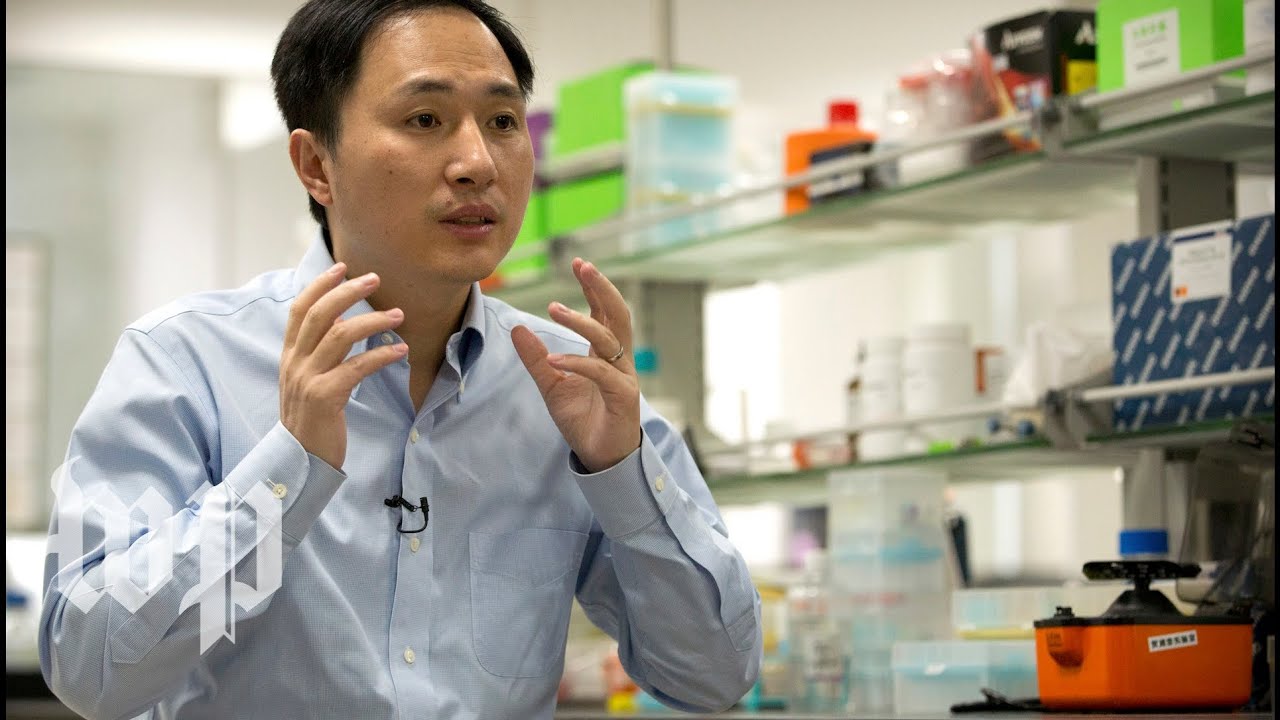
Chinese scientists are creating CRISPR babies
A daring effort is under way to create the first children whose DNA has been tailored using gene editing. When Chinese researchers first edited the genes of a human embryo in a lab dish in 2015, it sparked global outcry and pleas from scientists not to make a baby using the technology, at least for the present. It was the invention of a powerful gene-editing tool, CRISPR, which is cheap and easy to deploy, that made the birth of humans genetically modified in an in vitro fertilization (IVF) center a theoretical possibility. Now, it appears it may already be happening. According to Chinese medical documents posted online this month, a team at the Southern University of Science and Technology, in Shenzhen, has been recruiting couples in an effort to create the first gene-edited babies. They planned to eliminate a gene called CCR5 in hopes of rendering the offspring resistant to HIV, smallpox, and cholera. He Jiankui leads a team using the gene-editing technology CRISPR in an effort to prevent disease in newborns. The clinical trial documents describe a study in which CRISPR is employed to modify human embryos before they are transferred into women’s uteruses. The scientist behind the effort, He Jiankui, did not reply to a list of questions about whether the undertaking had produced a live birth. Reached by telephone, he declined to comment. However, data submitted as part of the trial listing shows that genetic tests have been carried out on fetuses as late as 24 weeks, or six months. It’s not known if those pregnancies were terminated, carried to term, or are ongoing. [After this story was published, the Associated Press reported that according to He, one couple in the trial gave birth to twin girls this month, though the agency wasn't able to confirm his claim independently. He also released a promotional video about his project.] The birth of the first genetically tailored humans would be a stunning medical achievement, for both He and China. But it will prove controversial, too. Where some see a new form of medicine that eliminates genetic disease, others see a slippery slope to enhancements, designer babies, and a new form of eugenics. Dr. Sullivan serves as professor of pharmacy practice and director of the Center for Bioethics. His research and writing interests include biomedical ethics, moral philosophy, and reproductive ethics. Contact him today for your story! Simply click on his icon to arrange an interview.


Virginia Tells Us Everything We Need to Know About Future Elections
Democrats increased their House majority over the weekend to a net gain of 37 seats -- and could still pick up at least one more. The final tally is close to what a political scientist at University of Mary Washington forecast a year ago when he created a statistical model based on the 2017 Virginia governor's election. Virginia, the expert argues, is the most important state in the nation, telling us everything we need to know about future elections. And non-biased statistical models are better forecasters than people. Trumps tweets and behaviors don't matter. Elections are easily predicted by fundamentals: Presidential approval and what voters in swing states like Virginia have to say. To learn more about the statistical model -- and why Virginia is so important in elections going forward -- contact Associate Professor of Political Science Chad Murphy at the University of Mary Washington. Simply click on his icon to arrange an interview.

Baylor Professors Use Whale Earwax to Reconstruct Whale Stress Levels Spanning More Than a Century
In a follow-up to their groundbreaking study, Baylor researchers were able to reconstruct baleen whales’ lifetime stress response to whaling and other manmade and environmental factors spanning nearly 150 years. Using a technique they pioneered six years ago, Stephen J. Trumble, Ph.D., associate professor of biology, and Sascha Usenko, Ph.D., associate professor of environmental science, both in Baylor University’s College of Arts & Sciences, analyzed earplug laminae, a growth layer representing six months found in whale earwax, as part of their recent study published in Nature Communications this month. Using earplugs taken from fin, humpback and blue whales originating in the Pacific and Atlantic Oceans from 1870 to 2016, Trumble and Usenko were able to determine the whales’ cortisol levels, a stress-response hormone, to industrial whaling, World War II wartime activities and sea-surface temperature. “This is the first-ever study to quantify temporal stress patterns in baleen whales,” Trumble said. “While the generated stress profile spans nearly 150 years, we show that these whales experienced survivor stress, meaning the exposure to the indirect effects of whaling, including ship noise, ship proximity and constant harassment, results in elevated stress hormones in whales spanning vast distances.” Whaling had a significant impact on whales’ cortisol levels. During the 1960s when whaling was at its peak with 150,000 whales harvested, cortisol peaked to a maximum and was the highest average in whales in the 20th century, according to the study’s findings. Second in a three-part exclusive online look at content from the Natural History Museum's Whales: Beneath the surface exhibition featuring Dr. Stephen J. Trumble and Dr. Sascha Usenko. During World War II when whaling declined, whales still showed an increase in cortisol levels. Trumble and Usenko suggest the impact of the theater of war. “The stressors associated with activities specific to WWII may supplant the stressors associated with industrial whaling for baleen whales,” Usenko said. “We surmised that wartime activities such as under water detonation, naval battles including ships, planes and submarines, as well as increased vessel numbers, contributed to increase cortisol concentrations during this period of reduced whaling.” When whaling moratoriums were introduced in the mid-1970s, whaling decreased as well as cortisol levels—reaching their lowest concentrations. “From the 1970s through the 2010s whaling counts were reportedly zero in the Northern Hemisphere, but mean cortisol levels steadily increased, with recent peaks reaching near the maximum levels observed before whaling moratoriums,” Usenko said. The impact of stress on whales could have larger implications for baleen whales, which are “considered sentinels of their environment and indicators of anthropogenic or manmade stressors,” Usenko said. “This study shows that anthropogenic stressors results in a physiological response in large whales. These chronic stressors may impact life history events such as reproductive parameters,” Trumble said. “Lastly, human-based stressors such as warming sea surface temperatures may also result in elevated stress in these whales.” The research pair has expanded the number of museums they partner with and currently have more than 100 additional earplugs to process. Earplugs were provided through a collaboration between the investigators and the Smithsonian Museum of Natural History and the Museum of Natural History London. ABOUT BAYLOR UNIVERSITY Baylor University is a private Christian University and a nationally ranked research institution, characterized as having “high research activity” by the Carnegie Foundation for the Advancement of Teaching. The University provides a vibrant campus community for approximately 15,000 students by blending interdisciplinary research with an international reputation for educational excellence and a faculty commitment to teaching and scholarship. Chartered in 1845 by the Republic of Texas through the efforts of Baptist pioneers, Baylor is the oldest continually operating University in Texas. Located in Waco, Baylor welcomes students from all 50 states and more than 80 countries to study a broad range of degrees among its 11 nationally recognized academic divisions. Baylor sponsors 19 varsity athletic teams and is a founding member of the Big 12 Conference. ABOUT BAYLOR COLLEGE OF ARTS & SCIENCES The College of Arts & Sciences is Baylor University's oldest and largest academic division, consisting of 26 academic departments and 13 academic centers and institutes. The more than 5,000 courses taught in the College span topics from art and theatre to religion, philosophy, sociology and the natural sciences. Faculty conduct research around the world, and research on the undergraduate and graduate level is prevalent throughout all disciplines.
