
Experts Matter. Find Yours.
Connect for media, speaking, professional opportunities & more.

Artemis II and why repeated missions are essential to lunar success
Getting to the moon wasn’t a one-and-done kind of effort. It took repeated missions, each one teaching scientists and engineers something new, and each one making the next attempt a little smarter and a lot safer. That’s a big reason lunar success eventually became possible: people kept going back, gathering more data, fixing problems, and building confidence step by step. With all eyes on the Artemis II mission's final hours, University of Delaware space professor Bennett Maruca can talk all things space exploration and the race to the moon. Have you ever wondered why Apollo 11 was named Apollo 11? It's because Apollo 1-10 were already taken! And mostly were fact-finding missions, with many barely leaving the ground, says Maruca. Space program launches can cost billions of dollars. In order to ensure that they are successful, trial runs need to take place. Space travel leaves very little room for guesswork, and even small mistakes can have serious consequences. By launching multiple missions, experts could spot weaknesses, improve hardware, and make sure astronauts were better protected before taking on even bigger risks. In a way, each mission was like a rehearsal that made the final performances much more reliable. Maruca can reveal facts like this and more. He has been featured in multiple publications. Click his profile to learn more.


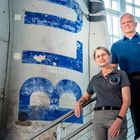
One year after his pioneering flight aboard Blue Origin’s New Shepard rocket, University of Florida space biologist Rob Ferl, Ph.D., is still processing what it meant — not just for his career, but for science itself. “What stands out the most is just the overwhelming gratitude,” Ferl said. “It was such an amazing opportunity for a scientist to go to space and actually do science.” Ferl, a professor in UF’s Horticultural Sciences Department, Director of the Astraeus Space Institute, and Assistant Vice President of Research, became one of the first space biologists to fly alongside his own experiment — a moment that marked a new era in researcher-led missions. His suborbital journey provided a rare opportunity to study how terrestrial biology responds to the very first moments of spaceflight. “For decades, space biology has relied on professional astronauts to carry out experiments designed by scientists on Earth,” Ferl explained. “But to truly understand how biology works in space, I believe you - as the scientist - have to be there. You have to feel the environment.” This September, Ferl and longtime collaborator Anna-Lisa Paul, Ph.D., will be back at Blue Origin’s West Texas launch site, continuing their work with a new series of plant experiments. Ferl and Paul, who directs UF’s Interdisciplinary Center for Biotechnology Research and is a professor in Horticultural Sciences, are tracking fluorescently tagged genes in Arabidopsis plants to study how gene expression changes during the rapid shift from Earth’s gravity to the microgravity of spaceflight and back again. It’s a full-circle moment for Ferl, who remains deeply engaged in the same questions that sent him to space a year ago. Unpacking the Transition from Earth to Space Ferl’s experiment focused on the early metabolic responses of plants during the critical transition from Earth’s gravity to the weightlessness of space. “The scientific community has accumulated plenty of data comparing biology in orbit with that on Earth,” he said. “But we’ve known almost nothing about what happens in those first few minutes as organisms enter space and are exposed to microgravity.” Initial results from the flight reveal intense metabolic changes in the early moments of spaceflight. These changes are distinct from, but connected to, the long-term adaptations seen in orbit. Early Findings, Future Impact While the data from Ferl’s experiment are still on the way to being published, the findings are already shaping the direction of ongoing research. The work contributes to a growing understanding of how terrestrial life, from plants to humans, shares fundamental pathways in responding to the space environment. “This has real implications for the future of space missions,” Ferl noted. “As we send more people and more biology into space in support of exploration, we need a comprehensive understanding of how living systems adapt — right from the start.” Ferl and his team will return to Blue Origin’s launch site in Texas in September to continue their research, sending an uncrewed payload of plants into suborbital space. The flight carries no humans—but it does carry an automated experiment designed to advance their understanding of plant biology in space. It’s part of a broader effort to refine what Ferl calls “researcher-tended missions.” A New Course for UF Space Science The mission has not only shaped the trajectory of Ferl’s research, it has also energized Astraeus and the university’s space biology efforts. “This is about building a new kind of science culture,” Ferl said. “One where the scientists are embedded in every part of the mission, from experiment design to the moment of launch.” As the one-year anniversary of his flight approaches, Ferl remains focused on pushing the boundaries of what science in space can be. But he hasn’t forgotten the magnitude of the moment. “Even a year later,” he said, “the most powerful thing I feel is just: thank you. Thank you for the chance to go, to see it for myself, and to bring that knowledge back to Earth.”




Expert Q&A: What is Soft Diplomacy and how does it impact classrooms?
"Right now, storytelling is critical. Language learning is highly personal, and it’s the person-to-person relationships that grease the wheels," says Cheryl Ernst, director of the English Language Institute at the University of Delaware. She recently published English Language Programs as Facilitators of Soft Diplomacy in Innovations in Star Scholars Press. Here's how she's discussing this important topic. Q: What is the focus of this research, and why is it important? Ernst: ELI and other English language programs provide the ideal space for communication development, cross cultural appreciation, gaining life skills, and raising awareness about people beyond the media. Post pandemic, we’re hearing across campus how individuals feel less connected, and in English language classrooms, connection is critical. Language is only learned through production and practice since it’s a skill that needs to be honed. In language, there is no such thing as perfect. In our classrooms, English is the common goal, and everyone comes to that space at their own levels and overflowing with imperfection. Our students learn to use their vulnerability as a tool. They learn the value of a growth mindset living in a culture that is different from their own, and with that comes an appreciation for difference, respect for others, trust, human-to-human communication. Q: What inspired this research? Ernst: More than 30 years of observation, conversations, experiences, and personal relationships. There was no term to describe the skills English language programs teach beyond grammar (what’s perceived, anyway). Terms like personal diplomacy, person-to-person diplomacy, civic diplomacy, and the like happens all the time and oversimplifies what we do. In my readings, I started to see overlaps between soft power and diplomacy, which led to the concept of Soft Diplomacy. Then what distinguishes Soft Diplomacy from other more common monikers are the variety of skills that happen organically in our classrooms that we rarely acknowledge and students may not recognize. Q: What are some key findings or developments? Ernst: Institutionally, ELPs can do better highlighting the skills beyond English that we teach organically or deliberately. Q: How could this work potentially impact the field or the wider public? Ernst: Respecting ELPs for the space they provide and the skills they offer. It’s not “just English,” rather is learning to communicate in a common language and with people from around the globe. I’d like people to realize that relationships are foundational, that there are common values across nations and that differences are not bad. What version of English is “correct” British or American dialects (the New York? Wisconsin? Alabama? Iowa?). Q: What are the next steps or upcoming milestones in your research? Ernst: A former student and I have launched a podcast series called Soft Diplomacy in Action that focuses on personal stories from those who work in international education. We’ve interviewed an ELI associate professor from Morocco, the UD coordinator of the Mandela Fellows program, a professor who sees (and lives) the diplomatic value of sports, and a retired English language professional. We’re looking forward to continuing these conversations with individuals from a variety of disciplines that also work in this space but through different lenses. ABOUT CHERYL ERNST Cheryl Ernst is the director of the English Language Institute at the University of Delaware where she and her colleagues and students practice Soft Diplomacy every day. Her professional areas of interest include program administration and international marketing, teacher training and working with international teaching assistants, curriculum design, and advanced level academic English (graduate levels). To speak with Ernst her work and the importance of Soft Diplomacy, reach out to MediaRelations@udel.edu.
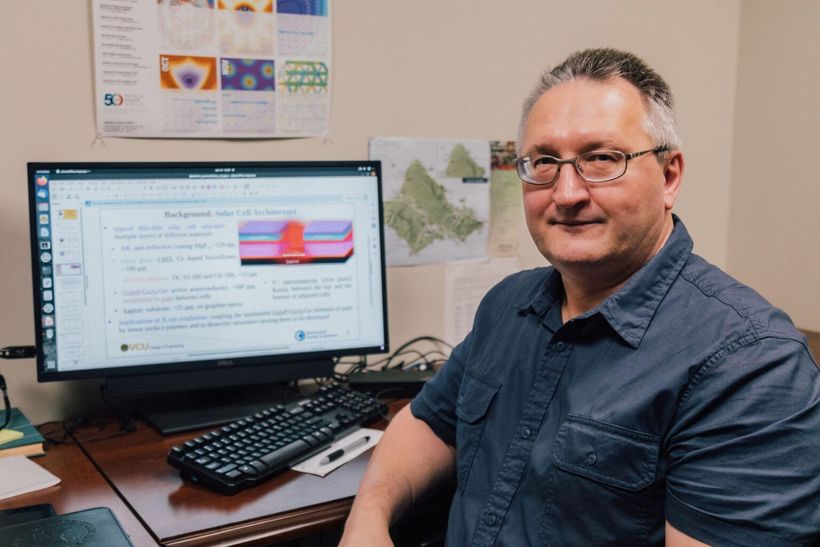
Recently named the nuclear program director at the Virginia Commonwealth University (VCU) College of Engineering, Gennady Miloshevsky, Ph.D., associate professor in the Department of Mechanical & Nuclear Engineering, answers some questions about the direction of VCU Engineering’s nuclear program and what he hopes it can accomplish. What are your top priorities for the nuclear program at the VCU College of Engineering? I want to focus on student development, innovative research and our rankings in best program lists, but that is not everything. Strategy is important. We need to align ourselves with the country’s national energy needs. There are many new developments in the energy sector, like small modular reactors or fusion energy systems, and having the right faculty to engage with these advancements is important. Providing students with a well-rounded education and good opportunities for gaining experience benefits the College of Engineering’s public and private sector partners. Nuclear subject matter is complex, so higher education is very important for workforce development. We want to build partnerships, like the one we have with Dominion Energy, that support this goal. A priority for me is continuing to establish relationships with Commonwealth Fusion Systems, which seeks to build and operate the first commercial grid-scale fusion plant in Chesterfield County, Virginia. Our workforce partners will benefit from VCU’s well-trained nuclear engineering graduates joining the workforce. So, aligning our strategy with national energy needs, hiring the right faculty to support our programs and building industry partnerships that benefit our student’s education and career opportunities are important things for VCU Engineering’s nuclear program. Where would you like to see the College of Engineering’s nuclear program 10 years from now? I would like to see growth in the nuclear program. For example, some new graduate courses on topics like nuclear materials or fusion energy. In 2024, I developed a general course for fusion energy, so building out a curriculum that goes more in-depth would be good. When you look at small modular reactors and micro reactors, current energy policy does not allow private companies to build their own. However, as energy demands increase, policy could change to where you see these compact devices installed in places like data centers, for example. A more in-depth curriculum allows VCU Engineering students to step into industry roles that lead growth of the energy industry while also ensuring students are capable of adapting to the changing field and taking advantage of new developments. What sort of cross-disciplinary opportunities are there for the College of Engineering’s nuclear program? Nuclear engineering and nuclear science are very interdisciplinary fields. You have physics that covers the nuclear reaction and the radiation it generates, for example, then chemistry is needed when talking about nuclear fuel cycles and nuclear waste. You also need materials science because good materials capable of withstanding radiation and high temperatures are needed in nuclear fission and fusion energy systems. This science then connects to engineering, building the reactors, the energy distribution systems like a power grid. It is a small sample of the overall work, but you see how mechanical and electrical engineering are key to this part. All these disciplines come together to solve the same problem. One researcher might be figuring out how to confine plasma and make it stable, then another researcher is looking at how plasma can disrupt the containment wall and how to make materials to protect the wall. Within our department, we are making connections between mechanical-focused faculty working on high-temperature ceramics or additive manufacturing techniques and those of us researching nuclear energy systems in order to make joint proposals. We are also collaborating outside VCU. As an example, I am involved with an alliance founded by the Defense Threat Reduction Agency (DTRA) comprised of 17 universities, research labs and military centers. Coordinated through DTRA, we work together on many of the same problems.Through this partnership, my Ph.D. students do summer research rotations with national labs like Lawrence Livermore National Laboratory in California and The Pacific Northwest National Laboratory. We also bring cadets and midshipman into VCU from other institutions, like the DTRA Nuclear Science and Engineering Research Center, United States Military Academy West Point and the Virginia Military Institute, whose students have been part of research experience for undergraduates programs in the summer. How is artificial intelligence impacting the field of nuclear engineering? So, the United States is sponsoring the Genesis Mission, which seeks to transform science innovation through the power of AI. One area of the Genesis Mission is nuclear fission and fusion energy. I see this playing out with the Department of Energy encouraging national labs, universities and industry to work together on applying these AI advancements to solve the research problems of nuclear energy. It is a great opportunity for students, who we can involve in this work to give them real-world experience with topics they will see after graduation. Last semester I taught a course at VCU on the practical applications of AI on nuclear engineering problems. It is not something like ChatGPT or anything like that. What we did is take Google’s TensorFlow platform that is a library of AI models and machine neural networks. Using Python scripting students learn how to apply these AI resources to about 30 problems in mechanical and nuclear engineering. They create scripts, use data sets and run analytics. We have a nuclear reactor simulator and I have some ideas to create AI-based software we can pair with the simulator, then give the software a data set and let it control the operation of the simulator in a safe way. Tell us about your background. What brought you VCU and the Department of Mechanical and Nuclear Engineering? Actually, I am not a mechanical or a nuclear engineer. My background is in physics. I graduated from the Belarusian State University in 1990 and continued to a Ph.D. in physics from the Heat and Mass Transfer Institute of the National Academy of Sciences of Belarus working on topics related to fusion plasmas and nuclear weapon effects. In space, nuclear weapons produce shockwaves and radiation. I computationally model these effects in my research to determine how something like a nuclear warhead detonation in orbit will impact the materials a satellite is made of, for example. My research also crosses over into nuclear fusion, specifically thermodynamic and optical plasma properties, fusion plasma disruptions, melt motion and splashing from plasma facing components. Accelerating Next-Generation Extreme Ultraviolet (EUV) Lithography (ANGEL) is my most recent collaborative project, supported by the Department of Energy’s (DOE) Office of Science, Fusion Energy Sciences. It involves two national laboratories, three universities and a private-sector company focusing on advancement of future micro-electronic chips, EUV photon sources, mitigation of material degradation and plasma chemistry. Prior to joining the VCU College of Engineering I worked at Purdue University at a DOE-funded center investigating nuclear fusion and the effects of plasma on materials. Around 2019 I wanted to develop my own lab, so I came to VCU with startup funds from the Nuclear Regulatory Commission and DTRA. My first priority after joining the VCU College of Engineering was continuing my fusion research, the second was collaborating with an alliance of universities focused on work for DTRA and DOE.



The science behind the blood moon: Understanding this lunar phenomenon ahead of march's event
March's celestial event – a blood moon – is just around the corner. This captivating lunar spectacle isn't just a cool sight to behold; it has some neat science backing it up. The blood moon phenomenon happens during a total lunar eclipse. "During a total lunar eclipse, the only light that reaches the surface of the moon is refracted through the Earth's atmosphere, which essentially acts like a lens. Light is a wave, and every color of the rainbow has a different wavelength – red the longest and violet the shortest," said Bennett Maruca, associate professor of physics and astronomy at the University of Delaware. What adds to the excitement is the rare nature of total lunar eclipses. While partial eclipses occur more frequently, a full blood moon isn't an everyday event. Depending on where you live, the blood moon may only grace the night skies a few times a decade. "One of my favorite things about total lunar eclipses is that it's hard to know ahead of time quite what it will look like. The moon can take on a color ranging from burnt orange to red to grayish brown," he said. "The closer the Moon passes to the center of Earth's shadow, the darker the color will be." Maruca is available to speak about the event, which takes place in the wee hours of March 3. He can discuss when to wake up to see the phenomenon and how to best capture it. "For photographing the moon, I would recommend a camera with some optical zoom – the moon is only about 0.5 degrees across. Because of the low lighting conditions, a tripod or other support would be helpful since a longer exposure time will be needed," he noted. He has appeared in a number of outlets including Mashable and The Philadelphia Inquirer. He can be contacted by clicking on his profile. ABOUT BENNET MARUCA Bennett Maruca serves as an associate professor in the University of Delaware's department of physics and astronomy. His research focuses on the sun, the solar wind and other space plasmas. He is a recipient of the Antarctic Service Medal and NASA's Silver Achievement Medal. He also serves as an associate director of the Delaware Space Grant Consortium and is currently mentoring over twenty undergraduate students developing experiments to fly into space to observe Earth's ionosphere.

Beyond the field: New research highlights how NIL is reshaping college athlete identity
In an era of name, image and likeness, or NIL, many college athletes are thinking differently about who they are — seeing themselves not just as competitors or students, but also as influencers with distinct voices and causes, according to a new study from the University of Florida. Molly Harry, Ph.D., an assistant professor in the Department of Sport Management at the UF College of Health and Human Performance, surveyed 200 athletes from 21 Power Four universities to better understand how NIL, which refers to the rights of college athletes to earn money through endorsements, sponsorships, social media promotions and other commercial opportunities, has impacted the way athletes perceive their roles and identities. “Historically, we’ve viewed them (college athletes) through the lens of athletics or academics, but they’re daughters, brothers, role models, and increasingly, they’re now cultivating public personas and marketing skills.” —Molly Harry, Ph.D., an assistant professor in the Department of Sport Management The findings, published Friday in the Sociology of Sport Journal, reveal a growing recognition among athletes that they are more than the two-dimensional “student-athlete” model that is traditionally used in research and policy. “With the shift in NIL policies, athletes are starting to develop roles and identities related to that of the influencer,” Harry said. “Historically, we’ve viewed them through the lens of athletics or academics, but they’re daughters, brothers, role models, and increasingly, they’re now cultivating public personas and marketing skills.” Through survey responses across seven major sports — football, baseball, men’s and women’s basketball, gymnastics, volleyball and softball — Harry and UF doctoral student Hannah Kloetzer examined athletes' engagement with NIL opportunities, as well as the personal sacrifices they made to pursue them. They found that many athletes now view NIL as a platform to promote causes they care about, build connections with their communities and explore career pathways after college. One softball player described the value of NIL in a way that highlights the broader impact: “It’s been great to feel seen and have your hard work in a sport help in other parts of life. It’s really nice to use NIL on a resume as marketing experience.” Athletes surveyed said they found deals not just with big-name brands, but more often with local businesses like restaurants, boutiques and community partners. This entrepreneurial approach often required initiative and personal outreach, something many athletes had to learn on their own. “Some athletes told us they felt lost when trying to navigate NIL,” Harry said. “Others shared how they reached out to local businesses or organized their own camps.” One particularly striking finding, Harry said, was that some athletes were making athletic sacrifices — like spending less time training — to pursue NIL work, a shift that underscores the importance of these opportunities. Harry stressed that while no one reported skipping practices, athletes did acknowledge shifting their priorities to make room for NIL-related endeavors. “If you’re willing to give up something in your athletic routine, that speaks volumes about how central NIL — and influencer identities — could become for some athletes,” she said. Another key insight: football players of color from low socioeconomic backgrounds were most likely to self-identify as influencers. This emerging pattern stands in contrast to perceived broader trends in the social media world. “That was one of the most fascinating takeaways,” Harry said. “We have this unique subset of influencers — college football athletes — that are starting to enter this space.” Harry’s research builds on a growing conversation in the academic community about the evolving identity of college athletes. A few conceptual pieces have previously proposed the idea of a “student-athlete-influencer,” but Harry’s team is one of the first to gather empirical data to back it up. This new perspective has broad implications for how universities and organizations like the NCAA support college athletes, both during their playing years and as they prepare for life after sport. “As fans, we often see athletes as commodities on the field,” Harry said. “But they’re humans first, and they’re starting to recognize their own value and tap into their potential beyond the playing field.” In addition to academic and athletic support, Harry believes universities should invest in more targeted resources tailored to influencer pressures, like mentorship opportunities and training that goes beyond basic social media etiquette. “Athletes who take on influencer roles may deal with unique stressors, whether it’s comparing engagement numbers or coping with public scrutiny,” she said. “It would be valuable to provide opportunities where athlete-influencers can support each other, share strategies and protect their mental health.” A football player who participated in the study summed up the broader potential of NIL: “I’m very appreciative of NIL opportunities and the ability to continue to grow my camp and greater brand outside of my football program.” Looking ahead, Harry plans to explore this evolving identity through more qualitative research, with a focus on what it truly means to be an “influencer” in the context of college athletics. “Athletes are more than football players. They are more than swimmers,” she said. “They are people who we walk with on our college campuses, and they are people who bring value to our society in a host of ways.”


Why Nick Cave’s First Public Outdoor Sculpture Found Its Home at Meijer Gardens
The permanent installation of Amalgam (Origin), Nick Cave’s first public outdoor sculpture in the world, marks a major moment for contemporary art in the Midwest and a defining milestone for Frederik Meijer Gardens & Sculpture Park. As the curator who guided the project from concept to completion, Suzanne Ramljak offers essential insight into why this work matters now, how it fits within Cave’s evolving career, and what it signals about the growing role of public art in shaping cultural identity. The sculpture’s installation in October coincides with a pivotal period in Nick Cave’s career. On Feb. 13, he debuted “Nick Cave: Mammoth,” a monumental new body of work on view at the Smithsonian American Art Museum through Jan. 3, 2027. Not only is it Cave's first solo exhibition in Washington, D.C., but it is the museum’s largest ever single-artist commission. And this spring, the Obama Presidential Center in Chicago opens with a major, immersive installation by Cave, placing his work at the center of a national cultural moment. Against this timely backdrop, Meijer Gardens’ installation stands as a quiet but powerful first: the artist’s inaugural permanent outdoor public sculpture. Understanding the Significance of Nick Cave's Work The sculpture reflects the evolution of Nick Cave’s artistic practice, rooted in his groundbreaking Soundsuits series, a body of work first developed in response in the wake of Rodney King’s 1991 assault by police and designed to challenge viewers’ perceptions of identity, race, and community. Over decades, Cave’s work has moved from wearable performance art into public sculpture, allowing his socially engaged visual language to occupy shared civic space. The permanent presence of Amalgam (Origin) at Meijer Gardens highlights the institution’s commitment to showcasing art that resonates with broader cultural dialogues about resilience, protection, and collective identity. “Nick Cave’s art is deeply rooted - in his family, in community, in craft, and in nature. His work is also grounded in concerns of social justice. The power of Amalgam (Origin) stems from this fertile mix; a blend of the personal and communal, exceptional and traditional.” Suzanne Ramljak, Vice President of Collections & Curatorial Affairs, Frederik Meijer Gardens & Sculpture Park Suzanne Ramljak is Vice President of Collections & Curatorial Affairs at Frederik Meijer Gardens & Sculpture Park where she oversees the acquisition, siting and curation of engaging sculptural exhibitions. View her profile The timing also highlights Cave’s deep Midwest ties. He lives and works in Chicago and earned his master's degree at Cranbrook Academy of Art in Bloomfield Hills, Michigan. The Meijer Gardens installation connects those regional roots to a global artistic trajectory, reinforcing the Midwest’s influence on contemporary art at the highest level. Media Attention, Coverage and Cultural Momentum Since the installation was announced and unveiled, the sculpture has drawn significant regional, national and arts-focused media attention, underscoring its cultural weight and public resonance. Coverage has highlighted the work’s monumental scale, its distinction as Nick Cave’s first permanent outdoor public sculpture, and Meijer Gardens’ role as a national destination capable of supporting ambitious and timely contemporary art. Media narratives consistently framed the installation as both a major moment for Grand Rapids’ cultural landscape and a signal of Meijer Gardens’ growing influence within the national arts conversation. The range of coverage points to interest from music, arts, lifestyle, and cultural outlets, suggesting the installation’s appeal to a variety of audiences. That level of attention reflects not only the significance of the work itself, but also the curatorial vision guiding its placement and permanence, a process led by Suzanne Ramljak. Expert Insight: As Curator of Collections and Senior Curator of Sculpture, Ramljak brings expert perspective on: Why Meijer Gardens was the right home for Cave’s first outdoor public sculpture How this work fits within Cave’s broader artistic practice, particularly his engagement with performance, movement, and public space What permanence means in contemporary art, especially for works often associated with temporality and performance How landscape, scale, and audience interaction shape the experience of outdoor sculpture Her expertise situates the installation within both Cave’s career arc and Meijer Gardens’ long-standing commitment to presenting ambitious contemporary sculpture in dialogue with nature.


Young magmas on the moon came from much shallower depths than previously thought, new study finds
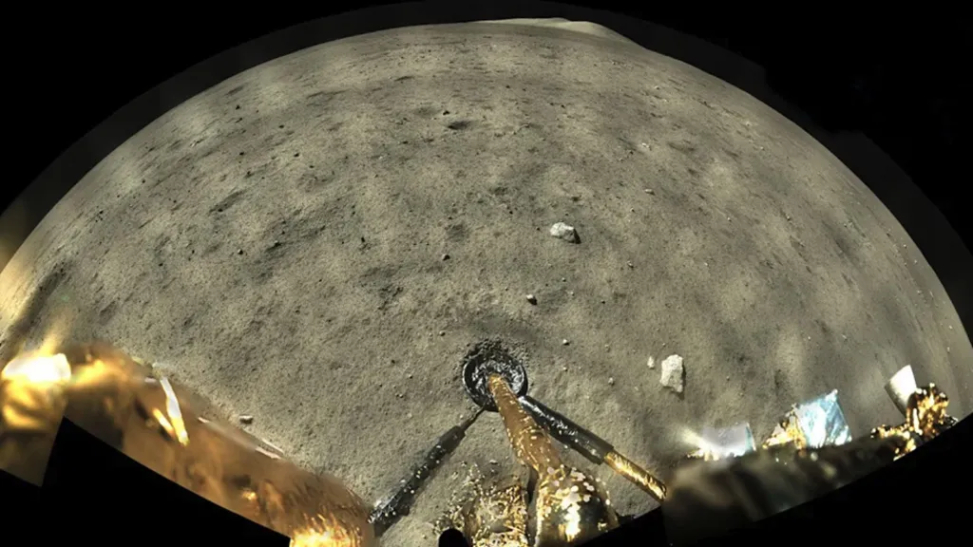
New research on the rocks collected by China's Chang'e 5 mission is rewriting our understanding of how the moon cooled. Stephen Elardo, Ph.D., an assistant professor of Geological Sciences with the University of Florida, has found that lava on the near side of the moon likely came from a much shallower depth than previously thought, contradicting previous theories on how the moon produced lavas through time. These samples of basalt, an igneous rock made up of rapidly cooled lava, were collected from the near side of the moon by the Chang’e 5 mission and are the youngest samples collected on any lunar mission, making them an invaluable resource for those studying the geological history of the moon. In order to get an estimate of how deep within the moon the Chang’e 5 lava came from, the team conducted high-pressure and high-temperature experiments on a synthetic lava with an identical composition. Previous work from Chinese scientists has determined that the lava erupted about 2 billion years ago and remote sensing from orbit has showed it erupted in an area with very high abundances of potassium, thorium and uranium on the surface, all of which are radioactive and produce heat. Scientists believe that, in large amounts, these elements generate enough heat to keep the moon hot near the surface, slowing the cooling process over time. “Using our experimental results and thermal evolution calculations, we put together a simple model showing that an enrichment in radioactive elements would have kept the Moon's upper mantle hundreds of degrees hotter than it would have been otherwise, even at 2 billion years ago,” explained Elardo. These findings contradict the previous theory that the temperature of the moon’s outer portions was too low to support melting of the shallow interior by that time and may challenge the hypothesis about how the moon cooled. Prior to this study, the generally-accepted theory was that the moon cooled from the top down. It was presumed that the mantle closer to the surface cooled first as the surface of the moon gradually lost heat to space, and that younger lavas like the one collected by Chang’e 5 must have come from the deep mantle where the moon would still be hot. This theory was backed by data from seismometers placed during the Apollo moon landings, but these findings suggest that there were still pockets of shallow mantle hot enough to partially melt even late into the moon’s cooling process. “Lunar magmatism, which is the record of volcanic activity on the moon, gives us a direct window into the composition of the Moon's mantle, which is where magmas ultimately come from,” said Elardo. “We don't have any direct samples of the Moon's mantle like we do for Earth, so our window into the composition of the mantle comes indirectly from its lavas.” Establishing a detailed timeline of the moon’s evolution represents a critical step towards understanding how other celestial bodies form and grow. Processes like cooling and geological layer formation are key steps in the “life cycles” of other moons and small planets. As our closest neighbor in the solar system, the moon offers us our best chance of learning about these processes. “My hope is that this study will lead to more work in lunar geodynamics, which is a field that uses complex computer simulations to model how planetary interiors move, flow, and cool through time,” said Elardo. “This is an area, at least for the moon, where there's a lot of uncertainty, and my hope is that this study helps to give that community another important data point for future models.”


When individuals sign up for direct-to-consumer genetic testing, the extent to which they ever think about their genetic data is likely in the context of the service for which they paid: information on predisposition to a genetic illness, or confirmation of an ethnic background, for example. But that data doesn’t just sit on a shelf, and while the most mainstream concern for such services is the privacy of your data, there is also the question of what else the companies do with it, and how. Ana Santos Rutschman, SJD, LLM, professor and faculty director of the Health Innovation Lab at Villanova University Charles Widger School of Law, is particularly interested in the latter. In June 2025, she co-authored an amicus brief centered on data protection and patient’s interests amid genetic testing company 23andMe’s bankruptcy proceedings. In December, many of those same co-authors published a paper in Nature Genetics, highlighting 23andMe’s bankruptcy as “an inflection point for the direct-to-consumer genetics market,” especially as it pertains to the broader corporate use of individuals’ scientific data. The reason? “How that data is used all depends on the policies of the individual companies,” she said. Genetic Testing Companies Use Your Data For More Than The Services You Pay For Those who utilize genetic testing companies—for any reason—are likely also consenting, often unknowingly, to other unrelated items. This includes acknowledgment of information related to how your data might be further used or monetized. “Most people don't think about secondary and tertiary uses of their data,” said Professor Rutschman. “[What they consent to] is displayed on the website somewhere, but it’s not easily understandable and accessible. It’s fine print.” Such companies often operate beyond the traditional “fee for a service” relationship with consumers. Yes, they will give you the information you paid for—finding out whether you have German ancestry or are predisposed to certain genetic disease—but instead of that genetic data just being stored somewhere, it’s often sold for research purposes. Today, in the age of AI big data, that might look something like this: The company puts your data in a box with parameters, along with thousands of others. Perhaps they are then able to observe a pattern that, until all that data was compiled, was previously unknown. They come up with a diagnostic or a medicine and patent it. That patent is licensed to somebody else, and the company makes money on the product. The use of that data for scientific purposes—even ones that turn a profit— is not problematic in itself, says Professor Rutschman. “Some people may even choose a company that allows scientific research over one that doesn’t. Many people may not care, but some will. The uses are not common knowledge, and that is worrisome. The public should be well-informed about what’s happening.” Deeper problems may arise when they aren’t informed of those potential uses of their data. Professor Rutschman cited the infamous Henrietta Lacks case, in which Lacks’ cells were, and continue to be, one of the most valuable cell lines in cancer research. Neither Lacks nor her family were paid for the widespread use of her genetic material until a settlement was reached long after her death. “When you have biologics involved, a concern is that if you have something potentially valuable, you may not see any money from it.” Bankruptcy Can Cause Policy Upheaval To understand the role bankruptcy can play in all of this, one needs to refer back to the power of individual company policy in this space. There are no external laws that dictate how these companies can further monetize their data, says Professor Rutschman, as long as they don’t violate other laws, such as privacy laws. That means that when a company like 23andMe goes bankrupt, as was the case in 2025, new ownership could enact completely different corporate policies for use of their property. In their specific case, the company was essentially bought back by 23andMe founder and CEO Anne Wojcicki’s non-profit, all but ensuring policies would remain the same. But that is exactly why Professor Rutschman and others are highlighting this specific case. “Bankruptcy is bad in the sense that there's a lot of uncertainty,” she said. “In this instance, the person coming in was the person who was there before, so the policy is likely to continue. But that's very rare. There are a roster of companies with access to biological materials. 23andMe is a good example of something not going horribly wrong, but with the understanding that it absolutely could.” Ways in which that could happen could be new ownership undermining the original intent of the data use by cessation of the company’s previous policies, or charging exorbitant prices to other entities to use that data for scientific research. “Because there is no law, these new owners can essentially do as they please with their proprietary data, unless they do something incredibly careless that amounts to the level of illegal,” Professor Rutschman said. “And that is concerning.” Onus Falls to Companies to Enact Safeguards To ensure a worst-case scenario for such companies does not unfold in a bankruptcy situation, Professor Rutschman points to a number of safeguards they could enact to protect their original commitments, ensure equitable access to data for scientific research and promote fair trade. One of which is implementing a company policy stating that commitments from a previous iteration of the company need to be honored if ownership is transferred. Those could include, as the authors recommend, policies “honoring original research-oriented commitments under which the data were collected,” as well as not “enclosing the dataset for exclusive commercial use.” She also highlights the need for Fair, Reasonable, and Non-Discriminatory (FRAND) voluntary licensing commitments, which are inherently more science and market friendly. “Companies in many sectors have committed to this approach, and we are saying it should apply in this space as well. You’ll charge your royalty, but it can’t be a billion dollars for a data set, nor would it be done by exclusively selling to one entity. You can get that billion dollars by selling to 15, 50 or 100 companies, and from a scientific research perspective, that’s what we want. Otherwise, you have a monopoly or duopoly. “There are a lot of different models that can be used, but ultimately what we are arguing is leaving this unaddressed is a really bad idea. It leaves everything exposed, and something bad is more likely to happen.”


Aston University economists say Prime Minister can reduce UK trade vulnerability with China visit
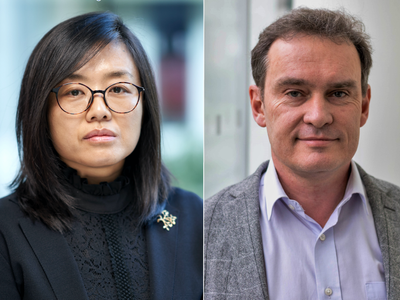
Greenland episode exposed UK’s lack of effective response to economic coercion from allies Research shows tariff retaliation would have cost the average UK household up to £324 per year Economists say China visit is “portfolio risk management” – diversification reduces vulnerability. The Prime Minister’s visit to China – the first by a British PM since 2018 – is an opportunity to reduce the UK’s vulnerability to economic coercion, according to new research from Aston University. A policy paper from Aston Business School’s Centre for Business Prosperity analyses the January 2026 Greenland tariff episode, when President Trump threatened and then withdrew tariffs on eight European countries. The researchers found that the UK had no good options: retaliation would have made Britain worse off, while absorbing the tariffs left Europe without credible deterrence. Director of the centre for business prosperity, Professor Jun Du, said: “The Greenland episode was a wake-up call. When your principal security ally threatens economic coercion, the old assumptions about who is safe and who is dangerous no longer hold. “The PM’s China visit should be framed as portfolio risk management – building diversified trading relationships that reduce the UK’s exposure to any single partner. Just as investors don’t put all their money in one stock, countries shouldn’t put all their trade into one basket. A UK with multiple strong partnerships is harder to pressure, whether the pressure comes from Washington or Beijing.” The research found that coordinated UK–EU tariff retaliation would have cost British households up to £324 per year – the worst outcome modelled. But the authors argue that Europe has untapped leverage elsewhere: the US runs a €148 billion annual services surplus with the EU, and mutual investment exceeds €5.3 trillion. Associate professor of economics and co-author, Dr Oleksandr Shepotylo, said: “Tariff retaliation fails because it hurts consumers and distorts the economy – the retaliator suffers similarly to the target. But Europe has cards it isn’t playing. Services, investment screening, and regulatory access are pressure points where Europe can respond effectively.” UK exports to China fell by 10.4% in the year to Q2 2025, with goods exports down 23.1% – the sharpest decline among major trading partners. The researchers argue that this closes off the UK’s largest alternative market at precisely the moment US reliability is in question. The paper identifies three priorities for UK policy: Recognise the permanent incentives behind US tariffs. US tariff revenue hit $264 billion in 2025. Trade negotiations alone cannot resolve revenue-driven policy. Build UK–EU coordination on non-tariff instruments. Services, investment, procurement, and regulation offer leverage that tariffs do not. Treat China engagement as portfolio risk management. Concentration in any single market creates vulnerability. Diversification is not about picking sides – it’s about resilience. Professor Du added: “The question for the Prime Minister is whether to use this breathing space to build resilience – or wait for the next Greenland.” To read the policy paper in full, click on this link:


